
SUBSCRIBE TO OUR FREE NEWSLETTER
Daily news & progressive opinion—funded by the people, not the corporations—delivered straight to your inbox.
5
#000000
#FFFFFF
To donate by check, phone, or other method, see our More Ways to Give page.


Daily news & progressive opinion—funded by the people, not the corporations—delivered straight to your inbox.
Ady recognized that so-called “Medicare Advantage” plans threaten our cherished public benefit.
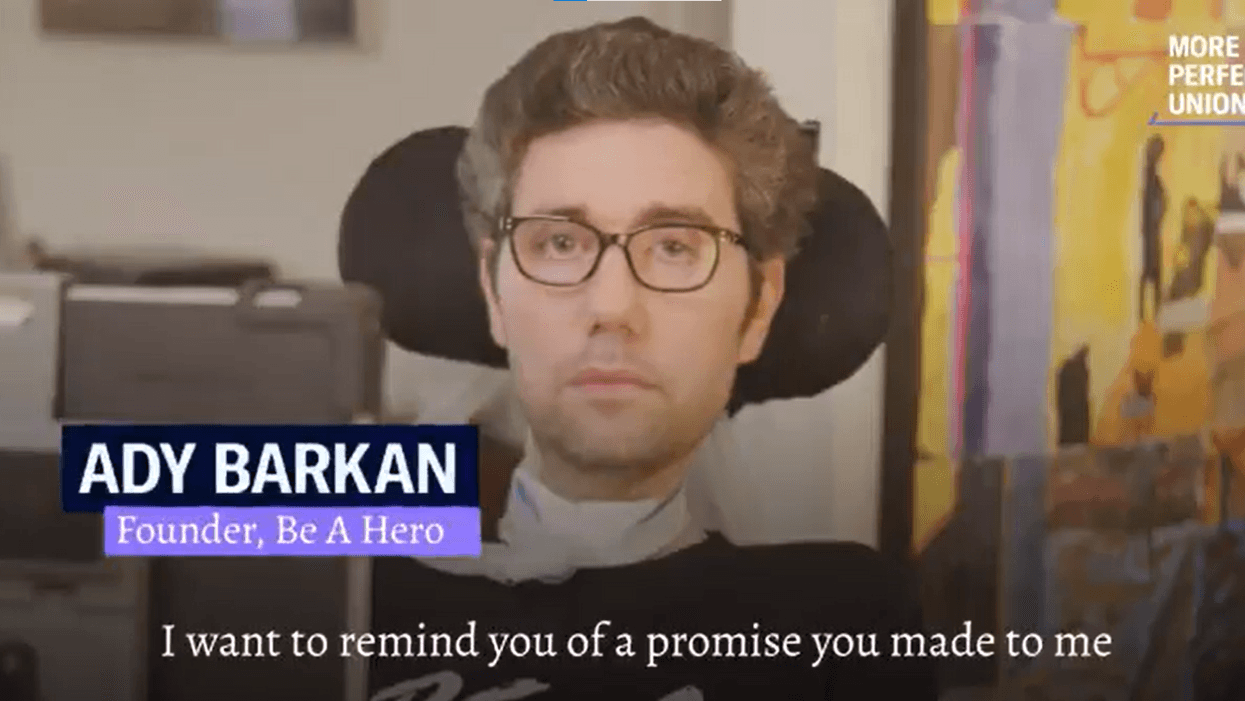
Ady Barkan, my dear friend and former colleague, spent the last years of his life fighting to give everyone in America the right to high-quality healthcare. He knew that he was dying, and used his own story to shine a light on why “the richest country in the history of the world” could figure out how to provide it. He evangelized the virtues of Medicare For All, yet came to understand that a powerful force stood in the way: So-called “Medicare Advantage” (MA) plans. These plans are not Medicare. They are privatized alternatives run by for-profit insurance corporations.
As Ady wrote a little over a year ago, these privatized plans threaten our cherished public benefit of Medicare. They siphon up our public dollars, overcharging the government to the tune of billions a year. Then, they delay and deny the care the patients need. Their goal is to generate profit by charging as much as possible to provide as little healthcare as possible.
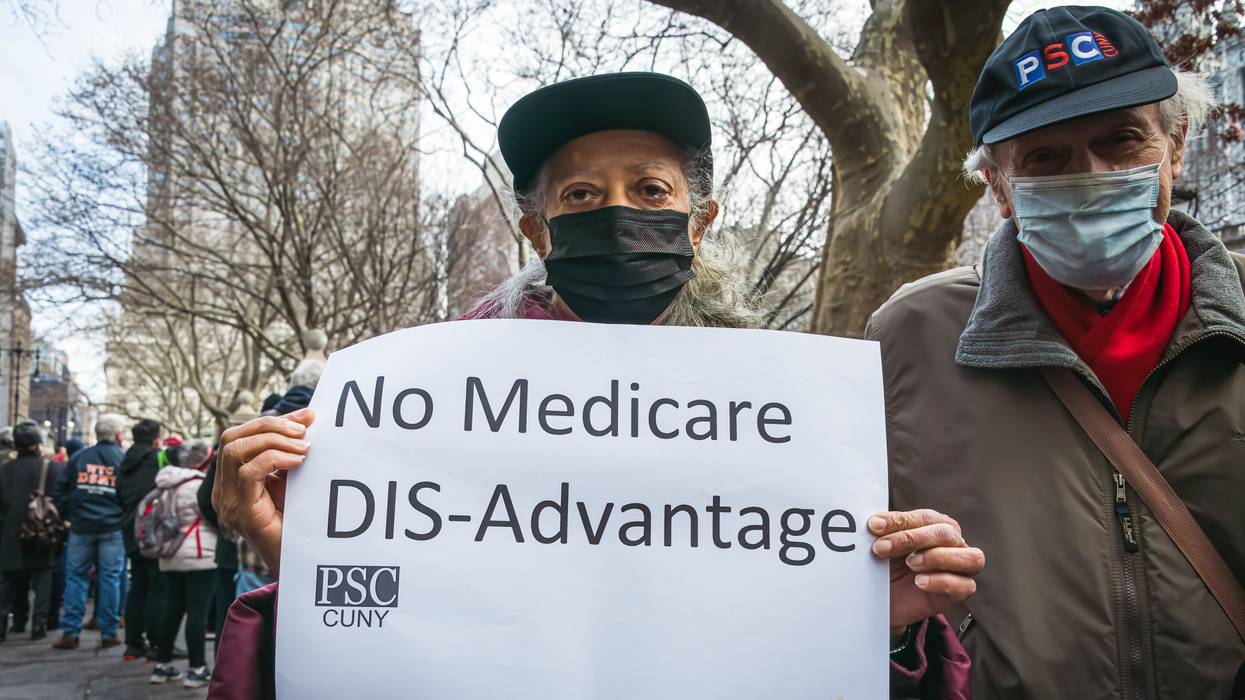
The government allows privatized plans to offer benefits Traditional Medicare is barred from covering, including dental, vision, hearing, and an out-of-pocket cap. This makes them an attractive option, particularly to younger and healthier patients. It is only once people get sick, and need to use their coverage, they realize these plans are a scam.
The government needs to hold these plans accountable for their greed, not give them a raise.
With Traditional Medicare, you can use the doctor and hospital of your choice, and they provide the care that you need. Medicare Advantage restricts your choice of doctors and hospitals, as well as what type of care they can provide. These might seem like minor nuisances when you’re relatively healthy, but can mean the difference between life and death when you’re sick.
That’s not an exaggeration. A recent study found that Medicare Advantage patients are 1.5 times more likely to die in the month after complex cancer surgery than Traditional Medicare patients. Another study found that if the government canceled contracts with the worst performing 5% of MA plans, it would save 10,000 lives a year.
Yet despite Medicare Advantage plans providing worse care than Traditional Medicare, they cost the government more money—an average of 6% per patient—despite the fact that Medicare Advantage patients are generally younger and healthier than those with Traditional Medicare. They are overcharging the government by up to $140 billion a year. This is money that comes out of the Medicare trust fund, endangering the future of the entire program. Yet it still isn’t enough for health insurance corporations offering these plans.
The government is proposing a 3.7% increase in payments to Medicare Advantage plans for next year. They plan to finalize that amount at the beginning of April. The health insurance corporations and their lobbyists are pressuring the government to increase that amount. They are even insisting that a 3.7% increase is a cut, just because it’s not as much as they want!
This is outrageous. The government needs to hold these plans accountable for their greed, not give them a raise. Over 25,000 Americans are calling on President Joe Biden to do just that. As their petition says, these plans should be paying us back, not the other way around.
Be A Hero, the organization Ady founded, is one of the organizations at the forefront of this fight. Hundreds of our grassroots supporters have shared their painful stories of being delayed or denied care by faceless, cruel insurance companies. Others reveal feeling tricked or even forced onto a Medicare Advantage plan and then being stuck in the “Hotel California.” Their heartbreaking stories called Ady and now call all of us to take action.
We are joined by doctors, patients and experts from across the country who see the existential threat posed to Medicare by insurance corporations. Reclaiming Medicare from corporate greed is an essential part of Ady’s legacy. It is the only way we can move towards Ady’s vision of Medicare for All—guaranteed high-quality healthcare for everyone.

"There are no words to capture Ady Barkan's brilliance, moral clarity, and immense capacity to imagine and fight for a new world."
Ady Barkan, a powerful moral force in the fight for a just healthcare system, died at the age of 39 on Wednesday from complications of amyotrophic lateral sclerosis, commonly known as ALS.
Following his terminal diagnosis in 2016—just months after the birth of his son, Carl—Barkan campaigned tirelessly for Medicare for All and other progressive causes, frequently taking part in Capitol Hill protests, congressional hearings, and conversations with prominent political figures even as he lost the ability to stand, walk, and speak on his own.
In 2020, Barkan delivered an address to the Democratic National Convention using a voice-generating device attached to his wheelchair.
"Like so many of you, I have experienced the ways our healthcare system is fundamentally broken. Enormous costs, denied claims, dehumanizing treatment when we are most in need," Barkan said. "Since my shocking diagnosis, I have traveled the country meeting countless patients like me, demanding more of our representatives and our democracy."
Barkan's death was announced Wednesday by his wife, Rachael.
"You probably knew Ady as a healthcare activist," she wrote. "But more importantly he was a wonderful dad and my life partner for 18 years."
Be a Hero—an advocacy organization that Barkan co-founded in 2018, the year before the birth of his daughter, Willow—said in a statement that Ady "inspired many of us to join the fight for universal access to life-saving and life-giving healthcare."
"Ady was a life-long activist and movement lawyer," said Jamila Headley, the group's co-executive director. "Before he co-founded Be a Hero in 2018, Ady spent years fighting to advance worker rights and economic justice at social justice organizations, including Make the Road New York and the Center for Popular Democracy, where he co-founded the Fed Up Campaign and Local Progress."
"Up until his death," Headley continued, "Ady spent his days working with the Be a Hero team of staff and volunteers to stop health insurance corporations from gouging Medicare and denying patients care, and fighting to make it possible for people with disabilities and older adults who need home and community-based services to get the care they need surrounded by the people they love."
News of Barkan's passing was met with an outpouring of tributes from those who worked alongside him for healthcare and economic justice.
"There are no words to capture Ady Barkan's brilliance, moral clarity, and immense capacity to imagine and fight for a new world," progressive activist Ana Maria Archila wrote on social media. "My dear friend, rest in power. Forever and always, your voice will guide us."
Rep. Pramila Jayapal (D-Wash.), chair of the Congressional Progressive Caucus and one of the lead sponsors of Medicare for All legislation in the House, said in a statement late Wednesday that "the progressive movement has lost a hero tonight."
"Ady Barkan accomplished more in his too-short time here than most do many lifetimes over. This country, and the lives of all of us who knew and loved him, are better for it," said Jayapal, whose Medicare for All bill now has the support of more than half of the House Democratic caucus. "I am devastated to lose a champion, a partner, and a friend. My Progressive Caucus colleagues and I are with all those mourning Ady tonight, and we send our deepest condolences to Rachael, Carl, and Willow."
Sen. Bernie Sanders (I-Vt.), the Senate's top Medicare for All proponent, wrote on social media that "Ady Barkan was an inspiration to all of us."
"There are very few people in this country who have done more to make healthcare a human right," Sanders added. "To honor his life, let us dedicate ourselves to completing his work."
A previous version of this story misspelled Jamila Headley's last name in the second mention.
"It is time to call out so-called Medicare Advantage for what it is," said Rep. Rosa DeLauro. "It's private insurance that profits by denying coverage and using the name of Medicare to trick our seniors."
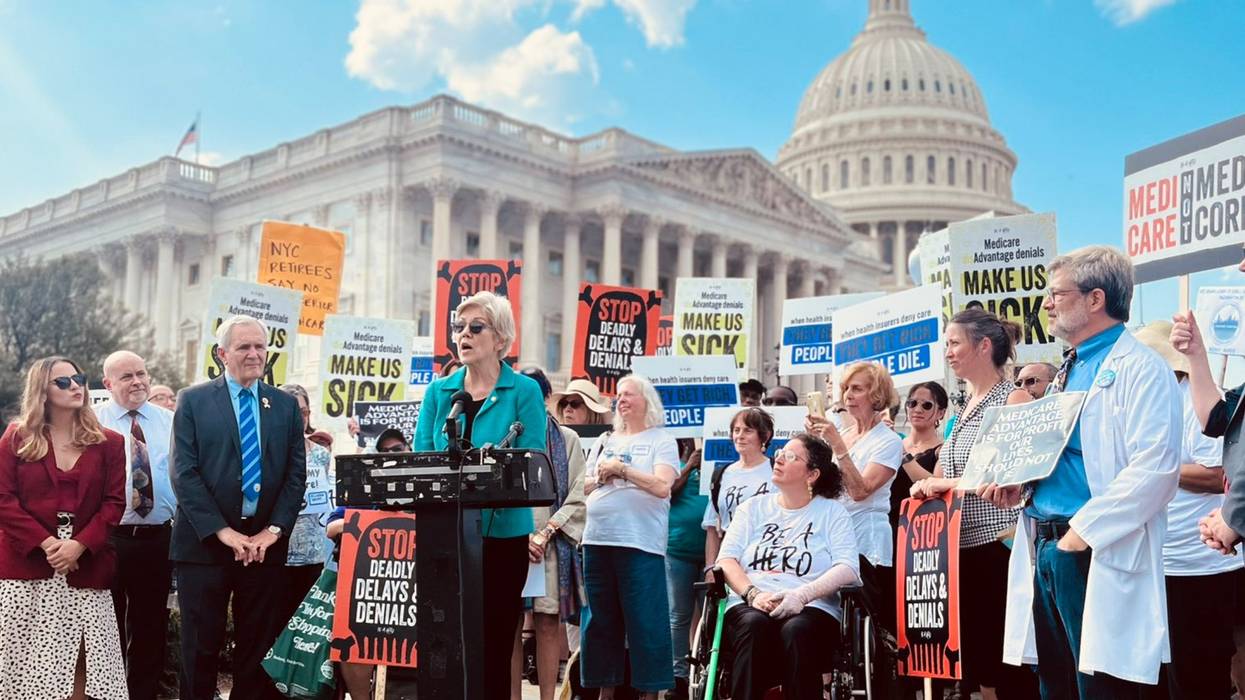
Democratic U.S. lawmakers on Tuesday joined senior citizens, people with disabilities, and healthcare campaigners at a Capitol Hill press conference to kick off a week of action demanding Congress move to stop abuses by so-called Medicare Advantage programs peddled by profiteering insurance companies and "reclaim Medicare."
"We are here to raise the alarm about Medicare Advantage. We are here to protect our Medicare," Sen. Elizabeth Warren (D-Mass.) said to robust applause.
"This year, for the very first time, more than half of all beneficiaries are enrolled in Medicare Advantage instead of traditional Medicare," she continued. "But Medicare Advantage substitutes private insurance companies for traditional Medicare coverage, and that private coverage is failing both Medicare beneficiaries and taxpayers."
"Not only do Medicare Advantage insurers rip off the government, they routinely deny care to patients who need it."
"It's all about the money," Warren said. "Private insurers are in Medicare Advantage to play games to extract more money from the government."
"Experts estimate that Medicare Advantage insurers will receive more than $75 billion in overpayments this year alone, and that's the real punch to the gut," she continued. "Not only do Medicare Advantage insurers rip off the government, they routinely deny care to patients who need it."
"Seniors and people with disabilities who rely on Medicare deserve better," the senator affirmed. "We can strengthen traditional Medicare, and by doing that, we can save money and we can use some of those savings to expand benefits, like hearing, dental, and vision... and add an out-of-pocket cap for all beneficiaries... and lower the eligibility age for Medicare."
"Medicare money should be spent to deliver services for people," Warren added, "not to boost profits for insurance."
Rep. Rosa DeLauro (D-Conn.) said that "it is time to call out so-called Medicare Advantage for what it is. It's private insurance that profits by denying coverage and using the name of Medicare to trick our seniors."
Universal healthcare activist Ady Barkan, who founded the advocacy group Be a Hero—an event sponsor—asserted that "healthcare is a human right, and Medicare should be a rock-solid guarantee to that fundamental right."
"It should be a beacon of mutual responsibility and solidarity in the wake of 50 years of neoliberal ideology—a pillar of love, standing tall in a world too often dominated by greed," he added. "Health insurance corporations are doing everything they can to destroy this vision. That's why Be A Hero is leading this week of action to fight back."
Like the lawmakers, Alex Lawson, executive director of the advocacy group Social Security Works, blasted "bad actors in Medicare Advantage" who he said "are delaying and denying the care seniors and people with disabilities need."
"Corporate insurance is designed to generate profits by delaying and denying care, harming and killing patients instead of providing care," Lawson added.
Among the patients who spoke at Tuesday's event were Jen Coffey, who described to the barriers she's faced while seeking lifesaving care for complex regional pain syndrome caused by breast cancer under a UnitedHealthcare Medicare Advantage plan.
"I'm tired of talking to insurance employees who get to override the care and medications my doctors order while having not one shred of medical knowledge to make that decision with," she said. "I want medical freedom where my care decisions are made by my providers and me, not a representative reading out of a manual or a computer algorithm."
Wendell Potter, who heads the Center for Health and Democracy, repeated the common refrain that "so-called Medicare Advantage is neither Medicare nor an advantage. It is simply another scheme by the insurance companies to line their pockets at the expense of consumers by denying and delaying care."
"The healthcare market is confusing for consumers and the misleading branding of calling private insurance Medicare only makes this worse," Potter stressed.
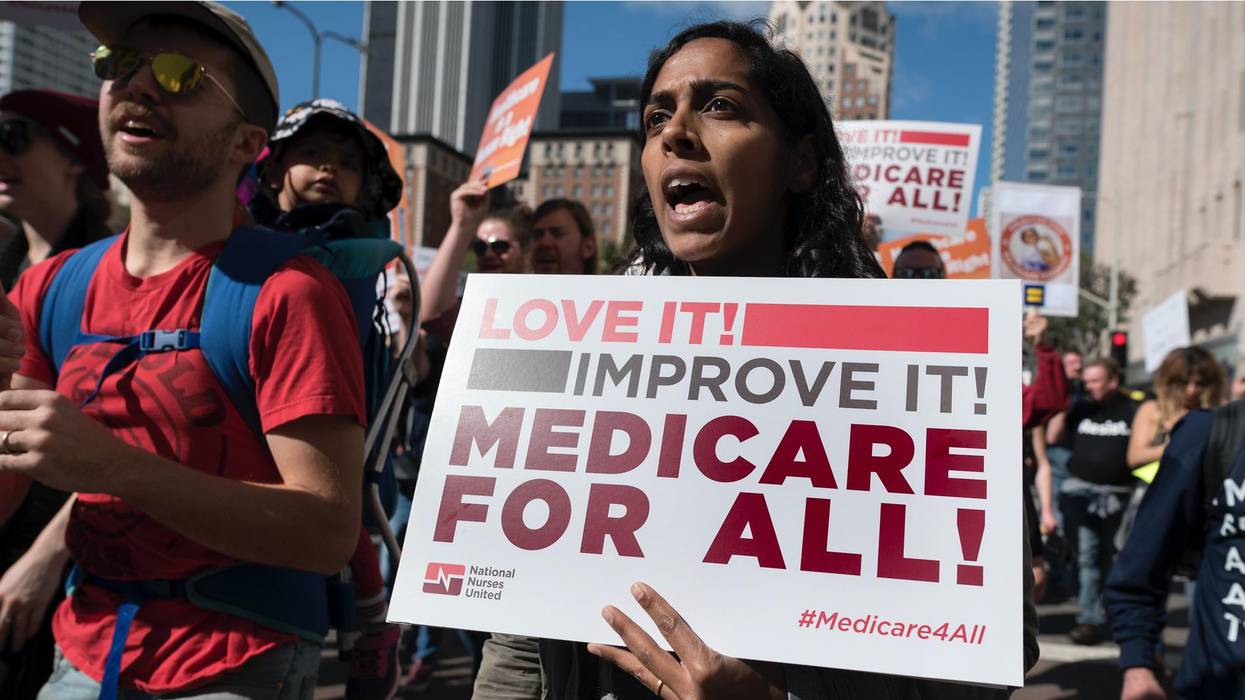
Zenei Triunfo-Cortez, a registered nurse and president of the National Nurses United union, implored Congress "to take immediate action to prevent delays and denials of care in Medicare Advantage" and "support improvements to traditional Medicare and the expansion of traditional Medicare to cover every person living in the United States."
Earlier this year, Democratic U.S. Reps Mark Pocan (Wis.), Jan Schakowsky (Ill.), and Ro Khanna (Calif.) reintroduced legislation that would prohibit insurance companies from using the word "Medicare" in their health plans.
Progressive lawmakers have also criticized President Joe Biden for delaying promised curbs on Medicare Advantage plans amid heavy insurance industry lobbying.
"Robots should not be making life-or-death decisions," said healthcare campaigner Ady Barkan.
Sen. Elizabeth Warren joined healthcare campaigner Ady Barkan and others on Monday in sounding alarm over a recent investigation showing that Medicare Advantage insurers are using unregulated artificial intelligence systems to determine when to end payments for patients' treatments, a practice that has prematurely terminated coverage for vulnerable seniors.
STAT reported earlier this month that while "health insurance companies have rejected medical claims for as long as they've been around," AI is "driving their denials to new heights in Medicare Advantage," a privately run program funded by the federal government.
"Behind the scenes, insurers are using unregulated predictive algorithms, under the guise of scientific rigor, to pinpoint the precise moment when they can plausibly cut off payment for an older patient's treatment," the outlet found. "The denials that follow are setting off heated disputes between doctors and insurers, often delaying treatment of seriously ill patients who are neither aware of the algorithms, nor able to question their calculations."
"Older people who spent their lives paying into Medicare, and are now facing amputation, fast-spreading cancers, and other devastating diagnoses, are left to either pay for their care themselves or get by without it," STAT continued. "If they disagree, they can file an appeal, and spend months trying to recover their costs, even if they don't recover from their illnesses."
Barkan, co-executive director of Be a Hero and an ALS patient who is acutely aware of the injustices at the heart of the United States' for-profit healthcare system, tweeted Monday that STAT's reporting is "outrageous and terrifying" and circulated a petition imploring the Biden administration to crack down on the Medicare Advantage industry's use of AI.
"This barbaric practice must end," the petition states. "We're calling on President Biden and the [Centers for Medicare and Medicaid Services] to stop this practice immediately."
Warren (D-Mass.), who blasted the huge profits of top Medicare Advantage insurers last week, echoed Barkan in a tweet of her own.
"Medicare Advantage insurers make patients look as sick as possible to overcharge taxpayers billions," Warren wrote, referring to a common industry practice known as upcoding.
"At the same time, they deny seniors and people with disabilities care—with the help of AI algorithms," the senator continued. "We must crack down on these abuses. No more #DeathByAI."
An analysis published last year in the Journal of Medical Internet Research found that "despite the plethora of claims for the benefits of AI in enhancing clinical outcomes, there is a paucity of robust evidence."
But that lack of evidence hasn't stopped hugely profitable private healthcare companies from increasingly using AI tools to "help make life-altering decisions with little independent oversight," STAT determined after reviewing secret corporate documents and hundreds of pages of federal records and court filings.
"Over the last decade, a new industry has formed around these plans to predict how many hours of therapy patients will need, which types of doctors they might see, and exactly when they will be able to leave a hospital or nursing home," STAT reported. "The predictions have become so integral to Medicare Advantage that insurers themselves have started acquiring the makers of the most widely used tools."
"Elevance, Cigna, and CVS Health, which owns insurance giant Aetna, have all purchased these capabilities in recent years," the outlet continued. "One of the biggest and most controversial companies behind these models, NaviHealth, is now owned by UnitedHealth Group."
"President Biden has the power to stop this. We're meeting with White House staff this week to discuss this outrage."
In 2020, a UnitedHealthcare algorithm determined that 89-year-old Dolores Millam—who broke her leg in a fall that year—would only need to stay in a nursing home for 15 days following surgery, STAT reported.
After the 15 days were up, Millam "received notice that payment for her care had been terminated." Millam's daughter, Holly Hennessy, told STAT that "she couldn't fathom UnitedHealthcare's conclusion that her mother unable to move or even go to the bathroom on her own—no longer met Medicare coverage requirements."
"Hennessy said she had no choice but to keep her mother in the nursing home, Evansville Manor, and hope the payment denial would get overturned," STAT reported. "By then, the bills were quickly piling up."
UnitedHealthcare rejected Millam and Hennessy's appeal, forcing them to pursue relief in federal court—an arduous process.
A federal judge finally ruled months later that UnitedHealthcare improperly denied Millam that she was entitled to full coverage.
The total bill for her nursing home stay was $40,000, according to STAT.
Barkan warned Monday that "insurance behemoths using AI to squeeze every cent out of us." Just seven healthcare companies control more than 70% of the Medicare Advantage market.
"President Biden has the power to stop this," Barkan wrote of Medicare Advantage plans' use of AI. "We're meeting with White House staff this week to discuss this outrage."
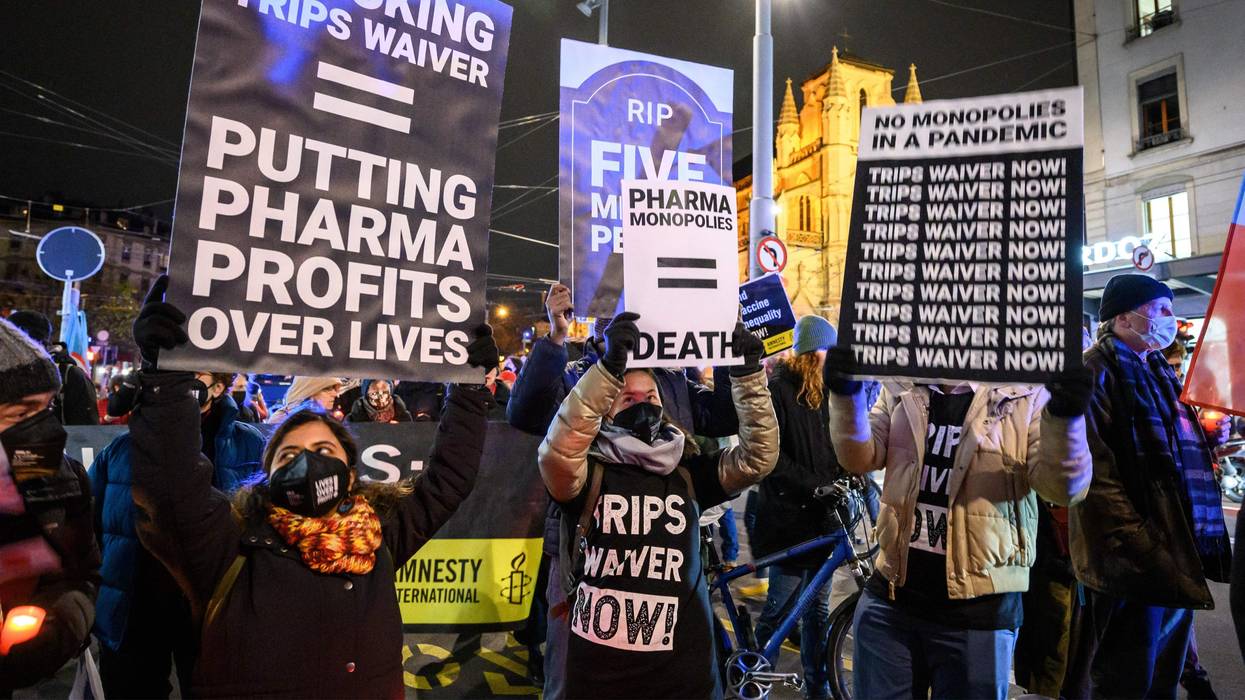
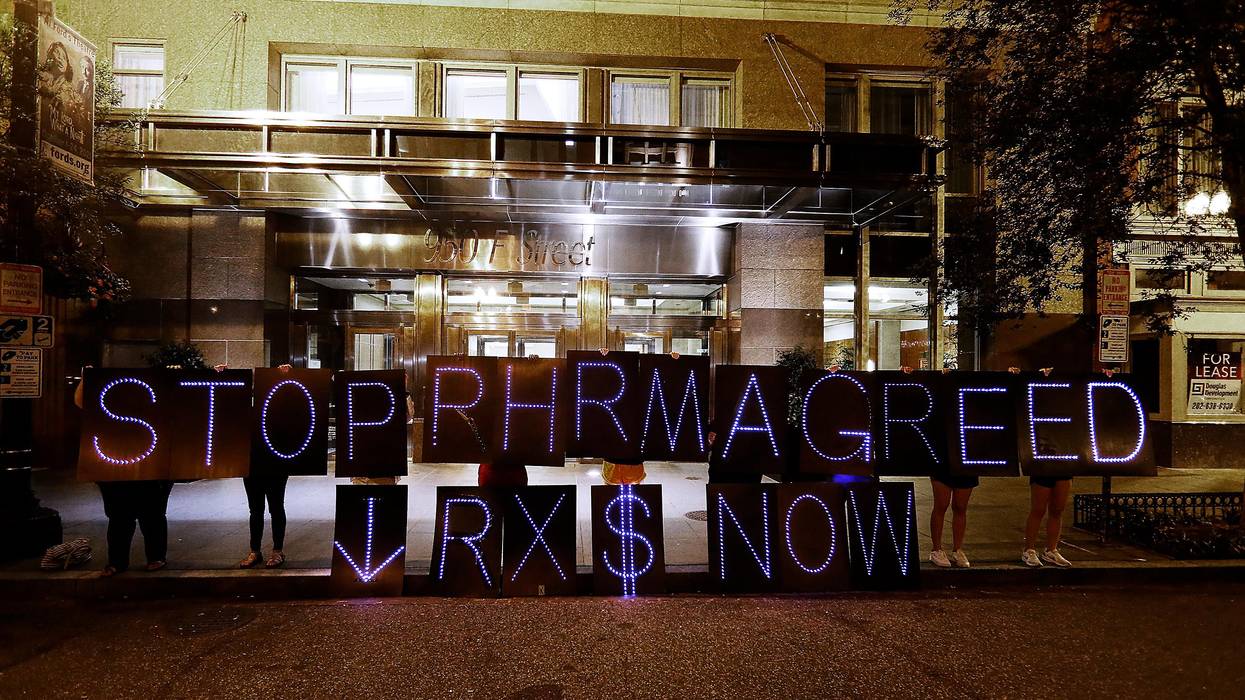
To mark the anniversary of the Biden administration's support for an Indian and South African proposal to temporarily waive patent protections on lifesaving Covid-19 vaccines and treatments, activists on Wednesday geared up for a candlelit vigil outside the White House to urge President Joe Biden to do more to deliver the waiver and press Congress to increase funding for global inoculation efforts.
Following sustained international activist pressure, U.S. Trade Representative Katherine Tai announced the Biden administration's support for a Trade-Related Aspects of Intellectual Property Rights (TRIPS) waiver at the World Trade Organization (WTO) last May 5.
"One year later, as President Biden and world leaders prepare for next week's Global Covid Summit, the WTO has failed to deliver this important waiver."
"Advocates across the globe are calling for the WTO to urgently deliver a waiver that can help ensure that all countries are equipped with the tools needed to save lives and bring the pandemic under control," the consumer advocacy group Public Citizen, which is co-hositng the vigil, said in a statement.
Biden's move last year--which was welcomed as a "transformative, hopeful event" at the time--marked a departure from most rich countries' opposition to the waiver, which is backed by more than 100 mostly Global South nations.
However, as Public Citizen noted this week, "one year later, as President Biden and world leaders prepare for next week's Global Covid Summit, the WTO has failed to deliver this important waiver, pharmaceutical companies continue to refuse to share vaccine technology, and funding for the global Covid response is drying up--all while the pandemic rages across the globe."
According to Public Citizen:
The candlelight vigil will include a projector and oversized screen which will play videos from Be A Hero's Ady Barkan and other videos from health providers and public health experts from South Africa, India, and Chile. They will call on President Biden to secure a true [TRIPS] waiver that covers Covid-19 vaccines, testing, and treatments and demand that Congress pass funding to vaccinate the world and save lives.
Next week, Biden will co-host the Second Global Covid-19 Summit, a virtual gathering of world leaders to "build on the themes and commitments" of last year's conference, at which the president urged nations to work toward vaccinating 70% of the world's population within a year.
As of April, nearly 58% of the world's population, or around 4.4. billion people, had been fully vaccinated against the coronavirus, according to the Johns Hopkins Coronavirus Resource Center. However, Global South nations had far lower inoculation rates. In 16 countries--13 of them in Sub-Saharan Africa--less than 10% of people were fully vaccinated, with rates as low as 1% in Haiti and less than one-tenth of 1% in Burundi.
Related Content

The vigil comes as campaigners are rejecting the WTO's corporate-friendly alternate proposal to India and South Africa's TRIPS waiver. The WTO proposal, which was leaked in March, "not only fails to remove intellectual property barriers standing in the way of global access to Covid vaccines, tests, and treatments, it actually imposes some new ones," according to Arthur Stamoulis, executive director of the Trade Justice Education Fund.
In a statement issued Tuesday, People's Vaccine Alliance co-chair Max Lawson said that "the text as it stands continues to place pharmaceutical corporate interests over the needs of global health."
"WTO member states must urgently deliver a genuine intellectual property waiver that will turn the tide on global vaccine, test, and treatment inequality and make a difference in controlling this virus," asserted Lawson. "If WTO negotiations cannot deliver that after two years of a deadly pandemic, then we must admit that the institution is not fit for purpose."
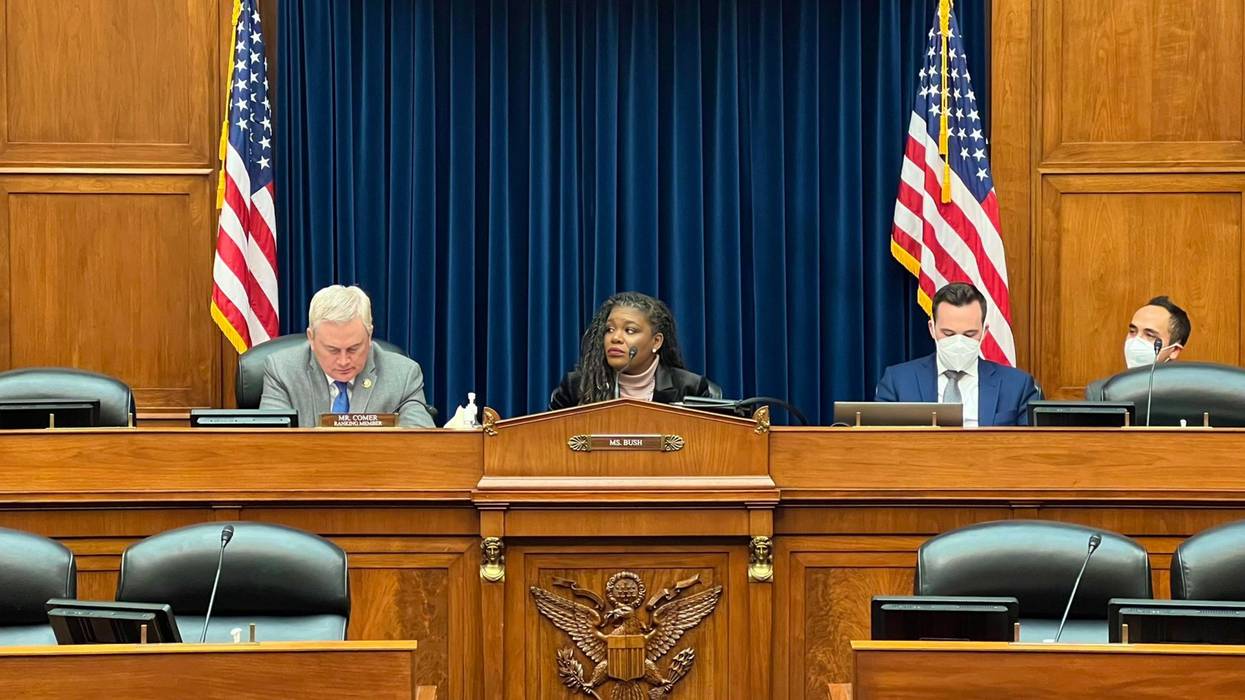
Progressive U.S. lawmakers, public health advocates, and universal healthcare campaigners testified Tuesday at the first congressional hearing on Medicare for All legislation since the start of the Covid-19 pandemic.
"We need Medicare for All now and we will not stop fighting until we have it."
Supporters of the Medicare for All Act of 2021--introduced last March by Congressional Progressive Caucus Chair Pramila Jayapal (D-Wash.) and Rep. Debbie Dingell (D-Mich.)--shared stories of personal healthcare hardship as well as harrowing accounts of avoidable suffering endured by others who lack access to health coverage.
Rep. Cori Bush (D-Mo.), who co-chaired the House Oversight Committee hearing, said that "Americans deserve a healthcare system that guarantees health and medical services to all. Congress must implement a system that prioritizes people over profits, humanity over greed, and compassion over exploitation."
Bush, a former Black Lives Matter organizer, continued:
The systemic racism perpetuating health inequities cannot be overstated--Black women are three to four times more likely to die during childbirth. We are more likely to have rates of asthma and cancer from generations living next to pollution centers. We are more likely to have foregone routine screenings and medical appointments for a real fear of having our pain dismissed.
"That's why my colleagues and I are coming through in force for our first Medicare for All hearing since the start of the Covid-19 pandemic," she added. "This policy will save lives, I want to make that clear. I hope this hearing will be one more step forward in our commitment to ensuring everyone in this country, and particularly our Black, Brown, and Indigenous communities, have the medical care they need to thrive."
Rep. Rashida Tlaib (D-Mich.) noted that the Covid-19 pandemic "exposed just how broken the healthcare system is in our country."
"Millions of people across the country know that passing Medicare for All is long overdue," she added. "In the richest country, our residents should not face financial ruin, continue to be sick, or even die, because they lack adequate coverage and care. We need Medicare for All now and we will not stop fighting until we have it. This hearing ignites the reality that we must act now."
Rep. Ro Khanna (D-Calif.) argued that "universal health coverage is not optional, it's urgent."
"Private health insurance is a crushing tax on working families and businesses," he added. "Medicare for All would save an estimated 68,000 lives a year while reducing U.S. healthcare spending by billions of dollars. It's good policy and the right thing to do."
Although not present at Tuesday's hearing, Sen. Bernie Sanders (I-Vt.)--who made universal healthcare a pillar of his 2016 and 2020 presidential campaigns--acknowledged in an email to supporters that "passing Medicare for All won't be easy."
"We are taking on the incredible wealth and power of the insurance companies, the drug companies, and an entire industry which puts profits before the well-being of the American people," the democratic socialist said. "We are taking on an army of well-paid lobbyists and the politicians who receive their campaign contributions from the healthcare industry."
"We can win this struggle if we engage people in the political process in an unprecedented way."
"But we can win this struggle if we engage people in the political process in an unprecedented way," Sanders asserted.
Public health providers and advocates joined lawmakers in making the case for Medicare for All at Tuesday's hearing.
Ady Barkan, an attorney and activist who suffers from the neurodegenerative illness ALS, or Lou Gehrig's disease, called the U.S. for-profit healthcare system a "moral abomination."
"Right now, around 30 million people in this country are uninsured, and even more get necessary care denied every year by their insurance companies," he told the hearing. "We're the richest nation in the history of the world, and yet Americans regularly go bankrupt from their medical bills and cut their pills in half because they can't afford the cost of prescription drugs."
"It reveals much about our country that we see spikes in cancer diagnoses in Americans age 65 when they become eligible for Medicare," Barkan continued. "Too many go far too long without care because they cannot afford it. By securing Medicare for All, we can save thousands of lives and free mourning families from the lingering pain of asking themselves, what if we had caught this sooner?"
Dr. Uche Blackstock, an emergency room physician and founder and CEO of Advancing Health Equity, called the hearing "a key step toward addressing racial health inequities in our country."
"This pandemic should have been a wake-up call to help us understand the urgency of identifying a path toward making universal healthcare a reality," she said. "I have had a front-row seat to the tragic loss of Black and Brown life from Covid-19 and racism."
Blackstock lamented that in the "separate and unequal" U.S. healthcare system, Covid-19 patients are "divided based on insurance and race."
"This is the definition of systemic racism," she asserted. "People who look like me are living this every day... Now is the time for us to protect our most vulnerable and underserved communities and identify a pathway to ensuring universal healthcare for all Americans."
"The choice is clear--it's our communities or Big Pharma."
"No one should have to choose between buying groceries and paying for medications they need to survive."
That's according to Maurice BP-Weeks, co-executive director of the Action Center on Race and the Economy, one of the groups behind the "Make Meds Affordable" campaign that launched Wednesday.
The campaign urges President Joe Biden and Health and Human Services Secretary Xavier Becerra to use their existing authority to lower prescription drug prices.
"Our communities are navigating their third year of a global pandemic, and many are choosing to forgo needed medications because of the cost," said Vinay Krishnan, national field organizer for the Center for Popular Democracy Action.
"All while pharmaceutical companies make billions in profits," Krishnan added. "President Biden must allow for the production of generics that would eliminate monopolies on medicines and deliver the healthcare people need. We're asking the president to Make Meds Affordable."
As Peter Maybarduk, Access to Medicines director at Public Citizen, put it: "No one should have to choose between buying groceries and paying for medications they need to survive."
Aija Nemer-Aanerud of People's Action emphasized how high the stakes are, explaining that "drug company monopolies have gotten so big and so powerful that they can now basically hold a gun to a patient's head and demand, 'Your money or your life.'"
Related Content

"Big Pharma corporations are killing Americans by charging outrageous prices for prescription drugs," declared Alex Lawson, executive director of Social Security Works. "We know why: These companies have spent a fortune on campaign spending and lobbying to get the U.S. government to act as their patent monopoly enforcers."
Democrats' House-approved Build Back Better Act--which contains some drug pricing reforms--has stalled in the Senate. Last week, Sen. Mike Crapo (R-Idaho), who takes money from the insurance and pharmaceutical industries, blocked a vote on bill that would slash medication prices. Meanwhile, Big Pharma has hiked the costs of hundreds of drugs this year.
"We've all heard the stories of people rationing medicine, going without lifesaving prescriptions, and going broke trying to pay for their prescriptions," said Be a Hero co-founder Ady Barkan.
"It's preposterous, it's inhumane, and it's wrong," he continued. "President Biden and Secretary Becerra have the opportunity to win our freedom back from Big Pharma's grip on our healthcare by lowering drug prices now. We cannot wait for Congress. Lives are at stake. President Biden and Secretary Becerra have the authority and must act now."
Sen. Elizabeth Warren (D-Mass.)--who joined campaign organizers for an online event hosted by act.tv--concurred that the Biden administration must take immediate action.
"One in four Americans struggle to afford their prescriptions and millions are rationing their medications because of costs while drug companies game the system to keep prices high and rake in profits," she said. "President Biden and Secretary Becerra can end this shameful price gouging by using their existing authorities to lower drug prices and crack down on the monopoly power of giant pharmaceutical companies--and they need to do it now."
PrEP4All co-founder Christian Antonio Urrutia pointed out that "Biden made a commitment to the American people that he would lower drug prices," and "he has yet to fulfill that promise."
Julia Santos, senior healthcare policy manager for Indivisible, said campaigners and people in need have a simple question for Biden and Becerra: "What are you waiting for?"
To pressure Congress to include $400 billion for home and community-based services in the $3.5 trillion social spending package now being drafted, Medicare for All advocate Ady Barkan and the ACLU are launching a new television and digital ad campaign in Arizona, home state of conservative Democratic Sen. Kyrsten Sinema.
"Across the United States, almost a million people are on waiting lists for home care and in danger of being ripped away from their families."
--Ady Barkan, Be A Hero
The ads highlight the importance of home and community-based services (HCBS), provided by underpaid caregivers, for people with disabilities and elderly Americans in need of support. While President Joe Biden has called for a $400 billion investment in HCBS, Sinema has expressed discontent about the price tag of the reconciliation bill, which is filibuster-proof but requires the support of every member of the Senate Democratic Caucus to pass. That's why the ads close by urging Arizonans to call Sinema and tell her, "Home care can't wait."
The Arizona ads, which mark the beginning of a multi-state effort to push reluctant lawmakers to expand access to HCBS and improve conditions for domestic healthcare workers, are set to air starting on Sunday.
As ACLU explained, "The first ad shares the story of Taryn Bailey, a 16-year old who is only able to live at home and be out and about in the community thanks to her lifelong occupational therapist Nina Castillo. The piece, narrated by Taryn's mother, will run on TV and appear on digital."
The second ad is a digital spot that will appear in English and Spanish. ACLU said that it "features Marcos Castillo, a quadriplegic who needs home care to assist him at home. When another caregiver is unavailable, Marcos must rely on his girlfriend to pick up the slack, which he notes is 'not fair to anyone's mental health or relationship.' Marcos adds that the problem is 'we have a wage disparity. We do not pay caregivers enough for the work they do.'"
Ady Barkan, the co-founder of Be A Hero whose ALS diagnosis has left him paralyzed and reliant on home care, is leading the fight for increased funding for HCBS.
"Although the need for home care is enormous, acquiring services is sadly out of reach for too many," Barkan said Friday in a statement. "Currently, 158,000 Arizonans depend on home and community-based services (HCBS). Approximately 67,000 home care workers reside in the state."
"Congress now has the chance to transform our safety net by investing in long-term care."
--Vikrum Aiyer, ACLU
Barkan said that "across the United States, almost a million people are on waiting lists for home care and in danger of being ripped away from their families and forced to live in institutions."
"Sadly, we know that during the pandemic, at least 134,000 nursing home residents died of Covid-19," he added. "We hope we can count on Sen. Sinema to be a hero and fully fund the initial $400 billion needed to make critical investments into HCBS. The lives of hundreds of thousands of disabled Americans, like Taryn's and Marcos', are on the line."
Recent polling found that 76% of U.S. voters, including 64% of Republicans, support Biden's proposal to spend $400 billion to improve HCBS. That's consistent with past surveys showing that a large majority of Americans want the federal government to invest in strengthening home care, which they prefer over nursing homes.
Vikrum Aiyer, deputy director at the ACLU's National Political Advocacy Department, said Friday that "for far too long, aging Americans and those with disabilities have been warehoused, abused, and deprived of the opportunity to live their fullest possible lives, but Congress now has the chance to transform our safety net by investing in long-term care."
Aiyer said that "expanding home and community-based services would transform the lives of millions of seniors and people with disabilities who rely on long-term support; expand labor protections for home care workers; and empower our most vulnerable to live freely and independently."
"Our investment in this campaign is vital to ensuring that the Senate recognizes a once-in-a-generation opportunity to urgently pass a budget reconciliation bill that invests in our communities and supports the people who need long-term care," Aiyer added. "We cannot wait any longer."
Healthcare activist Ady Barkan on Thursday urged President Joe Biden to make good on the promise he made last year to share Covid-19 vaccine technology with the world and not let intellectual property restrictions obstruct the global mass production of vital doses.
"If the U.S. discovers a vaccine first, will you commit to sharing that technology with other countries? And will you ensure there are no patents to stand in the way of other countries and companies mass-producing those life-saving vaccines?" Barkan, a well-known Medicare for All advocate, asked then-Democratic presidential nominee Biden during an interview last July.
"Absolutely, positively," Biden responded. "This is the only humane thing in the world to do."
And yet, as president, Biden has so far refused to support a motion at the World Trade Organization--led by India and South Africa and backed by more than 100 countries--to suspend coronavirus-related intellectual property rights for the duration of the pandemic so that tests, treatments, and vaccines can be mass-produced globally.
Unlike his predecessor in the White House, Biden has joined and contributed to COVAX, but global health campaigners have argued that the United Nations-backed program to boost vaccine distribution in impoverished countries doesn't address the fundamental injustice of Big Pharma's monopoly control over vaccine knowledge and technology, which is a barrier to increased production.
According to public health experts, approving the vaccine patent waiver proposal at the WTO and investing in ramped-up vaccine manufacturing around the world are necessary to beat Covid-19--which they stress is a global problem, not a national one.
"Mr. President, you and I are both safe from this deadly pandemic because we could get the vaccine," Barkan said in a video shared Thursday on social media. "But billions of families around the world aren't as lucky as you and me."
India, for example, is currently being ravaged by Covid-19, where less than 2% of its population has been fully vaccinated. Of the just over 1 billion doses that have been administered worldwide, only 0.2% have gone to people in low-income countries, compared with 83% that have been given to people in high- and upper-middle-income nations. In the absence of a vaccine patent waiver and expanded production, much of the Global South won't be inoculated until 2023 at the earliest.
The staggering gap between the number of doses administered in rich and poor countries--a manifestation of inequality that critics have dubbed "vaccine apartheid"--threatens to prolong the pandemic everywhere, resulting in the preventable suffering and deaths of potentially millions of people as well as trillions of dollars in avoidable economic losses.
That's why a majority of the world's countries; hundreds of civil society organizations in the U.S. and abroad; World Health Organization Director-General Tedros Adhanom Ghebreyesus; multiple Nobel prize-winning economists; scores of former heads of government; and dozens of Democratic lawmakers in the House and Senate are demanding a "people's vaccine" as opposed to a profit vaccine.
As Barkan said, inoculating the entire world "is the only way that we can prevent the development of vaccine-resistant coronavirus variants."
"When I asked you last year if you would change the global rules for vaccines, you did not hesitate, equivocate, or mince your words," Barkan noted.
Last July, Biden said that "the answer is yes. Yes, yes, yes."
"And it's not only a good thing to do, it's overwhelmingly in our interest to do it as well," Biden added. This is well-understood throughout the U.S. where, according to recent polls, anywhere from 60% to 70% of the public wants the president to end Washington's opposition to the vaccine patent waiver and force Big Pharma to share its formulas and blueprints with manufacturers around the world.
Alluding to the upcoming meeting of the WTO, where the body's 164 member nations will decide the fate of the vaccine patent waiver by a consensus vote, Barkan on Thursday told the president that "May 5 will be your moment, America's moment, to steer us down a more just and humane path."
"Governments from around the globe will gather," said Barkan. "They will ask America to waive the rules that are blocking them from making enough vaccines to protect their people."
As Barkan said, "American innovation has delivered health and safety to the people of this country."
"But," he noted, "billions of people have been excluded. Their dreams are no less real than ours. Their love is no less strong. Their lives are no less worthy."
"Because they live somewhere else, because they have less money, because the international laws are unfair, and because the pharmaceutical companies are so greedy, millions more people may die of this disease," he added. "You know that this is wrong."
"In a few days, at the WTO meeting, all eyes will be on America," Barkan said. "We will decide the answer to the world's plea."
"What kind of leadership will we display?" he asked. "The answer, Mr. President, is up to you."
As California's latest attempt to enact single-payer universal healthcare was placed on hold this week, progressive campaigners vowed to carry on the fight, while pressing embattled Gov. Gavin Newsom to fulfill his campaign promise to implement a Medicare for All-style system in the nation's most populous state.
"It's not a coincidence that Bernie Sanders won the California Democratic primary with this as a leading issue, and those voters are crucial to the governor's prospects in the recall."
--Michael Lighty,
Healthy California Now
On Wednesday evening, state Assembly Member Ash Kalra (D-27) announced he would withdraw Assembly Bill 1400--the California Guaranteed Healthcare for All Act (CalCare)--from consideration this year so that lawmakers could work out how to fund the ambitious measure before possibly reviving it next year.
A.B. 1400--introduced in February by Kalra and Assembly Members Alex Lee (D-25) and Miguel Santiago (D-53), and sponsored by the California Nurses Association (CNA)--would establish a single-payer healthcare system for all Californians, regardless of income, immigration, or any other status, while expanding healthcare coverage to include nearly three million uninsured Golden State residents. It would also offer generous benefits including dental visits, prescription drug coverage, and long-term care.
Upon its introduction, Kalra said the bill "represents the belief that healthcare is truly a human right" and "will set us on a real path towards a single-payer system and affirms the policy that would save lives, decrease suffering, and improve public health in California."
Around 70% of Californians--and a similar percentage of people across the United States--support Medicare for All. A.B. 1400 enjoys the backing of grassroots progressive groups including Democratic Socialists of America (DSA), RootsAction, the new Daybreak PAC, as well as influential figures including single-payer campaigner Ady Barkan, National Nurses United executive director Bonnie Castillo, and actor and activist Rosario Dawson.
Undaunted by the shelving of A.B. 1400, the single-payer advocacy group Healthy California Now called Kalra's move "a golden opportunity for single-payer advocates to unite behind a faster path to Medicare for All, led by Gov. Gavin Newsom."
While seemingly a setback, Healthy California Now organizer Michael Lighty said the tabling of A.B. 1400 could actually accelerate the push for California single-payer healthcare.
"In order to do to a Medicare for All-type system in any state requires federal and legislative approval," Lighty told Common Dreams. "The governor is the linchpin. He can initiate discussions with the federal government that will lead to adoption of single-payer plan, and he can motivate the legislature to act. The shelving of A.B. 1400 is actually the fastest way to jump-start this process."
Newsom--a Democrat who oversaw the implementation of the city's Healthy San Francisco program for uninsured residents when he was the city's mayor--campaigned for governor claiming a "firm and absolute commitment" to implementing universal healthcare in California.
"We will absolutely get it done," he pledged in September 2017, just months after moderate Democrats including Assembly Speaker Anthony Rendon (D-63) joined with their corporate donors and GOP colleagues to scupper a previous single-payer bill, even as they paid lip service to universal care.
With the darkening cloud of a recall campaign looming ominously over Newsom's every move, the governor is treading cautiously. Progressives--who have thrown their support behind Newsom in the recall fight--say he must do more to deserve their backing.
"Our support isn't free," warned Lee, the A.B. 1400 co-author, in a Politico interview earlier this month. "We should hold accountable our elected officials who say they support healthcare for all."
Lee added that Newsom has a "duty to energize his progressive base."
Lighty told Common Dreams that "the recall effort provides a political rationale for the governor to lead on single-payer because the progressive voters he needs to win the recall are motivated by this issue."
"It's not a coincidence that Bernie Sanders won the California Democratic primary with this as a leading issue, and those voters are crucial to the governor's prospects in the recall," he added, referring to the independent U.S. senator from Vermont's 2020 presidential run.
Progressive campaigners vowed to keep pushing for single-payer and to keep holding Newsom's feet to the fire. On Monday, activists led by the DSA will head to Sacramento, where they will stage a die-in at the state Capitol.
The Sacramento die-in will follow car rallies across the Golden State last week, where demonstrators called on state lawmakers to support CalCare.
Speaking at one of the rallies, UNITE HERE Local 11 co-president Ada Briceno said that the coronavirus pandemic "demonstrates the need for California law, more than ever, to provide healthcare for millions who lost health coverage [through] job losses in the state."
LA Progressive reports Briceno was joined by CNA activist Stephanie Roberson, who said that "how organized we are as a movement throughout the state will determine our success."
"We nurses see patients unable to afford lifesaving care and private companies refuse to pay," said Roberson. "We need to prioritize nurses and patients over profits."
"The fastest, most direct path to Medicare for All has always gone through the governor," Healthy California Now president Cindy Young said on Friday. "Now is the time for advocates to unite and tell Gov. Newsom to lead the way on Medicare for All."