SUBSCRIBE TO OUR FREE NEWSLETTER
Daily news & progressive opinion—funded by the people, not the corporations—delivered straight to your inbox.
5
#000000
#FFFFFF
To donate by check, phone, or other method, see our More Ways to Give page.
Daily news & progressive opinion—funded by the people, not the corporations—delivered straight to your inbox.
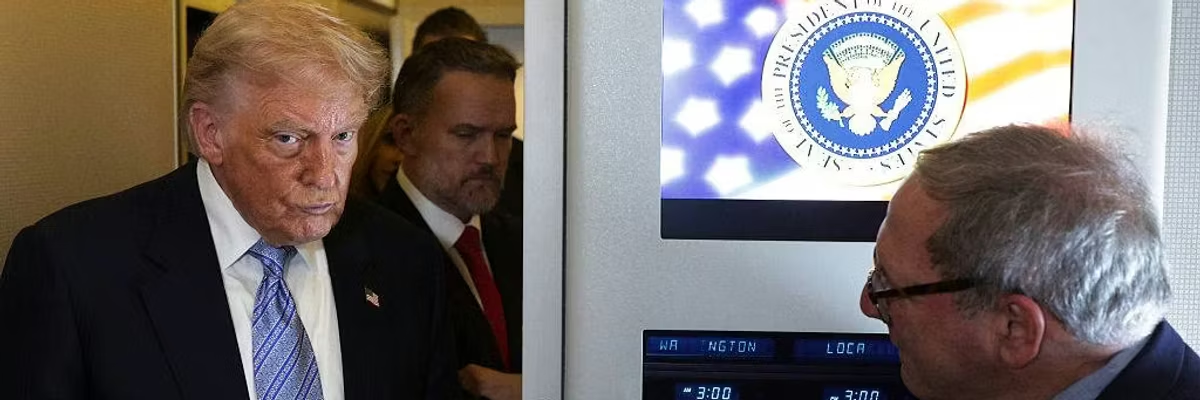
President Donald Trump briefs reporters after he concluded his trip to Beijing aboard Air Force One on May 15, 2026 as he returns to the United States.
"No American should be comfortable with the president of the United States accusing a reporter of treason for critical reporting."
President Donald Trump on Friday sparked alarm among press freedom advocates when he accused New York Times reported David Sanger of committing "treason" for portraying his illegal war with Iran in a negative light.
Speaking with journalists aboard Air Force One on his flight home from China, Trump was asked by Sanger about his failure to accomplish political changes in Iran that he swore to achieve when he launched the war without congressional authorization in late February.
"I had a total military victory," Trump replied. "But the fake news, guys like you, write incorrectly. You're a fake guy, and guys like you write incorrectly. We had a total military victory. We knocked out their entire navy, we knocked out their entire air force, we knocked out all their anti-aircraft weaponry."
Trump to NYT's David Sanger: "I had a total military victory. But the fake news, guys like you, write incorrectly. You're a fake guy. We had a total military victory. I actually think it's sort of treasonous what you write. You should be ashamed of yourself. I actually think it's… pic.twitter.com/QK421YHKtq
— Aaron Rupar (@atrupar) May 15, 2026
Despite this purported "total victory," however, Iran still controls the Strait of Hormuz and has prevented commercial vessels from traveling through it for the last two months.
After attacking the Times' reporting about the Iran War, the president pivoted to impugning Sanger's patriotism.
"I actually think it's sort of treasonous what you write," the president said. "You and The New York Times, and CNN, I would say, are the worst... You should be ashamed of yourself. I actually think it's treason."
The Times on Tuesday reported that the Trump administration’s “public portrayal of a shattered Iranian military is sharply at odds with what US intelligence agencies are telling policymakers behind closed doors, according to classified assessments from early this month that show Iran has regained access to most of its missile sites, launchers, and underground facilities.”
Hours after the president's tirade against Sanger—which echoed Trump's previous remarks about media coverage of the war—New York Times spokesperson Charlie Stadtlander released a statement defending its reporting on the Iran war.
"Reporting isn't treason," Stadtlander said. "It's foundational to a free press and the work that America's founders wrote the First Amendment to protect. That includes making clear when the claims of government officials and the reality of their actions don't line up... We will continue this important, constitutionally protected work."
Trump's treason accusation also drew a rebuke from Will Creeley, legal director of the Foundation for Individual Rights and Expression, who said that "no American should be comfortable with the president of the United States accusing a reporter of treason for critical reporting."
New York Times columnist Nicholas Kristof argued that Trump's attack on Sanger was really a sign of weakness given the failures of his military campaign against Iran.
"President Trump unloading on David Sander reflects a combination of anxiety, insecurity, and desperation about the Iran War," Kristof wrote. "David is the dean of national security reporters: experienced, meticulous, and fair. Blaming the messenger underscores that the reality itself is pretty bad."
Kristof's sentiment was echoed by former ABC News journalist Terry Moran, who wrote that he can't "understand how anyone can see Trump here and not see weakness."
Former Republican Illinois Congressman Joe Walsh said Trump's interaction with Sanger exposed him as "the biggest fucking crybaby in all of human history."
Dear Common Dreams reader, It’s been nearly 30 years since I co-founded Common Dreams with my late wife, Lina Newhouser. We had the radical notion that journalism should serve the public good, not corporate profits. It was clear to us from the outset what it would take to build such a project. No paid advertisements. No corporate sponsors. No millionaire publisher telling us what to think or do. Many people said we wouldn't last a year, but we proved those doubters wrong. Together with a tremendous team of journalists and dedicated staff, we built an independent media outlet free from the constraints of profits and corporate control. Our mission has always been simple: To inform. To inspire. To ignite change for the common good. Building Common Dreams was not easy. Our survival was never guaranteed. When you take on the most powerful forces—Wall Street greed, fossil fuel industry destruction, Big Tech lobbyists, and uber-rich oligarchs who have spent billions upon billions rigging the economy and democracy in their favor—the only bulwark you have is supporters who believe in your work. But here’s the urgent message from me today. It's never been this bad out there. And it's never been this hard to keep us going. At the very moment Common Dreams is most needed, the threats we face are intensifying. We need your support now more than ever. We don't accept corporate advertising and never will. We don't have a paywall because we don't think people should be blocked from critical news based on their ability to pay. Everything we do is funded by the donations of readers like you. When everyone does the little they can afford, we are strong. But if that support retreats or dries up, so do we. Will you donate now to make sure Common Dreams not only survives but thrives? —Craig Brown, Co-founder |
President Donald Trump on Friday sparked alarm among press freedom advocates when he accused New York Times reported David Sanger of committing "treason" for portraying his illegal war with Iran in a negative light.
Speaking with journalists aboard Air Force One on his flight home from China, Trump was asked by Sanger about his failure to accomplish political changes in Iran that he swore to achieve when he launched the war without congressional authorization in late February.
"I had a total military victory," Trump replied. "But the fake news, guys like you, write incorrectly. You're a fake guy, and guys like you write incorrectly. We had a total military victory. We knocked out their entire navy, we knocked out their entire air force, we knocked out all their anti-aircraft weaponry."
Trump to NYT's David Sanger: "I had a total military victory. But the fake news, guys like you, write incorrectly. You're a fake guy. We had a total military victory. I actually think it's sort of treasonous what you write. You should be ashamed of yourself. I actually think it's… pic.twitter.com/QK421YHKtq
— Aaron Rupar (@atrupar) May 15, 2026
Despite this purported "total victory," however, Iran still controls the Strait of Hormuz and has prevented commercial vessels from traveling through it for the last two months.
After attacking the Times' reporting about the Iran War, the president pivoted to impugning Sanger's patriotism.
"I actually think it's sort of treasonous what you write," the president said. "You and The New York Times, and CNN, I would say, are the worst... You should be ashamed of yourself. I actually think it's treason."
The Times on Tuesday reported that the Trump administration’s “public portrayal of a shattered Iranian military is sharply at odds with what US intelligence agencies are telling policymakers behind closed doors, according to classified assessments from early this month that show Iran has regained access to most of its missile sites, launchers, and underground facilities.”
Hours after the president's tirade against Sanger—which echoed Trump's previous remarks about media coverage of the war—New York Times spokesperson Charlie Stadtlander released a statement defending its reporting on the Iran war.
"Reporting isn't treason," Stadtlander said. "It's foundational to a free press and the work that America's founders wrote the First Amendment to protect. That includes making clear when the claims of government officials and the reality of their actions don't line up... We will continue this important, constitutionally protected work."
Trump's treason accusation also drew a rebuke from Will Creeley, legal director of the Foundation for Individual Rights and Expression, who said that "no American should be comfortable with the president of the United States accusing a reporter of treason for critical reporting."
New York Times columnist Nicholas Kristof argued that Trump's attack on Sanger was really a sign of weakness given the failures of his military campaign against Iran.
"President Trump unloading on David Sander reflects a combination of anxiety, insecurity, and desperation about the Iran War," Kristof wrote. "David is the dean of national security reporters: experienced, meticulous, and fair. Blaming the messenger underscores that the reality itself is pretty bad."
Kristof's sentiment was echoed by former ABC News journalist Terry Moran, who wrote that he can't "understand how anyone can see Trump here and not see weakness."
Former Republican Illinois Congressman Joe Walsh said Trump's interaction with Sanger exposed him as "the biggest fucking crybaby in all of human history."
President Donald Trump on Friday sparked alarm among press freedom advocates when he accused New York Times reported David Sanger of committing "treason" for portraying his illegal war with Iran in a negative light.
Speaking with journalists aboard Air Force One on his flight home from China, Trump was asked by Sanger about his failure to accomplish political changes in Iran that he swore to achieve when he launched the war without congressional authorization in late February.
"I had a total military victory," Trump replied. "But the fake news, guys like you, write incorrectly. You're a fake guy, and guys like you write incorrectly. We had a total military victory. We knocked out their entire navy, we knocked out their entire air force, we knocked out all their anti-aircraft weaponry."
Trump to NYT's David Sanger: "I had a total military victory. But the fake news, guys like you, write incorrectly. You're a fake guy. We had a total military victory. I actually think it's sort of treasonous what you write. You should be ashamed of yourself. I actually think it's… pic.twitter.com/QK421YHKtq
— Aaron Rupar (@atrupar) May 15, 2026
Despite this purported "total victory," however, Iran still controls the Strait of Hormuz and has prevented commercial vessels from traveling through it for the last two months.
After attacking the Times' reporting about the Iran War, the president pivoted to impugning Sanger's patriotism.
"I actually think it's sort of treasonous what you write," the president said. "You and The New York Times, and CNN, I would say, are the worst... You should be ashamed of yourself. I actually think it's treason."
The Times on Tuesday reported that the Trump administration’s “public portrayal of a shattered Iranian military is sharply at odds with what US intelligence agencies are telling policymakers behind closed doors, according to classified assessments from early this month that show Iran has regained access to most of its missile sites, launchers, and underground facilities.”
Hours after the president's tirade against Sanger—which echoed Trump's previous remarks about media coverage of the war—New York Times spokesperson Charlie Stadtlander released a statement defending its reporting on the Iran war.
"Reporting isn't treason," Stadtlander said. "It's foundational to a free press and the work that America's founders wrote the First Amendment to protect. That includes making clear when the claims of government officials and the reality of their actions don't line up... We will continue this important, constitutionally protected work."
Trump's treason accusation also drew a rebuke from Will Creeley, legal director of the Foundation for Individual Rights and Expression, who said that "no American should be comfortable with the president of the United States accusing a reporter of treason for critical reporting."
New York Times columnist Nicholas Kristof argued that Trump's attack on Sanger was really a sign of weakness given the failures of his military campaign against Iran.
"President Trump unloading on David Sander reflects a combination of anxiety, insecurity, and desperation about the Iran War," Kristof wrote. "David is the dean of national security reporters: experienced, meticulous, and fair. Blaming the messenger underscores that the reality itself is pretty bad."
Kristof's sentiment was echoed by former ABC News journalist Terry Moran, who wrote that he can't "understand how anyone can see Trump here and not see weakness."
Former Republican Illinois Congressman Joe Walsh said Trump's interaction with Sanger exposed him as "the biggest fucking crybaby in all of human history."