5
#000000
#FFFFFF
To donate by check, phone, or other method, see our More Ways to Give page.
Ronald Reagan famously said that the nine most terrifying words in the English language are: I’m from the government, and I’m here to help.
That was a lie, and it was a deadly one.
Like so much of what came out of Reagan’s mouth, this clever quip provided a folksy façade for a brutal attack on the most vulnerable Americans. Before Reagan’s election in 1980, homeless shelters and evictions were rare. Then Reagan and a compliant Congress laid waste to our nation’s safety net, including cutting investment in affordable housing by nearly 80%.
As many of our clinic clients can attest, well-trained, dedicated experts who answer to the people instead of some wealthy donors are the gold standard for housing inspection and code enforcement.
The U.S. commitment to affordable housing has never fully recovered. Urban policy scholar Peter Dreier lays the blame where it belongs: “Every park bench in America—everywhere a homeless person sleeps—should have Ronald Reagan’s name on it.”
This vicious Reagan legacy is important to remember as President Donald Trump and congressional Republicans trot out the same anti-government talking points to support a legislative agenda that would gut healthcare and food programs.
The government-harms shtick is just as false today as in Reagan’s time. Study after study shows that government assistance with food, healthcare, and housing makes tangible, positive impacts on people’s lives, from newborns to the elderly. And government programs deliver these essential services more efficiently and inexpensively than private charity programs, not to mention at a scale that even the most ambitious billionaire philanthropy can only dream of.
Our law school clinic’s work representing people facing eviction and living in unsafe and unhealthy rental housing provides us with a very specific example of government working well.
In our community as in many others, a local government agency is tasked with ensuring the safety of housing, including rental housing. Here, the agency is called the Marion County Public Health Department. (Indianapolis is located within Marion County.)
Our clients can simply call the agency’s phone number for housing inspections and describe the situation in their rented home, a situation that far too often includes mold, infestation with bugs or rodents, no heat during the winter, gas leaks, and more. A trained inspector will then come out to the home within days and issue a formal report and notice to the landlord soon after. This article includes a sample of those reports. As you can see, it includes the threat of substantial fines.
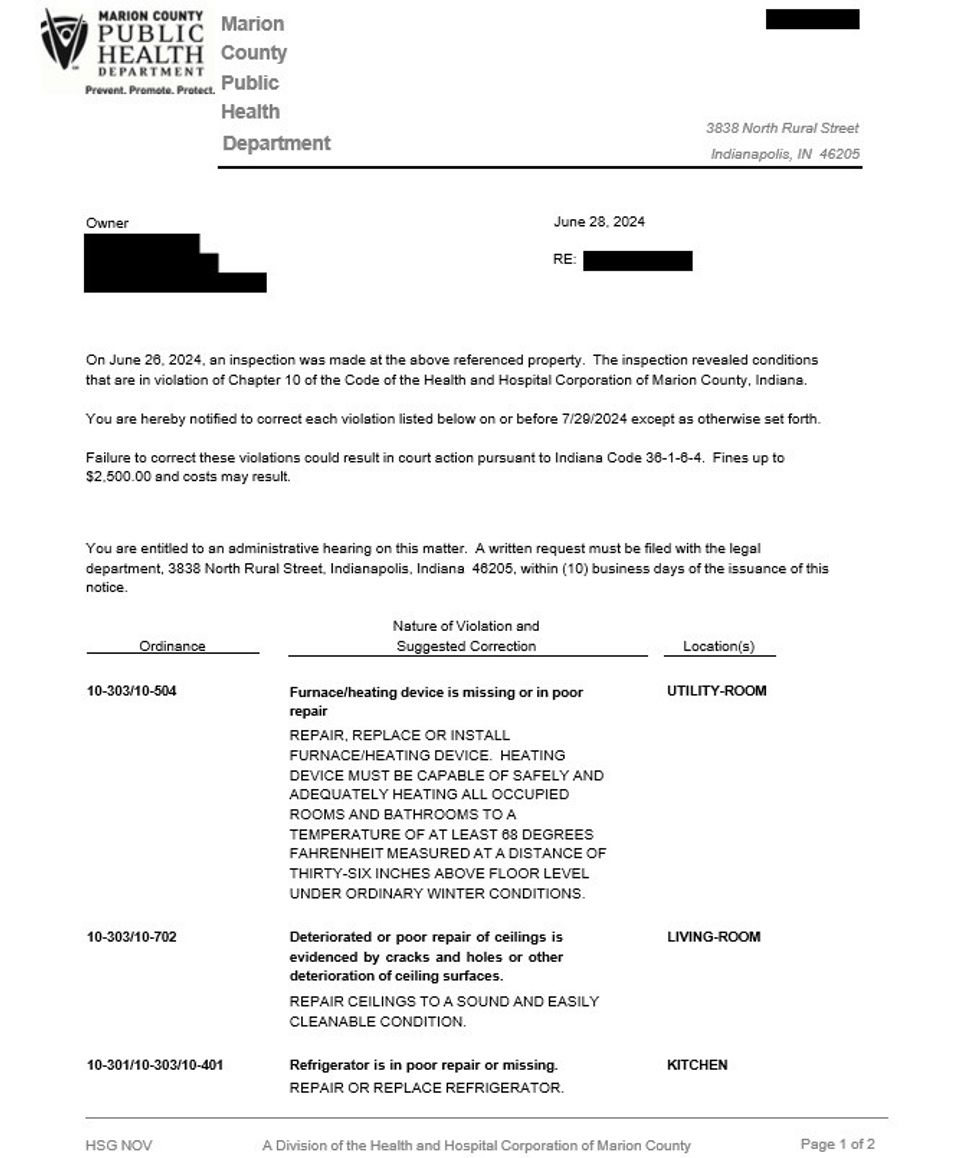
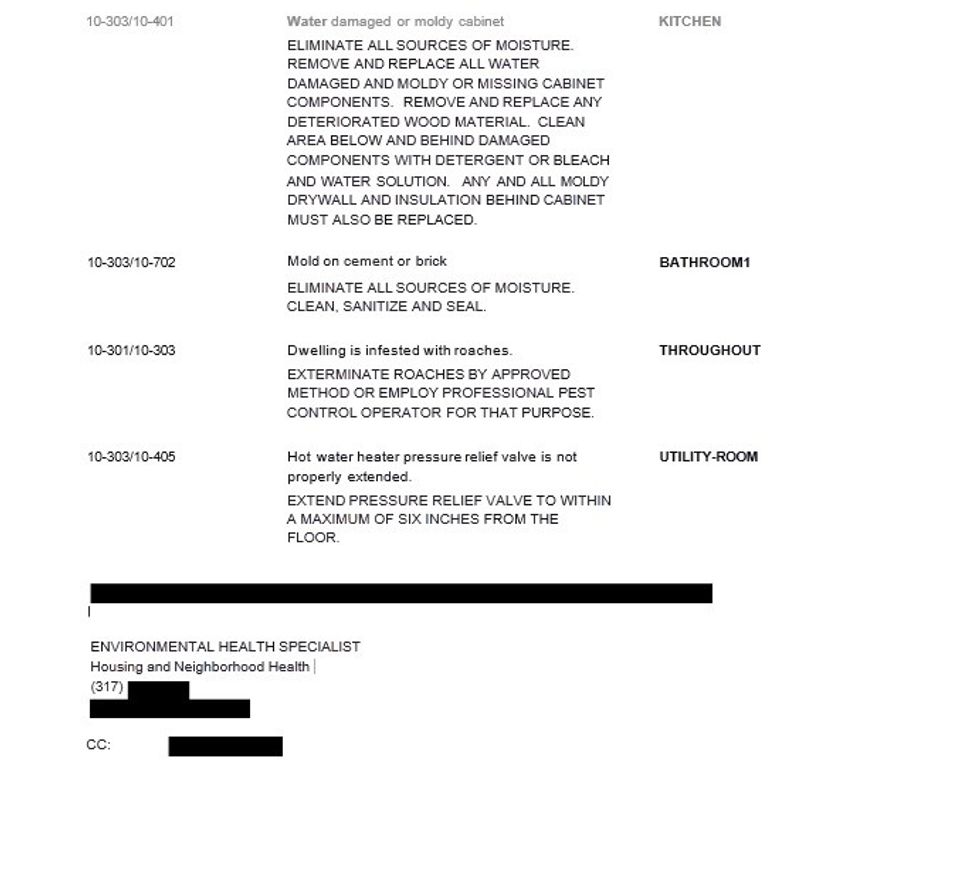
The inspectors’ reports often spur landlords to fix the problems. When they don’t, the agency can and does file a lawsuit against the landlord. Tenants can also file a claim of their own asking for rent offset or other damages due to the unsafe, unhealthy conditions.
Low-income tenants face a power imbalance: Landlords are far more wealthy than tenants, have access to attorneys that tenants rarely do, and of course control continued access to the very roof over tenants’ heads. But when this government agency intervenes, it flips the script, putting pressure on landlords to bring the housing up to code.
The agency is not perfect, of course. Our clinic and other advocates have joined with City County councilors to advocate for the agency to reverse their policy of dropping inspections and enforcement after tenants move out. But one of the defining characteristics of government programs is a benefit that no nonprofit agency can ever match: They are accountable to the community. Ultimately, that accountability is exercised at the ballot box for the agency leaders or those who appoint them.
So the advocacy here has borne fruit and the agency now continues to do its important scrutiny even after tenants move out.
The current revival of anti-government sentiment has impacted this local public health agency, with the Republican-controlled state legislature cutting its funding by more than 70%. More of the playbook from the president who asked in 1982, “Wouldn’t it be better for the human spirit and for the soul of this nation to encourage people to accept more responsibility to care for one another, rather than leaving those tasks to paid bureaucrats?”
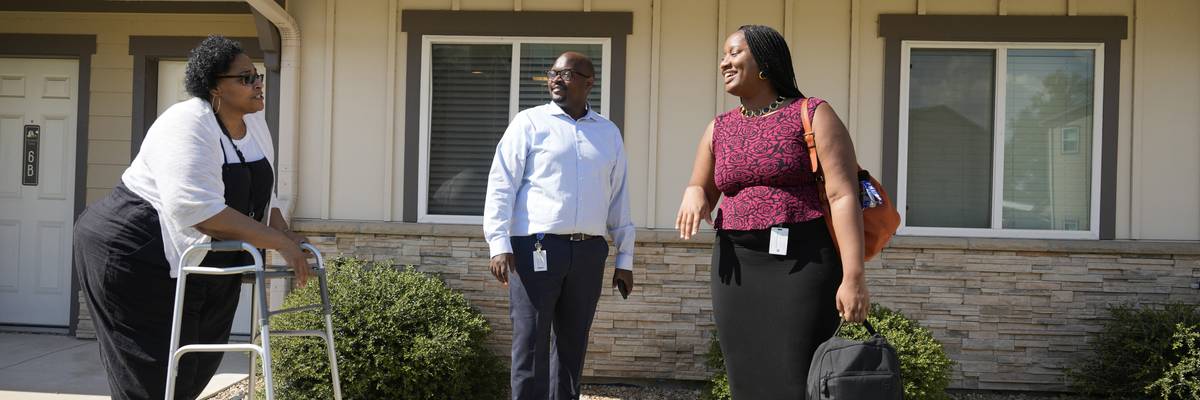
Nope. As many of our clinic clients can attest, well-trained, dedicated experts who answer to the people instead of some wealthy donors are the gold standard for housing inspection and code enforcement. Those inspectors are from the government, and they are here to help.
Ronald Reagan famously said that the nine most terrifying words in the English language are: I’m from the government, and I’m here to help.
That was a lie, and it was a deadly one.
Like so much of what came out of Reagan’s mouth, this clever quip provided a folksy façade for a brutal attack on the most vulnerable Americans. Before Reagan’s election in 1980, homeless shelters and evictions were rare. Then Reagan and a compliant Congress laid waste to our nation’s safety net, including cutting investment in affordable housing by nearly 80%.
As many of our clinic clients can attest, well-trained, dedicated experts who answer to the people instead of some wealthy donors are the gold standard for housing inspection and code enforcement.
The U.S. commitment to affordable housing has never fully recovered. Urban policy scholar Peter Dreier lays the blame where it belongs: “Every park bench in America—everywhere a homeless person sleeps—should have Ronald Reagan’s name on it.”
This vicious Reagan legacy is important to remember as President Donald Trump and congressional Republicans trot out the same anti-government talking points to support a legislative agenda that would gut healthcare and food programs.
The government-harms shtick is just as false today as in Reagan’s time. Study after study shows that government assistance with food, healthcare, and housing makes tangible, positive impacts on people’s lives, from newborns to the elderly. And government programs deliver these essential services more efficiently and inexpensively than private charity programs, not to mention at a scale that even the most ambitious billionaire philanthropy can only dream of.
Our law school clinic’s work representing people facing eviction and living in unsafe and unhealthy rental housing provides us with a very specific example of government working well.
In our community as in many others, a local government agency is tasked with ensuring the safety of housing, including rental housing. Here, the agency is called the Marion County Public Health Department. (Indianapolis is located within Marion County.)
Our clients can simply call the agency’s phone number for housing inspections and describe the situation in their rented home, a situation that far too often includes mold, infestation with bugs or rodents, no heat during the winter, gas leaks, and more. A trained inspector will then come out to the home within days and issue a formal report and notice to the landlord soon after. This article includes a sample of those reports. As you can see, it includes the threat of substantial fines.
The inspectors’ reports often spur landlords to fix the problems. When they don’t, the agency can and does file a lawsuit against the landlord. Tenants can also file a claim of their own asking for rent offset or other damages due to the unsafe, unhealthy conditions.
Low-income tenants face a power imbalance: Landlords are far more wealthy than tenants, have access to attorneys that tenants rarely do, and of course control continued access to the very roof over tenants’ heads. But when this government agency intervenes, it flips the script, putting pressure on landlords to bring the housing up to code.
The agency is not perfect, of course. Our clinic and other advocates have joined with City County councilors to advocate for the agency to reverse their policy of dropping inspections and enforcement after tenants move out. But one of the defining characteristics of government programs is a benefit that no nonprofit agency can ever match: They are accountable to the community. Ultimately, that accountability is exercised at the ballot box for the agency leaders or those who appoint them.
So the advocacy here has borne fruit and the agency now continues to do its important scrutiny even after tenants move out.
The current revival of anti-government sentiment has impacted this local public health agency, with the Republican-controlled state legislature cutting its funding by more than 70%. More of the playbook from the president who asked in 1982, “Wouldn’t it be better for the human spirit and for the soul of this nation to encourage people to accept more responsibility to care for one another, rather than leaving those tasks to paid bureaucrats?”
Nope. As many of our clinic clients can attest, well-trained, dedicated experts who answer to the people instead of some wealthy donors are the gold standard for housing inspection and code enforcement. Those inspectors are from the government, and they are here to help.
Ronald Reagan famously said that the nine most terrifying words in the English language are: I’m from the government, and I’m here to help.
That was a lie, and it was a deadly one.
Like so much of what came out of Reagan’s mouth, this clever quip provided a folksy façade for a brutal attack on the most vulnerable Americans. Before Reagan’s election in 1980, homeless shelters and evictions were rare. Then Reagan and a compliant Congress laid waste to our nation’s safety net, including cutting investment in affordable housing by nearly 80%.
As many of our clinic clients can attest, well-trained, dedicated experts who answer to the people instead of some wealthy donors are the gold standard for housing inspection and code enforcement.
The U.S. commitment to affordable housing has never fully recovered. Urban policy scholar Peter Dreier lays the blame where it belongs: “Every park bench in America—everywhere a homeless person sleeps—should have Ronald Reagan’s name on it.”
This vicious Reagan legacy is important to remember as President Donald Trump and congressional Republicans trot out the same anti-government talking points to support a legislative agenda that would gut healthcare and food programs.
The government-harms shtick is just as false today as in Reagan’s time. Study after study shows that government assistance with food, healthcare, and housing makes tangible, positive impacts on people’s lives, from newborns to the elderly. And government programs deliver these essential services more efficiently and inexpensively than private charity programs, not to mention at a scale that even the most ambitious billionaire philanthropy can only dream of.
Our law school clinic’s work representing people facing eviction and living in unsafe and unhealthy rental housing provides us with a very specific example of government working well.
In our community as in many others, a local government agency is tasked with ensuring the safety of housing, including rental housing. Here, the agency is called the Marion County Public Health Department. (Indianapolis is located within Marion County.)
Our clients can simply call the agency’s phone number for housing inspections and describe the situation in their rented home, a situation that far too often includes mold, infestation with bugs or rodents, no heat during the winter, gas leaks, and more. A trained inspector will then come out to the home within days and issue a formal report and notice to the landlord soon after. This article includes a sample of those reports. As you can see, it includes the threat of substantial fines.
The inspectors’ reports often spur landlords to fix the problems. When they don’t, the agency can and does file a lawsuit against the landlord. Tenants can also file a claim of their own asking for rent offset or other damages due to the unsafe, unhealthy conditions.
Low-income tenants face a power imbalance: Landlords are far more wealthy than tenants, have access to attorneys that tenants rarely do, and of course control continued access to the very roof over tenants’ heads. But when this government agency intervenes, it flips the script, putting pressure on landlords to bring the housing up to code.
The agency is not perfect, of course. Our clinic and other advocates have joined with City County councilors to advocate for the agency to reverse their policy of dropping inspections and enforcement after tenants move out. But one of the defining characteristics of government programs is a benefit that no nonprofit agency can ever match: They are accountable to the community. Ultimately, that accountability is exercised at the ballot box for the agency leaders or those who appoint them.
So the advocacy here has borne fruit and the agency now continues to do its important scrutiny even after tenants move out.
The current revival of anti-government sentiment has impacted this local public health agency, with the Republican-controlled state legislature cutting its funding by more than 70%. More of the playbook from the president who asked in 1982, “Wouldn’t it be better for the human spirit and for the soul of this nation to encourage people to accept more responsibility to care for one another, rather than leaving those tasks to paid bureaucrats?”
Nope. As many of our clinic clients can attest, well-trained, dedicated experts who answer to the people instead of some wealthy donors are the gold standard for housing inspection and code enforcement. Those inspectors are from the government, and they are here to help.