SUBSCRIBE TO OUR FREE NEWSLETTER
Daily news & progressive opinion—funded by the people, not the corporations—delivered straight to your inbox.
5
#000000
#FFFFFF
To donate by check, phone, or other method, see our More Ways to Give page.
Daily news & progressive opinion—funded by the people, not the corporations—delivered straight to your inbox.
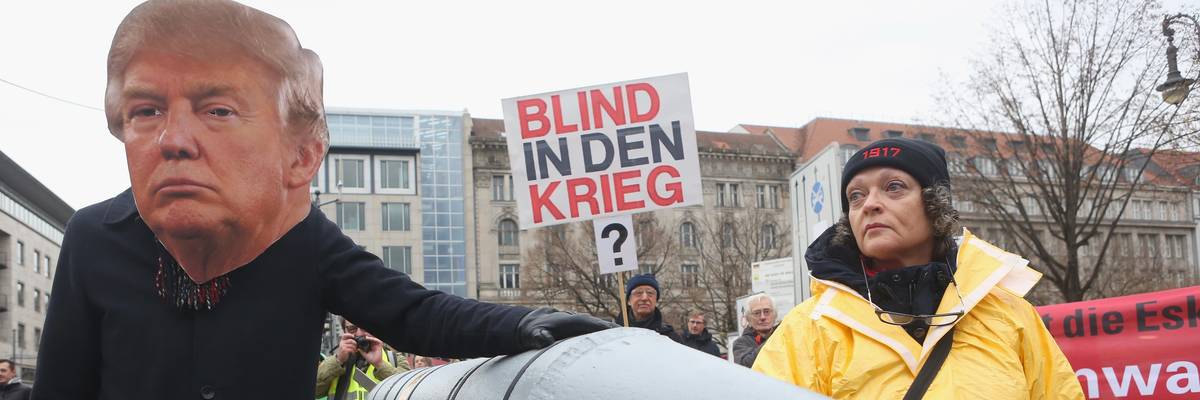
An activist with a mask of US President Donald Trump marches with a model of a nuclear rocket during a demonstration against nuclear weapons on November 18, 2017 in Berlin, Germany.
The civilian population and their political representatives must finally wake up and take joint action to persuade those responsible in the ruling political establishment to change course in the interests of humanity.
February 5, 2026, was the date on which the New START Treaty expired without the US and Russia renewing it. The People's Republic of China also did not participate in renegotiations.
Nothing now stands in the way of unrestrained further nuclear armament. This makes the world even more unsafe. How crazy do you have to be to take this risk?
START stands for “New Strategic Arms Reduction Treaty” and is a successor treaty to START I. It entered into force on February 5, 2011. Ten years later, it was extended until February 5, 2026. On that date, it expired without renegotiation.
The New START Treaty stipulates that Russia and the US:
This was intended to limit the risk of nuclear conflict and create stability in bilateral relations between the US and Russia.
The New START was a key treaty which, alongside other disarmament and control treaties that have also expired, was intended to reduce the risk of a third world war.
In 2023, Russia suspended the New START treaty in the wake of its attack on Ukraine and criticized the US for violating the treaty. The US government also had doubts as to whether Russia was still complying with the treaty's limitations. A few months later, the US also stopped implementing the provisions of the New START treaty, no longer allowing inspections and no longer providing transparency.
Russia signaled its continued compliance with the treaty's numerical limits, but did not allow transparency and inspections. US President Donald Trump has been inconsistent and has so far taken no initiative to renegotiate the treaty (“If it expires, it expires”). According to Daryl G. Kimball (2026) on the Arms Control Association website:
Since taking office last January, his administration has neither outlined a strategy for negotiating a new nuclear arms control agreement with Russia nor outlined how it would bring China into nuclear risk reduction or arms control talks.
For the first time since 1972, there are now no effective restrictions on the nuclear programs of the two superpowers.
Within a few weeks, the operational nuclear arsenals of the US and Russia could be significantly expanded. According to US peace researcher Jennifer Knox (2026), a doubling would be possible in a relatively short time:
Without mutual constraints, the two countries could field hundreds more nuclear weapons in a matter of weeks, and within a few years, their deployed nuclear forces could double. The resulting arms buildup, the lack of insight into each other's plans and arsenals, and the ending of formal bilateral consultations engendered by the treaty's verification regime would further destabilize relations between the United States and Russia, increase the risk of nuclear conflict through miscalculation or misunderstanding, and waste resources that neither country has to spare. Renewed nuclear competition between the United States and Russia could also drive China and other nuclear powers to expand their arsenals, leading to deteriorating security conditions around the world.
This significantly increases the risk of an accidental nuclear war due to false reports or technical failure.
Russia and the US could voluntarily continue to adhere to the New START treaty until a new treaty has been negotiated between them, preferably with the involvement of China. Furthermore, the renegotiation of a joint treaty should require compliance with the Nuclear Non-Proliferation Treaty and the signing and ratification of the nuclear ban treaty that has already been adopted by the United Nations. The non-participation of the US, Russia, China, and, incidentally, other nuclear states in nuclear disarmament measures violates Article VI of the current Nuclear Non-Proliferation Treaty.
In a statement, the German group of scientists from the VDW (2026) calls for more comprehensive negotiations between the major powers:
Joint limitation measures would create a more positive environment for talks on further strategic reductions, new restrictions on medium-range missiles and tactical nuclear weapons, limitations on strategic missile defense systems, and other measures to reduce nuclear risks. These include, above all, joint steps to mitigate the risks of integrating artificial intelligence into the nuclear command and control structure.
How deranged must the politicians in Russia, the US, and China be that they are unwilling to sit down at the table and reduce the danger of nuclear war through new START negotiations! The civilian population and their political representatives must finally wake up and take joint action to persuade those responsible in the ruling political establishment to change course in the interests of humanity. Nuclear weapons must be banned. Negotiations and diplomacy make the world much safer than unrestrained nuclear armament.
This is why the United Nations must also take action—even though it is currently being deliberately weakened and blocked by the US and Russia.
International Phycisians for the Prevention of Nuclear War activist and peace researcher Rolf Bader (2026) summarizes the demands in light of the expected modernization and expansion of nuclear arsenals as follows:
In this situation (of) escalating tensions, the United Nations would be called upon to act. Crisis prevention would be necessary to stop the looming arms race. With the support of influential member states in the Global South, attempts could be made to initiate negotiations to minimize risk.
The goal must be to negotiate at least a reduction in the highest alert level and a renunciation of the first use of nuclear weapons. Even if the chances are slim at present, everything should be tried to prevent the looming nuclear arms race.
Dear Common Dreams reader, It’s been nearly 30 years since I co-founded Common Dreams with my late wife, Lina Newhouser. We had the radical notion that journalism should serve the public good, not corporate profits. It was clear to us from the outset what it would take to build such a project. No paid advertisements. No corporate sponsors. No millionaire publisher telling us what to think or do. Many people said we wouldn't last a year, but we proved those doubters wrong. Together with a tremendous team of journalists and dedicated staff, we built an independent media outlet free from the constraints of profits and corporate control. Our mission has always been simple: To inform. To inspire. To ignite change for the common good. Building Common Dreams was not easy. Our survival was never guaranteed. When you take on the most powerful forces—Wall Street greed, fossil fuel industry destruction, Big Tech lobbyists, and uber-rich oligarchs who have spent billions upon billions rigging the economy and democracy in their favor—the only bulwark you have is supporters who believe in your work. But here’s the urgent message from me today. It's never been this bad out there. And it's never been this hard to keep us going. At the very moment Common Dreams is most needed, the threats we face are intensifying. We need your support now more than ever. We don't accept corporate advertising and never will. We don't have a paywall because we don't think people should be blocked from critical news based on their ability to pay. Everything we do is funded by the donations of readers like you. When everyone does the little they can afford, we are strong. But if that support retreats or dries up, so do we. Will you donate now to make sure Common Dreams not only survives but thrives? —Craig Brown, Co-founder |
February 5, 2026, was the date on which the New START Treaty expired without the US and Russia renewing it. The People's Republic of China also did not participate in renegotiations.
Nothing now stands in the way of unrestrained further nuclear armament. This makes the world even more unsafe. How crazy do you have to be to take this risk?
START stands for “New Strategic Arms Reduction Treaty” and is a successor treaty to START I. It entered into force on February 5, 2011. Ten years later, it was extended until February 5, 2026. On that date, it expired without renegotiation.
The New START Treaty stipulates that Russia and the US:
This was intended to limit the risk of nuclear conflict and create stability in bilateral relations between the US and Russia.
The New START was a key treaty which, alongside other disarmament and control treaties that have also expired, was intended to reduce the risk of a third world war.
In 2023, Russia suspended the New START treaty in the wake of its attack on Ukraine and criticized the US for violating the treaty. The US government also had doubts as to whether Russia was still complying with the treaty's limitations. A few months later, the US also stopped implementing the provisions of the New START treaty, no longer allowing inspections and no longer providing transparency.
Russia signaled its continued compliance with the treaty's numerical limits, but did not allow transparency and inspections. US President Donald Trump has been inconsistent and has so far taken no initiative to renegotiate the treaty (“If it expires, it expires”). According to Daryl G. Kimball (2026) on the Arms Control Association website:
Since taking office last January, his administration has neither outlined a strategy for negotiating a new nuclear arms control agreement with Russia nor outlined how it would bring China into nuclear risk reduction or arms control talks.
For the first time since 1972, there are now no effective restrictions on the nuclear programs of the two superpowers.
Within a few weeks, the operational nuclear arsenals of the US and Russia could be significantly expanded. According to US peace researcher Jennifer Knox (2026), a doubling would be possible in a relatively short time:
Without mutual constraints, the two countries could field hundreds more nuclear weapons in a matter of weeks, and within a few years, their deployed nuclear forces could double. The resulting arms buildup, the lack of insight into each other's plans and arsenals, and the ending of formal bilateral consultations engendered by the treaty's verification regime would further destabilize relations between the United States and Russia, increase the risk of nuclear conflict through miscalculation or misunderstanding, and waste resources that neither country has to spare. Renewed nuclear competition between the United States and Russia could also drive China and other nuclear powers to expand their arsenals, leading to deteriorating security conditions around the world.
This significantly increases the risk of an accidental nuclear war due to false reports or technical failure.
Russia and the US could voluntarily continue to adhere to the New START treaty until a new treaty has been negotiated between them, preferably with the involvement of China. Furthermore, the renegotiation of a joint treaty should require compliance with the Nuclear Non-Proliferation Treaty and the signing and ratification of the nuclear ban treaty that has already been adopted by the United Nations. The non-participation of the US, Russia, China, and, incidentally, other nuclear states in nuclear disarmament measures violates Article VI of the current Nuclear Non-Proliferation Treaty.
In a statement, the German group of scientists from the VDW (2026) calls for more comprehensive negotiations between the major powers:
Joint limitation measures would create a more positive environment for talks on further strategic reductions, new restrictions on medium-range missiles and tactical nuclear weapons, limitations on strategic missile defense systems, and other measures to reduce nuclear risks. These include, above all, joint steps to mitigate the risks of integrating artificial intelligence into the nuclear command and control structure.
How deranged must the politicians in Russia, the US, and China be that they are unwilling to sit down at the table and reduce the danger of nuclear war through new START negotiations! The civilian population and their political representatives must finally wake up and take joint action to persuade those responsible in the ruling political establishment to change course in the interests of humanity. Nuclear weapons must be banned. Negotiations and diplomacy make the world much safer than unrestrained nuclear armament.
This is why the United Nations must also take action—even though it is currently being deliberately weakened and blocked by the US and Russia.
International Phycisians for the Prevention of Nuclear War activist and peace researcher Rolf Bader (2026) summarizes the demands in light of the expected modernization and expansion of nuclear arsenals as follows:
In this situation (of) escalating tensions, the United Nations would be called upon to act. Crisis prevention would be necessary to stop the looming arms race. With the support of influential member states in the Global South, attempts could be made to initiate negotiations to minimize risk.
The goal must be to negotiate at least a reduction in the highest alert level and a renunciation of the first use of nuclear weapons. Even if the chances are slim at present, everything should be tried to prevent the looming nuclear arms race.
February 5, 2026, was the date on which the New START Treaty expired without the US and Russia renewing it. The People's Republic of China also did not participate in renegotiations.
Nothing now stands in the way of unrestrained further nuclear armament. This makes the world even more unsafe. How crazy do you have to be to take this risk?
START stands for “New Strategic Arms Reduction Treaty” and is a successor treaty to START I. It entered into force on February 5, 2011. Ten years later, it was extended until February 5, 2026. On that date, it expired without renegotiation.
The New START Treaty stipulates that Russia and the US:
This was intended to limit the risk of nuclear conflict and create stability in bilateral relations between the US and Russia.
The New START was a key treaty which, alongside other disarmament and control treaties that have also expired, was intended to reduce the risk of a third world war.
In 2023, Russia suspended the New START treaty in the wake of its attack on Ukraine and criticized the US for violating the treaty. The US government also had doubts as to whether Russia was still complying with the treaty's limitations. A few months later, the US also stopped implementing the provisions of the New START treaty, no longer allowing inspections and no longer providing transparency.
Russia signaled its continued compliance with the treaty's numerical limits, but did not allow transparency and inspections. US President Donald Trump has been inconsistent and has so far taken no initiative to renegotiate the treaty (“If it expires, it expires”). According to Daryl G. Kimball (2026) on the Arms Control Association website:
Since taking office last January, his administration has neither outlined a strategy for negotiating a new nuclear arms control agreement with Russia nor outlined how it would bring China into nuclear risk reduction or arms control talks.
For the first time since 1972, there are now no effective restrictions on the nuclear programs of the two superpowers.
Within a few weeks, the operational nuclear arsenals of the US and Russia could be significantly expanded. According to US peace researcher Jennifer Knox (2026), a doubling would be possible in a relatively short time:
Without mutual constraints, the two countries could field hundreds more nuclear weapons in a matter of weeks, and within a few years, their deployed nuclear forces could double. The resulting arms buildup, the lack of insight into each other's plans and arsenals, and the ending of formal bilateral consultations engendered by the treaty's verification regime would further destabilize relations between the United States and Russia, increase the risk of nuclear conflict through miscalculation or misunderstanding, and waste resources that neither country has to spare. Renewed nuclear competition between the United States and Russia could also drive China and other nuclear powers to expand their arsenals, leading to deteriorating security conditions around the world.
This significantly increases the risk of an accidental nuclear war due to false reports or technical failure.
Russia and the US could voluntarily continue to adhere to the New START treaty until a new treaty has been negotiated between them, preferably with the involvement of China. Furthermore, the renegotiation of a joint treaty should require compliance with the Nuclear Non-Proliferation Treaty and the signing and ratification of the nuclear ban treaty that has already been adopted by the United Nations. The non-participation of the US, Russia, China, and, incidentally, other nuclear states in nuclear disarmament measures violates Article VI of the current Nuclear Non-Proliferation Treaty.
In a statement, the German group of scientists from the VDW (2026) calls for more comprehensive negotiations between the major powers:
Joint limitation measures would create a more positive environment for talks on further strategic reductions, new restrictions on medium-range missiles and tactical nuclear weapons, limitations on strategic missile defense systems, and other measures to reduce nuclear risks. These include, above all, joint steps to mitigate the risks of integrating artificial intelligence into the nuclear command and control structure.
How deranged must the politicians in Russia, the US, and China be that they are unwilling to sit down at the table and reduce the danger of nuclear war through new START negotiations! The civilian population and their political representatives must finally wake up and take joint action to persuade those responsible in the ruling political establishment to change course in the interests of humanity. Nuclear weapons must be banned. Negotiations and diplomacy make the world much safer than unrestrained nuclear armament.
This is why the United Nations must also take action—even though it is currently being deliberately weakened and blocked by the US and Russia.
International Phycisians for the Prevention of Nuclear War activist and peace researcher Rolf Bader (2026) summarizes the demands in light of the expected modernization and expansion of nuclear arsenals as follows:
In this situation (of) escalating tensions, the United Nations would be called upon to act. Crisis prevention would be necessary to stop the looming arms race. With the support of influential member states in the Global South, attempts could be made to initiate negotiations to minimize risk.
The goal must be to negotiate at least a reduction in the highest alert level and a renunciation of the first use of nuclear weapons. Even if the chances are slim at present, everything should be tried to prevent the looming nuclear arms race.