SUBSCRIBE TO OUR FREE NEWSLETTER
Daily news & progressive opinion—funded by the people, not the corporations—delivered straight to your inbox.
5
#000000
#FFFFFF
To donate by check, phone, or other method, see our More Ways to Give page.
Daily news & progressive opinion—funded by the people, not the corporations—delivered straight to your inbox.
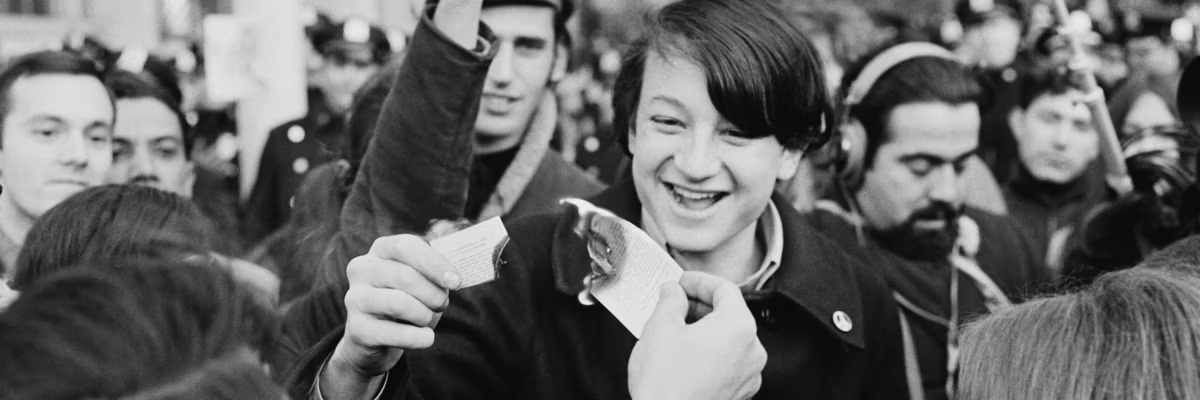
Mandatory conscription makes war easier, not harder.
Recently, commentators from various places on the US political spectrum have discussed and even called for the reinstitution of mandatory conscription. Meanwhile, plans are underway to automatically register all 18-year-olds via the computer database where their names are stored. In Germany, tens of thousands of young people marched against parliamentary moves towards reinstating mandatory conscription there. Some of those who support conscription do so because they believe that people (including politicians) will oppose wars their government starts if they face the possibility they or their child will be forced into the military to fight those wars. Others demand a return to mandatory conscription because citizens of the nation they live in need to be reminded that living in that nation means they must be an active part of its defense. Of course, both of these arguments require an acceptance that this nation for which the conscripts might give their lives holds the lives of the conscripts in the same regard as it does those making and profiting from its wars. From where I sit, that’s a mighty hard sell.
An aspect of the argument that a draft would make politicians think twice before allowing a war to take place because politicians’ children might get drafted into the war is not really much of an argument when considered historically. Looking at the last war where US citizens were drafted—the war in Vietnam, it is more than apparent that those draftees who did most of the killing and dying in that war were working class men. If those men were Black, they were even more likely to end up as nothing but cannon fodder. According to the Oxford Companion of Military History, “During the height of the US involvement, 1965-69, Blacks, who formed 11% of the American population, made up 12.6% of the soldiers in Vietnam. The majority of these were in the infantry, and although authorities differ on the figures, the percentage of Black combat fatalities in that period was a staggering 14.9%.” In addition, they accounted for almost 20% of all combat-related deaths in Vietnam from 1961-1965 and in 1968, they frequently contributed half of the men in frontline combat units. Meanwhile, men like Donald Trump evaded the draft, just like many other wealthy young men during the Vietnam War and every US war back to the Civil War.
If anything is going to stop their wars, it will be a determined and massive movement against their war; a movement that rejects both parties as war parties and organizes with that understanding.
Another part of this same argument is that the US people would be more likely to oppose US involvement in a war if their children were involved. Once again, history tells us something different. To put it as succinctly as possible, this just isn’t true. A military draft existed during the US war in Korea, and opposition to that conflict was essentially nonexistent. Same can be said for the 1965 US invasion of the Dominican Republic.
Likewise, the same can be said about the US war in Vietnam. While it’s reasonable to argue that the existence of military conscription convinced many young men to oppose the draft and the war, a greater truth is that it was the growing reach of the anti-war movement that made it okay for those resisters to resist, not the other way around. In other words, the existence of the draft didn’t create the anti-war movement; the anti-war movement created the draft resistance movement.
In later years, massive movements against the US wars in Iraq were organized and there was no draft, although various politicians did float the possibility of restarting it. Like the movement against the war in Southeast Asia, those movements existed because of determined organizing by numerous groups opposed to the slaughter. Any blame for the failure of those movements to stop the Iraq wars earlier than they did is most likely due to manipulation of the anti-war movement by the Democratic Party and vacillation among elements in the movement’s leadership.
Those who believe that an apparent lack of concern among US residents about the murder and havoc being wrought in their name in Iran can be reversed by reviving mandatory conscription of young people seem to think that the war machine will do the organizing against the war it is waging.This just isn’t going to happen. In fact, a revival of mandatory conscription is most likely to do the exact opposite.
With a considerably greater pool of potential cannon fodder biding their time in barracks and on ships, there is even less to restrain those in the Pentagon, war industry boardrooms, Congress, and the White House from expanding their slaughter. If anything is going to stop their wars, it will be a determined and massive movement against their war; a movement that rejects both parties as war parties and organizes with that understanding. A movement that is willing to use means that not only reject the status quo but is willing to overturn it when the moment arrives. Reinstating mandatory conscription does not meet that requirement.
Dear Common Dreams reader, It’s been nearly 30 years since I co-founded Common Dreams with my late wife, Lina Newhouser. We had the radical notion that journalism should serve the public good, not corporate profits. It was clear to us from the outset what it would take to build such a project. No paid advertisements. No corporate sponsors. No millionaire publisher telling us what to think or do. Many people said we wouldn't last a year, but we proved those doubters wrong. Together with a tremendous team of journalists and dedicated staff, we built an independent media outlet free from the constraints of profits and corporate control. Our mission has always been simple: To inform. To inspire. To ignite change for the common good. Building Common Dreams was not easy. Our survival was never guaranteed. When you take on the most powerful forces—Wall Street greed, fossil fuel industry destruction, Big Tech lobbyists, and uber-rich oligarchs who have spent billions upon billions rigging the economy and democracy in their favor—the only bulwark you have is supporters who believe in your work. But here’s the urgent message from me today. It's never been this bad out there. And it's never been this hard to keep us going. At the very moment Common Dreams is most needed, the threats we face are intensifying. We need your support now more than ever. We don't accept corporate advertising and never will. We don't have a paywall because we don't think people should be blocked from critical news based on their ability to pay. Everything we do is funded by the donations of readers like you. When everyone does the little they can afford, we are strong. But if that support retreats or dries up, so do we. Will you donate now to make sure Common Dreams not only survives but thrives? —Craig Brown, Co-founder |
Recently, commentators from various places on the US political spectrum have discussed and even called for the reinstitution of mandatory conscription. Meanwhile, plans are underway to automatically register all 18-year-olds via the computer database where their names are stored. In Germany, tens of thousands of young people marched against parliamentary moves towards reinstating mandatory conscription there. Some of those who support conscription do so because they believe that people (including politicians) will oppose wars their government starts if they face the possibility they or their child will be forced into the military to fight those wars. Others demand a return to mandatory conscription because citizens of the nation they live in need to be reminded that living in that nation means they must be an active part of its defense. Of course, both of these arguments require an acceptance that this nation for which the conscripts might give their lives holds the lives of the conscripts in the same regard as it does those making and profiting from its wars. From where I sit, that’s a mighty hard sell.
An aspect of the argument that a draft would make politicians think twice before allowing a war to take place because politicians’ children might get drafted into the war is not really much of an argument when considered historically. Looking at the last war where US citizens were drafted—the war in Vietnam, it is more than apparent that those draftees who did most of the killing and dying in that war were working class men. If those men were Black, they were even more likely to end up as nothing but cannon fodder. According to the Oxford Companion of Military History, “During the height of the US involvement, 1965-69, Blacks, who formed 11% of the American population, made up 12.6% of the soldiers in Vietnam. The majority of these were in the infantry, and although authorities differ on the figures, the percentage of Black combat fatalities in that period was a staggering 14.9%.” In addition, they accounted for almost 20% of all combat-related deaths in Vietnam from 1961-1965 and in 1968, they frequently contributed half of the men in frontline combat units. Meanwhile, men like Donald Trump evaded the draft, just like many other wealthy young men during the Vietnam War and every US war back to the Civil War.
If anything is going to stop their wars, it will be a determined and massive movement against their war; a movement that rejects both parties as war parties and organizes with that understanding.
Another part of this same argument is that the US people would be more likely to oppose US involvement in a war if their children were involved. Once again, history tells us something different. To put it as succinctly as possible, this just isn’t true. A military draft existed during the US war in Korea, and opposition to that conflict was essentially nonexistent. Same can be said for the 1965 US invasion of the Dominican Republic.
Likewise, the same can be said about the US war in Vietnam. While it’s reasonable to argue that the existence of military conscription convinced many young men to oppose the draft and the war, a greater truth is that it was the growing reach of the anti-war movement that made it okay for those resisters to resist, not the other way around. In other words, the existence of the draft didn’t create the anti-war movement; the anti-war movement created the draft resistance movement.
In later years, massive movements against the US wars in Iraq were organized and there was no draft, although various politicians did float the possibility of restarting it. Like the movement against the war in Southeast Asia, those movements existed because of determined organizing by numerous groups opposed to the slaughter. Any blame for the failure of those movements to stop the Iraq wars earlier than they did is most likely due to manipulation of the anti-war movement by the Democratic Party and vacillation among elements in the movement’s leadership.
Those who believe that an apparent lack of concern among US residents about the murder and havoc being wrought in their name in Iran can be reversed by reviving mandatory conscription of young people seem to think that the war machine will do the organizing against the war it is waging.This just isn’t going to happen. In fact, a revival of mandatory conscription is most likely to do the exact opposite.
With a considerably greater pool of potential cannon fodder biding their time in barracks and on ships, there is even less to restrain those in the Pentagon, war industry boardrooms, Congress, and the White House from expanding their slaughter. If anything is going to stop their wars, it will be a determined and massive movement against their war; a movement that rejects both parties as war parties and organizes with that understanding. A movement that is willing to use means that not only reject the status quo but is willing to overturn it when the moment arrives. Reinstating mandatory conscription does not meet that requirement.
Recently, commentators from various places on the US political spectrum have discussed and even called for the reinstitution of mandatory conscription. Meanwhile, plans are underway to automatically register all 18-year-olds via the computer database where their names are stored. In Germany, tens of thousands of young people marched against parliamentary moves towards reinstating mandatory conscription there. Some of those who support conscription do so because they believe that people (including politicians) will oppose wars their government starts if they face the possibility they or their child will be forced into the military to fight those wars. Others demand a return to mandatory conscription because citizens of the nation they live in need to be reminded that living in that nation means they must be an active part of its defense. Of course, both of these arguments require an acceptance that this nation for which the conscripts might give their lives holds the lives of the conscripts in the same regard as it does those making and profiting from its wars. From where I sit, that’s a mighty hard sell.
An aspect of the argument that a draft would make politicians think twice before allowing a war to take place because politicians’ children might get drafted into the war is not really much of an argument when considered historically. Looking at the last war where US citizens were drafted—the war in Vietnam, it is more than apparent that those draftees who did most of the killing and dying in that war were working class men. If those men were Black, they were even more likely to end up as nothing but cannon fodder. According to the Oxford Companion of Military History, “During the height of the US involvement, 1965-69, Blacks, who formed 11% of the American population, made up 12.6% of the soldiers in Vietnam. The majority of these were in the infantry, and although authorities differ on the figures, the percentage of Black combat fatalities in that period was a staggering 14.9%.” In addition, they accounted for almost 20% of all combat-related deaths in Vietnam from 1961-1965 and in 1968, they frequently contributed half of the men in frontline combat units. Meanwhile, men like Donald Trump evaded the draft, just like many other wealthy young men during the Vietnam War and every US war back to the Civil War.
If anything is going to stop their wars, it will be a determined and massive movement against their war; a movement that rejects both parties as war parties and organizes with that understanding.
Another part of this same argument is that the US people would be more likely to oppose US involvement in a war if their children were involved. Once again, history tells us something different. To put it as succinctly as possible, this just isn’t true. A military draft existed during the US war in Korea, and opposition to that conflict was essentially nonexistent. Same can be said for the 1965 US invasion of the Dominican Republic.
Likewise, the same can be said about the US war in Vietnam. While it’s reasonable to argue that the existence of military conscription convinced many young men to oppose the draft and the war, a greater truth is that it was the growing reach of the anti-war movement that made it okay for those resisters to resist, not the other way around. In other words, the existence of the draft didn’t create the anti-war movement; the anti-war movement created the draft resistance movement.
In later years, massive movements against the US wars in Iraq were organized and there was no draft, although various politicians did float the possibility of restarting it. Like the movement against the war in Southeast Asia, those movements existed because of determined organizing by numerous groups opposed to the slaughter. Any blame for the failure of those movements to stop the Iraq wars earlier than they did is most likely due to manipulation of the anti-war movement by the Democratic Party and vacillation among elements in the movement’s leadership.
Those who believe that an apparent lack of concern among US residents about the murder and havoc being wrought in their name in Iran can be reversed by reviving mandatory conscription of young people seem to think that the war machine will do the organizing against the war it is waging.This just isn’t going to happen. In fact, a revival of mandatory conscription is most likely to do the exact opposite.
With a considerably greater pool of potential cannon fodder biding their time in barracks and on ships, there is even less to restrain those in the Pentagon, war industry boardrooms, Congress, and the White House from expanding their slaughter. If anything is going to stop their wars, it will be a determined and massive movement against their war; a movement that rejects both parties as war parties and organizes with that understanding. A movement that is willing to use means that not only reject the status quo but is willing to overturn it when the moment arrives. Reinstating mandatory conscription does not meet that requirement.