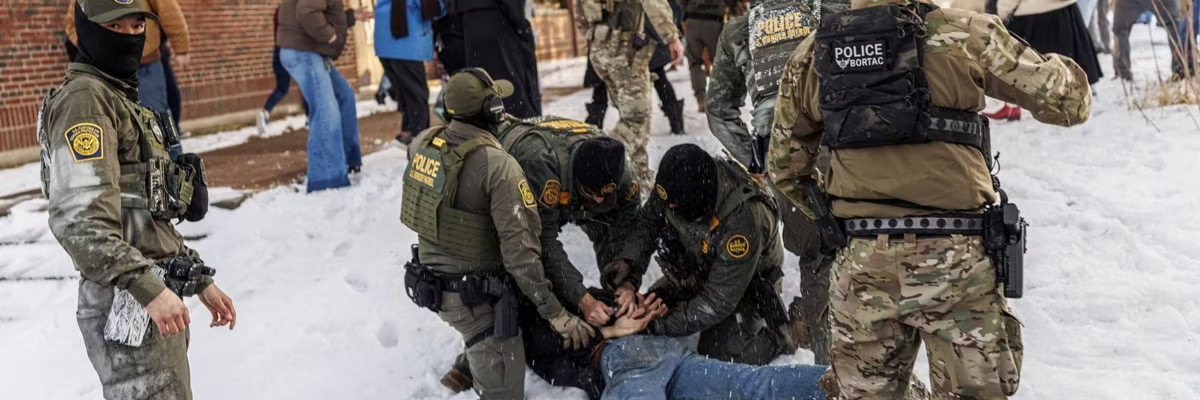
US Border Patrol agents detain a person near Roosevelt High School during dismissal time as federal immigration enforcement actions sparked protests in Minneapolis, Minnesota, on January 7, 2026.
America Under Siege: Fear and the Unchecked Presidency
A republic cannot survive this indefinitely. The removal of Donald Trump from office—which is now imperative—is not about vengeance; it is about preservation.
There are moments when the danger facing a nation is not announced by sirens or declarations of war, but by something quieter and more corrosive: fear—abroad and at home—paired with the normalization of lawlessness at the very top of power.
The United States is living through such a moment.
A growing number of economists, constitutional scholars, and foreign-policy experts—including Professor Jeffrey Sachs—have warned that the country is now operating under an effectively unchecked presidency, and this is very dangerous. What once sounded theoretical has become tangible. Executive conduct has crossed from aggressive policy into outright violations of constitutional structure, international law, and basic norms of human dignity—leaving Americans and foreign populations alike unsure where law ends and coercion begins.
Consider Venezuela. A sitting head of state was forcibly apprehended and remains detained despite long-established principles of head-of-state immunity recognized by both international law and US courts. No congressional declaration of war was issued. No authorization for the use of military force was granted. Yet naval deployments, explicit threats of escalation, and coercive demands have proceeded as if constitutional limits were optional.
This is not a policy disagreement. It is a rupture of the separation of powers.
A republic cannot survive this indefinitely.
Under the Constitution, Congress—not the President—decides when the nation enters hostilities. When force is used without that authorization, the injury is not foreign; it is domestic. It alters the legal obligations of service members, bypasses elected representatives, and establishes precedents that future presidents will inherit and may get to expand. What is done once without consequence becomes permissible forever.
The international consequences are equally severe. When restraint is publicly described as conditional on “cooperation,” the message is unmistakable: compliance is demanded under threat. Under international law, consent extracted through coercion is no consent at all. Agreements reached in such conditions are void, unstable, and corrosive to global order. They invite retaliation, miscalculation, and escalation.
Against this backdrop, the President’s own conduct has crossed from provocation into mockery.
Posting a mug-style image of himself online with the caption “Interim President of Venezuela” is not political satire—it is a display of contempt for a population already living under the shadow of military threat. Venezuelan civilians fear for their lives. Survivors of armed attacks have described, in horrific detail, the killing of guards and soldiers by US troops acting like mercenaries with no mercy, aligned with US objectives, sparing only the President and his wife to be taken alive. In that context, ridicule from the most powerful office on earth is not harmless. It is psychological warfare by indifference.
And the fear does not stop at the border.
Inside the United States, many citizens have grown quiet—not because they are indifferent, but because they are afraid. Afraid of retaliation. Afraid of being singled out. Afraid that the institutions meant to protect them are bending rather than holding. Silence, under these conditions, is not consent. It is duress.
That fear is reinforced when the President openly refuses to rule out acquiring foreign territory by force. When Greenland and Denmark rejected his demands, the response was not reassurance but continued ambiguity. Sovereignty, once treated as inviolable, was suddenly spoken of as negotiable—through pressure, leverage, or worse. This is not how democracies speak. It is how empires test boundaries.
What ties these episodes together is not ideology, but the erosion of restraint. Courts are pressured to proceed where jurisdiction is barred. Congress is sidelined in matters of war and peace. Sovereign resources are discussed as assets to be reassigned under coercive conditions. Threats substitute for diplomacy. Mockery substitutes for leadership.
A republic cannot survive this indefinitely.
The Constitution was designed precisely to prevent this concentration of power. War powers were placed in Congress to slow escalation. Immunities were recognized to prevent cycles of retaliation. Diplomacy was meant to replace force, not disguise it. When these guardrails fail, the danger is not merely to foreign nations—it is to the constitutional order itself.
The most alarming feature of the present moment is not outrage, but normalization. Each uncorrected violation lowers the threshold for the next. Each silence under fear teaches power that it need not explain itself.
America is now at a point where clarity is no longer optional. A President who acts beyond constitutional authority must be confronted with the limits of that authority. Violations of the Constitution and of international law must be acknowledged—not obscured, denied, or ridiculed—and immediately remedied through full and lawful redress (as guaranteed by the First Amendment’s right to petition the Government for a redress of grievances). The alternative is not ambiguity. It is consequence.
If redress is refused, if illegality is neither recognized nor corrected, the Constitution provides a final safeguard. Removal from office is not vengeance; it is a mechanism of preservation. It exists precisely for moments when power becomes unmoored from law.
“America Under Siege” does not mean tanks in the streets. It means a nation deciding whether constitutional limits still matter when they become inconvenient. And history is unforgiving to republics that delay that decision for too long.
We are at a crossroads
This country and this world are at a monumental crossroads. In a few short weeks, US voters will have an opportunity to beat back the forces of fascism and confront the billionaires who are rigging the economy, our media system, and our democracy, making it increasingly impossible for ordinary people to get by. We’re not just talking about the election. We’re talking about what must be done once these fascist elements are vanquished from power. We need a bolder set of solutions than what either major party has so far been willing to offer and a working-class movement ready to fight like hell for it. Trump didn't emerge from nowhere. The conditions that fueled MAGA authoritarianism were created by decades of radical neoliberal economic policies and a corrupt political system dominated by corporate interests. They slashed taxes on the super-rich, promising that the benefits would trickle down. They said giveaways to the corporate titans would make life more affordable for the rest of us. It was all bullshit. And when a bitter, betrayed populace searches for someone to blame, right-wing demagogues have little trouble finding scapegoats. People know when they're being lied to, but you won't hear any of this from the corporate media. Only independent journalism—powered and funded by people who believe in building a better world—can deliver truly trustworthy daily news. Our Fall Campaign is underway, and we need your help. To power our newsroom through the rest of the year, we need to raise $125,000 by midnight on October 31. So if you share our vision, please contribute whatever you can to sustain our work. |
There are moments when the danger facing a nation is not announced by sirens or declarations of war, but by something quieter and more corrosive: fear—abroad and at home—paired with the normalization of lawlessness at the very top of power.
The United States is living through such a moment.
A growing number of economists, constitutional scholars, and foreign-policy experts—including Professor Jeffrey Sachs—have warned that the country is now operating under an effectively unchecked presidency, and this is very dangerous. What once sounded theoretical has become tangible. Executive conduct has crossed from aggressive policy into outright violations of constitutional structure, international law, and basic norms of human dignity—leaving Americans and foreign populations alike unsure where law ends and coercion begins.
Consider Venezuela. A sitting head of state was forcibly apprehended and remains detained despite long-established principles of head-of-state immunity recognized by both international law and US courts. No congressional declaration of war was issued. No authorization for the use of military force was granted. Yet naval deployments, explicit threats of escalation, and coercive demands have proceeded as if constitutional limits were optional.
This is not a policy disagreement. It is a rupture of the separation of powers.
A republic cannot survive this indefinitely.
Under the Constitution, Congress—not the President—decides when the nation enters hostilities. When force is used without that authorization, the injury is not foreign; it is domestic. It alters the legal obligations of service members, bypasses elected representatives, and establishes precedents that future presidents will inherit and may get to expand. What is done once without consequence becomes permissible forever.
The international consequences are equally severe. When restraint is publicly described as conditional on “cooperation,” the message is unmistakable: compliance is demanded under threat. Under international law, consent extracted through coercion is no consent at all. Agreements reached in such conditions are void, unstable, and corrosive to global order. They invite retaliation, miscalculation, and escalation.
Against this backdrop, the President’s own conduct has crossed from provocation into mockery.
Posting a mug-style image of himself online with the caption “Interim President of Venezuela” is not political satire—it is a display of contempt for a population already living under the shadow of military threat. Venezuelan civilians fear for their lives. Survivors of armed attacks have described, in horrific detail, the killing of guards and soldiers by US troops acting like mercenaries with no mercy, aligned with US objectives, sparing only the President and his wife to be taken alive. In that context, ridicule from the most powerful office on earth is not harmless. It is psychological warfare by indifference.
And the fear does not stop at the border.
Inside the United States, many citizens have grown quiet—not because they are indifferent, but because they are afraid. Afraid of retaliation. Afraid of being singled out. Afraid that the institutions meant to protect them are bending rather than holding. Silence, under these conditions, is not consent. It is duress.
That fear is reinforced when the President openly refuses to rule out acquiring foreign territory by force. When Greenland and Denmark rejected his demands, the response was not reassurance but continued ambiguity. Sovereignty, once treated as inviolable, was suddenly spoken of as negotiable—through pressure, leverage, or worse. This is not how democracies speak. It is how empires test boundaries.
What ties these episodes together is not ideology, but the erosion of restraint. Courts are pressured to proceed where jurisdiction is barred. Congress is sidelined in matters of war and peace. Sovereign resources are discussed as assets to be reassigned under coercive conditions. Threats substitute for diplomacy. Mockery substitutes for leadership.
A republic cannot survive this indefinitely.
The Constitution was designed precisely to prevent this concentration of power. War powers were placed in Congress to slow escalation. Immunities were recognized to prevent cycles of retaliation. Diplomacy was meant to replace force, not disguise it. When these guardrails fail, the danger is not merely to foreign nations—it is to the constitutional order itself.
The most alarming feature of the present moment is not outrage, but normalization. Each uncorrected violation lowers the threshold for the next. Each silence under fear teaches power that it need not explain itself.
America is now at a point where clarity is no longer optional. A President who acts beyond constitutional authority must be confronted with the limits of that authority. Violations of the Constitution and of international law must be acknowledged—not obscured, denied, or ridiculed—and immediately remedied through full and lawful redress (as guaranteed by the First Amendment’s right to petition the Government for a redress of grievances). The alternative is not ambiguity. It is consequence.
If redress is refused, if illegality is neither recognized nor corrected, the Constitution provides a final safeguard. Removal from office is not vengeance; it is a mechanism of preservation. It exists precisely for moments when power becomes unmoored from law.
“America Under Siege” does not mean tanks in the streets. It means a nation deciding whether constitutional limits still matter when they become inconvenient. And history is unforgiving to republics that delay that decision for too long.
There are moments when the danger facing a nation is not announced by sirens or declarations of war, but by something quieter and more corrosive: fear—abroad and at home—paired with the normalization of lawlessness at the very top of power.
The United States is living through such a moment.
A growing number of economists, constitutional scholars, and foreign-policy experts—including Professor Jeffrey Sachs—have warned that the country is now operating under an effectively unchecked presidency, and this is very dangerous. What once sounded theoretical has become tangible. Executive conduct has crossed from aggressive policy into outright violations of constitutional structure, international law, and basic norms of human dignity—leaving Americans and foreign populations alike unsure where law ends and coercion begins.
Consider Venezuela. A sitting head of state was forcibly apprehended and remains detained despite long-established principles of head-of-state immunity recognized by both international law and US courts. No congressional declaration of war was issued. No authorization for the use of military force was granted. Yet naval deployments, explicit threats of escalation, and coercive demands have proceeded as if constitutional limits were optional.
This is not a policy disagreement. It is a rupture of the separation of powers.
A republic cannot survive this indefinitely.
Under the Constitution, Congress—not the President—decides when the nation enters hostilities. When force is used without that authorization, the injury is not foreign; it is domestic. It alters the legal obligations of service members, bypasses elected representatives, and establishes precedents that future presidents will inherit and may get to expand. What is done once without consequence becomes permissible forever.
The international consequences are equally severe. When restraint is publicly described as conditional on “cooperation,” the message is unmistakable: compliance is demanded under threat. Under international law, consent extracted through coercion is no consent at all. Agreements reached in such conditions are void, unstable, and corrosive to global order. They invite retaliation, miscalculation, and escalation.
Against this backdrop, the President’s own conduct has crossed from provocation into mockery.
Posting a mug-style image of himself online with the caption “Interim President of Venezuela” is not political satire—it is a display of contempt for a population already living under the shadow of military threat. Venezuelan civilians fear for their lives. Survivors of armed attacks have described, in horrific detail, the killing of guards and soldiers by US troops acting like mercenaries with no mercy, aligned with US objectives, sparing only the President and his wife to be taken alive. In that context, ridicule from the most powerful office on earth is not harmless. It is psychological warfare by indifference.
And the fear does not stop at the border.
Inside the United States, many citizens have grown quiet—not because they are indifferent, but because they are afraid. Afraid of retaliation. Afraid of being singled out. Afraid that the institutions meant to protect them are bending rather than holding. Silence, under these conditions, is not consent. It is duress.
That fear is reinforced when the President openly refuses to rule out acquiring foreign territory by force. When Greenland and Denmark rejected his demands, the response was not reassurance but continued ambiguity. Sovereignty, once treated as inviolable, was suddenly spoken of as negotiable—through pressure, leverage, or worse. This is not how democracies speak. It is how empires test boundaries.
What ties these episodes together is not ideology, but the erosion of restraint. Courts are pressured to proceed where jurisdiction is barred. Congress is sidelined in matters of war and peace. Sovereign resources are discussed as assets to be reassigned under coercive conditions. Threats substitute for diplomacy. Mockery substitutes for leadership.
A republic cannot survive this indefinitely.
The Constitution was designed precisely to prevent this concentration of power. War powers were placed in Congress to slow escalation. Immunities were recognized to prevent cycles of retaliation. Diplomacy was meant to replace force, not disguise it. When these guardrails fail, the danger is not merely to foreign nations—it is to the constitutional order itself.
The most alarming feature of the present moment is not outrage, but normalization. Each uncorrected violation lowers the threshold for the next. Each silence under fear teaches power that it need not explain itself.
America is now at a point where clarity is no longer optional. A President who acts beyond constitutional authority must be confronted with the limits of that authority. Violations of the Constitution and of international law must be acknowledged—not obscured, denied, or ridiculed—and immediately remedied through full and lawful redress (as guaranteed by the First Amendment’s right to petition the Government for a redress of grievances). The alternative is not ambiguity. It is consequence.
If redress is refused, if illegality is neither recognized nor corrected, the Constitution provides a final safeguard. Removal from office is not vengeance; it is a mechanism of preservation. It exists precisely for moments when power becomes unmoored from law.
“America Under Siege” does not mean tanks in the streets. It means a nation deciding whether constitutional limits still matter when they become inconvenient. And history is unforgiving to republics that delay that decision for too long.