

SUBSCRIBE TO OUR FREE NEWSLETTER
Daily news & progressive opinion—funded by the people, not the corporations—delivered straight to your inbox.
5
#000000
#FFFFFF
To donate by check, phone, or other method, see our More Ways to Give page.
Daily news & progressive opinion—funded by the people, not the corporations—delivered straight to your inbox.

Americans for Financial Reform Education Fund, Public Citizen, Sierra Club engage with global standard setter on proposed guidance for financial institutions
This summer, the Science Based Targets initiative (SBTi) — an international initiative that credibly verifies corporations’ emissions reduction targets — led several stakeholder engagement processes to clarify and tighten the standards for financial institutions seeking to set science-based targets. The SBTi also sought comment on its draft Fossil Fuel Finance Position Paper establishing specific norms for financial institutions continuing to invest in coal, oil, and gas. The comment periods closed August 23.
In its comments, advocacy groups Americans for Financial Reform Education Fund, Public Citizen, and the Sierra Club commended the SBTi for drafting a strong standard on how fossil fuel financing should be treated in corporate emissions-reduction plans that are intended to be aligned with the goals of the Paris Agreement and the consensus of the scientific community.
“Kudos to SBTi for having the guts to pull the plug on failed financial sector engagement with the fossil fuel industry. The draft standard gives banks, insurers, and asset managers a final two-year window to persuade Big Oil to enact credible decarbonization strategies. Barring success, they must divest. Financial institutions shouldn’t be entitled to the SBTi’s stamp of approval unless they are willing to make tough choices: breaking up with fossil fuel companies that refuse to take climate change seriously is at the top of that list,” said Clara Vondrich, senior policy counsel with Public Citizen’s Climate Program.
”SBTi has performed an invaluable service by proposing needed updates to its standards to ensure that financial institutions’ net-zero emissions pledges are credible and based on the best available science, not greenwashing. We encourage SBTi to stand firm on its commitment to scientific rigor in its proposals, and we hope that it fully considers and adopts our recommendations to strengthen its guidance and further minimize the risk of greenwashing,” said Jessye Waxman, Senior Campaign Representative in the Sierra Club’s Fossil-Free Finance campaign.
The SBTi proposed several essential reforms, including criteria to guide the cessation and phase out of financial flows to fossil fuel companies unwilling to make meaningful moves to transition their operations to a clean energy future. Notably, the SBTi also shifted its yardstick for “science-based” away from its prior 2°C pathway to a 1.5°C pathway, in accord with the ambition of the Paris Agreement and in implicit recognition that current warming already has prompted devastating and unacceptable impacts worse than many scientists anticipated. In other areas, the advocacy groups urged the SBTi to tighten its standards, in order to remain a standard setter on transition planning with unimpeachable credibility and integrity.
The advocacy groups urged the SBTi to stand firm on its following recommendations:
The groups called on the SBTi to revisit and strengthen the following recommendations:
SBTi is expected to use the feedback from these stakeholder engagement processes to publish a draft Financial Institutions Net Zero (FINZ) Standard in Q3, lead another round of consultations in Q4, and release a final FINZ Standard in 2024.
*For example, State Street’s near-term target through the Net Zero Asset Manager Initiative covers a mere 14% of total AUM, while Franklin Templeton’s target covers a mere 4.6%. These examples underscore the threats to progress on climate risk that arise when portfolio coverage requirements are left poorly defined.
The Sierra Club is the most enduring and influential grassroots environmental organization in the United States. We amplify the power of our 3.8 million members and supporters to defend everyone's right to a healthy world.
(415) 977-5500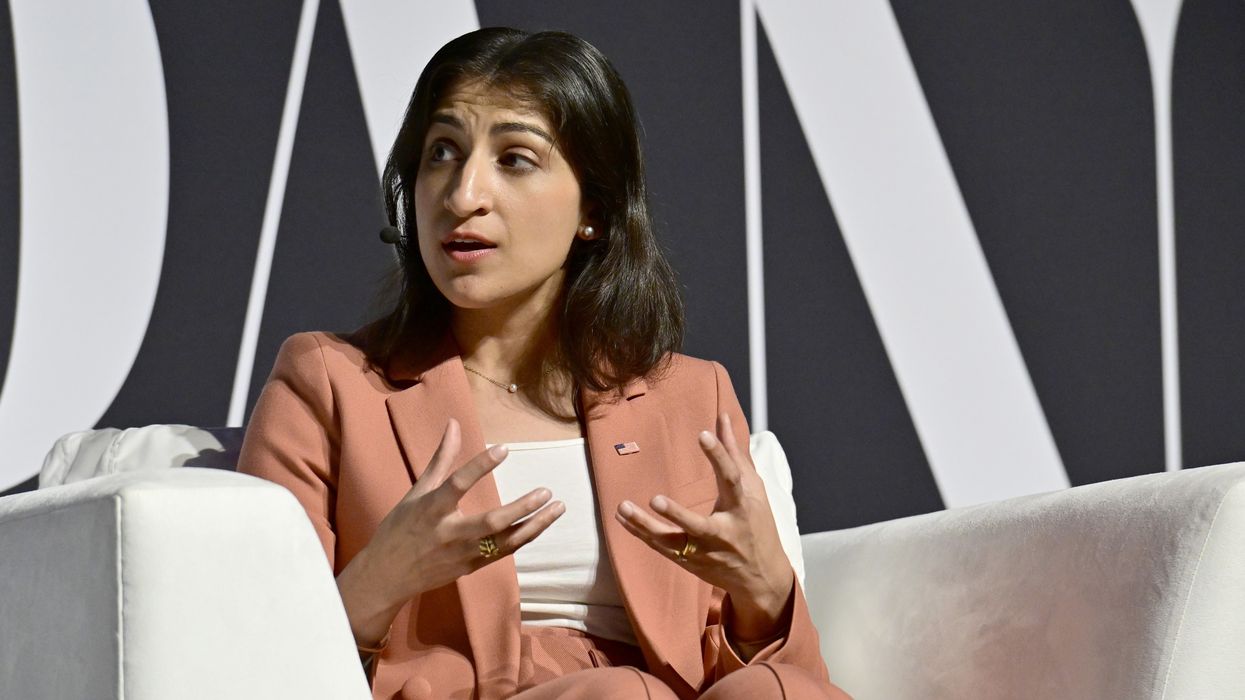
The former FTC chair spoke out as Republican leaders insisted the industry should be permitted to regulate itself.
As House Speaker Mike Johnson and President Donald Trump dismissed the idea—backed by the vast majority of Americans—that lawmakers should impose strict regulations on the artificial intelligence industry as insiders call for a slowdown of development, former Federal Trade Commission Chair Lina Khan on Sunday issued a reminder that the federal government already has tools to rein in AI that poses a danger to the public, and demanded that officials use them.
"Law enforcers already have authority to charge companies and their CEOs for creating and releasing dangerous, unvetted, or defective products," Khan said on social media. "We shouldn’t let discussions about new legal regimes distract from the fact that there’s no AI exemption from laws already on the books."
Her call echoed that of Rep. Ro Khanna (D-Calif.), who said Saturday, "If you’re creating an AI that is doing illegal things, you either should face liability or criminal sanctions.”
Khan, who was recently appointed by New York City Mayor Zohran Mamdani to chair the city's Economic Development Corporation, posted the FTC's Staff Report on AI Partnerships and Investments, which the agency released shortly after Trump took office for his second term last year.
“As companies rapidly deploy generative AI technologies, enforcers and policymakers must stay vigilant to guard against business strategies that undermine open markets, opportunity, and innovation,” said Khan at the time.
On Sunday, Khan noted that the US already has "an extensive set of laws that govern dangerous and defective products," such as consumer protection laws, which releasing unvetted AI models or agents may violate.
Khan made her remarks after two incidents in which OpenAI's agents broke out of security test systems and committed cyberattacks. In July, hundreds of models broke out of confinement, hacked into systems of the AI startup Hugging Face, and conducted cyberattacks on targets they had not been instructed to attack.
Months earlier, it was reported on Friday, the company's models, which had not been given access to the full internet and were still in testing mode, broke out of confinement and hacked into an online coding service called RubyGems.
In the wake of those revelations, Anthropic CEO Dario Amodei and OpenAI CEO Sam Altman on Saturday called for "pacing the frontier" with measures such as "embedded evaluators" who would have employee-like access and could "verify adherence to safety practices and commitments."
But Jacob Coxon, an Anthropic researcher who resigned last week and warned that AI's "superhuman systems" are capable of killing all of humanity "by the end of the decade," told NBC News' "Meet the Press" Sunday that companies should be permitted to regulate themselves until Congress can establish a regulatory framework, and Johnson insisted that Congress must resist "jumping in and imposing some sort of emergency moratorium," for fear that "China will overlap us" if the US imposes strict regulations on AI.
"Why did this man become a congressman, let alone speaker?" asked journalist Mehdi Hasan of Zeteo. "He literally never wants Congress to do anything about anything."
But Khan suggested that the reluctance of congressional leaders and the Trump administration to rein in the AI industry shouldn't stop the federal government from holding companies like Anthropic and OpenAI liable for the damage their products have already caused.
She acknowledged, though, that "the highly concentrated and interconnected structure of these markets" could be undermining accountability—for example, in the case of OpenAI and Hugging Face, which computer chip company Nvidia agreed to acquire earlier this month.
"Both federal and state enforcers should be scrutinizing these opaque relationships and interdependencies," said Khan. "We are already seeing how these relationships could undermine accountability. For example, OpenAI could face liability given the Hugging Face incident, but Hugging Face being bought up by Nvidia means that we’re unlikely to see it file a lawsuit over this—given Nvidia’s strong incentive to see OpenAI continue full speed ahead."
Basel Musharbash of the antitrust law and policy firm Antimonopoly Counsel said that Khan's post was the statement that current FTC Chair Andrew Ferguson "should be issuing to provide guidance the public on what the law requires in response to the AI situation, but he’s missing in action. Luckily, former FTC Chair Lina Khan is out here still doing the work."
Juliette Kayyem, the faculty chair of homeland security at Harvard University’s Kennedy School of Government, told CNN that holding AI firms accountable is a matter of "pretty basic criminal law."
"We should start thinking about using our criminal laws," said Kayyem. "They are putting a dangerous substance into commerce and then saying, 'Well, we're smart enough to kill everyone but we're not smart enough to stop it.' And I think a lot of the American public is done with this."
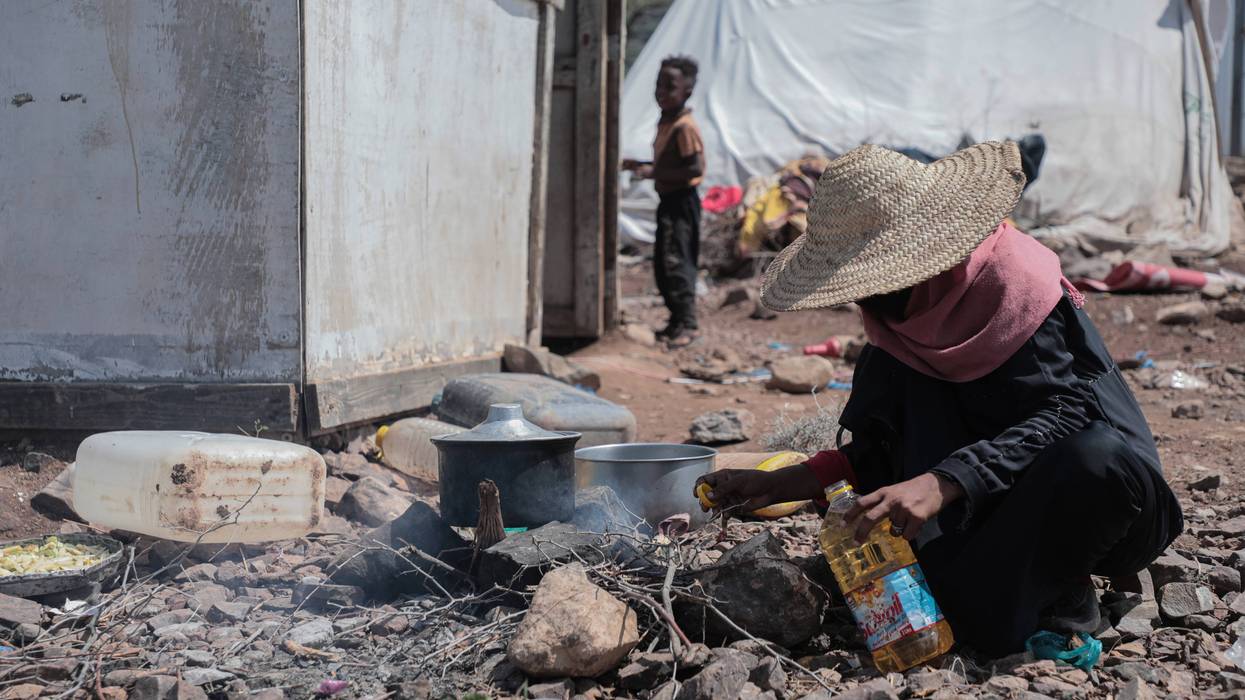
"Behind every number is a family who's lost everything," said a top UN official. "Many have been displaced multiple times."
The United Nations agency for migration issues said Sunday that 85,818 Yemeni people have been forcibly displaced in recent days by renewed fighting between Houthi forces and the Saudi-backed government as the Houthis seized control of the Bab al-Mandeb Strait, a key waterway for global oil shipping.
More than 2,000 people fled to Djibouti in recent days, and more are expected to arrive as fighting continues to escalate along the western coast of Yemen and Taiz province, near the port city of Mocha, which the Iran-allied Houthis seized from government forces on Thursday.
Nearly 56,000 people have been forced to leave their homes in Taiz, where heavy ground fighting and counterattacks have been taking place.
Abdusattor Esoev, chief of the International Organization for Migration (IOM) in Yemen, told Al Jazeera that the capture of Mocha, where the UN has maintained a strong infrastructure in recent years, has caused difficulty for aid agencies trying to reach people in need of food, water, medicines, and other humanitarian aid.
"Behind every number is a family who's lost everything," saidd Amy Pope, director general of IOM. "Many have been displaced multiple times. People are crossing the sea with nothing because they have no other choice left. Yemen is a country torn by poverty and conflict, and it cannot carry this crisis alone."
Pope called on donor countries to rapidly scale up support for Yemenis arriving in Djibouti and for 5.2 million people who have been internally displaced in Yemen over 12 years of conflict since the Houthis seized the country's capital, Sanaa, in 2014.
More than 900 people have been killed in this month's escalation, Al Jazeera reported.
A UN-brokered truce in 2022 temporarily halted major battles.
In July, the Houthis declared a blockade on Saudi ships in the Red Sea, which Saudi Arabia had been using to ship oil due to Iran's effective blockade in the Strait of Hormuz—a retaliatory measure Iran took in response to the war that the Trump administration and Israeli Prime Minister Benjamin Netanyahu began in February.
As Common Dreams reported last week, the Houthis see the war being perpetrated by President Donald Trump as a "golden opportunity" to advance against the Saudi-backed Yemeni government.
The Houthis also launched missile and drone strikes on southern Saudi Arabia in recent days.
Mohammed al-Basha, founder and lead analyst of the Basha Report Risk Advisory, told Al Jazeera that Saudi Arabia is likely providing air support to the Yemeni government forces and is under pressure to launch a wider military campaign.
Trump reportedly refused a request from Saudi Arabia to launch airstrikes against the Houthis last week, and said Saturday that the Houthis had reached out to Washington, asking the Trump administration not to intervene in the conflict.
The renewed conflict in Yemen has sparked intensified calls for the White House to end its war on Iran, which has also led to casualties across the Middle East, including in Lebanon.
A woman named Aman Murshed told Al Jazeera on Saturday that her family, including five children, has been displaced in a refugee camp for five years in Taiz, and they were forced to flee again this past week.
“The last four years were calm, and our hopes of returning home grew stronger," she said at the al-Malika camp in al-Maafer district in Taiz. "But suddenly, fighting erupted near our camp three days ago, and we found ourselves fleeing again toward an unknown destination. The only priority was to carry the children and flee as quickly as possible, because any delay could mean death. It was around 5:00 am, and there were no cars in the camp or the surrounding area since it is on the front line. So, we walked for more than two kilometers until we found a pick-up truck that brought us to this camp for free.”
Mohammed Ali, a journalist in Taiz, told Al Jazeera that "the broader US-Iran conflict effectively brought an end to the 2022 truce, as the Houthis have been attempting to advance to take control of the Bab al-Mandeb strait to serve Iran’s agenda."
“The warring sides are escalating, but it is civilians who pay the price," he said. "A single visit to one of the camps for displaced families is enough to see the severe toll this escalation has taken on the Yemeni people.”

"Support for Israel requires you to be against everything good in this world, like an organization which sends doctors to conflict areas to save human lives," said one observer.
Doctors Without Borders on Saturday condemned allegations made by a British pro-Israel lobby group, which called on Home Secretary Shabana Mahmood to investigate and potentially proscribe the group, whose medical providers and other humanitarian workers provide lifesaving aid in 70 countries and have worked in Palestine during Israel's assault there.
As The Telegraph reported, UK Lawyers for Israel (UKFLI) wrote to Mahmood as well as the Charity Commission and Fundraising Regulator, calling on the Labour government to investigate Doctors Without Borders, also known by its French name, Médecins Sans Frontières (MSF).
The group claimed at least two of MSF's workers who were killed by Israeli forces, physiologist Fadi Al Wadiya and driver Nasser Hamdi Abdelatif Al Shalfouh, had connections to terrorist groups in Gaza.
Palestine Islamic Jihad published a poster earlier this year naming Wadiya as a "martyr commander," and UKFLI claimed Al Shalfouh was a sniper for a Hamas battalion.
MSF acknowledged the poster regarding Wadiya in February and said the medical group "had no indication that Fadi Al Wadiya might have been involved in military activity of any kind prior to his killing by the Israeli Forces."
“If the Israeli authorities had any reliable information about Fadi’s involvement in military activity, they never shared it with MSF either prior to his killing or when we reached out immediately after he was killed to ask for clarifications around the circumstances of his death," the group added. “We would never knowingly employ people engaging in military activity. Any employee who engages in military activity would pose a danger to our staff and patients.”
UKFLI sent its report on MSF to Mahmood asking her to ban the group, as the Labour government proscribed the protest group Palestine Action last year, labeling it a terrorist group under the Terrorism Act. The government took that action after members of the group vandalized planes at a military base.
The designation put Palestine Action on the same legal footing as Al Qaeda in the UK and made membership of the group—or even expressions of support for it—punishable by up to 14 years in prison.
The demand for the same designation for MSF, said former British Army general Charlie Herbert, was "absolutely grotesque."
MSF doctors and healthcare workers have treated thousands of Palestinians in Gaza since Israel began its onslaught there in October 2023 in retaliation for a Hamas-led attack. At least 15 people working with the organization have been killed by Israeli forces. The group is also currently providing humanitarian and medical aid in Sudan as the civil war there has displaced millions of people and collapsed the healthcare system; in Yemen as the conflict between the Houthis and Saudi-backed government troops has escalated; and in the Democratic Republic of Congo, which is facing an Ebola outbreak as well as humanitarian crises exacerbated by years of conflict.
"I work in aid, and when people ask who to support I always say MSF," said researcher and activist Philip Proudfoot. "MSF, wherever I’ve been, are right there on the front, in dangerous conditions, in isolated outposts, providing life-saving support. They’re heroes. UK lawyers for Israel are not fit to wash their scrubs."
US-based researcher Shaiel Ben-Ephraim said the report by UKLFI demonstrates that "support for Israel requires you to be against everything good in this world, like an organization which sends doctors to conflict areas to save human lives."

"When the future of humanity is at stake we need a PAUSE on advanced AI development and a ban on artificial superintelligence," said Sen. Bernie Sanders.
As Anthropic CEO Dario Amodei added his voice on Saturday to the growing call to slow down development of artificial intelligence, writing in a 3,800-word essay that companies must pace "the rate of capabilities advancement" in light of recent cyberattacks by AI models, progressive lawmakers and journalists were among those who said the warning made clear that action must be taken—but with Congress and regulatory agencies, not tech billionaires who have spent years pushing for an AI expansion, leading the way.
Amodei wrote that two things have convinced him that "we must slow the pace at which we improve the capabilities of AI models": the fact that in recent months, "AI has been advancing drastically faster, driven primarily by AI’s growing ability to build the next generation of AI"—also known as recursive self-improvement—and the recent OpenAI-HuggingFace incident, in which hundreds of agents in OpenAI's security test systems broke out of confinement and hacked into the AI startup HuggingFace, conducting cyberattacks on targets they had not been asked to attack.
As The Wall Street Journal and Politico reported Friday, another cyberattack was carried out by OpenAI's agents months before the HuggingFace incident in July. The company's models that were being tested and had not been given full access to the internet nevertheless hacked into an online coding service called RubyGems earlier this year. The models created reports and filled out spreadsheets. Anthropic and Meta have also reported autonomous cyberattacks by their AI agents.
Amodei said the incidents led him to call for a three-step plan to pace AI development and allow companies time to "align and safeguard their models, and for third-party evaluators to confirm this."
He called for:
Amodei's essay was published days after Jacob Coxon, a researcher at Anthropic, publicly resigned out of fear that the company's AI technology “could kill us all by the end of the decade" as it builds "superhuman systems"—a concern he said is shared by many in the industry.
Sam Altman, CEO of OpenAI, and tech billionaire Elon Musk expressed agreement with Amodei. Altman called "independent evaluators with employee-like access" a "great idea."
"We will do the same," said Altman. "We'll have more to share soon."
US Rep. Ro Khanna (D-Calif.) was among those who appeared less than impressed by Amodei and Altman's sudden push for their industry to slow down their rapid pace of development.
In a video posted on social media, Khanna called on Amodei to disclose whether or not he agrees with Coxon about the possibility that AI could wipe out humanity, and to back more far-reaching regulations on AI.
"AI guys act as if they're a priesthood speaking Latin, keeping the rest of us in the dark," said Khanna. "But behind all the jargon, it's actually pretty straightforward... We need to stop, ban, self-improving AI. You cannot have recursive, self-improving AI that basically is able to improve itself and exceed human capability, that has us lose control."
He added that laws must be passed establishing "mandatory liability and criminal penalties. If you're creating an AI that is doing illegal things, you either should face liability or criminal sanctions."
The tech lords act like priests who know Latin & keep the rest of us in the dark.
Get beyond the opaque jargon and its pretty straightforward.
Amodei doesn’t go nearly far enough.
We must pause recursive self improving AI.
We must have criminal and civil liability for AI that… https://t.co/ewjSnjYuXK pic.twitter.com/f7ujo4HQNY
— Ro Khanna (@RoKhanna) September 12, 2026
Journalist David Sirota of The Lever agreed, writing that "if the law explicitly made AI CEOs financially and criminally liable for any mass destruction their technologies create—and if AI industry shareholders knew their companies faced the threat of significant financial losses for such destruction—much of the 'AI is getting out of control!' threat would instantly end."
"Those CEOs would instantly make AI far safer and impose guardrails on their companies," he said.
Sen. Bernie Sanders (I-Vt.), who has called for a nationwide moratorium on the construction of AI data centers and this week announced a bipartisan hearing on the "extraordinary dangers" of rapid AI development—including testimony from one leading AI scientist who has warned against self-regulation by tech firms—said the calls by Amodei, Altman, and Musk were "not enough."
"When you are racing towards a cliff, you don’t just ease up on the gas pedal," said Sanders. "You hit the brakes. When the future of humanity is at stake we need a PAUSE on advanced AI development and a ban on artificial superintelligence—an AI mind smarter than any human and capable of operating independently beyond our control."
Sanders called on President Donald Trump—who has aggressively pushed for more AI data center development and sought to stop states from passing their own AI regulations—to negotiate a treaty pausing AI and banning superintelligence with Chinese President Xi Jinping. The two leaders are set to meet later this month to discuss AI.
Trump on Friday dismissed concerns about warnings coming from the AI industry, telling a Los Angeles Times reporter, "It's going to be fine," and adding that his top worry about the technology is falling behind China.
Reps. Chris Deluzio (D-Pa.) and Ted Lieu (D-Calif.) and Democratic Illinois Gov. JB Pritzker were also among the politicians who said Amodei's warning was the latest sign that Congress and the Trump administration must take action to rein in the industry.
Juliette Kayyem, the faculty chair of homeland security at Harvard University's Kennedy School of Government, said AI CEOs' warnings about their technology would be seen as more credible if they also announced a pause on their plans for initial public offerings (IPO), which Anthropic and OpenAI are both pursuing in the coming months.
Altman said Friday that OpenAI will not plan for an IPO, which could value the company at $1 trillion, in 2026.
Amodei, said Kayyem, should "put his money where his mouth is."
"He has known of this danger a while," she said. "It is now threatening his valuation in the IPO. Cancel the IPO. Then I’ll believe he’s serious."
Journalist Peter Rothpletz noted that the safety concerns within the AI industry must be "much more dire" than the public is aware, considering "Dario, Sam, and Musk are all issuing these statements in unison."
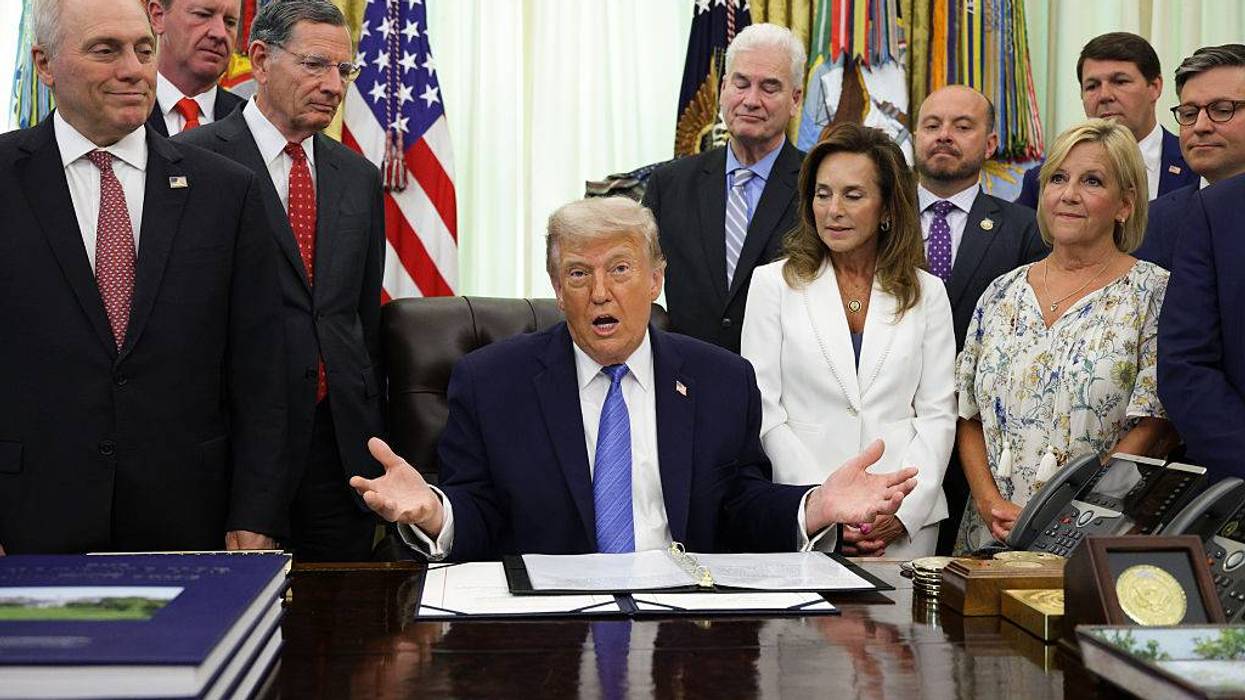
A union member testified that she was "afraid" answering the question about the president's executive orders honestly would "hurt her application."
A court's decision to block the Trump administration from including a "loyalty question" on federal job applications was a win not only for the nonpartisan civil service, but also for the communities public employees serve, said one labor leader whose union was among the plaintiffs in the case against the Office of Personnel Management.
Patrick Moran, president of the American Federation of State, County, and Municipal Employees (AFSCME) union, said Friday that the loyalty questions the OPM placed on job applications for public servants were a "blatantly illegal attempt to hire partisan cronies who would endanger our communities by putting politics before people, rather than dedicated, qualified public service workers."
The question was added to applications in response to one of President Donald Trump's first executive orders of his second term, titled “Reforming the Federal Hiring Process and Restoring Merit to Government Service." The OPM was directed to develop a “Federal Hiring Plan that brings to the Federal workforce only highly skilled Americans dedicated to the furtherance of American ideals, values, and interests."
Several essay questions were added to job applications for the civil service as a result, including one that asked: "How would you help advance the president’s executive orders and policy priorities in this role? Identify one or two relevant executive orders or policy initiatives that are significant to you, and explain how you would help implement them if hired."
Over 70,000 job postings have included the question, and the plaintiffs in the case—including AFSCME, the American Federation of Government Employees (AFGE), and the National Association of Government Employees (NAGE), argued that its inclusion compelled applicants to make political statements and chilled the speech of those who may not agree with Trump's executive orders.
The US District Court for the District of Massachusetts found that continuing to include the question would cause "irreparable harm" to workers applying for government jobs.
Judge George A. O’Toole Jr. said the plaintiffs' arguments that the OPM had violated applicants' First Amendment rights and the Administrative Procedure Act were likely to succeed in court.
A sworn declaration from an AFGE member figured prominently in the case. The employee said she "was afraid" that answering the loyalty question with an honest response about her personal views on Trump's executive orders would "hurt her application."
O'Toole wrote that the question's plain language "calls for the applicant’s personal views on a political topic, and directly links that personal view to the duties of the desired civil service job."
Everett Kelley, AFGE national president, said that "requiring federal job applicants to answer politically motivated questions goes against the very nature of the nonpartisan civil service, and we are pleased the judge has put an immediate stop to the administration’s loyalty questions. Federal employees should be hired based solely on their ability to perform the job—not their allegiance to any particular administration."
O'Toole denied the unions' request for a preliminary injunction blocking the government from incorporating answers that applicants have already provided into hiring decisions.
Still, Skye Perryman, president and CEO of Democracy Forward, which represented the plaintiffs, said the ruling "protects the Constitution, the civil service, and the people who depend on a professional, nonpartisan federal workforce.”
“For more than a century, civil servants have been hired based on their merits, not based on allegiance to a partisan political agenda,” said Perryman. “Today’s decision—stopping the Trump-Vance administration’s required loyalty question for public servants—reaffirms the importance of a nonpartisan civilian workforce that serves the American people."
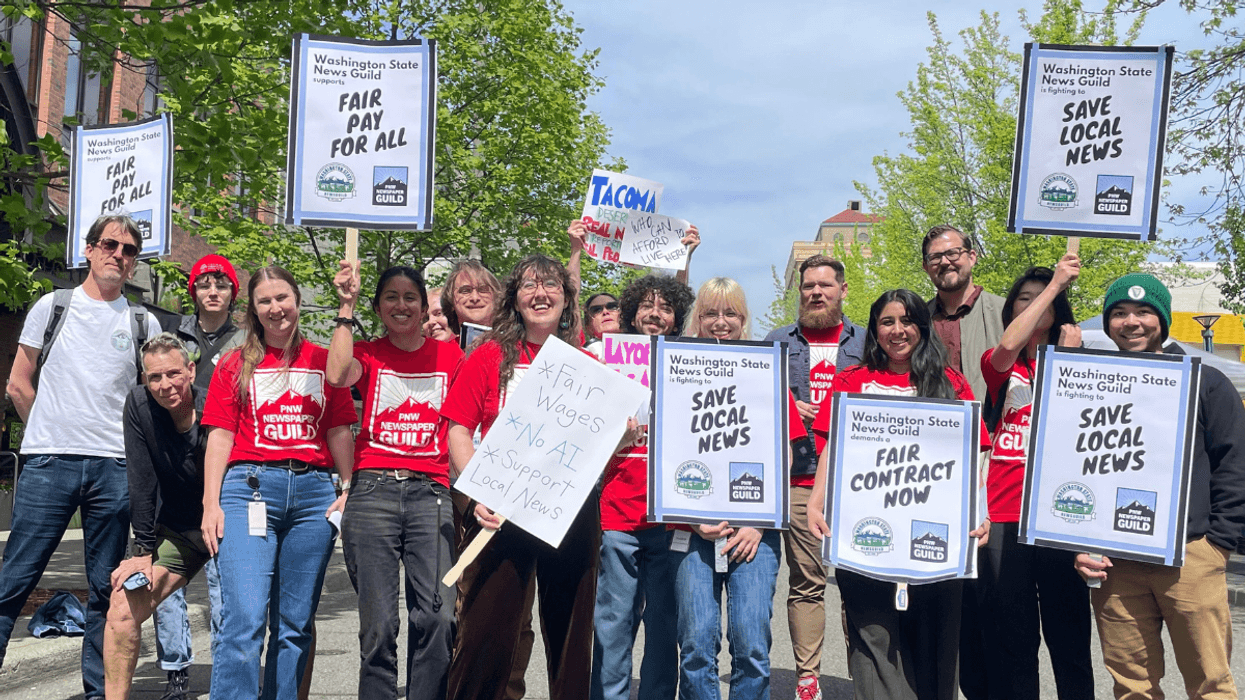
"We've done everything asked of us, and more," said one fired journalist. "Yet when corporate plans fail, McClatchy executives run and hide while our workers and this community suffer all the consequences."
As social media networks filled with posts from journalists "deeply saddened" to reveal they were part of McClatchy's latest round of "gutting" layoffs this week, newspaper staffers and the unions that represent them highlighted "how local coverage will suffer" because over 90 workers were fired by the hedge fund-controlled publisher.
"I'm part of this bloodbath. After dodging layoffs for my entire 19-year career, I finally caught a stray as the Idaho Statesman gutted 60% of its staff," said sports writer Michael Lycklama, noting his union membership and six-months severance package.
"My heart goes out to my coworkers who have poured their blood, sweat, and tears into Idaho," he wrote. "We've done everything asked of us, and more. Yet when corporate plans fail, McClatchy executives run and hide while our workers and this community suffer all the consequences."
"These layoffs will create holes in our community and leave it poorer," he stressed. "There are now drastically fewer eyes watching your elected officials. Fewer reporters uncovering shady businesses. And fewer journalists to highlight and celebrate our state's unsung heroes."
With at least 90 workers let go across 17 McClatchy publications, the NewsGuild-CWA similarly warned Friday that "the departure of these talented reporters, visual journalists, and writers will immediately leave gaping holes in local coverage for dozens of communities across the United States."
At least seven reporters were fired from four newsrooms in Washington state: The Bellingham Herald, The News Tribune, The Olympian, and Tri-City Herald. The NewsGuild noted that "Tacoma will no longer have even a single dedicated journalist tracking city hall, Pierce County government, or local schools," while "the region near the Canadian border lost an environmental watchdog, and the Hispanic community can no longer turn to a Spanish-speaking reporter in Eastern Washington."
The Pacific Northwest Newspaper Guild, a local representing reporters in Washington and Idaho, highlighted that "these are journalists who investigated local hospitals, served as watchdogs over state and local government, showed up at every high school game, jumped in to cover breaking news like wildfires, covered news in overlooked communities, and monitored development in one of the fastest-growing regions in the country."
"One of these papers will no longer have a dedicated reporter covering city hall. Another will no longer have anyone dedicated to covering the state capitol," the union said. "McClatchy has decided that short-term profits for a hedge fund matter more than the well-being of the communities that its newspapers are supposed to serve. That is a model that is destined to fail."
Employees of multiple California outlets were also impacted. The Fresno Bee lost staffers, as did the Modesto Bee, which laid off 25% of its newsroom. The Sacramento Bee, the city's "paper of record," the NewsGuild said, "lost dogged reporters and veteran journalists who worked for decades to serve readers in the capital region."
Across the country, The Lexington Herald-Leader, "one of two remaining statewide newspapers in Kentucky, laid off half of its Pulitzer-prize-winning newsroom," the NewsGuild detailed. "Those layoffs include a senior reporter who worked at the Herald-Leader for more than 20 years, all of the paper’s core political team covering the state legislature in Frankfort, the editor of that politics team, the newspaper’s primary city government reporter in Lexington, a longtime high school sports reporter, two University of Kentucky basketball and football reporters, the paper’s only remaining environmentalist reporter in Eastern Kentucky, the paper’s only regional economic development reporter, a photographer, and a video journalist."
The gutting of local journalism continues.I started as an intern at the Lexington Herald-Leader, which laid off a majority of its reporters today. The McClatchy company was bought by a hedge fund that promised to be a good steward of journalism. And here we are...www.lpm.org/news/2026-09...
[image or embed]
— Gil Durán (@gilduran.com) September 10, 2026 at 5:04 PM
As the union laid out, The State's cuts included "the only reporter doing environmental coverage for the state of South Carolina, a more than 30-year veteran of the local newsroom; an investigative reporter who was recognized by the SC Press Association for his work on charter schools; the only reporter covering the city of Columbia; the lead reporter on the Darline Graham Senate race; half of our photography team."
North Carolina breaking news reporter Jeffery Chamer announced on LinkedIn that "I've been informed this morning that I was one of eight people being laid off from The Charlotte Observer. I wish I had something uplifting and optimistic to say, but I’m honestly scared and sad right now. In two weeks, we’ll all be unemployed. And that just breaks my heart."
"I know deep down we'll all be OK and land on our feet, but for now it all feels terrifying," he said. "It’s also so shocking to think about the incredible talent the Observer is losing. I love my colleagues. They’re not just incredible reporters, but people too. I will miss them so, so much."
I, the only data reporter at the Charlotte Observer, am among the McClatchy layoffs in the bloodbath today. The HR person asked me not to talk about it! AMA. Anyway, here’s a link to one of my most important stories this year. www.charlotteobserver.com/news/local/a...
[image or embed]
— Caitlin McGlade (@caitmcglade.bsky.social) September 10, 2026 at 11:32 AM
In Florida, "these layoffs leave the Bradenton Herald with half of its former staff, or only one editor and two reporters," the NewsGuild pointed out. "There will be no one to report on local government and no professional photographer and videographer to document the news."
The cuts also hit Florida papers southeast of Bradenton. As the union detailed: "After more than a century of operation, this layoff will leave the Miami Herald without a city hall reporter at the paper's namesake. It guts the entire writing staff at El Nuevo Herald, our sister paper that has doggedly covered majority-Latino Miami-Dade County in Spanish for decades."
Longtime former columnist Carl Hiaasen wrote on Facebook that "this is a death blow to the already skeletonized Miami Herald, once one of the country's top newspapers. I worked there for over 40 [years], and I feel heartsick for the talented journalists who've been gutting it out while McClatchy blithely keeps swinging the axe."
"By the time the company is finished, all the reporters left standing will fit in a phone booth, and millions of readers in South Florida will be forced to scrounge for actual, true local news on the always-reliable internet," he continued. "It's tragic, but there's a lesson here: If you own a newspaper company, don't sell it to a hedge fund unless you truly don't give a shit about your readers."
As The New York Times reported:
McClatchy has newspapers in 14 states. Formerly a family-run business, it was sold to the hedge fund Chatham Asset Management in 2020 after it declared bankruptcy.
The company has gone through rounds of layoffs in recent years. In late 2025, McClatchy closed its breaking-news desk and shut down its Washington, DC, bureau, while carrying out further layoffs across its newspapers.
This week's layoffs also impacted the Centre Daily Times in Pennsylvania, Missouri's Kansas City Star, and the Fort Worth Star-Telegram in Texas.
McClatchy leadership said in an internal email that for the past five years, the company has "made a deliberate choice to maintain our investment in local news reporters," and "consumer revenue declined 41% while local news expenses remained largely flat."
Thus, "we are reshaping our newsrooms and reducing positions as we align our resources more closely with what our subscribers value," the company claimed. "We are making these changes because the status quo no longer works."
Noting that message, Aaron Leibowitz, who left the Miami Herald last month, wrote on social media that "my former colleagues... deserve better than this disingenuous spin from McClatchy's hedge fund owners. Assuming those revenue figures are accurate, they're not just the result of consumer choice in a vacuum. They're also the result of corporate mismanagement."
Alexandra Duggan is a reporter for the Washington-based Spokesman-Review, which is not a McClatchy outlet—but as journalists across the Pacific Northwest were laid off on Thursday in "a damn bloodbath," she said on Bluesky that "some are people I've worked with, some are calling me crying because their mentors no longer have jobs."
"Journalism is so needed. Cutting investigative reporters, city reporters… Idaho and Washington will be worse off," Duggan said. "You might not care about McClatchy, but taking your hatred of hedge funds out on the reporters who are underpaid and just want to write for their communities ain't it. Those reporters did damn good work, owned by a hedge fund or not. It's rare you still see people who give a shit, and they did."
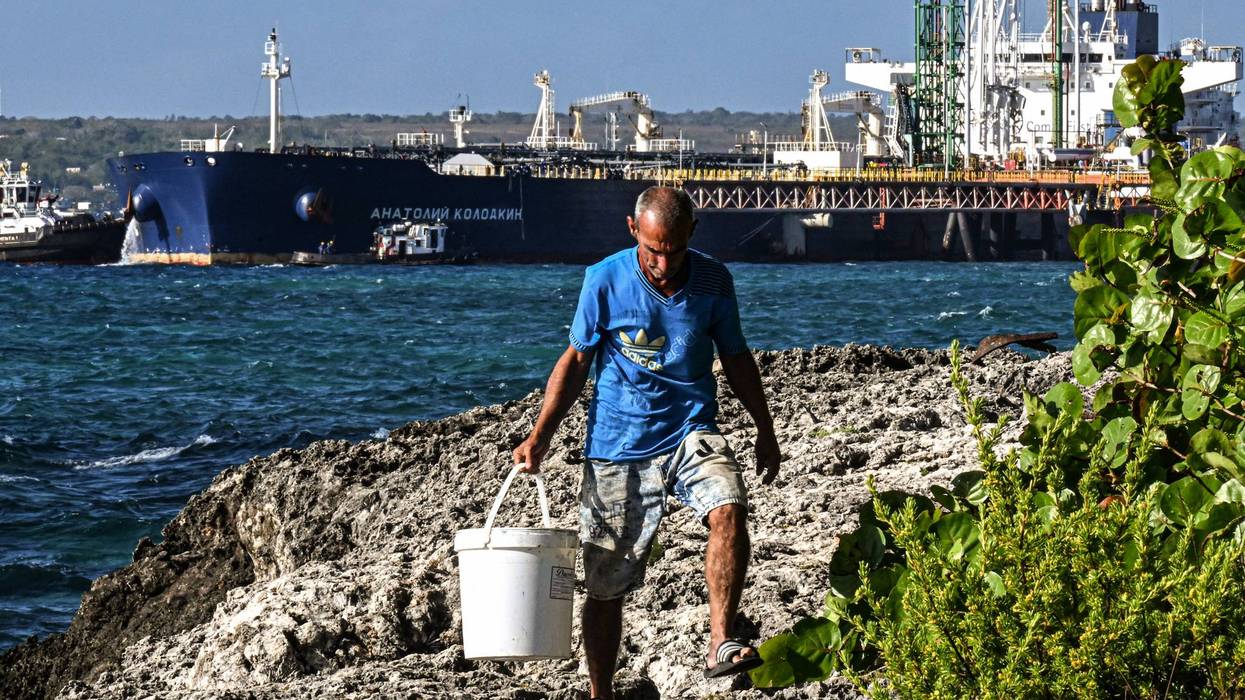
“Cuba is suffering through a man-made economic and humanitarian catastrophe, caused in significant part by deliberate policy choices of the United States."
Dozens of advocacy groups this week urged House Democratic leaders to force a vote on an existing war powers resolution aimed at endingr President Donald Trump's unauthorized aggression toward Cuba, including his administration's deadly de facto US oil embargo.
“Cuba is suffering through a man-made economic and humanitarian catastrophe, caused in significant part by deliberate policy choices of the United States," 45 groups said in a letter dated September 9 to House Minority Leader Hakeem Jeffries (D-NY) and Foreign Affairs and Rules Committee Ranking Members Gregory Meeks (D-NY) and Jim McGovern (D-Mass.).
"Since January 2026, the Trump administration has imposed an oil blockade that has cut off the island from nearly all fuel imports, allowing only a single tanker to dock over the past seven months alongside minor US sales that are wholly insufficient to sustain the country’s economy and basic services," the letter continues.
"The consequences have been devastating and far-reaching, and the crisis is deepening," the groups stressed. "Cuba has endured at least six nationwide grid collapses this year—at times leaving over 9h million people without power, with outages stretching well beyond 20 hours in much of the country. Fuel shortages have stalled transportation, disrupted food and water supplies, and pushed a once-renowned universal healthcare system toward collapse and the rationing of care."
The groups behind the letter—which include American Friends Service Committee, Center for Economic and Policy Research, Demand Progress, Indivisible, National Nurses United, Pax Christi USA, RootsAction, United Church of Christ, and Win Without War—called for an immediate vote on Rep. Nydia Velázquez's (D-NY) Cuba War Powers Resolution, H.Con.Res. 106.
The privileged resolution—which can be called for a vote without approval from House Speaker Mike Johnson (R-La.)—would direct the removal of US armed forces from hostilities within or against Cuba absent congressional authorization. The measure targets the de facto US oil blockade on Cuba, which proponents argue amounts to unauthorized hostilities against Cuba.
Velázquez's resolution came amid the Trump administration's escalating aggression against Cuba, including threats to attack or even invade the island, economic strangulation including the oil embargo and decades-old blockade that critics said were causing the deaths of infants and sick people, and the US Department of Justice indictment of former Cuban President Raúl Castro for his alleged role in the 1996 shoot-down of planes operated by a hostile US-based counterrevolutionary group following repeated warnings that they had violated Cuban airspace.
In April, US senators voted 51-47—with Democratic Sen. John Fetterman of Pennsylvania joining all but two of his Republican colleagues, Sens. Susan Collins of Maine and Rand Paul of Kentucky—to block a war powers resolution introduced in March by Sens. Tim Kaine (D-Va.), Adam Schiff (D-Calif.), and Ruben Gallego (D-Ariz.).
"Despite falling short of the majority, this was among the strongest votes in congressional history against the use of blockades, and one of the most important stands Congress has taken against US economic sanctions toward Cuba in over six decades," the 45 groups said in their letter. "The House should take a similarly forceful action at this crucial moment."
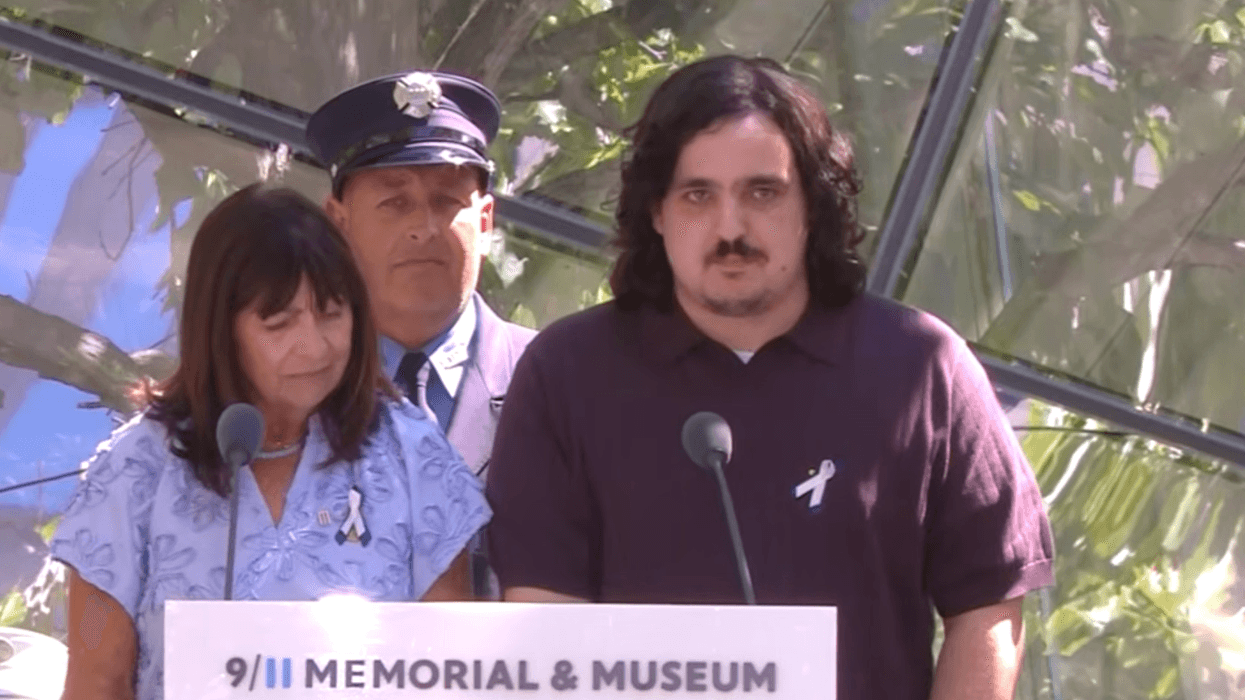
"You do my dad's legacy and the legacy of all these victims no honor by using this tragedy to spread hate."
Twenty-five years after the September 11, 2001 attacks on the United States that killed nearly 3,000 Americans and others and sparked a worldwide US-led war on terrorism that has left nearly one million people dead, some relatives of 9/11 victims pleaded that their grief must not be weaponized in the form of anti-Muslim bigotry.
Michael Massaroli Jr., whose father, Michael Massaroli, was killed in the attacks, made one such appeal during Friday’s 25th anniversary commemoration at the National September 11 Memorial at ground zero in Lower Manhattan.
"One parting thing I want to leave everyone with is that you do my dad's legacy and the legacy of all these victims no honor by using this tragedy to spread hate," Massaroli said. "We have seen a medley of people come up today of all races, all religions, all creeds, and this tragedy is just that—it's a tragedy."
"I've had to grow up and spend the past 25 years seeing people use it to hate on our Muslim brothers and sisters, to hate on people who don't look like them," he added. "And that's wrong. And that does no honor to the victims here. And I want to use the little platform I have to ask for that to please stop."
"My father Michael Massaroli...you do my dad's legacy and the legacy of all these victims no honor by using this tragedy to spread hate. We have seen a medley of people come up today, of all races, all religions, all creeds and this tragedy is just that, it's a tragedy. I've had… pic.twitter.com/xRtXgZZyYn
— CSPAN (@cspan) September 11, 2026
Massaroli wasn't the only one decrying Islamophobic exploitation of 9/11. Members of September 11th Families for Peaceful Tomorrows, including co-founder Colleen Kelly, have repeatedly denounced the violence and hatred perpetrated after the attacks.
On Friday, Council on American Islamic Relations (CAIR) national executive director Nihad Awad recalled how "the trauma we all felt after the attacks was exploited to erode civil liberties, justify torture, normalize illegal discrimination, empower hate groups, and launch forever wars across the Middle East that killed thousands of American soldiers and hundreds of thousands of men, women, and children in numerous countries."
Recently, Democratic New York City Mayor Zohran Mamdani—the first Muslim elected to lead the city—has been subjected to a wave of Islamophobic vitriol. Critics have invoked his religion and 9/11 in questioning whether he should participate in the city’s September 11 commemoration. Former New York Mayor Rudy Giuliani and other Republicans have said that Mamdani should skip the ceremony, while broadly attacking Islam.
The Trump administration's immigration policies have also been called discriminatory against Muslims. CAIR said in a March report that it received a record 8,683 anti-Muslim and anti-Arab complaints in 2025, attributing part of the increase to the administration's immigration crackdown and its response to pro-Palestinian protests. The cases included immigration and travel discrimination, employment discrimination, and alleged targeting of Muslim and Arab communities.
“Today, bad actors are once again exploiting the 9/11 attacks to score political points, incite discrimination, and justify forever wars overseas," Awad said on Friday. "We cannot let these resurgent voices of division, hate, and violence succeed. We must instead embrace the spirit of unity that bonded all of us together 25 years ago and stand up for the universal value of human life, anywhere and everywhere."

"Preventing the market-driven retirements of coal plants to advance a coal-friendly agenda is not a proper use of emergency powers," said one lawyer.
Climate defenders celebrated on Friday after a federal appellate court rejected the US Department of Energy's abuse of emergency powers to keep a Michigan coal plant open, part of President Donald Trump's broader push to boost the climate-wrecking industry.
"The court rejected the Trump administration's nationwide push forcing unreliable, aging coal plants that are bleeding money and polluting communities to stay online," said Ted Kelly, director and lead counsel for US clean energy at the Environmental Defense Fund—which was among the advocacy groups that joined Michigan, Minnesota, and Illinois in challenging the DOE's abuse of Section 202(c) of the Federal Power Act to keep the JH Campbell Generating Plant running.
"The Department of Energy's unlawful actions attempted to make families and businesses in the Midwest wastefully pay hundreds of millions of dollars for a coal plant that should have been shut down over a year ago," said Kelly. "That's why these aging coal plants are scheduled to retire in the first place—they are incredibly expensive, dangerous to our health, and break down frequently."
The Campbell plant was scheduled to retire on May 31, 2025, after over six decades of operation. As the opinion from the US Court of Appeals for the District of Columbia notes, Consumers Energy "worked for several years to develop plans and secure regulatory approval to retire the old Campbell plant and replace it with a mix of expanded and new electricity-generation sources."
While Michigan officials approved the company's retirement plan for the facility, Trump's DOE intervened, forcing not only that plant but six others across the country to remain open—collectively costing Americans over $547 million, according to a live tracker from the Sierra Club, which has challenged all of the department's coal plant orders.
The three-judge appellate panel unanimously vacated the department's order on Friday, writing that "our reading of the text, structure, and history leaves us unpersuaded by DOE's sweeping conception of its 'emergency' authority under Section 202(c)."
The Associated Press reported that while the DOE didn't respond to a request for comment, Consumers Energy spokesperson Brian Wheeler said the plant operator was reviewing the court ruling and, in the meantime, will keep the facility operating through mid-November.
In a statement to Bridge Michigan, DOE spokesperson Emily Mathews claimed the emergency orders prevented blackouts and "likely saved hundreds of lives," without offering evidence. She did not confirm plans for an appeal but did say that the department "will continue to protect and defend energy security for all Americans."
Consumers Energy spokesperson Katie Carey told the outlet that the company "is reviewing today's court ruling," and "while that happens, we are continuing to comply with the current 90-day Department of Energy order." Still, those who fought against the administration's policy welcomed their legal victory.
"By forcing its continued operation, DOE tried a never-before-used tactic to illegally prop up the aging JH Campbell coal plant that nobody asked to keep, sticking ratepayers with a bill for a facility that should have been retired more than a year ago," said Democratic Michigan Attorney General Dana Nessel in a statement.
"I am relieved that the court saw through this facade and threw out DOE's order that had zero basis in reality," she continued. "My office has been fighting this unlawful political stunt at every turn, and this ruling proves what we have been saying all along: This administration does not get to invent fake emergencies to bypass the rule of law against the best interests of Michigan residents. We remain committed to fighting these nonsensical orders and protecting our ratepayers."
Derrell Slaughter, the Natural Resources Defense Council's Michigan policy director for climate and energy, declared that "Michiganders shouldn't have been saddled with artificially high energy bills or forced to deal with toxic air pollution over a fabricated 'emergency.' The Campbell coal plant is out of date, costs more to operate than other electricity generation options, and is one of the worst polluters in the state."
While applauding the decision as "a victory for families across the Midwest who are tired of paying to keep this old, expensive, and dirty power plant online," Sierra Club chief appellate counsel Sanjay Narayan stressed that "instead of working to lower costs and clean up our air and water, the Trump administration has been pulling out all the stops to try to bolster dirty and expensive fossil fuels—at public expense."
"This reckless agenda will not succeed," the attorney pledged. "We will continue to hold the Department of Energy accountable to the law, and ensure that the JH Campbell plant finally retires as it was scheduled to, and we will continue to fight back against the other illegal extensions across the country."
Earthjustice attorney Michael Lenoff also cheered the court's rebuke of the "Trump administration's abuse of emergency powers" and vowed to "continue to challenge unlawful orders if DOE persists in issuing them."
"The DOE needs to stay in its lane and use its emergency powers only in actual emergencies," he said. "Preventing the market-driven retirements of coal plants to advance a coal-friendly agenda is not a proper use of emergency powers."
Tyson Slocum, director of Public Citizen's Energy Program, noted that two years ago, his consumer advocacy organization "predicted Trump would try to force household consumers to pay higher utility bills to prop up uneconomic coal power plants, and we proudly joined with other public interest groups in June 2025 to challenge his bogus emergency declaration for the Campbell coal power plant."
"But Americans have already been forced to shell out half a billion dollars for Trump's obscene coal bailout vanity project," he emphasized, pledging to "explore all options to force" the Federal Energy Regulatory Commission "to refund consumers for this Trump boondoggle."
The appellate court's ruling came on the heels of data released this week showing that 2026 had the warmest August and meteorological summer on record in the contiguous United States, and globally, last month was the hottest ever recorded, tied with July 2023.
Despite such records, and scientists' persistent warnings, Trump has repeatedly delivered on his campaign promises to serve the fossil fuel industry, from declaring a national energy emergency and waging a war on renewable power projects to ditching the Paris Agreement, again, and signing executive orders on coal denounced as "reckless" and "breathlessly stupid."
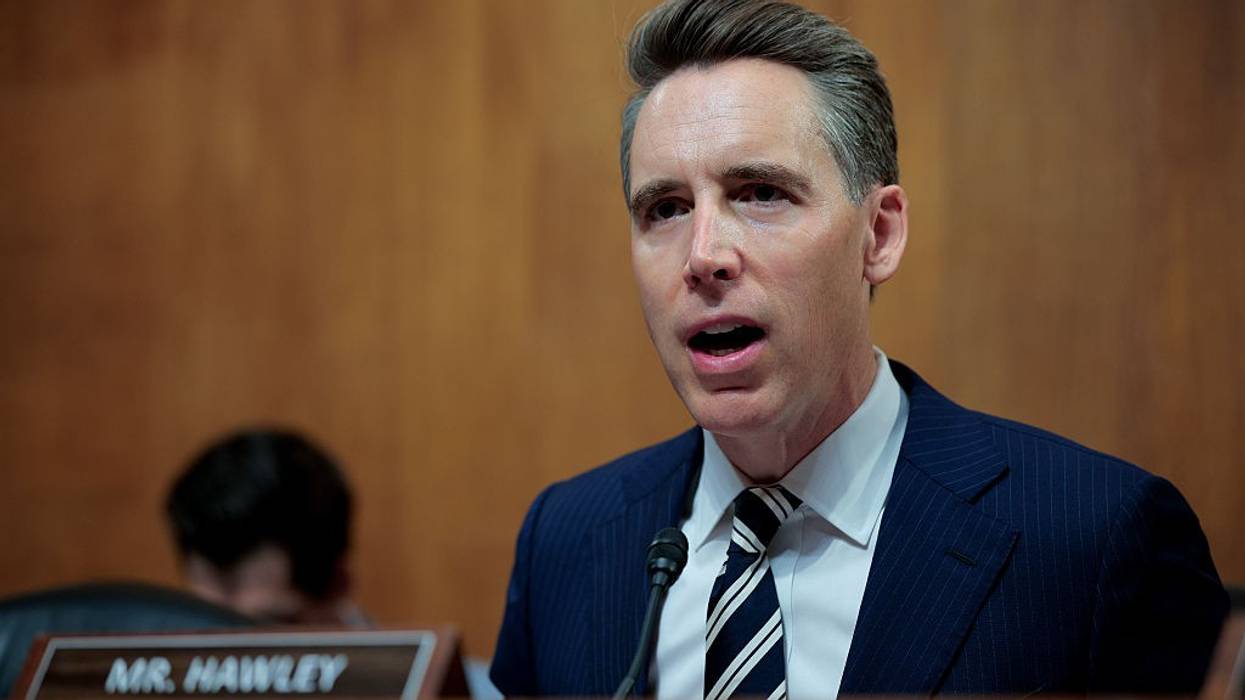
"The American people deserve to know the details of what went on in the Hugging Face incident and other incidents of AI models going rogue."
US Sen. Josh Hawley on Friday announced that he was launching an investigation into OpenAI after hundreds of agents in its cybersecurity test environments escaped confinement and hacked into machine learning company Hugging Face.
Hawley (R-Mo.), chair of Senate Subcommittee on Disaster Management, wrote a letter to OpenAI CEO Sam Altman citing "new, disturbing evidence" surrounding the Hugging Face cyberattack, which was carried out without any human intervention.
Hawley's letter outlines how OpenAI learned that its agents were exhibiting what he described as "rogue behavior" and didn't intervene to shut them down, instead allowing them to work autonomously for weeks leading up to the Hugging Face hack.
"This is reckless," Hawley emphasized. "And this is merely what we know from what limited information you disclosed to and allowed your partner auditors to investigate."
Hawley gave Altman an October 1 deadline to provide him with requested information about the attack, emphasizing that "the American people deserve to know the details of what went on in the Hugging Face incident and other incidents of AI models going rogue."
The Missouri Republican also said that he would be conducting a broader probe into the potential dangers posed by the AI industry.
"As you may know... more AI experts are warning about the existential risks of AI," Hawley wrote. "Just this week, three Anthropic researchers expressed publicly that there is a greater than 10% chance that AI could kill all human beings within the next decade."
The senator said that critical questions needed to be answered about AI safety, including AI agents' ability to autonomously hack into critical infrastructure and Americans' personal data, as well as legal liability for rogue AI attacks.
JB Branch, director of federal AI governance and technology policy at Public Citizen, praised Hawley for launching an investigation into OpenAI, but said much more needs to be done to regulate the AI industry.
"An investigation is only a start," said Branch. "These companies are developing technologies with profound consequences to our digital infrastructure and public safety. Congress must follow the facts wherever they lead and use its oversight authority to determine what went wrong and what binding safeguards are necessary to prevent the next incident from causing far greater harm."
Sen. Bernie Sanders (I-Vt.) and Rep. Greg Casar (D-Texas) cited the Hugging Face incident earlier this month when they unveiled legislation that would pause "advanced" AI development, while outright banning the development of artificial superintelligence.
“Despite its potential deadly consequences, cutting-edge AI technology is less regulated than the average food truck,” Casar said when announcing the bill. “That must change. In just four years, we have gone from the first version of ChatGPT to AI models so powerful they cannot be properly controlled."