

SUBSCRIBE TO OUR FREE NEWSLETTER
Daily news & progressive opinion—funded by the people, not the corporations—delivered straight to your inbox.
5
#000000
#FFFFFF
To donate by check, phone, or other method, see our More Ways to Give page.
Daily news & progressive opinion—funded by the people, not the corporations—delivered straight to your inbox.

Massive Fossil Fuel Expansion on Pace With Trump Administration
Federal data show the Biden administration approved 9,779 permits for oil and gas drilling on public lands in its first three years, nearly keeping pace with the Trump administration’s 9,982 drilling-permit approvals in its first three years.
The Biden administration’s policy of oil and gas expansion contradicts the clear climate science that fossil fuel growth must be stopped and governments must phase out fossil fuels to avoid the most catastrophic consequences of climate change. In December the United States and other countries agreed to a phasedown and ultimate phaseout of fossil fuel extraction.
“Given the urgency of the climate crisis and our nation’s pledge to phase out oil and gas extraction, the Biden administration needs to pump the brakes right now on issuing drilling permits on our public lands,” said Jeremy Nichols of the Center for Biological Diversity. “It’s time for the administration to show the world what true climate leadership looks like.”
The pace of new oil- and gas-drilling approvals stands in contrast to the administration’s action last week to temporarily pause new gas-export projects. While met with support, the pause is not permanent and does not stem new fossil fuel production.
“The temporary pause on new gas-exports projects is a good step, but for it to be meaningful, the Biden administration needs to make it permanent and stop rubberstamping more fossil fuel production,” said Nichols.
More than 6,000 of the drilling permits granted by the administration are on public lands managed by the U.S. Bureau of Land Management’s New Mexico office, followed by 1,793 permits in Wyoming and several hundred each in Utah, Colorado, California and North Dakota.
Scientific analyses show climate pollution from the world’s already producing fossil fuel developments, if fully developed, will push warming past 1.5 degrees Celsius. Avoiding such warming requires ending new investment in fossil fuel projects and phasing out production to keep as much as 40% of already developed fields in the ground.
The Biden administration has not enacted any policies to significantly limit drilling permits or manage a decline of production to avoid 1.5 degrees of warming. It supported Sen. Joe Manchin’s demands to add provisions to the Inflation Reduction Act that will lock in fossil fuel leasing for the next decade.
The administration has also ignored petitions from hundreds of climate, conservation, Indigenous and environmental justice groups calling for a phaseout of federal oil and gas production.
In June 2023 the Interior Department rejected a petition filed by the Center for Biological Diversity and others to wind down federal fossil fuel extraction. The Center sued the Interior Department in November over the failure of the agency to release records explaining why it denied the petition.
At the Center for Biological Diversity, we believe that the welfare of human beings is deeply linked to nature — to the existence in our world of a vast diversity of wild animals and plants. Because diversity has intrinsic value, and because its loss impoverishes society, we work to secure a future for all species, great and small, hovering on the brink of extinction. We do so through science, law and creative media, with a focus on protecting the lands, waters and climate that species need to survive.
(520) 623-5252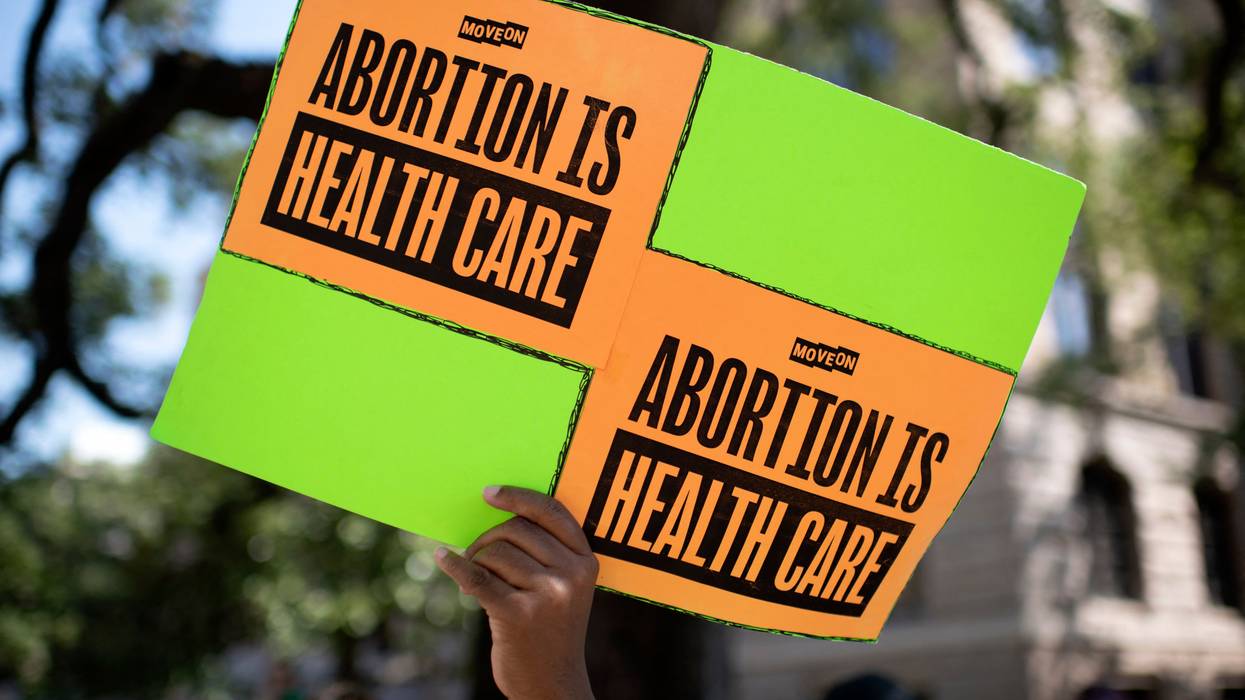
"Everyone, no matter who they are, where they live, how much money they make, or how they get their insurance, deserves access to abortion care without barriers."
On Wednesday, reproductive rights groups marked half a century of abortion care being "baselessly set apart from all other healthcare," with coverage for abortions blocked in government-funded healthcare plans like Medicaid, which about 16 million women of reproductive age rely on.
"Our constituents have suffered the consequences," said the Congressional Reproductive Freedom Caucus, chaired by Reps. Diana DeGette (D-Colo.) and Ayanna Pressley (D-Mass.).
For 50 years, the Hyde Amendment—proposed by the late Rep. Henry Hyde (D-Ill.), who expressed his wish to prevent "anybody having an abortion" and said blocking federal funds within the Medicaid program from being used for care was the best way to do so—has stopped hundreds of thousands of people from obtaining abortion care, and has been called by anti-abortion groups "one of the greatest achievements of the pro-life movement to date."
The Reproductive Freedom Caucus denounced the budget rider that has been reeimplemented in appropriations bills every year since 1976 as "a dangerous, racist, and classist abortion ban. An abortion ban for the working class and people of color, who disproportionately receive health insurance through the federal government."
The caucus noted that more than 200 House Democrats have supported efforts to repeal the amendment, and advocacy groups on Wednesday called on Congress to pass the Equal Access to Abortion Coverage in Health Insurance (EACH) Act, which would permanently repeal the Hyde Amendment.
"Without solutions like the EACH Act, the Hyde Amendment will continue to force people with low incomes to struggle for the care they need or carry a pregnancy against their will," said the National Women's Law Center (NWLC). "Everyone, no matter who they are, where they live, how much money they make, or how they get their insurance, deserves access to abortion care without barriers."
In addition to low-income people who rely on Medicaid, said the National Network of Abortion Funds (NNAF), the Hyde Amendment blocks abortion care for Indigenous people who use the Indian Health Service, people in federal prisons, disabled people, military service members and their families, and federal employees, among others.
Twenty-nine states follow Hyde Amendment restrictions, which include "exceptions" for pregnancies resulting from rape or incest or cases in which a pregnant person's life is at risk. Twenty-one states use state funds to cover abortion care, but nearly half of US women of reproductive age who use Medicaid live in states that either ban abortion care or bar them from getting abortions using the federally funded healthcare plan.
NNAF highlighted the network's decades of work to counter the Hyde Amendment by ensuring people who need abortions can access funding, which abortion funds across the country obtain through grassroots donations as they also advocate to end the Hyde Amendment.
"By the 1990s—less than two decades after Hyde first passed—28 abortion funds had formed across the country. Twenty-two of those funds started the National Network of Abortion Funds (NNAF) in 1993," said NNAF. "We joined together to build strategic power and end the Hyde Amendment. Today, our network has nearly 100 member abortion funds, and our fight against Hyde continues."
"The fierce abortion funds in our network have raised money, arranged travel, connected folks to clinics, provided practical support, and fought restrictions in their states and communities," the group added. "Despite endless challenges, their tireless work has built power for our collective goal: Make abortion accessible for all."
Abortion funds have helped people obtain care across the country, but the NWLC emphasized that the Hyde Amendment has still left hundreds of thousands of women with no choice but to pay for abortions out of pocket—often pushing them to delay care while they gather funds or to carry a pregnancy to term when they don't want to or can't afford to become a parent.
"While abortion costs vary by location, facility, and stage of pregnancy, the median out-of-pocket costs in 2023 were $563 for medication abortion, $650 for first-trimester procedural abortion, and $1,000 for second-trimester abortion care," said NWLC. "Those costs account for just the procedure itself, not additional expenses. And yet, nearly half of American families cannot afford the true cost of living... So, when the Hyde Amendment denies someone abortion care, the compounding costs can push people further into a struggle to survive and meet basic needs."
Dr. Jamila Perritt, president and CEO of Physicians for Reproductive Health, remembered Rosie Jimenez, a 27-year-old mother and aspiring teacher who died in 1977, almost exactly a year after the Hyde Amendment was passed, after being denied Medicaid coverage for an abortion.
“Hyde has harmed generations of people seeking abortion care," said Perritt. "Women like Rosie Jimenez, the first known person to die because of Hyde Amendment restrictions, should still be here. No one, no matter what insurance they have access to or who they are, should be denied abortion care, full stop."
Stateline reported Tuesday that with weeks to go until the midterm elections and President Donald Trump's approval rating plummeting to record lows, anti-abortion groups are increasingly concerned that a Democratic majority could repeal the amendment, which it came close to doing in 2022.
“If there becomes a pro-abortion majority in Congress, then Hyde is going to be one of the first things to go, probably, especially because it’s been in the spotlight more recently,” Gavin Oxley, spokesperson for Americans United for Life, told Stateline. Particularly since Trump told Republicans to be "a little flexible" on the Hyde Amendment when the party was pushing to end subsidies under the Affordable Care Act, Oxley said "there are some Republicans who may not be as committed to protecting Hyde.”
Perritt expressed hope that Congress could pass the EACH Act, which now "has the highest amount of support... ever seen with over 200 co-sponsors."
"As a DC-based OB-GYN and abortion provider, I see patients burdened with the cost of abortion care, forcing them to choose between basic living needs and lifesaving healthcare," she said. "The Hyde Amendment is a zero-sum constraint that is not about patients’ health and autonomy, but instead about punishing people for making informed decisions about their bodies, families, and futures. Enough is enough."
"We do not need another Hyde Amendment anniversary," said Perritt. "We need to repeal the Hyde Amendment for good.”
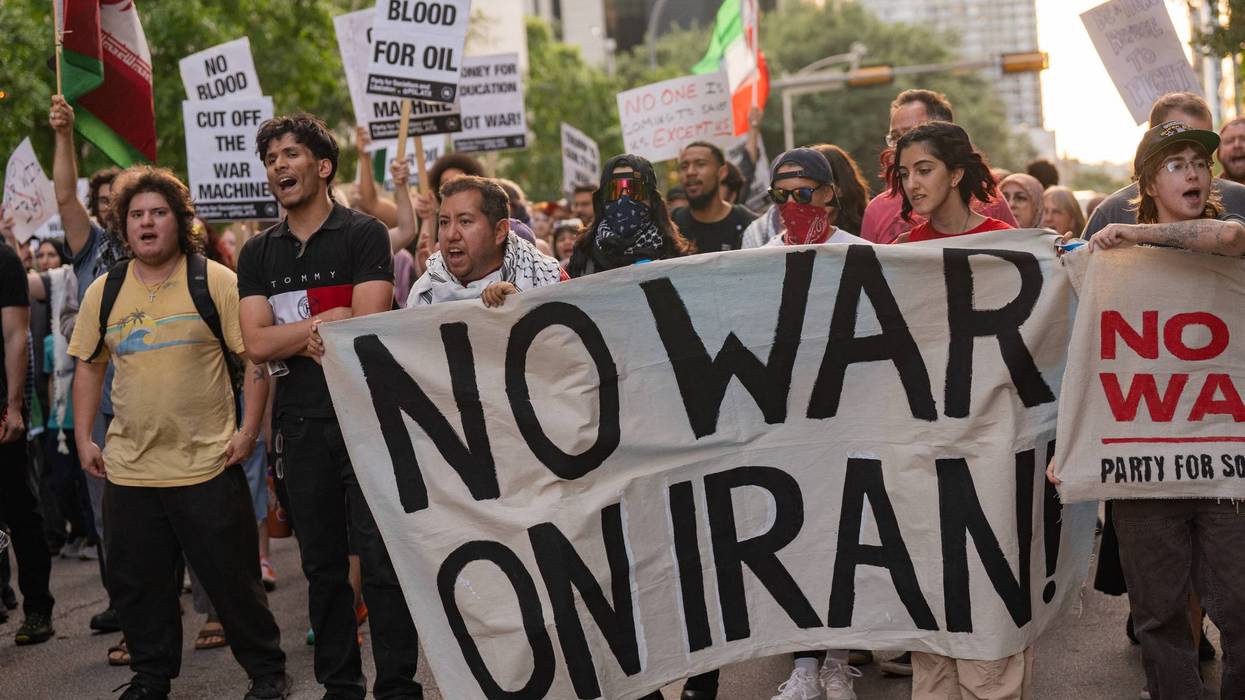
"This is a self-inflicted wound, it's a choice, and it can be undone."
A group of experts says that President Donald Trump's illegal war with Iran, which has been massively expensive and has made Americans less safe, shows the need for a radical overhaul of US foreign policy.
Scholars at the Political Economy Research Institute (PERI) at the University of Massachusetts on Wednesday are holding a webinar to present ideas for reducing the US military footprint and using the savings to invest in programs that will directly benefit working-class Americans.
In a video posted on social media ahead of the webinar, PERI experts advocated for making major changes to US foreign policy, which they argued has left the country overstretched.
"The Iran War costs us billions while making us less safe," says a message accompanying the video on PERI’s social media account. "By reining in military spending and taxing the wealthy to pay their fair share, we can fund critical services like universal preschool, infrastructure investments, and Medicare for All."
The Iran War costs us billions while making us less safe.
By reining in military spending and taxing the wealthy to pay their fair share, we can fund critical services like universal preschool, infrastructure investments, and medicare for all. pic.twitter.com/daOFLyWHEr
— PERI (@PERIatUMass) September 30, 2026
Lindsay Koshgarian, program director of the National Priorities Project (NPP), made the case that the US can no longer enforce a policy of "maintaining dominance over the entire world."
"We have endless wars in the Middle East, a war of choice with Iran at the moment," said Koshgarian. "Clearly, something is broken about our foreign policy. It's extremely costly and, in fact, it actually makes us less safe."
Koshgarian then outlined her plan for what she described as "a smaller, safer military" that would slash US presence overseas and generate between $200 billion to $500 billion of savings per year.
Heidi Peltier, senior researcher at the Watson School of International and Public Affairs at Brown University, pointed to Trump's request for an "astronomical" $1.5 trillion military budget to argue that America's priorities have become completely warped.
"The money is there," Peltier said. "The question really is, what are our priorities?"
Peltier's research aims to "demilitarize" federal spending by reducing the annual US Department of Defense budget by 10%, which would free up $100 billion more to spend on domestic priorities.
Aaron Medlin, professor of international studies at Boston College, pointed to the ways Trump's illegal war had made the price of energy more expensive and was inflicting economic pain on working-class Americans.
Medlin said that his work focuses on raising taxes on the wealthy by taxing income generated from owning assets at the same rate as income generated from working, while also imposing a minimum tax on fortunes over $100 million, and small levies on stock, bond, and derivatives trades.
In total, Medlin estimates that the proposed tax package would raise more than $2 trillion annually.
"The United States is just becoming unaffordable for a huge share of Americans," he said. "This is a self-inflicted wound, it's a choice, and it can be undone."
The experts' proposals for reducing the US military footprint and taxing extreme wealth came on the same day that petroleum industry analyst Patrick De Haan estimated that Americans have now spent over $75 billion more on gasoline since the start of the Iran War.
When higher gas prices are combined with rising rates for diesel, the Costs of War Project at Brown's Watson Institute estimates that Americans have spent an extra $121.7 billion.

After more than six months, 329,000 people in Lebanon remain displaced from their homes by Israel's occupation, one-third of whom are children.
Israel's latest assault on Lebanon is inflicting widespread hunger, death, and injury on children across the country, according to a report out Wednesday from the United Nations Children's Fund.
Children go to bed hungry in at least one in five households, according to a survey conducted by UNICEF in July, while nearly a third are going without needed healthcare because their families are unable to afford it. Four in five households, the report says, have found it harder to afford basic necessities.
Nearly 17,000 people have been killed or injured since March. Among them are 261 children who've been killed and 1,056 who've been injured—and 12% of those injured now live with a disability.
Around 100,000 children are at risk of losing access to education. At least 436 schools have been damaged across the country, including 37 that were completely destroyed.
“Children and young people in Lebanon are being asked to bear a burden no child should have to carry,” said UNICEF Lebanon Representative Marcoluigi Corsi, who noted the report's finding that 770,000 children have suffered psychological distress over the past six months due to repeated exposure to violence, loss, and displacement.
Lebanon was already in the midst of an economic crisis that left many families poor. But the situation has grown markedly more severe since March, when Israel launched an ongoing occupation of southern Lebanon that has displaced more than 1.1 million people and unleashed punishing airstrikes across the country, including in densely populated civilian areas.
More than 329,000 of those displaced have yet to go home, and around one-third are children. Despite a ceasefire announced in April, Israeli officials have said that those ordered to leave their homes will not be allowed to return until they deem northern Israel "safe" from attacks by the militant group Hezbollah.
Israeli forces have systematically razed dozens of villages and farms in southern Lebanon, destroying tens of thousands of homes. As Al Jazeera reported earlier this week, Israel has predominantly demolished Shia villages while telling Christian villages they'll be spared so long as they stay neutral.
According to a June report by Amnesty International, about 6% of Lebanese territory is effectively under a "don't come back" order from Israel with residents barred indefinitely from returning home. Amnesty said the forced displacement and prevention of return in parts of southern Lebanon constitute unlawful transfer, a war crime.
Some Israeli leaders have discussed annexing the occupied portion of Lebanon and moving in Israeli settlers.
Earlier this week, Bezalel Smotrich—the Israeli finance minister who has overseen a historic surge of violent settlement expansion in the West Bank—said that he would "very much like to annex at least… up to the Litani [River] in Lebanon," extending the country's border into southern Lebanon.

"If it comes to pass, this deal would bulldoze America’s most important wildlife law," said one campaigner.
A bipartisan Senate proposal to overhaul federal permitting rules drew fierce opposition Wednesday from environmental and wildlife advocates, who warn that the legislation could significantly weaken the Endangered Species Act and other key protections in service of boosting President Donald Trump's pro-fossil fuel and artificial intelligence agenda.
Senate negotiators—chiefly Democrats Martin Heinrich (NM) and Sheldon Whitehouse (RI) and Republicans Shelley Moore Capito (W.Va.) and Mike Lee (Utah)—reportedly reached an agreement Monday on the text of a sweeping permitting package intended to speed construction of energy and infrastructure projects.
While the full legislative text of the “Bipartisan American Affordability and Jobs Act of 2026" had not been publicly released as of Wednesday, reported provisions have prompted alarm among conservation groups, who warn that the proposal would weaken endangered species protections, shift federal authority and responsibility to states, limit scientific review and judicial oversight, and exempt some projects from key environmental consultations.
“If it comes to pass, this deal would bulldoze America's most important wildlife law,” Defenders of Wildlife president and CEO Andrew Bowman said Wednesday. “We can build the infrastructure America needs without sacrificing the wildlife we have a responsibility to protect and that Americans cherish. Development should not come at the expense of science, accountability, or the ability of America’s most imperiled wildlife to survive.”
Oil Change International called the proposal "a blatant giveaway to Big Oil and Big Tech."
“This ‘dirty deal’ threatens to raise electricity prices for working families by accelerating the buildout of energy-guzzling AI data centers and liquefied natural gas export projects," said Oil Change International US campaigns manager Collin Rees. "Our recent research shows that the Trump administration’s support for reckless AI development and greater gas exports drives up energy costs for households."
Brett Hartl, government affairs director at the Center for Biological Diversity (CBD), said that “this is a climate kill shot that condemns our most vulnerable communities to suffer decades more fossil fuel pollution."
"It’s absurd to ensure our planet chokes with greenhouse gases, gut endangered species protections, and eviscerate the Clean Water Act for what seems to be a nearly meaningless victory against Trump’s war on offshore wind,” Hartl continued. "The minor benefits for renewable energy corporations are massively dwarfed by the gifts to the fossil fuel industry."
"If this grotesque legislation becomes law, the paltry increases in renewable energy will be instantly devoured by AI data centers," he added. "The only winners here are Elon Musk, Mark Zuckerberg, tech oligarchs, and the shareholders of fossil fuel companies.”
According to CBD:
Today’s package contains numerous provisions that lock in thousands of fossil fuel projects, including oil and gas pipelines, [liquefied natural gas] export terminals, and expanded fossil fuel drilling onshore and offshore approved by President Trump over the past two years. It also ensures that future fossil fuel pipelines and methane gas-generated electricity can never be challenged in court.
Additional provisions gut parts of the Clean Water Act, including the Section 401 authority of states to protect their rivers and streams from the impacts of building pipelines and the [Environmental Protection Agency's] Section 404(c) permit veto authority, which has been used to stop projects like the Pebble Mine in Alaska.
The legislation weakens the National Historic Preservation Act and Tribal consultations, leaving most Tribal nations with no meaningful way to protect their sovereignty when faced with potential fossil fuel projects on their lands.
Furthermore, CBD noted, "the legislation guts the Endangered Species Act by allowing states to take over the Section 7 consultation process with minimal safeguards, turning one of the law’s strongest provisions into a state-run rubber stamp of dangerous projects."
The Western Environmental Law Center described the proposal as a “five-alarm fire,” warning that it could weaken the Clean Water Act, Endangered Species Act, [National Environmental Policy Act], and other safeguards.
“The permitting deal is a betrayal of public lands, water, and wildlife, and environmental justice values that Westerners depend on,” said Erik Schlenker-Goodrich, the group's executive director, who warned that the measure could ultimately “hobble the ability of future administrations to enact an ambitious climate and conservation agenda.”
Hartl called out Democrats Heinrich and Whitehouse for "giving away our most cherished environmental laws based on fantastical models that project a renewable energy utopia."
"They’re rewarding a ruthless fossil fuel industry that will always put its quarterly profits ahead of a livable planet and future generations,” he said. "Trump promised fossil fuel companies that he’d do everything in his power to assist them in his second term, and Sen. Heinrich and Sen. Whitehouse seem hell-bent on helping Trump fulfill that promise."
Bowman contended that "Congress should be looking for ways to make permitting more efficient rather than a Trojan horse to weaken the Endangered Species Act."
“Efficiency and conservation are not opposing goals," he added. "A durable permitting bill should deliver both. Congress should not lock in permanent damage to the Endangered Species Act simply to get a deal today.”

"Until he pays what he owes, Secretary Bessent is placing himself above the law," said Sen. Ron Wyden.
A group of Senate Democrats on Wednesday pushed US Treasury Secretary Scott Bessent to pay back the nearly $1 million in Medicare payroll taxes that he reportedly owes from his years as a hedge fund manager.
In a letter to Bessent, the senators pointed to a recent court ruling clarifying the scope of a self-employment tax loophole that is widely exploited by hedge fund managers and private equity executives. During his confirmation hearing last year, Bessent cited the then-pending litigation to justify his decision not to pay $910,000 in payroll taxes he potentially owes the Internal Revenue Service, and pledged to set up a "reserve fund to address any contingency related to this issue."
"We write to ask whether you will uphold your commitment to pay the Medicare tax you avoided during your time as a hedge fund manager in light of last week’s Second Circuit opinion about the scope of the limited partner exception," the Senate Democrats wrote in their letter. "Your avoidance and delay tactics have already cost the Medicare trust fund hundreds of thousands of dollars. Now that the appellate court has spoken, will you use your reserve fund to pay the avoided tax?"
Bessent, who has an estimated net worth of around $500 million, currently oversees the IRS as head of the Treasury Department, and he previously served as the tax agency's acting commissioner.
Sen. Ron Wyden (D-Ore.), the ranking member of the Senate Finance Committee and one of the letter's signatories, said in a statement on Wednesday that Bessent "is the highest ranking tax official in America and he is failing to lead by example by exploiting tax loopholes to avoid payroll taxes that every working American pays out of each paycheck."
"In Trump’s America, you have to pay your fair share of taxes, but the ultra-rich like Scott Bessent get to pay what they want, when they want," said Wyden. "Many Americans are financially struggling in Trump’s economy. Until he pays what he owes, Secretary Bessent is placing himself above the law."
The New York Times reported last year that "like many firms on Wall Street, Mr. Bessent’s hedge fund, Key Square Capital Management, was set up as a limited partnership."
"Through that structure, Mr. Bessent avoided paying roughly $910,000 in Medicare taxes on money he made running his hedge fund in 2021, 2022, and 2023," the Times reported, citing a memo prepared by Democratic Senate staffers ahead of Bessent's confirmation hearing. "Mr. Bessent’s decision to not pay the additional tax has now put him in the unusual spot of personally opposing—and having a personal stake in—how the IRS interprets tax law. And since he took office, the Treasury and IRS have backed away from developing regulations to address it."
Under Bessent's leadership, the Treasury Department has worked to deliver fresh tax breaks to large corporations, championed President Donald Trump's deficit-exploding tax cuts for the wealthy, overseen the gutting of IRS staff, and refused to close loopholes leveraged by the richest people in the US—including one that benefits private jet owners.
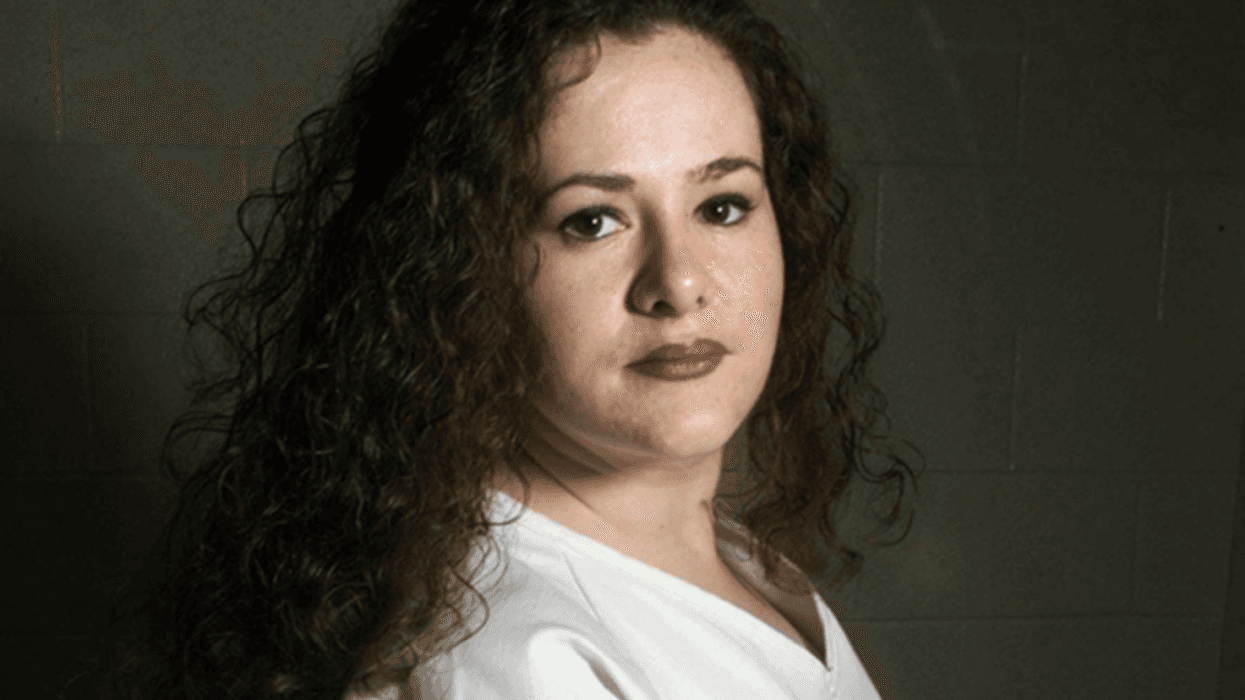
"So much of Ms. Pike's experience reflects widespread and systemic failures that surface in death penalty cases," said an Amnesty International USA researcher, urging an end to capital punishment "in Tennessee and beyond."
A federal appellate court on Wednesday morning temporarily blocked Tennessee from executing Christa Pike, as witnesses had already gathered at Riverbend Maximum Security Institution in Nashville for the state's first execution of a woman in centuries.
A panel from the US Court of Appeals for the 6th Circuit ruled 2-1 to halt the state-sanctioned killing, after Republican Gov. Bill Lee and the US Supreme Court declined to do so. The 50-year-old, found guilty of murdering Colleen Slemmer in 1995, when Pike was 18, could still be executed on Wednesday if the nation's top court allows it.
Republican state Attorney General Jonathan Skrmetti's office said: "We will continue to advocate for the lawfully imposed sentence as the courts work through this technical issue. It is common in capital cases for the defense to raise last-minute objections following decades of litigation in numerous courts. We are asking the Supreme Court of the United States to lift the stay."
Judges Jane Stranch and Karen Moore, both appointees of Democratic presidents, concluded early Wednesday that "a short stay of execution" is in order due to arguments related to the sexual abuse Pike suffered as a child—which clinical psychologist Dr. Bethany Brand described as "truly extreme," writing in 2023 that "the level of trauma she was subjected to as a preschooler through her 18th year, when she was arrested, is almost impossible to grasp because it is so severe."
As the 6th Circuit's order details, Pike points out "that the state recently reversed its litigation position that she is a liar who fabricated sexual abuse. Pike contends that the state's concession of her history of child sexual abuse and rape 'erodes the foundation' of her state court proceedings. Pike ties this erosion to defects in the federal court proceedings because... the district court was required to give strong deference to the state court's findings of facts."
"Pike also cites scholarly authority supporting her argument that the state's representations about her history of sexual abuse tainted the state court proceedings and the subsequent federal ones by introducing damaging stereotypes of survivors of sexual assault," the filing says.
Pike was "subjected to drugs and alcohol while she was still in her mother's womb" and "first sexually abused by her grandmother's boyfriend, who would orally rape her before she was in kindergarten," the Nashville Banner's Steven Hale recently reported, citing Brand's findings. "After living through periods of physical and emotional torment by extended family members and one of her mother's husbands, Pike was later raped by a known predatory neighbor."
"She was hospitalized at the age of 12 after overdosing on pills during a suicide attempt," then sexually assaulted by one of her mother's boyfriends, who had "moved into the family's home and brought with him violence and depravity," Hale continued, noting that the perpetrators who abused Pike often faced limited consequences. "When she was 17 in January 1994, Pike was sexually assaulted again, by a man who saw her walking to the store in Carrboro, North Carolina."
Hale was among the journalists at the prison in Nashville on Wednesday morning. He said on social media that "I'm told the state has until midnight to carry out the execution. Still unclear what happens next, but prison officials are bringing those of us witnessing the execution inside now to be ready."
The journalist added just after noon Central Time that "prison officials have brought us back outside now while we continue to wait for news from the Supreme Court."
Following the 6th Circuit's decision, the ACLU—whose Capital Punishment Project works to repeal the death penalty in the United States—took to social media, urging the public to "tell Gov. Lee to respect the court's decision and call off her execution NOW."
"Gov. Lee's 615-741-2001 mailbox is full—contacting him through this form is the quickest way to reach his office," the legal group explained, sharing a link to the relevant page on the state government's website.
Lee had said Monday that "after deliberate consideration of Christa Gail Pike's request for clemency, and after a thorough review of the case, I am upholding the sentence of the state of Tennessee and do not plan to intervene."
Attorneys for Pike—Stephen Ferrell, Kelly Gleason, and Randy Spivey—responded that they were "deeply saddened and heartbroken by Gov. Lee's decision to deny clemency," emphasizing that "throughout her childhood, Christa was failed by people and institutions that should have shown her care and meaningful intervention."
"The 18-year-old girl suffering from severe mental illness and near-debilitating trauma no longer exists," the lawyers said. "Christa is a 50-year-old remorseful woman who understands her actions, receives proper treatment for her mental illness, and provides for and guides fellow incarcerated women."
"With this decision, the state of Tennessee is ignoring what both science and our legal system have decided: An 18-year-old brain is not an adult brain, and 18 is too young to face execution. This decision also leaves unanswered vital questions about Tennessee’s execution protocol," they added. "We will continue to support Christa through every remaining avenue and advocate for a system that is transparent for the people of Tennessee."
Among the organizations that have pressured Lee to block the execution is Amnesty International USA, whose deputy director of research, Justin Mazzola, recently said that "so much of Ms. Pike's experience reflects widespread and systemic failures that surface in death penalty cases."
"She endured profound abuse and trauma as a child and had serious mental disabilities that were never adequately addressed nor treated," he highlighted. "Due to inadequate legal representation, these issues were not fully presented to the jury. Knowing all that, it is unthinkable that Gov. Lee would even consider moving forward with this execution."
Mazzola—whose group opposes capital punishment under all circumstances—also stressed that "this issue is about more than one person. Amnesty International members are speaking out because the use of the death penalty remains a human rights failure. As its use continues to decline globally, the United States remains an outlier. It is well past time to abolish the death penalty once and for all, in Tennessee and beyond."
The US National Domestic Violence Hotline can be reached at 1-800-799-SAFE (7233), by texting "START" to 88788, or through chat at thehotline.org. RAINN's National Sexual Assault Hotline can be reached at 1-800-656-HOPE (4673) or by texting "HOPE" to 64673. Both offer 24/7, free, and confidential support. DomesticShelters.org has a list of global and national resources.
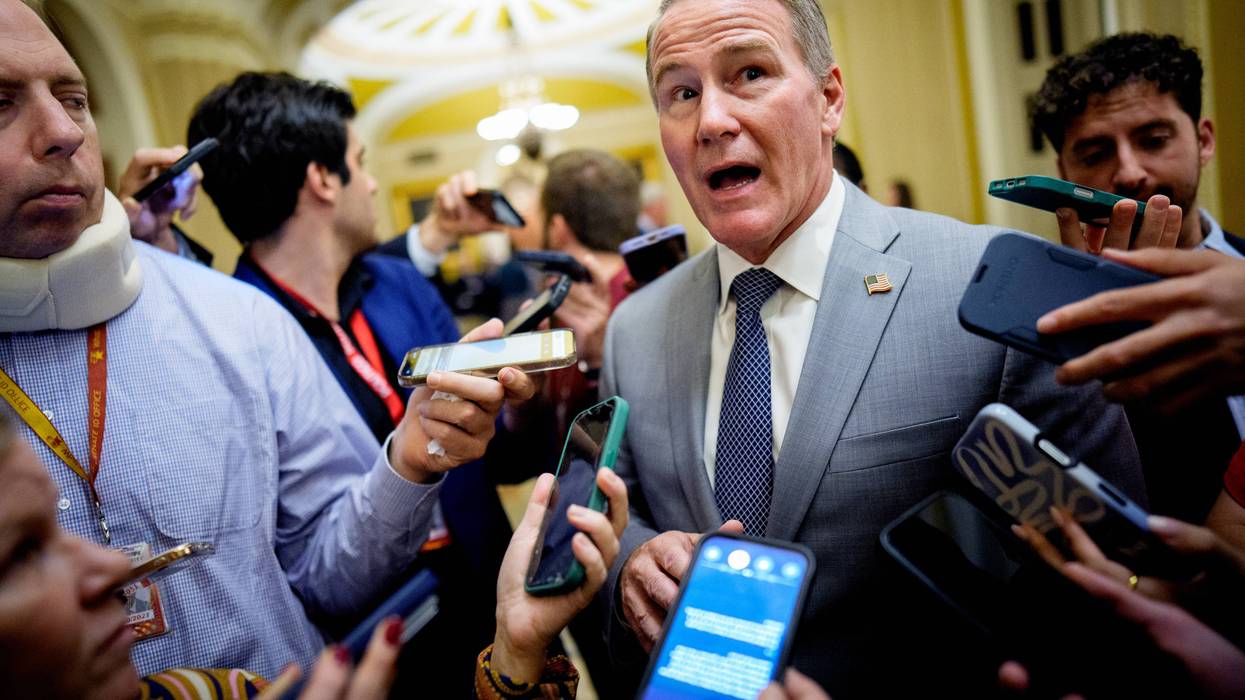
"In fact... Husted voted for the war FOURTEEN TIMES," said one critic.
An embattled incumbent Republican senator squirmed on Tuesday when confronted with his multiple votes supporting President Donald Trump's illegal war with Iran, which has driven up gas prices across the US.
During a Wednesday interview with local news station WKRC, Sen. Jon Husted (R-Ohio) was asked by reporter James Pilcher about his votes in favor of continuing the war, which the journalist noted has become "pretty unpopular."
"First of all, I didn't, that's not what that vote was, it's not what I did," Husted replied. "Here's the bottom line: These are the people that want higher gas prices right now: Iran, Russia, and the, and the Democrats in Congress. They don't want us to be successful there. They are literally... we are the party that has been, as Republicans, we've wanted more drilling. Like, we have, thank goodness, we have a great supply of domestic fuel right now, or prices would be even higher."
Q: You voted in favor of the war in Iran. It's proven to be pretty unpopular. What do you see as the offramp here?
HUSTED: First of all, I didn't- that's not what that vote was. That's not what I did. Here's the bottom line. These are the people that want higher gas prices right… pic.twitter.com/t4ZEmD0q2f
— Aaron Rupar (@atrupar) September 30, 2026
Husted—whom polls show is currently trailing his rival, former Sen. Sherrod Brown (D-Ohio)—then baselessly claimed that "Russia, Iran, and Senate Democrats seem to be aligned in seeing prices go up, I'm for prices going down."
The price of energy skyrocketed in the months since Trump attacked Iran without any congressional authorization in February, and the price of diesel fuel last week hit a record high of $6.53 per gallon.
Husted, meanwhile, has voted 14 times against war powers resolutions in the US Senate to compel Trump to end the conflict he started.
Critics of the Ohio Republican were quick to slam him for trying to evade responsibility for the fallout of the Iran War.
In a social media post, author James Surowiecki accused Husted of telling "a blatant lie" when he said he didn't vote to support the war.
"This month, he cast the deciding vote against a war powers resolution in the Senate directing Trump to end the war in Iran," Surowiecki wrote. "So yes, he voted in favor of continuing the war in Iran."
Husted's statement drew a similar rebuke from Kelsie Taggart, vice president of the Democratic advocacy group American Bridge.
"That is, in fact, what that vote was," Taggart wrote, "and Husted voted for the war FOURTEEN TIMES."
Brian Finucane, a former State Department legal adviser who now advises the US Program at the International Crisis Group, argued that what Husted did was actually "even worse than voting for the Iran War."
"He voted to abnegate Congress' constitutional authority over the use of military force," Finucane explained, "and to allow Trump to wage war based on his own whims."

"The ocean is transforming before our eyes: Warming, rising seas, and ecosystem degradation are interconnected signs of significant and long-term change."
The 10th annual Copernicus Ocean State Report, released Wednesday by a team of more than 100 international scientists, provided the latest reminder that, as one United Nations official said, "the ocean is one of the clearest indicators of the profound shifts" that the climate crisis is causing.
Data gathered by Mercator Ocean International, the nonprofit that produced the report, revealed "an ocean warming at an alarming pace, with far-reaching consequences for marine life, coastlines, and communities worldwide," said the group.
The study delivers ocean scientists' "starkest warning yet of the profound changes sweeping across the ocean, as a likely unprecedented El Niño takes shape in the Pacific," said Mercator, referring to the natural warming trend that is expected to be made more intense this year by planetary heating.
Drawing on four decades of data from satellites, buoys, sensors, and modeling, the scientists found that 2024 was marked by record-breaking marine heatwaves as well as an unprecedented extreme low sea level event, causing levels in the Bothnian Bay between Sweden and Finland to plunge 60 inches, bringing ferries to a halt for 18 hours.
Heatwaves in the Mediterranean and Black seas lasted more than 30 days and raised water temperatures by more than 8.3°F (4.6°C) above average.
“These are not isolated hot spells; they are occurring against a backdrop of sustained ocean warming that is changing the conditions marine ecosystems experience,” Blanca Fernández-Álvarez, a report author and a conresearcher at the Mediterranean Institute for Advanced Studies, told CNN.
But along with extreme events documented in the report, the scientists found unmistakable trends showing no sign of letting up, including persistent damage to marine life due to ocean heating fueled by continued oil and gas extraction.
Small island states—some of the countries least responsible for carbon emissions that are leading to record heat absorption by the oceans—face worsening, "overlapping pressures" including sea-level rise that could wipe out coastal and island communities and the growing threat of more intense tropical cyclones.
Over the last three decades, reads the report, "ongoing reorganization of marine ecosystems around the world" hasr been made clear by persistent changes in growth patterns of phytoplankton, which support food webs and carbon flows, in nearly 5% of the ocean.
Heat stress also contributed to coral bleaching in 84% of the world's reefs, threatening marine ecosystems as well as coastal communities that rely on reefs for protection and tourism.
"The ocean is transforming before our eyes: Warming, rising seas, and ecosystem degradation are interconnected signs of significant and long-term change," said Pierre Bahurel, director general of Mercator Ocean International.
As humans have continued to emit carbon and other greenhouse gases despite warnings from energy experts and scientists, the rate of ocean heating has doubled over the past two decades, causing sea surface temperatures to skyrocket to record highs in 2023, 2024, and this year.
In 2025, the report says, the ocean absorbed an additional 23 zettajoules—about 40 times the energy consumed by the entire world last year. The energy absorption is equivalent to 12 atomic bombs going off every second for one year.
The global mean sea level rose by 3.8 ± 0.3 millimeters each year between 1999-2025, and the ocean has become about 17% more acidic over the last four decades, wreaking havoc on crucial underwater ecosystems.
Peter Thomson, the UN secretary-general's special envoy for the ocean, emphasized that the dangers posed to the world's oceans by continued fossil fuel extraction have been made clear over 10 years of reports by Mercator, as well as other warnings from scientists.
"What it tells us is unmistakable: The ocean is changing, and those changes are reaching into the lives, livelihoods, and security of people everywhere," said Thomson. "We have the knowledge. We have the evidence. Now we need the political will to act."
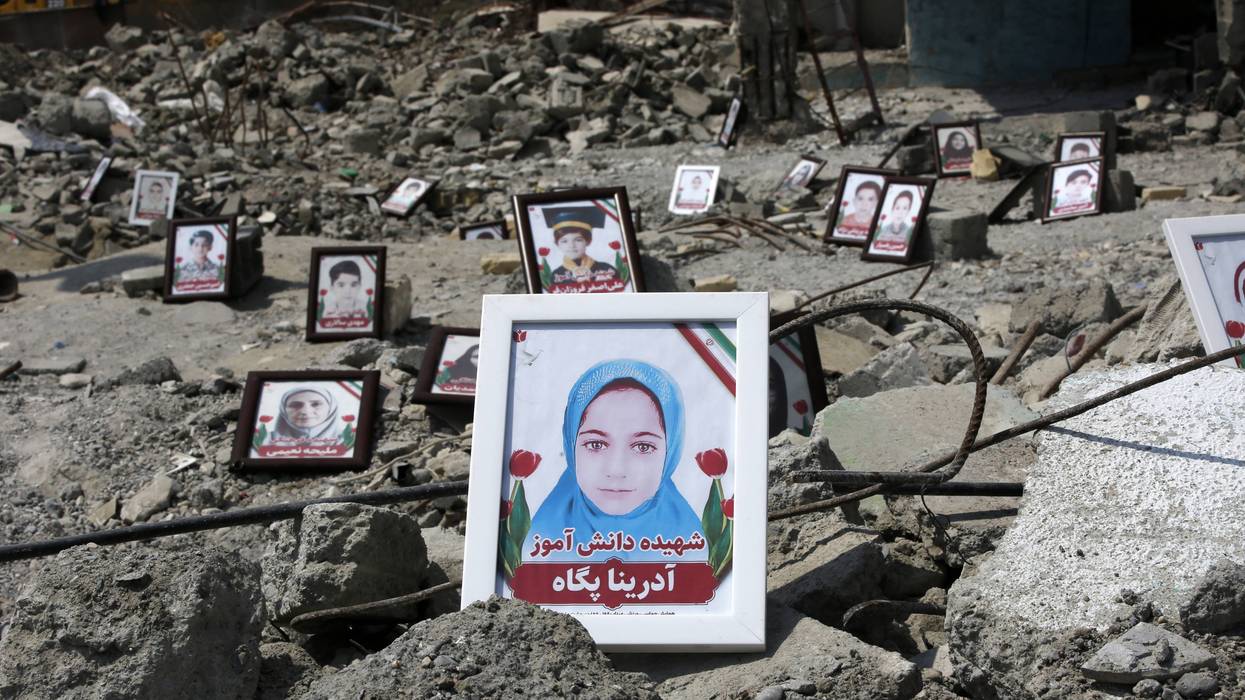
“There was no school left,” said the father of a 6-year-old girl killed in the attack. “I thought I was asleep and having a nightmare.”
Survivors, parents, and first responders provided harrowing firsthand accounts of the US bombing of an elementary school on the first day of the US-Israeli war with Iran as part of a new Drop Site News investigation demonstrating that the school had publicly operated as a civilian institution for more than a decade.
The report, published Wednesday, provides new eyewitness accounts from those who lost loved ones when US Tomahawk missiles hit the Shajareh Tayyebeh School in Minab, which killed 120 children and dozens of others, and has been described as “one of the worst US war crimes since Vietnam.”
“The children were five years old and all they did was yell, ‘Miss! Miss!’ and were crying. I ran to the children. I just said, ‘Get under the table!” recalled preschool teacher Hossniyeh Salem. “I didn’t think they were going to strike the school. I just thought that some place had been hit. I said, ‘Don’t be afraid, sit down.’”
“Two simultaneous sounds. They’re still in my ear. My son even describes them—‘Wooosh, boom! Woosh, boom!’—and then the explosion very close by,” Salem said. “Plaster was falling, the ground was shaking, and at that moment I just looked at my preschool girls and my son, and I said to myself, ‘It’s over. Now is the time when we go under the rubble, it’s going to fall now,’” she continued. “Then there were no more sounds. The class was full of smoke and dust."
Yaghoub Yazdanpanah, a literature teacher at another school about eight miles from Minab, described the moment he learned that the school his 6-year-old daughter, Fatemeh, attended had been bombed.
“I left my classroom, ran home, took my car, and sped to Minab. When I arrived, I said, ‘Oh no!’ The unimaginable had happened," he said. “There was no school left. Two-thirds of the school, maybe more, had been destroyed. Smoke was rising from all over the school. It had turned into rubble. For a moment, I thought I was asleep and having a nightmare."
Yazdanpanah said he already knew the worst had happened well before he received his daughter’s body at an overwhelmed hospital that night.
“We knew our children had been martyred; we knew our children were no longer with us," he said. “When they brought Fatemeh, she was in one piece because she had been in her teacher’s arms [when she died].”
“There was no school left."
The US has still not accepted responsibility for the Minab attack, even though an internal Pentagon investigation has concluded that US forces struck the school using two Tomahawk missiles. In the initial days after the attack, President Donald Trump claimed that Iran had been responsible before backing off the claim, stating, “I just don’t know enough about it.”
Drop Site obtained images of the missile fragments from the site, which an independent weapons inspector said “all appear to be remnants of Tomahawk missiles." Iran is not known to possess Tomahawks. A UN fact-finding mission report released earlier this month determined that the school had been “the intended point of impact" rather than collateral damage.
 People are seen scouring the wreckage at the site of the February 28, 2026 bombing of the Shajareh Tayyebeh girls’ elementary school in Minab, Iran. (Photo by Mehr News Agency/Wikimedia Commons)
Adm. Brad Cooper, the commander of US Central Command (CENTCOM) told Congress in May that the school was "located on an active [Islamic Revolutionary Guard Corps] cruise missile base."
Wes Bryant, a former senior targeting adviser at the Pentagon, told Drop Site he'd never seen any indication that the school was on an active missile site and explained that even if it was, "it doesn’t matter."
“Those children, all those civilians, are still non-combatants and protected, so it’s really disgusting to hear that," he said. "This wasn’t even fragmentation that hit a school next to another target. This was deliberately targeted very, very clearly and obviously. So at the very least, [it was a] complete mischaracterization of the target.”
There was abundant evidence of the school's civilian use that would have been available to those who conducted the strike. The school was part of a compound that included barracks for the elite IRGC but was redeveloped for civilian use beginning in 2014. It had publicly and officially operated as a school since 2015.
The school had a very active online presence with a website that prominently displayed classroom activities and school events. Meanwhile, satellite imagery captured just two months before the attack showed children standing in the schoolyard outside the building.
An investigation from Bloomberg found that the school had been placed on a list of targets for the war's opening salvo that was assembled in part using the Maven artificial intelligence system developed by Palantir, which reportedly did not classify it as a school.
The UN report emphasized that even if the attack can be boiled down to an intelligence failure, it still likely amounted to a war crime because the US attacked despite readily available evidence that the building was a school, a failure investigators said went “beyond mere negligence” and amounted to recklessness toward the risk of striking civilians.
 US President Donald Trump and Secretary of Defense Pete Hegseth attend a dignified transfer event for US service members killed during operations in the Middle East, at Dover Air Force Base in Dover, Delaware, on July 22, 2026. (Photo by Saul Loeb/AFP via Getty Images)
Hala Rharrit, a career former US Foreign Service officer who spent 17 years at the State Department before resigning in 2024, remains unsatisfied by the government's efforts to downplay the attack as a "mistake."
“There’s no way to say that this was some type of error,” Rharrit told Drop Site. “You’re either saying that our US Military is completely incompetent, that despite the multiple layers of review, everybody messed up—or there was something very, very sinister about this strike.”
According to data from the Human Rights Activists News Agency, the vast majority of US-Israeli strikes during the first 40 days of the war did harm to civilians or civilian infrastructure, contradicting repeated claims that the US “never targets civilians.” At minimum, the data shows at least 1,701 civilians have been killed, but HRANA has stressed that the true death toll is likely substantially higher.
Defense Secretary Pete Hegseth has spent his tenure dissolving guardrails meant to prevent civilian casualties, denouncing "stupid rules of engagement," and saying the military should pursue “lethality” over “legality.” Trump, meanwhile, has repeatedly threatened mass destruction upon Iran, including that the "entire civilization" would "die."
“The administration and Hegseth have made it quite clear that they don’t really care about civilian casualties. That may also have been true of previous bombing campaigns that predate the Trump administration, but it is even more the case than in the past, and they have made it clear that troops do not need to be concerned about consequences,” said Harrison Mann, a former US Army major and intelligence analyst for the Defense Intelligence Agency (DIA).
“There is no mystery about what coordinates those missiles hit, and that question would have been answerable on the day of the strikes," he told Drop Site. "The only way that CENTCOM would not know is that they are choosing to be willfully ignorant.”

"The Trump-Rubio interventions, with the collaboration of the Bolsonaro clan, have made the Flávio campaign into another US regime change operation. This should be defeated."
Brazilian officials, pro-democracy advocates, and US lawmakers are growing increasingly concerned about apparent efforts by President Donald Trump and Secretary of State Marco Rubio to interfere in the Latin American country's upcoming election.
Reuters reported Wednesday that Brazil's spy agency "confirmed the existence of interference from the United States as well as Russia" in the presidential election, the first round of which will take place on October 4. Brazilian President Luiz Inácio Lula da Silva is running for reelection against Sen. Flavio Bolsonaro, the son of former far-right President Jair Bolsonaro—who is currently serving a 27-year prison sentence under house arrest for orchestrating a coup attempt in 2022.
Democratic lawmakers in the US have raised alarm about the Trump administration's election meddling in Brazil in recent days as the contest approaches. Earlier this week, Democratic Sens. Jeanne Shaheen (NH), Peter Welch (Vt.), and Tim Kaine (Va.) wrote in a letter to Rubio that "over the course of President Trump’s second term, we have seen US officials engage in a campaign of interference and destabilization in Brazil."
"The administration’s most recent actions point toward an effort to interfere with, and potentially undermine, Brazil's general election in October," the lawmakers wrote. "Senator and presidential candidate Flávio Bolsonaro’s recent Oval Office meeting with President Trump, undertaken while attempting to mitigate a domestic political scandal, underscores the administration's willingness to insert itself in the election."
The senators' letter followed a separate demand by more than 30 Democrats in the US House that Rubio "confirm whether the administration will commit to respecting Brazil’s electoral process and to recognizing its certified outcome." The House Democrats demanded a response from the Trump administration by October 1.
"Particularly given the tragic history of US involvement in the 1964 military coup against Brazil’s democratically elected government at the time, as well as subsequent US support for the resulting military dictatorship," the lawmakers wrote, "the United States has a responsibility to support the democratic institutions that so many Brazilians, across generations, struggled to build."
Trump has been a vocal defender of Flávio Bolsonaro's father, saying he is "not guilty of anything" and describing his prosecution as a "witch hunt"—echoing Trump's attack on investigations into his own effort to subvert the 2020 election in the US. Last year, Trump hit Brazil with a 40% tariff, accusing the country's leaders of "persecuting former President of Brazil Jair Bolsonaro."
"It was not just a trade maneuver," political scientist Octavio Amorim Neto said of the tariff in an interview published Thursday, noting that "Bolsonarism explicitly applauded [Trump's economic attack], while Brazil’s traditional right did not vigorously defend national sovereignty, saying that everything was Lula’s fault."
Over the summer, Brazil denied visas to two top US State Department officials "whom the Trump administration planned to dispatch on a mission to cast doubt on the fairness and integrity of the country’s electoral system," The Washington Post reported in July.
Mark Weisbrot, co-director of the Center for Economic and Policy Research, wrote in an op-ed for The Los Angeles Times earlier this week that Trump’s intervention in Brazil's electoral process "undermines a basic and generally cherished right to self-determination, as well as the right to democracy itself."
"It is even clearly illegal under the Charter of the Organization of American States, to which the United States is a signatory," wrote Weisbrot. "The Trump-Rubio interventions, with the collaboration of the Bolsonaro clan, have made the Flávio campaign into another US regime change operation. This should be defeated, for the sake of Brazil and the whole hemisphere."