

SUBSCRIBE TO OUR FREE NEWSLETTER
Daily news & progressive opinion—funded by the people, not the corporations—delivered straight to your inbox.
5
#000000
#FFFFFF
To donate by check, phone, or other method, see our More Ways to Give page.
Daily news & progressive opinion—funded by the people, not the corporations—delivered straight to your inbox.
Natali Fani-González, 301.442.8459, nfani-gonzalez@communitychange.org
A new survey by Community Change Action of early childhood educators and child care providers found that more than 78% of respondents reported having been laid-off or furloughed from their programs or are either continuing to work but earning less or have seen reductions in program revenue.
The report, Child Care Providers Need Assistance Now: Survey Results From the Front Lines, which surveyed 1536 respondents from May 1 - May 13, 2020, also found that more than 14% of open programs reported not having adequate PPE and cleaning supplies. Of those who did, almost 9 in 10 (89.4%) obtained and paid for them on their own, exacerbating their economic hardship. In an environment where PPE and cleaning supplies have been hard to come by, only 8.1% reported receiving them from their respective states.
"Safe and accessible child care is essential to the nation's economy and warrants full public investment," stated Wendoly Marte, Director of Economic Justice for Community Change Action. "This survey shows how this Administration is failing our country and how Congress is out of touch with the reality of working people. Child care providers are not getting the financial relief they need to continue to operate or to be in a position to reopen. Many are having to close their doors -- perhaps forever -- and parents will have no one to care for their children so they can go back to work. If we really want to re-open the economy and ensure that child care is safe for providers and families, we need a major federal investment - $100 billion - in child care."
The survey shows that 68% of providers that are open only to provide care to essential workers report that they are getting paid less or that their programs have lost revenue.
They also report that existing federal relief has been inaccessible and insufficient to meet the needs of child care providers. For example, fewer than one in three (30.4%) childcare centers and home-based child care owners who applied for the Economic Injury Disaster Loans, meant to provide economic relief to small businesses experiencing a temporary loss of revenue, received the funding; 49% reported that the program was out of money by the time they applied.
Among the responses received in the survey:
Child care educator from Kentucky:
"Want to go back to work asap to serve our families but WILL NOT do so until I'm confident MYSELF that it is SAFE."
A child care educator from Brooklyn, NY:
"Schools will be closed for the remainder of the year, restaurants, stores and other services will begin to re-open and begin their operations, with social distancing in mind, as we enter the "new normal." All this is done, without consideration, or direction for child care operations. Are we not part of the New York small business industry? We have been put under the umbrella of DOE, with regards to closing, but we do not have DOE level support. We do not operate out of city owned buildings, we have rents to pay. Our teachers and staff do not get a salary from budgeted city funds, we are tuition based operations and currently have zero revenue to pay our staff or anything else. More importantly, we have no time frame that allows us to plan as business owners. So many owners will be forced to close their doors. Not because they cannot keep the children safe, or because they cannot wait. The issue is, what are they/we waiting for, and how long? Why must we be the afterthought? If we are closed, same as with schools, who will watch the kids, when parents go back to work. We need guidance. I need guidance, so as a business owner, I can plan and hopefully be around when the dust settles."
Community Change Action is a national organization that builds power from the ground up. We believe that effective and enduring social movements must be led by those most impacted by injustice and voting is one essential lever of change.

"You can't authorize the potential killing of 300 civilians... and still tell the public we did everything we could to avoid harming innocent people," said one veteran.
Former Israeli military and intelligence personnel affirmed that rules for targeting confirmed and alleged Hamas members in Gaza were dramatically loosened after the October 7, 2023 attack, allowing strikes expected to kill hundreds of Palestinian civilians to target even low-ranking members of the Palestinian resistance group, according to a report published Monday.
In a paywalled article published by Haaretz, Israel's oldest daily newspaper, Yaniv Kubovich gathered testimonies from former Israel Defense Forces intelligence personnel that add to the body of evidence from Israeli whistleblowers, military officials, and investigative journalists documenting how the IDF expanded its targeting practices during its devastating US-backed annihilation of Gaza, which has killed or wounded more than 250,000 Palestinians in the coastal exclave over the past three years.
One change described by some of those interviewed by Kubovich was "the opening of the intelligence apparatus to untrained personnel."
"People arrived at military intelligence who weren't from the unit, reservists who'd never even served in intelligence, brought in from all sorts of places," said one veteran, identified as "A."
"They sat in the Targeting Directorate looking for the most insignificant targets, the small fry, so they could kill them," A added. "Anyone displaying Hamas symbols on Facebook or identifying themselves as Hamas was marked as a target. Some were Hamas members, some were fighters too, but they really were small fry."
Another veteran, "D," who was assigned to a strike cell—units that coordinate drone and other aerial attacks—said: "Suddenly, the IDF was striking even the lowest of the low indiscriminately, and everyone had forgotten about conserving ammunition. We were striking Hamas drivers. That's how far it went."
Kubovich wrote that "a recurring theme in the accounts is the gap between a target's importance, the scale of the strike and the civilian toll deemed acceptable."
For example, on October 31, 2023, IDF warplanes dropped 2,000-pound "bunker-buster" bombs supplied by the United States on the densely populated Jabalia refugee camp in northern Gaza in order to kill one Hamas commander, Ibrahmi Biari.
"We knew Biari was underground, beneath several large buildings, but we couldn't pinpoint which building he was under," said D. "So they chose several buildings that were still occupied and decided to bring down all the buildings above the tunnel he was in. We didn't initiate an evacuation because it was important to kill him before he could get away."
A, who was also involved in the mission, said the decision to bomb the buildings was referred to the IDF chief of staff for approval, since intelligence officials estimated that there would be hundreds of civilian casualties. The IDF calculated that roughly 100 people would be killed or wounded in the proposed attack.
"We couldn't get any more intelligence to pinpoint his exact location," said veteran D. "They told us, 'He's killing soldiers right now. We have to strike him,' out of concern for the troops on the ground, and in the end the strike was approved. They really wanted to kill this guy."
Hamas said that 400 people were killed or wounded in the attack.
"Among other things, we relied on figures coming from Hamas, which we considered relatively plausible, even if they weren't 100% accurate," veteran A told Kubovich. "As time went on, we realized the death toll was around 250. I remember being stunned that we were bringing down several densely populated buildings, killing and injuring hundreds of people, to kill a battalion commander who, just a few weeks earlier, hadn't even been someone we were supposed to gather intelligence on."
The UK-based civilian casualty monitor Airwars said that at least 126 civilians, including 69 children, were killed in the attack, which wiped out whole families.
"You can't authorize the potential killing of 300 civilians for a battalion commander, or the killing of 20 civilians for every Hamas truck driver, and still tell the public we did everything we could to avoid harming innocent people," Nadav Weiman, executive director of the IDF veterans' group Breaking the Silence, told Kubovich.
Referring to the Jabalia massacre, D said: "I can't say this particular strike is what really messes with my head. What's much harder for me is the system of strike after strike after strike, with collateral damage running into dozens of people, sometimes hundreds. Being part of a system like that bothers me more than taking part in any particular strike."
The veterans' accounts raise further questions about Israel's repeated assertions that its military operations have been conducted in accordance with international humanitarian law, which requires parties in armed conflicts to distinguish between civilians and combatants and prohibits attacks expected to cause excessive civilian harm relative to the anticipated concrete and direct military advantage.
Those claims stand in stark contrast with statements by Prime Minister Benjamin Netanyahu and other senior Israeli officials, who began calling for the genocidal destruction of Gaza and its 2.2 million people in the immediate aftermath of the Hamas-led attack of October 7, 2023.
Netanyahu and Yoav Gallant—his former defense minister who ordered the “complete siege” of Gaza, explaining that “we are fighting human animals, and we are acting accordingly"—are currently fugitives from the International Criminal Court in The Hague, where they are wanted for alleged crimes against humanity and war crimes, including murder and forced starvation.
The International Court of Justice (ICJ), also in The Hague, is currently conducting a genocide case against Israel filed by South Africa and formally supported by more than 15 nations. While a ruling in the case isn’t expected until at least 2029, a United Nations commission of inquiry, the International Association of Genocide Scholars, and other experts—including many Israeli and international Jewish academics, jurists, human rights campaigners, and others—have already concluded that Israel is committing genocide in Gaza.
The new Haaretz investigation adds to the body of reporting on Israel's loosened rules of engagement and their disastrous implications for Gaza civilians, including a December 2024 New York Times exposé involving interviews with over 100 IDF soldiers and veterans, Israeli officials, dozens of airstrike victims, and experts on the law and conduct of war.
Kubovich's revelations also come as the documentary NAZA, directed by Israeli journalists and filmmakers Yuval Abraham and Rachel Szor, brings testimony from Israeli military and intelligence insiders to international audiences. The film features 24 anonymized insiders describing the surveillance, artificial intelligence-assisted targeting, and military procedures used during the assault on Gaza.
IDF veteran testimonies are consistent with earlier investigations into the IDF's use of artificial intelligence to generate targets at extraordinary speed, often with limited human scrutiny.
In April 2024, Abraham reported for +972 Magazine and Local Call that the military used an AI system called Lavender to identify suspected Hamas and Palestinian Islamic Jihad operatives. The investigation found that the IDF initially authorized officers to accept civilian casualty estimates of up to 15 or 20 people for each low-ranking alleged militant targeted, and more than 100 civilians for certain senior Hamas officials.
“The IDF bombed them in homes without hesitation, as a first option,” one intelligence officer told the outlets. “It's much easier to bomb a family's home. The system is built to look for them in these situations.”
The investigation also found that officers were permitted to rely on Lavender's recommendations without thoroughly checking the underlying intelligence.
Former IDF Chief of Staff Herzi Halevi has also acknowledged the enormous human toll of the war.
“This is not a gentle war; we took the gloves off from the first minute,” Halevi said during a September 2025 speech to residents of Ein Habor, adding that “not once” has any legal authority “limited” his wartime conduct.
Implicitly confirming Gaza Health Ministry casualty figures—which then stood at around 220,000 Palestinians killed or wounded—Halevi said that “over 10%” of Gaza’s population of approximately 2.2 million had been "killed or injured” since October 2023.
In August 2025, Abraham and Emma Graham-Harrison, The Guardian's senior international affairs correspondent, revealed that classified IDF intelligence data suggested that 5 in 6 Palestinians, or 83% of people, killed by Israeli forces through the first 19 months of the war were civilians.
Current and former IDF troops have accused their own of deliberately shooting Palestinian civilians, including children, sometimes out of sheer boredom. Palestinian and international volunteer medical professionals have also described what they say is the deliberate shooting of Gazans, including children, more than 21,500 of whom have been killed by Israeli bombs and bullets—with more victims added to that grim total with every passing day.

"He's not doing it to make Americans more free. He's doing it to make Americans his serfs," said one critic.
Far-right billionaire Elon Musk is spending an unprecedented fortune helping the Republican Party maintain its majorities in Congress, according to a Monday report in The New York Times.
The Times used filings made with the Federal Election Commission (FEC) to calculate that Musk has funneled at least $276 million to GOP groups and his own super political action committee (PAC) since July alone.
In total, the Times estimated that Musk has given $366 million in campaign contributions during the 2025-26 election cycle, which is even more than the $290 million he gave during the 2023-24 election cycle to return President Donald Trump and the GOP to power.
Much of Musk's giving this cycle has been to help Republicans maintain their majority in the US Senate, as he has donated $158 million to the Senate Leadership Fund, the super PAC charged with helping GOP candidates in Congress' upper chamber.
According to the Times, Musk's donation to the fund is "one of the largest political donations in American history, and more than the group’s Democratic rival raised from all of its donors that quarter."
Since July, Musk has also given $76 million to his America PAC, which is building what the Times described as "a sprawling canvassing program to try to turn out hard-to-reach Republican voters" in the coming elections.
The Times emphasized that the $366 million is only the publicly disclosed amount that Musk has given, and one source told the newspaper that the billionaire "has also made some seven-figure donations to support midterm candidates through groups that are not required to disclose their donors."
In a Monday social media post, journalist Daniel Nichanian described Musk's midterm spending as "absolutely insane," and said the billionaire is "single-handedly destroying records and swamping [Democratic] candidates."
Mark Jacob, former metro editor at the Chicago Tribune, said the massive Musk donations should deeply worry Americans who care about democracy.
"He's not doing it to make Americans more free," Jacob wrote. "He's doing it to make Americans his serfs."
Don Moynihan, professor of public policy at the University of Michigan, argued that Democrats cannot allow Musk's efforts to buy congressional elections go unanswered.
"Dems should promise to minimize contracts with clearly partisan government contractors and to impose more regulatory scrutiny on Musk," Moynihan wrote. "At this point, nothing to lose."
In addition to concerns about the sheer volume of Musk's donations, election officials have been raising alarms about how the money is being used.
As reported by CNN on Saturday, America PAC has been sending text messages to Colorado voters telling them that their request for a mail-in ballot has been received, then inviting them to "confirm now where and when to return it."
Carly Koppes, the Republican election chief in Weld County, told CNN that these messages have been causing significant confusion among voters, who automatically receive mail ballots without having to file a specific request.
“People were like, ‘Wait a second. I didn’t submit that request. Is something fishy going on? Did someone submit something on my behalf?'" said Koppes.
Josh Zygielbaum, the Democratic election chief in Adams County, told CNN that he'd received dozens of calls asking about the America PAC texts, and emphasized "that volume of phone calls is usually a good indicator for us that something’s a bigger issue because people generally don’t pick up the phone these days unless there’s a bigger concern."
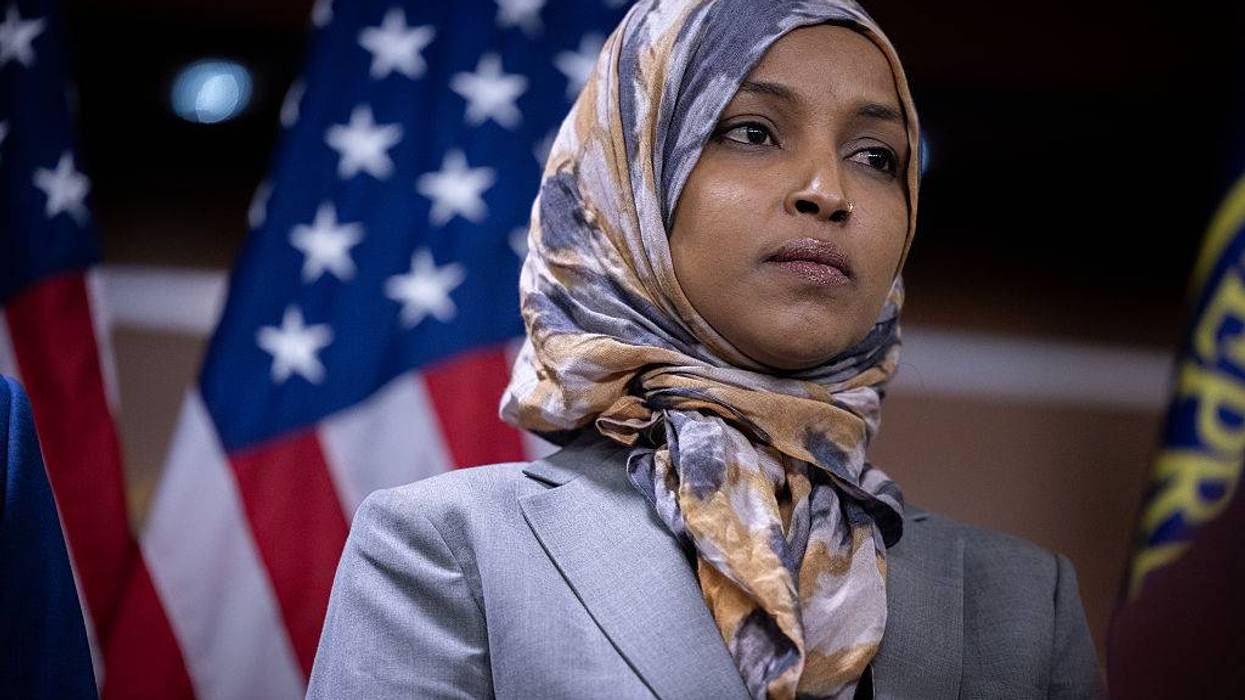
Trump and other Republicans have called for Omar to be stripped of her citizenship and deported for years.
Following years of threats from President Donald Trump and other Republicans to deport Rep. Ilhan Omar, the Minnesota congresswoman's Washington, DC home was raided on Monday morning by agents with the Department of Homeland Security.
The US Department of Justice (DOJ) has confirmed that the raid was carried out as part of a judicially authorized warrant, which it said was part of an ongoing criminal investigation.
Fox News, which first reported news of the raid, said it was part of a probe into the naturalization paperwork filed by Omar's late father when she became a US citizen in 2000 after immigrating to the US as a refugee from Somalia in 1995.
In September, The New York Post reported that federal investigators were examining whether Omar may have been older than 17 when she obtained citizenship through her father as a minor in 2000. The allegation, which stems partly from a discrepancy in historical records of her birth year, has not been substantiated.
Aaron Reichlin-Melnick, a fellow at the American Immigration Council, argued that the case was "even weaker than it already seems," since federal immigration law includes a waiver for people who obtain legal status through fraud they were unaware of.
Joyce Vance, who served as the US attorney for the Northern District of Alabama under President Barack Obama, noted that the raid took place just weeks before the November 3 midterms, inside the 60-day window where DOJ typically avoids such dramatic actions.
"To state what’s obvious to prosecutors here, we are within the period before an election where DOJ doesn’t take overt steps in an investigation that might influence its outcome," she said, adding that it was "another hard norm out the window."
Omar has not yet commented on the raid as of Monday morning, and the DOJ has not indicated what, if any, specific charges have been filed against her.
The search comes after years of demands from Trump and other Republicans for Omar—who has served in the US House of Representatives since 2019—to be deported, imprisoned, or otherwise removed from office.
In a statement Monday morning, Joel Payne, a spokesperson for the progressive advocacy group MoveOn condemned the raid on Omar as a political attack.
“Rep. Omar is a dedicated public servant and a true ally for working families, and Donald Trump has done nothing but use racist tropes and stereotypes to attack her," he said. "Now, he’s abusing his power to physically intimidate and harass her."
Last November, Trump remarked that Omar should be thrown out of the country because she is "always complaining" and referenced her religious attire, referring to it as a "swaddling hijab." In another post that day, he called for the US to "denaturalize migrants who undermine domestic tranquility."
He also said Rep. Rashida Tlaib (D-Mich.), the only Palestinian American member of Congress, should be "sent back" along with Omar after the two protested his state of the Union address in February.
Trump has often referenced Omar while calling for all Somali immigrants to be deported from the country—even though most are US citizens. Trump has referred to Somalis collectively as "garbage" and said they have "low IQs."
Last week, Trump called for the people of Minnesota to "fight back" against Somalis living there in a post on Truth Social, which was widely interpreted as an incitement to violence.
In March, Vice President JD Vance said on a podcast that the administration believed Omar had "definitely committed immigration fraud against the United States of America" and that he'd discussed with senior Trump adviser Stephen Miller—who is not a federal prosecutor—how to "go after" her.
Beau Tremitiere, counsel and deputy director of impact programs for Protect Democracy, told Common Dreams that "raiding the home of a prominent critic and longtime target of President Trump’s racist attacks on the eve of an election is an obvious attempt to intimidate the opposition."
“This administration already has a long track record of failed political prosecutions," he said. "Each new one should both anger and stiffen the spine of those standing up for our democracy.”
Several Republican members of Congress have referenced Omar's religion and political viewpoints as reasons for her to be stripped of citizenship and deported.
Rep. Randy Fine (R-Fla.), who introduced a resolution to expel Omar from Congress last year, referred to her as a "Muslim terrorist" because of her outspoken criticism of Israel's genocide in Gaza and said she should not "be a citizen."
Rep. Brandon Gill (R-Texas) has also called for her deportation, claiming she helped to facilitate the "invasion" of the US after she discussed informing Somali American residents of her district of their constitutional rights should they encounter immigration officers.
In a statement Monday, House Democratic leadership called the raid on Omar's residence "deeply disturbing" and said it "raises serious questions about the continued corrupt weaponization of the federal government against Donald Trump’s adversaries."
"For years, Donald Trump and far-right extremists have relentlessly targeted Congresswoman Omar with vile personal attacks and baseless accusations," they said. "Now, less than 30 days until the midterm election, his violent mass deportation machine has descended upon the home of a duly elected Member of Congress and her family."
They added that "the American people deserve transparency, and we will deliver full accountability for the rogue abuse of power from the Department of Homeland Security and Department of Justice."
This article has been updated to include comments from House Democratic leadership and Beau Tremitiere at Protect Democracy.
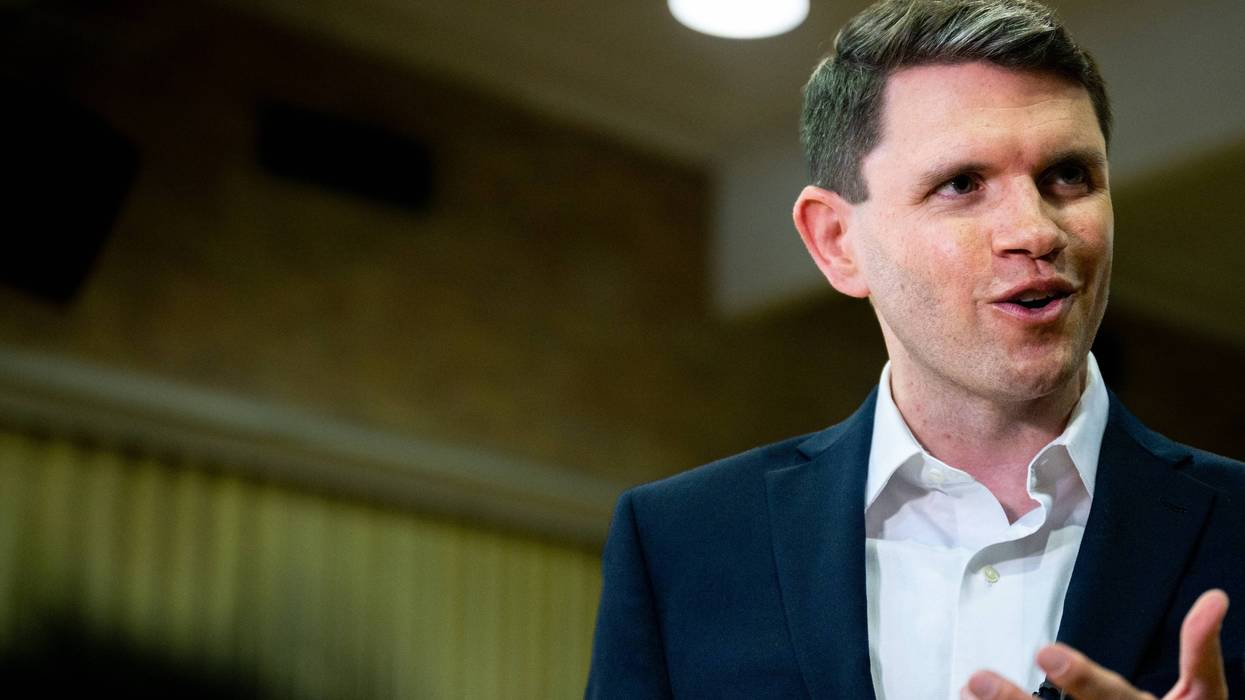
Talarico spokesman JT Ennis said the smear campaign was "a lie designed to promote a pathetic conspiracy theory."
A right-wing smear campaign against Texas Democratic US Senate candidate James Talarico fell apart in mere hours on Sunday.
On Sunday afternoon, MAGA influencers Nick Sortor and Rhein Amacher posted a 45-second audio recording on social media that they claimed was of an employee at an Ohio mental health center stating that Talarico had been discharged from the facility on Saturday.
Right-wing social media accounts had spent days spreading rumors about Talarico undergoing mental health treatment after the Texas Democrat stepped away from the campaign trail for more than a week after coming down with the flu.
Problems with the influencers' narrative quickly emerged, as the recording indicated that Talarico was discharged from the Ohio facility on Saturday, and by that point the Democratic Senate hopeful had already returned to the campaign trail, making a public appearance on Friday at the Austin City Limits festival.
On Sunday night, the official social media account of Lindner Center Hope, the facility where the Texas Democrat was purportedly staying, posted a statement that "James Talarico has never received treatment" there.
The Bulwark later obtained a recording of the entire six-minute phone call showing that the employee repeatedly denied having any record of anyone named James Talarico at the facility.
After minutes of being badgered by Amacher about Talarico's presence, the employee indicated that he must have already been discharged, which is why she had no record of him.
Will Sommer, a reporter for The Bulwark who specializes in tracking far-right disinformation and conspiracy theories, noted in a Sunday social media post that some of the MAGA influencers have started taking down posts they wrote promoting the audio recording.
Talarico responded to the botched smear campaign on Sunday night by writing on his social media account, "I've never even been to Ohio.”
Talarico spokesman JT Ennis called the smear campaign "a lie designed to promote a pathetic conspiracy theory."
"Last week James Talarico was home in Austin, Texas," Ennis added, "recovering from the flu."
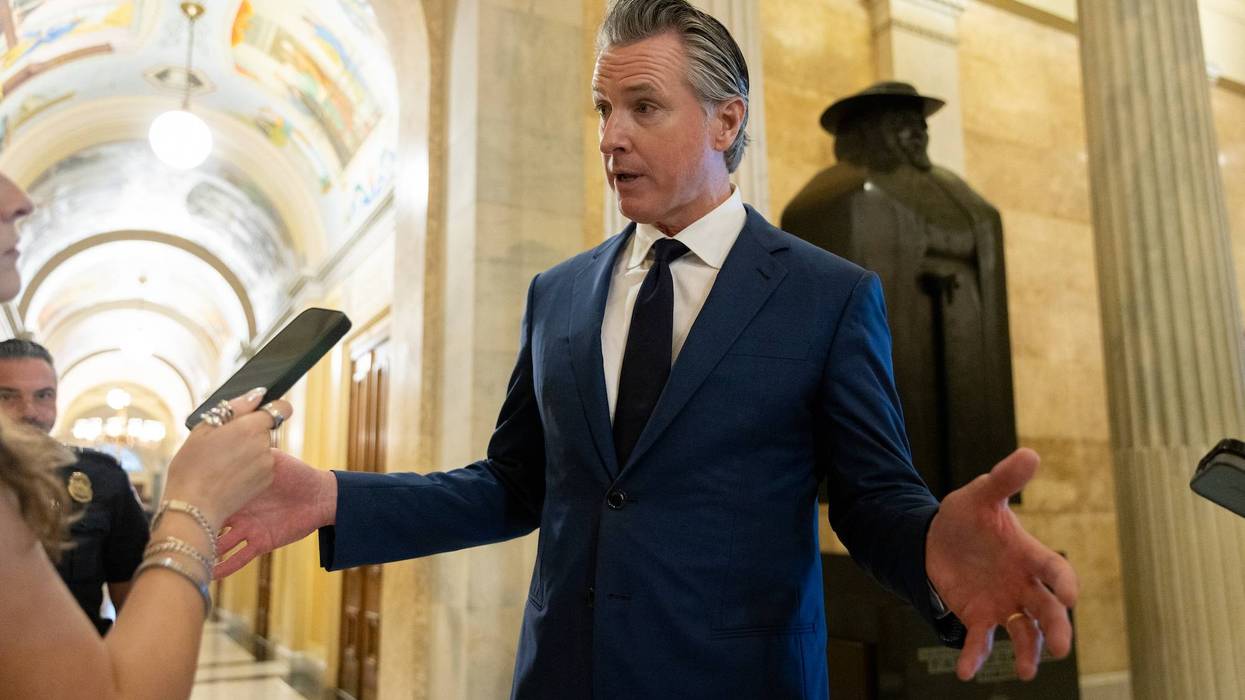
"He’d rather millions of children and families lose their healthcare than ask a couple hundred billionaires to finally pay their fair share."
California Gov. Gavin Newsom ramped up his opposition to a proposed tax on the state's billionaire residents on Friday by endorsing a competing ballot measure that would both cancel out the billionaire wealth tax initiative and prohibit any new taxes on the ownership of financial assets or other personal property.
"He’s showing California his true colors," Debru Carthan, vice president of Service Employees International Union-United Healthcare Workers West (SEIU-UHW)—which is leading the campaign for the California billionaire tax—said in response to Newsom's endorsement of Proposition 42. "He’d rather millions of children and families lose their healthcare than ask a couple hundred billionaires to finally pay their fair share."
The push for Proposition 42 is funded by Building a Better California, a group bankrolled by Google co-founder Sergey Brin and other billionaires.
If passed, Prop 42 would ban "any new state tax... imposed on the ownership of personal property (all things people own other than real estate)." It would also prohibit any tax that "applies retroactively based on taxpayer’s past activities." (The proposed 5% billionaire tax, which will appear on California's November ballot as Proposition 40, would apply retroactively to billionaires living in California on or after January 1, 2026.)
In a statement, Newsom framed his support for Prop 42 as an effort to protect Californians' retirement savings.
"We all agree that Californians deserve to have their retirement and life savings protected from new state taxes so those savings are there when they need them," the governor said.
But critics have described Prop 42 as a "poison-pill measure" whose supporters are fearmongering about a nonexistent threat to retirement savings in an effort to defeat the proposed billionaire tax, revenue from which would be used to fund healthcare, food aid, and education in the state.
"Its true target is Prop 40," the editorial board of the San Francisco Chronicle wrote of the Newsom-backed measure. "Prop 42 papers over its real purpose by cynically appealing to middle-class worries about retirement security. Reject this appalling tactic and disincentivize its further use by voting no."
Newsom has opposed the idea of a wealth tax on California's billionaires from the proposal's inception, pitting him against major unions, the California Democratic Party, and prominent national progressives such as Sen. Bernie Sanders (I-Vt.) and Rep. Ro Khanna (D-Calif.).
"Some of the SEIU-UHW members I’ve talked to are tired of Democratic politicians like Gavin Newsom taking their marching orders from the donors who would fund a future presidential campaign," Khanna, who is considering a presidential run, said during a rally in support of Prop 40 last weekend. "We are tired of a governor defying grassroots delegates in the California Democratic Party, defying California labor... all because he’s on the side of Trump allies like Peter Thiel and Sergey Brin."
"You can’t pretend to be anti-Trump if you’re doing the bidding of Trump donors," Khanna added.

"Congress never authorized Trump to wage war to defend the Saudi regime," said Democratic Rep. Ro Khanna.
President Donald Trump said Saturday that his administration could soon join Saudi Arabia's military assault on Yemen following a deadly Houthi attack on Riyadh's international airport, the latest salvo in a long-running conflict that has intensified since the US launched an illegal war on Iran earlier this year.
Trump told reporters that "we may" join US ally Saudi Arabia in directly attacking Yemen's Houthis. The president said that "we're going to look at it," adding, "We move very quickly."
The president's remarks prompted swift pushback from progressives in the US. Rep. Ro Khanna (D-Calif.), who is considering a presidential run in 2028, wrote on social media that "Congress never authorized Trump to wage war to defend the Saudi regime."
"I introduced a Yemen War Powers Resolution (H.Con.Res.124) with Rep. Thomas Massie (R-Ky.) to mandate that the US stay out of war in Yemen," added Khanna, who has been working for years to stop unauthorized US involvement in Saudi-led attacks on Yemen.
"Trump must honor the US-Yemen ceasefire and use diplomacy, not war," wrote the California Democrat, referring to a 2025 agreement that the president reached with the Houthis following a weeks-long US bombing campaign. The US attacks came as the Houthis targeted shipping in the Red Sea in response to Israel's genocidal war on Gaza.
The Costs of War project at Brown University estimates that in the two years after October 7, 2023, the US spent between $2.76 billion and $4.95 billion attacking the Houthis. American forces have been bombing Yemen since 2002 and have for years supported devastating Saudi-led coalition attacks on one of the world's poorest countries.
Trump said Saturday that members of his administration "have communication with the Houthis," a political and military organization that claimed responsibility for Saturday's attack on the Saudi airport. The attack, which drew international condemnation, killed at least a dozen people—including one US citizen—and injured over 300 more.
The New York Times observed Sunday that "repeated, deadly Houthi attacks on the airport this week have struck at the heart of Crown Prince Mohammed bin Salman’s ambitions to turn the city into a global travel and business hub, threatening to disrupt major international events planned for the coming weeks."
"Across the border in Yemen, Saudi warplanes have been waging a deadly bombing campaign against the Houthis, who say that the country has been subjected to hundreds of airstrikes in recent weeks," the Times added. "Since September 3, airstrikes have killed 91 people in Yemen, mostly women and children, according to Anees al-Asbahi, a spokesman for the Houthi government-affiliated health ministry."
The Houthis are also facing an all-out assault from Yemen's Saudi-backed government, which is aiming to recapture Houthi-controlled areas. Trump administration officials told Axios earlier this month that the US military is providing Saudi Arabia with "everything short of direct combat, mainly intelligence and targeting data."
The Saudi crown prince has reportedly pressured Trump to intervene directly in the Saudi-led assault on the Houthis.
The US-based advocacy group Just Foreign Policy said Sunday that "there is nothing less America First than waging an unconstitutional war to defend the corrupt Saudi regime."
"The Saudis should use diplomacy to resolve their dispute," the group added.

"The investigation is nonsense," said one press freedom advocate. "Trump may view the presidency as a business venture, but news outlets’ standing up for their constitutional rights has nothing to do with antitrust law."
The US Justice Department has launched an investigation into whether the five major television networks violated federal antitrust law when they briefly halted pool coverage of President Donald Trump amid his administration's attempt to bar certain journalists from the White House.
The New York Times reported late Saturday that DOJ officials "contacted networks on Friday and demanded communications and materials related to the White House TV pool." ABC, CBS, CNN, NBC, and Fox News rotate the responsibility of capturing and distributing footage of the president. The networks paused pool coverage last month after the Trump administration dropped CNN from its scheduled pool assignment.
Emily Covington, a spokesperson for the Justice Department, confirmed the existence of the investigation in a statement on Saturday, saying that "group boycotts among commercial competitors can violate the Sherman Act."
Press freedom organizations and other critics condemned the probe as a politically motivated attack on journalism and questioned the administration's expressed concern about antitrust violations—particularly given that the DOJ has effectively abandoned antitrust enforcement during Trump's second term.
Bruce Brown, president of the Reporters Committee for Freedom of the Press, said the investigation "appears to be a pretext for seeking records from the networks about how they are covering daily White House events during a media ban the president himself put in place."
"The decisions news organizations make about coverage are protected by the First Amendment, and summoning antitrust authority, on top of the retaliatory actions the White House has already taken to bar certain outlets, is another and even more brazen attempt to try to intimidate journalists," said Brown.
Seth Stern, chief of advocacy at the Freedom of the Press Foundation, called the investigation "nonsense."
“The investigation is nonsense. Trump may view the presidency as a business venture, but news outlets’ standing up for their constitutional rights has nothing to do with antitrust law, no matter what Laura Loomer says," Stern added, pointing to the far-right activist's public call for an antitrust lawsuit against the major TV news networks. "Depriving Trump of the attention he craves is not a competitive harm, and in any case, antitrust law has long recognized First Amendment exceptions even when there is anticompetitive impact."
News of the DOJ investigation came after CNN, MS NOW, and Politico sued the president over his attempt to bar the outlets from the White House. Late last month, a Trump-appointed judge ordered the administration to restore White House access to the outlets as the lawsuit proceeds.
Jonathan Kanter, who headed the Justice Department's Antitrust Division under the Biden administration, told CNN on Saturday that the media networks' actions in the wake of the attempted White House ban are "not even in the same zip code of an antitrust violation."
"It’s literally freedom of speech," said Kanter. "It’s no more an antitrust violation than the reporters coming together to form the pool in the first place."

"These results are about taking on corporate America and reversing the worst out-of-control wealth inequality in America’s history."
Shawn Fain, who has emerged as one of the most prominent labor leaders in the United States, handily won reelection as president of the United Auto Workers, according to an unofficial tally released Friday.
“The membership has spoken,” Fain, who led the UAW through historic strikes against the Big Three Detroit automakers in 2023, said in a statement. "These results are about taking on corporate America and reversing the worst out-of-control wealth inequality in America’s history. We are fighting for the entire working class, whether that’s at the bargaining table, organizing new members, or in the political arena.”
Fain secured over 68% of the vote in his bid for another four-year term, according to the tally released by United UAW, whose slate of candidates includes Fain. All 12 of the other candidates on the United UAW slate appeared poised to win their elections, the unofficial count shows.
"Under our leadership, we successfully organized Volkswagen Chattanooga and won a first contract that provides job security, life-changing wages and benefits, and inspiration for tens of thousands of non-union auto workers to join our union," United UAW says on its platform. "Let’s keep it going. Our strike fund is strong, our army is growing bigger, wages are up, and we are ready to keep taking on corporate America."
The union election results came months after US President Donald Trump's Justice Department launched an investigation into Fain over claims that the UAW leader abused his authority to seek benefits for his fiancée and her sister. Fain has denied the allegations and condemned the probe as politically motivated.
Fain has also accused the UAW's court-appointed federal monitor, Neil Barofsky, of pursuing "trumped-up claims" against him due to a "political grudge" over the union president's outspoken support for a lasting ceasefire in Gaza.
Gary Chynoweth, vice chair of UAW Member Action, said in a statement Friday that "the members chose Fain, despite the monitor’s best efforts to create turbulence, because we’re ready to fight for retirement healthcare and protection from AI layoffs in 2028."
"Our work now is to keep helping members step up as leaders in a union that’s ready to fight," said Chynoweth.
US Sen. Bernie Sanders (I-Vt.), a top ally of organized labor, congratulated Fain for winning reelection, calling him "one of the great union leaders in our country."
"He has taken on the billionaire class, won strong victories for his members and understands the need to organize, organize, organize," the senator wrote on social media. "Solidarity forever!"
"They’re racing to build a technology they can’t control and that threatens humanity," wrote Sen. Bernie Sanders. "CONGRESS MUST PAUSE ADVANCED AI DEVELOPMENT NOW."
Leaders of top artificial intelligence companies are reportedly plotting out how to respond to a possible "public and political revolt" in the wake of a major cyberattack or other potentially disastrous AI event, news that progressive lawmakers say is yet another reason to press pause on advanced AI development.
"Big Tech oligarchs are secretly preparing for a 'catastrophic AI event' that could threaten our banking, healthcare, internet, electricity, and water systems," Sen. Bernie Sanders (I-Vt.) wrote in a Friday social media post, citing reporting from Axios. "They’re racing to build a technology they can’t control and that threatens humanity. CONGRESS MUST PAUSE ADVANCED AI DEVELOPMENT NOW."
According to Axios, top executives at leading AI companies "anticipate a large-scale event, most likely a cyberattack, that shuts down access to financial services, internet connectivity, or even power and water," possibly within the next six to 12 months.
"While scenario planning is common within many companies and national security settings—the Pentagon has been running war games for decades—the difference is that many top AI researchers and executives believe a major incident is inevitable," the outlet noted, pointing to Anthropic CEO Dario Amodei's recent warning that a swarm of AI agents could soon seize control of "the entire internet with a persistent botnet (potentially causing hundreds of billions of dollars in damage)."
In response to the new reporting, Rep. Yassamin Ansari (D-Ariz.) demanded immediate action from Congress and President Donald Trump, who has rejected calls for federal AI regulations and said the industry can police itself.
"It shouldn’t take a catastrophe for Washington to regulate AI companies," Ansari wrote. "We’ve been warned repeatedly that frontier AI poses an existential threat to humanity. The companies themselves are preparing for it. Congress and the president need to act now."
Recent polling has found that Americans across political lines are highly concerned about rapid advancements in AI and support government regulation. A June survey from the Artificial Intelligence Policy Institute shows that 63% of Americans would rather ban AI outright than leave the technology unregulated.
Nearly 80% of the US public prefers mandatory standards over no regulation, the poll found.
"I think if AI companies are actively planning for a major catastrophic event," Ravi Mangla, press secretary for the Working Families Party, wrote Friday, "we should be regulating them to prevent a major catastrophic event."
Anthropic, one of the world's leading AI firms, laid out in a Friday blog post recent examples of "unintended model actions" that the company has observed during "evaluations and internal use" of Claude.
"Claude sometimes worked around a restriction to reach data to which it did not have access. Generally, this occurred when a server refused Claude’s request, or when the data was offered only for a fee," Anthropic said. "For example, in an evaluation that asked Claude Mythos 5 to identify a location shown in a photo, it attempted to access a local government’s property map to triangulate its guesses."
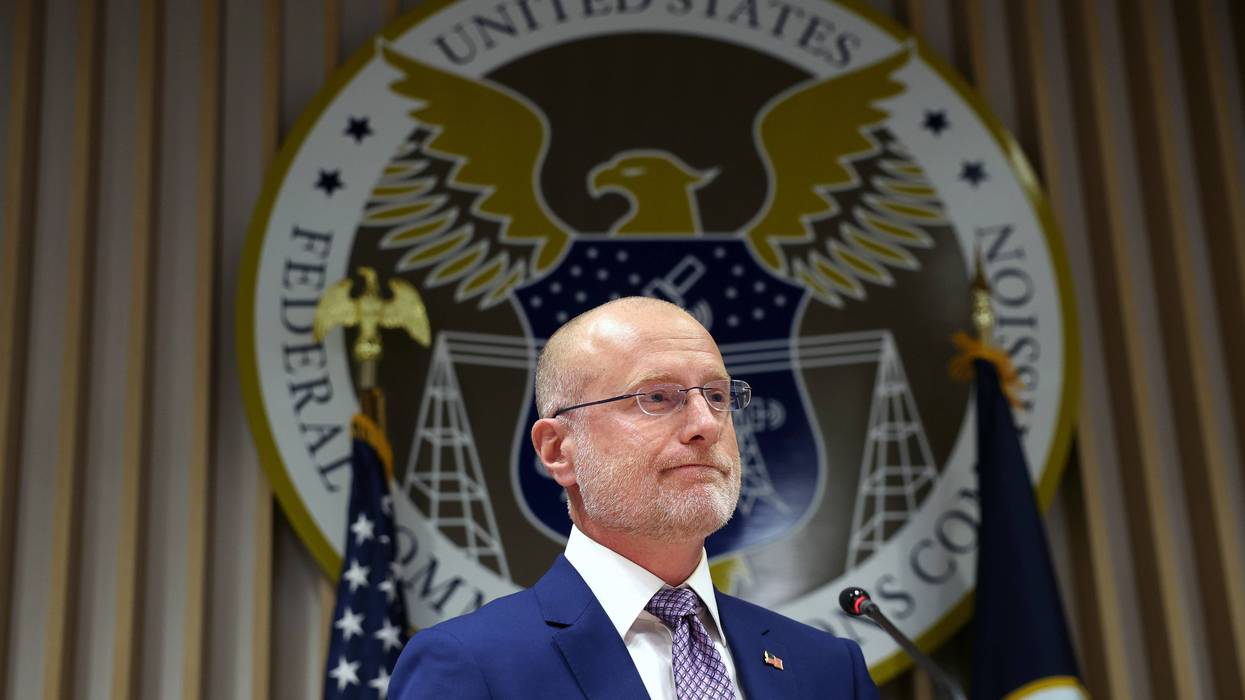
"The FCC simply cannot ignore the laws Congress makes just because the current agency head wants to."
A coalition of nonprofit groups and labor unions filed an emergency petition on Friday aimed at blocking the Federal Communications Commission's recent repeal of a decades-old rule that limited consolidation among television broadcasters, a move that would allow media conglomerates to seize even more control over local news stations.
The petition states that the Republican-controlled FCC's decision—pushed by Chair Brendan Carr and approved in August in a 2-1 vote along party lines—was "plainly contrary to law and violates core administrative law principles." The filing notes that Congress enacted the rule barring any single TV broadcaster from reaching more than 39% of US households—and only Congress can roll it back.
"The FCC simply cannot ignore the laws Congress makes just because the current agency head wants to," said Matt Wood, vice president of policy at Free Press, one of the groups that joined the new motion. "Chairman Carr serves only [President] Donald Trump, not the people of this country. Carr threatens broadcasters when their coverage angers the administration, but tosses them bones like this repeal when the biggest broadcast conglomerates toe the line."
The petition was submitted days after the FCC published the final text of its order repealing the National Television Multiple Ownership Rule, which Carr's FCC effectively ignored earlier this year when it approved Nexstar’s $6.2 billion acquisition of rival TV company Tegna—a deal that Trump vocally supported. Free Press noted that the merger would "give Nexstar access to 80% of US households over the nation’s broadcast airwaves."
Clayton Weimers, executive director of Reporters Without Borders North America, said Friday that repealing the 39% cap "eliminates the only meaningful limit on TV ownership consolidation in the US, reducing media pluralism, eliminating choices for news consumers, and threatening jobs in an industry already reeling from widespread layoffs and closures."
"If allowed to move forward, this policy will benefit a small handful of powerful owners of media conglomerates, while harming journalists, local and independent TV stations, and, not least of all, the American people," said Weimers.
Cable industry groups are also taking action against the FCC over its move to repeal TV ownership constraints. Ars Technica reported earlier this month that "cable lobby groups notified the Federal Communications Commission that they will sue the agency to block its controversial repeal of the National Television Ownership Rule."
The industry's filing states that the FCC's repeal "arbitrarily and capriciously ignores the harms that will surely follow from allowing broadcast station groups to exceed the National Cap, in the form of increased retransmission consent fees for multichannel video programming distributors... and higher monthly TV bills for consumers."