SUBSCRIBE TO OUR FREE NEWSLETTER
Daily news & progressive opinion—funded by the people, not the corporations—delivered straight to your inbox.
5
#000000
#FFFFFF
To donate by check, phone, or other method, see our More Ways to Give page.
Daily news & progressive opinion—funded by the people, not the corporations—delivered straight to your inbox.
Ashanti Washington, awashington@ucsusa.org, 202-331-5660
The Environmental Protection Agency (EPA) today released its final Affordable Clean Energy rule, a replacement for the Obama-era Clean Power Plan that will do virtually nothing to curb U.S. power plant carbon emissions, despite the many cost-effective options available, according to the Union of Concerned Scientists.
Below is a statement by Ken Kimmell, president of the Union of Concerned Scientists:
"The Trump Affordable Clean Energy rule is a sham. It is dangerously irresponsible and completely at odds with the urgent need to address climate change, not to mention the EPA's mission to protect public health.
"This administration's strategy is clear: Since the beginning it has taken its marching orders from the fossil fuel industry and launched a broadside attack on climate action and public health protections. From undermining the Clean Power Plan, vehicle fuel economy standards and methane regulations to abandoning the Paris agreement, it is obvious the Trump administration is putting fossil fuel company profits above the interests of the American people.
"By issuing a bare-bones power plant carbon standard primarily focused on small efficiency improvements at coal plants, the EPA is just ticking a box so it can say to a court that it has done something. With the costs of wind, solar power and energy storage falling, the U.S. should double down on clean energy, instead of trying to prop up costly and polluting forms of energy. It is now time to take this reckless administration to court and have a judge end this charade."
The Union of Concerned Scientists is the leading science-based nonprofit working for a healthy environment and a safer world. UCS combines independent scientific research and citizen action to develop innovative, practical solutions and to secure responsible changes in government policy, corporate practices, and consumer choices.
"Sounds like Trump preparing himself an off-ramp and trying to dump the Hormuz mess on others," said one observer.
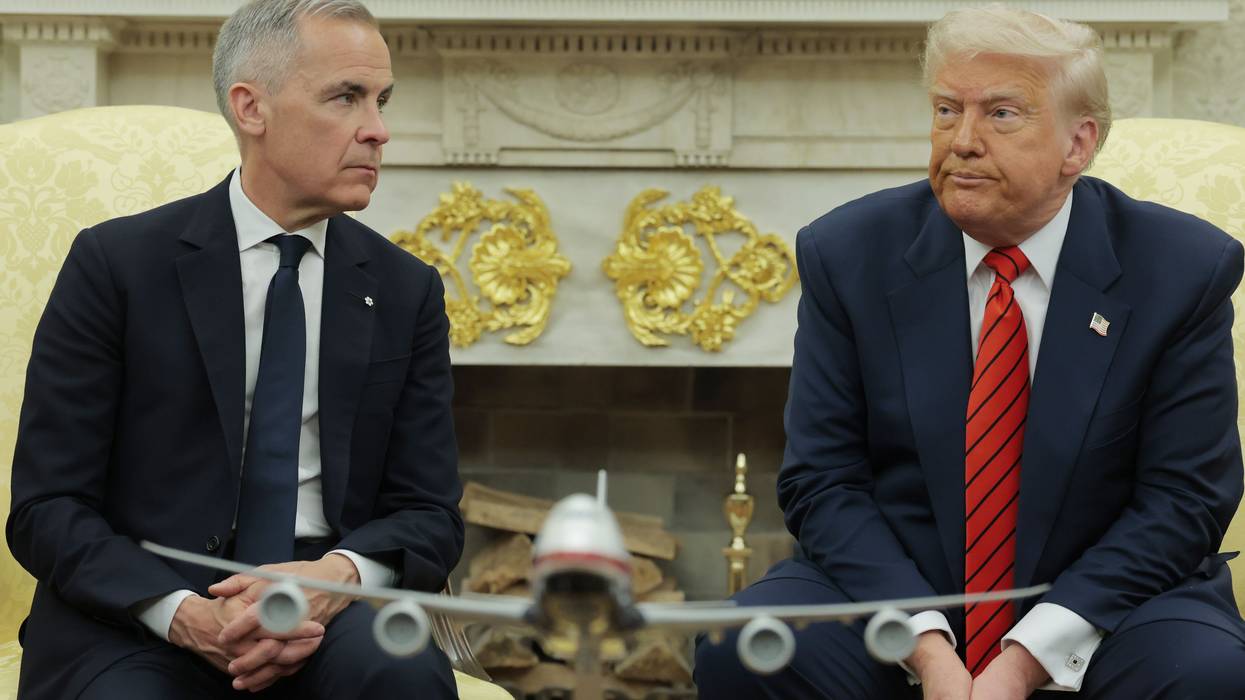
President Donald Trump on Friday continued to send contradictory messages on his plans for the US-Israeli assault on Iran, declaring that he is not interested in a ceasefire but is nevertheless considering "winding down" the three-week war, just two days after ordering thousands more troops to the Middle East
Trump wrote on his Truth Social network, "We are getting very close to meeting our objectives as we consider winding down our great Military efforts in the Middle East with respect to the Terrorist Regime of Iran."
Separately, the president told reporters Friday that he does not "want to do a ceasefire" in Iran.
This, after the president reportedly ordered 4,000 additional US troops deployed to the Mideast. On Friday, an unnamed US official told Axios that Trump is considering sending even more troops in order to secure the opening of the Strait of Hormuz and possibly occupy Kharg Island, home to a port from which around 90% of Iran's crude oil is exported.
Sound like Trump preparing himself an offramp and trying to dump the Hormuz mess on others. But as it is Trump, who knows and this could change in short order.
[image or embed]
— Brian Finucane (@bcfinucane.bsky.social) March 20, 2026 at 2:21 PM
Trump also said Friday that the Strait of Hormuz must be "guarded and policed" by other nations that use the vital waterway, through which around 20 million barrels of oil passed daily before the war.
Some observers questioned the timing of Trump's "winding down" post. Investment adviser Amit Kukreja said on X that Trump "obviously saw the market reaction towards the end of the day," and "now once again, he’s trying to convince everyone that the war is done; just not sure if the market believes it anymore."
Others mocked Trump's assertion—which he has repeated for two weeks—that the war is almost won, and his claim that he is winding down the operation as he sends more troops and asks Congress for $200 billion in additional funds.
Still others warned against sending US ground troops into Iran—a move opposed by more than two-thirds of American voters, according to a Data for Progress survey published Thursday.
"I cannot overstate what a disastrous decision it would be for President Trump to order American boots on the ground in this illegal war and send US troops to fight and die in Iran," Sen. Elizabeth Warren (D-Mass.) said Friday on social media.
Noting other Trump contradictions—including his declaration that "we're flying wherever we want" and "have nobody even shooting at us" a day after a US F-35 fighter jet was hit by Iranian air defenses—Chicago technology and political commentator Tom Joseph said Friday on X that "Trump has no idea what he’s doing."
"Call out Trump’s incompetence. This war is like a cartoon to him. He desperately needs a series of a catastrophes to distract from Epstein so he’s letting it happen," Joseph added, referring to the late convicted child sex criminal and former Trump friend Jeffrey Epstein. The war is solvable, but Trump has to go be removed from office first."
"It's unfortunate that it took this long for the Pentagon's ridiculous policy to be thrown in the trash," said one press freedom advocate.
A federal judge in Washington, DC blocked the US Department of Defense's widely decried press policy on Friday, which The New York Times and reporter Julian Barnes had argued violates their rights under the First and Fifth amendments to the Constitution.
The Times filed its lawsuit in December, shortly after the first briefing for the "Pentagon Propaganda Corps," which critics called those who signed the DOD's pledge not to report on any information unless it is explicitly authorized by the Trump administration. Journalists who refused the agreement turned over their press credentials and carried out boxes of their belongings.
"A primary purpose of the First Amendment is to enable the press to publish what it will and the public to read what it chooses, free of any official proscription," Judge Paul Friedman, who was appointed to the US District Court for DC by former President Bill Clinton, wrote in a 40-page opinion.
"Those who drafted the First Amendment believed that the nation's security requires a free press and an informed people and that such security is endangered by governmental suppression of political speech," he continued. "That principle has preserved the nation’s security for almost 250 years. It must not be abandoned now."
Friedman recognized that "national security must be protected, the security of our troops must be protected, and war plans must be protected," but also stressed that "especially in light of the country's recent incursion into Venezuela and its ongoing war with Iran, it is more important than ever that the public have access to information from a variety of perspectives about what its government is doing—so that the public can support government policies, if it wants to support them; protest, if it wants to protest; and decide based on full, complete, and open information who they are going to vote for in the next election."
The newspaper said that Friday's ruling "enforces the constitutionally protected rights for the free press in this country. Americans deserve visibility into how their government is being run, and the actions the military is taking in their name and with their tax dollars. Today's ruling reaffirms the right of the Times and other independent media to continue to ask questions on the public's behalf."
The Times had hired a prominent First Amendment lawyer, Theodore Boutrous Jr. of Gibson Dunn, who celebrated the decision as "a powerful rejection of the Pentagon's effort to impede freedom of the press and the reporting of vital information to the American people during a time of war."
"As the court recognized, those provisions violate not only the First Amendment and the due process clause, but also the founding principle that the nation's security depends upon a free press," Boutrous said. "The district court's opinion is not just a win for the Times, Mr. Barnes, and other journalists, but most importantly, for the American people who benefit from their coverage of the Pentagon."
Seth Stern, chief of advocacy at Freedom of the Press Foundation, also welcomed the ruling, saying that "the judge was right to see the Pentagon's outrageous censorship for what it is, but this wasn't exactly a close call. If the same issue was presented as a hypothetical question on a first-year law school exam, the professor would be criticized for making the test too easy."
"It's shocking that this sweeping prior restraint was the official policy of our federal government and that Department of Justice lawyers had the nerve to argue that journalists asking questions of the government is criminal," Stern declared. "Fifty years ago, the Supreme Court called prior restraints on the press 'the most serious and the least tolerable' of First Amendment violations. At the time, the court was talking about relatively targeted orders restraining specific reporting because of a specific alleged threat—like in the Pentagon Papers case, where the government falsely claimed that the documents about the Vietnam War leaked by Daniel Ellsberg threatened national security."
"Courts back then could never have anticipated the government broadly restraining all reporting that it doesn't authorize without any justification beyond hypothetical speculation," he added. "It's unfortunate that it took this long for the Pentagon's ridiculous policy to be thrown in the trash. Especially now that we are spending money and blood on yet another war based on constantly shifting pretexts, journalists should double down on their commitment to finding out what the Pentagon does not want the public to know rather than parroting 'authorized' narratives."
The Trump administration has not yet said whether it will appeal the decision in the case, which was brought against the DOD—which President Donald Trump calls the Department of War—as well as Defense Secretary Pete Hegseth and the Pentagon’s chief spokesperson, Sean Parnell.
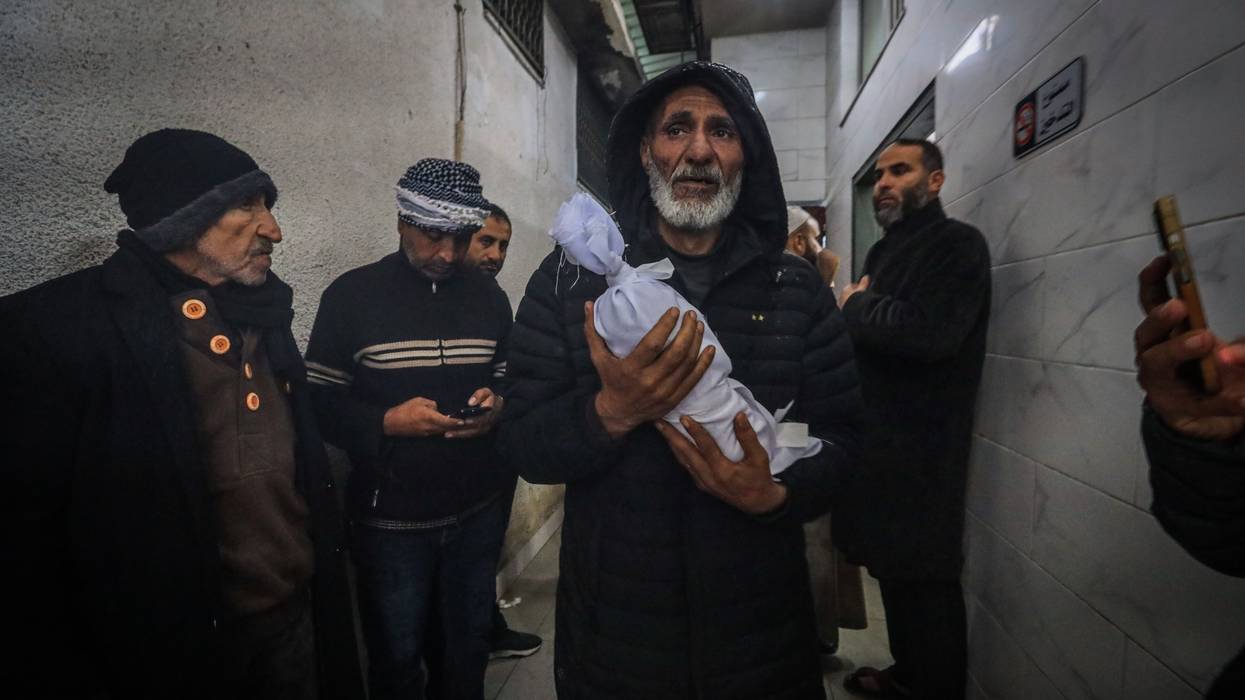
"When the international community didn't stop Israel as it deliberately killed nearly 75,000 Palestinians in Gaza, including 20,000 children, Israel knew they could kill civilians with impunity," said one critic.
Eighty percent of Lebanese people killed in Israel's renewed airstrikes on its northern neighbor were slain in attacks targeting only or mainly civilians, a leading international conflict monitor said Friday.
Reuters, using data provided by the Madison, Wisconsin-based Armed Conflict Location and Event Data (ACLED), reported that 666 people were killed by Israeli strikes on Lebanon between March 1-16. As of Thursday, Lebanese officials said the death toll from Israeli attacks had topped 1,000.
While Lebanese authorities do not break down the combatant status of those killed and wounded during the war, Israel's targeting of civilian infrastructure, including entire apartment buildings, and reports of whole families being wiped out, have belied Israeli officials' claims that they do everything possible to avoid harming civilians.
Classified Israel Defense Forces (IDF) data leaked last year revealed that—despite Israeli government claims of a historically low civilian-to-combatant kill ratio—83% of Palestinians killed during the first 19 weeks of the genocidal war on Gaza were civilians.
According to Gaza officials, 2,700 families were erased from the civil registry in the Palestinian exclave during Israel's genocidal assault.
"When the international community didn't stop Israel as it deliberately killed nearly 75,000 Palestinians in Gaza, including 20,000 children, Israel knew they could kill civilians with impunity," Lebanese diplomat Mohamad Safa said on social media earlier this week. "The result is exactly what we're seeing in Lebanon and Iran right now."
US-Israeli bombing of Iran has killed at least 1,444 people, according to officials in Tehran. The independent, Washington, DC-based monitor Human Rights Activists in Iran (HRAI) says the death toll is over twice as high as the official count and includes nearly 1,400 civilians.
The February 28 US massacre of around 175 children and staff at an elementary school for girls in the southern city of Minab—which US President Donald Trump initially tried to blame on Iran—remains the deadliest known incident of the three-week war.
As Israeli airstrikes intensify and the IDF prepares for a possible ground invasion of southern Lebanon—which Israel occupied from 1982-2000—experts are warning that noncombatants will once again pay the heaviest price.
United Nations officials and others assert that Israel's intentional attacks on civilians are war crimes. Israel is the subject of an ongoing genocide case filed by South Africa at the International Court of Justice, and the International Criminal Court has issued arrest warrants for Israeli Prime Minister Benjamin Netanyahu and former Defense Minister Yoav Gallant, who are accused of crimes against humanity and war crimes in Gaza.
"Deliberately attacking civilians or civilian objects amounts to a war crime," UN High Commissioner for Human Rights spokesperson Thameen al-Kheetan said earlier this week. "In addition, international law provides for specific protections for healthcare workers, as well as people at heightened risk, such as the elderly, women, and displaced people."
As was the case during Israel's bombing of Gaza and Lebanon following the October 7, 2023 attack, journalists are apparently being deliberately targeted again. Reporters Without Borders said in December that, for the third straight year, Israel was the world's leading killer of journalists in 2025.
"This was a deliberate, targeted attack on journalists," said RT correspondent Steve Sweeney after narrowly surviving an IDF airstrike on Thursday. "There's no mistake about it. This was an Israeli precision strike from a fighter jet."
"But if they think they’re going to silence us, if they think we're going to stay out of the field, they’re very, very much mistaken," he added.