

SUBSCRIBE TO OUR FREE NEWSLETTER
Daily news & progressive opinion—funded by the people, not the corporations—delivered straight to your inbox.
5
#000000
#FFFFFF
To donate by check, phone, or other method, see our More Ways to Give page.
Daily news & progressive opinion—funded by the people, not the corporations—delivered straight to your inbox.

Ulla Nilsen, MN350, 612-787-7110, Ulla@MN350.org
Kate Jacobson, MN350, 651-402-8901, Kate@MN350.org
After several months of community actions led by climate change advocacy group MN350 and allies, U.S. Bancorp has issued a new Environmental Policy restricting the bank's potential investments in coal and taking carbon pollution into account in investment decisions.
Advocates commended U.S. Bank for its commitment to act on climate change, but called for greater changes, including divestment from tar sands oil pipelines and an accountability mechanism.
"We are glad that U.S. Bank is starting to limit their support for the fossil fuels that harm our communities. We also know they can and must do much more," said Ulla Nilsen, Corporate Accountability Organizer with MN350. "To live up to their words on climate change, U.S. Bank needs to end their financing of tar sands oil pipelines that are deadly to Indigenous communities, Minnesota's most precious waters, and a safe climate."
The most recent policy released in June, contains commitments to reduce lending across the U.S. coal sector, including restrictions on new coal mining projects, coal-fired power plants and mountaintop removal mining practices. It also includes protections for Indigenous communities in the energy and mining sectors, and additional measures to screen clients in the oil and gas industries.
A report released last year, "Financing Climate Chaos: How Minnesota's Banking Giants Prioritize Profit in the Face of Climate Change" took the bank to task for financing the Enbridge pipeline network that brings tar sands oil from Canada and fracked oil from North Dakota across Northern Minnesota. Climate advocates say these reserves of especially polluting oil, obtained through "extreme extraction" must remain in the ground to limit the impact of global warming to a level compatible with human life on earth.
Minnesota's Native American communities have led opposition to the expansion of Enbridge's pipeline network. Winona Laduke, Executive Director of Honor the Earth states, "New pipeline proposals from Enbridge put our relationship to our land, its health, and our communities at risk -- infringing on treaty rights."
The announcement comes after nine months of actions by community members around the country. Concerned customers publicly closed their U.S. Bank accounts, occupied bank lobbies and flooded top executives' in-boxes with requests that U.S. Bank live up to its commitment to environmental stewardship. In April, climate advocates along with members of the community, faith and labor coalition Minnesotans for a Fair Economy spoke at the bank's annual shareholders meeting in Denver, where CEO Richard Davis publicly indicated a willingness to work on their concerns.
Representatives of MN350 have since met with U.S. Bank executives on two occasions, along with faith and community leaders and developers of non-profit solar projects.
Other big banks in the United States, including Wells Fargo, Bank of America, Citi and JP Morgan Chase have also recently updated their policies around financing projects that drive climate change, restricting investments in coal mining in particular. A recent report "Shorting the Climate" by the Rainforest Action Network (RAN) argues for further changes, stating, "big banks pouring hundreds of billions into the fossil fuels that are most incompatible with a climate-stable world."
"In a recent Op Ed in the Wall Street Journal, U.S. Bank CEO Richard Davis states, 'A bank's single greatest purpose [is] to keep entire communities growing and going,'"said Nilsen. "In order to maintain a viable economy our financial institutions must be willing to remove all support from the toxic industries that are devastating our planet, and instead help fund the transition to a sustainable economy."
350 is building a future that's just, prosperous, equitable and safe from the effects of the climate crisis. We're an international movement of ordinary people working to end the age of fossil fuels and build a world of community-led renewable energy for all.

Congresswoman Summer Lee renewed her call to abolish US Immigration and Customs Enforcement on Friday after the Allegheny County Office of the Medical Examiner ruled the death of Daphy Michel, a Haitian immigrant who died after being released from ICE custody, a homicide.
"Michel died on March 2, four days after departing the Washington County Correctional Facility, where she spent six months awaiting a preliminary hearing on misdemeanor charges of terroristic threats and harassment, which were ultimately dismissed," Pittsburgh's Public Source reported in April. "She was turned over to Immigration and Customs Enforcement, which fitted her with an ankle bracelet and released her under the agency's Alternatives to Detention Program."
The 31-year-old Charleroi resident then "spent around 24 hours across the last two days of her life in sub-freezing weather in a bus shelter on the South Shore," according to the the outlet, which cited visual records released by Pittsburgh Regional Transit.
The medical examiner's office said in a Friday statement that she died of hypothermia, and "the opinion of the forensic pathologist in this case is that Ms. Michel was a vulnerable adult, suffering from untreated severe mental health issues, and a significant language barrier when she was released from federal custody."
"Based on all available information during the investigation, the pathologist ruled Ms. Michel's death a homicide," the office said. The finding means "the death was caused by the actions of another individual," but is "not to be interpreted as a declaration of criminal guilt."
Emma Federkeil, a spokesperson for Allegheny County District Attorney Stephen A. Zappala Jr., told the Pittsburgh Post-Gazette that the office hasn't yet seen a copy of the report and opinion.
"As such," she Federkeil, "we must obtain a copy of the official report and opinion and any and all records relied on by the report, in order to determine the basis for the finding of homicide as the manner of death which requires a finding the death occurred 'at the hand of another.'"
"As we gather the necessary investigation documentation and reports," she added, "we cannot comment further."
ICE is part of the US Department of Homeland Security. In response to the newspaper's request for comment, DHS acting Assistant Secretary Lauren Bis reiterated the text of a March statement and added that "all illegal aliens who are processed have access to phones to call family, friends, and attorneys."
Regardless of any criminal charges, Joseph Murphy, an attorney who has represented Michel's family since her death, told Public Source that he expects a civil lawsuit in the weeks ahead.
Lee (D-Pa.), who has joined other progressives in calling for an end to ICE throughout President Donald Trump's deadly crackdowns on immigrants across the United States, stressed in a Friday statement that "Daphy Michel was a human being. She happened to be born on the other side of a border, but she was no less worthy of care, safety, and dignity. That should not have been a death sentence. Daphy's death was preventable and is the result of a violent system that cages people, surveils them, abandons them, dehumanizes them in life, and smears them in death to escape accountability."
"She deserved care, shelter, language access, and medical support. ICE and every agency that failed her must answer for this," Lee continued. "And now, as more people die in and around ICE custody, their answer is not transparency, accountability, or care, but to stop reporting the deaths of recently released detainees altogether. We may never know how many more stories like Daphy's have been hidden by a system built to disappear people. Rather than pour billions more into the agency that murdered her, we must abolish ICE and build systems rooted in equity and basic human dignity."
Daphy Michel was a human being who happened to be born on the other side of a border. That did not mean she was any less worthy of care, safety, and dignity. Her death was preventable. We must abolish ICE.www.publicsource.org/haitian-immi...
[image or embed]
— Rep. Summer Lee (@repsummerlee.bsky.social) June 12, 2026 at 5:49 PM
As Trump has pursued his mass deportation agenda since returning to office last year, at least dozens of people have died in ICE custody or shortly after being released. Earlier this month, ICE announced that it was rescinding a 2021 Biden administration policy requiring a report to Congress and an investigation any time a detainee died within 30 days of their release.
Following that announcement, the Republican-controlled Congress sent a bill with nearly $70 billion in new DHS funding to Trump's desk. The legislation, which the president signed on Wednesday, includes $38 billion for ICE and $26 billion for US Customs and Border Protection (CBP).
"House Republicans handed ICE and CBP billions more while families struggle to afford rent, groceries, childcare, and healthcare," Lee said on social media after the chamber's vote. "Congress shouldn't be writing blank checks for cruelty while everyday people are being crushed by rising costs."
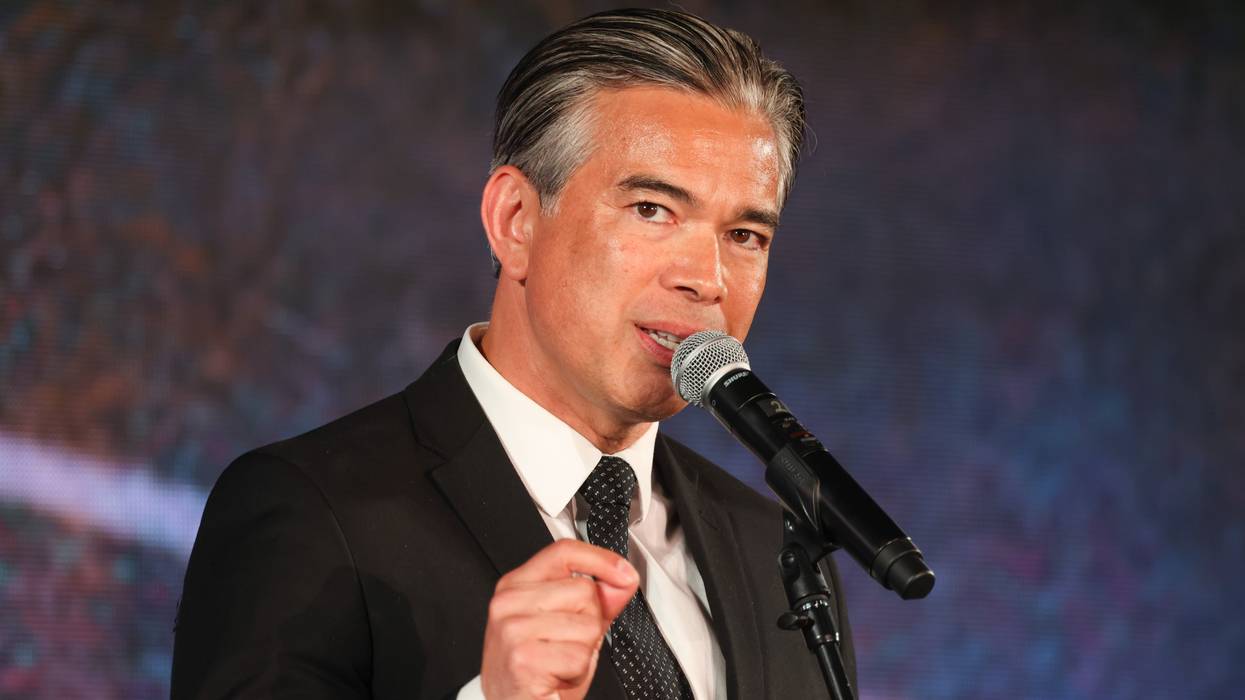
"Now that the federal government has abandoned antitrust enforcement in favor of cronyism and runaway consolidation, state attorneys general must step in to block this deal," said one critic.
The US Department of Justice on Friday approved Paramount Skydance Corporation's megamerger with Warner Bros. Discovery, prompting opponents of the $110 billion deal to place their hopes of blocking it in the hands of Democratic state attorneys general.
The DOJ's Antitrust Division approved the merger without requiring divestitures or behavioral remedies—a significant win for billionaire Paramount CEO David Ellison. Analysts and critics had suggested the DOJ might require sales of some of the corporation's numerous cable networks, streaming services, film and television studios, sports programming rights, or media outlets.
The DOJ also reportedly declined to impose conduct restrictions on bundling, distribution, licensing commitments, and other areas.
“If we had an uncorrupted Department of Justice, Paramount would not even have tried to merge with Warner Bros. Discovery, in plain violation of the law," Robert Weissman, co-president of the consumer advocacy group Public Citizen, said in response to the news of the DOJ approval. "If it had, a Department of Justice that was doing its job would have rushed to court to block the merger the moment it was announced."
“Now, however, a compromised DOJ has rubber-stamped a merger that consolidates power for the Ellisons, one of [President Donald]Trump’s preferred oligarch families," Weissman added. “This merger will jack up prices for consumers, cost workers their jobs and, most importantly, limit the range of viewpoints permitted to air on the major media or appear in movies and creative outlets. Put simply, this is an anti-free speech merger."
This is terrible news for every American who doesn't want Trump-aligned billionaires to control what they watch and how much they pay.The Paramount-Warner Bros. deal has reeked of corruption and influence-peddling.This fight isn't over. State AGs must block this merger.
[image or embed]
— Elizabeth Warren (@warren.senate.gov) June 12, 2026 at 1:48 PM
Craig Aaron, co-CEO of the advocacy group Free Press, said in a statement: “Despite all the talk about conducting a thorough investigation, the fix was in at the Trump Justice Department from the start. Paramount Skydance has fêted, flattered, and promised sweeping changes to news coverage to win the administration’s approval, despite evidence that giving one corporation this much media power—all the movie studios, cable channels, and newsrooms—will undermine competition, destroy jobs, slant the news, and endanger our democracy."
“We've already seen how far Paramount and the Ellison family are willing to go to diminish a once-proud network and news organization like CBS, and they promise to do worse if they get their hands on Warner Bros., HBO, CNN, and all the rest," he added. "The Ellisons aren’t hiding their intentions, and no weak concessions will make this deal any better."
Congressman Jamie Raskin of Maryland, the top Democrat on the House Judiciary Committee, warned earlier this week that approval of the merger would result in "the same kind of unprecedented pro-MAGA editorial control we have seen at CBS News and '60 Minutes.'"
Raskin also contended that the merger could mean that "American consumers, who already pay an average $69 a month for streaming on top of $100 a month for cable and $78 for internet," will pay "even more for sports, news, and entertainment."
As Politico's Yasmin Khorram reported Friday:
The [DOJ] decision... paves the way for Paramount to combine with the entertainment and media company behind a vast film and television studio, CNN, and the HBO Max streaming service, which would be combined with Paramount+ to create a new offering boasting about 200 million subscribers. The deal, which would upend the Hollywood ecosystem by combining two historic rival studios, is opposed by many in the entertainment industry who fear it could lead to mass layoffs, among other concerns.
The DOJ's reported approval of the merger does not necessarily mean the deal is done. Several states are weighing antitrust challenges, most notably California, where the office of Democratic Attorney General Rob Bonta is conducting what he called a "vigorous" review of the proposed merger to determine how it would impact competition in entertainment, streaming, advertising, and labor markets. Reuters reported earlier this month that California, New York, and other states are preparing a lawsuit aimed at blocking the merger.
“The good news is, this is not the last word on the matter," Weissman said. "Competition authorities in the states and other countries can still follow the law and stand up for the public interest against this media consolidation. Now that the federal government has abandoned antitrust enforcement in favor of cronyism and runaway consolidation, state attorneys general must step in to block this deal."
Aaron said that states "have strong case for blocking this merger, and many brave journalists, filmmakers, and workers in the entertainment industry have spoken out against the dangers of this deal despite threats to their livelihoods."
"They are warning us what will happen if this deal goes through, and we must listen," he added. "The attorney generals have the evidence they need to stop this deal; now the public needs them to take action.”
Last year's merger between Paramount Global, Skydance Media, and National Amusements was itself opposed by critics who sounded similar alarms over corruption, antitrust issues, labor concerns, and attacks on editorial independence.
CBS, a Paramount Global company, announced the cancellation of "The Late Show with Stephen Colbert" during the merger review period. While Paramount claimed the cancellation was a financial decision, critics said its timing suggested at least indirect political pressure, given Colbert's vocal criticism of Trump and the need for merger approval from the Federal Communications Commission. FCC Chair Brendan Carr was appointed by Trump and has been dogged by allegations that he's more loyal to the president's agenda than to his agency's stated mission.
One of the biggest recurring flashpoints involves claims of corporate pressure and censorship at CBS' venerable "60 Minutes" weekly current affairs program. Numerous former "60 Minutes" journalists and others have accused Bari Weiss—the right-wing podcaster who became CBS News editor-in-chief after the merger—of political censorship.
Earlier this month, a coalition of press freedom groups warned that recent firings of "60 Minutes" journalists were a “grotesque effort taken straight from an authoritarian handbook” that posed a much wider threat to democracy, and highlighted that an approved Paramount Skydance-Warner Bros. Discovery merger would hand control of CNN, a Warner Bros. company, to the same billionaire family that now owns CBS.
The coalition argued that the merger “would open the door to improper political meddling in journalists’ editorial decisions" and "alter CNN’s editorial direction (not to mention meddle with HBO’s documentaries) to be more friendly to the [Trump] administration, threatening press freedom."
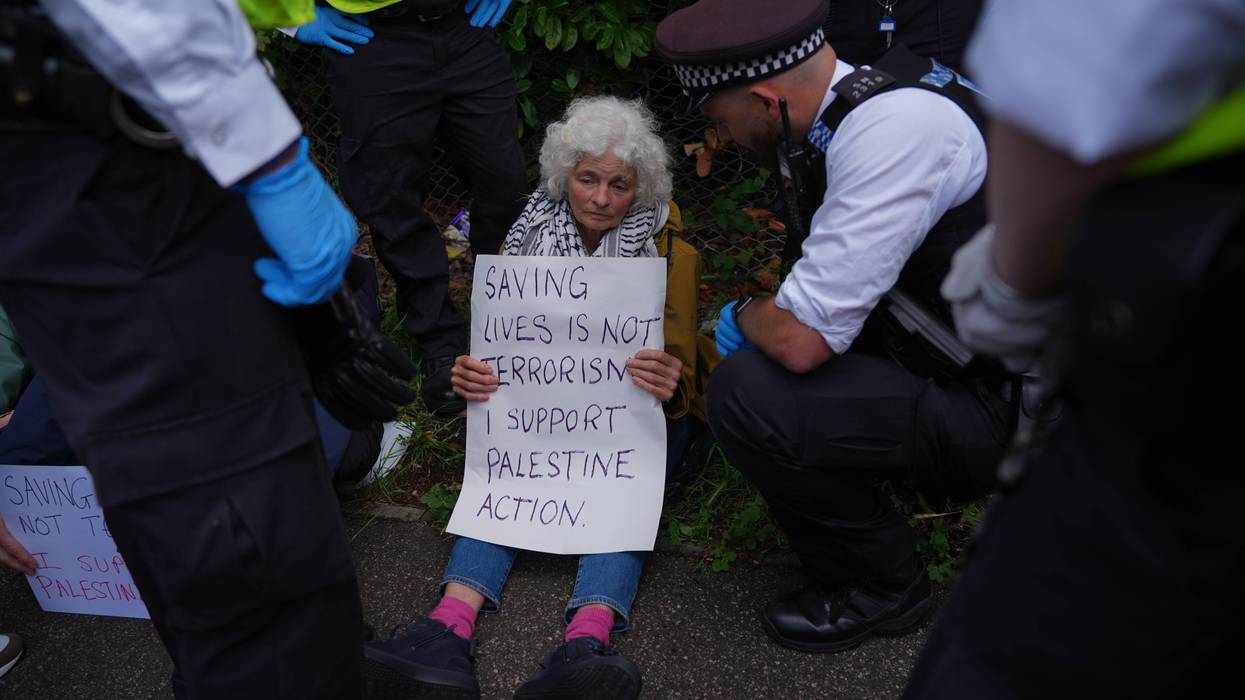
Amnesty UK said the defendants "were sentenced as terrorists because prosecutors want to make an example of them."
In a decision that Amnesty International described as "completely disproportionate," four demonstrators with the outlawed group Palestine Action were sentenced as terrorists in the UK on Friday after being convicted for causing damage at an Israeli weapons factory in 2024 to protest the genocide in Gaza.
Supporters of the so-called "Filton 4" were filmed crying and embracing outside Woolwich Crown Court in London as the judge, Mr Justice Jeremy Johnson, handed down sentences ranging from four years and eight months to seven years and eight months to the four young defendants.
Charlotte Head, 30; Leona Kamio, 30; and Fatema Rajwani, 21, were convicted of criminal damage last month after a break-in at a factory in Bristol owned by the Israeli company Elbit Systems, where they smashed up over a dozen drones and other military equipment, causing around £1.2 million, or $1.6 million, of damage.
A fourth defendant, 23-year-old Samuel Corner, was also convicted for the damage, as well as grievous bodily harm without intent for striking a policewoman on the scene with a sledgehammer, fracturing her spine.
🇬🇧 🇵🇸 Four Palestine Action Activists Sentenced as ‘Terrorists’ in UK Legal First
Four activists who raided an Elbit Systems arms factory near Bristol in 2024 were sentenced as “terrorists” Friday at Woolwich Crown Court, in what supporters said is the first time UK protesters… pic.twitter.com/gC4MvAXfz4
— Drop Site (@DropSiteNews) June 12, 2026
In what has been described as a legal first for Britain, Johnson sentenced the four defendants as terrorists, although three had only been convicted of property damage. He did so under the Sentencing Act of 2020, which allows nonterrorism crimes to be treated as terrorism if they meet certain criteria.
Elbit's drones have been documented in use during attacks on civilians, including the April 2024 strike on a World Central Kitchen convoy that killed seven aid workers.
Last month, 22-year-old Zoe Rogers, another activist who took part in the Elbit raid but was acquitted, said she believed that because of their sabotage of the drones, "innocent lives were saved" in Gaza.
However, Johnson did not allow the defendants to explain the reason for their actions as part of the trial, nor were jurors informed that the defendants could later receive sentences for terrorism.
Because the protesters had caused “serious damage to property” for the purpose of “advancing a political or ideological cause,” Johnson determined that the protesters could be sentenced as terrorists using the broad definition from the Terrorism Act 2000.
The terrorism designation means that defendants will have to serve a minimum of two-thirds of their sentences in prison and will be required to register as terrorists with the police for the next 15 years.
Attorneys for the defendants said they were not informed that their clients were at risk of being sentenced for terrorism and accused the prosecution of submitting key evidence, including a report on the cost of damage to the factory, “at the 59th minute of the eleventh hour," giving them little time to form a rebuttal.
The defendants’ attorneys described the precedent that someone could be sentenced for terrorism after being convicted of a nonviolent offense as unprecedented and dangerous to speech.
“It’s wrong for someone to be sentenced for a more serious offense of which they have not been convicted,” said Corner's attorney, Tom Wainwright, who noted that similar measures could have been used to sentence earlier protest movements, like the suffragettes or other anti-war demonstrators who sabotaged military equipment, for terrorism simply because their actions had a political motivation.
Head's attorney, Rajiv Menon, described the attempt to sentence his client as unprecedented, and warned that it was “an invitation to chilling, creeping authoritarianism that undermines the very fabric of our society."
After their conviction, Wainwright hailed the protesters as people of conscience: "[The drones] may have been involved in taking the lives of men, women, and children in Gaza. That is why they acted. That’s something that—in a sane world—would be commended.”
In a post to social media following news of the conviction, Amnesty UK condemned the use of terrorism powers in this case.
"It is completely disproportionate to punish protesters for criminal damage as if they were terrorists, a sentence which stays with you for life," the human rights group said.
More than 70 people were arrested for supporting the proscribed group Palestine Action outside Woolwich Crown Court.
The arrests happened as four members of Palestine Action were sentenced over a separate incident. pic.twitter.com/kRkXEjbPFm
— Channel 4 News (@Channel4News) June 12, 2026
The sentencing comes amid a broader crackdown in the UK against pro-Palestine speech and protest that has ramped up even under a Labour government, which has sought to label even peaceful demonstrations as terrorism.
Following another case in which Palestine Action protesters vandalized military equipment—this time on a UK Royal Air Force base—the government of Prime Minister Keir Starmer in 2025 used the same terrorism law cited by Johnson to label the group as proscribed, effectively making it illegal to belong to it or publicly support it.
Police have arrested numerous peaceful protesters for no other crime than holding signs that read: "I oppose genocide. I support Palestine Action."
Amnesty said in May that more than 3,300 people had been arrested across the UK since the proscription took effect and that more than 1,200 protesters had been charged with terrorism-related offenses.
Eight other Palestine Action activists, including four others who have been accused of involvement with the Elbit break-in, went on a lengthy hunger strike this past winter to protest their confinement in prison for more than a year without trial, during which time they alleged that they were denied needed medical care and had their communication with the outside world censored.
Amnesty said the Filton 4 "were sentenced as terrorists because prosecutors want to make an example of them."
On Friday, as hundreds rallied outside the court against the terrorism sentence, more than 100 peaceful protesters were also arrested for allegedly supporting Palestine Action.
Video of one of the arrests, published by Channel 4 News, shows police officers lifting an elderly woman by her arms and legs and dragging her away from a larger group of people holding signs.
"You're under arrest under Section 13 of the Terrorism Act," one officer is heard saying.