

SUBSCRIBE TO OUR FREE NEWSLETTER
Daily news & progressive opinion—funded by the people, not the corporations—delivered straight to your inbox.
5
#000000
#FFFFFF
To donate by check, phone, or other method, see our More Ways to Give page.
Daily news & progressive opinion—funded by the people, not the corporations—delivered straight to your inbox.

Abigail Seiler, 202-547-9359, pr@centerforfoodsafety.org
From 2006 to 2014, Japanese doctors documented a new cluster of symptoms reported by hundreds of rural Japanese people: patients suffering from recent memory loss, finger tremors, and combined symptoms of headache, general fatigue, palpitation/chest pain, abdominal pain, muscle pain, and cough. Public health researchers later associated these symptoms with the level of exposure to agricultural neonicotinoid insecticides, used on fresh fruits, tea, rice and a host of other human food crops. Urine sampling showed the level of symptoms correlated with the amount of neonicotinoid consumption.
Last week, the public health team composed of Japanese, American and African researchers published the alarming story of those patients. The patients lived in rural communities and were being exposed to agricultural chemicals mostly through ingestion of pesticide-contaminated food and also perhaps by blowing sprays and dusts in a heavily-farmed, densely-populated area. Residential, pet and other exposures may also have contributed. The people involved were not farmworkers and did not have unusually high occupational exposures.
Key quotes from the authors:
"The results suggest that the occurrence of neo-nicotinic symptoms in the general population is related to environmental exposure to neonicotinoids, at least acetamiprid and thiamethoxam."
"Gender seems to be one of the factors that neo-nicotinic symptoms manifest. In this study, more than 60% were women in the Typical Symptomatic Group and Atypical Symptomatic Group. This trend is consistent with our previous study. Age dependency was not clear in our studies. However the involvement of young patients suggests the adverse effect of neonicotinoids on the developing brain; and that of aged patients suggests the effect of neonicotinoid on the brain with cognitive function problems"
Peter T. Jenkins, consulting attorney with CFS, stated, "If this Japanese rural population is experiencing neurological symptoms from exposure to neonics, aren't rural Americans also at risk in many areas? Any involuntary poisoning with neurotoxins is reprehensible and must come to an end. These exposures are occurring mostly through eating and drinking, so the risks go far beyond farmworkers and other occupational exposures to every-day consumers in rural areas."
The potential for water contamination is also high; although Japanese studies have not documented it, numerous U.S., Canadian, and Dutch studies have. These are compiled in the new Center for Food Safety report, Water Hazard - Aquatic Contamination by Neonicotinoid Insecticides in the United States. The safety of drinking water sources and threats from pesticide contamination needs further urgent research.
"The bee-killing class of neonicotinoid insecticides act neurotoxically. Human brains and nervous systems can be affected in some of the same ways as insects with high enough dosing. Prior neurotoxicity studies on the neonicotinoids have raised alarms, including within the European Food Safety Agency. But, those were mostly cell culture or rat studies. Now, well-supported evidence of illness in real people has emerged in the published scientific literature for the first time. Federal and State regulators must act to protect public health," said Jenkins.
The paper is: Marfo, Fujioka. et al. 2015. Relationship between Urinary N-Desmethyl-Acetamiprid and Typical Symptoms including Neurological Findings: A Prevalence Case-Control Study. PLoS ONE 10(11): e0142172. doi:10.1371/journal.pone.0142172 .
Center for Food Safety's mission is to empower people, support farmers, and protect the earth from the harmful impacts of industrial agriculture. Through groundbreaking legal, scientific, and grassroots action, we protect and promote your right to safe food and the environment. CFS's successful legal cases collectively represent a landmark body of case law on food and agricultural issues.
(202) 547-9359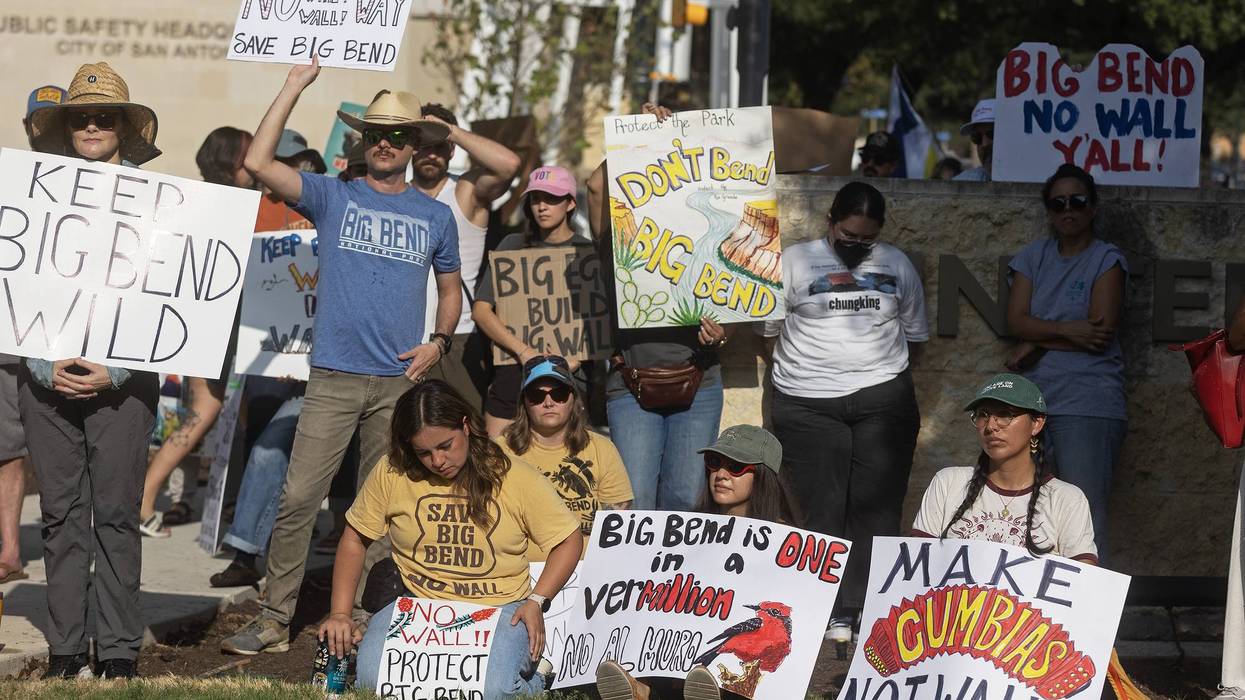
"This fight is far from over," said one campaigner. "We won’t rest until Big Bend’s environmental protections are fully restored and the illegal waiver that allowed so much destruction is gone for good.”
A federal judge in El Paso on Friday temporarily blocked the Trump administration from continuing construction of border barriers, roads, and other infrastructure across the Big Bend region, a win for environmentalists, landowners, and other Texans from across the political spectrum who are united in their opposition to the project.
US District Judge Kathleen Cardone—who was appointed by former President George W. Bush—granted a preliminary injunction sought by the Center for Biological Diversity (CBD) and other plaintiffs.
"The court finds that plaintiffs are likely to succeed on the merits of at least one of the claims in [their] suit, that there is a likelihood that they will suffer serious, irreparable harm without an injunction, and that the balance of the equities and the public interest weigh in their favor," Cardone wrote in her two-page decision.
BIG WIN FOR BIG BEND!! A federal judge just issued an emergency injunction to block border barrier and road construction across the #BigBend region. The injunction will remain in place while the court considers a lawsuit challenging the federal government’s waiver to fast-track construction.
— Center for Biological Diversity (@biologicaldiversity.org) October 2, 2026 at 2:18 PM
Cardone's order immediately prohibits the Department of Homeland Security and its agencies from building “border barrier or related infrastructure” or engaging in “any construction or ground-disturbing activities” in the Big Bend Sector until they comply with applicable laws. It also stays the effect of three Trump administration waivers that had allowed officials to bypass numerous federal protections.
“This is a historic victory for Big Bend and everyone who loves this wild corner of Texas,” said Laiken Jordahl, CBD's national public lands advocate. “No administration has the right to destroy a crown-jewel national park for political theater."
"With a federal court ordering the bulldozers to stop, Big Bend gets to breathe," Jordahl added. "But this fight is far from over. We won’t rest until Big Bend’s environmental protections are fully restored and the illegal waiver that allowed so much destruction is gone for good.”
Clara Bensen, director of communications for No Big Bend Wall and a board member of Conserve Big Bend, also welcomed the ruling.
"For months we've watched the federal government send bulldozers into a national park that belongs to all of us. Today a federal judge told them to stop," she said in a statement.
"Since we learned the Trump administration planned to seize public and private land and destroy the Big Bend region as we know it, this community has come together across the political aisle to fight back," Bensen added. "The government tried to ignore the law to build unnecessary border infrastructure, and the court made clear it can't. This is a victory, but we are not letting our guard down."
🚨 BREAKING NEWS: A federal judge just HALTED the destruction of Big Bend.This is a massive victory for the landowners, local communities, and everyday Texans who stood up to protect one of our state's greatest treasures.The fight isn't over, but today, the people won.
[image or embed]
— Clayton Tucker (@claytontuckertx.com) October 2, 2026 at 2:16 PM
The ruling comes after contractors began bulldozing roads and building other infrastructure in and around Big Bend National Park in August, including near Santa Elena Canyon and Mariscal Mountain. US Customs and Border Protection (CBP) temporarily halted construction on August 17, but that pause expired earlier this week.
The Trump administration has argued that the project—which initially included plans for a 30-foot-high reinforced steel wall—is necessary to achieve what it calls “operational control” of the border. Plaintiffs in the case challenged the administration's determination under Section 102 of the Illegal Immigration Reform and Immigrant Responsibility Act of 1996 that the region is an area of “high illegal entry,” noting that the government's claim is contradicted by its own statistics.
The Big Bend Sector is among the least-trafficked portions of the southern border, accounting for roughly a quarter of the international boundary's length, but no more than 3% of annual migrant apprehensions. The sector recorded just 1.3% of total border apprehensions in 2025, according to CBP data.
Plaintiffs in the case argued that the administration unlawfully used extraordinary powers to waive environmental and other laws, including the Endangered Species Act, National Park Service Organic Act, and National Wild and Scenic Rivers Act. Indigenous groups alleged violations of the Native American Graves Protection and Repatriation Act and the Archaeological and Historic Preservation Act.
At Friday's hearing, Rio Grande river guide and landowner Danny William Miller described the prospect of a barrier cutting across his property and blocking access to the river as “a bullet to the head," according to The Big Bend Sentinel.
Miller testified that once the landscape is altered, it cannot simply be restored. His guide work, he said, would become “a tour of the military-industrial complex, rather than a tour of the wilderness.”
Another local resident, Bill Guerra-Addington, told the court, “They’re taking the river away from us, and it’s devastating.”
Friday's injunction is temporary. The underlying lawsuit will continue, and the broader legal battle over Trump's Big Bend border project—and the administration's legally dubious waivers—remains unresolved. On Wednesday, US District Judge Orlando Garcia, an appointee of former President Bill Clinton, rejected a request from an Indigenous group and business owners for a temporary restraining order in one of several separate cases seeking to halt work on the project.
Still, National Parks Conservation Association president and CEO Tiernan Sittenfeld called Cardone's order “a victory for Big Bend and for all of America’s national parks.”
"While national park advocates are grateful for this halt to border construction in Big Bend, the devastating toll it has already taken on this national park must be studied and remediated," she said. "The administration must repair the damage it has done to the beautiful, fragile desert ecosystems that make Big Bend National Park one of America’s most iconic places."
“The administration’s border plan at Big Bend has faced strong bipartisan opposition from local landowners, experienced local borderland sheriffs, and conservationists alike," Sittenfeld added. "Big Bend is no place for border barriers. It’s time for the administration to come to the table with the border communities that know Big Bend best, repair the damage from this ill-conceived project, and find new solutions.”
s
"It doesn’t have to be this way. ICE doesn’t have to traumatize children, tear families apart, and treat people like this," said one Austin, Texas official.
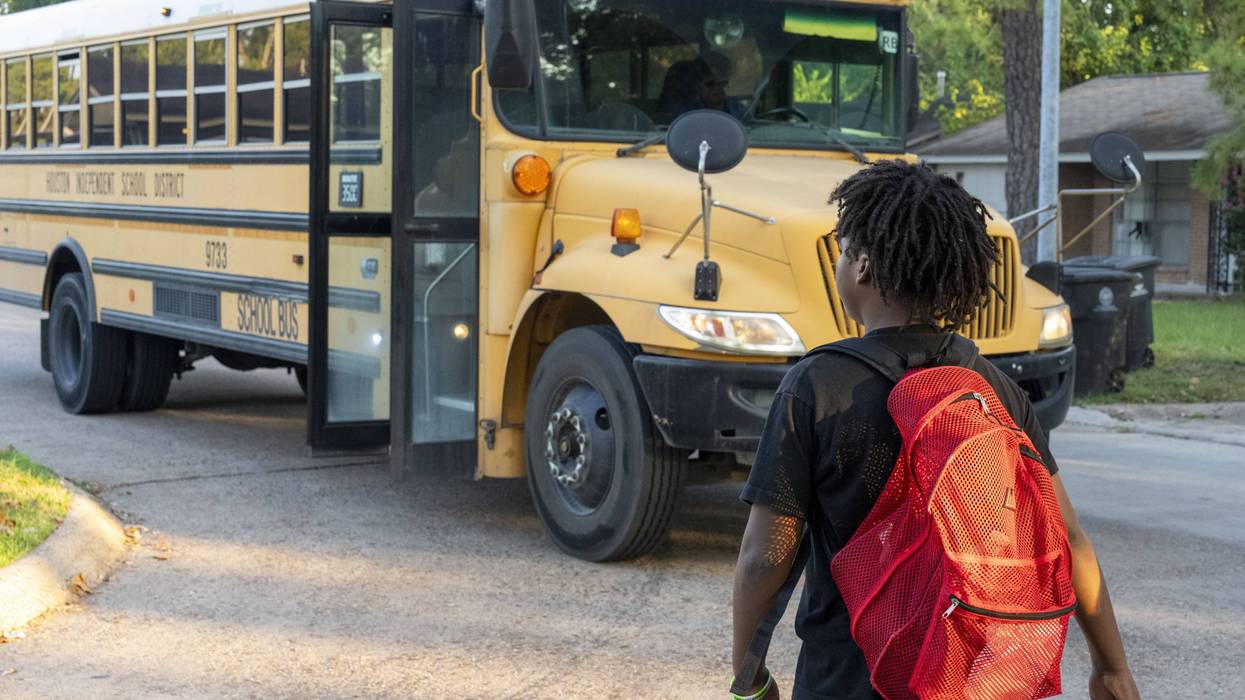
Since Republicans in the US Senate this week blocked a bill to make school bus stops off-limits for US Immigration and Customs Enforcement, community members in Pennsylvania and Austin, Texas have expressed outrage by arrests made in front of children—in at least one reported case, leaving a child abandoned as officers detained his mother.
"It doesn’t have to be this way. ICE doesn’t have to traumatize children, tear families apart, and treat people like this," said José "Chito" Vela III, the mayor pro tempore of Austin, on social media late Thursday.
Vela made the comments as he posted a video that he said shows the aftermath of an ICE arrest at a school bus stop, with officers driving away with the mother of a 9-year-old boy who was left with other community members.
"They fucking took her," said one woman angrily as the child sat on the ground crying. "What the fuck are they going to do with the child now? ... Y'all have no fucking shame."
ICE arrested the mom of a 9-year-old at a school bus stop in Austin, leaving him alone and crying. The video has profanity and is heartbreaking to watch, but it shows the fear/pain of what happened.
This is evil. This is wrong. And it has to stop.
Video: Leonardo Pelaez on FB pic.twitter.com/F52rCjZwIF
— Mayor Pro Tem Chito Vela, III (@chitoforatx) October 2, 2026
Vela posted the video a day after Sen. Chris Murphy (D-Conn.) introduced a bill aimed at stopping ICE and other Department of Homeland Security (DHS) agencies from conducting enforcement operations at school bus stops.
In August, Murphy and many of his constituents were outraged when ICE arrested parents at school bus stops in Danbury, Connecticut—detaining them after their children boarded buses, leaving them without anyone to pick them up after school let out and giving the family no time to ensure their children would be cared for.
Murphy said on the Senate floor Wednesday that the bus stop arrests were part of an operation in which 118 people were detained in Connecticut. Federal data has shown that a majority of people being arrested by ICE, which is carrying out President Donald Trump's mass deportation agenda, have no criminal convictions.
“For parents in this body, you know how anxious that first day of school is, how kids are just brimming with nervous anxiety about that first day, and you know what that feels like to watch your kid walk onto that school bus," said Murphy. "Well, what do you think it does to those kids on that first and second day of school to see ICE officers at the school bus stop? Imagine that 6-year-old who boarded the school bus, and when he got back from school that day and got off, his parent wasn't there. A 6-year-old feeling like he had been abandoned. In this case, he may or may not have seen the arrest because it happened almost immediately after he got on.”
The senator added that ICE has "blatantly lied" about its practice of carrying out arrests at school bus stops.
"When they were presented with these stories from Danbury, DHS doubled down and said any claim that ICE targeted parents at a school bus stop is false," he said. "Then just days afterwards, we had the video evidence. This often happens—ICE says something didn't happen, and then we have the video proving that it did."
Also on Wednesday, about 75 community members gathered at the corner of Tremont Avenue and East Fornance Street in Norristown, Pennsylvania, where ICE reportedly detained three people in front of a group of children who were waiting for the school bus.
They called on Democratic Gov. Josh Shapiro and local officials to pass legislation to bar law enforcement from cooperating with ICE.
“When enforcement happens in places where families live their everyday lives, at bus stops, on streets, near schools, or in neighborhoods, the effects can reach beyond the person who is detained,” Jorge Liborio, 16, told WHYY. “It can affect children, parents, coworkers, friends, and entire communities.”
Jay Lee, an advocacy and civic engagement manager at the Woori Center, which provides resources for the area's large immigrant population, said that "attendance is falling" in local schools. Immigrants make up about 18% of Norristown's population.
Chalkbeat reported this week that nearly two years after Trump rescinded a policy that barred immigration enforcement in sensitive areas like schools and hospitals, school attendance dropped below 40% at one Indianapolis school when ICE was conducting operations in the city.
Two federal lawsuits challenging Trump's termination of the sensitive locations policy are ongoing.
On Wednesday, Murphy denounced Republicans for blocking his bill, pointing to Sen. Jim Banks' (R-Ind.) claim that it would create "sanctuary bus stops"—safe havens for immigrants who commit crimes.
"If we prohibit ICE from operating at school bus stops, you know what will happen?" said Banks. "All the illegals in the country will just hide out at bus stops, knowing that ICE isn’t allowed to touch them! Bus stops will become the most unsafe places in the country."
Murphy called Banks' objection "bizarre" and "dishonest."
"I did not anticipate that one of the arguments against this bill would be that it would lead to the development of ‘sanctuary bus stops,'" said the senator. "But what do we imagine here? People are going to live at bus stops? We're going to have encampments around bus stops of people who are here without documentation? I just think it's an example of how this whole debate has gone way off the rails. It is just fundamentally detached from the reality.”
In Austin, Vela said that "families pay the price" when ICE "chooses to use these tactics."
"This is evil. This is wrong. And it has to stop," said Vela. "We must demand accountability. We must demand better. Our children deserve better."
"It is no coincidence that this is taking place at exactly the same time that Donald Trump's poll numbers are sagging."
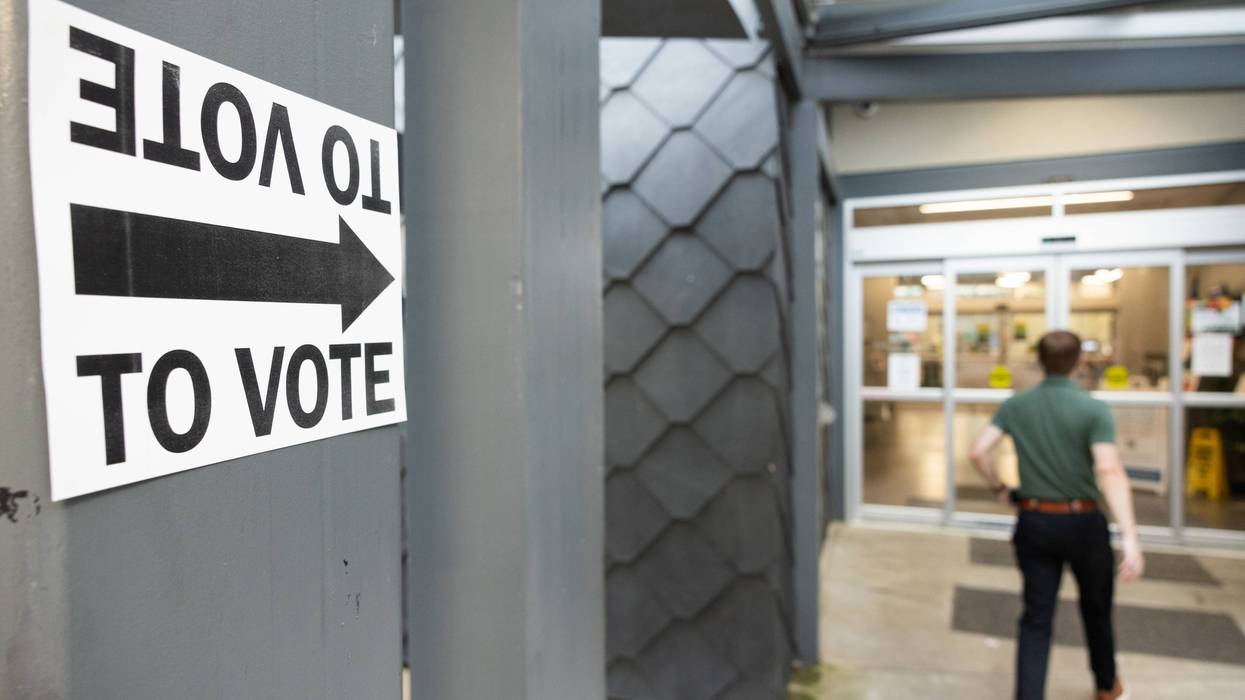
Experts are raising alarms after Georgia's Republican-led State Election Board requested that President Donald Trump's Department of Justice launch an investigation into state voting machines just over a month before the 2026 midterm elections.
As reported by the Atlanta Journal-Constitution on Thursday, James Mills, executive director of the State Election Board, sent a letter to US Attorney General Todd Blanche asking the DOJ "to put additional security measures in place before the midterm election and give the state a six-month deadline to eliminate the use of QR codes on ballots to tally votes."
The AJC noted that Georgia would need to "revamp its in-person voting process" to comply with this demand since it currently "relies on scanners reading QR codes on ballots to count votes."
In a Thursday analysis of Mills' letter, Democracy Docket reporter Jacob Knutson described it as "an extraordinary assault on Georgia’s voting system by unelected officials appointed to make and enforce the state’s election rules."
Knutson also questioned whether the Trump administration could even legally carry out Mills' request.
"The DOJ lacks the legal authority to declare voting machines unlawful or unilaterally seize voting equipment," Knutson wrote, "as the US Constitution gives state and local officials the power to administer elections."
In a video published Friday, election attorney and Democracy Docket founder Marc Elias said that Mills' request for DOJ interference in his own state's election process boils down to Republicans fearing that they're about to be swept out of power in the coming elections.
"It is no coincidence that this is taking place at exactly the same time that Donald Trump's poll numbers are sagging," Elias said, "at exactly the same time that it appears that his efforts in court are failing, and exactly the same time that [Democratic US Sen.] Jon Ossoff looks clear to win that Senate race in a walk."
Later in the video, Elias explained that Trump and his allies have been telegraphing for months that they will take extraordinary measures to maintain their full grip on all three branches of the federal government.
"This is all happening when you have a White House that is looking for excuses to take over voting," he said. "They are looking for excuses to seize ballots. They are looking for excuses, as Donald Trump said, to take control of the tabulation of votes."
Kristin Nabers, Georgia state director for voter rights advocacy group All Voting is Local, accused the State Election Board of "trying to sow chaos into the midterms before voting takes place."
"Certain members of this board continue to show that they do not serve Georgia voters, they serve the interests of the Trump administration," Nabers said. "The board has already advocated for the administration’s interference in elections many times in Trump’s second term, including when multiple board members served as witnesses in the FBI’s bogus investigation into Fulton County."
After losing the 2020 presidential election, Trump infamously waged an unsuccessful campaign to strong-arm Georgia Secretary of State Brad Raffensperger to "find" the votes necessary to overtake former President Joe Biden's lead in the Peach State.
Led by student groups and opposition parties, the protesters are demanding the resignation of India's elections chief as more than 133 million people have been deleted from voter rolls since last year.
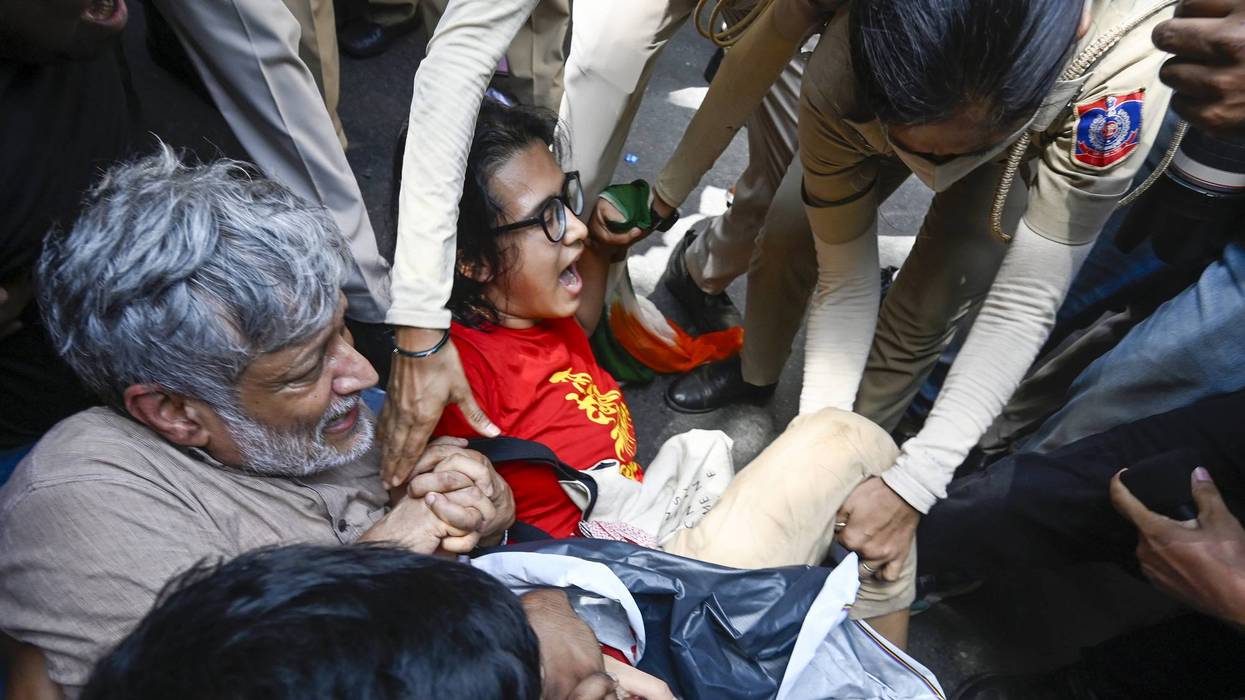
Police in New Delhi detained hundreds of people Friday amid a crackdown on demonstrations challenging India's election authorities and their controversial revision of voter rolls, prompting Amnesty International to accuse the government of trampling fundamental rights in the world's largest democracy.
More than 700 protesters—including former Delhi Chief Minister Atishi Marlena; Aam Aadmi Party (AAP) leader Saurabh Bharadwaj; and Neha Bora, who is president of the leftist All India Students' Association—were reportedly detained in the capital as demonstrators sought to protest outside Jantar Mantar against Chief Election Commissioner (CEC) Gyanesh Kumar and the Election Commission's Special Intensive Revision (SIR) of electoral rolls.
Journalists covering the protests were also reportedly detained and blocked from doing their jobs.
The Cockroach Janta Party—which led last summer's successful youth-led protests to oust embattled Education Minister Dharmendra Pradhan after devastating leaks of critical university entrance exams—is again playing a central role in the demonstrations.
Police cited Section 163 of India's criminal code—a provision intended to address immediate public order threats that critics say is misused to broadly restrict peaceful political assembly—to justify the mass detentions.
“The right to protest is not dependent on government approval. It is protected by the Indian Constitution and international human rights law," Amnesty International India board chair Aakar Patel said. “Prohibitory orders like Section 163 of India’s criminal procedure law, which grant temporary emergency powers to restrict gatherings in the name of public order, have become a convenient way for authorities to routinely prevent peaceful protests."
“Detaining people simply because they intend to protest is a blatant attack on the rights to liberty and freedom of peaceful assembly," Patel added. "Detentions must have a lawful basis and cannot be arbitrary or discriminatory. Those arbitrarily detained for solely exercising their right to freedom of expression and peaceful assembly must be released at once, and authorities must guarantee their right to protest."
The sweeping overhaul of India's electoral rolls has resulted in more than 133 million names being removed from draft voter lists across 30 states and union territories since the process began last year. That's about 14.1% of the pre-SIR rolls. Delhi recorded the largest reduction, with 32.8% of registered electors removed from its draft list.
While the Election Commission says SIR intended to verify voter eligibility and clean up electoral rolls, critics warn that mass deletions could disenfranchise legitimate voters, particularly people who have migrated, lack documentation, or belong to marginalized communities.
The controversy intensified last month after an Indian Express investigation revealed that Election Commissioners Sukhbir Singh Sandhu and Vivek Joshi had formally objected at least 14 times over 10 months to decisions involving voter additions, deletions, and other SIR-related procedures. The two commissioners reportedly raised concerns, including over what they characterized as “unauthorized” or “illegal” actions.
"This is a disenfranchisement of millions of voters.”
Protesters are demanding Kumar's resignation amid doubts about the transparency and impartiality of the SIR and those behind it.
“The protest is against Gyanesh Kumar and the Election Commission," protester Pawan, a 36-year-old IT professional, told The Indian Express Friday at Jantar Mantar. "But there’s a larger context, I feel. Demanding the resignation of the CEC isn’t the only thing. People are upset with the SIR. This is a disenfranchisement of millions of voters.”
AAP spokesperson Anurag Dhanda, who was among those detained, told Indo-Asian News Service that "we are simply demanding that democracy should not be destroyed. We were saying that people should have the right to vote. Gyanesh Kumar took away the right to vote and committed vote theft, yet the vote thief is not being put in jail. Instead, they brought us here and made us sit at the police station."
"This is a complete dictatorship of the Modi government," he added, referring to Indian Prime Minister Narendra Modi and his right-wing Bharatiya Janata Party.
Marlena, better known mononymously as Atishi, said that "when the British ruled India, Gandhiji fought for people's right to vote. Today, when we have that right, Gyanesh Kumar is trying to take it away."
Atishi said that when demonstrators tried to reach Jantar Mantar—an officially designated protest site—police hauled them away in buses and detained them at a local police station.
"We are not afraid of Modiji's police," she said, referring to Modi. "We will continue to fight to protect the right to vote. The fight against vote theft will continue. The EC's system will have to be corrected, and Gyanesh Kumar will have to resign."
At one point, Bora and other detained demonstrators were sprung from a police bus by fellow protesters in the streets.
After escaping detention, Bora defiantly called for a fresh wave of protests for Saturday.
"Get rest after today's detention," she said. "Because if you don't, how will you reach Jantar Mantar at 1 pm tomorrow?"
"Thousands of police officers are working to save one man—Gyanesh Kumar—whom we have to ensure gets removed from office," Bora continued.
"Jantar Mantar 2.0 is not done!" she added, implicitly referring to the earlier Cockroach Janta Party protests. "It has just begun!"
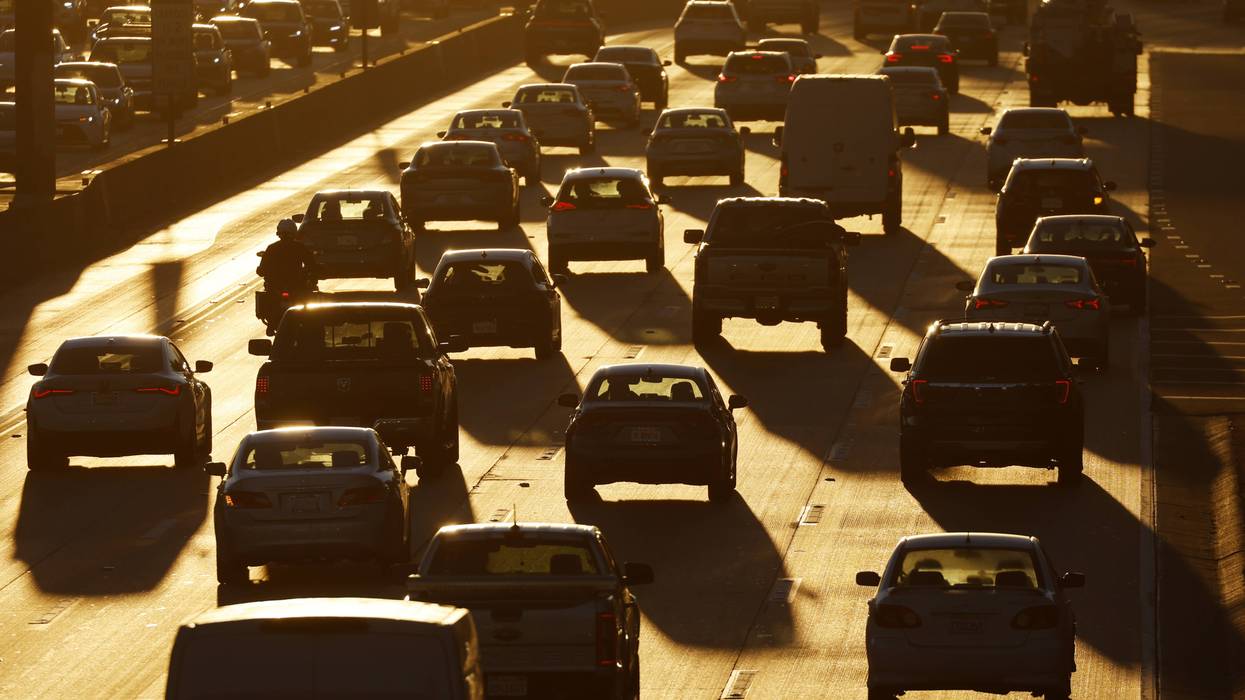
One environmental advocate said the Trump administration's rollback of fuel efficiency standards "will mean wasted gas, more air pollution, and higher costs for Americans who are already struggling with high fuel prices."
A coalition of environmental groups filed a lawsuit Friday seeking to block the Trump administration's rollback of fuel efficiency standards, which they called a "giveaway" to the oil and auto industries.
Earlier this week, the US Department of Transportation finalized a rule weakening Corporate Average Fuel Economy (CAFE) standards, which require automakers to increase the fuel efficiency of their vehicles each year.
The Biden administration required annual fuel-efficiency improvements aimed at bringing the average for new vehicles to 50.4 miles per gallon by 2031. Under the Trump administration’s new rule, the 2031 requirement would fall below the 35.4 mpg already achieved by the 2024 fleet, according to the National Highway Traffic Safety Administration's (NHTSA) own analysis.
NHTSA estimated that as a result of the rule change, Americans will consume roughly 122 billion more gallons of gas by 2050 than they would have under the old standards, increasing average lifetime fuel costs by more than $1,600 per vehicle—more than the roughly $1,300 the administration has claimed they'll save on average in upfront vehicle costs.
It is also projected to add about 1 billion additional metric tons of CO2 emissions by 2050 compared with retaining the previous standards—equivalent to more than six months' worth of emissions from the entire US transportation sector.
“Oil companies will profit from less efficient cars, but drivers will take a hit to their wallets and our kids will breathe dirtier air," said David Pettit, an attorney at the Center for Biological Diversity’s (CBD) Climate Law Institute. "We’ll all pay the price for more tailpipe pollutants spewing everywhere from playgrounds to wild places. We’re asking the courts to put a stop to this callous giveaway to Big Oil and Big Auto.”
CBD was joined by the Conservation Law Foundation, Environmental Defense Fund, Public Citizen, and Sierra Club, which filed a petition on Friday to ask an appeals court to review the rule change. They argue that the rollback is illegal because federal law requires NHTSA to set fuel-economy standards at the “maximum feasible” level manufacturers can achieve.
“The Trump administration’s rollback will mean wasted gas, more air pollution, and higher costs for Americans who are already struggling with high fuel prices,” said Andy Su, senior transportation attorney at Environmental Defense Fund. “We’re going to court to oppose this dangerous U-turn away from decades of successful work to make our cars more efficient and less expensive to drive.”

"Instead of strengthening public education," said one union leader, "Trump is diverting $500 billion in taxpayer cash into private hands, with everyone else left fighting for scraps in a real-life Hunger Games."
The US Department of the Treasury this week released proposed regulations for the first federal "school choice" program, as proponents call it, drawing a fresh wave of condemnation from critics who have expressed concerns since President Donald Trump signed last year's Republican budget package.
"The Trump administration's proposed rules confirm what we expected, that their federal private school voucher program is designed to direct public resources to private schools and organizations and will provide little benefit to the 90% of children who attend public schools," said Demetria McCain, director of policy at the Legal Defense Fund, in a Friday statement.
"Instead of using federal resources to serve all children, this administration has dismantled the Department of Education, weakened long-standing civil rights protections, and worked to build a two-tiered system of education that benefits a select few," McCain continued. "Our children deserve better."
The One Big Beautiful Bill Act established the Education Freedom Tax Credit, which is set to begin next year. According to the Treasury Department, under the proposed rules, eligible taxpayers could claim an annual credit of up to $1,700—or $3,400 for married couples filing jointly—for contributions to scholarship granting organizations (SGOs).
The program is widely seen as a scheme to funnel tax dollars toward private school tuition, but the department noted that the rules would also allow scholarships to support "academic tutoring, special needs services, books, supplies, computers and other equipment, and other qualifying expenses connected with a student's enrollment or attendance."
That "aspect of the program has put Democratic governors in a bind," The Washington Post reported Thursday. There is no cost to states that participate, but "governors must approve all SGOs that meet the rules. States that want to opt into the program for the benefit of public school students will have to allow private school vouchers as well, and vice versa."
As the Post detailed:
Governors have until January 1 to opt in. Thirty mostly Republican-led states have already joined. Most of the remaining states that have not rejected the plan are led by Democrats.
The proposed regulations include income limits for eligible families, protections for scholarship funds, and details on how the funds can be used. States cannot restrict the types of schools that benefit, Treasury and Education department officials said, meaning public funds could go toward a religious school that bars LGBTQ students or a private school that doesn't have certified teachers.
Among the Democrats facing some calls to opt out are New York Gov. Kathy Hochul—who, as Chalkbeat pointed out, "has said she plans to participate unless she finds a 'poison pill' in the program," but "declined Thursday to make it official."
New York State United Teachers president Melinda Person declared Thursday that "the regulations are loaded with poison pills. If New York opts in, the state would be prohibited from setting standards for scholarship organizations, deciding which organizations can participate, or limiting the types of schools and expenses that receive these federal tax dollars."
"That means New York could be forced to help funnel taxpayer-subsidized dollars to private schools that have admissions policies and practices that would never be acceptable in our public schools, while being denied the authority to put stronger safeguards around the program," Person warned. "New York puts its name on the program, but Washington writes the rules."
"We take responsibility for participating, but surrender much of our ability to determine where the money goes and what standards recipients must meet," she added. "This isn't local control. It is a one-way door into a federally designed voucher program, one that could use public resources to support schools that discriminate, while stripping New York of the ability to provide the protections New Yorkers expect. Gov. Hochul should make clear now that New York will not walk through that door."
Josh Cowen, a Michigan State University education policy professor who authored the book The Privateers: How Billionaires Created a Culture War and Sold School Vouchers, laid out the "good" and "bad" of the regulations on social media Thursday.
It’s striking that the FSTC has clear revenue streams for public schools and families, guided by sensible rules to promote service access and quality—such as you might expect from progressive policymakers——jammed Frankenstein-style alongside rules permitting anything-goes on the private side.
[image or embed]
— Josh Cowen (@joshcowenmi.bsky.social) October 1, 2026 at 5:37 PM
So the decision basically comes down to eating a sh-t sandwich with some stuff we really don’t like in the private sector, with some meaningful money that you might expect any number of progressive lawmakers to have crafted.
— Josh Cowen (@joshcowenmi.bsky.social) October 1, 2026 at 5:37 PM
Leaders at the nation's two largest teachers unions also weighed in. National Education Association president Princess Moss said that "with back-to-school in the rearview mirror, more Americans are struggling to make ends meet as the cost of school supplies, packed lunches, and gas continues to outpace salaries and paychecks."
"Instead of helping families make ends meet, the Trump administration is once again putting its thumb on the scale for private school vouchers at the expense of the public schools that serve 90% of America's students," she asserted. "At a time when educators, students, and families are calling for more resources to strengthen neighborhood public schools, this administration is advancing a plan to divert taxpayer dollars to subsidize private education for a select few."
"We will closely review the Treasury Department's new voucher regulations and continue fighting to ensure public funds remain invested in public schools where every student—regardless of their race, ZIP code, disability, family income, or immigration status—can learn, grow, and thrive," Moss pledged. "America's students deserve policies that expand opportunity, not vouchers that leave most children behind."
American Federation of Teachers president Randi Weingarten similarly charged that "this scheme is a poison pill for the 90% of American children who attend public schools. Instead of strengthening public education, President Trump is diverting $500 billion in taxpayer cash into private hands, with everyone else left fighting for scraps in a real-life Hunger Games."
While the Congressional Budget Office estimated the program would cost the federal government $26 billion in lost revenue over the next decade, the Institute on Taxation and Economic Policy has found it could cost up to $51 billion per year. A January report from US Senate Health, Education, Labor, and Pensions Committee Ranking Member Bernie Sanders (I-Vt.) noted that's more than the combined federal spending on programs to support students with disabilities and those who are from low-income backgrounds.
Weingarten said that "state governors should reject it—not least of all because they will have no say or oversight over how the vouchers operate. The reality is that for every precious public dollar funneled to private schools—money that could be spent on instruction, lowering class sizes, modern buildings, or new books in the library—public school parents will be hunting for pennies on the floor."
"This isn't about 'school choice'; it's the about the school's choice: Private schools can simply refuse to accept poor kids, those with special needs, or those with different religions. And they can refuse to submit to the basic accountability measures their backers hypocritically demand of public schools," she stressed. "If this were really about 'choice' then the administration would be trying to help public schools succeed, rather than eviscerating them."
"This is yet another cruel chapter in the Trump's administration's war on families after the Big, Ugly Bill slashed trillions in support for young people by gutting Medicaid, food assistance, and student loans," she continued. "If we are serious about the promise of education, then we have an obligation to make every public school a place where parents want to send their kids, educators want to work, and kids thrive."
The union leader argued that "instead of this voucher scheme, we should commit to creating safe and welcoming schools with a curriculum that is engaging, relevant, and rigorous. That means multiple pathways to career and college, expanding community schools, focusing on literacy and critical thinking, and protecting children against the perils of artificial intelligence while harnessing its potential. These regulations do the exact opposite."
"In every state, a day’s delay in delivery means that if mail voters wait until the last day or two before the election to mail their ballot... they could be disenfranchised."
An analysis published Friday by Democracy Docket warned that "tens of thousands" of voters across the US face "risk of disenfranchisement" thanks to actions being taken by the United States Postal Service.
The analysis, written by veteran election reporter Jim Saksa, points to a new USPS policy known as Regional Transportation Optimization (RTO) that "will eliminate evening mail pickups from post offices more than 50 miles away from a regional processing facility, most of which are located in major urban areas."
For people who live in these areas, ballots sent on Election Day will be postmarked and delivered at least a day later than in previous election years, thus making it ineligible to be included in final election tallies.
"In every state, a day’s delay in delivery means that if mail voters wait until the last day or two before the election to mail their ballot," Saksa explained, "they could be disenfranchised."
Saksa reported that this policy is currently active in "about 42.5% of all ZIP codes" in the continental US, and is scheduled to eventually take effect in around 70% of all ZIP codes. No additional ZIP codes are expected to be added between now and election day.
Saksa also said that voters concerned about their ballots not being counted should deliver them in person to their local post office, where they can ask an employee to postmark it.
President Donald Trump has tried for the last several months to use USPS to meddle with states' mail-in voting systems.
In March, the president signed an executive order that instructed the United States Postal Service to not deliver ballots in any states that have not given the federal government access to their voter lists.
The US Supreme Court last month rejected Trump's efforts to interfere with mail-in voting, allowing states to continue sending ballots to voters as they've done in past elections.
Even with the Supreme Court loss, however, the president's repeated attacks on voting by mail has had a major impact on the 2026 midterm elections.
An NBC News poll released in September showed that just 23% of Democratic voters said they planned to vote by mail this year, a double-digit drop from 2024 when 34% of Democrats said they were voting by mail.
In an interview with Politico published Thursday, Quentin James, founder and president of The Collective Political Action Committee, said Black voters have been expressing concerns about sending in their ballots for fear that Trump will order USPS to not deliver them.
“I think there’s confusion,” James said. “We know that the president has spent six months talking about changing the rules regarding mail-in voting, and a lot of folks are concerned about their ballot being secure."
Indivisible co-founder Leah Greenberg also told Politico that her group is "absolutely hearing concern" about the mail voting process this year.
"But more importantly," Greenberg added, "what we’re hearing is people trying to figure out what they can do and how they can organize locally in order to protect elections."
"They’re trying to pull one over on voters," said one reproductive rights advocate.
The Trump administration is intentionally slow-rolling efforts to restrict abortion pill access until after the midterms. Once they're over, "the gloves will be off," according to one anti-abortion advocate who spoke with The Washington Sun.
US Attorney General Todd Blanche said during his July confirmation hearing that rules allowing abortion pills to be shipped nationwide were "wrong" and that he'd seek to review them. He's also reportedly assured faith leaders he would work to ban abortion "in every single state."
But according to a Friday report from the Sun, White House Chief of Staff Susie Wiles has intervened to limit the potential political fallout of new sweeping restrictions on a method that accounts for nearly two-thirds of all abortions in the US.
Six in 10 Americans say abortion should be legal in all or most cases, and 68% say they oppose the banning of medication abortion nationwide. According to senior White House officials, Wiles warned Blanche that an aggressive effort to ban the drug would further alienate voters in November, when Republicans are already predicted to take heavy losses.
"No one wants us taking any real action before the midterms,” one senior administration official told the Sun, passing on the message apparently being pushed by White House staff to the Justice Department.
The White House has denied that the meetings took place, saying the report was "completely false."
But anti-abortion activists who have pressured the White House told the Sun they believe officials are just biding their time until, in their view, the opinion of voters no longer matters.
“Once the midterms are over and it’s truly lame-duck time, we’ve heard the gloves will be off,” one of them said. “We have heard we have friends [in the White House], and there are definitely people who are staunch pro-lifers.”
During President Donald Trump’s second term, the DOJ has asked federal courts to pause several state lawsuits challenging Food and Drug Administration (FDA) policies that allow mifepristone to be prescribed via telehealth and delivered by mail. But critically, it has not defended those FDA policies on the merits, but rather sought to slow litigation against them on procedural grounds.
But evidence also suggests the administration is laying the groundwork to restrict access once the political costs are neutralized. Despite multiple prior reviews reaffirming its safety and effectiveness, Health and Human Services Secretary Robert F. Kennedy Jr. has spearheaded an FDA "safety" review of mifepristone that could tighten prescription and delivery rules.
Blanche, meanwhile, has indicated openness to reviving the 1873 Comstock Act, which banned the shipment of “lewd” and “indecent” materials through the mail, including those related to abortion.
Amy Littlefield, The Nation's abortion access correspondent, has described Comstock as a “zombie law from the Victorian era," but said it could serve as a "nuclear option" for effectively banning abortion nationwide without any need for an act of Congress.
Since the 2022 Dobbs v. Jackson Women's Health Organization ruling overturned the national right to an abortion, anti-abortion groups have pushed for the act to be interpreted in the most expansive way possible.
"If abortion opponents are right in their reading of it, if the courts agree with their reading of it, it could essentially be revived as a de facto nationwide abortion ban that would apply even in blue states," Littlefield told Democracy Now! "Broadly interpreted, it could apply to latex gloves that might be used in an abortion, or syringes... It could be broadly interpreted to shut down not just mail-order abortions, but also clinic-based care, depending on how it’s read."
In 2022, the DOJ under the Biden administration published a legal opinion stating that Comstock does not prohibit the mailing of abortion drugs unless the sender intends to use them illegally. During his confirmation, Blanche said he would revisit that opinion and would use “every lawful action available” to enforce the law.
One unnamed anti-abortion activist told the Sun they've been assured that, under Blanche, the DOJ is "actively working on" plans to use Comstock to restrict abortion. Kristan Hawkins, president of Students for Life of America, has previously told the Sun that she's had "encouraging" meetings with a DOJ official and that plans to rescind the 2022 memo are in the works.
Kristi Hamrick, vice president of media and policy for Students for Life, however, said the DOJ had indicated that “everything but the election is pushed until after the elections.”
Trump has vowed to be the “most pro-life president in history" since returning to office. But while campaigning in 2024, he pledged explicitly that he would “not block” access to abortion drugs.
Katie O'Connor, the director of federal abortion policy at the National Women's Law Center, told Common Dreams that "asking the DOJ to wait until midterm votes are counted to take action on abortion is an intentionally deceptive move that keeps voters from making their voices heard."
"This isn't a surprise if you've been paying attention to how this administration operates when it comes to abortion," said Mini Timmaraju, the president and CEO of Reproductive Freedom for All, in a social media post.
"Abortion is extremely popular with voters. Trump knows that," she said. "But he's also under a ton of pressure from anti-abortion extremists to take away access to medication abortion, which is used in the majority of abortions in the US and has been a lifeline for access post-[Roe v. Wade]."
"They’re trying to pull one over on voters," she said. "We’re not going to let that happen."
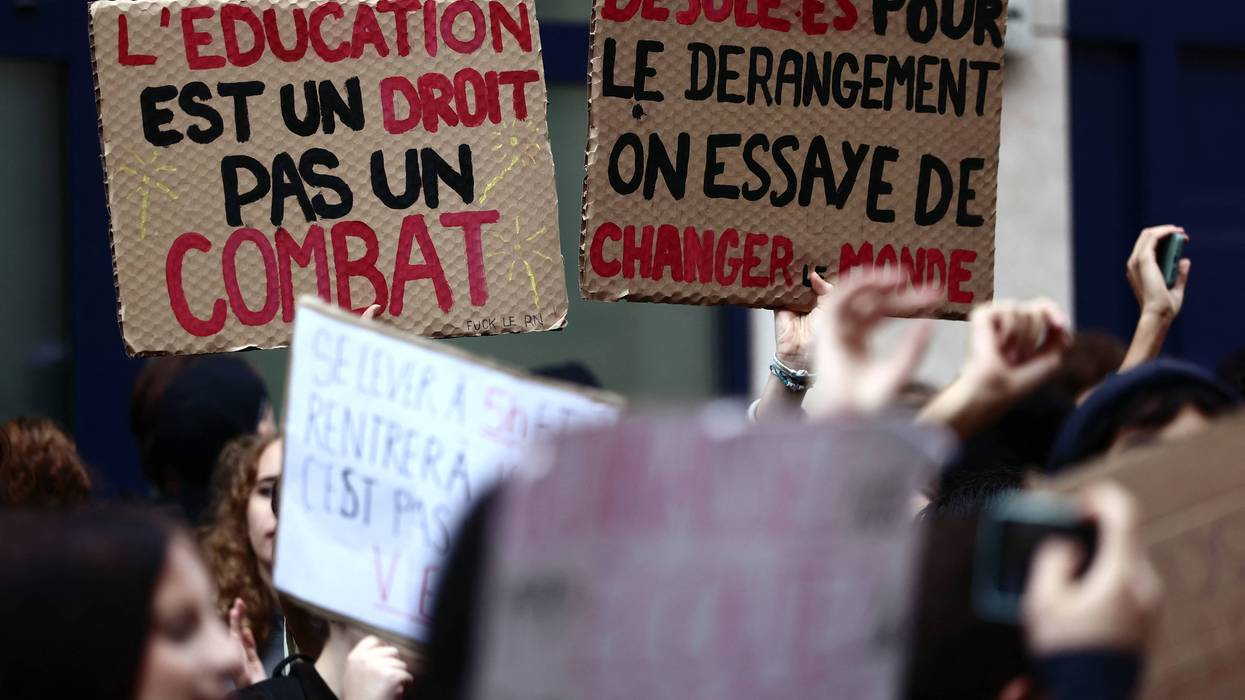
Some protests at schools have devolved into chaos in recent days, but students maintained they are peacefully demanding more support for schools.
Left-wing French political leader Jean-Luc Mélenchon said Friday that labor unions across the country were planning to strike next week alongside students who have been protesting poor school conditions and teacher shortages, as demonstrators reported unwarranted force by the police and the protests devolved into violence in parts of France.
The French justice minister said Friday that "an active and violent minority" of demonstrators has pushed widening protests against poor education funding into chaos, with fires being set at some schools, dozens of teachers an principals injured, and a police officer in northeastern France reportedly attacked by a mob.
Meanwhile, one student outside Lycée Voltaire in Paris held a sign that read, “School is a right, not a privilege," and a 17-year-old identified as Yves by The Guardian said he and his classmates were "totally pacifist" as they peacefully blocked the entrance to the school, joined by some of their teachers.
“The atmosphere on this barricade is generally very calm,” Yves said. “But there have been other people from outside school who have come past and tried to set fire to things, so we’ve tried to move the bins to stop that.”
The high school is one of many that students say have suffered from teacher shortages and neglect by the government, with students struggling to learn in classrooms packed with 40 children or more. Some protesters reported dilapidated school buildings in the European Union's second-largest economy, inequality in which a child's "social background" decides their success in school, excessively long school days that have done nothing to improve international rankings, and infrastructure that is ill-equipped for the soaring temperatures the climate emergency brought this summer.
“It was unbearable sitting exams in 35°C-40°C heat, even the teachers said those were impossible conditions," a 19-year-old student named Sofiane told The Guardian. Sofiane also expressed concerns that the government may end food assistance for low-income students.
On Thursday, the French government announced spending cuts in its 2027 budget.
“The education budget is being cut to shreds while so much extra funding is being put into the army,” a student named Sophia told The Guardian.
Justice Minister Gérald Darmanin told RTL Radio that officials are "not entirely sure" that protesters who have set fires to schools and perpetrated violence in the protests, which began last month in Paris before spreading across the country, "are even high school students themselves."
"We have gone from high school student demonstrations to a public order disturbance," said Darmanin.
Authorities said more than 560 schools were closed Friday due to the unrest, and Darmanin said police have made about 2,000 arrests of young people.
In Marseille, prosecutors said Thursday that two teachers had been assaulted by students who poured gasoline on them, but The Guardian reported Friday that the teachers had been inadvertently hit with the gasoline when a student was throwing it into a trash can.
At least two high schools in Paris were damaged by fire on Friday morning.
But Mélenchon, a presidential candidate and the leader of the left-wing party France Unbowed, suggested that demands for order from his opponent, the far-right National Rally leader Marine Le Pen, were disingenuous.
"Ms. Le Pen calls for the restoration of order," said Mélenchon. "What order is she talking about?! The daily disorder that our youth experience? Our adversaries live in a parallel reality."
Students on Friday accused police of using tear gas to disperse protests, and an investigation was being conducted into a police officer's alleged beating of a 14-year-old boy in Val d’Oise, outside Paris. The boy suffered severe injuries to his mouth and jaw. The officer also reportedly launched a rubber bullet, and the family's lawyer said the boy had thought he was "going to die."
"The government has opted for a crude and dangerous escalation," said Mélenchon on Friday.
On Thursday, one student in Saint-Denis held a sign that read, "Can we explain ourselves without being tear-gassed?"
Mélenchon said a strike in solidarity with the students by French labor unions was "taking shape for October 6, thanks to the decisive action of the trade union confederations."
"Everywhere, delegations of workers are forming to ensure the protection of young people," he said. "The government must stop playing at violence and festering. And completely revise its 'education' copy in the budget!"
"Join the October 6 demonstrations by wearing a white armband!" Mélenchon urged workers. "Step in to protect our youth!"
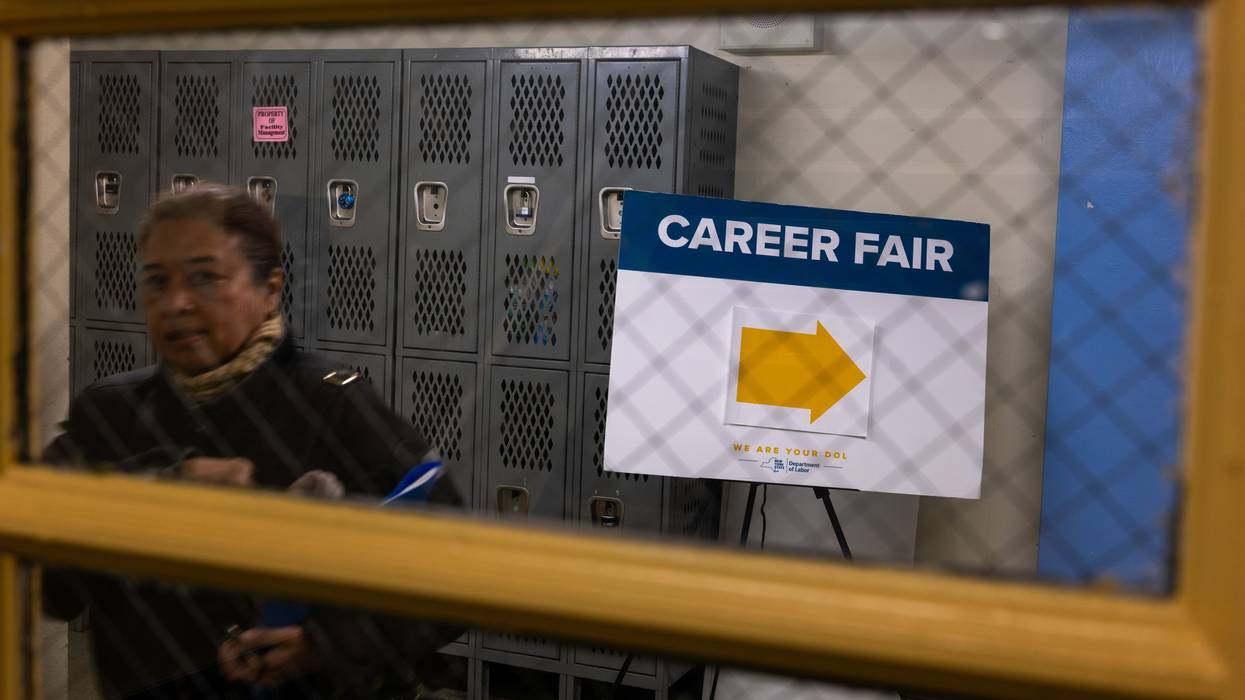
"It’s a stalled economy—and working families are stuck in it," said one economist.
A Friday report from the US Bureau of Labor Statistics showed that the American job market is running on fumes.
According to the BLS, the US economy added just 29,000 jobs in September, which was well below economists' forecasts of 90,000 jobs added on the month.
Additionally, employment numbers for previous months were revised downward by a total of 60,000 jobs, and BLS now estimates that the economy posted a net loss of 10,000 jobs in July and a net gain of 133,000 jobs in August.
In a Friday social media post, economist Bill McBride noted that the economy over the last year has only created 496,000 jobs, which averages to roughly 41,000 jobs per month. For comparison, the economy created an average of 186,000 jobs per month in the last year of former President Joe Biden's term.
Heather Long, chief economist at Navy Federal Credit Union, called the latest jobs numbers "mediocre," and pointed out that wage growth in September posted just a 3% yearly gain.
"That’s a new five-year low," Long remarked, "and it’s wiped out entirely by ~3.4% inflation."
Tahra Hoops, director of economic analysis at Chamber of Progress, also pointed to wage growth failing to keep up with inflation, which she said "gives credibility to the negative consumer sentiment" expressed in recent surveys.
Kyle Moore, chief economist at The Century Foundation, said that the weak wage growth on the month doesn't tell the full story of the stresses working-class Americans are facing because the numbers "leave out debt, all the bills families have to pay before they can spend any of their paycheck."
"A worker with debt often can’t afford to miss a paycheck, and therefore can’t afford to quit a bad job or push for a raise," Moore explained. "That is exactly what we see in today’s job market, with hiring stalled, the quit rate stuck at 1.9%, and wage growth falling as prices climb. Mounting debt, sluggish hiring and real wage growth, and weak social support all disempower workers."
Moore criticized President Donald Trump and his administration for trying to spin their economic policies as successes given the current numbers.
"Until the Trump administration confronts the reality that debt is eating into workers’ gains—wage gains that are now non-existent, in real terms, for the typical worker," said Moore, "the gulf between how this administration spins the economy and how working families actually experience it will continue to widen."
White House National Economic Council Director Kevin Hassett didn't heed Moore's advice on this matter, and continued boasting about the state of the economy during a Friday interview.
"If you look at the data from this week, it's proving that Trumponomics is really working," said Hassett, "and this is one reason why markets are celebrating so much."
Kevin Hassett responds to a bad September jobs report: "If you look at the data from this week, it's proving that Trumponomics is really working ... we're very very happy"
The Fox News host responds by saying "you're bullish and I expected that" pic.twitter.com/bVdTFnteHc
— Aaron Rupar (@atrupar) October 2, 2026
Breyon Williams, chief economist at Groundwork Collaborative, called the weak jobs report emblematic of how the economy as a whole has performed during Trump's second term.
"There’s a clear pattern in the Trump economy," Williams explained. "One sector is creating most of the new jobs, unemployed workers can’t find new jobs, and Americans are seeing their paychecks eaten up by the president’s high prices. When businesses are barely hiring and raises aren’t keeping up with rising prices, it’s a stalled economy—and working families are stuck in it."