May, 18 2015, 01:15pm EDT

SEIU Petitions Federal Watchdog to Launch Investigation into Franchise Industry
Franchisees from McDonalds, 7-Eleven back call for Federal Trade Commission to probe abusive practices in $800 billion industry
WASHINGTON
Citing evidence of a dramatic power imbalance between the nation's top franchisors and their franchise operators, the Service Employees International Union petitioned the Federal Trade Commission Monday to launch an investigation into the franchise sector and issue recommendations for curbing "abusive and predatory" practices by franchisors in the $800 billion industry.
"Franchised businesses represent a large and growing segment of the nation's businesses," the petition reads. "Yet, unlike traditional small businesses, most franchises reflect a profound imbalance of contractual power that favors the franchisor and places franchisees in a financially precarious situation."
The 32-page petition calls on the FTC to invoke its authority to issue civil investigative demands that would compel top franchise companies to turn over information about their relationships with franchisees.
The request for investigation contains evidence from an extensive review of franchise agreements at 14 of the largest franchise systems in the country finding that franchise agreements are consistently one-sided, often allowing franchisors to terminate franchisees for minor violations of one of thousands of pages of ever-changing rules.
The petition details five franchisor practices that are particularly harmful and appear endemic to the sector:
- Incomplete or misleading financial performance representations made to prospective franchisees;
- Unreasonable capital expenditure demands tied to renewal of franchise agreements;
- Retaliation against operators who join franchisee associations;
- Unfair termination or nonrenewal of franchise agreements;
- Arbitrary denial of franchisees' requests to sell or transfer their business
Franchise operators from major chains including McDonald's and 7-Eleven voiced their support for a federal investigation Monday, describing how their experiences in the franchise sector underscore the urgent need for balance and fairness in the industry.
Jose Quijano, a former Vice President at McDonald's Corp. and current McDonald's franchisee from Puerto Rico, spoke on behalf of all Puerto Rican McDonald's operators about how McDonald's franchisees on the island collectively lost control of their businesses overnight in 2007 after the company unilaterally installed the South American investment firm Arcos Dorados as the region's new franchisor, empowered to make its own rules in place of McDonald's while also actively competing as a franchise operator itself by adding new stores in the market.
"We enjoyed a good relationship with McDonald's until we developed the Puerto Rican market and it became very profitable," said Luis Moyett , a McDonald's franchisee who opened his first store in Puerto Rico in 1981. "McDonald's then broke off its contact with us, and inserted a foreign sub-franchisor that makes its own rules. That company degraded services, abandoned the advertising cooperative, stopped paying to the joint advertising fund, opened its own restaurants close to ours and took our customers away."
Moyett added, "McDonald's decided to make a financial experiment in Puerto Rico at our expense. We don't know whether we are a pilot plan for things to come in the U.S. mainland, but this experiment is destroying our livelihoods."
Jas Dhillon, a 7-Eleven franchisee from Los Angeles, echoed concerns raised by McDonald's franchisees regarding the unchecked power of franchisors: Dhillon described how South Asian immigrant franchise operators at 7-Eleven have been targeted for abuse by the company, facing threats and intimidation, with many ultimately losing their business altogether after the company decided to resell their stores in a churning program revealed by a management whistleblower to other higher-paying operators.
"The franchise sector bills itself as a path to the American Dream, but the truth is that franchisors like 7-Eleven and others have made this business into a trap," said Dhillon. "Franchisors hold all the power, and so they can churn through one operator to the next, leaving us with nothing while their profits continue to soar."
And Kathryn-Slater Carter, a former McDonald's operator from California, described losing her business last year after she spoke out about the need to reform the franchise industry.
"Just like that, McDonald's took away a business that my husband and I had spent our lives building together," said Slater-Carter. "We had nowhere to turn - we were voiceless. Companies like McDonald's have left franchisees no choice but to stand together and demand change and that's why I am supporting the call for an FTC investigation. The industry needs reform now."
The call for change comes as the franchise industry grows. Franchised businesses represent a large and expanding segment of the nation's economy, making up almost 11 percent of businesses with employees, employing an estimated 9.1 million people, and consistently adding jobs faster than non-franchised businesses in recent years.
"The substantial evidence of pervasive franchisor abuses presented in the petition demonstrates an urgent need to reform the growing franchise sector--for the benefit of workers and franchisees alike," said Scott Courtney, assistant to the president of SEIU. "An FTC investigation could help curb harmful and predatory franchisor practices, giving franchisees space to create good jobs and grow the economy."
In addition to filing the petition, SEIU is supporting efforts by franchisees in California to pass the Small Business Investment Protection Act, a bill that protects franchisees against unfair terminations, allows franchisees to monetize their equity when franchisors refuse to renew franchise agreements, and protects franchisees' ability to sell or transfer their units. The State Assembly passed the bill with overwhelming support last week.
In California and beyond, the franchise sector faces heightened scrutiny. More than one in six franchise loans made over a 20-year period has ended in failure, according to a recent analysis of data from the U.S. Small Business Administration. A recent poll by FranchiseGrade.com revealed more than half of franchisees say they can't earn a living from their businesses. And a recent survey of McDonald's franchisees by Janney Capital Markets found record-low confidence among franchisees in the company's 6-month business outlook.
With 2 million members in Canada, the United States and Puerto Rico, SEIU is the fastest-growing union in the Americas. Focused on uniting workers in healthcare, public services and property services, SEIU members are winning better wages, healthcare and more secure jobs for our communities, while uniting their strength with their counterparts around the world to help ensure that workers--not just corporations and CEOs--benefit from today's global economy.
LATEST NEWS
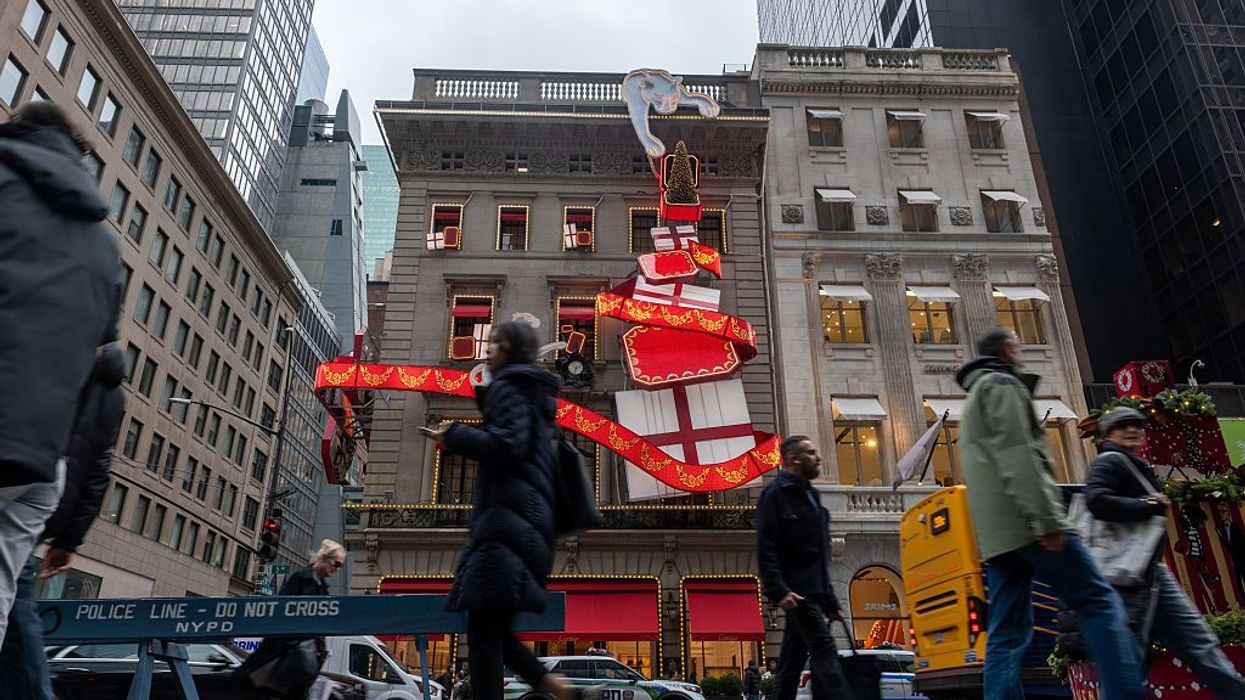
In Trump Economy, Holiday Spending Plans Plummet and Layoffs Hit Highest Level Since Covid Pandemic
The grim data arrive as President Donald Trump is reportedly planning to "aggressively push back" on negative perceptions about his economy.
Dec 04, 2025
A new batch of data is offering more evidence that the US economy is in rough shape heading into the holidays.
The latest Economic Confidence Index released by Gallup on Thursday has found that Americans' confidence in the economy has fallen by seven points over the last month, and now stands at its lowest level in more than a year.
Overall, Gallup found that just 21% of Americans currently describe the economy as excellent or good, while 40% describe it as poor. The outlook for the near future also looks grim, as more than two-thirds of Americans surveyed said the economy is currently getting worse.
This deteriorating economic confidence is weighing on Americans' holiday shopping plans, as Gallup found that planned holiday spending expenditures have "plummeted" from just over $1,000 in October to $778 in November. The decline in spending expectations also occurred across all income groups, although it was particularly steep among low-income households, which slashed their estimated holiday spending by an average of $267.
Gallup noted that while it's common for shoppers to trim their spending plans the closer it gets to the holidays, the drop between October and November this year was the biggest it has ever recorded, even "surpassing the $185 drop seen during the 2008 global financial crisis."
The Gallup survey was not the only troubling economic data to drop on Thursday, as outplacement firm Challenger, Gray, and Christmas released its latest report showing that hiring in the US has slowed to its lowest level in the last 15 years, while layoffs now total their highest level since 2020, when the country was at the peak of the Covid-19 global pandemic.
The data on layoffs came just one day after global payroll processing firm ADP estimated that the US economy lost 32,000 jobs in November, with small businesses shouldering by far the most job losses.
President Donald Trump, who earlier this week dismissed concerns Americans might have about affordability as a "Democrat scam," has reportedly decided to hit the road in an effort to convince voters that they've never had it so good.
According to Axios, Trump next week will start touring the country to tout his administration's economic policies, and he is expected to "aggressively push back against criticism over the cost of everyday essentials—an issue that helped propel him to victory over Kamala Harris last year."
However, a new poll published by Politico on Thursday shows that Trump may have an uphill climb selling his economy even to his own voters.
Overall, the poll found that 37% of voters who backed Trump last year now say that the cost of living crisis is the worst they have experienced in their lifetimes, while only 24% of 2024 Trump voters say that the cost of living crisis at the moment is "not bad."
The poll also found that Trump's efforts to blame former President Joe Biden for the current state of the economy aren't flying, as 46% of voters say that Trump is most to blame for the current state of the economy, compared to 29% of voters who put the primary blame on Biden.
Keep ReadingShow Less
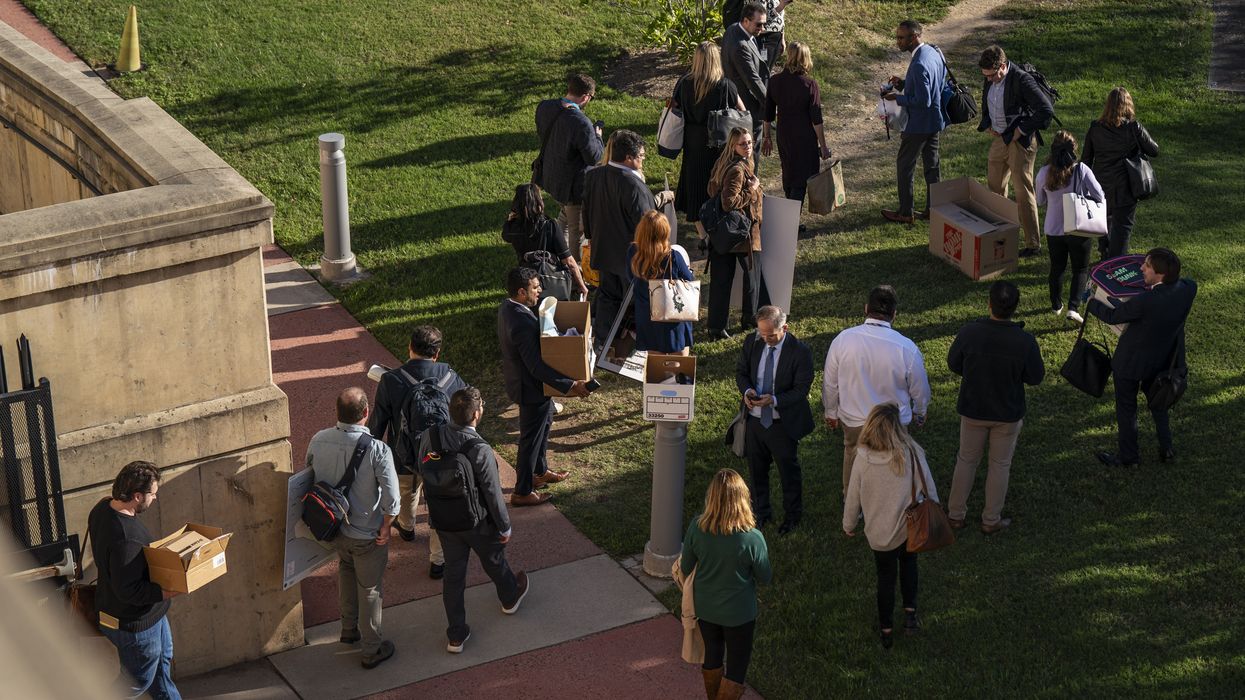
After NYT Sues Over Pentagon Policy, Press Advocates 'Urge Other News Outlets to Follow'
"The only way to put an end to the Trump administration's multipronged assault on press freedom is for every news outlet to fight back at every opportunity," said the head of the Freedom of the Press Foundation.
Dec 04, 2025
Press freedom advocates on Thursday welcomed the New York Times' lawsuit over the US Department of Defense's "flatly unconstitutional" press policy, filed on the heels of the first briefing for what critics call the "Pentagon Propaganda Corps."
The newspaper and Times reporter Julian E. Barnes, one of several journalists who refused to sign the policy earlier this year, are suing the DOD—which President Donald Trump has dubbed the Department of War—as well as Defense Secretary Pete Hegseth and the Pentagon's chief spokesperson, Sean Parnell, in the US District Court in Washington, D.C.
The plaintiffs are asking Judge Paul L. Friedman, an appointee of former President Bill Clinton, to strike down provisions of the Pentagon policy that violate their First and Fifth Amendment rights, and warn that "if allowed to stand, that policy will upend the longstanding and 'healthy adversarial tension between the government, which may seek to keep its secrets' and 'the press, which may endeavor to' report them... and will deprive the public of vital information about the United States military and its leadership."
The filing notably comes not only as the DOD celebrates that dozens of "independent journalists, bloggers, and social media influencers" who "are not associated with legacy media outlets, including print media such as newspapers and magazines, and broadcast media, such as cable television news," have joined the new Pentagon Press Corps in exchange for signing the controversial agreement, but also as Trump and Hegseth face mounting outrage over boat bombings that experts argue are "war crimes, murder, or both."
Charlie Stadtlander, a spokesperson for the newspaper, said in a statement that "the Times stands with fellow news organizations across digital, print, and broadcast media, including many conservative outlets, in strongly opposing this unprecedented policy."
The paper has hired a prominent First Amendment lawyer, Theodore J. Boutrous Jr. of Gibson Dunn. The Washington Post reported that "lawyers representing the Times said they discussed litigation with other news organizations but ultimately decided to proceed on their own. They said they would welcome other outlets filing their own lawsuits or amicus briefs in the Times' case."
While Parnell said in a statement that "we are aware of the New York Times lawsuit and look forward to addressing these arguments in court," journalists and media advocacy groups are already signaling support for the newspaper—which is also battling a $15 billion defamation suit refiled by the president in October.
Reporters Committee for Freedom of the Press vice president of policy Gabe Rottman said Thursday that "the Pentagon's press access policy is unlawful because it gives government officials unchecked power over who gets a credential and who doesn't, something the First Amendment prohibits."
"The public needs independent journalism and the reporters who deliver it back in the Pentagon at a time of heightened scrutiny of the department's actions," he asserted. "We look forward to lending our voice in support of this suit."
The Pentagon Press Association said it was "encouraged by the New York Times' effort to step up and defend press freedom," while White House Correspondents' Association president Weijia Jiang declared that the WHCA "stands firmly" with the newspaper and described the suit as "a necessary and vital step to ensure journalists can do their jobs."
Clayton Weimers, executive director for Reporters Without Borders USA, said that "it's great to see the New York Times continue to proactively defend press freedom in the courts as well as on their pages. We all know by now that capitulation to Donald Trump's authoritarian impulses never works out, but fighting back will."
"This is the logical next step after the mass refusal of journalists to sign Secretary of Defense Hegseth's loyalty pledge," Weimers added. "Journalists must be able to cover the government critically and freely."
Pointing to television companies' recent settlements with the president, Freedom of the Press Foundation executive director Trevor Timm said that "in an era where news networks seem to be caving to Trump's censorious tactics left and right, it's refreshing to see the New York Times leading by example and sticking up for the First Amendment in court."
"An attack on any journalist’s rights is an attack on all. And the only way to put an end to the Trump administration's multipronged assault on press freedom is for every news outlet to fight back at every opportunity," Timm continued. "We urge other news outlets to follow the Times' lead."
"These days, the government has countless platforms of its own to tell the public what it wants it to know. A free and independent press isn't needed for that," he noted. "The Constitution guarantees one anyway precisely because the public needs the information the government does not want it to know. The Pentagon's absurd access pledge has been an affront to the First Amendment since the first day they proposed it. And we look forward to a federal judge throwing it out with the trash, where it belongs."
Keep ReadingShow Less
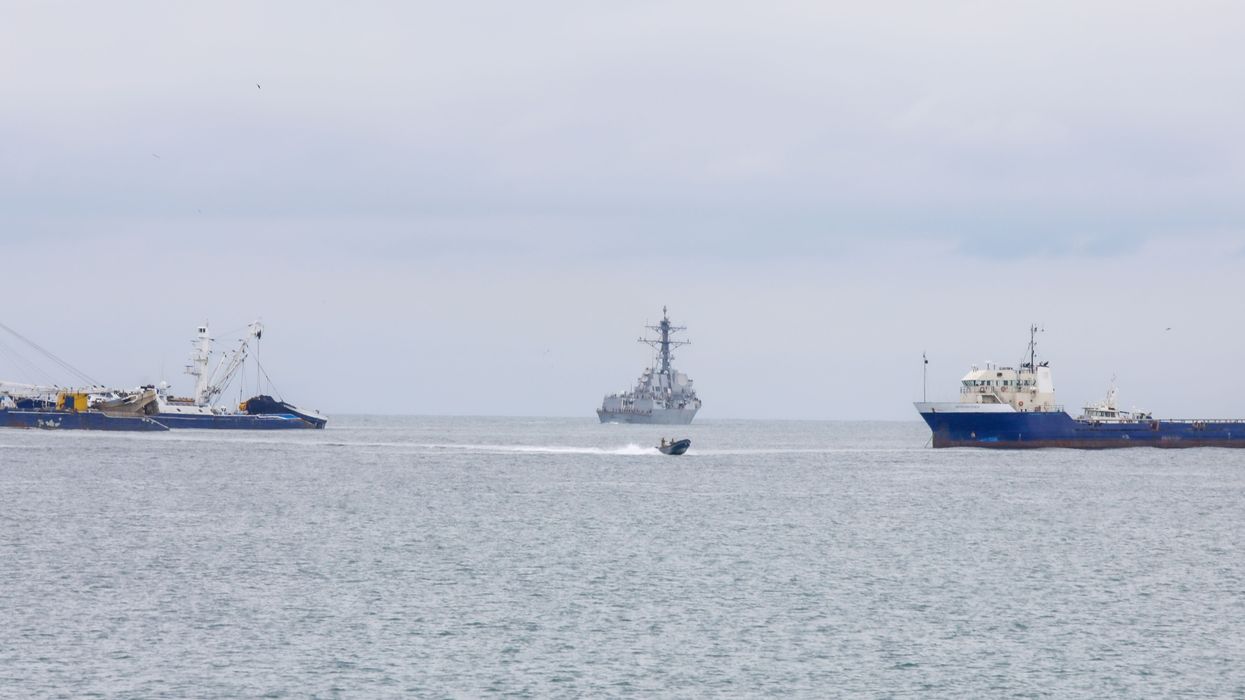
UN Experts Say Those Ordering and Carrying Out US Boat Strikes Should Be 'Prosecuted for Homicide'
“US military attacks on alleged drug traffickers at sea," said two human rights experts, "are grave violations of the right to life and the international law of the sea."
Dec 04, 2025
Two United Nations rights experts warned that in numerous ways in recent weeks, the Trump administration's escalation toward Venezuela has violated international law—most recently when President Donald Trump said he had ordered the South American country's airspace closed following a military buildup in the Caribbean Sea.
But the two officials, independent expert on democratic and international order George Katrougalos and Ben Saul, the UN special rapporteur on protecting human rights while countering terrorism, reserved their strongest condemnation and warning to the US for the administration's repeated bombings of boats in the Caribbean and the Pacific, which have targeted at least 22 boats and killed 83 people since September as the White House has claimed without evidence it is combating drug traffickers.
The strikes, said Katrougalos and Saul, "are grave violations of the right to life and the international law of the sea. Those involved in ordering and carrying out these extrajudicial killings must be investigated and prosecuted for homicide.”
Human rights advocates have warned for months that the strikes are extrajudicial killings. Trump has claimed the US is in an "armed conflict" with drug cartels in Venezuela—even though the country is not significantly involved in drug trafficking—but Congress has not authorized any military action in the Caribbean.
Typically, the US has approached drug trafficking in the region as a criminal issue, with the Coast Guard and other agencies intercepting boats suspected of carrying illegal substances, arresting those on board, and ensuring they receive due process in accordance with the Constitution.
The Trump administration instead has bombed the boats, with the first operation on September 2 recently the subject of particular concern due to reports that Defense Secretary Pete Hegseth issued an order for military officers to "kill everybody" on board a vessel, leading a commander to direct a second "double-tap" strike to kill two survivors of the initial blast.
Hegseth and Trump have sought to shift responsibility for the second strike onto Adm. Frank "Mitch" Bradley, the commander who oversaw the attack under Hegseth's orders. Bradley was scheduled to brief lawmakers Thursday on the incident.
The White House has maintained Bradley had the authority to kill the survivors of the strike and to carry out all the other bombings of boats, even as reporting on the identities of the victims has shown the US has killed civilians including an out-of-work bus driver and a fisherman, and the family of one Colombian man killed in a strike filed a formal complaint accusing Hegseth himself of murder.
The UN experts suggested that everyone involved in ordering the nearly two dozen boat strikes, from Trump and Hegseth to any of the service members who have helped carry out the operations, should be investigated for alleged murder.
After Hegseth defended the September 2 strike earlier this week, Saul emphasized in a social media post that contrary to the defense secretary's rhetoric about how the boat attacks are "protecting" Americans, he is carrying out "state murder of civilians in peacetime, like executing alleged drug traffickers on the streets of New York or DC."
As Common Dreams reported last month, a top military lawyer advised the White House against beginning the boat bombings weeks before the September 2 attack, saying they could expose service members involved in the strikes to legal challenges.
Katrougalos and Saul urged the administration to "refrain from actions that could further aggravate the situation and ensure that any measures taken fully comply with the UN Charter, the Chicago Convention, and relevant rules of customary international law."
They also emphasized that Trump had no authority to declare that Venezuela's airspace was closed last week—an action that many experts feared could portend imminent US strikes in the South American country.
“International law is clear: States have complete and exclusive sovereignty over the airspace above their territory. Any measures that seek to regulate, restrict, or ‘close’ another state’s airspace are in blatant violation of the Chicago Convention,” said the experts. “Unilateral measures that interfere with a state’s territorial domain, including its airspace, risk fully undermining the stability of the region and are seriously undermining Venezuela’s economy."
Saul and Katrougalos further called on the White House not to repeat "the long history of external interventions in Latin America."
“Respect for sovereignty, nonintervention, and the peaceful settlement of disputes," they said, "are essential to preserving international stability and preventing further deterioration of the situation.”
Keep ReadingShow Less
Most Popular