SUBSCRIBE TO OUR FREE NEWSLETTER
Daily news & progressive opinion—funded by the people, not the corporations—delivered straight to your inbox.
5
#000000
#FFFFFF
To donate by check, phone, or other method, see our More Ways to Give page.
Daily news & progressive opinion—funded by the people, not the corporations—delivered straight to your inbox.
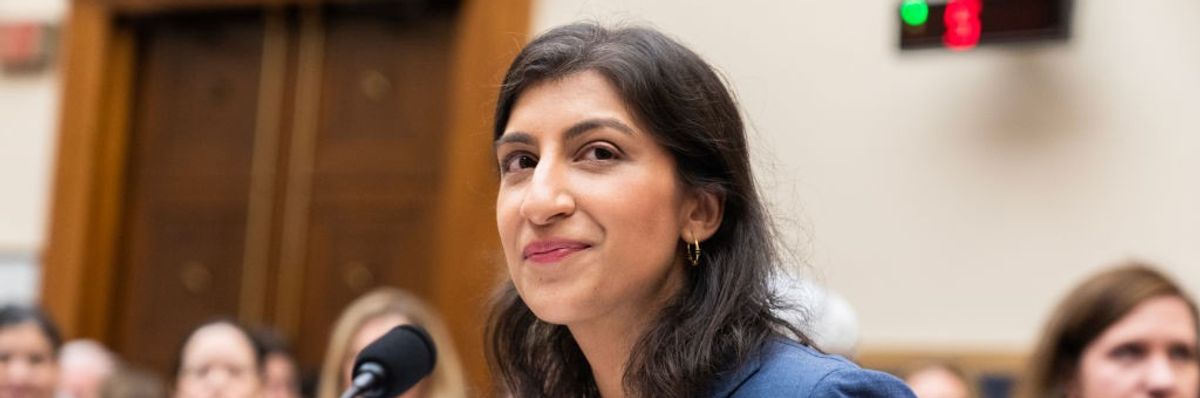
FTC Chair Lina Khan prepares to testify during a congressional hearing in Washington, D.C. on July 13, 2023.
Advocates praised the FTC "for taking a strong stance against this egregious use of corporate power, thereby empowering workers to switch jobs and launch new ventures, and unlocking billions of dollars in worker earnings."
U.S. workers' rights advocates and groups celebrated on Tuesday after the Federal Trade Commission voted 3-2 along party lines to approve a ban on most noncompete clauses, which Democratic FTC Chair Lina Khansaid "keep wages low, suppress new ideas, and rob the American economy of dynamism."
"The FTC's final rule to ban noncompetes will ensure Americans have the freedom to pursue a new job, start a new business, or bring a new idea to market," Khan added, pointing to the commission's estimates that the policy could mean another $524 for the average worker, over 8,500 new startups, and 17,000 to 29,000 more patents each year.
As Economic Policy Institute (EPI) president Heidi Shierholz explained, "Noncompete agreements are employment provisions that ban workers at one company from working for, or starting, a competing business within a certain period of time after leaving a job."
"These agreements are ubiquitous," she noted, applauding the ban. "EPI research finds that more than 1 out of every 4 private-sector workers—including low-wage workers—are required to enter noncompete agreements as a condition of employment."
The U.S. Chamber of Commerce has suggested it plans to file a lawsuit that, as The American Prospect detailed, "could more broadly threaten the rulemaking authority the FTC cited when proposing to ban noncompetes."
Already, the tax services and software provider Ryan has filed a legal challenge in federal court in Texas, arguing that the FTC is unconstitutionally structured.
Still, the Democratic commissioners' vote was heralded as a "seismic win for workers." Echoing Khan's critiques of such noncompetes, Public Citizen executive vice president Lisa Gilbert declared that such clauses "inflict devastating harms on tens of millions of workers across the economy."
"The pervasive use of noncompete clauses limits worker mobility, drives down wages, keeps Americans from pursuing entrepreneurial dreams and creating new businesses, causes more concentrated markets, and keeps workers stuck in unsafe or hostile workplaces," she said. "Noncompete clauses are both an unfair method of competition and aggressively harmful to regular people. The FTC was right to tackle this issue and to finalize this strong rule."
Morgan Harper, director of policy and advocacy at the American Economic Liberties Project, praised the FTC for "listening to the comments of thousands of entrepreneurs and workers of all income levels across industries" and finalizing a rule that "is a clear-cut win."
Demand Progress' Emily Peterson-Cassin similarly commended the commission "for taking a strong stance against this egregious use of corporate power, thereby empowering workers to switch jobs and launch new ventures, and unlocking billions of dollars in worker earnings."
While such agreements are common across various industries, Teófilo Reyes, chief of staff at the Restaurant Opportunities Centers United, said that "many restaurant workers have been stuck at their job, earning as low as $2.13 per hour, because of the noncompete clause that they agreed to have in their contract."
"They didn't know that it would affect their wages and livelihood," Reyes stressed. "Most workers cannot negotiate their way out of a noncompete clause because noncompetes are buried in the fine print of employment contracts. A full third of noncompete clauses are presented after a worker has accepted a job."
Student Borrower Protection Center (SBPC) executive director Mike Pierce pointed out that the FTC on Tuesday "recognized the harmful role debt plays in the workplace, including the growing use of training repayment agreement provisions, or TRAPs, and took action to outlaw TRAPs and all other employer-driven debt that serve the same functions as noncompete agreements."
Sandeep Vaheesan, legal director at Open Markets Institute, highlighted that the addition came after his group, SBPC, and others submitted comments on the "significant gap" in the commission's initial January 2023 proposal, and also welcomed that "the final rule prohibits both conventional noncompete clauses and newfangled versions like TRAPs."
Jonathan Harris, a Loyola Marymount University law professor and SBPC senior fellow, said that "by also banning functional noncompetes, the rule stays one step ahead of employers who use 'stay-or-pay' contracts as workarounds to existing restrictions on traditional noncompetes. The FTC has decided to try to avoid a game of whack-a-mole with employers and their creative attorneys, which worker advocates will applaud."
Among those applauding was Jean Ross, president of National Nurses United, who said that "the new FTC rule will limit the ability of employers to use debt to lock nurses into unsafe jobs and will protect their role as patient advocates."
Angela Huffman, president of Farm Action, also cheered the effort to stop corporations from holding employees "hostage," saying that "this rule is a critical step for protecting our nation's workers and making labor markets fairer and more competitive."
Dear Common Dreams reader, It’s been nearly 30 years since I co-founded Common Dreams with my late wife, Lina Newhouser. We had the radical notion that journalism should serve the public good, not corporate profits. It was clear to us from the outset what it would take to build such a project. No paid advertisements. No corporate sponsors. No millionaire publisher telling us what to think or do. Many people said we wouldn't last a year, but we proved those doubters wrong. Together with a tremendous team of journalists and dedicated staff, we built an independent media outlet free from the constraints of profits and corporate control. Our mission has always been simple: To inform. To inspire. To ignite change for the common good. Building Common Dreams was not easy. Our survival was never guaranteed. When you take on the most powerful forces—Wall Street greed, fossil fuel industry destruction, Big Tech lobbyists, and uber-rich oligarchs who have spent billions upon billions rigging the economy and democracy in their favor—the only bulwark you have is supporters who believe in your work. But here’s the urgent message from me today. It's never been this bad out there. And it's never been this hard to keep us going. At the very moment Common Dreams is most needed, the threats we face are intensifying. We need your support now more than ever. We don't accept corporate advertising and never will. We don't have a paywall because we don't think people should be blocked from critical news based on their ability to pay. Everything we do is funded by the donations of readers like you. When everyone does the little they can afford, we are strong. But if that support retreats or dries up, so do we. Will you donate now to make sure Common Dreams not only survives but thrives? —Craig Brown, Co-founder |
U.S. workers' rights advocates and groups celebrated on Tuesday after the Federal Trade Commission voted 3-2 along party lines to approve a ban on most noncompete clauses, which Democratic FTC Chair Lina Khansaid "keep wages low, suppress new ideas, and rob the American economy of dynamism."
"The FTC's final rule to ban noncompetes will ensure Americans have the freedom to pursue a new job, start a new business, or bring a new idea to market," Khan added, pointing to the commission's estimates that the policy could mean another $524 for the average worker, over 8,500 new startups, and 17,000 to 29,000 more patents each year.
As Economic Policy Institute (EPI) president Heidi Shierholz explained, "Noncompete agreements are employment provisions that ban workers at one company from working for, or starting, a competing business within a certain period of time after leaving a job."
"These agreements are ubiquitous," she noted, applauding the ban. "EPI research finds that more than 1 out of every 4 private-sector workers—including low-wage workers—are required to enter noncompete agreements as a condition of employment."
The U.S. Chamber of Commerce has suggested it plans to file a lawsuit that, as The American Prospect detailed, "could more broadly threaten the rulemaking authority the FTC cited when proposing to ban noncompetes."
Already, the tax services and software provider Ryan has filed a legal challenge in federal court in Texas, arguing that the FTC is unconstitutionally structured.
Still, the Democratic commissioners' vote was heralded as a "seismic win for workers." Echoing Khan's critiques of such noncompetes, Public Citizen executive vice president Lisa Gilbert declared that such clauses "inflict devastating harms on tens of millions of workers across the economy."
"The pervasive use of noncompete clauses limits worker mobility, drives down wages, keeps Americans from pursuing entrepreneurial dreams and creating new businesses, causes more concentrated markets, and keeps workers stuck in unsafe or hostile workplaces," she said. "Noncompete clauses are both an unfair method of competition and aggressively harmful to regular people. The FTC was right to tackle this issue and to finalize this strong rule."
Morgan Harper, director of policy and advocacy at the American Economic Liberties Project, praised the FTC for "listening to the comments of thousands of entrepreneurs and workers of all income levels across industries" and finalizing a rule that "is a clear-cut win."
Demand Progress' Emily Peterson-Cassin similarly commended the commission "for taking a strong stance against this egregious use of corporate power, thereby empowering workers to switch jobs and launch new ventures, and unlocking billions of dollars in worker earnings."
While such agreements are common across various industries, Teófilo Reyes, chief of staff at the Restaurant Opportunities Centers United, said that "many restaurant workers have been stuck at their job, earning as low as $2.13 per hour, because of the noncompete clause that they agreed to have in their contract."
"They didn't know that it would affect their wages and livelihood," Reyes stressed. "Most workers cannot negotiate their way out of a noncompete clause because noncompetes are buried in the fine print of employment contracts. A full third of noncompete clauses are presented after a worker has accepted a job."
Student Borrower Protection Center (SBPC) executive director Mike Pierce pointed out that the FTC on Tuesday "recognized the harmful role debt plays in the workplace, including the growing use of training repayment agreement provisions, or TRAPs, and took action to outlaw TRAPs and all other employer-driven debt that serve the same functions as noncompete agreements."
Sandeep Vaheesan, legal director at Open Markets Institute, highlighted that the addition came after his group, SBPC, and others submitted comments on the "significant gap" in the commission's initial January 2023 proposal, and also welcomed that "the final rule prohibits both conventional noncompete clauses and newfangled versions like TRAPs."
Jonathan Harris, a Loyola Marymount University law professor and SBPC senior fellow, said that "by also banning functional noncompetes, the rule stays one step ahead of employers who use 'stay-or-pay' contracts as workarounds to existing restrictions on traditional noncompetes. The FTC has decided to try to avoid a game of whack-a-mole with employers and their creative attorneys, which worker advocates will applaud."
Among those applauding was Jean Ross, president of National Nurses United, who said that "the new FTC rule will limit the ability of employers to use debt to lock nurses into unsafe jobs and will protect their role as patient advocates."
Angela Huffman, president of Farm Action, also cheered the effort to stop corporations from holding employees "hostage," saying that "this rule is a critical step for protecting our nation's workers and making labor markets fairer and more competitive."
U.S. workers' rights advocates and groups celebrated on Tuesday after the Federal Trade Commission voted 3-2 along party lines to approve a ban on most noncompete clauses, which Democratic FTC Chair Lina Khansaid "keep wages low, suppress new ideas, and rob the American economy of dynamism."
"The FTC's final rule to ban noncompetes will ensure Americans have the freedom to pursue a new job, start a new business, or bring a new idea to market," Khan added, pointing to the commission's estimates that the policy could mean another $524 for the average worker, over 8,500 new startups, and 17,000 to 29,000 more patents each year.
As Economic Policy Institute (EPI) president Heidi Shierholz explained, "Noncompete agreements are employment provisions that ban workers at one company from working for, or starting, a competing business within a certain period of time after leaving a job."
"These agreements are ubiquitous," she noted, applauding the ban. "EPI research finds that more than 1 out of every 4 private-sector workers—including low-wage workers—are required to enter noncompete agreements as a condition of employment."
The U.S. Chamber of Commerce has suggested it plans to file a lawsuit that, as The American Prospect detailed, "could more broadly threaten the rulemaking authority the FTC cited when proposing to ban noncompetes."
Already, the tax services and software provider Ryan has filed a legal challenge in federal court in Texas, arguing that the FTC is unconstitutionally structured.
Still, the Democratic commissioners' vote was heralded as a "seismic win for workers." Echoing Khan's critiques of such noncompetes, Public Citizen executive vice president Lisa Gilbert declared that such clauses "inflict devastating harms on tens of millions of workers across the economy."
"The pervasive use of noncompete clauses limits worker mobility, drives down wages, keeps Americans from pursuing entrepreneurial dreams and creating new businesses, causes more concentrated markets, and keeps workers stuck in unsafe or hostile workplaces," she said. "Noncompete clauses are both an unfair method of competition and aggressively harmful to regular people. The FTC was right to tackle this issue and to finalize this strong rule."
Morgan Harper, director of policy and advocacy at the American Economic Liberties Project, praised the FTC for "listening to the comments of thousands of entrepreneurs and workers of all income levels across industries" and finalizing a rule that "is a clear-cut win."
Demand Progress' Emily Peterson-Cassin similarly commended the commission "for taking a strong stance against this egregious use of corporate power, thereby empowering workers to switch jobs and launch new ventures, and unlocking billions of dollars in worker earnings."
While such agreements are common across various industries, Teófilo Reyes, chief of staff at the Restaurant Opportunities Centers United, said that "many restaurant workers have been stuck at their job, earning as low as $2.13 per hour, because of the noncompete clause that they agreed to have in their contract."
"They didn't know that it would affect their wages and livelihood," Reyes stressed. "Most workers cannot negotiate their way out of a noncompete clause because noncompetes are buried in the fine print of employment contracts. A full third of noncompete clauses are presented after a worker has accepted a job."
Student Borrower Protection Center (SBPC) executive director Mike Pierce pointed out that the FTC on Tuesday "recognized the harmful role debt plays in the workplace, including the growing use of training repayment agreement provisions, or TRAPs, and took action to outlaw TRAPs and all other employer-driven debt that serve the same functions as noncompete agreements."
Sandeep Vaheesan, legal director at Open Markets Institute, highlighted that the addition came after his group, SBPC, and others submitted comments on the "significant gap" in the commission's initial January 2023 proposal, and also welcomed that "the final rule prohibits both conventional noncompete clauses and newfangled versions like TRAPs."
Jonathan Harris, a Loyola Marymount University law professor and SBPC senior fellow, said that "by also banning functional noncompetes, the rule stays one step ahead of employers who use 'stay-or-pay' contracts as workarounds to existing restrictions on traditional noncompetes. The FTC has decided to try to avoid a game of whack-a-mole with employers and their creative attorneys, which worker advocates will applaud."
Among those applauding was Jean Ross, president of National Nurses United, who said that "the new FTC rule will limit the ability of employers to use debt to lock nurses into unsafe jobs and will protect their role as patient advocates."
Angela Huffman, president of Farm Action, also cheered the effort to stop corporations from holding employees "hostage," saying that "this rule is a critical step for protecting our nation's workers and making labor markets fairer and more competitive."