November, 22 2013, 09:10am EDT

Tea Party Bill Would Eviscerate Endangered Species Act
As America Celebrates 40th Anniversary of Landmark Law, Right-wing Senators Seek to Tear It Apart
WASHINGTON
Tea Party senators introduced a bill this week that would effectively end the protection of most endangered species in the United States and gut some of the most important provisions of the Endangered Species Act. Senate Bill 1731, introduced by Tea Party Sens. Rand Paul, Mike Lee and Dean Heller, would end protections for most of the species that are currently protected by the Act and make it virtually impossible to protect new species under the law. It would also eliminate protection for habitat that's critical to the survival of rare and struggling animals and plants around the country.
"Here we are celebrating the 40th anniversary of the Endangered Species Act this year, and the Tea Party wants to tear it limb from limb," said Brett Hartl, endangered species policy director at the Center for Biological Diversity. "It's really a sad testament to how out of touch the Tea Party has become with the American people, and how beholden they are to industry special interests that are more interested in profits than saving wildlife, wild places and a livable future for the next generation."
In its 40-year history, the Endangered Species Act has been more than 99 percent successful at preventing extinction for wildlife under its protection and has put hundreds of plants and animals on the path to recovery, including bald eagles, grizzly bears, whales and sea turtles.
Despite this successful track record, the bill's most extreme provision would require that every five years all protected species be removed from the list of threatened and endangered species, eliminating all legal protections. No matter how close to extinction they might be, every listed species would then have to wait until Congress passed a joint resolution renewing their protections under the Act for another five years. Five years later, this process would start over again, eliminating all protections until Congress passed another joint resolution.
"The strength of the Endangered Species Act -- in fact all of our nation's environmental laws -- comes from the requirement that science, not politics, guide the protection of our wildlife, air and water," said Hartl. "This bill would allow extreme ideologues in Congress to veto environmental protections for any protected species they wanted, just so they could appease their special-interest benefactors."
The bill would eliminate all protections for the critical habitat of endangered species and allow state governments to effectively veto any conservation measures designed to protect an imperiled species within their respective state. Meanwhile federal wildlife agencies would need to complete onerous accounting reports to estimate the costs of protecting endangered species rather than completing tangible, on-the-ground conservation activities to protect species and the places they live.
"This bill would devastate species protections and open the door to log, mine and pave some of the last places on Earth where these animals survive," Hartl said. "It's a boon for profiteers like the Koch Brothers but will rob every American who values wildlife and wild places."
At the Center for Biological Diversity, we believe that the welfare of human beings is deeply linked to nature — to the existence in our world of a vast diversity of wild animals and plants. Because diversity has intrinsic value, and because its loss impoverishes society, we work to secure a future for all species, great and small, hovering on the brink of extinction. We do so through science, law and creative media, with a focus on protecting the lands, waters and climate that species need to survive.
(520) 623-5252LATEST NEWS

Poll Shows US Voters Have Disapproved of Trump's War of Choice Against Iran From Beginning to End
Only 38% of Americans supported the war in its first days, and nearly two-thirds said in the latest polling they disapproved of the president's handling of Iran.
Jun 19, 2026
As talks to end the US-Israeli war on Iran were delayed Friday by continued attacks by the Israel Defense Forces in Lebanon, new polling showed Americans are eager to see the conclusion of the conflict that began in February—confirming that at no point since the Trump administration and Israel began the assault has the war been popular with the public.
Nearly two-thirds of respondents to an Associated Press/NORC Center for Public Affairs Research poll taken from June 11-17 said they were unhappy with President Donald Trump's handling of issues with Iran, which he began attacking as he insisted the country must not have enriched uranium that can be used to make a nuclear weapon and that the US must "destroy their missiles."
One independent voter from Plano, Texas told the AP that he was frustrated by Trump's decision to wage an unprovoked war on Iran—which followed an invasion of Venezuela and threats against Greenland and Cuba—after the president made ending US foreign wars a central campaign promise in 2024.
“I would like the war to end,” the voter, Donald McBride, told the AP. “The original objective of the war was to end the Iranian regime, and that’s just not possible. I don’t really know why we’d continue fighting.”
The poll was in line with an analysis of eight reputable surveys that were taken in early March, just days after Trump and Israeli Prime Minister Benjamin Netanyahu began the attacks—a decision Secretary of State Marco Rubio said was made by the Trump administration because the White House believed Iran would retaliate against bombing that Israel was intent on starting.
Those surveys found that just 38% of voters approved of the military strikes against Iran in the days after they began, with polling expert G. Elliott Morris warning that "wars only get less popular” over time.
That quickly proved true in this case, with Americans almost immediately feeling the effects of Iran's retaliatory strategy after the country effectively closed the Strait of Hormuz, sending gas prices skyrocketing. In late April, 78% of respondents to a Reuters/Ipsos poll said they were very concerned about the rising cost of fuel, and 77% blamed Trump.
Fifty-eight percent also told Reuters two months into the Iran War that they'd be less likely to vote for a candidate who supported Trump's actions against Iran.
In the poll released Friday, 53% of voters said the US military action against Iran has gone "too far," slightly down from 59% who said so in March. The poll was taken as the US released a memorandum of understanding with Iran and as the president indicated a retreat from the central demands he had made regarding Israel's missiles and nuclear program, which Iranian officials have maintained is not for military purposes.
Keep ReadingShow Less

'Psychopath' Ben-Gvir Slammed for Demand That 'All Lebanon Must Burn'
Ben-Gvir's invocation of mass slaughter came as the US is trying to negotiate an end to President Donald Trump's illegal war with Iran.
Jun 19, 2026
Israeli National Security Minister Itamar Ben-Gvir drew widespread condemnation on Friday when he declared that "all Lebanon must burn" shortly after four Israeli soldiers were killed in a fight with Hezbollah.
In a social media post, Ben-Gvir said that Israel should retaliate for the deaths of the soldiers with a scorched-earth military campaign aimed at killing large numbers of Lebanese people.
"For every tear of an Israeli mother, a thousand Lebanese mothers must weep," the far-right Israeli Cabinet member wrote. "Enough with the ping-pong. In the Middle East, you don’t win with measured responses and restraint—you need to go berserk. To obliterate. To crush the terror."
Ben-Gvir also took a subtle shot at the Trump administration, which has called for Israel to cease its military operations in Lebanon so that the US and Iran can negotiate an end to the illegal war of choice President Donald Trump launched earlier this year.
"With all due respect to the Americans, Israel must make it clear to the entire world that the blood of our sons and the security of our citizens are not forfeit," he wrote. "All of Lebanon must burn."
Ben-Gvir's demands for mass slaughter were widely condemned as the ravings of a genocidal maniac.
"You are a psychopath and one of the greatest threats to the security of Israel and of Jewish people around the world," journalist Yashar Ali wrote in response to Ben-Gvir. "You belong in a psychiatric institution, not in a government role."
Humza Yousaf, former first minister of Scotland and leader of the Scottish National Party, argued that Ben-Gvir's ravings should end any question about the nature of Israel's current government.
"For those who continue to deny Israel has any intention of committing genocide then read this tweet from a minister at the heart of the Israeli government," Yousaf wrote. "He belongs in the Hague, convicted and in a jail cell."
Trita Parsi, executive vice president of the Quincy Institute for Responsible Statecraft, said that Ben-Gvir's post should make Western nations reconsider which nation is the largest obstacle to achieving peace in the Middle East.
"While regional states are intrinsically involved in efforts to bring about peace in the region," Parsi noted, "this Israeli cabinet minister tweets that 'All of Lebanon must burn!' And he repeats that call twice in the post. When will the West ask the question that never gets asked: How is the rest of the region supposed to live in peace and security next to a state that behaves like this?"
British journalist Owen Jones remarked that, in calling for mass killing in Lebanon, Ben-Gvir "sounds like a Nazi."
"If this wasn't Israel," Jones added, "everybody would say he sounds like a Nazi."
Keep ReadingShow Less
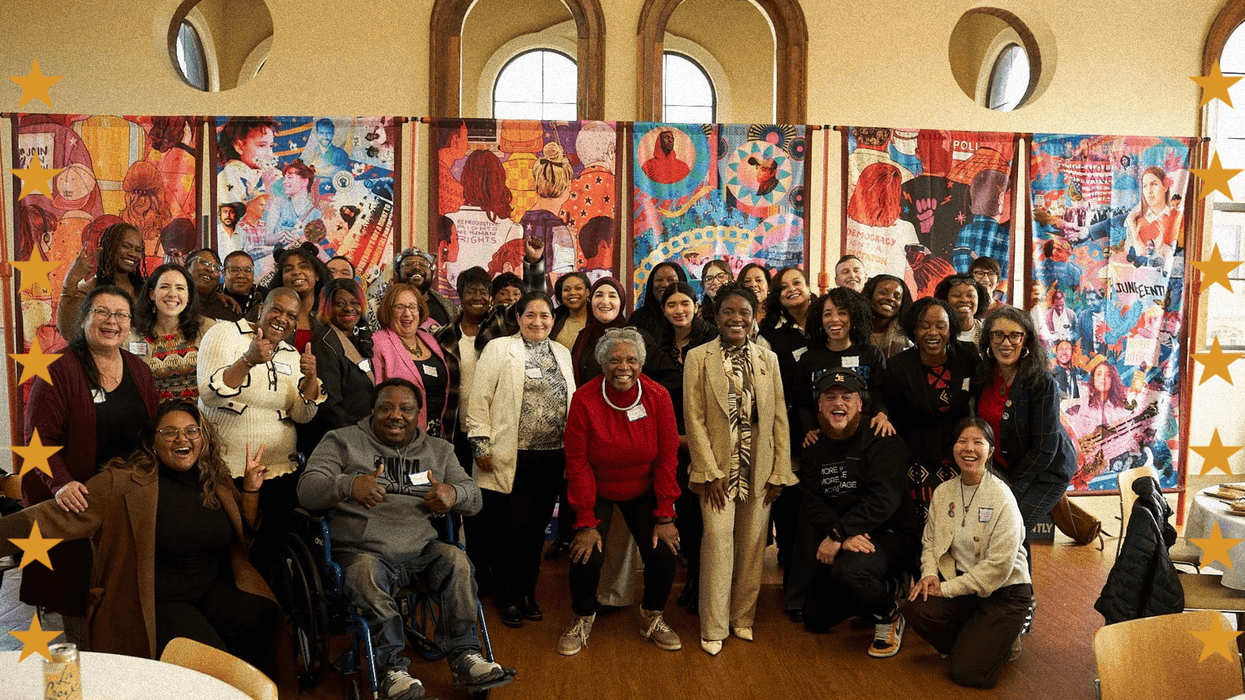
Pro-Democracy Coalition Plans Mass Mobilization to Counter Trump-Centered 250th Birthday
The Next250 coalition is focused on building a future in the US in which Americans declare their "interdependence" and work together to secure economic justice and an inclusive democracy.
Jun 19, 2026
With the 250th anniversary of the United States' independence approaching, much of the planned celebration has been centered not on highlights of the country's history, the communities that changed the nation by demanding progress on voting and civil rights, or how far the US has come since the Declaration of Independence was signed.
Instead, President Donald Trump has increasingly placed himself and his own views on American history at the center of the semiquincentennial celebration—insisting on a "Freedom 250" UFC fight on the White House lawn, arranging for his own image to appear on US passports and commemorative gold coin, calling himself “the Number One Attraction anywhere in the World" as he stepped in to headline the Great American State Fair after numerous performers dropped out, and using taxpayer dollars earmarked for the 250th birthday to hold an event devoted to the absurd and ahistorical claim that the US was founded as a Christian nation.
Ahead of the official "Freedom 250" events planned for July 4, a coalition of progressive groups—including One Fair Wage, Workers Center for Racial Justice, the Council on American Islamic Relations, and Jews for Racial and Economic Justice—are mobilizing to direct the country's attention away from Trump, Christian nationalism, and even the country's history and its independence—and toward a future in which Americans celebrate their "interdependence."
"Interdependence means recognizing that our lives, communities, and futures are connected," reads the Next250 coalition's website. "It means understanding that none of us are free, safe, or thriving alone, and that the well-being of our communities, democracy, environment, and future generations depends on how we care for one another now."
On June 27, a week before Independence Day, people from across the US are planning to attend a national mobilization in Washington, DC where the coalition will "reckon with our nation’s history and simultaneously declare a shared vision for the future of the country."
The event will amplify the Declaration of Interdependence, a document that focuses on the "collective destiny" of everyone in the US.
"We are one nation, interdependent, woven together by the strength of our ideals, our shared history, and the extraordinary land we live on—stewarded since time immemorial by Indigenous nations whose sovereignty and leadership continue today," reads the declaration. "We can bring this vision to life only by recognizing our common destiny, honoring our shared humanity, and working together."
"Today, too many people in the United States are struggling to meet their basic needs, while a tiny few have more money than nations," the document continues. "Too many of us are feeling disconnected from our neighbors, have lost faith in government, and are longing for community. People do not feel safe from violence. Wildfires, floods, and extreme weather are destroying whole communities. We join together in our shared values to carve a path toward a better future for ourselves and each other."
The declaration pledges to look ahead and build a nation where:
- All people are treated with dignity and respect;
- Everyone feels safe in every community;
- Access to clean, green spaces is abundant;
- Every person who works earns a living wage and benefits that allows families work-life balance.
The mass mobilization planned for June 27 has been years in the making. Key organizers—including political activists Linda Sarsour and Carmen Perez-Jordan and One Fair Wage president Saru Jayaraman—have gathered inspiration for the gathering and the declaration from communities across the country at town halls in Hartford, Detroit, and New York City, as well as "listening sessions" in dozens of states.
The town halls, like the event planned for the 27th, have included music and art exhibitions as well discussions about a more inclusive and democratic future for the US.
The organizers, Sarsour told Common Dreams, "really tried to use the themes, the words that came out of those listening sessions, and to develop this Declaration of Interdependence."
"What it really reaffirmed for me personally and for the folks that were involved is that majority of people agree on very fundamental universal values and principles," Sarsour added. "People want safety. People want dignity. People want to thrive. People are tired of just the survival mode."
The coalition found that "living wages" were an issue that people across the country "fundamentally agree on."
"Everyone, regardless of political party, regardless of where you live in the country, no one wants to work three jobs to support their families," said Sarsour. "So this idea of economic justice and living wages is actually a universal principle and value that people hold in this country."
A majority of Americans also agree on "sensible gun reform," she told Common Dreams, and—despite Trump's insistence that the climate crisis is a "scam," most people in the US do not agree with him. Widespread agreement has also been found when it comes to reproductive rights, with voters in red states like Kansas and Kentucky voting in favor of protecting abortion access in recent years after the Supreme Court's right-wing majority overturned Roe v. Wade.
"I think that when you have conversations about universal values, the question is like, 'What do you think your neighbors want?'" said Sarsour. "And I think everyone is like, 'Yeah, of course, why wouldn't my neighbor want to also make a living wage? Why wouldn't my neighbor also want to have access to healthcare?' It's just, we just never give the opportunity to our people to, to think about these things or ask them, prompt them on these questions about others."
Keep ReadingShow Less
Most Popular