July, 01 2011, 02:17pm EDT
US: Crack Cocaine Ruling a Victory for Rights
WASHINGTON
The US Sentencing Commission's unanimous vote on June 30, 2011, to make new federal crack cocaine sentencing guidelines retroactive, is consistent with internationally recognized human rights principles, Human Rights Watch said today. These include the right to benefit from sentence reductions made after commission of a crime as well as the right to be free of racial discrimination. The guidelines reduce sentences for crack cocaine possession. However, further reforms are required to bring the United States into full compliance with its international human rights obligations.
In 2010, President Barack Obama signed into law the Fair Sentencing Act (FSA), which reduced the differences in federal sentencing for crack cocaine compared to those for powder cocaine offenses. Prior to the FSA, a person convicted of an offense involving possession of crack cocaine would get the same mandatory prison term as someone with 100 times that amount of powder cocaine. The FSA increased the amounts of crack cocaine that trigger mandatory minimum sentences for federal crack cocaine crimes, thereby reducing the differential from 100-1 to 18-1.
The FSA also directed the US Sentencing Commission to change the current drug weights for crack cocaine sentences in the US Sentencing Guidelines. After proposing permanent guideline changes in April, the commission voted at the June 30 hearing to make its guidelines retroactive.
At the hearing, commissioners emphasized the fundamental fairness of making the guidelines retroactive. Commissioner William B. Carr stated that it would be "incongruous, if not unconscionable" to fail to make the FSA guidelines retroactive. Commissioner Ricardo Hinojosa said it was "the just, the fair, and the right thing to do."
Human Rights Watch agrees. The International Covenant on Civil and Political Rights, ratified by the US, states under article 15 that if sentencing laws reduce the penalties for a crime subsequent to the commission of the crime, "the offender shall benefit thereby."
International human rights law also obligates the United States to amend, rescind, or nullify any law that has the effect of perpetuating racial discrimination. Under the International Convention on the Elimination of All Forms of Racial Discrimination, which the US has ratified, governments must act affirmatively to prevent or end policies with unjustified discriminatory effect, regardless of their purpose.
Because of existing patterns of drug law enforcement, African Americans in the United States have disproportionately borne the burden of the far harsher sentences for crack offenses. In 2008, 80 percent of federal defendants sentenced for crack cocaine offenses were African American. But, according to federal drug use surveys, 27 percent of crack cocaine users were African American and 65 percent were white. The disproportionate number of African American drug offenders sentenced for crack cocaine offenses helps explain the far longer average sentence lengths for all African American federal drug offenders.
The US Sentencing Commission estimates that its decision to allow retroactive application of its new crack cocaine sentencing guidelines will make 12,040 cocaine offenders eligible to receive a reduced sentence. The average sentence reduction for eligible offenders will be approximately 37 months, but even after reduction, the average sentence will be about 10 years because of mandatory minimums.
While the June 30 action by the US Sentencing Commission will provide the possibility of sentence reductions for thousands of offenders, it will not help all prisoners sentenced to mandatory minimums enacted prior to the current FSA. Even with this vote, prisoners who have not yet served their full mandatory minimum sentence will not be eligible for a sentence reduction below that minimum. This shortcoming is contrary to US obligations under article 15 of the International Covenant on Civil and Political Rights. The Fair Sentencing Clarification Act, a bipartisan bill introduced on June 23 by Rep. Bobby Scott, authorizes sentence reductions that would bring previously imposed sentences in line with the current mandatory minimums.
Because of the fundamental injustice in condemning offenders to longer sentences simply because they committed their crime prior to enactment of the FSA, Human Rights Watch urges enactment of the FSA Clarification Act.
Human Rights Watch is one of the world's leading independent organizations dedicated to defending and protecting human rights. By focusing international attention where human rights are violated, we give voice to the oppressed and hold oppressors accountable for their crimes. Our rigorous, objective investigations and strategic, targeted advocacy build intense pressure for action and raise the cost of human rights abuse. For 30 years, Human Rights Watch has worked tenaciously to lay the legal and moral groundwork for deep-rooted change and has fought to bring greater justice and security to people around the world.
LATEST NEWS
Talarico Protests as Texas Swing County Plans to Close 92 Polling Places
“The most powerful people in this county, the most powerful people in this country, don’t want us to be able to vote easily."
Aug 31, 2026
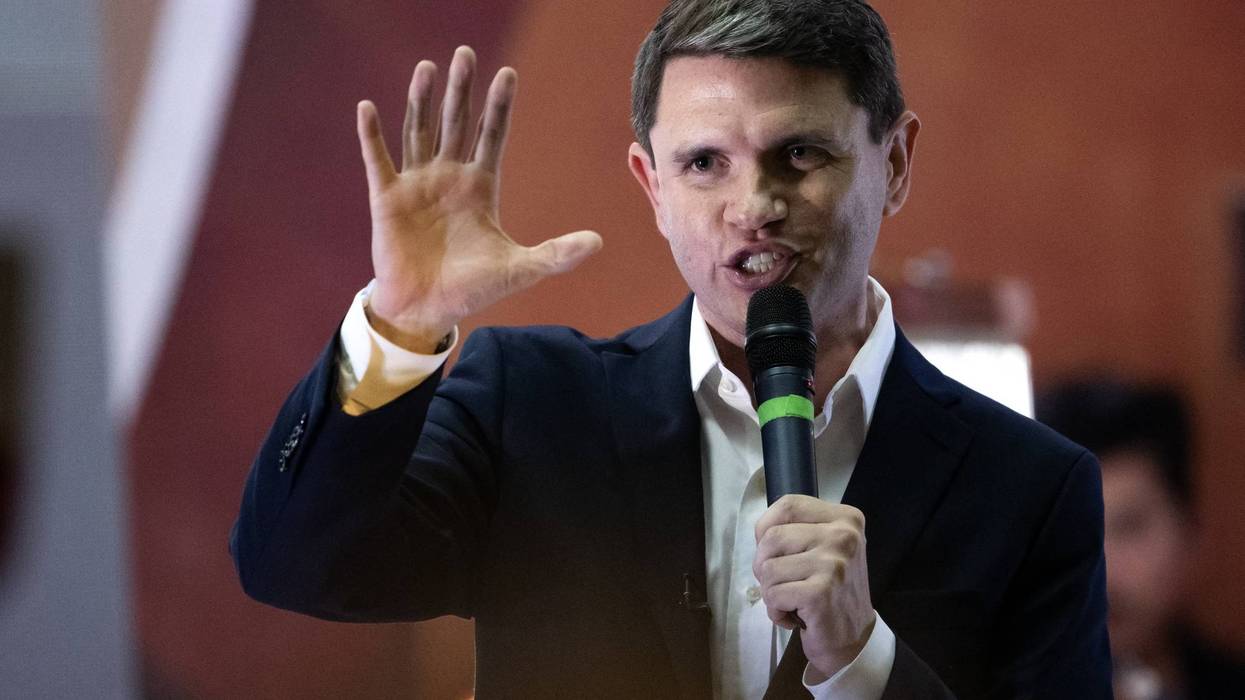
Texas Democratic Senate nominee James Talarico is pushing for one of Texas' most important swing counties to drop plans to close nearly a third of its polling places before November's midterms.
Amid public outcry, the Commissioners Court for Tarrant County—which contains Fort Worth and borders Dallas—plans to hold a vote on Tuesday on whether to shutter 92 of the polling places used in the 2022 election, many of which serve the city's poorer and minority populations.
If Democrats flip the Senate this November, the road to that outcome will almost certainly run through Texas. A Democrat has not won a statewide election there since 1994, but Talarico may be in a position to break the trend—leading Republican Attorney General Ken Paxton in most polls.
Tarrant County narrowly supported then-Rep. Collin Allred, the Democratic challenger to Sen. Ted Cruz (R-Texas) in 2024. Talarico said the closure of polling places was meant to suppress turnout and help Republicans cling to their advantage in the state.
“The most powerful people in this county, the most powerful people in this country, don’t want us to be able to vote easily,” Talarico said at a press event Sunday, during which he argued that the closures would result in longer travel for voters and lower turnout, especially in heavily Black and Latino communities.
"We're here fighting for the rights of everybody," Talarico added. "The problem is when we let voting rights become a partisan issue. That's when we walk down a very dangerous path in this country."
Proponents of the closures have described them as a way for the county to save money, rather than a political tactic.
“We’re clearly not trying to suppress the vote,” state Rep. Matt Shaheen (R-66), the chairman of the Texas House Elections Committee, told the Associated Press. “That’s a silly accusation.”
But Republican officials in Tarrant County have, in the past, explicitly tied closures of certain voting locations to partisan aims. In 2024, Republican County Judge Tim O'Hare attempted, unsuccessfully, to remove several early voting sites on college campuses, a move that the county's GOP chairman said would have been "a serious win for Republicans in Tarrant County."
In 2025's off-year elections, Republicans voted 3-2 to reduce the number of polling locations by more than a third and cut funding for free bus rides to the polls for low-income residents. The previous year, they introduced new rules blocking what they derided as "left-wing" groups from registering voters inside county buildings.
At the state level, meanwhile, Texas has carried out unprecedented mid-decade redistricting to hand more US House seats to Republicans at the behest of President Donald Trump. And following Trump's false assertions that his loss in the 2020 election was marred by fraud, Texas introduced several new restrictions on mail-in voting that were found to have significantly reduced turnout.
Tuesday's scheduled vote in Tarrant County comes after commissioners opted to table an earlier proposal that would have shuttered nearly half the county's polling places.
An analysis of that plan showed that the lowest-income third of ZIP codes would lose nearly 58% of their Election Day polling sites, while the highest-income third would lose just under 22%. Majority-minority ZIP codes would have lost nearly 52% of their polling places, while majority-white ones would have lost just a third of theirs.
A similar analysis has not yet been conducted for the new proposal. But civil rights groups still argue that the proposal will disenfranchise many voters.
"Cutting the number of poll sites, especially at such a large scale, will harm Tarrant County voters and their right to participate in the democratic process—and cause particular harm to Black, Latino, and [Asian American and Pacific Islander] voters who already face significant barriers to exercising that fundamental right," wrote groups including the ACLU, the Legal Defense Fund, and the Texas Civil Rights Project, in a letter to the Commissioners' Court on Friday.
They emphasized that the polling places slated to close under the new proposal were clustered in areas such as south and southeast Fort Worth and central and eastern Arlington, which have predominantly nonwhite populations.
Tarrant County Commissioner Alisa Simmons, a Democrat who is running to unseat O'Hare as county judge and spoke alongside Talarico on Sunday, argued that while it was an improvement on the earlier proposal, "dropping 92 Election Day polling places is crazy."
"We should not compare this proposal to the worst proposal," she said. "We should compare it to the access that Tarrant County voters actually had in 2022."
Keep ReadingShow Less
'This Is Ethnic Cleansing': Retired Israeli Generals Decry Settler Terrorism Against West Bank Palestinians
"Once a society behaves this way, that society is doomed."
Aug 31, 2026
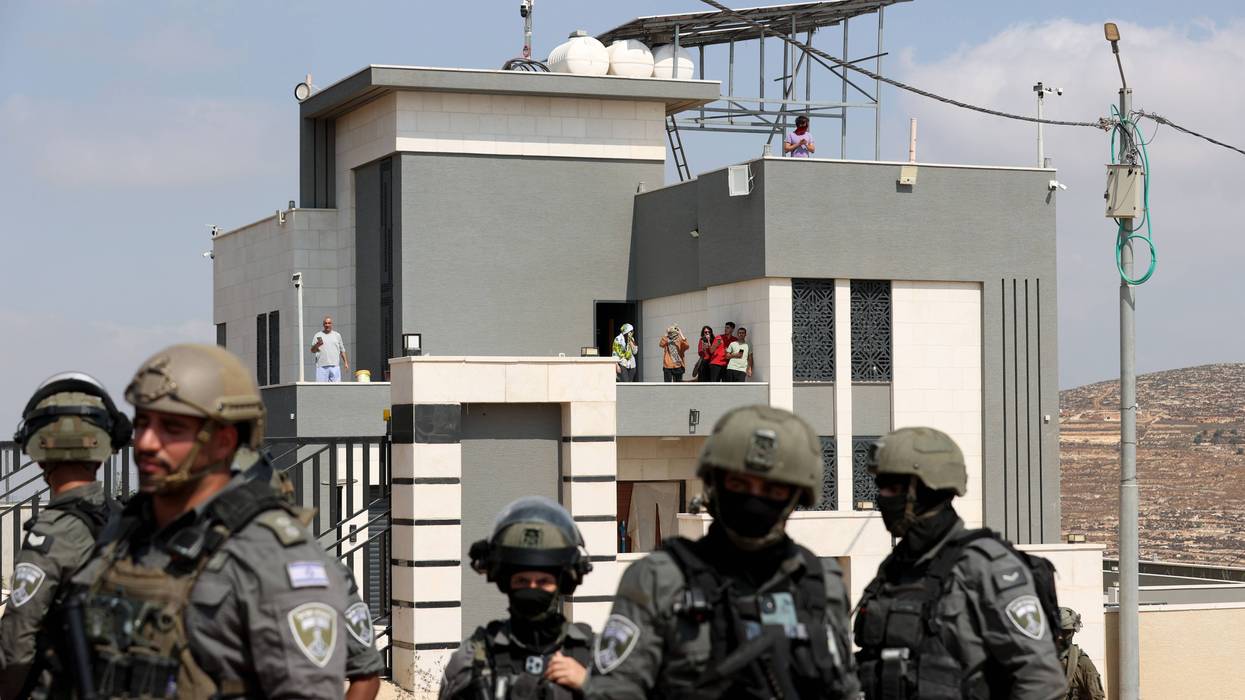
Several retired Israel Defense Forces generals are publicly denouncing their own government for permitting settlers living in the illegally occupied West Bank to wage a campaign of violence against the Palestinian population.
As The New York Times reported on Monday, the retired generals have been touring the West Bank in recent days to witness first-hand the damage that has been done to Palestinians' livelihoods by the Israeli settlers, whose violent actions have grown so outrageous that even US Ambassador to Israel Mike Huckabee described them as "terrorists."
Ephraim Sneh, retired brigadier general and former minister of health, did not mince words in describing the settlers' campaign of attacking Palestinian villages.
"This is ethnic cleansing, to put it simply," said Sneh.
Asaf Agmon, a retired Air Force general, likened the attacks on Palestinians to the kinds of pogroms once suffered by Jews living in Europe.
Agmon also said that the Israeli government's tacit support of these attacks bodes ill for the future of Israel.
“Once a society behaves this way,” said Agmon, “that society is doomed.”
The tours of the West Bank are being organized by Yaakov Or, a retired Israeli general who spent much of his career working inside the occupied territory.
According to the Times, Or begins every tour with a speech where he emphasizes the importance of speaking out against what he says are indefensible atrocities.
"When I take you to see what is happening in the West Bank, you will have two choices," Or said during the start of a recent tour. "You can stay silent, and be complicit, or you can speak out, and tell everyone you know about what is happening."
Israeli Prime Minister Benjamin Netanyahu over the weekend once again downplayed the significance of settler attacks on Palestinians, describing them as rogue actions taken by troubled individuals.
"We are talking about a very small handful of people," Netanyahu said, "usually young people who come with all kinds of distress and problems, often from home, and I am determined to stop this."
The Israeli prime minister also said that attacking Palestinian villages "harms the settlement movement" and "gives us a bad name around the world."
Netanyahu on "settler" terrorism:
We are talking about a very small handful of people, usually young people who come with all kinds of distress and problems, often from home, and I am determined to stop this.
You want to enter a village? You will not enter. That is not your… pic.twitter.com/MlnKxlaxlB
— Clash Report (@clashreport) August 30, 2026
Palestinian Christian theologian Munther Isaac pointed out that the Israeli government itself has been actively working to push Palestinians out of their homes in the West Bank, pointing to recent Israeli demolitions of homes in the town of Birzeit.
"This is what ethnic cleansing looks like in Palestine," wrote Isaac.
Birzeit: Israeli occupation forces demolished two inhabited residential buildings. Each was four stories high, with every floor covering 250 square meters.
This is what ethnic cleansing looks like in Palestine. pic.twitter.com/XsYu92VUFw
— Munther Isaac منذر اسحق (@MuntherIsaac) August 31, 2026
Human rights organizations for months have been sounding the alarm about the situation in the West Bank, where Israeli settlers have routinely attacked Palestinians at their own homes.
An analysis published by the Carter Center last month found that “settler attacks are now the leading cause of Palestinian injuries in the West Bank,” as “more than 3,200 Palestinians have been displaced by settler attacks and home demolitions this year—double the daily rate of the previous three years.”
Keep ReadingShow Less
'The President of the United States Is Mentally Unwell': Deranged Trump Posts AI Slop of Iran Bombing
The chief executive of Iran's government-run oil company dismissed the US president's social media posts "laughable."
Aug 31, 2026
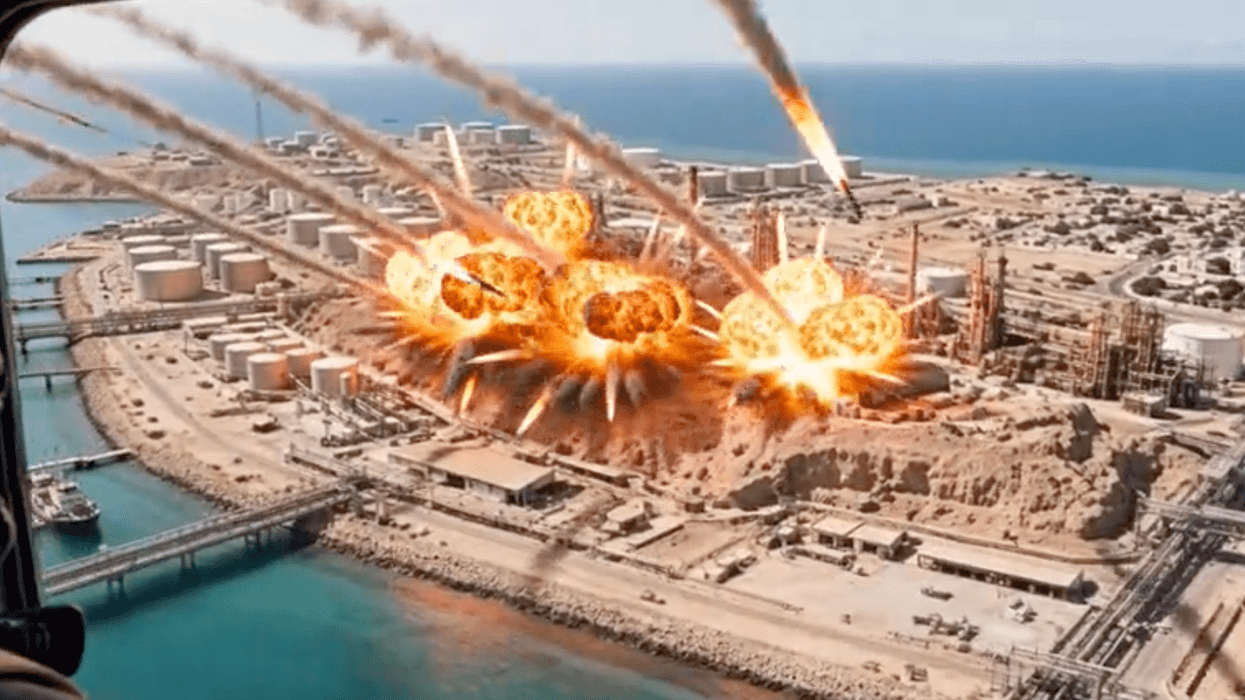
US President Donald Trump published a string of unhinged posts to his social media platform overnight and into Monday morning, including an artificial intelligence-generated video attempting to depict American forces bombing Kharg Island—Iran's primary oil export terminal.
The post, which drew mockery from Iranian officials and alarm from observers concerned about Trump's increasingly erratic behavior, came after US forces attacked Larak Island, which is located hundreds of miles east of Kharg in the Strait of Hormuz.
"Kharg Island being blown to smithereens!!!" Trump wrote in the caption of his post. It is unclear whether Trump, who frequently shares inane AI-generated videos with his 13 million Truth Social followers, confused Larak Island with Kharg Island, which the president has repeatedly threatened to invade.
An unnamed US official confirmed to Reuters in the wake of Trump's post that American forces did not target Kharg Island during their Sunday attacks.
Trump posts AI slop with the caption, “Kharg Island being blown to smithereens!!!” pic.twitter.com/HVTF9xFC6B
— Aaron Rupar (@atrupar) August 31, 2026
Hamid Bovard, the chief executive of Iran's government-run oil company, called Trump's posts "laughable" and described conditions on Kharg Island as "calm and appropriate."
Iran retaliated for the US strike on Larak with a drone attack on two American military installations in Jordan and condemned the Trump administration's ongoing aggression as an "obvious violation" of the United Nations Charter.
"It is obvious that full responsibility for the consequences of America’s new aggressive actions, as well as the continuation of the maritime blockade and economic war against Iran, rests with the US regime and all parties that in any way cooperate or participate in preparing and implementing the US’ illegal and unlawful actions," the Iranian Foreign Ministry said in a statement.
The military exchange between the US and Iran was the first in weeks amid stalled efforts to achieve a lasting solution to the historically unpopular war that Trump and his Israeli counterpart, Prime Minister Benjamin Netanyahu, launched in late February, sparking a global energy crisis that has jacked up gas prices in the US and prompted fears of a global food emergency.
In a separate Truth Social post on Monday morning, Trump declared that Iran is "officially a Failed Nation," adding in all-caps, "IT IS DEAD!"
"They have no Navy, they have no Air Force, they have no currency, they are not paying their soldiers or police, Inflation is at 300%, and their leadership is in total disarray and incapable of properly representing the country" Trump wrote.
"They must be tried for war crimes against humanity!" added the US president, who has been credibly accused of committing war crimes in Iran and elsewhere.
Trump's attempt to convey overwhelming and unflagging US military superiority conflicts with internal assessments by top American officials, who reportedly warned Pentagon Secretary Pete Hegseth earlier this month that "prolonging large-scale operations against Iran is unsustainable and risks weakening their ability to confront threats elsewhere, including the US homeland." US intelligence assessments have also found that, despite Trump's claims, Iran's government is still intact after six months of American bombing.
"The president of the United States is mentally unwell and has been for quite some time," Rep. Ted Lieu (D-Calif.), who has supported congressional efforts to end Trump's illegal war, wrote in a social media post on Monday. "He fantasized blowing up Iran’s Kharg Island. Except it didn’t happen."
"And why would Trump need to blow it up if, as Trump claims, the US has total control of the Strait," Lieu asked.
Keep ReadingShow Less
Trump Accused of Using Iran War Energy Crisis as 'Cover for a Resource Grab' in Venezuela
"Oil reserves in Venezuela will do nothing to lower families’ bills today," said one campaigner.
Aug 31, 2026
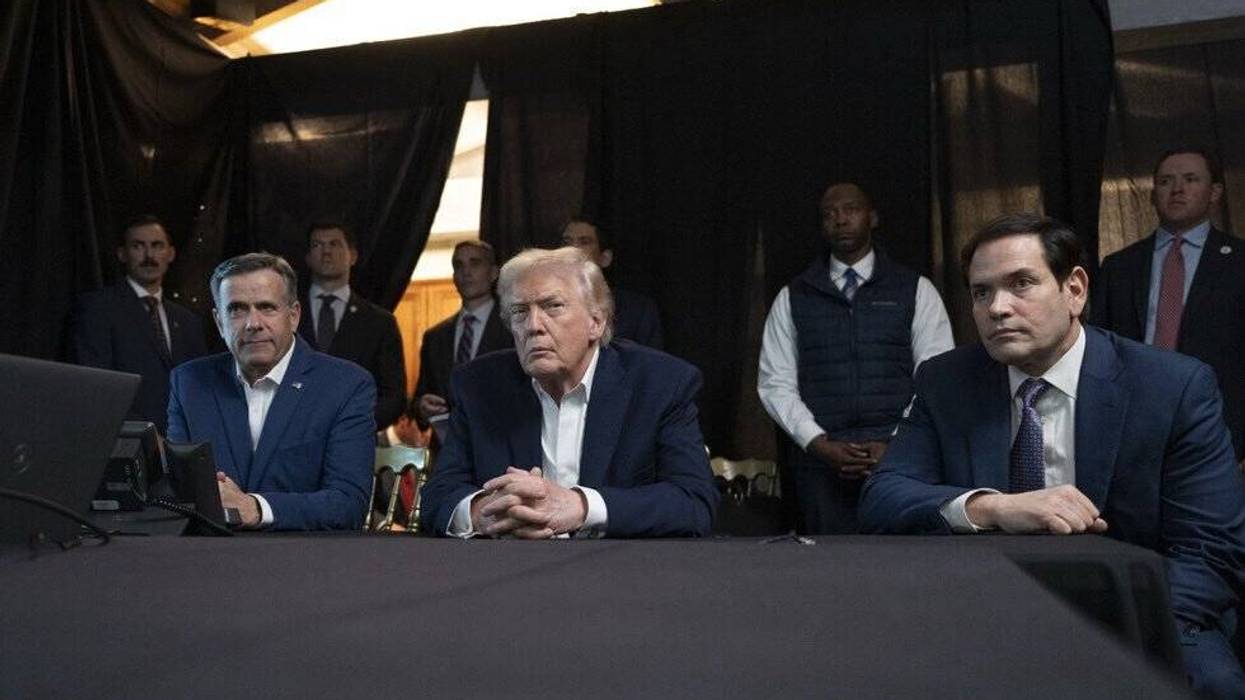
President Donald Trump was accused over the weekend of exploiting an energy crisis of his own creation to make the case for what he dubiously characterized as "the biggest oil deal in world history" with Venezuela, a country that the US illegally attacked earlier this year in an operation to abduct its then-president, Nicolás Maduro.
“Trump drove up gas prices by launching a devastating war with Iran. Now he is using the energy crisis he created as cover for a resource grab of Venezuela’s oil," Allie Rosenbluth, US program manager at Oil Change International, said in a statement on Sunday. "The announcement confirms his aggression against Venezuela was about securing power, profits, and fossil fuels."
The newly announced agreement—which Trump and Venezuela's acting president, Delcy Rodríguez, said involved the development of fields with potentially 65 billion barrels of oil—came as gas prices in the US remained above $4 per gallon. According to AAA, this month is "poised to set a new record as the most expensive August at the pump," as the national average price for a gallon of gas has been above $4 every day of the month for the first time.
Rosenbluth, like other analysts, questioned the impact of Trump's deal with Venezuela on the US energy crisis, which has become a major political problem for the president and his Republican Party heading into the midterms.
Trump, who has significant fossil fuel company holdings, claimed the deal would "substantially lower gas prices" and help replenish the US Strategic Petroleum Reserve, which is at its lowest level in decades after the president ordered the release of 172 million barrels following Iran's closure of the Strait of Hormuz in response to US aggression.
Trump tries to retroactively justify his war of aggression against Venezuela by saying he will use its oil to replenish America's strategic reserves, which are depleted because of his aggressive war of choice against Iran. What is wrong with this "logic"? https://t.co/Grh3ov8Jhw
— Kenneth Roth (@KenRoth) August 30, 2026
Trump announced the deal with Venezuela on Friday, which marked six months since the US and Israel started bombing Iran.
"Oil reserves in Venezuela will do nothing to lower families’ bills today," said Rosenbluth. "Increasing production of this extremely heavy and dirty crude would take years and billions of dollars. A bet on new Venezuelan oil production that may take a decade or more to materialize is a bet against solving the climate crisis already destroying lives and livelihoods every day. The immediate winners are the oil companies and private investors given access to Venezuela’s resources, while Venezuelans lose sovereignty, and communities in Venezuela and along the US Gulf Coast face more pollution and harm."
“Trump’s attacks on Iran and Venezuela expose the vicious cycle of fossil fuel dependence: Wars secure access to oil, oil fuels violence and militarization, prices become more volatile, and fossil fuel companies profit while ordinary people pay," Rosenbluth added. "Real energy security comes from phasing out fossil fuels and investing in affordable, renewable energy.”
Gerald Kepes, president of the consultancy firm Competitive Energy Strategies, noted in an interview with NPR that the US has no "government-owned operational capability per se in the oil and gas sector," raising the question of "who's going to operate on the ground?"
Chevron is currently the only US oil company actively producing in Venezuela. NPR reported that "there's a private Venezuelan company involved in the deal," but the details remain murky.
Keep ReadingShow Less
'Mobster Language': Trump Says Venezuelan Oil Will Replenish US Reserves
"I used to spend so much time trying to prove that the US was not interested in promoting democracy and just preferred autocratic governments that give us whatever we want. And now he just posts this every day on social media," one journalist wrote.
Aug 30, 2026
President Donald Trump was accused of naked gangsterism and revisionist history on Sunday when he announced that Venezuelan oil would be used to refill the US Strategic Petroleum Reserve.
"One of the things I am going to do with the Venezuelan Oil is fill up the Strategic National Reserves which, because of Sleepy Joe Biden, has been virtually emptied. The 'topping out' process will begin very shortly, and is a Gift from Venezuela to the People of the United States," Trump wrote on Truth Social.
The oil in question comes from a deal announced between the governments of Trump and acting Venezuelan President Delcy Rodriguez on Friday, which would allow the US to take majority control of 65 billion barrels worth of Venezuelan oil preserves. While Rodriguez has spoken favorably of the arrangement, it is hard to know how freely she speaks and acts given that her predecessor Nicolás Maduro was kidnapped by US forces in January.
"Describing oil you are looting by force as a 'Gift from Venezuela to the People of the United States' is straight mobster language," Drop Site News journalist Ryan Grim wrote on social media in response to Trump's statement on Sunday.
"No one told the demented jerk that he drained over 100 million barrels from the Strategic Reserves?"
Nathan J. Robinson, editor-in-chief of Current Affairs, also commented on the imperialism inherent in Trump's remarks, writing: "I feel like I used to spend so much time trying to prove that the US was not interested in promoting democracy and just preferred autocratic governments that give us whatever we want. And now he just posts this every day on social media."
In an article on Sunday entitled "Trump’s Venezuela Oil Grab Reprises Industry’s Neocolonial Past," Bloomberg reported that the oil deal reminded some analysts of 20th century US colonialism in Latin America.
Venezuelan economist Francisco Rodríguez told Bloomberg that Venezuela is “functioning as a protectorate of the US in all but name,” and that the current deal “isn’t furthering the interests of Venezuelans. It’s about securing the economic and security interests of the United States.”
New York University associate history professor Alejandro Velasco, meanwhile, compared today's Venezuela with the Central American "Banana Republics" that were heavily influenced by the US-based United Fruit Company during the first half of the 20th century.
The Venezuelan people “are entirely at the whims of whatever the US government, by way of these companies, is going to give to them,” he told Bloomberg. “Venezuela is a client state now.”
Both Rodriguez, the economist, and Robinson questioned whether the deal would survive a change in Venezuela's government.
“If I were an investor in Venezuela right now, I would be asking myself if there’s going to be a government in the future that will repudiate the contracts,” Rodriguez told Bloomberg.
Robinson, meanwhile, wrote on social media, "It's obvious that a democratic Venezuela would never hand over its oil to the US, so the US actually strongly opposes democracy in Venezuela."
Other experts pointed out that Trump lied about how the Strategic Petroleum Preserve (SPR) was depleted in the first place. While President Joe Biden did drawn upon the reserve in response to Russia's invasion of Ukraine, Trump has also relied on reserves to offset the impact of his war on Iran and the subsequent closure of the Strait of Hormuz. As of August 21, the SPR held 289.7 million barrels, a 30% decrease from the start of the year, according to the Energy Information Administration. It is supposed to fall further to 243 million barrels per Trump's orders, Drop Site News reported.
"No one told the demented jerk that he drained over 100 million barrels from the Strategic Reserves?" Dean Baker, senior economist at the Center for Economic and Policy Research, asked on social media.
It is also unclear how quickly any Venezuelan oil could top out the SPR, given that Venezuela's oil industry has been weakened by sanctions and mismanagement and needs substantial investment and work before it can increase production, according to Reuters.
At the same time, Drop Site pointed out that Delcy Rodriguez made no mention of gifting the US oil when she laid out more details of the deal on Saturday night. According to the acting Venezuelan leader, the deal would last 25 years and the country would maintain “ownership of and sovereignty” over the oil “while leveraging capital, technology, and operational expertise to support the recovery of a strategic industry that has been severely affected by sanctions," as Reuters reported.
In response, Francisco Rodriquez outlined a series of questions about the deal, including how Delcy Rodriguez's remarks compared with Trump's.
"President Trump has also said that with immediate effect, the United States' strategic oil reserve will begin to be supplied through a gift from Venezuela. Can you explain under what conditions this gift is being made?" the economist asked the Venezuelan leader on social media on Sunday. "Which articles of the law or Constitution allow you to give away Venezuelan oil property? And if that flow begins immediately, as President Trump says, does that mean it will be supplied from current production, and therefore imply lower revenues for the national treasury in the immediate term?"
Keep ReadingShow Less
'Embarrassing': Google Maps Renames 'Lake Ontario' as 'Lake America' in US
The name change followed President Donald Trump's executive order and "served as a reminder that billionaires will always side with authoritarians, because authoritarians will always protect billionaires at the expense of democracy and the working class."
Aug 30, 2026
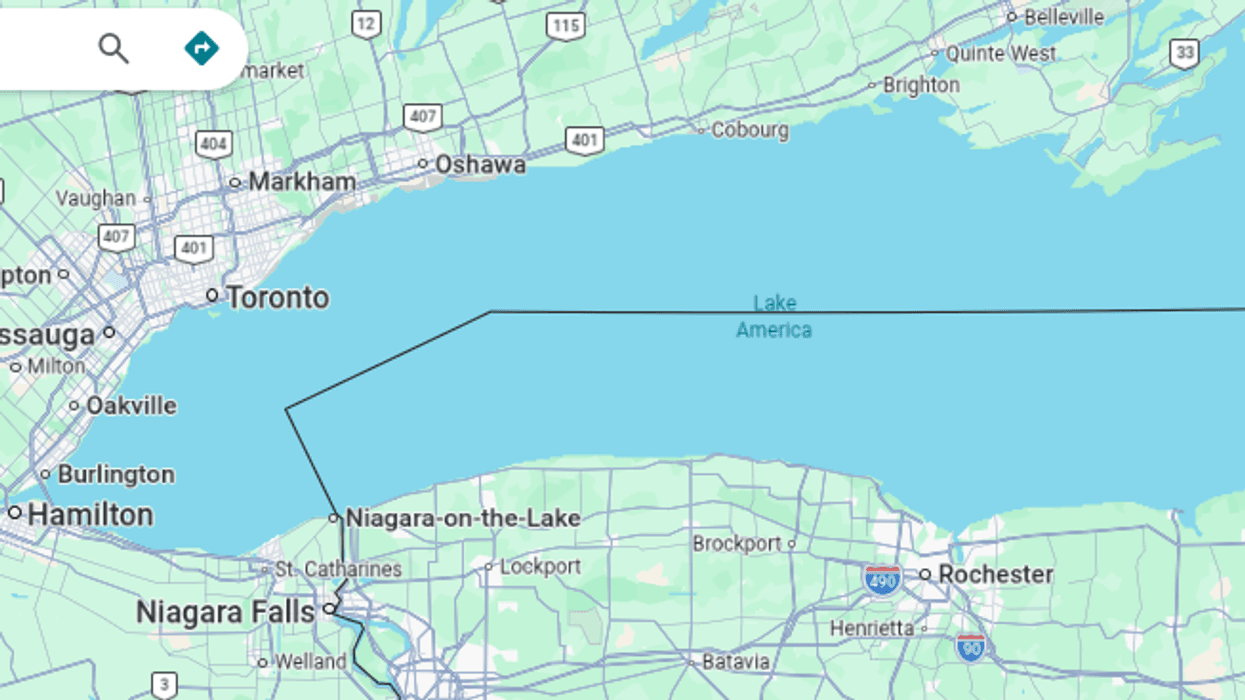
Tech giant Google faced widespread criticism over the weekend for becoming the first major online map provider to change the name of "Lake Ontario" to "Lake America" for its US users, after President Donald Trump ordered the name change in an executive order on Thursday.
Google presented the decision as a procedural one in its statement on Saturday:
The US Geographic Names Information System (GNIS) has formally changed the name for "Lake Ontario" to "Lake America" in the United States. Since we update Google Maps to reflect name changes in official government sources, which is GNIS for the US, people using Maps in the US will see "Lake America," those in Canada will continue to see "Lake Ontario," and those outside of the US and Canada will see both names. These updates follow our long-standing policy for bodies of water with names that vary from country to country, and are starting to roll out now.
However, advocates, lawmakers, and commenters saw the shift as another example of Big Tech in general, and Google in particular, caving to Trump's whims. Notably, the CEO of Google's parent company Alphabet, Sundar Pichai, attended Trump's inauguration with a host of other Silicon Valley moguls.
"This is so embarrassing for @Google and served as a reminder that billionaires will always side with authoritarians, because authoritarians will always protect billionaires at the expense of democracy and the working class," Melanie D'Arrigo, executive director of the Campaign for New York Health, wrote on social media.
Zero integrity over at @Google.
Resign, @sundarpichai.
Fuck you, @googlemaps. pic.twitter.com/ERxPc5sZ88
— Killed by Google (@killedbygoogle) August 30, 2026
Rep. Mark Pocan (D-Wis.) threatened the company with congressional questioning for its capitulation, writing on social media: "Hey @Google, how about an option for thinking people vs. cultish sheep? I don’t wanna have to see your brown lips from Trump. How about calling it what it is? Don’t forget, when the Majority changes in the House and Senate, you might have some answering to do. Correction. WILL."
Sen. Ruben Gallego (D-Ariz.), in response to another social media post about the change, wrote sarcastically, "That's definitely going to make food more affordable."
Kenneth Roth, the former head of Human Rights Watch, asked, "Is Google really so terrified of Trump that it has to play along with his childishness?"
Is Google really so terrified of Trump that it has to play along with his childishness? pic.twitter.com/tHOrwJoiCy
— Kenneth Roth (@KenRoth) August 30, 2026
Trump biographer Seth Abramson chastised the company, writing, "Thing #1 that you *do not do* for a psychopath: appease them."
While Google was the first digital map provider to make the change, it will not be the last, according to Wired, which reported that Apple and Bing are expected to follow suit. All three companies changed the name of the Gulf of Mexico to the Gulf of America following Trump's redesignation at the start of his second term.
Trump did receive pushback from other quarters at the time, with The Associated Press losing access to presidential events because it refused to change its style guide to prefer "Gulf of America."
This new name change, which Trump issued as part of an ongoing trade war with Canada, has also met with resistance both within and beyond the US.
On the day of Trump's order, MapQuest announced simply, "We're not changing it."
We’re not changing it. pic.twitter.com/NdeE9v2BNO
— MapQuest (@MapQuest) August 27, 2026
Canadian Prime Minister Mark Carney rejected the name change in a social media post on Thursday, pointing to the Indigenous origins of the name Ontario.
"The name Lake Ontario comes from the Wendat word Ontari’io, which, appropriately, means 'the lake is beautiful, the lake is big.' The name is more than 400 years old, predating both the Confederation of Canada and the Declaration of Independence of the United States of America," he wrote. "We know that America is changing. Their trading relationships, their foreign policies, their national monuments, their hydronyms. Canadians also know that naming reality means calling it Lake Ontario—then, now, and always."
The upstate New York-based Seneca Nation on Friday asked Trump to rescind the order, saying it violated an over 225-year-old treaty signed by President George Washington and the Haudenosaunee confederacy, of which the Seneca are a member.
Seneca Nation President J. Conrad Seneca said the name change showed "blatant disrespect" to Indigenous groups, adding, "The President cannot assert ownership over our culture or erase it through irresponsible political action."
On Saturday, Ontario Premier Doug Ford unveiled a billboard on the lake's edge that reads, "Lake Ontario, now and always" in English and French.
It’s Lake Ontario, now and always. pic.twitter.com/KNahtPAMeJ
— Doug Ford (@fordnation) August 29, 2026
"President Trump can call it whatever he wants, but I can tell you the rest of the world will always call it Lake Ontario," Ford said.
Keep ReadingShow Less
Trump Threatens NBC's Welker With 'Punishment' for Doing Her Job
"Trump, like all authoritarians, wants to silence those who disagree with him," Sen. Bernie Sanders said in response.
Aug 30, 2026
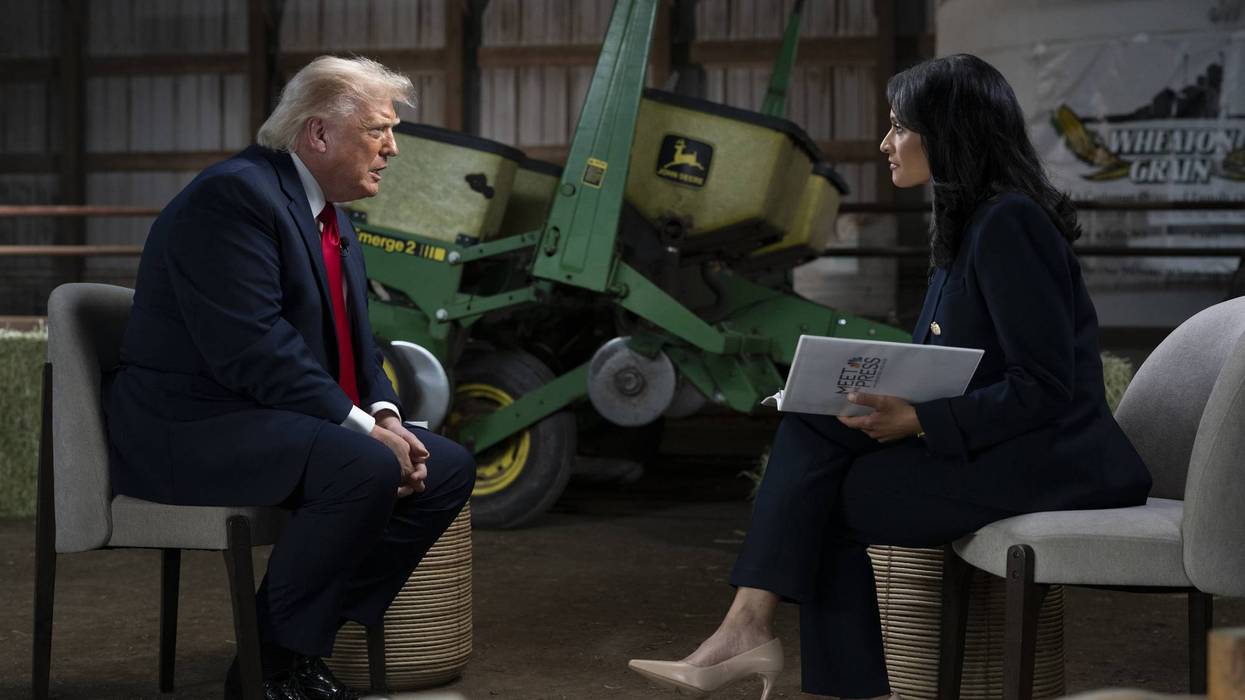
President Donald Trump took to Truth Social on Sunday to threaten NBC journalist Kristen Welker with "rebuke or punishment" from the Federal Communications Commission, or FCC, after she accurately reported that his endorsement had netted "mixed" results for Republican candidates this election cycle.
In a second post on Sunday, Trump also lashed out against reported polling results, writing, "THE FAKE POLLS USED BY OUR CROOKED MEDIA ARE OUT OF CONTROL, AND SOMETHING MUST BE DONE ABOUT IT. FCC TO THE RESCUE!"
"Trump, like all authoritarians, wants to silence those who disagree with him," Sen. Bernie Sanders (I-Vt.) wrote on social media in response. "Now he's trying to punish an NBC journalist for reporting on his mixed endorsement record. Sorry, Mr. President. In America, we believe in democracy and the First Amendment. FIGHT BACK."
Welker made the remarks that enraged Trump during a pre-"Meet the Press" promotion on NBC's Washington, DC affiliate station. They were backed up by NBC reporting that six candidates Trump endorsed for House and governor had lost their Republican primary races in August.
"Trump makes clear that he thinks it's the government's role to go after journalists who anger him."
"Kristen Welker, the Unpopular 'Hostess' of the once great Meet the Press, now considered Meet the Fake Press, just stated that Donald Trump has 'mixed results' on his Endorsements of Candidates, when the recent WINS of Darline Graham and Mike Mazzei, stand at 100% for the US Senate, and 98% for the US House, recently and over the longterm. How can anyone be allowed to say this, working for freely given Public Airwaves? Results are attached. Because of this purposeful inaccuracy, she will be reported to the FCC for rebuke or punishment," Trump wrote.
He also appealed to the head of the FCC directly, saying, "I hope that Chairman Brendan Carr, and the fine people of his Commission, will take this Threat to our Country very seriously."
"Trump is getting more explicit about weaponizing the FCC," CNN chief media analyst Brian Stelter noted in a thread on social media. While he pointed out that the FCC cannot legally punish Welker and has limited power by design, its chair Carr "has been responsive to Trump's posts in the past..."
Indeed, Carr has a history of targeting Trump critics.
In September of 2025, he pressured ABC into briefly removing Jimmy Kimmel from the air following remarks he made surrounding the Trump administration's response to conservative activist Charlie Kirk's death.
In March, Carr wrote a post on social media that appeared to threaten to revoke the broadcasting licenses of news outlets that criticized Trump's war on Iran, responding directly to Trump's own social media rant against war coverage.
In April, he ordered Disney's eight ABC stations to file their broadcast renewal requests years early, prompting ABC and Disney to file a First Amendment lawsuit against the FCC earlier this month. The renewal requests, which Carr denies were retaliatory, came a day after Trump again criticized Kimmel for making jokes about First Lady Melania Trump.
Stelter concluded: "Trump invoked Carr's name, complimented the 'fine people' of the FCC, and said he hopes the commission will 'take this Threat to our Country very seriously.' ABC is already in court fighting the FCC's unprecedented actions; it's reasonable to think NBC will be targeted next."
Chief White House correspondent for The New York Times Pete Baker wrote on social media that, with his threats against Welker, "Trump makes clear that he thinks it's the government's role to go after journalists who anger him."
"Are there really any Americans left who think this man is paying any attention to any problem any person in the United States is having right now," Trump biographer Seth Abramson wrote on social media in response to Trump's tirade. "As far as I can tell there's not a single second of his day taken up by anything but what personally interests and enriches him."
Keep ReadingShow Less
'Horrific': Masked Israeli Settlers Attack, Injure Palestinian Woman and NBC Crew
Another journalist called the assault "the latest instance of unacceptable and alarming settler violence toward journalists and Palestinians."
Aug 29, 2026
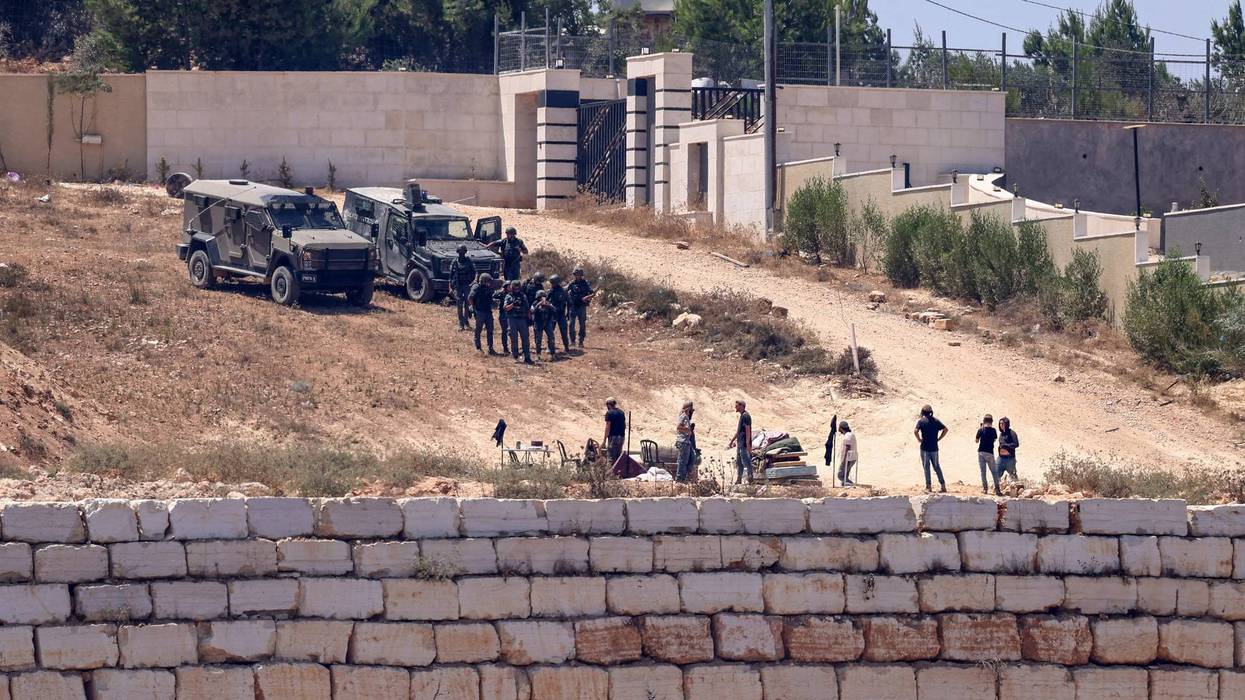
Israeli settlers attacked and wounded a Palestinian woman and four NBC team members who were interviewing her in the West Bank on Saturday, amid ongoing settler violence in the occupied Palestinian territory.
The settlers, who were wearing masks, drove up as Aida Ahmed Abdullah and her family were telling NBC about how settlers forced them from their home in the town of Jalud.
“They jumped out, beat us, then jumped back in the car,” NBC News international correspondent Matt Bradley told the outlet.
Make This Go VIRAL
Masked Israeli Settlers ATTACK Palestinian Woman and NBC News Crew in the West Bank
NBC correspondent Matt Bradley was struck twice pic.twitter.com/EMmWGsNk2X
— Ryan Rozbiani (@RyanRozbiani) August 30, 2026
Bradley was hit twice on the arm by the attackers, who carried sticks. They also threw rocks. Abdullah, Bradley, West Bank-based cameraman Khaldoon Eid, producer Producer Lawahez Jabari, and a driver were all injured in the ambush and treated afterword. Abdullah remained in the hospital as of Saturday night.
Both Eid and Jabari also described the assault.
“We didn’t expect that—that they would come to attack,” Eid told NBC. “We were in the middle of a Palestinian area next to Palestinian houses.”
Jabari said, "Suddenly a car came to us,” adding, "the settlers had sticks, I saw a gun, but they didn’t use the gun.”
Jeremy Diamond, a CNN correspondent in Jerusalem, called the incident "horrific" on social media and said it was "the latest instance of unacceptable and alarming settler violence toward journalists and Palestinians."
The NBC crew and their interviewee were not the only targets of such violence on Saturday, as attacks continued in the town of Qusra, where settlers have been conducting a nearly three-week siege of three Palestinian homes. Settlers pepper sprayed Palestinian workers, threw rocks at a building, and besieged a fourth home with at least four Palestinian residents inside, according to Hareetz and Al Jazeera.
Israeli Prime Minister Benjamin Netanyahu condemned Saturday's attacks, characterizing them as “criminal acts of violence committed in the villages of Qusra and Jalud by a handful of rioters who violate the law, cause enormous injustice to the law-abiding settler public, hinder the IDF [Israel Defense Forces] in fulfilling its missions, and harm Israel’s standing in the world.”
Yet Trita Parsi, executive vice president of the Quincy Institute for Responsible Statecraft, argued on social media:
1. The settler wouldn't do this to Americans had they not received a green light from the Israeli gov.
2. Israel's gov would not have given such a green light unless it felt confident that the US gov—and Amb. [Mike] Huckabee—wouldn't lift a finger to defend the Americans.
Journalists trying to report in both Gaza and the West Bank have long been targets of both settlers and the Israeli military. The IDF was found to be the leading killer of journalists worldwide for the third year in a row in 2025, and even before the Gaza genocide began in 2023, there were cases like the IDF killing of Palestinian-American reporter Shireen Abu Akleh in the West Bank in 2022.
The attacks on the NBC team also come amid an uptick in setter violence in the West Bank since 2023, which humans rights observers say is enabled by the Israeli government. Netanyahu's government has expanded settlements in the West Bank despite the fact that they are illegal under international law.
Keep ReadingShow Less
Judge Rules the Trump Admin Can't Deport International Students for Free Speech
"A federal judge just ruled that the Trump admin's use of immigration law to deport me and other noncitizen students for pro-Palestinian speech is unconstitutional. No one should fear speaking up for Palestine," Mahmoud Khalil said.
Aug 29, 2026
The Trump administration violated the Constitution when it moved to deport or rescind visas from international students who spoke up for Palestinian rights and criticized Israel's genocide in Gaza, a federal judge ruled on Friday.
Northern District of California Judge Noël Wise, who was appointed by former President Joe Biden, said that the administration's actions violated both the First Amendment of the Constitution protecting free speech and the Fifth Amendment ensuring due process.
"Stated plainly, in the United States, freedom of speech belongs to the people. It is not the government’s to take," Wise wrote.
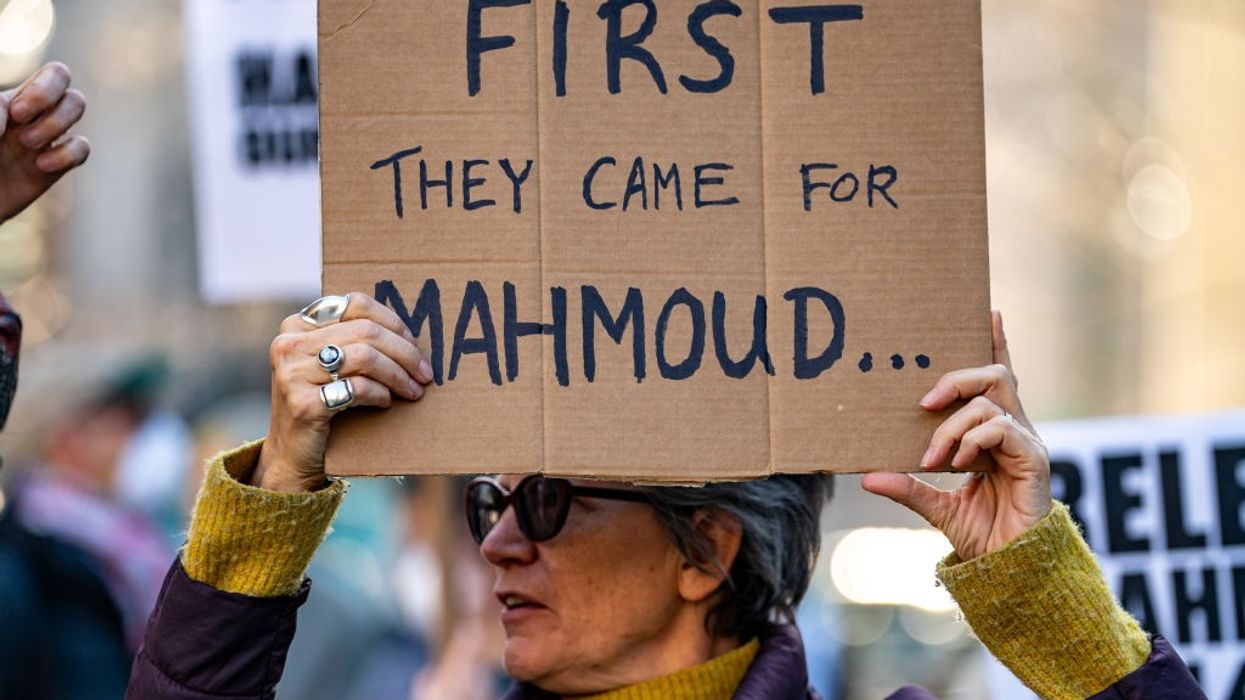
Mahmoud Khalil, a Columbia University student who was detained by Immigration and Customs Enforcement early in the second Trump administration despite holding a green card, celebrated the ruling on Saturday.
"A federal judge just ruled that the Trump admin's use of immigration law to deport me and other noncitizen students for pro-Palestinian speech is unconstitutional. No one should fear speaking up for Palestine," Khalil wrote on social media.
The Council on American-Islamic Relations also welcomed the decision in a statement on Saturday:
This ruling reaffirms a fundamental American principle that the government cannot deport people simply because it dislikes their political views. Students do not surrender their constitutional rights at the classroom door, and international students do not surrender their freedom of expression when they come to study in the United States. Criticizing the policies of a foreign government, including the genocidal government of Israel, is protected political speech.
The lawsuit was brought by the Foundation for Individual Rights and Expression (FIRE) in August 2025 on behalf of The Stanford Daily, Stanford University's student newspaper, and an anonymous female plaintiff. The newspaper argued that student reporters on visas refrained from covering pro-Palestinian protests on campus out of fear of being deported, while the Jane Doe was a noncitizen who had spoken out on behalf of Palestine and now was worried about government retaliation.
"The reporters in our newsroom shouldn’t have to fear that writing a story will result in their deportation. Today’s victory means they won’t have to," the paper's editor-in-chief George Porteous wrote on social media on Friday.
In particular, the lawsuit challenged two provisions of the Immigration and Nationality Act that Secretary of State Marco Rubio used to justify seeking the deportations of Khalil, Columbia student Moshen Mahdawi, and Tufts University student Rümeysa Öztürk. The first allows the secretary of state to deport a noncitizen for speech if the secretary “personally determines” the speech “compromises a compelling foreign policy interest.” The second allows the secretary to revoke visas entirely at their own discretion.
Wise agreed that the provisions violated the Constitution and offered a rousing defense of free speech.
“In the United States, free speech, including the freedom to criticize the government and its leaders, is not a sign of our democracy’s fragility. It is evidence of its strength," she wrote. "That strength is diminished when members of our society—citizens and noncitizens alike—must self-censor and ‘behave’ or suffer the government’s retaliation.”
FIRE said the decision was the "first in the country to squarely rule on the constitutionality of these statutes" and that it would "reverberate in similar proceedings around the country."
“In America, free speech doesn’t just belong to the people who say things the government agrees with,” FIRE attorney Conor Fitzpatrick said in a statement Friday. “Today’s ruling proves that free speech isn’t a privilege, but the inalienable right of every man, woman, and child.”
Keep ReadingShow Less
'One Big Military Theft': Trump Announces Deal for US Control of Venezuelan Oil Fields
"This is proof Trump put our service members at risk to get Venezuelan oil for his billionaire buddies," one Democratic senator said. "Putting our soldiers’ lives on the line for private profit is a gross dereliction of his constitutional duty."
Aug 29, 2026
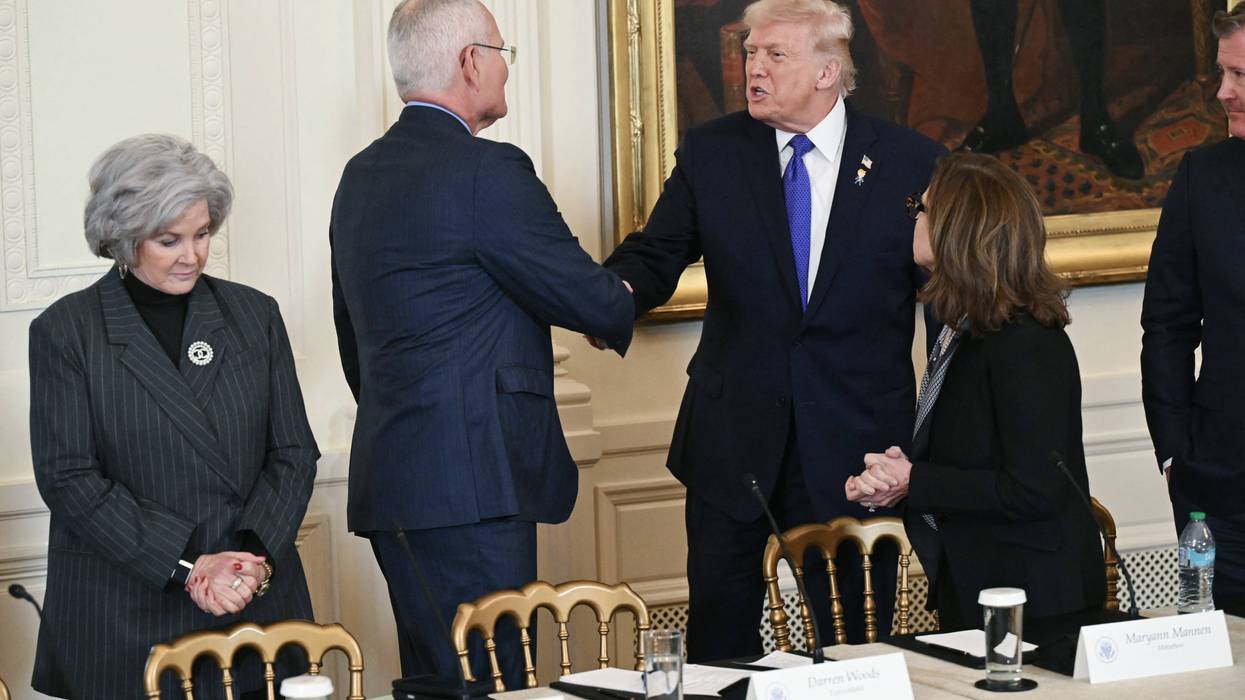
President Donald Trump announced on Truth Social on Friday that his government had "secured majority US control" of Venezuelan oil reserves containing 65 billion barrels of oil.
The announcement followed on reporting from Axios that a deal was in the works, prompting criticisms that such a move would be "colonial" and calls for Congress to reject any such proposal.
"Let's be clear: This isn't a win," Sen. Chris Van Hollen (D-Md.) wrote on social media in response to the announcement. "This is proof Trump put our service members at risk to get Venezuelan oil for his billionaire buddies. Putting our soldiers’ lives on the line for private profit is a gross dereliction of his constitutional duty."
When US forces invaded Caracas and kidnapped Venezuelan President Nicolás Maduro and his wife First Combatant Cilia Fores on January 3, Trump's own words following the invasion confirmed suspicions that he acted largely to gain access to the country's oil.
"These are some of the largest crimes of our lifetimes."
“We’re going to get the oil flowing the way it should be,” he said in a press conference following the attack.
Friday's deal, which seems like an attempt to make good on that promise, was also announced by Secretary of State Marco Rubio and acting Venezuelan President Delcy Rodriguez, who provided more details.
According to Venezuelanalysis:
Rodríguez stated that the deal will involve private corporations developing 17 “strategic fields” with 65 billion barrels of proven reserves. She echoed Rubio’s $100 billion investment claim and pledged that the projects would yield $209 billion in tax revenues. According to the acting president, the announced agreement “ushers in a new era of growth and prosperity.”
However, economist Francisco Rodríguez, a senior research fellow at the Center for Economic and Policy Research, argued that the agreement was actually a bad deal for Venezuelans.
"President: According to your figures, this agreement will generate tax revenues of just $3.22 per barrel of Venezuelan oil. This represents 4.7% of the current price, and less than half of the royalty rate contemplated in concessions granted by Juan Vicente Gómez," he wrote on social media, addressing the current Venezuelan leader and referring to a Venezuelan dictator from the early 20th century.
Joseph Bouchard, a journalist and researcher who focuses on Latin America, agreed with Rodriguez's criticism of the deal, writing on social media that "Trump [was] 'generously' buying billions of barrels of Venezuelan oil at less than 5% its market price. He's stealing their oil for his own family and cronies' profit. Guessing this may be used as a chip to manipulate the midterms. These are some of the largest crimes of our lifetimes."
Francisco Rodriguez had earlier pointed out that the deal violated the Venezuelan Constitution, which holds that all minerals and hydrocarbons are “inalienable public domain," according to Venezuelanalysis. For the deal to go through, therefore, Venezula would have to alter its Constitution.
Former head of Human Rights Watch Kenneth Roth noted on social media that "senior Venezuelan officials, all fearing arrest, are hardly in a position to negotiate vigorously, making the whole thing seems like one big military theft."
On the plus side, no one has to argue whether the United States is imperialist anymore. https://t.co/nsb87JUARw
— Dean Baker (@DeanBaker13) August 29, 2026
Trump is under pressure to lower gas prices that have spiked due to the fallout of his war on Iran, which entered its sixth month on Friday, and promised in his announcement, "This Historic Transaction MORE THAN DOUBLES American Oil Reserves, greatly increases our Oil Supply, and will substantially lower Gas Prices for all Americans, long into the future."
However, The Associated Press pointed out: "A significant drop in US gas prices tied to the agreement should not be expected immediately. Experts have repeatedly warned that a substantial boost in Venezuelan oil production will not happen quickly as repairing and expanding infrastructure takes years and requires billions of dollars."
Exploiting Venezuela's oil reserves would also exacerbate the climate crisis, which just this summer intensified a deadly heatwave in Europe and is supercharging an El Niño that could contribute to a significant increase in food prices in 2026 and 2027.
Keep ReadingShow Less
See More
Most Popular