SUBSCRIBE TO OUR FREE NEWSLETTER
Daily news & progressive opinion—funded by the people, not the corporations—delivered straight to your inbox.
5
#000000
#FFFFFF
To donate by check, phone, or other method, see our More Ways to Give page.


Daily news & progressive opinion—funded by the people, not the corporations—delivered straight to your inbox.

Rachel Myers, (212) 549-2689 or 2666; media@aclu.org
In
an important step toward upholding and promoting the United States'
commitment to international human rights at home, President Obama
announced Thursday that the U.S. will lend its support to the U.N.
Declaration on the Rights of Indigenous Peoples (UNDRIP). The decision
is a reversal of the position taken by the Bush administration in 2007,
when the U.S. voted against UNDRIP even as 145 nations supported it.
The American Civil Liberties Union and the Human Rights at Home
Campaign (HuRAH Campaign) have long called for unqualified endorsement
of UNDRIP, which articulates the rights set forth for indigenous peoples
in the Universal Declaration of Human Rights.
The following can be attributed to Jamil Dakwar, Director of the
ACLU Human Rights Program and steering committee member of the HuRAH
Campaign:
"We commend the Obama administration for endorsing this important
declaration and rectifying the Bush administration's rejection of an
essential human rights document. Unqualified endorsement of this
declaration is essential to protecting the rights of all indigenous
peoples, especially Indian and Alaska Native nations in the United
States. The administration should work in close partnership with
indigenous peoples and tribal governments to address the serious human
rights challenges that continue to face indigenous communities in this
country."
The following can be attributed to Laura W. Murphy, Director of the ACLU Washington Legislative Office:
"Guaranteeing basic human rights for our indigenous population should
be considered a priority and we are happy to see that the Obama
administration agrees. We will continue to work with Congress and the
administration to ensure that it remains so. We are hopeful this
endorsement will lead to a renewed effort to bolster human rights
protections both here in the U.S. and abroad."
The following can be attributed to Professor Lisa Crooms, chair of the HuRAH Campaign:
"The Obama administration's endorsement of the Declaration is a welcome
first step towards matching U.S. rhetoric on human rights with concrete
actions. Effective promotion and implementation of the declaration will
require the administration to work in full partnership with indigenous
peoples and civil society to build a human rights infrastructure here at
home."
The ACLU and the HuRAH Campaign also urged the Obama administration to
issue an executive order to reconstitute the Inter-Agency Working Group
on Human Rights, which is essential to promoting and implementing UNDRIP
and other declarations and ratified treaties across the government.
The U.N. Declaration on the Rights of Indigenous Peoples is available online at: www.un.org/esa/socdev/unpfii/en/drip.html
The HuRaH statement in support of the UNDRIP is available here: www.hurahcampaign.org/wp-content/uploads/2010/12/UNDRIP-HuRAH-Statement.pdf
The American Civil Liberties Union was founded in 1920 and is our nation's guardian of liberty. The ACLU works in the courts, legislatures and communities to defend and preserve the individual rights and liberties guaranteed to all people in this country by the Constitution and laws of the United States.
(212) 549-2666"Trump is once again in power, and he is again telling us his plan. He has weaponized the entire federal government—including the Department of Justice and the US Postal Service—to make voting more difficult."
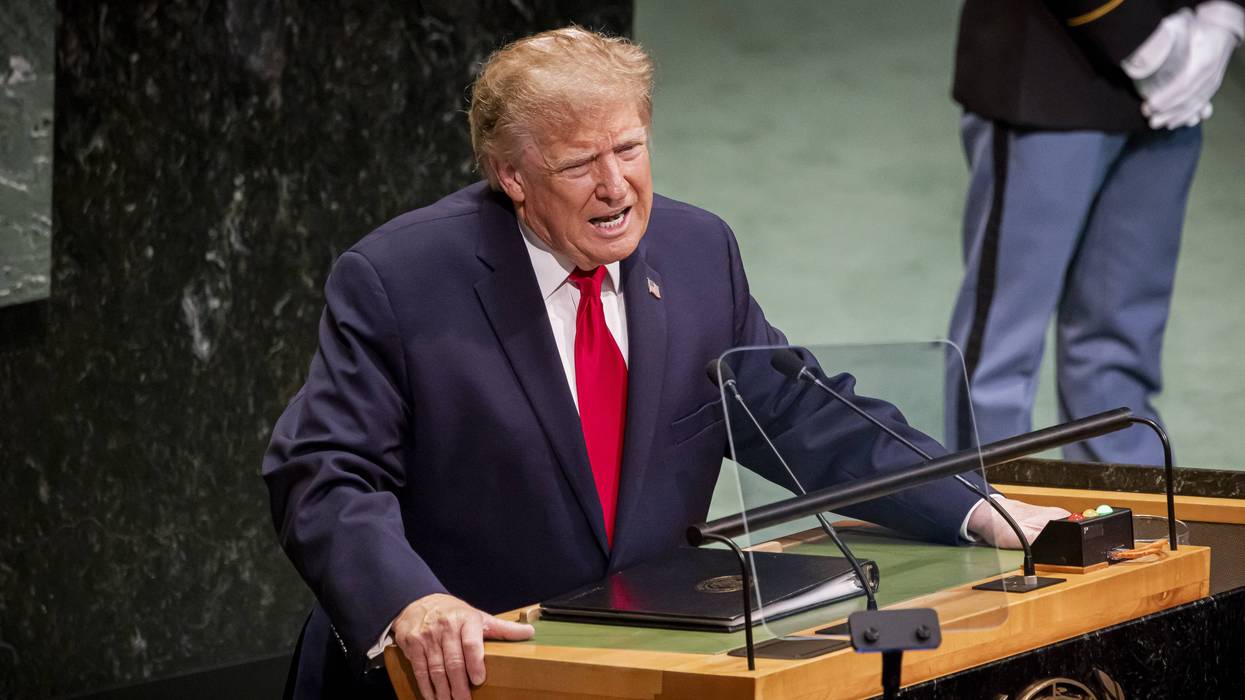
With just four weeks to go until the 2026 midterm elections, democracy watchdogs are warning that President Donald Trump is breaking the law in a desperate bid to retain Republican control of the US Congress.
A Monday report in USA Today highlighted the unprecedented steps that Trump is taking to rig the midterms for the GOP, ranging from his promises to pay every American $5,000 if Republicans retain Congress, to his efforts to get the US Postal Service to not deliver ballots to voters, to his push to have Republican-led states redraw their electoral maps in the middle of the decade.
Adav Noti, executive director of the Campaign Legal Center, told USA Today that the president has shown he is willing to behave lawlessly to keep power.
"I think the president is trying to use all of the powers at his disposal to control the election results, and almost all of those efforts are illegal," Noti said, "but that has not deterred the administration."
Noti added that Trump has gone well above and beyond what any past president has done to meddle in elections.
"We've never seen anything like this before," he said. "The issue of the president of the United States using the powers of the presidency to try to control the election. That is a new development with this election."
In an analysis published by Democracy Docket on Monday, election attorney Marc Elias warned that Trump in the coming weeks could take even more extreme steps, many of which he has already mused about publicly.
"Trump is once again in power, and he is again telling us his plan," Elias explained. "He has weaponized the entire federal government—including the Department of Justice and the US Postal Service—to make voting more difficult."
The "most dangerous" threat Trump has made, Elias continued, has related to the counting, tabulation, and certification of votes.
"Despite what the US Constitution says, he has repeatedly claimed the power to direct this process," Elias warned. "This is not a new idea. It has been his plan all along."
Elias also slammed the US media for continuing to downplay Trump's authoritarian attacks on democracy, arguing that the press has learned nothing since the president incited a violent attack on the US Capitol on January 6, 2021.
Elias isn't alone in his concern about another January 6-style event.
In an interview that aired on CBS News Sunday, retiring US Sen. Thom Tillis (R-NC) was asked about the potential for Trump to try to overturn Democratic victories in this year's elections, and he expressed real concern.
"I think there's a risk," Tillis said. "I really do. It would be another political unforced error if we do that."
Condemning the "illegal campaign of extrajudicial killings" as "murder at sea," Amnesty International USA asked, "Where is Congress to stop the horror?"
US President Donald Trump's boat-bombing spree continued on Sunday despite condemnation from around the world, claiming four more lives and bringing the death toll from the 13-month campaign to at least 238.
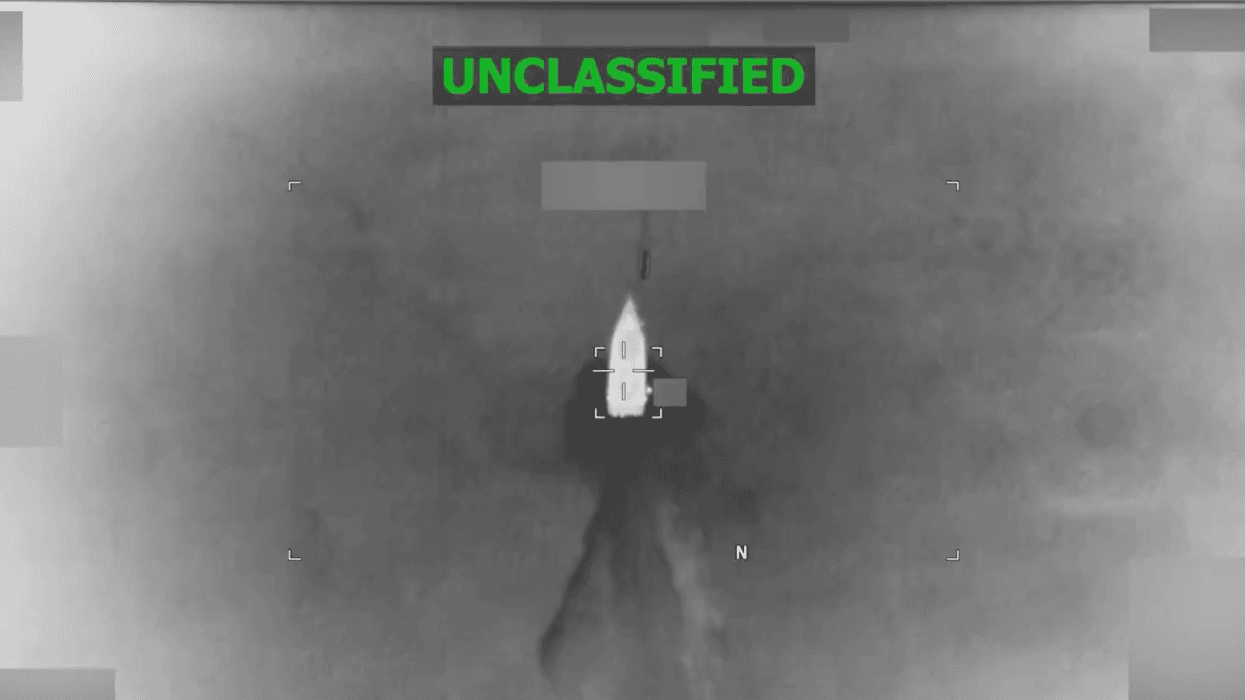
Sharing a video of the strike, US Southern Command said on social media late Sunday that "under the direction of SOUTHCOM, Joint Task Force Western Hemisphere executed a lethal, kinetic strike on a go-fast vessel operating along established narco-trafficking routes in the Caribbean."
"Confirmed intelligence revealed the vessel's active involvement in narco-trafficking," SOUTHCOM continued, without offering any evidence, as with at least 70 previous strikes since September 2025. "The operation killed four narco-terrorists."
Citing a federal memo that it aims to keep concealed from the public, the Trump administration claims to be at war with drug cartels and that the killings in the Caribbean Sea and Pacific Ocean are justified. Legal experts and human rights advocates argue the bombings are at least war crimes, if not outright murder.
Sunday's strike was the administration's first confirmed boat bombing since Ben Saul, the United Nations special rapporteur on human rights and counterterrorism, said last month that even if the targeted vessels were engaged in drug trafficking, there are no "international legal rights to unilaterally use military force" to counter cartels.
After SOUTHCOM's announcement, Gizmodo reporter Matt Novak declared, "We murdered four more people in a boat today."
Brian Finucane, a former State Department legal adviser who now advises the US Program at the International Crisis Group, called it "more performative killing at sea."
Highlighting the rising death toll from Trump's "illegal campaign of extrajudicial killings, ie, murder at sea" initiative, Amnesty International USA asked, "Where is Congress to stop the horror?"
The Republican-controlled Congress has declined to pass war powers resolutions intended to stop the strikes—though the odds of passage could change if Democrats reclaim one or both chambers in next month's midterm elections.
Trump's bombing spree has apparently been not only illegal but ineffective. The Washington Post reported in July that a Drug Enforcement Administration analysis concluded that the boat-bombing campaign has not "reduced the amount of cocaine entering" the United States.
"The yellow line cannot be treated simply as a line on a map. It has become a mechanism of encirclement and ethnic cleansing."
A year after a so-called "ceasefire" deal established the Israel Defense Forces' "yellow line" in Gaza, separating the IDF-controlled eastern part of Gaza from about 47% of the strip that was originally set aside for Palestinians, the Israeli military has crept westward, block by block—effectively "asphyxiating" Gaza's population of 2.1 million people, as one aid group said Monday.
Médecins Sans Frontières (MSF), also known by its English name, Doctors Without Borders, said that the US-backed IDF now occupies about 65% of the Gaza Strip, "squeezing people into a smaller and smaller area" and leaving Palestinians uncertain about where the yellow line begins and ends as they are forced to repeatedly move.
"People risk being shot by Israeli forces when they approach it, and MSF teams continue to treat people with gunshot wounds sustained nearby," said the organization.
MSF released its statement on the shifting yellow line and the organization's struggles to provide medical aid for Palestinians days after the Danish Refugee Council reported on refugee camps near the boundary, where 80% of Palestinians interviewed by the DRC said they've faced water shortage and people reported rat and rodent infestations, continued food scarcity despite a ceasefire deal that required a ramp-up of humanitarian aid, and rapid spread of illnesses.
DRC accused Israel of "a policy of protracted displacement," which was supported by MSF's reporting Monday.
"The October 2025 ceasefire in Gaza was supposed to end civilians' suffering," said DRC. "Nearly a year on, it exists largely in name only. Displacement in Gaza has not ended; it has changed shape."
The United Nations Office for the Coordination of Humanitarian Affairs (OCHA) also warned last month about the IDF's gradual push westward through demolitions and the movement of military forces, noting that residents have continued living in neighborhoods adjacent to the yellow line, such as Al-Tuffah and Al Zaytoun in Gaza City, "because they have nowhere else to go."
"Where do we go? This is a question we’ve been asking ourselves for three years,” Safaa Mushtaha of Al-Tuffah told OCHA. “We accepted living near the yellow line, but it’s become unbearable.”
Ibtisam Malika, who also lives near the line, added that "every two to three months, we are forced to move and leave our belongings behind."
MSF described how families are being "pushed into overcrowded and unlivable conditions" and how the group's ability to deliver clean water has been impeded when there are attacks near the yellow line.
"The yellow line cannot be treated simply as a line on a map,” says Amande Bazerolle, head of emergency response for MSF in Gaza. “It has become a mechanism of encirclement and ethnic cleansing, while cutting communities off from the infrastructure, healthcare, water, and other essentials they need to survive.”
The medical aid group treated more than 1,500 cases of chickenpox in June and July, and has treated more that 11,000 cases of skin disorders including scabies this year.
One official said a majority of Palestinians in Gaza have less than six liters of water per day for drinking, bathing, and other domestic uses, and Israeli restrictions on the delivery of many items—ones that authorities claim are "dual-use" and could be used by Hamas for military purposes—have left families and medical providers without essentials.
“We are treating gastroenteritis, acute respiratory infections, a lot of skin conditions, hepatitis, bacterial skin infections, scabies, and lice," said Dr. Murad Asaliyya, medical activities manager for MSF in Gaza. “At the same time, we are facing severe shortages in terms of medical supplies. Even the cream we need to treat scabies has been restricted by the Israeli authorities.”
Other crucial items that have been restricted by Israel include engine oil and spare parts, "crippling the infrastructure needed to keep hospitals, ambulances and water systems running," said MSF.
MSF emphasized that the area near the yellow line is hardly the only part of Gaza where Palestinians face continued Israeli attacks. In June and July, the group's medical teams treated more than 1,200 cases of "violent trauma" across the strip, "including blast injuries, burns, gunshot wounds, and injuries resulting from physical assault."
Since Israel began relentlessly attacking Gaza in October 2023 in retaliation for a Hamas-led attack, the military offensive has killed more than 74,000 Palestinians, including more than 20,000 children, with experts warning that the true death toll is likely far higher. About 80% of all structures across Gaza have been damaged, said MSF.
The group released its findings as Israeli Finance Minister Bezalel Smotrich boasted in an interview about the IDF's encroachment on the territory that had been ostensibly set aside for Palestinians last year, saying the moving of the yellow line and the destruction of Gaza and its infrastructure "encourages migration" and that "a world will not be built there."
Israeli Finance Minister Bezalel Smotrich:The Gaza Strip should never be rebuilt — a memorial to sin. That is also what will encourage migration from there the most. https://t.co/EnZCIPrs9x
— Clash Report (@clashreport) October 5, 2026
“Destruction, displacement, and deprivation have become normalized—practices Israel is carrying out with impunity,” said Bazerolle. “Governments must act now to ensure Israel stops the destruction and killing, prevents ethnic cleansing, and stops denying Palestinians the means of survival.”
"This is a plan to wreck state SNAP programs and push millions off of SNAP and into hunger."
The Republican budget package that President Donald Trump signed into law last summer included a change requiring states to fund a larger portion of the costs of administering the Supplemental Nutrition Assistance Program, which provides food aid to tens of millions of Americans.
That change, which advocates and experts warned would impose unsustainable burdens on some states and potentially result in more cuts to food aid, took effect late last week, amid a nationwide affordability crisis that has forced many Americans to turn to food banks and other sources of support to meet their families' needs.
Katie Bergh, a food policy expert at the Center on Budget and Policy Priorities (CBPP), explained that—under the Trump-GOP budget law—"every state now gets half as many federal dollars to ensure SNAP gets to eligible families on time and in the right amount."
"Some states didn't increase state funding to make up for this federal funding cut, which could lead to staff shortages, backlogs, and low-income families waiting months for help," Bergh warned. "Other states and counties are weighing property tax increases or cuts to other services to fill the gap."
CBPP has estimated that more than 5 million people, including more than a million children, have lost SNAP since Trump signed the Republican budget measure into law last year.
Rep. Shontel Brown (D-Ohio) condemned the newly implemented SNAP changes in a statement, noting that Trump and the Republican Party have created new work requirements—and thus new bureaucratic burdens for states and aid recipients—while also slashing administrative funding, a potentially disastrous combination.
"It’s a devastating gut punch and it’s intentional," said Brown. "This is a plan to wreck state SNAP programs and push millions off of SNAP and into hunger."
The Food Research & Action Center estimated in a recent analysis that the new cost burden for states "ranges from $3 million in Wyoming to $168 million in New York."
"States are being asked to administer a more complicated program with fewer federal resources. That is not an efficiency strategy. It is a fiscal transfer," the group said. "Ultimately, this policy does not simply affect state agencies. It affects every family waiting for an application to be processed, every community experiencing rising food insecurity, and every state budget attempting to balance growing needs with fewer available resources."
"We have to crush these sociopaths," said one critic.
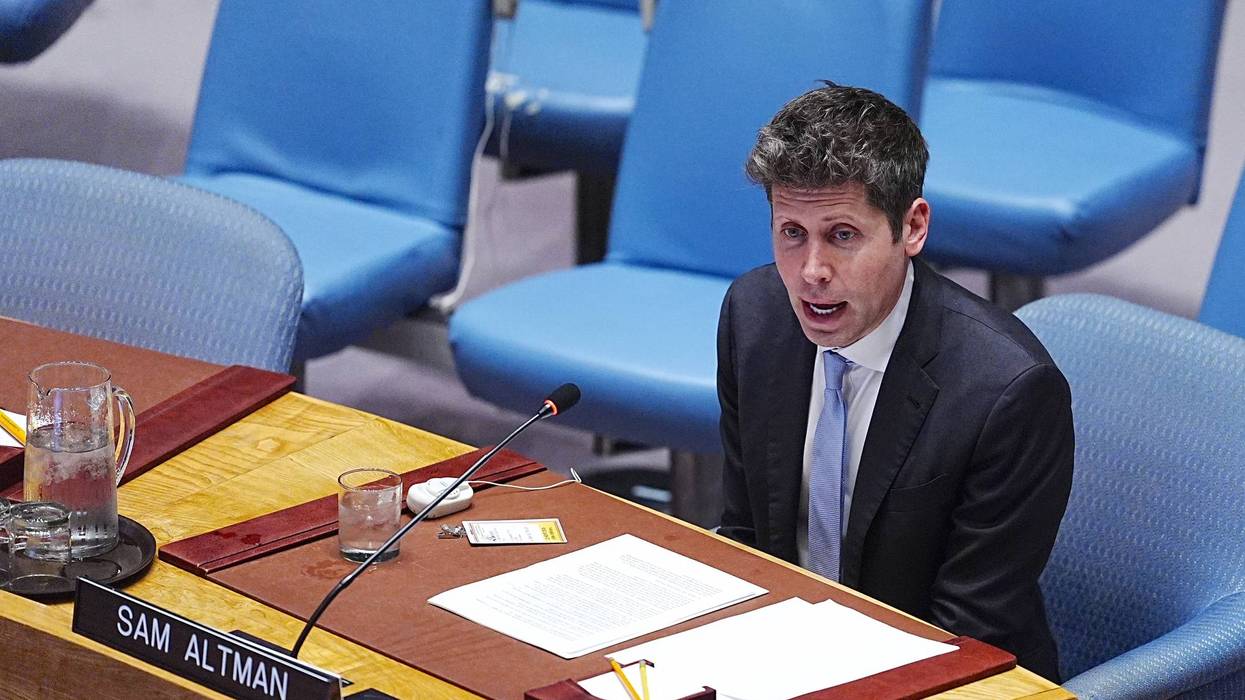
Critics of the artificial intelligence industry expressed horror after OpenAI CEO Sam Altman said the world needs to "accept some bad things happening" as the price to pay for technological advancement.
In a Sunday interview with Politico, Altman was asked where his company differs from rival Anthropic, whose CEO, Dario Amodei, has called for guardrails that will slow the pace of AI development.
"We have always been a big believer that this technology has to be democratized and put into people's hands," said Altman. "One of the biggest differences between us and some of the stricter... AI safety people is that we believe the world should accept some bad things happening for the benefits of this technology."
“We believe the world should accept some bad things happening for the benefits of this technology.”In a conversation for the first edition of Decoded, a new daily newsletter and podcast, OpenAI CEO Sam Altman talked with POLITICO’s @BrendanBordelon about trade-offs, AI safety, and how his company is different from Anthropic.Subscribe to Decoded for the full conversation with Sam Altman: https://t.co/YHJJsDOQVh
— POLITICO (@politico) October 4, 2026
Altman went on to say that one reason he's called for "lighter touch" regulation "comes with an accepting of the fact that some bad things are going to happen as society figures out the resilience."
Critics reacted furiously to Altman's blithe dismissal of "bad things" his own company's technology could cause, especially because many AI developers have warned that it could potentially wipe out human life.
Patrick Gaspard, distinguished senior fellow at the Center for American Progress, called Altman's statement "freaking insane" and said politicians cannot let the AI industry continue without any regulations.
"Our elected leaders need to move past the polling safe territory of data center resistance to the real work of regulating these narcissistic freaks," Gaspard wrote in a Sunday social media post, "who gleefully tell us that we 'need to accept some bad things' from AI for their massive profits. And they don’t even know the limits of what they’re unleashing."
Joshua Topolsky, co-founder of tech news website The Verge, completely rejected the premise of Altman's argument.
"No, I don't think this is a reasonable answer or position," Topolsky wrote, "and no one should accept it or acquiesce to it."
Commentator Wajahat Ali said Altman's statement showed the need for a political movement against the AI industry.
"We have to crush these sociopaths," Ali wrote. "The problem is that many Democrats take money from them, which means they will get bailed out at our expense in the next two to four years."
Ali's comments were echoed by Talking Points Memo founder Josh Marshall.
"A whole political movement should be stood up against this arrogant and sociopathic bullshit," Marshall wrote.
Adam Carlson, founder of Zenith Polls, said Altman's remarks were symbolic of how completely out of touch Silicon Valley executives are with ordinary people.
"To any normal, rational person who doesn’t stand to materially benefit from AI acceleration or buy their whole schtick hook line and sinker," wrote Carlson, "you genuinely just sound insane talking about 'accepting bad things' without specifying exactly what you mean."
The social media account for The Tennessee Holler offered up a satirical summary of Atlman's argument.
"Sociopath elitist tech fascists who think they’re creating God and believe democracy is the enemy," The Tennessee Holler wrote, "want us to finance our own demise to let them take over the world."
Ahead of Sunday's contest, Brazil's government and Lula's presidential campaign called for investigations into alleged Trump administration efforts to interfere in the Latin American country's politics.
Brazil's presidential election headed to a runoff on Sunday after neither incumbent President Luiz Inácio Lula da Silva nor challenger Flávio Bolsonaro—the son of former President Jair Bolsonaro and ally of US President Donald Trump—received enough votes to win outright.
The younger Bolsonaro, whose father is serving a 27-year prison sentence under house arrest for orchestrating a coup attempt in 2022, led Lula by two percentage points in the first round, with the final tally standing at 47% to 45%. The runoff will take place on October 25.
Sunday's results—which included major conservative wins in down-ballot contests—heightened fears of another far-right victory in Latin America, where candidates backed by Trump have swept to power in recent elections, including in Colombia, Peru, and Chile. Ahead of Sunday's contest, Lula's campaign, Brazil's intelligence agency, and outside observers accused the Trump administration of meddling in the high-stakes election in an effort to oust Lula and return an ally to the nation's presidency.
Just days before the election, Lula's team called for an investigation after the Trump administration halted US consular services in Brazil, citing "security concerns."
Additionally, Lula's government is calling for a probe of "alleged efforts by the United States to interfere in the country’s domestic politics through the diversion of funds to far-right causes," Al Jazeera reported last week.
"Attorney General Jorge Messias called for the probe on Thursday, one day after the British newspaper The Guardian published a story suggesting that the administration of United States President Donald Trump planned to award $1 million to right-wing civil groups opposing the Brazilian Supreme Court," the outlet noted. "Messias stated in a social media post that foreign meddling 'cannot be tolerated' and that the report represented 'an important alert for Brazilian sovereignty.'"
Mark Weisbrot, co-director of the US-based Center for Economic and Policy Research, called the Trump administration's interference "another US regime change operation," pointing to the aggressive tariffs Trump imposed on Brazilian goods last year and the US State Department's attempt to send two top officials to "cast doubt on the fairness and integrity of the country’s electoral system," as The Washington Post reported earlier this year.
Trump, who hosted Flávio Bolsonaro at the White House in May, said last week that he was following the Brazilian election "very closely" and described the contest as "very important." A key Trump ally in the region, Argentine President Javier Milei—whose austerity agenda has fueled an increase in poverty in his country—traveled to Brazil in July to support Bolsonaro's campaign against Lula.
Flávio Bolsonaro, a sitting senator, wasn't the only member of the Bolsonaro family seeking greater political power in Sunday's elections. Jair Bolsonaro's wife, Michelle, and his second son, Carlos, both won seats in Brazil's Senate.
The Guardian reported that "of the 54 senators elected, 34 were from the right or far-right."
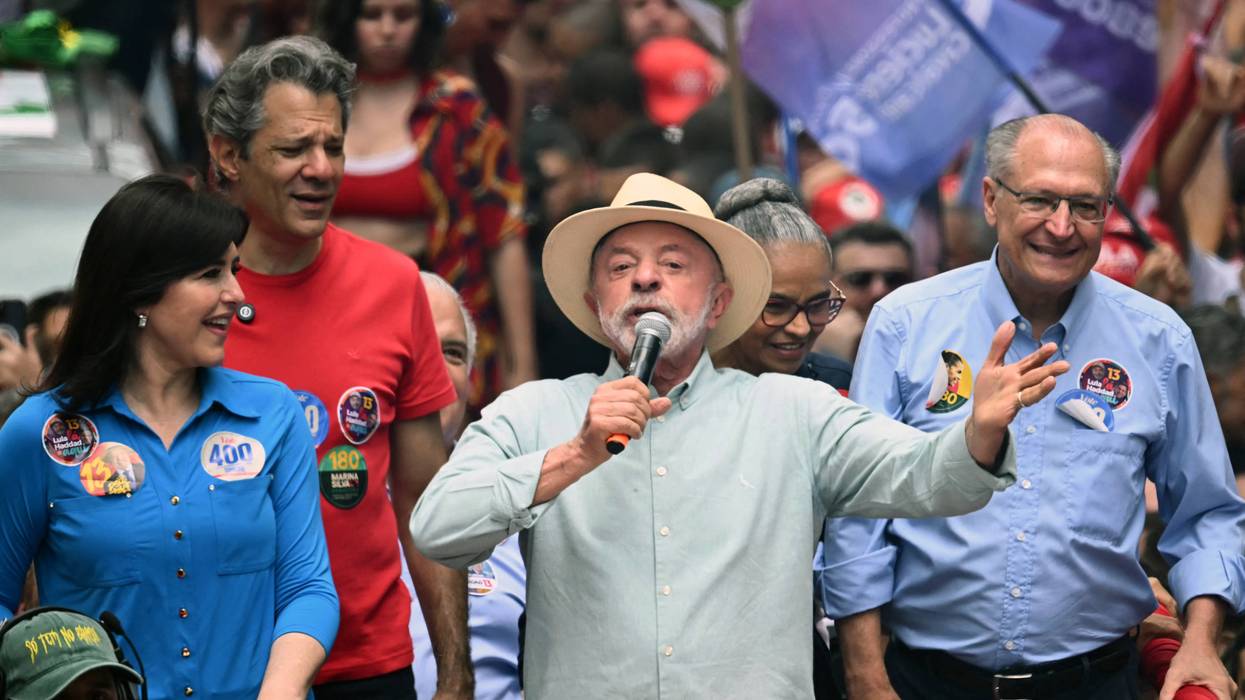
Following the results, Lula told supporters in Sāo Paulo on Sunday that "we have just had a lesson in Brazilian democracy."
"The result is often unexpected. We can never get everything we wanted. I confess to you that I was convinced I was going to win the election in the first round," said Lula. "But we have a second round."
"From tomorrow we will launch a new campaign," Lula added, "a campaign with only two candidates [where] we will be able to show the difference between our proposals for Brazil."
The US is providing military advisers and helping the Saudis choose targets in a war that has already displaced nearly 150,000 people and put much of the country on the brink of acute food insecurity.
Yemen is spiraling back toward full-scale war after its Saudi-backed government launched a major offensive on Sunday to retake territory captured by the Iran-backed group Ansar Allah, also known as the Houthis.
President Rashad al-Alimi said the armed forces would seek to retake all Houthi-controlled territory, which is home to about 70% of Yemen's population, including the capital Sanaa. He said the offensive would continue “until the country is liberated from the grip of the terrorist militia."
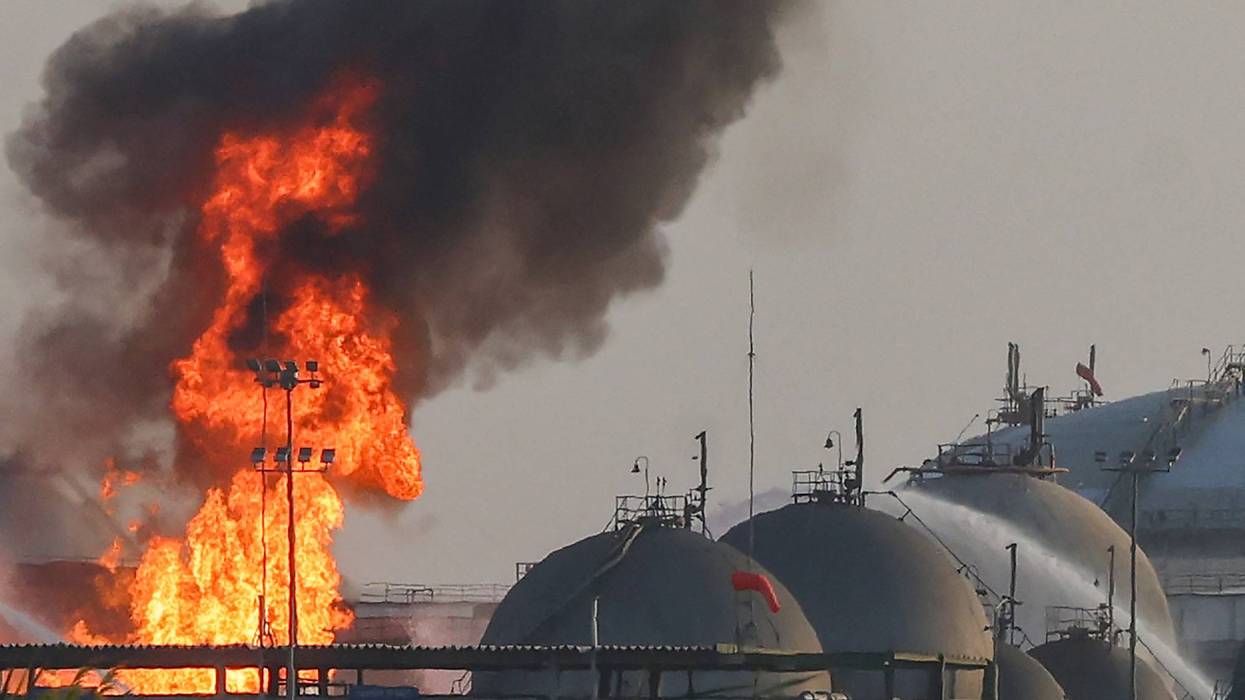
Houthi officials said Saudi forces have launched 50 air and missile attacks in the last 12 hours. As al-Alimi announced the new offensive, the Houthis responded by launching ballistic missiles and drones at Saudi Aramco oil facilities, including one near Riyadh that was engulfed in flames.
Last month, the Houthis captured major strategic areas along the Red Sea coast, giving them unprecedented leverage over one of the world's busiest shipping routes and adding to the economic stranglehold Iran is asserting by restricting travel through the Strait of Hormuz in response to US-Israeli attacks.
Earlier this month, it was reported that President Donald Trump had rebuffed Saudi Crown Prince Mohammed bin Salman's request for the US to launch airstrikes against the Houthis.
However, US officials told Axios on Friday that the military is providing Saudi Arabia with "everything short of direct combat, mainly intelligence and targeting data."
While the Saudis conduct a new campaign of airstrikes, Yemen's government could reportedly mobilize as many as 100,000 troops, one of the largest military buildups since the 2022 truce that halted the nation's brutal eight-year civil war.
That war, in which the US also provided extensive military support to a merciless Saudi air campaign, is estimated by the United Nations Development Program to have caused about 377,000 excess deaths by the end of 2021: 154,000 from the fighting itself and 223,000 from indirect effects such as hunger, disease, and the collapse of healthcare and basic infrastructure. An estimated 259,000 of those deaths were of children under 5.
Even before Sunday's escalation, renewed fighting was already fueling a major displacement and hunger crisis. More than 149,000 people have been driven from their homes, according to the International Organization for Migration. Meanwhile, the World Food Program says fighting has disrupted food delivery routes, placing 18.3 million Yemenis at risk of acute food insecurity.
Researcher Muhammad Shehada reviewed all 170 names on the IDF's list of supposed militants posing as journalists and found it to be "the most sloppy shameless fraud possible."
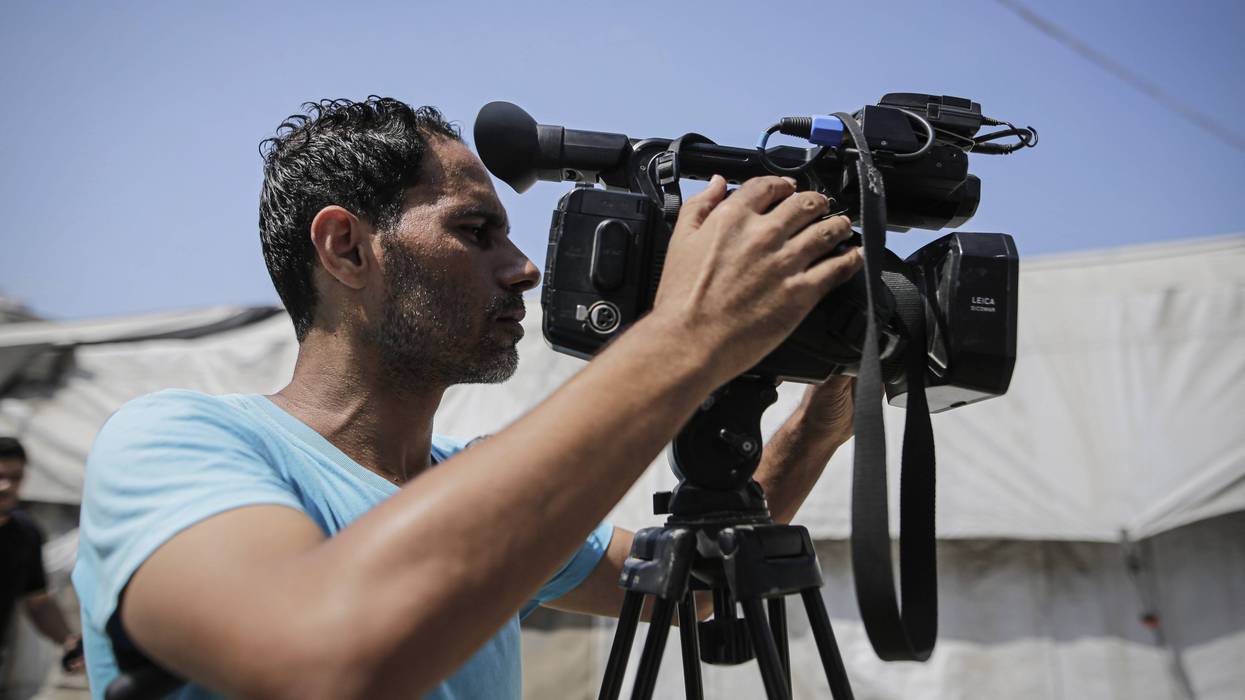
Seeking to discredit reports of its unprecedented killing of journalists in Gaza, the Israel Defense Forces last week published a list of 170 slain Palestinians it claimed were not legitimate media workers but members of "terrorist groups."
Palestinian political analyst Muhammad Shehada, a visiting fellow at the European Council on Foreign Relations, reviewed every single entry on the list. He called it "the most sloppy shameless fraud possible."
Israeli officials and Western supporters have trumpeted the IDF's list as a counter to findings by groups like International Federation of Journalists, which has described Israel's nearly-three-year-old-war in Gaza as “the deadliest period in the history of journalism" and cataloged at least 240 journalists and media workers killed.
Reporters Without Borders (RSF) has found dozens of cases in which it concluded journalists were targeted deliberately because of their reporting and filed multiple complaints with the International Criminal Court (ICC) alleging war crimes against the press.
The database, which the IDF refers to as the "Press Files," says "that claim does not tell the full story" and states that "individuals presented as innocent journalists were, in fact, militants in the military wings of Hamas, Palestinian Islamic Jihad (PIJ) and other terrorist organizations."
The IDF claims the list was the product of an “in-depth investigation” consisting of open-source information, documents recovered by Israeli forces in Gaza, interrogations of alleged Palestinian militants, and intelligence gathered during military operations.
But as Shehada explained in a thread posted to social media on Sunday, "In the overwhelming majority of those listed, the IDF presents ZERO credible evidence. In most of them, their pages are literally blank."
In 59 cases, Shehada found that the IDF did not provide any evidence for its claim that a journalist was a member of Hamas or PIJ other than that the claim was "based on multiple intelligence sources."
Shehada said this amounted to essentially saying "trust me, bro," which is especially insufficient given the numerous instances in which the IDF has been found to have misled the public about its responsibility for certain attacks, like the killing of 5-year-old Hind Rajab in 2024.
In another 42 cases, Shehada found, the IDF provided only decontextualized "snippets" of files, which were "undated and unspecified." Without more information, Shehada said, this is "not... evidence of anything."
"Those snippets could be taken from random files; they could be outdated or fabricated," Shehada said, pointing to previous cases in which purported Hamas intelligence circulated by Israeli sources was later revealed to be misleadingly presented as fabricated.
Shehada pointed to specific cases in which Israel's allegations against specific journalists have been undermined by the underlying evidence.
Israel claimed that Al Jazeera reporter Ismail al-Ghoul, whom the IDF killed in July 2024, was an operative with Hamas' elite Nukhba wing and released a supposed Hamas personnel document as proof.
But as Reporters Without Borders has previously explained, the document says al-Ghoul, born in 1997, received a military rank in 2007, when he was 10, while elsewhere saying he joined in 2014. It also identifies him as an engineer, contradicting the IDF’s description of him as a Nukhba fighter. Israeli troops also detained al-Ghoul at al-Shifa hospital months before he was killed but released him after 12 hours.
The case of Anas al-Sharif, another Al Jazeera journalist killed in 2025, is similar. As Shehada documented for +972 magazine last year, al-Sharif was seriously injured in 2017, listed in a military context in 2019, but described as “suspended” and “unassigned” by 2023—while another document nevertheless portrays him as an elite Nukhba fighter. He was also reportedly detained and released by Israeli forces during the 2024 al-Shifa raid.
In other cases, the IDF's evidence outright debunks the military's own claims. For instance, Israel labeled photojournalist Hassan Aslih—killed by an airstrike at Nasser Hospital in Khan Yunis in May 2025—as a "military operative." But the 2019 Hamas document provided as evidence for this lists him as a "photographer" involved with "media services."
While the document, if authentic, does establish a relationship between Aslih and Hamas' Qassam Brigades at least six years before his death, this does not make him a legitimate target under international humanitarian law, which distinguishes between those who have a “continuous combat function" and those who provide political or other indirect forms of support, like media coverage.
Shehada found at least seven cases in which the only evidence provided by the IDF was photos of slain journalists holding guns. In another 12 cases, the IDF provided undated photos of journalists allegedly taking part in Hamas or PIJ military activities.
Shehada noted that many prominent Israeli journalists also have past military service, such as Axios correspondent Barak Ravid, who was an IDF reservist until 2023. "Does that make him a 'legitimate target'? or a non-civilian forever?" Shehada asked.
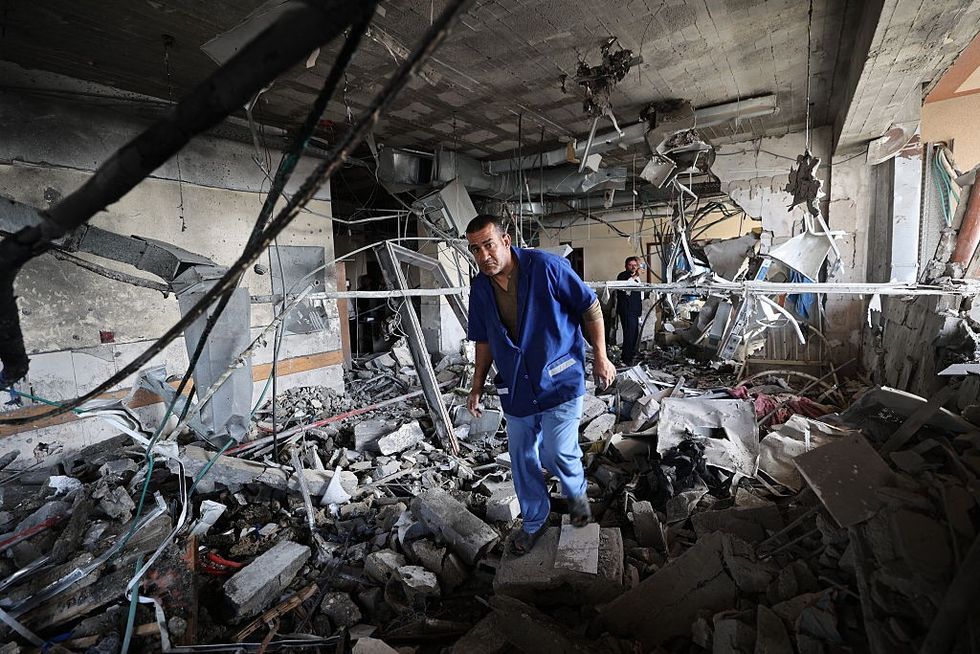
The distinction between past military affiliation and active combatant status has been a repeated source of dispute for press freedom groups that have attempted to tally the number of journalists killed.
Last month, the Committee to Protect Journalists (CPJ) completed a sweeping review of 229 deaths after Hamas and PIJ published obituaries identifying some people listed as journalists as members of armed groups.
CPJ ultimately removed 22 people from its list, including some it found had participated in combat—but retained others despite militant obituaries, gun photos, or past organizational ties when the evidence did not establish active combatant status.
The "Press Files" database contains 49 cases in which the main piece of evidence is one of these obituaries. Among them are people who CPJ examined and concluded were not active combatants, such as photojournalist Amr Abu Odeh—a 26-year-old freelance photographer for the Anadolu Agency and Reuters—whom the IDF database labels a Hamas "squad commander."
CPJ examined photos of Odeh wearing a military uniform, which came from a 2021 military training course with Gaza's Ministry of the Interior. The group noted that "No armed factions in Gaza have claimed Abu Odeh as being affiliated with them, and the IDF has not alleged he was involved in combat."
"In multiple cases, despite obituaries by Hamas/PIJ, the Committee to Protect Journalists investigated thoroughly and concluded those journalists were NOT engaged in any militant activity during the genocide," Shehada wrote. "They may have in the past. That doesn't make them combatants forever."
He added that the flimsiness of the IDF's evidence was more striking given the sophistication of the intelligence unit it uses to "dig up dirt" on journalists to provide post hoc justification for their killings, which has been referred to internally as the "Legitimization Cell," which was revealed in a +972 investigation.
"If that's all they can provide as "evidence" (e.g. blank pages, random snippets, outdated docs) despite having formidable resources," Shehada wrote, "then it's a vindication of Gaza's journalists!"
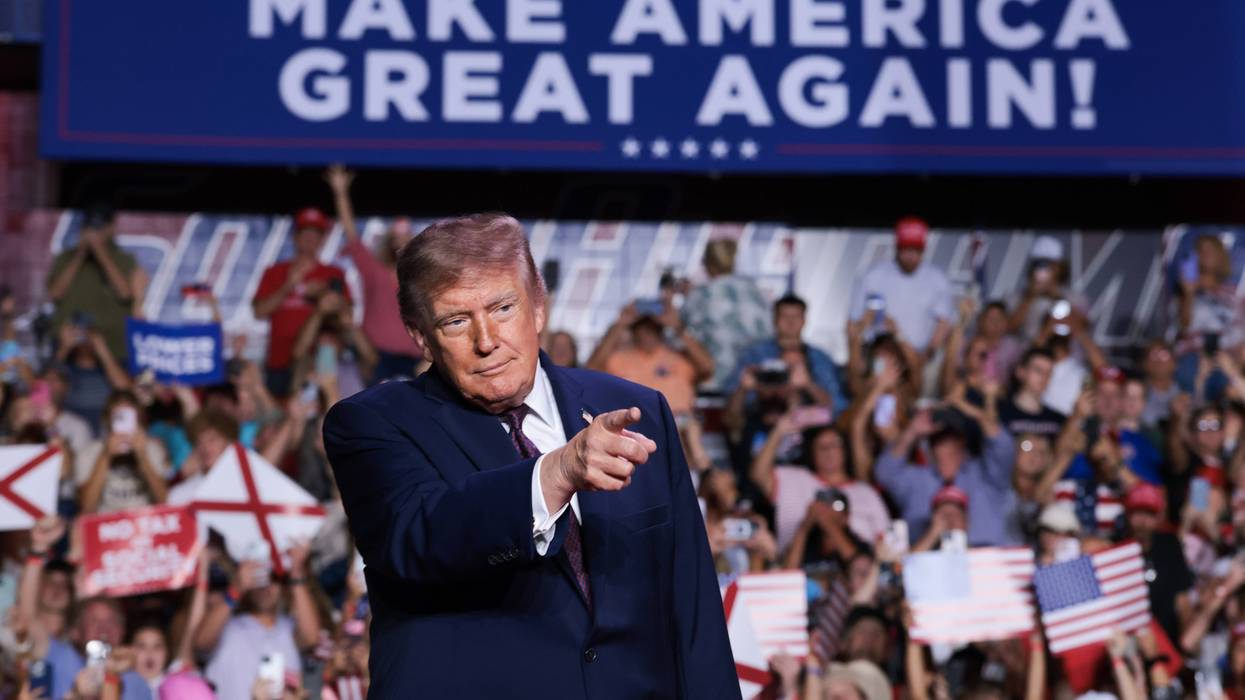
"At this point, Trump’s economic policy is starting to look less like governing and more like Publishers Clearing House with a campaign logo."
With the midterm elections just weeks away, President Donald Trump announced on Friday that more than 20 million Medicare Part B beneficiaries will receive a one-time $90 payment this month.
Trump, who declared on Truth Social that his administration would send out "checks," said the money will come from the $2 billion Medicare Improvement Fund and is expected to appear in seniors' bank accounts around October 8.
The $90 payment is not even enough to cover half of the standard monthly Medicare Part B premium payment, which is about $202. But Trump described the comparatively small payment as proof that Americans could trust his promise of a much heftier windfall if Republicans prevail in next month's elections.
"Because I delivered on this very important issue for the American people, they can also rest assured the highly popular $5,000 Trump Dividend will be distributed to every U.S. Citizen if, and when, the Republicans win the Midterm Elections!" Trump said.
Americans have reason to be skeptical that they will ever see such a payout. Although roughly 1 million unsubsidized Affordable Care Act enrollees are currently receiving $500 payments, Trump has on several other occasions floated or promised Americans larger sums of free money that never materialized.
In February 2025, he proposed $5,000 "DOGE dividend" checks for Americans, purportedly funded by savings generated by Elon Musk's Department of Government Efficiency, but the payments were never authorized by the GOP-controlled Congress.
That November, he promised that most Americans would receive tariff payments of "at least $2,000 a person," but Congress has still not authorized them nearly a year later.
Sending all 240 million adult citizens a $5,000 check, as Trump has promised to do if the GOP wins the midterms, would cost an estimated $1.2 trillion.
"At this point Trump’s economic policy is starting to look less like governing and more like Publishers Clearing House with a campaign logo," remarked the Indiana-based political commentator Mike Young.
Sen. Ron Wyden (D-Ore.) described the payments as "Trump's latest attempt to bribe the American public," arguing that $90 amounts to a pittance compared with the higher costs seniors are facing under Trump's policies.
"This year, Trump handed seniors a $200 monthly Medicare premium for the first time ever, and he also shoveled $20 billion in extra payments to insurance companies selling private Medicare plans,” Wyden said. “This is another desperate attempt by a failed president to escape Americans’ revulsion with his failed agenda, amounting to one tank of Trump-inflated gas.”
"Often at the request of the Bolsonaro family, the US has engaged in a pressure campaign to weaken the Lula government," explained one analyst.
Just two days before Brazil's closely watched presidential election, the campaign of its left-wing president, Luiz Inácio Lula da Silva, has asked the nation's top election court to examine the sudden shutdown of US consular services as part of a broader investigation into alleged election "interference" by the Trump administration.
On Friday night, the US suspended in-person consular services at its embassy and consulates across Brazil on Friday and advised Americans to avoid US diplomatic facilities, citing unspecified "security concerns."
In a petition filed to Brazil's Superior Electoral Court, Lula's campaign said taking such an action just days before Brazilians vote "projects instability over the electoral environment," something it said was part of a larger "infrastructure of external intervention in the Brazilian electoral process.”
In recent days, Brazil's intelligence agency said it confirmed the existence of interference by the US in Brazil's election to support Sen. Flavio Bolsonaro, the son of former far-right President Jair Bolsonaro—who is currently serving a 27-year prison sentence under house arrest for orchestrating a coup attempt in 2022.
"Although Trump has not formally endorsed him, Bolsonaro is undoubtedly Washington’s preferred candidate," explained Nick Cleveland-Stout, a research associate at the Quincy Institute for Responsible Statecraft, on Friday. "Often at the request of the Bolsonaro family, the US has engaged in a pressure campaign to weaken the Lula government, sparking fears of further interference."
Trump responded with hostility to the prosecution of the disgraced ex-president—imposing tariffs of up to 50% on Brazilian imports in retaliation, sanctioning the Supreme Court justice overseeing the case, and threatening to use American "military might" against Brazil.
He's also designated two Brazilian crime groups as "narcoterrorist" organizations, invoking a similar pretext Trump used to justify his invasion of Venezuela to kidnap its leader Nicolás Maduro in January.
As the election has approached, Trump has appeared to put his thumb on the scale in an effort to stop Lula from achieving what would be an unprecedented fourth term.
In July, the US consulate in São Paulo invited right-wing pro-Bolsonaro social media influencers to a closed-door roundtable meeting to discuss “freedom of expression and the digital environment.”
The Guardian reported on Thursday that the State Department was also diverting $1 million from its human rights fund to oppose "judicial overreach and censorship" by Brazil’s Supreme Court, an apparent reference to the court's actions against Bolsonaro and his allies.
The Brazilian government has denied visas to two State Department officials whom it said were seeking to discuss "election integrity," which it perceived as an effort to “undermine the electoral system.”
Trump and his allies have previously spread baseless conspiracy theories to cast doubt upon Lula's victory in 2022, which helped to fuel the failed coup. They've done the same with the victories of other left-wing candidates in Latin American elections—including Bolivia's Evo Morales in 2019 and Guatemala's Bernardo Arévalo in 2023.
Lula's campaign said the sudden US suspension of consular services was "yet another extremely serious development in the interference in Brazilian elections by the US government," alleging that it was "coordinated, by all indications, directly by the brothers Flávio and Eduardo Bolsonaro.”
The filing noted that even “the legislative branch of the foreign state itself… recognizes the pattern of external pressure." It pointed to a letter sent earlier this week by Democratic US Sens. Jeanne Shaheen (NH), Peter Welch (Vt.), and Tim Kaine (Va.) to Secretary of State Marco Rubio, which said that "the administration’s most recent actions point toward an effort to interfere with, and potentially undermine, Brazil’s general election in October."

The first round of Brazil's election will begin on Sunday. Should neither candidate receive 50% of the vote, a runoff between the top two candidates will be held on October 25. Several major polls show Lula with a narrow first-round lead entering Sunday, although others have the race effectively tied or Bolsonaro slightly ahead.
But Lula has also seized upon Trump's meddling to portray Bolsonaro as a tool of foreign powers, drawing on a history of US-backed coups and election interference that have undermined Brazilian democracy.
“Flávio Bolsonaro is Trump’s candidate and what Trump wants is to colonize Brazil, take our riches, steal our future and leave us in the dust," said a campaign ad that began airing last week.
The Trump administration, for its part, has continued to double down on public overtures toward imperialist ambition. On Thursday, an official US State Department social media account reposted a video created in August glorifying the 19th-century Monroe Doctrine and declaring that "American dominance in the Western Hemisphere will never be questioned again."
Dov H. Levin, a political scientist at the University of Hong Kong who recently published research on the effects of foreign election interference, told the Brazilian newspaper Folha de S. Paulo that, if too overt, Trump's intervention could backfire.
"There are cases of failure," he said, "and cases where the reaction provoked by the intervention harms precisely the side it intended to help."