

SUBSCRIBE TO OUR FREE NEWSLETTER
Daily news & progressive opinion—funded by the people, not the corporations—delivered straight to your inbox.
5
#000000
#FFFFFF
To donate by check, phone, or other method, see our More Ways to Give page.
Daily news & progressive opinion—funded by the people, not the corporations—delivered straight to your inbox.
Anna Ghosh, Food & Water Watch: 415-293-9905, aghosh(at)fwwatch(dot)org
Developers, agribusiness and construction interests would benefit
from the water bond on this fall's ballot, while public services-such as
education and public health programs-could suffer, according to a new
analysis from consumer organization Food & Water Watch.
As California's legislators return to Sacramento this week to decide
the fate of Proposition 18, an $11 billion water bond that the governor
hopes to postpone to the 2012 ballot, the group today released an
independent analysis detailing the funders of the pro-bond campaign and
the interests that stand to benefit from the most expensive water bond
in the state's history. The fact sheet, Who's Behind the Bond?, can be
downloaded here: https://www.foodandwaterwatch.org/water/california/no-water-bond/whos-behind-the-bond/
"Proposition 18 is being sold as a solution that will benefit all
Californians, but over half of the contributions to the Alliance for
Clean Water and New Jobs, the main political action committee behind the
bond, come from agribusiness, construction and development interests,"
said Elanor Starmer, Western Region Director for Food & Water Watch.
"The bond provides more money for these interests, which have
mismanaged our water in the past."
The bond would cost the state's General Fund an estimated $800
million a year, enough to fund 13,000 teachers' salaries or a quarter of
the University of California's state funding each year, according to
the report. But while taxpayers would likely see cuts to these and other
essential services if the bond passed, they would not be the main
beneficiaries of bond-funded projects.
Food & Water Watch examined campaign finance reports and other
documents to determine who contributed to the pro-bond PAC directly and
indirectly through other PACs, such as Schwarzenegger's California Dream
Team.
The group then investigated several primary beneficiaries of the
water bond based on the text of the bill and other documents. Some
beneficiaries, such as powerful Central Valley corporate farms and The
Westlands Water District, are well known. Other less obvious
beneficiaries include Warren Buffet, large construction companies like
Japan-based Obayashi Corp., and companies in the business of privatizing
water resources like American Water Company and Poseidon Resources.
The analysis concludes that these interests, not the general public,
are the main beneficiaries of the water bond, although the cost of the
bond would be borne by all taxpayers.
With polls showing lagging support for the bond, Governor
Schwarzenegger asked the legislature last month to delay the measure
until the 2012 ballot. Any adjustment to Prop 18, including
postponement, requires a two-thirds majority vote in the legislature.
The legislature has until around Aug. 20, when ballots will be printed,
to postpone or remove the measure from the ballot.
"Our report shows that the bond does not benefit the taxpayers who
would foot the bill for these projects," said Food & Water Watch's
Starmer. "In the interest of all Californians, legislators should take
this opportunity to repeal the bond and start anew, not postpone it."
Food & Water Watch mobilizes regular people to build political power to move bold and uncompromised solutions to the most pressing food, water, and climate problems of our time. We work to protect people's health, communities, and democracy from the growing destructive power of the most powerful economic interests.
(202) 683-2500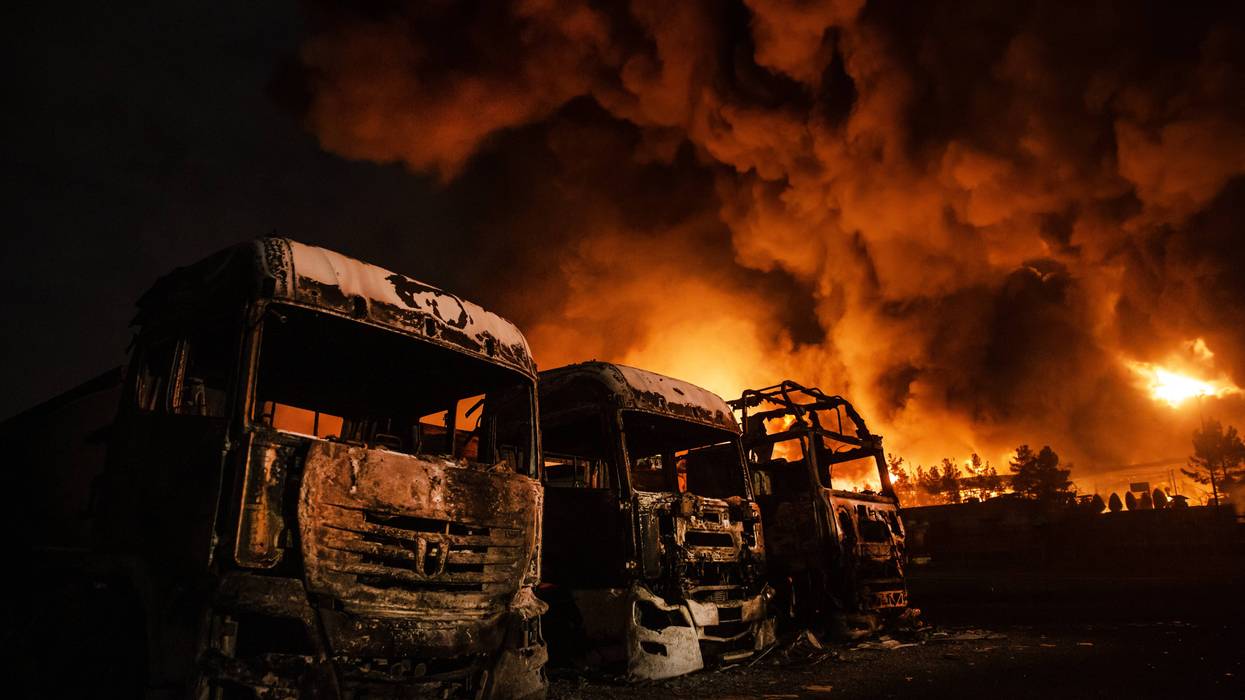
"The oil market challenges we are facing are unprecedented in scale," said the executive director of the International Energy Agency.
The International Energy Agency said Thursday that the US-Israeli war on Iran and its reverberating impacts across the region have sparked "the largest supply disruption in the history of the global oil market," with flows of crude and other fossil fuel products through the Strait of Hormuz plummeting and Gulf nations slashing production as they run out of storage space.
The agency noted in its monthly report on the state of the global oil market that "oil prices have gyrated wildly since the United States and Israel launched joint airstrikes on Iran on 28 February," pointing to "disruptions to Middle Eastern supplies due to attacks on the region’s oil infrastructure and the cessation of tanker traffic through the Strait of Hormuz," which have "sent Brent futures soaring, trading within a whisker of $120/bbl."
The IEA's report came a day after the agency's 32 member nations—including the US—agreed unanimously to release a total of 400 million barrels of oil from their emergency reserves to "address disruptions in oil markets stemming from the war in the Middle East."
"The oil market challenges we are facing are unprecedented in scale, therefore I am very glad that IEA member countries have responded with an emergency collective action of unprecedented size,” said the agency's executive director, Fatih Birol.
The IEA assessment on Thursday came as oil prices surged again as Mojtaba Khamenei, Iran's new supreme leader, vowed to keep the Strait of Hormuz closed. An estimated 20% of the world's oil passes through the route each year.
Earlier on Thursday, Iraq—which has among the largest confirmed reserves of crude oil in the world—suspended all of its oil terminal operations after two vessels were attacked off the nation's coast. NPR reported that Iran "took responsibility for attacking one of the tankers, which it said was owned by the US."
The US and Israel have also bombed Iran's oil infrastructure, choking Tehran with black smoke and spraying toxic rain that prompted warnings from the World Health Organization (WHO).
"The black rain and the acidic rain coming with it is indeed a danger for the population, respiratory mainly," WHO spokesperson Christian Lindmeier told reporters in Geneva earlier this week.
Heba Morayef, Amnesty International's regional director for the Middle East and North Africa, said Wednesay that "the potential for vast, predictable, and devastating civilian harm arising from strikes targeting energy infrastructure, including uncontrolled deadly fires, major disruptions to essential services, environmental damage, and severe long-term health risks for millions, means there is a substantial risk such attacks would violate international humanitarian law and in some cases could amount to war crimes."
“Regardless of whether a military objective is cited to justify targeting energy infrastructure, under international humanitarian law all parties have a clear obligation to take all feasible precautions to reduce civilian harm and refrain from attacks that cause disproportionate death or injury to civilians or damage to civilian objects," said Morayef. "This includes any foreseeable knock-on, indirect adverse effects on civilians’ life and health, such as exposure to toxic chemicals.”
“No one is safe from making these trade-offs,” said a researcher at Gallup, which found even insured Americans in higher income brackets have avoided daily expenses to pay medical bills.
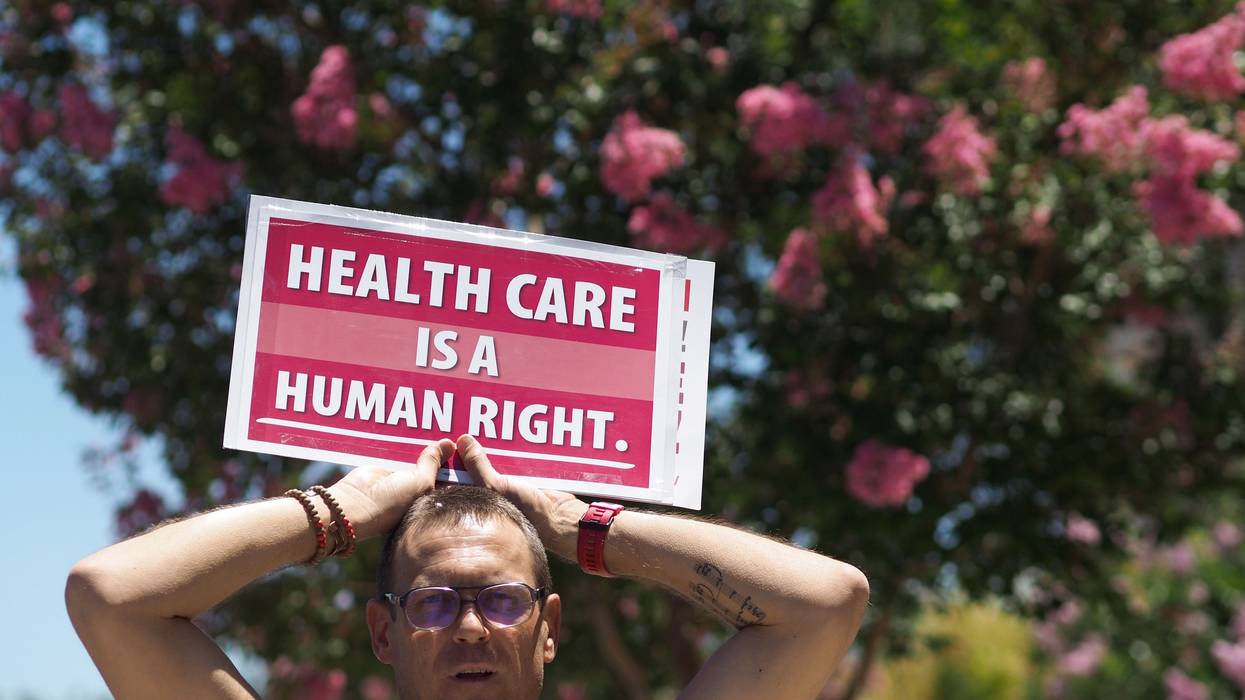
As the Trump administration spends an estimated $1 billion per day in taxpayer money bombing targets across Iran that have reportedly included an elementary school and healthcare facilities, Gallup released a survey Thursday that found one-third of Americans reported making financial trade-offs in order to pay for medical expenses last year.
The West Health-Gallup Center on Healthcare in America polled nearly 20,000 US adults between June and August 2025 and found that roughly one-third of them—equivalent to about 82 million people in the richest country in the world—were forced cut back on at least one expense in order to afford healthcare.
Eleven percent of respondents—equivalent to 28 million Americans—skipped a meal or intentionally drove less in order to pay a medical bill. Fifteen percent, the equivalent of nearly 40 million people, said they prolonged a current prescription or borrowed money, and 9% cut back on utilities.
Those numbers were strikingly similar among people who have health insurance, with 14% of insured people prolonging prescriptions to avoid paying for a new one and 9% skipping meals. Among insured Americans, 29% made at least one trade-off to afford healthcare.
The crisis is also not exclusively affecting low-income people. A quarter of people in households earning $90,000 to $120,000 per year skipped meals or other expenses to pay medical bills, and 11% of people in households earning $240,000 or more did the same.
“No one is safe from making these trade-offs,” Ellyn Maese, a senior researcher at Gallup and research director for the West Health-Gallup Center, told The New York Times.
Sixty-two percent of people without healthcare coverage were forced to make trade-offs, and 55% of people with household incomes lower than $24,000 per year as well as 47% of people earning $24,000 to $48,000 avoided expenses.
Gallup also released the results of a separate poll taken between October and December 2025, which showed how Americans are delaying major life decisions as well as altering their daily lives to afford healthcare under the for-profit insurance system.
As the Trump administration's policies slashed healthcare for 15 million Americans and raised healthcare premiums for tens of millions of people—and as the White House demanded that families have more children—6% of respondents said they had postponed having or adopting a child due to healthcare costs, equivalent to about 16 million Americans.
Nearly 30% said healthcare costs led them to avoid taking a vacation, 18% said they delayed finding a different job, 15% said they postponed pursuing education or job training, and 14% said they postponed buying a home.
The polls are “telling a consistent story here,” Maese said.
The survey results were released weeks after the Trump administration proposed new regulations for healthcare plans purchased through the Affordable Care Act marketplace that would charge deductibles as high as $15,000 for individuals and $31,000 for families to offset lower monthly premiums—underscoring how the healthcare law passed 16 years ago has left American households vulnerable to rising costs under the for-profit health insurance system.
A survey taken last November by Data for Progress found that 65% of voters support expanding the Medicare system to everyone in the US, a proposal that would save an estimated $650 billion annually.
But as Rep. Pramila Jayapal (D-Wash.)—who has sponsored Medicare for All legislation in the House—noted on Wednesday, Republicans and establishment Democrats continue to claim the proposal is unaffordable.
"When we ask for Medicare for All it’s 'too expensive,' and we 'don’t have the money,'" said Jayapal. "When the president drags us into his own personal war, no expense is spared. Our priorities are backwards."

"The very purpose of this biased and politically motivated text, which was pushed by the Israeli regime and the United States, is clear: to reverse the roles of victim and aggressor," said Iran's ambassador to the UN.
The United Nations Security Council on Wednesday adopted a resolution condemning Iran's retaliatory attacks on Gulf nations without denouncing—or even mentioning—the illegal US and Israeli bombing campaign that started the war, which has hurled the region into conflict and destabilized the global economy.
The resolution, sponsored by council member and US ally Bahrain, "condemns in the strongest terms the egregious attacks by the Islamic Republic of Iran against the territories of Bahrain, Kuwait, Oman, Qatar, Saudi Arabia, the United Arab Emirates, and Jordan," nations that host US military bases. The text calls Iranian strikes "a breach of international law and a serious threat to international peace and security," but contains no mention of the US or Israel, nations that have been accused of grave war crimes.
The council adopted Bahrain's measure by a vote of 13-0, with two abstentions—China and Russia. Both nations have veto power but declined to use it. Neither Iran nor Israel is currently a member of the Security Council.
The UN body also voted on a competing resolution, sponsored by Russia, that would have implored "all parties"—without naming any of them—to stop their military operations and avoid escalating the conflict. The resolution did not receive the nine votes necessary for adoption, with the US and Latvia voting against it and Bahrain, Colombia, the Democratic Republic of the Congo, Denmark, France, Greece, Liberia, Panama, and the United Kingdom abstaining.
Amir Saeid Iravani, Iran's ambassador to the UN, said the body's adoption of Bahrain's resolution marks "a serious setback to the council’s credibility and leaves a lasting stain on its record."
"Today’s action represents a blatant misuse of the Security Council’s mandate in pursuit of the political agendas of certain members," said Iravani. "The very state responsible for this brutal war of aggression against my country—the regime of the United States—sits on the other side of this chamber as president of the council, abusing its position while obstructing every effort to bring an end to this barbaric war against the Iranian people and preventing the Council from fulfilling its Charter-based responsibilities."
"This resolution is a manifest injustice against my country, the main victim of a clear act of aggression. It distorts the realities on the ground and deliberately ignores the root causes of the current crisis," he continued. "The very purpose of this biased and politically motivated text, which was pushed by the Israeli regime and the United States, is clear: to reverse the roles of victim and aggressor. It rewards the regimes of the United States and Israel, which have violated the UN Charter and committed acts of aggression. In doing so, it establishes impunity and sends a wrong message to the international community—emboldening the aggressors to commit further crimes."
"The UN and International Criminal Court were created for moments like this, when the most powerful decide the rules do not apply to them."
Ahead of the vote on Bahrain's resolution, which accuses Iran of "deliberate targeting of civilians and civilian objects," Iravani said US-Israeli bombing has killed more than 1,300 civilians in Iran and destroyed nearly 10,000 civilian structures across the country, including around 8,000 homes and dozens of schools and healthcare facilities.
Earlier on Wednesday, the New York Times reported that the Pentagon has reached the preliminary conclusion that US forces were responsible for the February 28 bombing of an Iranian elementary school, an attack that killed around 175 people—mostly young children.
DAWN, a nonprofit that supports human rights and democracy in the Middle East, said Wednesday that "mounting evidence" shows US and Israeli forces "have committed multiple war crimes" in Iran and Lebanon—which is facing a rapidly worsening humanitarian disaster due to Israeli attacks.
"In mere days, US and Israel forces have launched a war of choice, killed hundreds of civilians, displaced hundreds of thousands, bombed scores of schools, health facilities, and fuel depots, and dropped white phosphorus on civilian communities," Omar Shakir, DAWN's executive director, said in a statement. "The international community's failure to act when the most fundamental norms of international law are being challenged risks plunging the world further into a lawless era in which civilians across the globe are at risk."
"The UN and International Criminal Court were created for moments like this, when the most powerful decide the rules do not apply to them," said Shakir. "Governments unwilling to invoke international law when their allies commit crimes have no credibility when they invoke it against rivals."