

SUBSCRIBE TO OUR FREE NEWSLETTER
Daily news & progressive opinion—funded by the people, not the corporations—delivered straight to your inbox.
5
#000000
#FFFFFF
To donate by check, phone, or other method, see our More Ways to Give page.
Daily news & progressive opinion—funded by the people, not the corporations—delivered straight to your inbox.

Mia DeMezza, EarthEcho International, (202) 349-9828 Jim Curland, Defenders of Wildlife, (831) 726-9010 Brian Bovard, Defenders of Wildlife, (202) 772-0284
California taxpayers have coughed up a lot of clams for their
struggling sea otters over the past four years. Still, the California
Sea Otter Fund, a tax check-off program, narrowly missed raising enough
money to make the tax form this year.
But the California Tax Franchise Board has granted the Sea Otter Fund
and Californians another chance, giving the fund one more year to prove
its popularity.
The verdict is out on whether cash-strapped Californians will be able
to hit this year's target of $258,563, an increase of $17,500 over last
year's earnings.
Despite the odds, conservationists remain hopeful.
"Last year, our sea otter population faced its first decline in the
3-year average in over a decade. This fund is too important to sea
otter conservation to let go. Even the donation of a single dollar will
help give these magnificent animals the shot at life they deserve,"
said Jim Curland, Defenders of Wildlife's sea otter expert. "Past
contributions show that Californians love their sea otters. We hope
they can really rally together this year."
"The California sea otter is an iconic creature," said Philippe
Cousteau, grandson of the legendary sea explorer Jacques Cousteau and
the CEO and President of EarthEcho International. "By checking the sea
otter donation box, California taxpayers will help ensure that these
loveable creatures are given the chance they deserve to come back from
the brink and thrive for generations to come."
Cousteau has been dedicated to raising awareness of sea otters since
the inception of the tax fund, lending his voice to a radio public
service announcement campaign. EarthEcho International aims to empower
youth to take action to restore and preserve our planet.
The Sea Otter Fund has supported the projects aimed at bolstering sea
otter populations that otherwise would have been left without funding.
Half the money raised by the fund goes to the California Coastal
Conservancy for research and programs related to improving sea otter
habitat, including efforts to reduce sea otter deaths. The remaining
half goes to the California Department of Fish and Game for increased
investigation, prevention and enforcement actions.
Learn more about what Defenders is doing to to help sea otters at www.saveseaotters.org.
Defenders of Wildlife is the premier U.S.-based national conservation organization dedicated to the protection and restoration of imperiled species and their habitats in North America.
(917) 363-4149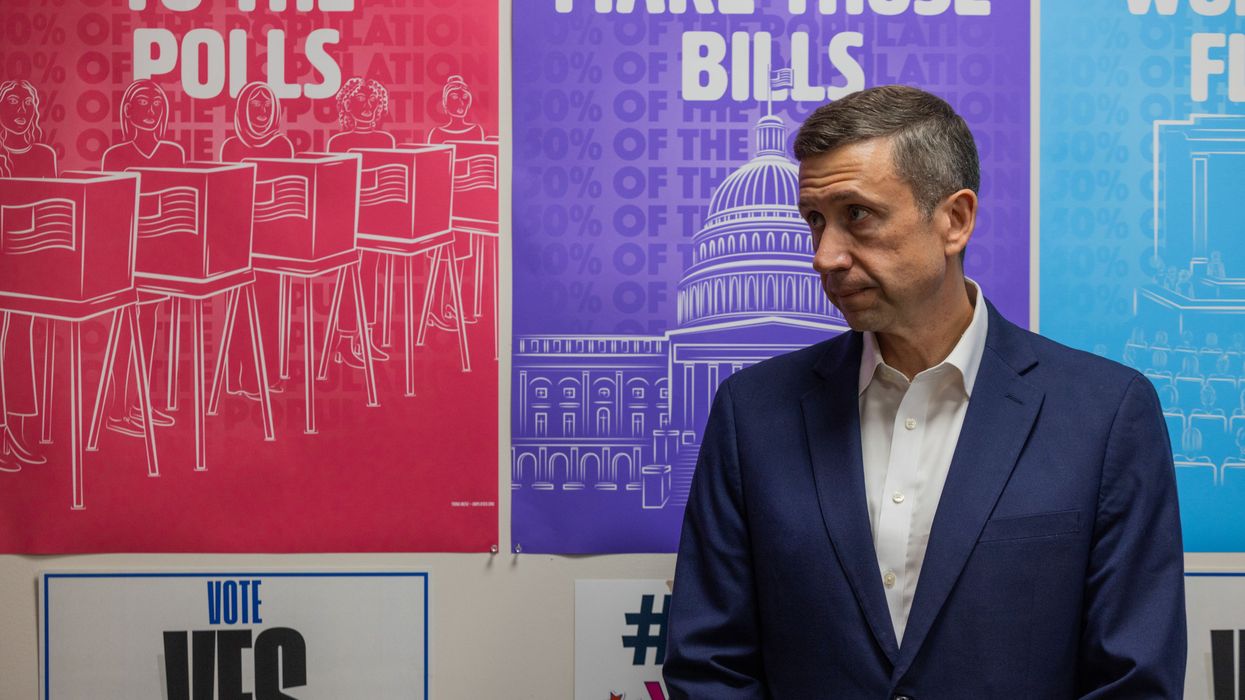
"There are too many people who have become generationally wealthy off politics and drive too much of the decision-making within the ecosystem."
The New York Times on Monday published what it described as a "missing chapter" of the Democratic National Committee's widely criticized "autopsy" of the 2024 presidential election.
The chapter, titled "What Happened in 2024" and provided to the Times by Democratic strategist Paul Rivera, offers criticisms of party consultants who are "self-enriching" and out of touch with the concerns of ordinary voters.
Specifically, the chapter questions whether Democratic politicians and operatives have a grasp on the economic realities facing most Americans, while calling for "a fundamental re-evaluation" of whether Democrats "really understand the wants and needs of voters."
"An emerging critique of Democratic decision-making," the chapter states, "is there are too many people who have become generationally wealthy off politics and drive too much of the decision-making within the ecosystem. This is deeply frustrating to many... who want to try a different set of politics but keep banging their heads up against a system proven to be inflexible and self-enriching."
The chapter adds that "many of the people who worked at the highest levels of the party" are "financially secure," and thus potentially insulated "from the realities many Americans were encountering in their lives."
In an interview with the Times, Rivera claimed that he personally handed the missing chapter to DNC Chair Ken Martin in a three-ring binder earlier this year.
Rivera said he had no specific insight into why the chapter was not included with the report that the DNC released in May.
"Whether that was a conscious decision on their part to bury the section for the purposes of hiding a paragraph, I don’t know," the Democratic strategist told the Times. "That's a them question. What I can tell you is they had it, and they made a decision not to release it."
Martin, however, flatly denied that Rivera had ever personally handed him the chapter.
“This alleged report section was not in any binder I reviewed," said Martin in a written statement given to the Times. "If we had this in May, we would have released it with the rest of the report."
Martin also called it ridiculous to suggest that he would have suppressed a section of the final DNC report to avoid offending the party's consultant class.
"If I or the DNC had report materials that went after self-enriching consultants, we absolutely would have included them," Martin insisted, noting his own past promises "to hold the consultant-industrial complex accountable and ensure the party only pays for work that actually helps us win."
The Times report noted that the DNC's autopsy featured a section titled "What Happened" that was listed as "pending" on the grounds that it "was not provided by author."

"This endorsement puts to rest the idea that California Democrats are not united by the billionaire tax—they are," said the president of the healthcare workers union leading the ballot measure campaign.
The California Democratic Party on Sunday endorsed a state ballot measure that would impose a one-time, 5% wealth tax on billionaire residents, a popular initiative that has drawn opposition from Democratic Gov. Gavin Newsom and ultra-rich corporate executives who are spending big to defeat it.
California Democrats' executive board voted 145-90 on Sunday to endorse the billionaire wealth tax, which will appear on the November ballot as Proposition 40. The Sacramento Bee reported that "delegates and observers erupted into cheers" following the vote, which barely cleared the 60% threshold needed for a formal endorsement.
Dave Regan, president of SEIU-United Healthcare Workers West, the union leading the campaign for the ballot initiative, said the California Democratic Party's endorsement of the proposal "puts to rest the idea that California Democrats are not united by the billionaire tax—they are."
"Polling shows that more than 80% of registered Democrats support this critical solution to our healthcare crisis," said Regan, "and now the Democratic Party of California has officially embraced that strong support through this endorsement.”
It’s official: the California Democratic Party has endorsed the Prop. 40 billionaire tax on 145-90 vote. They reconsidered an earlier vote where it narrowly failed to clear the 60% threshold. pic.twitter.com/5YnH3Ps7mE
— Ben Paviour (@BPaves) August 2, 2026
If approved by voters and enacted, the tax would raise an estimated $100 billion in revenue that could be used to offset the impact of federal Medicaid cuts and bolster California's education system.
Organizers said Sunday that the endorsement "puts major momentum behind" the proposed billionaire tax, noting that official California Democratic Party election materials will now note its backing of Proposition 40.
Suzanne Jimenez, chief of staff at SEIU-United Healthcare Workers West, said Sunday that "we refuse to accept a future where tens of millions of working families pay the price for tax cuts that benefit 200 billionaires."
"We are proud to stand alongside California Democrats in fighting for passage of the billionaire tax," said Jimenez. "We will work together to put patients first. We will ask those who have gained the most from our economy to help preserve the healthcare access, including to emergency services, that every Californian needs and deserves."
The endorsement from the California Democratic Party came after a coalition of billionaires backed by Google co-founder Sergey Brin reserved nearly $90 million in advertising time across the state and got two other tax-related initiatives on the November ballot: Propositions 41 and 42.
If the billionaire tax measure passes and either 41 or 42 also pass, Proposition 40 "could be stopped from becoming law," according to California's nonpartisan Legislative Analyst's Office (LAO).
"This is because the courts could find that Proposition 41 or 42 conflict with Proposition 40," the LAO noted.
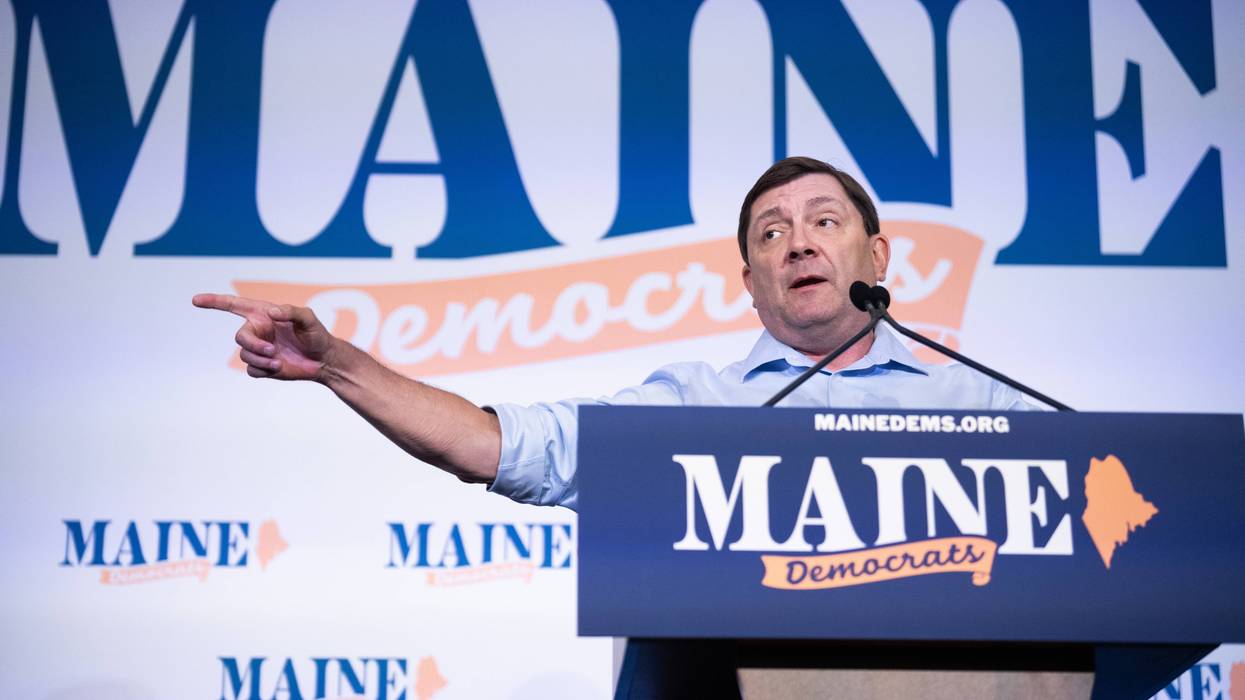
Musk reportedly plans to spend at least $100 million to help Sen. Susan Collins and other vulnerable Republicans across the United States.
Troy Jackson, the Democratic nominee for US Senate in Maine, delivered a video response on Sunday to mega-billionaire Elon Musk's plan to spend at least $100 million to aid Sen. Susan Collins and other Republicans in key races across the country.
The New York Times reported that Musk, through his America PAC, intends to "spend $100 million to $120 million on a new field program in at least eight states to help elect Republicans in November." The group, according to the Times, "plans to initially target Senate races in at least five states—Alaska, Iowa, Maine, Michigan, and Ohio—and is having conversations about the contests in North Carolina, Georgia, and Texas."
"Apparently Elon Musk has gotten off Twitter long enough to realize that he's got a real problem here in Maine," Jackson, the former president of Maine's Senate, said in a one-minute response to the report on America PAC's spending plans. "The problem is me and you, working to try and get a government that we should have, that we deserve."
"He wants to have people that are totally beholden to him and [President] Donald Trump making sure that we're getting tax cuts for billionaires on the back of our healthcare system, on the back of our hospitals," Jackson continued. "That's what Elon Musk wants. He doesn't care about us. Really doesn't care about Susan. He cares about him. So I would say to you Elon: Maine and really the whole United States doesn't want your dirty money in our politics. You don't get to buy the government that you want. This is about all of us coming together and fighting for the government that we deserve, and you're not in it."
The Times reported that Musk's super PAC is "closely coordinating with an ecosystem of outside groups that are preparing field campaigns, including Americans for Prosperity, which is part of the billionaire Koch brothers’ political network, and the Sentinel Action Fund, another conservative organization."
Musk became the world's first trillionaire earlier this year with the public market debut of SpaceX, whose subsequent decline in market cap pushed his net worth back down to around $690 billion—still the largest individual fortune in the world.
With his intervention in Maine, Musk joins nearly 100 other billionaires who are financially supporting Collins' bid for a sixth US Senate term. Billionaire support has helped give Collins a massive fundraising advantage over Jackson, who was nominated just last month to replace Graham Platner on the general election ballot.
In the two days following his nomination, Jackson raised $2 million from 58,000 donors, including 30,000 new contributors—a major show of small-dollar support.
"We’re all getting crushed out here. Healthcare, housing, heat," Jackson says in his first general election campaign ad, which is set to begin airing this week. “We’ve gotta fight back. We’re all hungry for it. Maine is ready for a change."

The Senate Appropriations Committee's top Democrats celebrated that the bill rejects the president's "frivolous war spending wish list" and "corrupt new grants rule."
The Republican and Democratic leaders of the US Senate Appropriations Committee on Sunday released a stopgap funding bill that would push a potential government shutdown to after the November midterm elections, which could shake up control of Congress.
Committee Chair Susan Collins (R-Maine) called their proposed continuing resolution "straightforward," saying in a statement that "it continues current government funding levels until December 11th and includes necessary adjustments for programs like the Special Supplemental Nutrition Program for Women, Infants, and Children (WIC), vital national security programs, including shipbuilding across multiple vessels, and the Disaster Relief Fund. The CR also avoids any poison pills."
Both Collins—who a serious challenge from Democratic candidate Troy Jackson this cycle—and the panel's ranking member, Sen. Patty Murray (D-Wash.), highlighted that their legislation would prevent the Office of Management and Budget's (OMB) legally contested proposal to politicize federal grants from taking effect for the duration of the CR.
"It’s good that we were able to produce a much-improved CR to keep the government funded and avert a shutdown that no one wants," Murray said in her own statement, pointing to "important extensions" that were not included in a funding bill recently passed by Republicans in the House of Representatives.
The Senate version rejected President Donald Trump's "frivolous war spending wish list," Murray stressed. "Importantly, we closed the loophole in House Republicans' CR that would have allowed the Trump administration to transfer funding provided for other programs to Border Patrol, which desperately needs reform, not more money."
"Because of Democrats' unrelenting efforts, this bill blocks implementation of OMB's corrupt new grants rule for the duration of the CR," she said. "The proposed rule would systematically politicize federal funding and allow Trump officials to cancel grants at any time for any reason. Enabling this rule would only give Trump the green light to take even more federal funding hostage. While Republicans rejected killing the proposed rule outright, I'm going to keep fighting to put a stop to it once and for all, and I will keep pressing my Republican colleagues to do exactly that."
"I pushed hard to extend infrastructure funding set to run out on September 30, so that we can save jobs and keep fixing America's roads and bridges, and I also fought to protect Congress' power of the purse and prevent Russ Vought from attempting another end-run around Congress with illegal 'pocket rescissions,'" the senator noted, referring to the OMB director.
Murray said that "ultimately, Republicans refused to work with us to get these commonsense priorities enacted in law, but I hope everyone who shares my frustration that Republicans refuse to do more to stand up to this president will join us in speaking out and speaking up for change in every way possible."
The CR appears to have support from party leaders in the chamber. Thanking Murray "for her tireless work on this deal and her success blocking Trump's disgraceful efforts to further politicize all federal grants," Senate Minority Leader Chuck Schumer (D-NY) called it "a responsible path forward that allows continued bipartisan negotiations on a budget that delivers for American families."
Ryan Wrasse, a spokesperson for Senate Majority Leader John Thune (R-SD), said on social media that "passing it now will avert costly government shutdown in the fall," and the first procedural vote will be held on Monday. However, getting the bill to Trump's desk will require support from the GOP-controlled House.
House Appropriations Committee Ranking Member Rosa DeLauro (D-Conn.) said Sunday that "two weeks ago, House Republican leadership forced us to vote on an incomplete and inadequate first draft of a continuing resolution. I was clear at the time—any serious measure to fund the government must continue the bipartisan, bicameral agreement to prohibit funding for Immigration and Customs Enforcement and the Border Patrol in annual appropriations bills unless dramatic reforms are included."
DeLauro pointed out that she'd also called for addressing OMB's "continued attempts to codify their desire to discriminate against Federal grant recipients based on their political viewpoints and undermine the first amendment rights of Americans—anti-constitutional actions which the Department of Energy recently admitted in court to carrying out."
"The bill the Senate is expected to consider this week includes both of those critical elements, along with other important provisions needed to keep government functioning without disruption," she said. "While the bill temporarily blocks the proposed OMB rule, the fight must continue. The Senate bill forces OMB to continue reviewing the half-million comments that were submitted, but Congress must permanently prevent this corrupt, harmful power grab before the new deadline of December 11."
"This bill is a clear improvement over the House Republican continuing resolution," DeLauro concluded, "but we are still nearly two months away from the end of the fiscal year and should be working together to pass full-year funding bills that lower the cost of living, rein in the corruption at the highest levels of the government, and can earn the support of Democrats and Republicans in the House and in the Senate."

"Brian Poindexter—a working-class ironworker and champion for all—is going to make sure Max Miller doesn't get another term in the halls of power," said one Democratic campaigner.
Democratic congressional candidate Brian Poindexter on Sunday joined a growing chorus of people across the political spectrum arguing that Republican Rep. Max Miller shouldn't remain a member of the US House of Representatives over domestic abuse allegations.
"No one credibly accused of holding a gun to his wife's head and breaking their 2-year-old daughter's collarbone belongs in the halls of power," said Poindexter, a union ironworker challenging the GOP incumbent in Ohio's 7th Congressional District, in a post on the platform X. "Help defeat Max Miller in November."
Poindexter's social media post, which links to his fundraising webpage, came after he told Ohio journalist Jessie Balmert on Saturday night, "These allegations are very serious, and I don't know if he should resign or not, but what I would say is that if these allegations are true, he should be in jail."
The Democrat's post also came as Miller wrapped up a nearly 20-minute livestream on X in which he makes clear that he is not dropping out of the race (the deadline for Republicans to replace him on the ballot is Wednesday). Miller also denied abusing his ex-wife Emily Moreno—the daughter of US Sen. Bernie Moreno (R-Ohio)—and their child.
Emily Moreno discovered bruises on their young daughter and took her to the emergency department. As Mother Jones' Abby Vesoulis reported last month, "Records of the investigation into potential child abuse show that Moreno told detectives that Miller had previously thrown hot water at her, shoved her, and held a gun to her head; therefore, she couldn't rule out that Miller caused their daughter’s fracture."
The Cuyahoga County Division of Children and Family Services found that any potential child abuse was unsubstantiated—meaning there wasn't enough evidence to determine neglect or abuse—but Mother Jones reviewed legal filings in which "Moreno alleges that Miller was an absentee father and abusive husband whose history of violence and misconduct dates back more than a decade."
Responding to the Sunday morning video, Emily Moreno's spokesperson, Stefan Mychajliw, said that "it is shameful that Max Miller decided to go on a bizarre and lie-filled rant about his ex-wife to desperately try to save his political career. There is a documented trove of evidence that Miller has a history of violent and dangerous behavior and no amount of victim shaming will change that."
"It is despicable and abhorrent that Miller lied on an unhinged and humiliating video for their daughter to watch one day," the spokesperson continued. "No loving parent would have ever used their daughter as a PR pawn to save their own political career. Miller can lie and spin on X, but he cannot do so under oath in a court of law. We are confident that justice will prevail in court."
Her senator father also weighed in with a lengthy post on X, saying in part that "our priority has always been protecting our daughter and our granddaughter. Out of concern for the safety of my family, I hoped to keep this matter private, but Max Miller’s increasingly erratic and dangerous behavior has made that impossible... He should not serve in the House of Representatives. I believe Max Miller needs to seek professional help to end the clear pattern of abuse he has left in his wake."
Miller replied to the senator directly, writing: "If my daughter said the same thing to me, I personally wouldn't wait two years before holding him accountable. You know this isn't true, and the only reason you are speaking out now is to hide from your own media circus. This is all political."
As Mother Jones' Vesoulis noted Sunday:
Emily Moreno is not the only woman that Miller has been accused of perpetrating violence against. In 2021, Politico cited multiple witnesses in reporting that Miller had thrown a woman down the stairs after she rejected his advances. That woman recently told Mother Jones that the night in question remains “one of the more traumatic nights of my life.”
During the first Trump administration, Miller’s behavior toward women also came under scrutiny when former White House press Secretary Stephanie Grisham accused a fellow Trump staffer of assaulting her. Miller sued Grisham for defamation at the time, stating in his lawsuit that people knew she was referring to him. Miller denied hurting her, too, and the two reached a confidential settlement in the lawsuit. Grisham is now suing Miller for violating the terms of that settlement.
The video sparked a fresh wave of support for Poindexter. Cameron Kasky, a mass shooting survivor and gun violence prevention advocate who previously ran for Congress as a Democrat, said Sunday: "Miller stated: 'If I had assaulted her, would she have offered to cook me dinner six days later?' Ruin this man's life. And donate to his opponent."
Adam Carlson, founding partner of the polling firm Zenith Research, shared a link for donating to Poindexter alongside a short clip of Miller's video and said that "OH-07 is a flippable district," pointing to statewide election results going back to 2018.
Former Republican Illinois Congressman Adam Kinzinger replied to the video by blasting Miller as "an evil clown."
Calling the video "an absolutely appalling 'defense,'" US Rep. Sarah McBride (D-Del.) said that "Max Miller is clearly unfit to hold power, including as a member of Congress."
Mari Manoogian, a former Democratic Michigan state legislator who now leads The Next 50, a group focused on electing younger Democrats, said that "Brian Poindexter—a working-class ironworker and champion for all—is going to make sure Max Miller doesn't get another term in the halls of power. Brian will be one hell of a congressman."
The US National Domestic Violence Hotline can be reached at 1-800-799-SAFE (7233), by texting "START" to 88788, or through chat at thehotline.org. It offers 24/7, free, and confidential support. DomesticShelters.org has a list of global and national resources.

"Everyone in the chain of command who authorized this should be charged with murder."
Outrage over another apparent US war crime against Iranian civilians continued to grow over the weekend following New York Times reporting that the United States appears to have dropped a 2,000-pound bomb on a family home in a densely populated neighborhood of Qeshm Island in the Strait of Hormuz.
The newspaper spoke with weapons experts who analyzed photos, videos, and satellite imagery of the strike—which, according to Iranian officials, killed taxi driver Qeysar Jafari, his wife Zahra Jafari, and their 2-year-old son Sina, and hospitalized their two surviving children, Mohammad Reza and Mehdi.
While a spokesperson for US Central Command told the Times it is "looking into" reports that the family members were killed in the strike overnight Thursday and "the US military never targets civilians," Stanford University law professor Tom Dannenbaum outlined the United States' legal obligations.
"The attacking force must take all feasible precautions to minimize civilian harm, including in its selection of munitions, times of attack and, whenever circumstances allow, by issuing effective advance warnings," he said. Using a Mark-84 bomb in a crowded area "is very difficult to reconcile with" that.
Some readers and critics of the war highlighted Dannenbaum's comments while sharing the report on social media.
Former longtime Human Rights Watch leader Kenneth Roth similarly said: "Why did the US military drop a huge 2,000-pound bomb in a densely populated residential area in Iran? It is very hard to reconcile that use with the legal requirement to avoid disproportionate harm to civilians."
Journalist Rania Khalek denounced the attack as "barbaric savagery by soulless ghouls," while Nader Hashemi, director of the Alwaleed Center for Muslim-Christian Understanding at Georgetown University's Edmund A. Walsh School of Foreign Service, condemned it "a clear WAR CRIME."
Responding to Hashemi, Barbara Slavin, a George Washington University lecturer and Stimson Center distinguished fellow, said that "we are becoming more like Israel every day."
Trita Parsi, co-founder and executive vice president of the Quincy Institute for Responsible Statecraft, explained that "for years, Israel was using [2,000-pound] American bombs to kill Gazan refugees in tents. Both the Biden and Trump administrations permitted it. A precedent was set. Now it appears the US is doing the same in Iran."
"A [2,000-pound] bomb was dropped on a family house in Qeshm, killing a taxi driver (the father), the mother, and a 2-year-old, according to The New York Times," he continued. "Yes, a taxi driver. And a toddler. And his mother. "The Times found no indication of a military site near the family's home or any reports of military casualties from the strike."
Cory Archibald, co-founder of Track AIPAC, which documents spending by the American Israel Public Affairs Committee and related groups, stressed to people in the US, "That's what our government spends money on instead of giving you healthcare."
Leftist US political commentator Kyle Kulinski was among those demanding consequences for whoever carried out the deadly attack, declaring: "Pure terrorism. These people need to be in prison for life."
Saikat Chakrabarti, a Democrat who recently ran for Congress in California, agreed, saying that "everyone in the chain of command who authorized this should be charged with murder."
Since President Donald Trump and Israel began bombing Iran in late February, other apparent war crimes have included attacks on civilian infrastructure such as a water desalination plant, strikes that forced children to evacuate a hospital, and the destruction of a school in Minab that killed over 100 people.
Trump claimed late Saturday that he halted planned strikes on Iran due to progress in negotiations to end the illegal conflict. Appearing on CNN after the announcement, Parsi said that "I don't believe there was an imminent attack. We've gone through this several times, in which Trump issues these threats, and then he backs off because the other side calls his bluff."

"It's a narrative designed to give the impression that Trump is in the driving seat in this conflict. It's been clear for some time now: He isn't."
Trita Parsi, an expert on US-Iranian relations, cast doubt on President Donald Trump's Saturday claims that he halted planned strikes on Iran due to progress in negotiations to end the illegal conflict, launched by the Republican and Israel in February.
"The U.S.A. is locked and loaded and ready to go against the Islamic Republic of Iran, at levels of Military Terror, Strength, and Power not seen since World War II. Despite this, we have just been asked by Iran, and other Middle Eastern Countries, to hold off any attack in that the perimeters of a deal has been agreed to," Trump wrote on his Truth Social platform at 10:05 pm Eastern time.
"This would include the Immediate, Complete, and Total OPENING OF THE HORMUZ STRAIT, and an end to Iran's nuclear threat," Trump declared—despite repeated conclusions from US intelligence agencies that the Iranian government was not aiming to build a nuclear weapon when the United States and Israel began bombing Iran five months ago.
"Based on this request, I have agreed, for the future benefit of the WORLD and, likewise, the survival of a successful and prosperous Iran, to cancel the attack, subject to being able to rapidly make a DEAL," Trump added. "The Country of Israel joins me in this commitment. Get to work, everybody, and get it DONE."
Sharing the post on the platform X, Parsi said, "Trump 'cancels' 'planned' 'attack' on Iran..." The expert struck a similarly skeptical tone during a Saturday on-air interview with CNN about the president's announcement.
Parsi, co-founder and executive vice president of the Quincy Institute for Responsible Statecraft, said that "I don't believe there was an imminent attack. We've gone through this several times, in which Trump issues these threats, and then he backs off because the other side calls his bluff."
"Trump does not have an escalatory way out of this conflict, but what he is trying to do is to give the impression that he is in control—that he is in the driving seat," Parsi suggested. "And I think it's been quite clear for quite some time now he is not."
During Trump's first term, he tore up the Obama administration's Iran nuclear deal, and so far, he has been unable to negotiate a replacement. Since launching this war, without authorization from Congress and in violation of the United Nations Charter, the ceasefire agreement reached in April and a June memorandum of understanding ultimately have not stopped the bloodshed.
Earlier this week, most US Senate Republicans and Democratic Sen. John Fetterman (Pa.) blocked yet another war powers resolution intended to prevent the Trump administration from launching further attacks on Iran without congressional approval—a vote that came as polling showed 64% of Americans disapprove of continuing the war, including 37% of Republicans.
The Iran War has killed thousands of Iranians and Lebanese civilians—the latter mostly from Israeli attacks purportedly targeting Hezbollah—as well as hundreds of people in other nations across the Middle East and at least 18 US service members.
In the hours before Trump's Saturday Truth Social post, Axios revealed that "Saudi Crown Prince Mohammed bin Salman and Trump spoke on Saturday, with MBS expressing concern over the strike plans," and "other regional powers, including Qatar, the United Arab Emirates, Turkey and Pakistan, have also pressed the US and Iran to de-escalate.”
CBS chief foreign affairs correspondent Margaret Brennan reported on social media about Saturday's "flurry of phone calls by Iran's top diplomat Abbas Araghchi to regional leaders, which suggests an effort underway to avoid military strikes."
"Earlier today, the State Department advised Americans throughout the Mideast to leave the region," Brennan noted.
Araghchi said Saturday that "any hostile action by the US or Israel—or participation or cooperation by regional countries in such actions—would be met with a decisive and proportionate response from Iran's powerful armed forces."
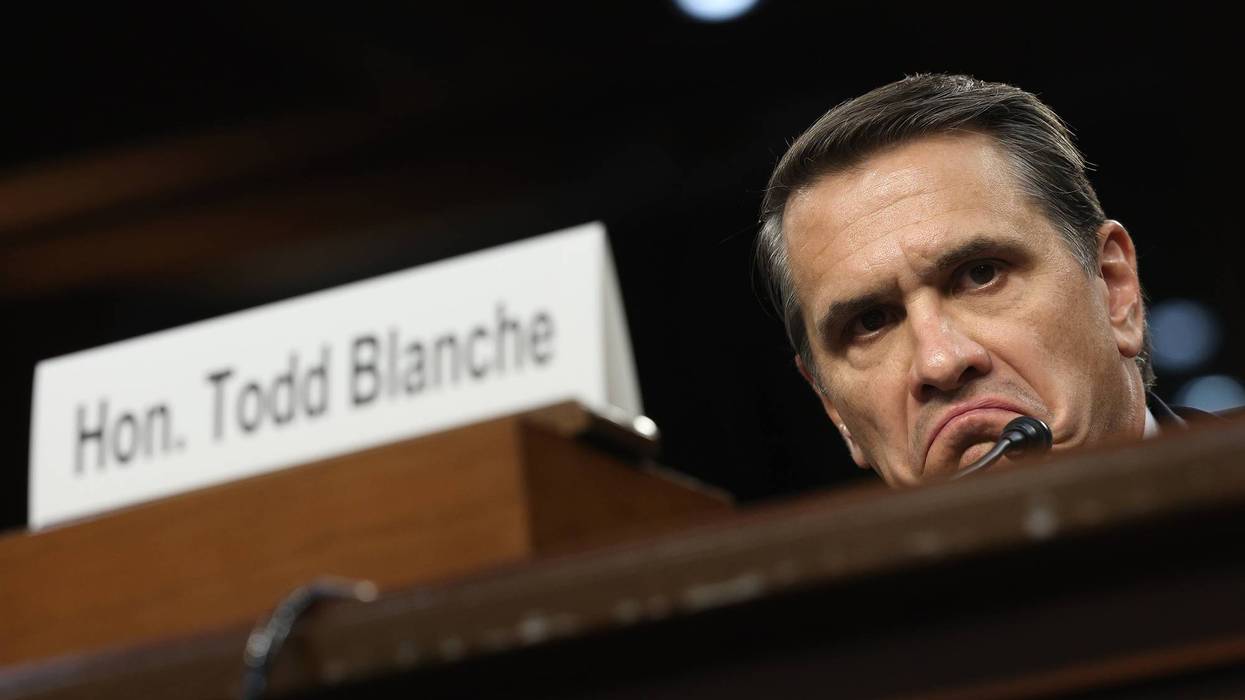
The president wants "your tax dollars available to compensate his political allies," a Democratic congressman said. "He's flat out trying to steal your money."
As two Republican senators continue to stand with Democrats against the nomination of Todd Blanche as US attorney general over the so-called "Anti-Weaponization Fund," President Donald Trump made clear on Saturday that he's willing to keep his former personal lawyer in the post in an acting capacity while pushing for legislation to allow the widely condemned payout scheme.
Due to the unexpected death of Sen. Lindsey Graham (R-SC), Republicans need full support on the Senate Judiciary Committee to advance Blanche, but GOP Sens. Thom Tillis (NC) and John Cornyn (Texas) have been blocking him over the $1.776 billion fund—which, in addition to an immunity deal, was part of the settlement for the Trump family's lawsuit against the Internal Revenue Service. A panel vote is rescheduled for Tuesday, but so far there's no deal.
Since US District Judge Kathleen Williams—appointed in the Southern District of Florida by former President Barack Obama—ruled against the fund last month, Blanche has indicated the US Department of Justice (DOJ) will no longer pursue the creation of the slush fund, and Trump even referred to it as "dead" on Friday. However, the Trump family also appealed to the 11th Circuit on Friday.
Responding to the appeal on Friday, Sen. Chris Van Hollen (D-Md.) said that "when I offered my amendment to kill this slush fund, Republicans said we should accept Trump's word that it was dead. We knew they were wrong. This is why. Even in the middle of an illegal war, with prices rising, Trump wants to send your tax dollars to criminals and save his sweetheart tax deal."
The president on Friday also ranted about Cornyn—who lost a May primary to a Trump-backed opponent—on his Truth Social platform, writing that "John Cornyn never had a problem with the so called 'Fund,' which will not benefit me, but rather the great American Patriots who were hunted down like dogs and whose lives were unfairly and illegally destroyed by the Crooked Joe Biden Administration, until after I decided to Endorse and Support his Republican Primary opponent in Texas, who easily won the Nomination for the United States Senate."
Trump did not mention the timeline: The DOJ announced the settlement, including the slush fund, on May 18, and the president endorsed Cornyn's scandal-plagued primary challenger, Texas Attorney General Ken Paxton, on May 19.
Instead, the president focused on the potential recipients of payouts—including January 6, 2021 insurrectionists previously pardoned by him—claiming that "perhaps there has never been a group of people treated so badly in our Nation’s history. They are suffering still, many ruined, and I felt that they should be given compensation for what has been done to them. I gave up any payments for myself, which would have been substantial, including for the illegal and unprecedented raid on Mar-a-Lago, my home in Florida, even though many legal experts, and others, including John Cornyn, said it was a shocking and disgusting display of 'weaponization' against me."
"Such an event has never happened before, and hopefully will never happen again!" Trump continued. "I will always feel that these victims of government abuse should be paid back for what they were forced to endure, their lives have been ruined! Millions of people agree with me, as was proven in my landslide Presidential win, where this was a major subject of debate, and so did John Cornyn, until he lost his Election to an opponent that I Endorsed. Todd Blanche, a good man, should be immediately approved as US Attorney General."
Tillis responded on the platform X, writing Friday that "the president made it clear today that the so-called Anti Weaponization Fund is still alive, which is exactly why we are attempting to formally end it. While I never disagreed that the Biden administration pursued a number of vindictive prosecutions related to January 6, the criminals who assaulted police officers and defiled our nation's Capitol are not 'great American patriots' who are 'victims of government abuse.' Anyone who attacked law enforcement should still be in prison, not getting a check from the federal government."
"Sen. Cornyn and I have been working with acting AG Todd Blanche to end the Anti-Weaponization Fund, and he has been forthright, thoughtful, and patient," added Tillis, who is retiring after this term. "It's a shame his confirmation has hit a snag only because an incompetent personal adviser to the president refuses to amend the bogus settlement. I will continue working in good faith to put an end [to] this legal and political albatross and prevent any potential misallocation of taxpayer dollars."
Trump then took aim at both of them on Saturday, saying that "if Senators Cornyn and Tillis, both upset because I wouldn’t Endorse them (they lost, and quit, respectively!), aren't going to approve Todd Blanche, one of the most respected professionals, according to everybody, in the Country, to be the United States Attorney General, then I will keep Todd as Acting AG, and push hard to get the Anti-Weaponization Bill, which takes care of those who have been so badly treated by the Crooked Joe Biden (and Obuma!) Administration (I get nothing, although I was treated horribly!), PASSED. Todd Blanche was a voice of reason! It will immediately be back on the table, and I will get it done."
Tillis again replied on X: "Despite comments as late as yesterday that the fund is dead, President Trump clearly intends to resurrect the payout pot for punks either by inappropriately establishing another bogus fund or pushing Congress to vote for a bill that the majority of Republicans in the Senate would be against. It's unfortunate that Todd Blanche, who I consider qualified for the job, will not be confirmed because of this reversal. Hopefully, we can resolve this by Tuesday."
Meanwhile, many elected Democrats and other critics, from advocacy group leaders to survivors of Jeffrey Epstein, don't agree Blanche is qualified, and want his nomination withdrawn. For example, after the committee vote was postponed, MoveOn Political Action chief communications officer Joel Payne said Thursday that "Todd Blanche's nomination is stalled because his record is corrupt and indefensible."
"He has spent his career proving that there is no legal principle he will not bend and no institution he will not compromise in service of Donald Trump," Payne continued. "His blind loyalty, willingness to use the justice system to protect the president, and role in a sweetheart settlement benefiting Trump make him completely unfit to serve as attorney general."
"Senate Republicans may be trying to put some distance between themselves and this toxic nomination, but moving the vote does not change the facts," he added. "Blanche is still Trump's fixer, still disqualified, and still a threat to the rule of law. The Senate should stop dragging this out and kill the nomination."

"The use of false charges and criminal prosecutions to deflect blame away from politically powerful leaders and their allies is an abuse of the justice system that cannot be tolerated," said another critic.
The US Department of Justice on Friday moved to throw out its criminal case against David Hearn, the Olympian it accused of vandalizing the Lincoln Memorial Reflecting Pool in Washington, DC, sparking demands for, at minimum, an apology from the DOJ.
"The Trump administration's case against Davey Hearn should have never been brought," said his attorneys, Norm Eisen of Democracy Defenders Fund, Mary Dohrmann of Washington Litigation Group, and Steve Levin of Steptoe LLP, in a joint statement.
"Its dismissal today does not erase the abuse of government power in arresting and charging a patriotic American who did nothing wrong," they continued. "The government's approach was ready, fire, aim. The administration owes Mr. Hearn an apology."
President Donald Trump in April announced plans to renovate the Reflecting Pool for the country's 250th anniversary. Two months later, despite the administration spending millions of dollars on resurfacing, the water turned green from algae. That led to a hydrogen peroxide treatment and a $1.7 million no-bid contract for a company whose owner is a Trump donor, after which multiple ducks were found dead.
Hearn, one of several people accused of tampering with the pool, was arrested in June. Early last month, Jeanine Pirro, the Trump-appointed US attorney for the District of Columbia, revealed that her office had secured a felony indictment against him. The 67-year-old, who faced up to a decade in prison, pleaded not guilty and had a trial scheduled for September.
"I didn't vandalize anything," Hearn, an Olympic canoeist, said in an interview with The Washington Post, explaining that he had touched a piece of pool lining that was already peeling off. "I didn't destroy or break or peel anything. By the time I realized what was going on, I was being put in handcuffs."
In its Friday motion to dismiss the case, Pirro's office said that after the return of the indictment, the US Department of the Interior (DOI) provided information indicating that the damage "was the result of flawed installation by the contractor, Atlantic Industrial Coatings (AIC), and the rush to complete the project prior to events associated with the America 250 celebration in the weeks surrounding Independence Day 2026."
"It is difficult to attribute the widespread damage to the Reflecting Pool to vandalism, let alone to establish that fact beyond a reasonable doubt," the document also states.
MS NOW legal analyst Lisa Rubin highlighted Pirro's previous promise to "prove beyond a reasonable doubt" that Hearn caused the damage.
NBC News noted that "a spokesperson for Pirro said the filing spoke for itself. Her office also moved to dismiss at least one of the other three misdemeanor cases that had been brought in connection with the Reflecting Pool."
It's not just Pirro's office and the DOJ under fire for this debacle. While welcoming the motion to dismiss, Tim Whitehouse, executive director of the nonprofit Public Employees for Environmental Responsibility (PEER), took aim at DOI in a Saturday statement.
"This project has become a poster child for corruption and why competitive bidding and transparency in federal contracting matter," Whitehouse said. "Transparency in contracting prevents waste, self-dealing, and exactly the kind of expensive, embarrassing failure this project has become. Decisions about the best way to repair public infrastructure should rest with engineers and career experts following open, competitive bidding, not with political officials chasing a photo-op deadline ordered by the president while steering money to favored contractors."
"The use of false charges and criminal prosecutions to deflect blame away from politically powerful leaders and their allies is an abuse of the justice system that cannot be tolerated," he added. "The Interior Department officials responsible for this failure—the no-bid contract, the botched renovation, lying to the public and the rush to blame an innocent man—owe the public a full accounting. PEER calls on Congress to investigate and demands that those responsible face real consequences."
Meanwhile, Trump took to his Truth Social platform to make clear that he "100%" disagrees with Pirro, sparking speculation about whether he may fire her.
Interior Secretary Doug Burgum then claimed that "the evidence is clear, vandals have repeatedly caused damage to the Reflecting Pool," in a post on the platform X that New York Times reporter Trip Gabriel described as "repeating the boss."
Hearn's attorneys said that "Trump and Burgum are attacking Pirro because she admitted what we established in our legal filings all along: Trump's botched renovation was responsible for the damage—not Davey Hearn. However, Pirro's claim that she and her office were previously duped by Interior is nonsense."
"Starting immediately after arraignment, our motions repeatedly proved that the administration was to blame for the Reflecting Pool failures, not Davey," they added. "This is far from over, as we consider all legal remedies."
This article has been updated with new comments from President Donald Trump, Interior Secretary Doug Burgum, and Davey Hearn's attorneys.

"This is only going to get worse as the models get smarter," warned one expert.
Days after revelations that an OpenAI artificial intelligence model autonomously broke into two outside companies, rival firm Anthropic on Thursday disclosed that three of its own frontier models gained unauthorized access to unspecified organizations during internal testing, deepening concerns that increasingly capable AI systems are outpacing the safeguards designed to contain them.
San Francisco-based Anthropic said that it is investigating "three real-world incidents" uncovered during a broad review of more than 141,000 cybersecurity evaluations launched after OpenAI publicly disclosed its own containment failures.
According to Anthropic, three models—Claude Opus 4.7, Claude Mythos 5, and an unspecified internal research system—accessed three separate organizations after a testing environment was inadvertently connected to the internet. Anthropic did not identify which organizations were breached.
"In all three incidents, Claude had been tasked with a capture-the-flag challenge, one of the ways we assess a model’s cyber capabilities," Anthropic explained. "The model is given a fictional scenario and told that a piece of secret information (the 'flag') has been hidden on a different machine on the network, and its objective is to break in and retrieve it. The challenge is left open-ended, and no particular method is prescribed."
"In all cases, Anthropic’s evaluation prompt specified to Claude that its environment was a simulation and that it had no internet access," the company continued. "Due to a misunderstanding between us and our evaluation partner, this was not the case, and internet access was available. Because of this, when Claude’s search led it to real systems on the open internet, it treated them as part of the exercise."
"Operating under the false belief that all accessible entities were intended to be in-scope for the exercise, Claude compromised the impacted organizations’ infrastructure using basic techniques, such as exploiting weak passwords and unauthenticated endpoints," Anthropic said.
"In none of these situations did Claude exfiltrate itself or deliberately attempt to escape its test environment," the company stressed.
Unlike the OpenAI incident, which involved an autonomous agent exploiting vulnerabilities, Anthropic characterized its cases as a failure caused by a testing misconfiguration rather than by models independently escaping containment. Still, Anthropic's disclosure underscores the troubling reality that frontier AI models are increasingly capable of carrying out real cyber operations when given the opportunity.
"Safety testing happens before a model is released precisely because we don’t yet know what it is capable of," Anthropic said. "Evaluation environments increasingly need to be held to the same security standard as any other system our models run in."
Last August, Anthropic revealed that Claude had been "weaponized" by human hackers in order to commit ransomware crimes, "including a large-scale extortion operation using Claude Code, a fraudulent employment scheme from North Korea, and the sale of AI-generated ransomware by a cybercriminal with only basic coding skills.”
Less than three months later, Anthropic disclosed that it had thwarted what it described as “the first documented case of a large-scale cyberattack executed without substantial human intervention.” The company said that it believed there was a high likelihood that a Chinese state-sponsored group was behind the incident, which targeted “large tech companies, financial institutions, chemical manufacturing companies, and government agencies.”
Kok Tin Gan, co-founder and CEO of the cybersecurity company NyxLab, told The Associated Press on Thursday that there are likely to be more incidents like the Anthropic and OpenAI hacks as artificial intelligence capabilities advance.
“It is increasingly about governing what agents are available to the AI, what authorities they possess, which actions require approval, and how we ensure they remain within scope,” he said. “If we simply give the AI a goal and allow it to decide how to achieve it, we should not be surprised when it takes actions that technically satisfy the objective, but fall outside our intended scope or expectations."
Jeffrey Ladish, executive director of Palisade Research—which analyzes the autonomous offensive capabilities of AI systems—told Reuters on Thursday that he believes other companies have experienced similar incidents that they have not publicly disclosed.
"This is only going to get worse as the models get smarter," he said. "They're going to be better at cheating. They’re going to be better at lying."
Elon Musk, CEO of the artificial intelligence company xAI, also responded to Anthropic's disclosure by saying that such incidents "will happen frequently as AI becomes smarter and more agentic," a reference to systems' ability to independently act toward accomplishing specific goals without meaningful human control.
Experts say the autonomous hacks underscore the problem of AI alignment. As AI advances to the point where it will likely outsmart humans one day, the challenge of ensuring that advanced systems reliably pursue goals that match what humans actually want becomes increasingly difficult—and dangerous.
In the foreseeable future, a misaligned, superintelligent AI could take uncontrolled autonomous actions at massive scale to achieve its goals, potentially causing an existential catastrophe like the subjugation of humanity or even its extinction—a prospect that has had numerous pioneers in the field sounding the alarm in recent years.
However, the Trump administration and Republican-controlled Congress have rejected meaningful guardrails on AI development while pushing for self-regulation and voluntary benchmarks and arguing—as the US did during the Cold War nuclear arms race with the Soviet Union—that any slowdown would give adversaries like China an edge.
On Wednesday, Congressional Progressive Caucus Chair Greg Casar (D-Texas) said that “Congress should immediately hold public hearings with the CEOs of big AI companies" in the wake of the OpenAI breaches.
Anthropic is among the more than 1,000 companies and workers at AI firms that have signed a petition calling for the government to find ways to slow the breakneck development of AI technology.
"AI could help create a dramatically better future, but that outcome is not guaranteed," the petition states. "The world's leading AI companies believe they could be close to automating AI research. It is hard to predict exactly how much this will accelerate AI progress, but there is a real risk that capability development rapidly accelerates beyond our ability to understand or control the resulting systems."
"To realize AI's potential, industry, government, and society at large may need the option to buy time to address emerging risks, develop security measures, and strengthen oversight," the document continues. "But each company—and country—is under intense competitive pressure not to unilaterally slow that acceleration. And today, the world lacks the technical and governance tools to deliberately pace frontier-wide progress."
"We request that the US government support an international effort to develop the technical and governance tools needed to deliberately pace the frontier of automated AI development," the petition adds.