SUBSCRIBE TO OUR FREE NEWSLETTER
Daily news & progressive opinion—funded by the people, not the corporations—delivered straight to your inbox.
5
#000000
#FFFFFF
To donate by check, phone, or other method, see our More Ways to Give page.


Daily news & progressive opinion—funded by the people, not the corporations—delivered straight to your inbox.
Max Gleischman (Durbin) - (202) 228-5244
Zach Lowe (Feingold) - (202) 224-8657
The Department of Justice has responded to a letter from U.S. Senators Dick
Durbin (D-IL) and Russ Feingold (D-WI), in which the
Senators asked the Attorney General to consider bipartisan reforms to
the USA PATRIOT Act that they have proposed,
and which were supported by President Obama when he was in the Senate. In
its response, the Department of Justice indicated willingness to consider
reforms to the USA PATRIOT Act. Senators Feingold and Durbin, who plan to
introduce legislation soon, released the following statement after receiving
the response:
The Department of Justice has responded to a letter from U.S. Senators Dick
Durbin (D-IL) and Russ Feingold (D-WI), in which the
Senators asked the Attorney General to consider bipartisan reforms to
the USA PATRIOT Act that they have proposed,
and which were supported by President Obama when he was in the Senate. In
its response, the Department of Justice indicated willingness to consider
reforms to the USA PATRIOT Act. Senators Feingold and Durbin, who plan to
introduce legislation soon, released the following statement after receiving
the response:
"We
welcome the administration's willingness to consider additional
safeguards for surveillance powers that have been vastly expanded in recent
years. Congress should revise the USA PATRIOT Act and related authorities
to better protect the constitutional rights of American citizens, while
preserving the powers of our government to fight terrorism. After the
Inspector General reports documenting rampant misuse of National Security
Letters, there can no longer be any doubt that granting overbroad authority leads
to abuses. We must take this opportunity to get it right, once and for
all. And we must be able to have a meaningful public debate so that the
American people and their representatives in Congress can understand how these
authorities have actually been used and make informed decisions about how they
should be used in the future."
The
Durbin-Feingold letter, originally sent on August 6th, is available here. More information on the
fixes Feingold and Durbin are seeking is available here.
"The absolute disregard for his well-being by the DHS agents is ghastly. He should be alive today," said one advocate for refugees.
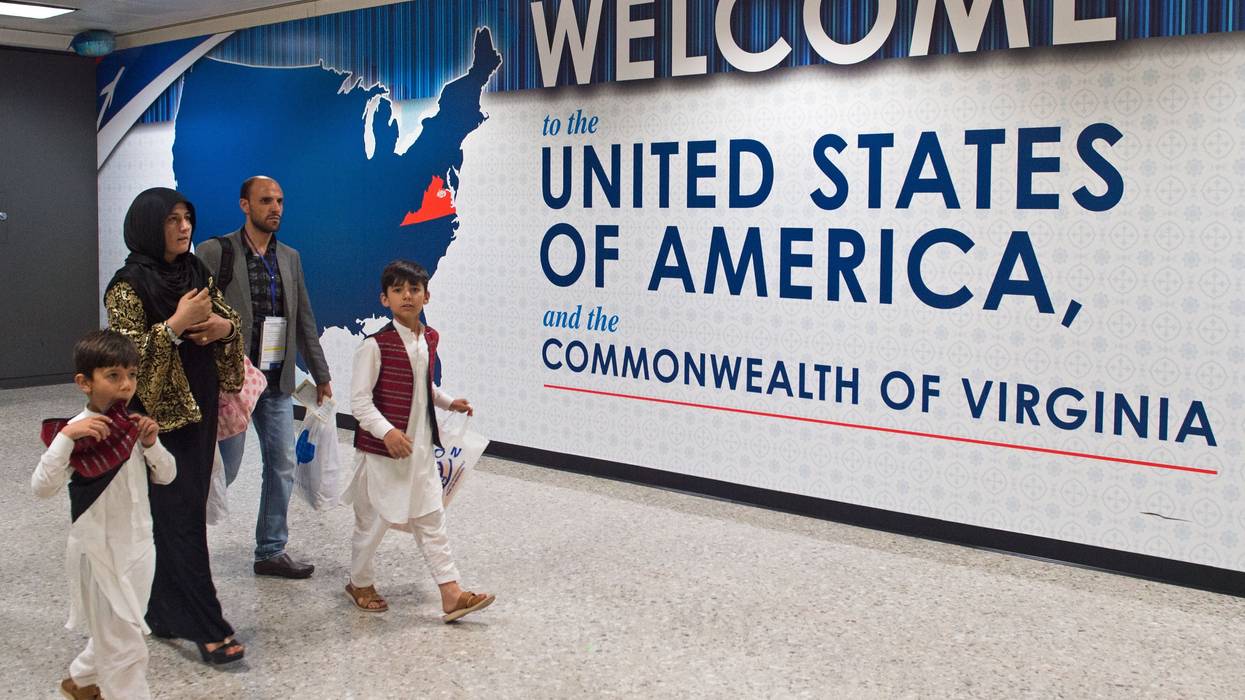
The Trump administration's response was swift following the news that the death of a nearly blind New York man who was left by US Border Patrol agents in the freezing cold was ruled a homicide—and it made clear that the Department of Homeland Security has no intention of taking accountability for the agents' actions that preceded the 56-year-old's death.
But state Attorney General Letitia James warned that despite the deflections of the administration, her office would continue to review "the circumstances and treatment that led" to the death of Nurul Amin Shah Alam, a Rohingya refugee, in February.
"Mr. Shah Alam fled genocide to build a life in this country," James said. “Instead, he was abandoned and left to suffer alone in his final hours. No New Yorker should be treated this way.”
As Common Dreams reported, Shah Alam was found dead on a Buffalo, New York street five days after Border Patrol agents dropped him off at a closed coffee shop. They had not informed Shah Alam's family or lawyer where he was, making it impossible for him to find his way home as extreme winter weather hit Buffalo. In addition to being visually impaired, Shah Alam was unable to speak or read English.
The "manner of death," said the county medical examiner's office, "was homicide."
The medical examiner emphasized that on death certificates, "homicide" refers to "death resulting from the volitional act of another, which may include negligent acts or omissions," and does not imply the intent to cause someone's death.
The designation does "not indicate criminality, which is the purview of the judicial system," said the office.
Dr. Gale Burstein, the Erie County Department of Health commissioner, announced Wednesday that Shah Alam's death had been directly caused by complications from a perforated ulcer that had formed when hypothermia decreased blood flow and weakened the lining of his intestines.
Shah Alam experienced “severe stress” and that “stress was felt to be hypothermia, being in very cold temperatures, and dehydration, so no access to liquids," said Burstein.
The perforated ulcer doubtlessly caused "severe pain," the health commissioner added at a news conference.
“If that is not repaired in a short period of time, it can cause death, which is what we have, we felt we’ve seen in this instance,” said Burstein. “It’s a medical emergency.”
On Thursday morning, hours after the officials announced the homicide determination and described the health crisis Shah Alam experienced in his last days as he walked through the streets of Buffalo in subfreezing temperatures, DHS said on social media that the account of Shah Alam's death was "another hoax being peddled by the media and sanctuary politicians to demonize our law enforcement."
“This death had NOTHING to do with Border Patrol. Mr. Shah Alam passed almost A WEEK AFTER he was released by Border Patrol," said the agency before listing a number of allegations regarding the man's "serial violent criminal rap sheet."
The charges DHS referred to were related to an incident in February 2025, when Shah Alam was detained after getting lost on the way home from a store where he had purchased two curtain rods to use as walking sticks. He ended up on the porch of a woman who called the police, who later accused him of swinging a rod “in a menacing manner," which his lawyer denies.
Police body camera footage shows him saying, “OK” and dropping one end of the curtain rod when an officer told him to put it on the ground.
Shah Alam was charged with assault, trespassing, and possession of a weapon and taken to Erie County Holding Center, where he was held for a year.
He was released in late February after his family posted bail. The local police alerted Border Patrol, which sent two agents to pick Shah Alam up from jail. His son was waiting outside the jail to take him home, The New York Times reported, but the agents took him to a closed Tim Hortons location instead and left him there, describing their actions as giving Shah Alam a "courtesy ride."
The agency claimed after Shah Alam's death was reported in February that he had shown “no signs of distress, mobility issues, or disabilities requiring special assistance."
After officials announced their findings regarding Shah Alam's death on Wednesday, his son, Mohamad Faisal Nurul Amin, told The Guardian: “When I got the call from the medical examiner, my body went into shock. I felt like I was going to throw up. I couldn’t move. Someone told my mother, and she was devastated. I am still depressed.”
Jeremy Konyndyk, president of Refugees International, said Shah Alam's fate amounted to "death-by-policy."
"In Minnesota, DHS often released detainees in secluded areas in freezing evening conditions with no alert to family. It seemed calculated to endanger people. Very similar to what they did here," he said.
Afaf Nasher, executive director of the New York chapter of the Council on American-Islamic Relations, said the medical examiner's ruling confirms what Shah Alam's "family and community feared from the beginning: This was not a tragic accident, but a preventable and deeply disturbing loss of life."
“We call for an immediate, independent criminal investigation into the actions of the US Border Patrol agents who abandoned a nearly blind refugee miles away from his home in freezing conditions," said Nasher. "No one, regardless of immigration status, should ever be treated with such disregard for their safety and basic human dignity.”
The Erie County district attorney's office told The Guardian it had requested the autopsy report regarding Shah Alam's death.
“We are committed to seeking the truth and upholding justice,” the office said.
Gov. Kathy Hochul, a Democrat, said in a statement that "the cruelty and inhumanity" of the actions that preceded Shah Alam's death "should shock the conscience of every American."
“As more details of this case emerge, I want to be crystal clear: Every individual involved in the death of Mr. Shah Alam must be held fully accountable," said Hochul. "To ensure a fair and impartial investigation, the Erie County district attorney must continue his investigation and, if warranted by the evidence, prosecute to the fullest extent of the law.”
"If it was possible for Trump to have spent the last 14 months on the golf course, we would be in a better place," said one expert.
Thursday marks the one-year anniversary of President Donald Trump unleashing a sweeping package of global tariffs on imported products, which has prompted many critics to reflect on how much economic damage the president has caused.
The Tax Foundation on Monday published an analysis examining the promises Trump made about the benefits of the tariffs, including a claim that "jobs and factories will come roaring back," as foreign investments would pour in.
This particular promise, the Tax Foundation found, has completely failed to materialize.
"Foreign direct investment (FDI) into the United States has seen no such dramatic spikes," the Tax Foundation explained. "In 2025, FDI totaled $288.4 billion—more than an order of magnitude smaller than President Trump’s claims. Total FDI in 2025 was below the prior 10 years’ average of $320.7 billion and lower than the annual totals in 2021, 2022, 2023, and 2024 ($405.5 billion, $338.4 billion, $297.4 billion, and $292.3 billion, respectively)."
The analysis also found manufacturing jobs continued to decline after the tariffs went into effect, with a net 89,000 jobs lost between April 2025 and February 2026.
Dario Perkins, head of global research at the consultancy TS Lombard, said in an interview with The Guardian that Trump's chaotic tariff scheme, which was ruled unconstitutional by the US Supreme Court in February, was a signal to foreign firms that they should avoid making investments in the country for the foreseeable future.
"If you think that discouraging investors from buying assets in the US is a victory, then you don’t believe in a growing economy," Perkins explained. "If it was possible for Trump to have spent the last 14 months on the golf course, we would be in a better place."
Russ Mould, investment director of the British stockbroker AJ Bell, wrote in a Monday research note flagged by CNBC that Trump's tariffs have caused global investors to shy away from pouring money into the US, instead seeking nations with more stable economic policies.
"Investors do seem to have thought carefully about where to allocate capital in a post-liberation day world, and one where presidential social media posts carry heft politically, economically and militarily,” Mould wrote. "The US stock market may have bounced back strongly from the liberation day low, but it has not been the first destination of choice... In other words, it is no longer a case of America first and the rest nowhere."
Nigel Green, CEO of deVere Group, told CNBC that Trump's trade war chaos had dented America's image as a financial safe haven.
"Investors are no longer treating the US as a uniform opportunity; they’re picking sectors that align with policy tailwinds and avoiding those exposed to trade disruption,” Green explained. "Liberation day accelerated a bifurcation in markets. On one side, companies aligned with domestic production, AI and energy security are attracting capital. On the other, globally exposed firms with complex supply chains are facing higher scrutiny and, in some cases, valuation compression."
Groundwork Collaborative on Thursday released a fact sheet about the Trump tariffs that highlighted how the president has used international trade policy to boost his own finances.
"Tariff policy has been used as leverage to secure favorable treatment for Trump’s personal business interests, such as a Trump-linked golf development," explained Groundwork Collaborative. "Trump turned U.S. trade policy into a transactional system, using tariff leverage to help Trump-linked and -favored business ventures win special treatment from foreign governments rather than prioritizing fixes to help balance US trade and help US workers."
In a Thursday social media post, the Democratic Party marked the one-year anniversary of Trump's tariffs by counting ways they had made the US economy weaker.
"One year ago, Trump announced sweeping tariffs that completely fucked the economy," the party wrote. "Since then: Americans have faced 1+ million layoffs; inflation has soared; the job market is the weakest it’s been in decades. Trump's economy is a complete failure."
The US started a war despite "no imminent threat" from Iran and has since carried out widespread attacks against schools, hospitals, civilian homes, and energy facilities.
A day after President Donald Trump threatened to bomb Iran "back to the Stone Age" during a primetime speech, a group of more than 100 international law experts said US strikes over the past month of war clearly violated the United Nations Charter and may amount to war crimes.
On Thursday, Just Security released a letter signed by senior professors, law association leaders, former government advisers, military law experts, and former judge advocates general (JAGs) arguing that the US has violated international law both by launching the war alongside Israel on February 28 and through its conduct while prosecuting it since then.
"The initiation of the campaign was a clear violation of the United Nations Charter," the experts said, "and the conduct of United States forces since, as well as statements made by senior government officials, raise serious concerns about violations of international human rights law and international humanitarian law, including potential war crimes."
Over 100 international lawyers (including me) warn that U.S. strikes on Iran violate the UN Charter and may be war crimes. Read the letter here:www.justsecurity.org/135423/profe...
[image or embed]
— Oona Hathaway (@oonahathaway.bsky.social) April 2, 2026 at 7:35 AM
The charter allows for the use of military force against other nations only in self-defense against an imminent armed attack or when authorized by the UN Security Council.
"The Security Council did not authorize the attack. Iran did not attack Israel or the United States," the experts said. "Despite the Trump administration’s varied and sometimes conflicting claims to the contrary, there is no evidence that Iran posed an imminent threat that could ground a self-defense claim."
They highlighted statements from administration officials, such as Defense Secretary Pete Hegseth, who has described the rules of military engagement as "stupid" and said the US was seeking to prioritize "maximum lethality, not tepid legality."
They also mentioned the defense secretary’s pledge to give “no quarter, no mercy for our enemies” in mid-March—noting that the threat is not only “especially prohibited” under international law, but also the Department of Defense’s own war manual.
Trump himself has said explicitly that he doesn't "need international law" and suggested that the US was conducting strikes against certain Iranian infrastructure, including an oil hub, "just for fun."
This has culminated in what the experts say have been widespread violations of the laws of armed conflict, including rampant strikes against civilians and political leaders with no military role, as well as critical infrastructure like oil and other energy facilities, which the UN's high commissioner for human rights, Volker Türk, condemned last month for their “disastrous” impacts on civilians.
They also raised serious concerns about attacks on schools, health facilities, and homes, citing recent data from the Iranian Red Crescent, which found that at least 67,414 civilian sites have been struck, including 498 schools and 236 health facilities.
According to a report on Wednesday from the Human Rights Activists News Agency (HRANA), a US-based human rights monitor for Iran, more than 1,600 civilians have been killed since the war began on February 28, including 244 children.
The experts raised particular concern about the US bombing of the Shajareh Tayyebeh Primary School in Minab on the first day of the war, which killed at least 175 people, most of whom were children aged 7-12.
"The strike likely violates international humanitarian law, and if evidence is found that those responsible were reckless, it could also be a war crime," they said. "The strike is among the deadliest single attacks by the US military on civilians in recent decades."
They warned that a lack of accountability has only allowed the administration's conduct to grow more aggressive and reckless, with Trump issuing increasingly bombastic threats, including to "obliterate” Iran's power plants and water facilities and "do things that would be so bad they could literally never rebuild as a nation again.”
They also called out Hegseth's dismantling of internal safeguards meant to prevent the military from violating international law, including the removal of senior lawyers from oversight positions and the elimination of "civilian environment teams" meant to help the military understand how their operations could impact the population.
While the letter focused on violations by the US government, it also said Iran's government has committed illegal actions during the conflict, by continuing its violent crackdowns against protesters and by conducting strikes on civilian areas in Israel and the Gulf states in retaliation for the war.
The experts urged US officials to uphold international law and reminded other nations "of their legal obligations not to aid or assist the United States, Israel, or Iran in the commission of internationally wrongful acts."
The legal scholars who signed the letter joined a growing chorus of international law experts and human rights organizations that have condemned the war as illegal, including multiple UN bodies, Human Rights Watch, Amnesty International, and Human Rights First.
One of the letter's signatories, American University law professor Rebecca Hamilton, said she hoped the letter would spur action from "those with constitutional responsibilities," including the US Congress, which she said was "flailing in the face of illegal actions by the executive."
Hamilton said she was "proud to be part of this professional community, willing to come together to give voice to the rule of law."