

SUBSCRIBE TO OUR FREE NEWSLETTER
Daily news & progressive opinion—funded by the people, not the corporations—delivered straight to your inbox.
5
#000000
#FFFFFF
To donate by check, phone, or other method, see our More Ways to Give page.
Daily news & progressive opinion—funded by the people, not the corporations—delivered straight to your inbox.
Israel and Egypt should open their borders to permit humanitarian aid to reach Gaza and to allow civilians to seek safety from the conflict, Human Rights Watch said today, on the occasion of the UN High Commissioner for Refugees, Antonio Guterres, addressing the United Nations Security Council.
Earlier this week, Guterres called for strict adherence to humanitarian principles in the ongoing conflict in Gaza, including respect for the universal right of those fleeing war to seek safety in other states.
"There is no place safe from the fighting for civilians in Gaza at this time," said Fred Abrahams, senior emergencies researcher at Human Rights Watch. "It is imperative that borders not be closed to people fleeing for their lives."
During the current fighting, Israel and Egypt have blocked the exit from Gaza of many severely wounded people in urgent need of medical treatment. Israel has permitted only a limited number of critically injured patients to enter Israel since the start of the current military operations. Egypt is also preventing timely evacuations of severely wounded from Gaza, despite pledges from Turkey and Qatar, among others, to receive the wounded at Egypt's Rafah border crossings and evacuate them to hospitals in third countries. Since the current offensive began, Egypt has reportedly let a total of 154 wounded persons through Rafah, including 54 wounded on December 30 and 31, 2008.
"For Israel and Egypt to continue blocking the evacuation of severely wounded people is not only unlawful but heartless," said Abrahams.
Ensuring access into Israel and Egypt for the war wounded as well as patients who received regular treatment outside Gaza prior to the current military operations is a serious concern, Human Rights Watch said. Even before the current fighting, medical facilities in Gaza could not provide many advanced services, such as cardiovascular surgery, neurosurgery, and advanced ophthalmology services.
"We strongly back High Commissioner Guterres' call this week that all of Gaza's borders be kept 'open' for humanitarian purposes and 'safe,' and that Palestinians seeking safety outside of Gaza should not be prevented from doing so," said Abrahams. "The UN Security Council should urge Egypt and Israel to keep their borders open to Palestinian civilians seeking temporary refuge."
Beyond fleeing the fighting, civilians are seeking refuge outside of Gaza because of the worsening humanitarian situation. A densely populated area, the Gaza Strip has a population of 1.4 million. One million are refugees, of whom 750,000 are dependent upon the UN Relief and Works Agency for Palestine Refugees in the Near East (UNRWA) for food aid. This includes 94,000 particularly vulnerable "special hardship cases," including the chronically ill, the disabled, the elderly, and the very young. UNRWA told Human Rights Watch on January 6 that they and the agency's other beneficiaries last received regular food distributions on or before December 18, when UNRWA exhausted its warehoused food supply.
Israeli restrictions on fuel and industrial diesel have had a particularly grave impact, limiting the electricity that is required for Gaza's hospitals, water-pumping stations, sewage-treatment facilities, and other infrastructure essential for the well-being of Gaza's population.
"The impact of the armed conflict on the Palestinian population in Gaza has been magnified by months of an Israeli blockade that has caused severe shortages of food, water, electricity, and medicines," said Abrahams. "It's crucial that Israel lift its unlawful blockade of basic necessities immediately."
Despite its 2005 withdrawal of military forces and settlers from Gaza, Israel has maintained substantial control of Gaza's land, air, and sea borders.
Human Rights Watch is one of the world's leading independent organizations dedicated to defending and protecting human rights. By focusing international attention where human rights are violated, we give voice to the oppressed and hold oppressors accountable for their crimes. Our rigorous, objective investigations and strategic, targeted advocacy build intense pressure for action and raise the cost of human rights abuse. For 30 years, Human Rights Watch has worked tenaciously to lay the legal and moral groundwork for deep-rooted change and has fought to bring greater justice and security to people around the world.
"The vaults are open and the arms trade is thriving before the war and after it," said one Nobel Peace Prize laureate.
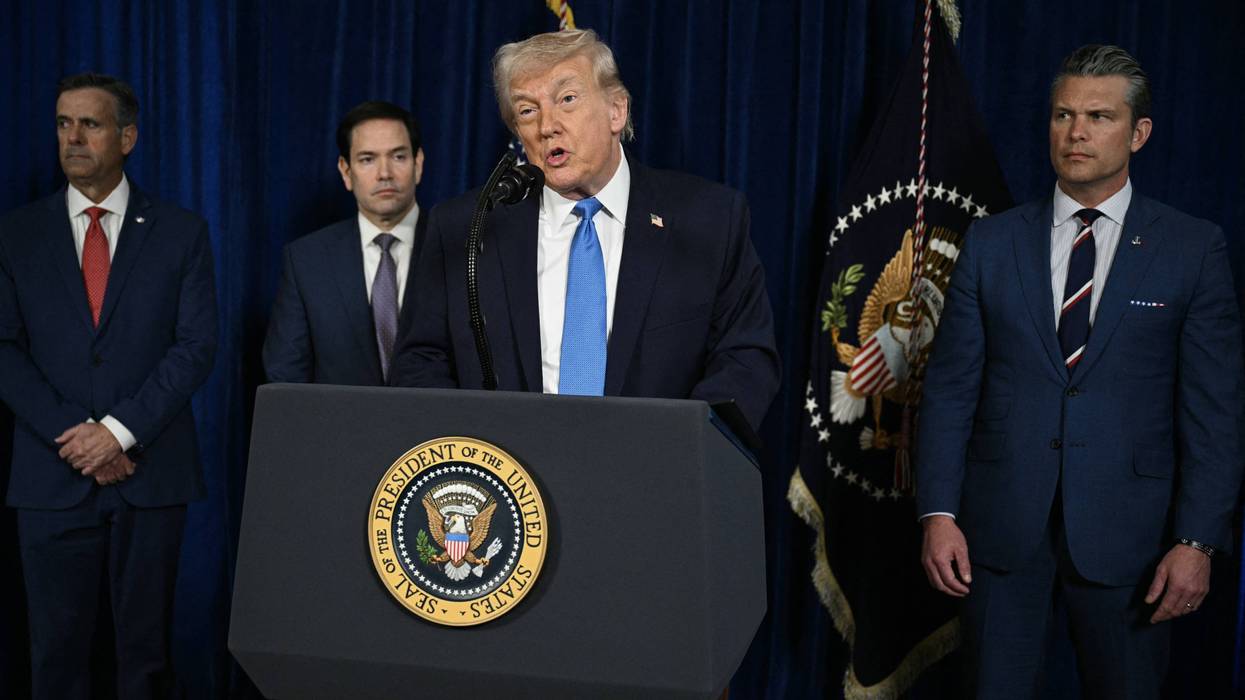
As the US voting public continues to express its discontent over the disastrous war of choice against Iran that US President Donald Trump launched just over two months ago, fresh criticism followed after weekend reporting revealed the administration skirted congressional review to approve an $8.6 billion weapons deal with the United Arab Emirates and other allies in the Middle East.
Announced Friday night quietly by the US State Department, as the New York Times reports, the "sales would entail the transfer of rockets to Israel, Qatar, and the United Arab Emirates and air-defense equipment to Qatar and Kuwait."
According to the Times:
Under the terms of the deal with Qatar, the Gulf country would pay more than $4 billion for American-made Patriot missile interceptors — global stockpiles of which have dwindled during the war with Iran.
Israel, the Emirates and Qatar would receive an Advanced Precision Kill Weapon System, which fires laser-guided rockets. Kuwait also purchased an advanced aerial defense system for about $2.5 billion.
Secretary of State Marco Rubio expedited the deals under an emergency provision allowing the “immediate sale” of the weapons, the State Department said, bypassing standard congressional review and prompting criticism from Democratic lawmakers. This is the third time the second Trump administration has invoked an emergency authorization during the Iran war to bypass Congress on arms sales.
"No comment," said Mohamed ElBaradei, a Nobel Peace Prize winner and the former head of the International Atomic Energy Agency (IAEA), in an eye-rolling response to the news on social media.
After a commenter suggested that "America opened the door to war for [the countries taking part in the sale] so they would open their treasuries and the Israeli-American arms trade would boom after a slump," ElBaradei seemed to agree.
"The vaults are open, and the arms trade is thriving before the war and after it," he said.
Kenneth Roth, former executive director of Human Rights Watch and now a visiting professor at Princeton University, said: "Trump is bypassing Congress to fast-track arms sales to the United Arab Emirates, apparently without receiving any promise that the UAE would stop arming the genocidal Rapid Support Forces (RSF) in Sudan."
The RSF has been accused of atrocities in the ongoing Sudanese civil war, and the backing it has received from the US, with the UAE as its closely allied proxy, has been the source of outrage and criticism.
"Over and over again, the Trump administration is exposing private Social Security data," said one watchdog group who called the leak of personal information "a goldmine for identity thieves" and other fraudsters.
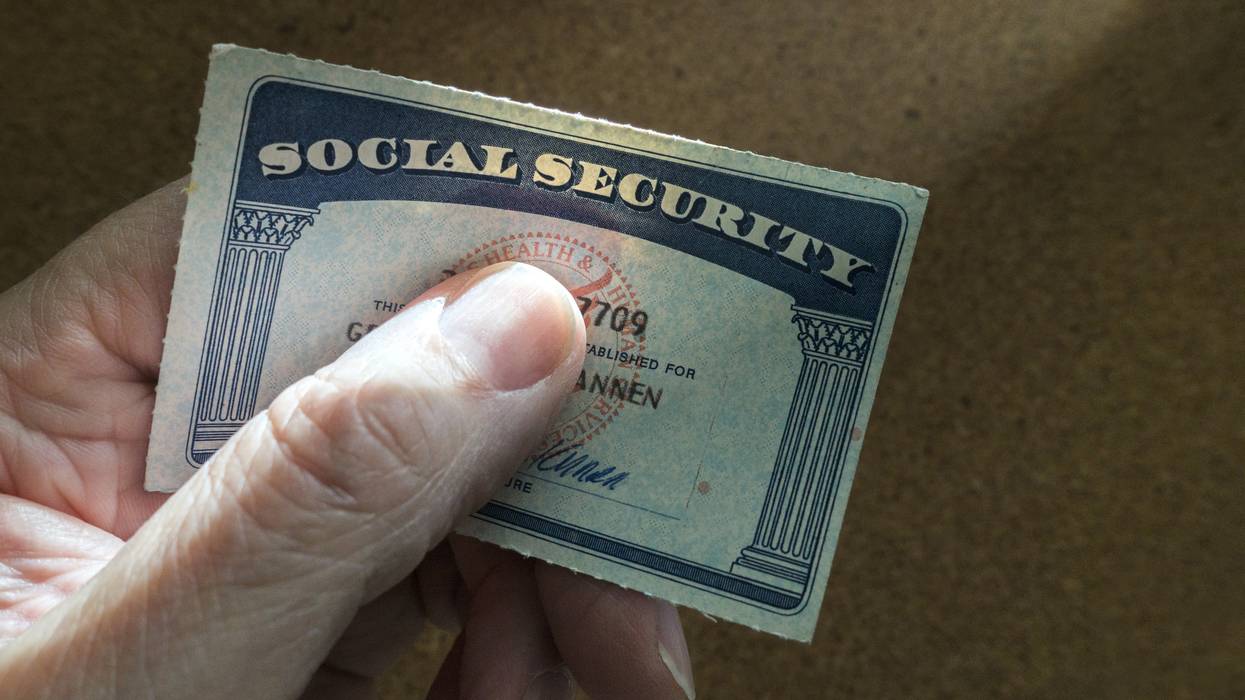
A newly reported failure of the Trump administration's ability to handle sensitive private information in the social programs it is tasked with operating triggered a fresh wave of anger over the weekend after it was revealed that healthcare providers' Social Security numbers were made public as part of a faulty Medicare portal rollout.
The Washington Post discovered the compromised database and alerted the administration last week, before publishing a story about it on Friday, after efforts had been made to protect the sensitive information from further compromise.
According to the Post:
The Centers for Medicare and Medicaid Services (CMS) last year created a directory to help seniors look up which doctors and medical providers accept which insurance plans, framing it as an overdue improvement and part of the Trump administration’s initiative to modernize health care technology.
But a publicly accessible database used to populate the directory contains some of the providers’ Social Security numbers, linked to their names and other identifying information. For at least several weeks, CMS made the database available for public use as part of its data transparency efforts.
While the reporting noted that the files were "not immediately visible to users who [visited] the provider directory," lawmakers and experts said the compromised information would be a treasure trove for fraudsters.
“The more we learn about how the Trump Administration handles the people’s most sensitive data, the clearer their incompetence becomes."
Critics pounced on the new reporting, calling it "yet another mess-up by the Team Trump" and only the latest evidence that the administration cannot and should not be trusted to protect the nation's most successful anti-poverty programs or the sensitive personal data of the American people who entrust the government with that information.
"Over and over again, the Trump administration is exposing private Social Security data," said Social Security Works, an advocacy group that serves as a public watchdog for the nation's social programs.
The compromised database, said the group, "is a goldmine for identity thieves, scammers, and foreign governments. And it is undermining the very foundation of our Social Security system."
"This is a failure by this administration," said Sen. Ruben Gallego (D-Ariz.) in response to the reporting. "Exposing Social Security numbers, whether patients or providers, is unacceptable."
Rep. Richard Neal (D-Mass.), the ranking member of the House committee that oversees the Medicare program, put the onus on his Republican colleagues in Congress.
“The more we learn about how the Trump Administration handles the people’s most sensitive data, the clearer their incompetence becomes,” Neal told the Post in a statement. “Do House Republicans need to see their own data exposed before they do right by their constituents and act?”
In March, as Common Dreams reported at the time, a whistleblower filed a complaint with the Social Security Administration accusing a former staffer with Trump's Department of Government Efficiency (DOGE), run for a time by right-wing billionaire Elon Musk, of trying to share information from SSA databases with his private employer.
Since the outset of Trump's second term, DOGE's meddling with Social Security and Trump's undermining of the program have been the source of deep anger and concerns among the program's defenders.
In a social media post on Saturday citing the whistleblower allegations from March, Rep. John Larson (D-Conn.) said, "For more than a year, 'DOGE' has been combing through the American people's records. They want to use your data to overturn elections and profit in the private sector. Enough! This administration must be held accountable for this massive data breach!
On Friday, responding to the Post's new reporting about the compromised database of physicians' private information, Larsen condemned Republicans for their ongoing and pervasive failures in the face of Trump's malfeasance and incompetence.
DOGE, said Larsen, "has been in your data for more than a year. We just learned that physicians' Social Security numbers were publicly exposed in an online portal launched by ‘DOGE’ officials."
"If this isn't enough for Republicans to act," he asked, "where will they draw the line?"

"Your dignity stands taller than the place you stood, and it will live forever in our memory."
Explosive Media, one of the independent outfits generating the viral videos about the war in Iran, created a short piece on Saturday to honor the American father of two who climbed atop a bridge in the Washington, DC this weekend to demand an end to the conflict.
"In honor of Guido Reichstadter, the man who climbed the Frederick Douglass Memorial Bridge to make his voice of protest heard," the group said in a post alongside the video short. "Your dignity stands taller than the place you stood, and it will live forever in our memory."
As Common Dreams reported, Reichstadter climbed the bridge wearing a t-shirt that simply read "End War" beginning on Friday afternoon, remained in protest overnight, and told one reporter he intends to remain "for a few days at least."
In honor of Guido Reichstadter,
the man who climbed the Frederick Douglass Memorial Bridge to make his voice of protest heard.
Your dignity stands taller than the place you stood,
and it will live forever in our memory. 🫡🏔️ pic.twitter.com/WANYzS7kIh
— Explosive Media (@ExplosiveMediaa) May 2, 2026
Reichstadter said he climbed the 168-foot-tall bridge “because the government of the United States is engaged in acts of mass murder in my name. And I refuse to be complicit in that.”
"The world is proud of you, Guido," Explosive Media said in a separate post on social media. "Soon, side by side, we will celebrate peace and victory together."