

SUBSCRIBE TO OUR FREE NEWSLETTER
Daily news & progressive opinion—funded by the people, not the corporations—delivered straight to your inbox.
5
#000000
#FFFFFF
To donate by check, phone, or other method, see our More Ways to Give page.
Daily news & progressive opinion—funded by the people, not the corporations—delivered straight to your inbox.

Lisa Nurnberger, 202-331-6959, Meghan Crosby, 202-331-6943
The Union of Concerned Scientists (UCS) today issued a report card
grading 15 federal agencies on their policies controlling communication
between staff scientists and the news media and the public. The report
found significant inconsistencies and confusion among agency media
policies and their implementation. Some agency policies encourage free
speech, but the agencies stifle communication. Other policies are weak,
but in practice the agencies allow scientists to speak freely. And
although overall many agency policies are deficient, UCS has seen some
positive changes in recent years. (For the report card, go to: www.ucsusa.org/mediapolicies.)
"We've
learned that with a little determination, agencies can become more
responsive to the public through the media," said Francesca Grifo,
director of the UCS Scientific Integrity Program. "But too many
agencies have a long way to go. Too often the press and the public are
being shortchanged."
The agencies with the best policies and implementation were the National Aeronautic and Space Administration (NASA), National Institute of Standards and Technology (NIST), and National Oceanic and Atmospheric Administration (NOAA).
The agencies with the worst policies were the Environmental Protection
Agency (EPA), Consumer Product Safety Commission (CPSC), Fish and
Wildlife Service (FWS), and Occupational Safety and Health
Administration (OSHA).
NASA
made improvements in the wake of a widely reported incident in which a
political appointee censored top climate scientist James Hansen. "When
presented with allegations of censorship, NASA moved quickly to take
steps to clarify its media policy and move toward a culture of
openness," Grifo said. "It's time for other federal agencies to make
the grade." The report gave NASA's policy a B and its implementation of
the policy a "satisfactory."
UCS
analyzed the media policies at regulatory and science agencies and
surveyed staff scientists to assess how the policies are implemented.
UCS also interviewed dozens of agency scientists, public affairs officers, and journalists who cover the agencies.
Among other things, UCS's investigation found:
-- The Centers for Disease Control and Prevention has an excellent media policy, with
provisions that allow scientists to state their personal views and
review press releases about their research. When it comes to
implementation, however, many scientists say they are not allowed to
speak freely to the media, and many fear retaliation for doing so. UCS
gave the CDC an A for its policy, but a "needs improvement" for
implementation.
-- OSHA's policy is more focused on controlling
the agency's message than communicating scientific results and
analysis. Most agency scientists told UCS they could not speak freely
or feared retaliation for stating their personal scientific opinions.
UCS gave OSHA's policy an F.
--
FWS has no national policy, forcing scientists to rely on informal, ad
hoc local policies. Many FWS scientists told UCS that political
appointees have interfered with science-based decisions in recent years
and, as a result, scientific openness has suffered. UCS gave FWS's
policy a D.
--
In addition to receiving poor marks on numerous regional media
policies, the EPA is especially restrictive, according to interviews
UCS conducted with journalists who cover the agency. Many EPA
scientists concur, telling UCS they cannot speak freely to the media. UCS gave the EPA policies a D.
Besides
the aforementioned agencies, the report also graded media policies at
the Bureau of Land Management, Census Bureau, Food and Drug
Administration, National Institutes of Health, National Science
Foundation, Nuclear Regulatory Commission and U.S. Geological Survey.
The
report calls on the next administration to ensure federal scientists
are allowed and encouraged to share their expertise freely with the
media. Furthermore, the report recommended that agency media policies
grant scientists the right to final review of press releases and other
documents that rely upon their research or purport to represent their
scientific opinions. In addition, the policies should protect
scientists' freedom to speak
openly about their research and scientific opinions in a private
capacity, even in situations in which their research may be
controversial or have implications for agency policy.
"The
common-sense reforms we are suggesting wouldn't cost the government a
penny," said Grifo. "In these tough economic times, adopting and
enforcing good media policies is a way to strengthen the government's
ability to protect public health and safety without putting additional
financial strain on taxpayers."
The Union of Concerned Scientists is the leading science-based nonprofit working for a healthy environment and a safer world. UCS combines independent scientific research and citizen action to develop innovative, practical solutions and to secure responsible changes in government policy, corporate practices, and consumer choices.
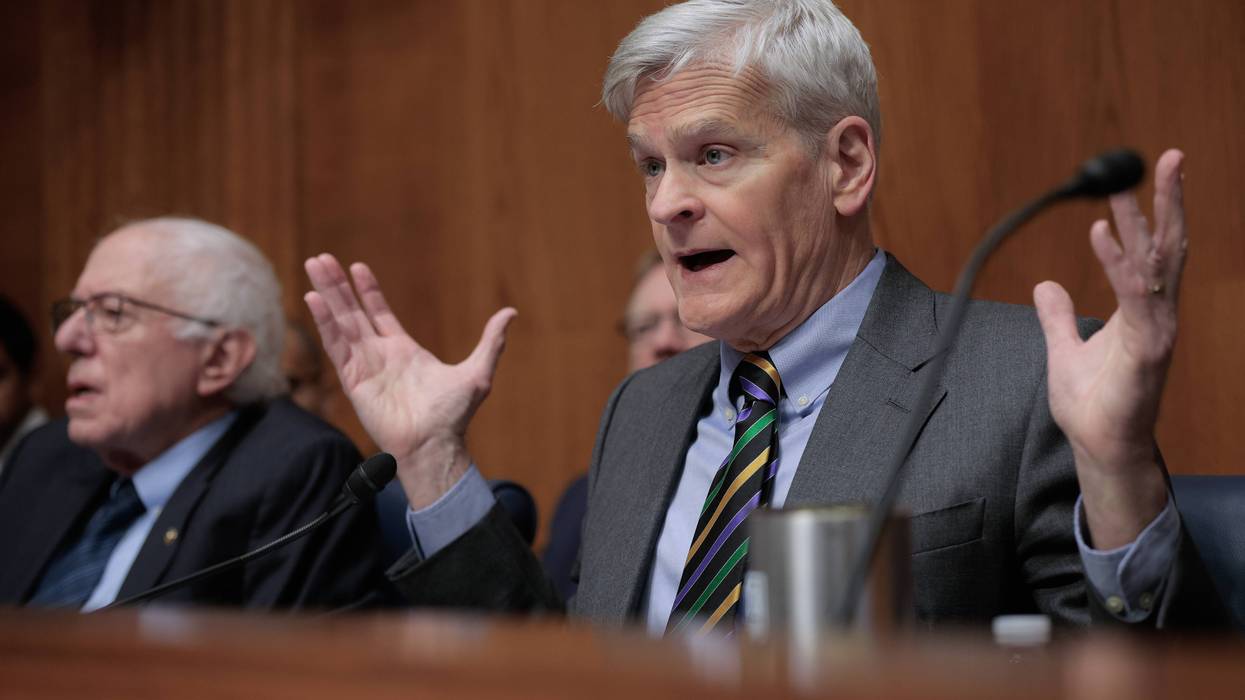
"This is a major blow for the disastrous, backfiring war and sends a clear signal to President Trump: End the war, do not escalate it," said NIAC. "The hard work of pro-peace Americans is paying off."
After months of failed votes on Democratic war powers resolutions intended to end President Donald Trump's illegal assault on Iran, the US Senate finally advanced legislation to a final vote on Tuesday, when a fourth Republican broke ranks.
Sen. Bill Cassidy (R-La.) joined three other Republicans and all Democrats but one for the 50-47 vote on a motion to discharge Sen. Tim Kaine's (D-Va.) bill from committee. Cassidy's move notably came just days after he lost a primary race in which Trump backed one of his challengers—apparent retribution for the senator voting to convict Trump following his historic second impeachment.
"While I support the administration's efforts to dismantle Iran's nuclear program, the White House and Pentagon have left Congress in the dark on Operation Epic Fury," Cassidy said on social media Tuesday. "In Louisiana, I've heard from people, including President Trump's supporters, who are concerned about this war. Until the administration provides clarity, no congressional authorization or extension can be justified."
The US and Israel launched the operation on February 28, without authorization from Congress and in violation of the United Nations Charter. Faced with a key deadline under the War Powers Act earlier this month, the White House claimed the conflict had been "terminated" due to a ceasefire agreement reached hours after Trump's genocidal threat against Iran on April 7. However, the president has maintained a naval blockade, and Iran has continued to limit ship traffic through the Strait of Hormuz.
As with last week's vote on a war powers resolution from Sen. Jeff Merkley (D-Ore.), Sens. Susan Collins (R-Maine), Lisa Murkowski (R-Alaska), and Rand Paul (R-Ky.) backed the new motion, while Sen. John Fetterman (D-Pa.) voted with the GOP. A potential tie was avoided on Tuesday when Sens. John Cornyn (R-Texas), Thom Tillis (R-NC), and Tommy Tuberville (R-Ala.) did not participate.
The Associated Press noted that Kaine's bill "will get a vote on final passage, but the timing was not immediately clear," and if the three Republicans who were absent Tuesday maintain their stances on the war, the resolution could still ultimately be defeated.
Despite that uncertainty, congressional Democrats and other critics of the illegal assault welcomed the Tuesday vote that followed seven unsuccessful votes in the Senate and many more in the House of Representatives, where Republicans also have a narrow majority.
"This is a major blow for the disastrous, backfiring war and sends a clear signal to President Trump: End the war, do not escalate it," the National Iranian American Council (NIAC) declared on social media. "The hard work of pro-peace Americans is paying off."
NIAC president Jamal Abdi said that "it has taken 10 weeks and a dozen votes but Congress is finally coming in line with the vast majority of Americans who oppose the senseless war on Iran... There are strong odds it will pass in the Republican-controlled House later this week."
Senate Minority Leader Chuck Schumer (D-NY) said in a statement that "vote by vote, Democrats are breaking through Republicans' wall of silence on Trump’s illegal war."
"For more than 80 days, Trump has dragged America into a costly, chaotic conflict with no plan, no objective, and no legal authority," he continued. "Today proved our pressure is working: Republicans are starting to crack, and momentum is building to check him. We are not letting up."
According to The New York Times, Kaine similarly said that "the momentum is moving our way slowly."
While Trump would be able to veto a war powers resolution that reached his desk, Democrats have argued that passing one would make clear to him that his assault on Iran is unpopular. Kaine said that "what the president cares about is his own popularity, and when Congress, even including members of his own party, start to vote against him."
Kaine expects a final vote to come after the Memorial Day recess, and expressed hope that lawmakers returning to their state or districts will hear from frustrated constituents. He predicted that "people are going to hear an earful when they get home about gas prices," which have soared due to the Strait of Hormuz closure.
Alix Fraser, vice president of advocacy at the pro-democracy group Issue One, called Tuesday's vote "a significant step in the effort to reestablish one of Congress' most sacred roles—the constitutional right to send American men and women to war."
Fraser applauded "the senators who voted to reaffirm Congress's constitutional role in decisions of war and peace," recognizing by name the Republicans who had the "for having the courage to stand up for the American service members being asked to risk their lives, as well as for the American families already struggling with rising costs at home."
He also urged the House "to follow suit," emphasizing that "this is a pivotal moment for our democracy. We must decide whether future generations will inherit a system in which the representatives of the American people debate and authorize the most consequential decisions, like going to war—or whether we normalize a system where presidents can unilaterally lead the country into ill-defined and open-ended conflicts."
“Americans should remain concerned about the broader structural weaknesses that allowed the country to reach this point without meaningful congressional involvement from the outset," Fraser added. "The current war powers framework needs to be reformed to empower the legislative branch and follow the constitutional process that the framers intended."
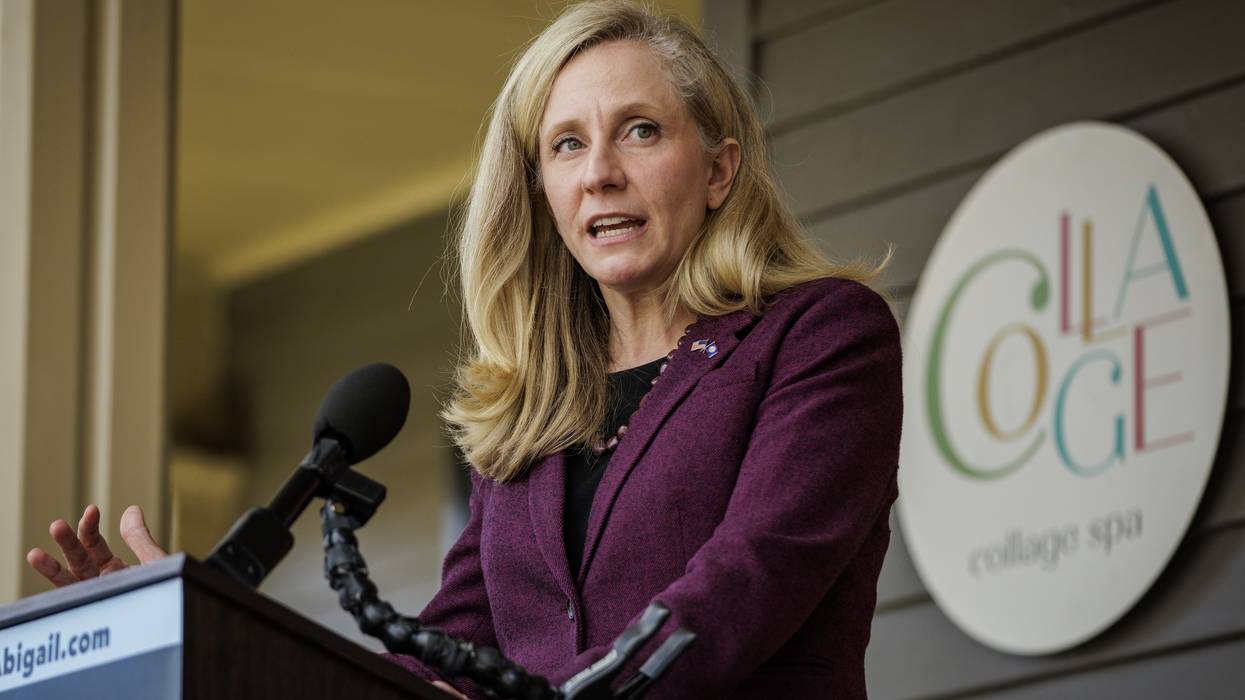
“The governor’s decision leaves the commonwealth exactly where we have been since 2021: with an unchecked illicit market hurting our communities, harming our youth, and putting adults at risk," said one critic.
Criminal justice reform and cannabis legalization advocates led condemnation of Democratic Virginia Gov. Abigail Spanberger's Tuesday veto of legislation that would have established a retail market for the sale of recreational-use marijuana, which has been legal in the state for five years.
In 2021, Virginia became the then-16th state to pass an adult-use marijuana legalization law, with sales set to begin in 2024. However, former Republican Gov. Glenn Youngkin repeatedly vetoed the legislation, which would establish the framework for regulating and taxing the plant's recreational use.
Today, while adults can legally consume cannabis recreationally, cannabis sales in Virginia are still restricted to medical use, and patients must travel to one of the five licensed providers in the commonwealth.
In March, Virginia lawmakers passed a package of bills to legalize recreational cannabis sales to people age 21 and older via a regulated market, place oversight of such sales under the Virginia Cannabis Control Authority, increase the public possession limit from one ounce to 2.5 ounces, allow delivery sales, establish new state and local cannabis taxes, and set January 1, 2027 as the launch date for sales.
Spanberger—who had campaigned on a promise to sign legislation establishing recreational cannabis sales—proposed amendments to the bill that were rejected by the General Assembly.
“I support the intent of many of the bills I am vetoing," she explained in a statement. "However, it is my responsibility as governor to make sure all new laws can be successfully implemented and protect against unintended consequences that harm Virginians."
"I look forward to continuing to work with bill patrons, state and local leaders, and advocates on legislation addressing these issues in the future," the governor said.
Marijuana Moment reported that Spangberger sought to delay the start of sales by six months, increase taxes, and institute new criminal penalties for cannabis consumers.
“Once again, Virginia’s efforts to establish a safe, regulated, and equitable adult-use cannabis marketplace has been halted despite years of work, public input, and broad recognition that the status quo is failing Virginians," state Sen. Lashrecse Aird (D-63), who sponsored one of the bills, said in a statement Tuesday.
“The governor’s decision leaves the commonwealth exactly where we have been since 2021: with an unchecked illicit market hurting our communities, harming our youth, and putting adults at risk," she added.
Del. Paul Krizek (D-16), who sponsored the House of Delegates version of the sales bill, said, “Five years ago, Virginia legalized cannabis in recognition that the War on Drugs has caused disproportionate harm to Black families and communities."
“The question now is whether Virginia will continue allowing an unregulated illegal market to thrive, or finally establish a safe, transparent system that protects consumers, keeps products away from children, and keeps our commitment to ending racially discriminatory marijuana policing in Virginia," he added.
JM Pedini, development director for the advocacy group National Organization for the Reform of Marijuana Laws and executive director for Virginia NORML, told Marijuana Moment that Spanberger's veto is “a profound disappointment to the many Virginia voters who believed her when she said on the campaign trail that she supported establishing a regulated adult-use cannabis market.”
“It is also a slap in the face to the years of serious work undertaken by lawmakers, policy experts, advocates, public health stakeholders, and regulators who spent more than half a decade researching, debating, and carefully crafting this legislation,” Pedini added. “Rather than build upon that work, the governor dismissed it in favor of out-of-touch proposals to recriminalize cannabis consumers that lawmakers rightly rejected.”
It was stupid when Youngkin stood in the way of a regulated market for LEGAL recreational adult-use marijuana--not just for the important safety aspects of taking it off the black market, but also for the $ Virginia misses out on every day without. It is just as stupid now.
— VAPLAN (@vaplan.bsky.social) May 19, 2026 at 2:26 PM
Chelsea Higgs Wise, executive director of the Richmond-based nonprofit Marijuana Justice, said in a statement that "for five years, Virginia has been stuck in a limbo where adults can legally possess, share, and grow cannabis, but there is still no regulated way to purchase it."
"By rejecting the retail bill," Wise added, "the governor has chosen to extend that chaos rather than move us toward a transparent, accountable retail system that centers public health, public safety, and justice."
Twenty-four states have legalized recreational marijuana, while 16 states allow medical use of the plant. Last month, the US Department of Justice began reclassifying cannabis from Schedule I—a category that includes dangerous drugs like heroin, LSD, and MDMA to Schedule III, which includes codeine, ketamine, anabolic steroids, and testosterone.
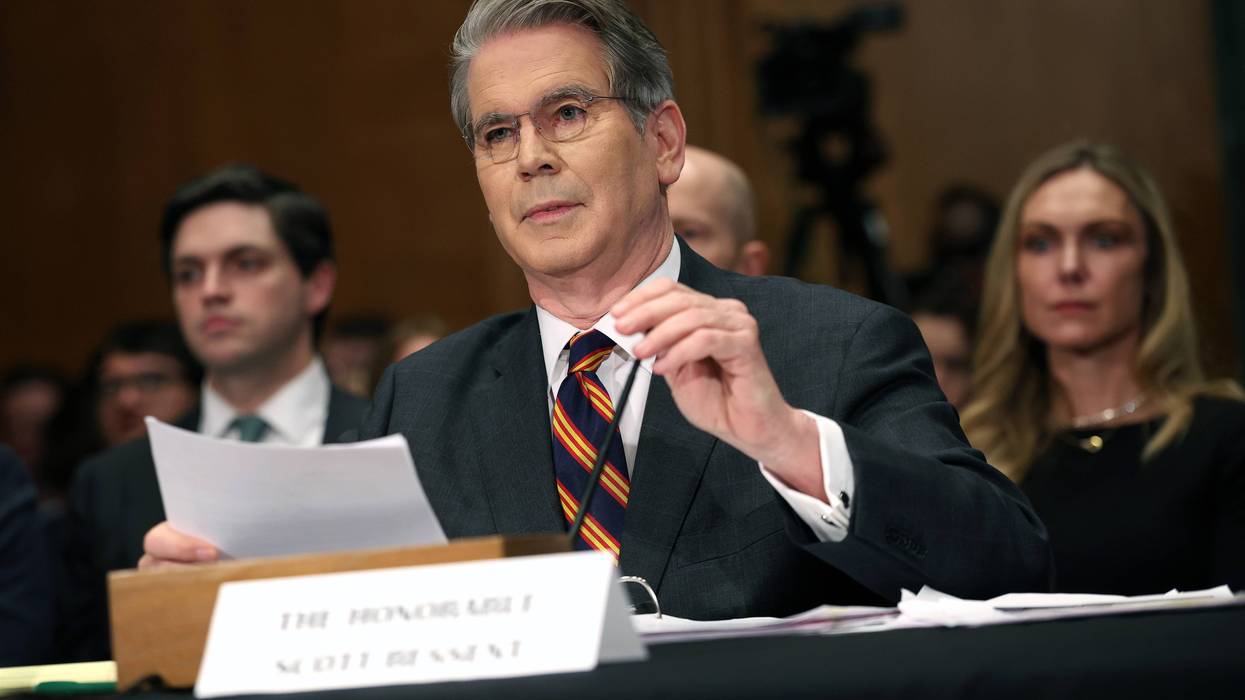
"Every time Palestinians and their supporters organize internationally, Washington reaches for the terrorism label to shut them down," said one critic.
Palestine defenders decried Tuesday's announcement by the Trump administration of US sanctions targeting four nonviolent campaigners involved in the recent humanitarian flotillas that tried to break Israel's illegal siege of Gaza.
The US Department of the Treasury said in a statement that its Office of Foreign Assets Control "is taking action against four individuals associated with the pro-Hamas flotilla organized by the US-designated Popular Conference for Palestinians Abroad (PCPA) that is attempting to access Gaza in support of Hamas."
The sanctioned individuals are Saif Abu Keshek, a Palestinian with Spanish and Swedish citizenship and PCPA leader who helped organize and lead Global Sumud Flotilla (GSF) missions; Jordan-based PCPA president Hisham Abdallah Sulayman Abu Mahfuz; Mohammed Khatib, who is based in Belgium and is the European coordinator for Samidoun, the Palestinian Prisoner Solidarity Network; and Jaldia Abubakra Aueda, Samidoun's coordinator in Madrid.
“The pro-terror flotilla attempting to reach Gaza is a ludicrous attempt to undermine President [Donald] Trump’s successful progress toward lasting peace in the region," Treasury Secretary Scott Bessent said in a statement Tuesday. “Treasury will continue to sever Hamas’ global financial support networks, no matter where in the world they are.”
There is no substantiated evidence that the Gaza flotillas are linked to Hamas. Meanwhile, United Nations experts, numerous national governments, human rights groups, and experts say Israel is perpetrating genocide, apartheid, colonization, occupation, and ethnic cleansing against Palestinians.
Samidoun called the sanctions—which freeze any of the targets' US assets and ban Americans from doing business with them—“the latest manifestation of the ongoing US genocidal war on the Palestinian people" and pointed to Israel's ongoing violent interception and seizure of GSF vessels on the high seas off the coast of Gaza.
“Today’s sanctions by the US come hand-in-hand with today’s Israeli piracy of the Global Sumud Flotilla and the Freedom Flotilla, and the abduction of hundreds of international activists at sea,” the group said in a statement. “All of these sanctions targeting Palestinian organizations, not only those targeting us, are aiding and abetting genocide."
Since the Hamas-led attack of October 7, 2023, the Biden and Trump administrations have supported Israel with tens of billions of dollars worth of armed aid and diplomatic cover, including vetoes of numerous United Nations Security Council Gaza ceasefire resolutions. Total US financial support for Israel since it was founded in 1948—largely via the ethnic cleansing of Palestinian Arabs—is approaching $300 billion in inflation-adjusted dollars.
Since returning to office, Trump has cracked down on pro-Palestinian activists, students, organizations, and foreign nationals. Critics—including advocacy groups, academics, and some judges—have condemned what they have called attacks on free speech, association, and academic freedom.
The Trump administration has sanctioned International Criminal Court Prosecutor Karim Khan and other numerous other ICC jurists after the Hague-based tribunal issued warrants for the arrest of Israeli Prime Minister Benjamin Netanyahu and former Defense Minister Yoav Gallant for alleged war crimes and crimes against humanity in Gaza. The ICC also issued arrest warrants for three Hamas leaders who were killed by Israeli attacks.
On Tuesday, far-right Israeli Finance Minister Bezalel Smotrich said that the ICC is also seeking his arrest, and that he would "fight back" by ordering the ethnic cleansing of hundreds of Palestinians from their homes in the illegally occupied West Bank.
The US administration has also sanctioned independent UN Palestine expert Francesca Albanese and her family—a move that was temporarily blocked earlier this month by a federal judge who asserted that the Italian humanitarian "has done nothing more than speak."
“Every time Palestinians and their supporters organize internationally, Washington reaches for the terrorism label to shut them down," Isabelle Hayslip, advocacy manager at Democracy for the Arab World Now, told Al Jazeera on Tuesday. "The net keeps widening. Palestinian diaspora communities now live under constant threat of designation for demanding their rights.”