SUBSCRIBE TO OUR FREE NEWSLETTER
Daily news & progressive opinion—funded by the people, not the corporations—delivered straight to your inbox.
5
#000000
#FFFFFF
To donate by check, phone, or other method, see our More Ways to Give page.
Daily news & progressive opinion—funded by the people, not the corporations—delivered straight to your inbox.

US Sen. Bill Cassidy (R-La.) speaks to reporters on December 3, 2025.
One campaigner said Republicans want to force people "onto junk plans that leave them at risk of crippling medical debt."
The Republican healthcare proposal that's set for a vote in the US Senate on Thursday would not prevent insurance premiums from skyrocketing for tens of millions of Americans and would likely harm sicker people by promoting high-deductible plans.
The GOP bill, led by Sens. Mike Crapo (R-Idaho) and Bill Cassidy (R-La.), would allow enhanced Affordable Care Act (ACA) tax credits to expire, replacing them in 2026 and 2027 with an annual payment of up to $1,500 in tax-advantaged health savings accounts to help cover out-of-pocket costs.
The catch is that only Americans enrolled in high-deductible bronze or catastrophic plans on the ACA exchanges would be eligible for the funding, which could not be used on monthly premiums. In 2026, the average individual deductible for bronze plans is $7,476, and the average for catastrophic plans is $10,600.
Larry Levitt, executive vice president for health policy at KFF, said Tuesday that "premium payments would still more than double next year" under the GOP plan, which does not have enough support to overcome the Senate's 60-vote filibuster.
"Healthy people could be better off in a high deductible plan with a health savings account," Levitt noted. "People who are sick would face big premium increases or a deductible they can't afford."
Brad Woodhouse, president of the advocacy group Protect Our Care, called Senate Republicans' legislation "an utter joke that would set healthcare progress back by decades and leave Americans high and dry without the care and coverage they deserve."
"Republicans are proving once again how unserious they are," said Woodhouse. "Instead of protecting hard-working families, Sens. Cassidy and Crapo want to force them off the insurance plans they like and onto junk plans that leave them at risk of crippling medical debt. That’s not what American families want, and it’s certainly not what they deserve.”
Asked earlier this week if he supports the Crapo-Cassidy bill, President Donald Trump responded, "I like the concept."
The Senate GOP plan was introduced as a counter to Democrats' push for a clean three-year extension of the enhanced ACA subsidies. Republicans, who passed legislation over the summer that enacted the largest-ever cuts to Medicaid, are expected to vote down the Democratic plan on Thursday.
The Center on Budget and Policy Priorities estimates that if the ACA tax credits lapse at the end of the year, "a couple making $44,000 (208% of the poverty level) will see their monthly marketplace premium rise from $85 to $253—an annual increase of $2,013."
With the Senate vote looming, House Speaker Mike Johnson (R-La) is "still trying to figure out" his healthcare proposal, Politico reported Tuesday.
"The goal is for GOP lawmakers to have 'something' to vote on before the end of next week, according to one of the senior House Republicans involved in the talks," the outlet added, "even if there is no time left for the Senate to pass it before the subsidies lapse."
Dear Common Dreams reader, It’s been nearly 30 years since I co-founded Common Dreams with my late wife, Lina Newhouser. We had the radical notion that journalism should serve the public good, not corporate profits. It was clear to us from the outset what it would take to build such a project. No paid advertisements. No corporate sponsors. No millionaire publisher telling us what to think or do. Many people said we wouldn't last a year, but we proved those doubters wrong. Together with a tremendous team of journalists and dedicated staff, we built an independent media outlet free from the constraints of profits and corporate control. Our mission has always been simple: To inform. To inspire. To ignite change for the common good. Building Common Dreams was not easy. Our survival was never guaranteed. When you take on the most powerful forces—Wall Street greed, fossil fuel industry destruction, Big Tech lobbyists, and uber-rich oligarchs who have spent billions upon billions rigging the economy and democracy in their favor—the only bulwark you have is supporters who believe in your work. But here’s the urgent message from me today. It's never been this bad out there. And it's never been this hard to keep us going. At the very moment Common Dreams is most needed, the threats we face are intensifying. We need your support now more than ever. We don't accept corporate advertising and never will. We don't have a paywall because we don't think people should be blocked from critical news based on their ability to pay. Everything we do is funded by the donations of readers like you. When everyone does the little they can afford, we are strong. But if that support retreats or dries up, so do we. Will you donate now to make sure Common Dreams not only survives but thrives? —Craig Brown, Co-founder |
The Republican healthcare proposal that's set for a vote in the US Senate on Thursday would not prevent insurance premiums from skyrocketing for tens of millions of Americans and would likely harm sicker people by promoting high-deductible plans.
The GOP bill, led by Sens. Mike Crapo (R-Idaho) and Bill Cassidy (R-La.), would allow enhanced Affordable Care Act (ACA) tax credits to expire, replacing them in 2026 and 2027 with an annual payment of up to $1,500 in tax-advantaged health savings accounts to help cover out-of-pocket costs.
The catch is that only Americans enrolled in high-deductible bronze or catastrophic plans on the ACA exchanges would be eligible for the funding, which could not be used on monthly premiums. In 2026, the average individual deductible for bronze plans is $7,476, and the average for catastrophic plans is $10,600.
Larry Levitt, executive vice president for health policy at KFF, said Tuesday that "premium payments would still more than double next year" under the GOP plan, which does not have enough support to overcome the Senate's 60-vote filibuster.
"Healthy people could be better off in a high deductible plan with a health savings account," Levitt noted. "People who are sick would face big premium increases or a deductible they can't afford."
Brad Woodhouse, president of the advocacy group Protect Our Care, called Senate Republicans' legislation "an utter joke that would set healthcare progress back by decades and leave Americans high and dry without the care and coverage they deserve."
"Republicans are proving once again how unserious they are," said Woodhouse. "Instead of protecting hard-working families, Sens. Cassidy and Crapo want to force them off the insurance plans they like and onto junk plans that leave them at risk of crippling medical debt. That’s not what American families want, and it’s certainly not what they deserve.”
Asked earlier this week if he supports the Crapo-Cassidy bill, President Donald Trump responded, "I like the concept."
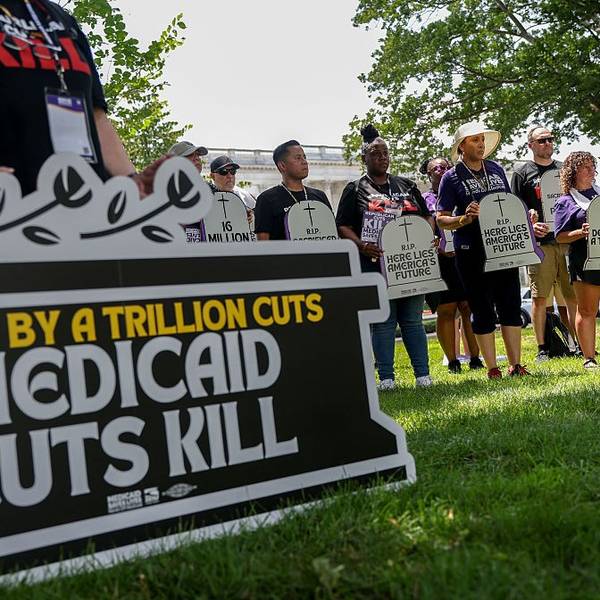
The Senate GOP plan was introduced as a counter to Democrats' push for a clean three-year extension of the enhanced ACA subsidies. Republicans, who passed legislation over the summer that enacted the largest-ever cuts to Medicaid, are expected to vote down the Democratic plan on Thursday.
The Center on Budget and Policy Priorities estimates that if the ACA tax credits lapse at the end of the year, "a couple making $44,000 (208% of the poverty level) will see their monthly marketplace premium rise from $85 to $253—an annual increase of $2,013."
With the Senate vote looming, House Speaker Mike Johnson (R-La) is "still trying to figure out" his healthcare proposal, Politico reported Tuesday.
"The goal is for GOP lawmakers to have 'something' to vote on before the end of next week, according to one of the senior House Republicans involved in the talks," the outlet added, "even if there is no time left for the Senate to pass it before the subsidies lapse."
The Republican healthcare proposal that's set for a vote in the US Senate on Thursday would not prevent insurance premiums from skyrocketing for tens of millions of Americans and would likely harm sicker people by promoting high-deductible plans.
The GOP bill, led by Sens. Mike Crapo (R-Idaho) and Bill Cassidy (R-La.), would allow enhanced Affordable Care Act (ACA) tax credits to expire, replacing them in 2026 and 2027 with an annual payment of up to $1,500 in tax-advantaged health savings accounts to help cover out-of-pocket costs.
The catch is that only Americans enrolled in high-deductible bronze or catastrophic plans on the ACA exchanges would be eligible for the funding, which could not be used on monthly premiums. In 2026, the average individual deductible for bronze plans is $7,476, and the average for catastrophic plans is $10,600.
Larry Levitt, executive vice president for health policy at KFF, said Tuesday that "premium payments would still more than double next year" under the GOP plan, which does not have enough support to overcome the Senate's 60-vote filibuster.
"Healthy people could be better off in a high deductible plan with a health savings account," Levitt noted. "People who are sick would face big premium increases or a deductible they can't afford."
Brad Woodhouse, president of the advocacy group Protect Our Care, called Senate Republicans' legislation "an utter joke that would set healthcare progress back by decades and leave Americans high and dry without the care and coverage they deserve."
"Republicans are proving once again how unserious they are," said Woodhouse. "Instead of protecting hard-working families, Sens. Cassidy and Crapo want to force them off the insurance plans they like and onto junk plans that leave them at risk of crippling medical debt. That’s not what American families want, and it’s certainly not what they deserve.”
Asked earlier this week if he supports the Crapo-Cassidy bill, President Donald Trump responded, "I like the concept."
The Senate GOP plan was introduced as a counter to Democrats' push for a clean three-year extension of the enhanced ACA subsidies. Republicans, who passed legislation over the summer that enacted the largest-ever cuts to Medicaid, are expected to vote down the Democratic plan on Thursday.
The Center on Budget and Policy Priorities estimates that if the ACA tax credits lapse at the end of the year, "a couple making $44,000 (208% of the poverty level) will see their monthly marketplace premium rise from $85 to $253—an annual increase of $2,013."
With the Senate vote looming, House Speaker Mike Johnson (R-La) is "still trying to figure out" his healthcare proposal, Politico reported Tuesday.
"The goal is for GOP lawmakers to have 'something' to vote on before the end of next week, according to one of the senior House Republicans involved in the talks," the outlet added, "even if there is no time left for the Senate to pass it before the subsidies lapse."