America is barreling towards authoritarianism at such a breakneck pace that it should alarm every single one of us. But instead of meeting this moment with courage and integrity, the corporate media has utterly capitulated, stuffing money in Trump's pockets, spiking stories that might offend the regime, and firing journalists who refuse to go along and get along. That is not journalism. That’s complicity.
Our model of reader-funded journalism has survived for one reason only: people like you. Please help us with a gift of $8, $13, $27, $75, or whatever amount you can afford, which will help keep Common Dreams strong now and into the future.
Why Your Support Matters Now
Our model of reader-funded journalism has survived for one reason only: people like you. Please help us with a gift of $8, $13, $27, $75, or whatever amount you can afford, which will help keep Common Dreams strong now and into the future.
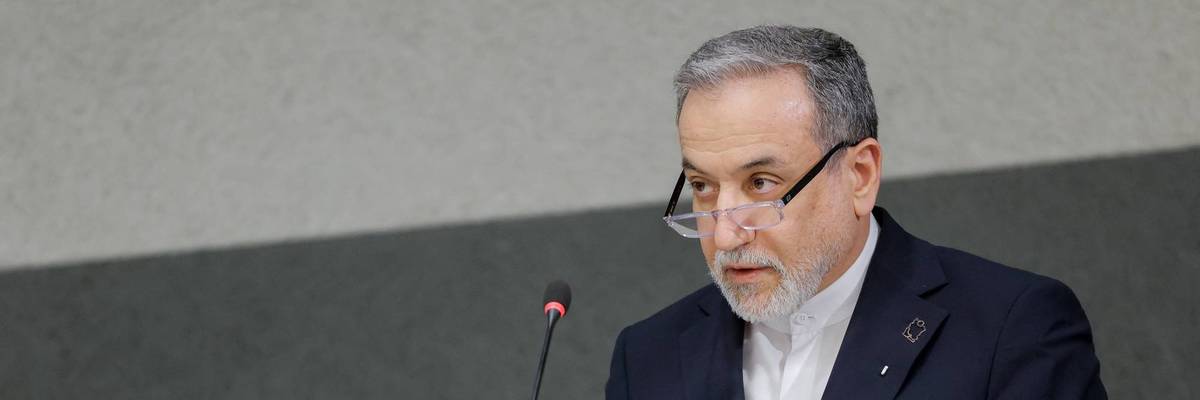
Iranian Foreign Minister Abbas Araghchi delivers a speech during a session of the United Nations Conference on Disarmament, on the sidelines of a second round of US-Iranian talks with Washington pushing Tehran to make a deal to limit its nuclear program, in Geneva, on February 17, 2026.
(Photo by Valentin Flauraud/AFP via Getty Images)
Iran Foreign Minister Says ‘There Is No Military Solution to Our Nuclear Program’ as Trump Ramps Up Threats
"I know that a deal is achievable, but it should be fair and based on a win-win solution," said Abbas Araghchi. "A military option would only complicate this, would only bring about disastrous consequences."
As President Donald Trump continued to threaten a potentially massive war, Iran's foreign minister stressed his commitment to peaceful negotiations over Iran's nuclear program.
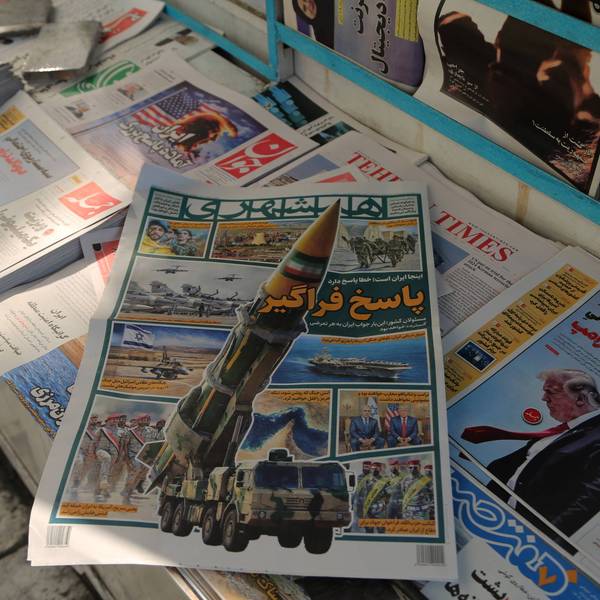
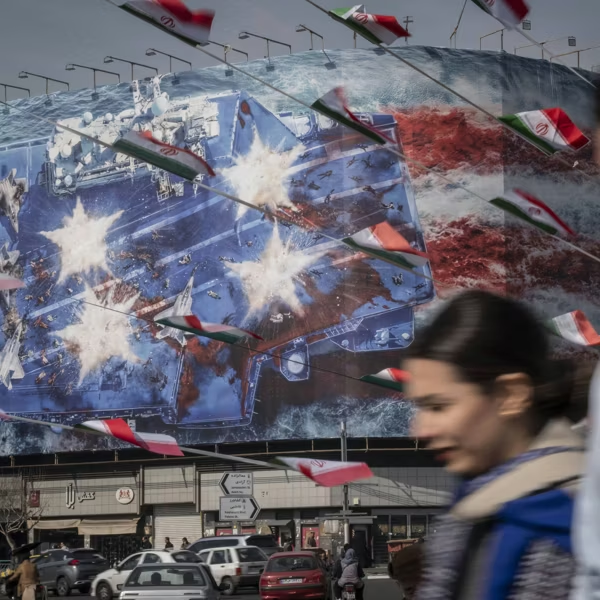
Amid the largest military buildup in the Middle East since the invasion of Iraq, Trump said on Thursday that he was weighing an initial, limited strike in order to force Iran to negotiate a new deal to limit its nuclear enrichment and would launch a broader attack—potentially aimed at toppling the entire government—if the country refused to do so.
Iranian Foreign Minister Abbas Araghchi responded to these demands in a lengthy interview on MS NOW's "Morning Joe" on Friday, discussing recent talks with the US in Geneva.
"One thing I have to emphasize is that there is no military solution for Iran's nuclear program," Araghchi said. "That was tested last year, and there was a huge attack on our facilities. They killed and assassinated our scientists, but they couldn't kill our nuclear program."
After his strikes on three Iranian nuclear sites in June, Trump claimed to have “obliterated” Iran's nuclear program and enrichment capabilities. But less than a year later, he is once again threatening a much bigger attack on Iran using the same justification.
Iran's Masoud Pezeshkian insisted earlier this week that his country is “absolutely not seeking nuclear weapons” and invited international inspectors in to verify it. Supreme Leader Ali Khamenei, meanwhile, has reiterated that Iran has the right to a nuclear industry.
"If they want a solution for Iran's nuclear program, if they want to ensure that Iran's nuclear program would remain peaceful forever," Araghchi said on Friday, "the only solution is diplomatic negotiation."
Although Iran is allowed to pursue nuclear power for peaceful means under the Nuclear Nonproliferation Treaty (NPT), Trump publicly declared that he would not accept a deal that allows "any enrichment” by Iran.
Araghchi, however, said that's not what the discussion has looked like behind the scenes. "The US side has not asked for zero enrichment,” he said.
Instead, he said they discussed "political commitments and technical measures" to "make sure that this program is only for peaceful purposes" and said the International Atomic Energy Agency (IAEA), the UN's nuclear watchdog, was involved in helping to craft them.
"This is what we have already done in 2015," Araghchi said, referring to the first nuclear deal between Iran and the US, which Trump ripped up during his first term, even though Iran was complying with its strict enrichment limits. "I believe that we can do it again, even a better one," he said.
Although the US president warned on Thursday that Iran must agree to a deal within 10 days or "bad things happen," Araghchi said there has been "no ultimatum" from Trump and that the only discussion between the two sides was on how to reach a "fast deal."
"We are under sanctions. Obviously, any day the sanctions are terminated sooner would be better for us. So we have no reason to delay a possible deal," Araghchi said. "For the US side also, President Trump and his team are interested in a quick deal. So we agreed to work with each other to achieve a deal as soon as possible. The only question is how to make it a fair deal, a win-win deal, an equitable deal."
Trump has also demanded that Iran surrender its ballistic missile program and support for regional allies in Gaza, Lebanon, and Yemen, which Iran has said are nonstarters. Israeli Prime Minister Benjamin Netanyahu has nudged Trump keep pushing these maximal demands and has been accused of attempting to goad the US into war with its number one adversary by injecting "poison pills" into the negotiations.
Araghchi did not clarify the extent to which these demands have come up as sticking points during recent talks.
"I know that a deal is achievable, but it should be fair and based on a win-win solution," Araghchi said. "[A] military option would only complicate this, would only bring about disastrous consequences, not only for us, perhaps for the whole region and for the whole international community, which is fed up with different escalations and wars in our region and beyond."
Soon after Araghchi's interview aired, Trump told reporters he was considering a military strike to force Iran into a deal.
“I guess I can say I am considering that,” he said at the start of a meeting with governors at the White House.
The U.S. is on a fast track to authoritarianism like nothing I've ever seen. Meanwhile, corporate news outlets are utterly capitulating to Trump, twisting their coverage to avoid drawing his ire while lining up to stuff cash in his pockets.
That's why I believe that Common Dreams is doing the best and most consequential reporting that we've ever done.
Our small but mighty team is a progressive reporting powerhouse, covering the news every day that the corporate media never will. Our mission has always been simple: To inform. To inspire. And to ignite change for the common good.
Now here's the key piece that I want all our readers to understand: None of this would be possible without your financial support.
That's not just some fundraising cliche. It's the absolute and literal truth. We don't accept corporate advertising and never will. We don't have a paywall because we don't think people should be blocked from critical news based on their ability to pay. Everything we do is funded by the donations of readers like you.
Will you donate now to help power the nonprofit, independent reporting of Common Dreams?
Thank you for being a vital member of our community. Together, we can keep independent journalism alive when it’s needed most.
- Craig Brown, Co-founder
Our work is licensed under Creative Commons (CC BY-NC-ND 3.0). Feel free to republish and share widely.
As President Donald Trump continued to threaten a potentially massive war, Iran's foreign minister stressed his commitment to peaceful negotiations over Iran's nuclear program.
Amid the largest military buildup in the Middle East since the invasion of Iraq, Trump said on Thursday that he was weighing an initial, limited strike in order to force Iran to negotiate a new deal to limit its nuclear enrichment and would launch a broader attack—potentially aimed at toppling the entire government—if the country refused to do so.
Iranian Foreign Minister Abbas Araghchi responded to these demands in a lengthy interview on MS NOW's "Morning Joe" on Friday, discussing recent talks with the US in Geneva.
"One thing I have to emphasize is that there is no military solution for Iran's nuclear program," Araghchi said. "That was tested last year, and there was a huge attack on our facilities. They killed and assassinated our scientists, but they couldn't kill our nuclear program."
After his strikes on three Iranian nuclear sites in June, Trump claimed to have “obliterated” Iran's nuclear program and enrichment capabilities. But less than a year later, he is once again threatening a much bigger attack on Iran using the same justification.
Iran's Masoud Pezeshkian insisted earlier this week that his country is “absolutely not seeking nuclear weapons” and invited international inspectors in to verify it. Supreme Leader Ali Khamenei, meanwhile, has reiterated that Iran has the right to a nuclear industry.
"If they want a solution for Iran's nuclear program, if they want to ensure that Iran's nuclear program would remain peaceful forever," Araghchi said on Friday, "the only solution is diplomatic negotiation."
Although Iran is allowed to pursue nuclear power for peaceful means under the Nuclear Nonproliferation Treaty (NPT), Trump publicly declared that he would not accept a deal that allows "any enrichment” by Iran.
Araghchi, however, said that's not what the discussion has looked like behind the scenes. "The US side has not asked for zero enrichment,” he said.
Instead, he said they discussed "political commitments and technical measures" to "make sure that this program is only for peaceful purposes" and said the International Atomic Energy Agency (IAEA), the UN's nuclear watchdog, was involved in helping to craft them.
"This is what we have already done in 2015," Araghchi said, referring to the first nuclear deal between Iran and the US, which Trump ripped up during his first term, even though Iran was complying with its strict enrichment limits. "I believe that we can do it again, even a better one," he said.
Although the US president warned on Thursday that Iran must agree to a deal within 10 days or "bad things happen," Araghchi said there has been "no ultimatum" from Trump and that the only discussion between the two sides was on how to reach a "fast deal."
"We are under sanctions. Obviously, any day the sanctions are terminated sooner would be better for us. So we have no reason to delay a possible deal," Araghchi said. "For the US side also, President Trump and his team are interested in a quick deal. So we agreed to work with each other to achieve a deal as soon as possible. The only question is how to make it a fair deal, a win-win deal, an equitable deal."
Trump has also demanded that Iran surrender its ballistic missile program and support for regional allies in Gaza, Lebanon, and Yemen, which Iran has said are nonstarters. Israeli Prime Minister Benjamin Netanyahu has nudged Trump keep pushing these maximal demands and has been accused of attempting to goad the US into war with its number one adversary by injecting "poison pills" into the negotiations.
Araghchi did not clarify the extent to which these demands have come up as sticking points during recent talks.
"I know that a deal is achievable, but it should be fair and based on a win-win solution," Araghchi said. "[A] military option would only complicate this, would only bring about disastrous consequences, not only for us, perhaps for the whole region and for the whole international community, which is fed up with different escalations and wars in our region and beyond."
Soon after Araghchi's interview aired, Trump told reporters he was considering a military strike to force Iran into a deal.
“I guess I can say I am considering that,” he said at the start of a meeting with governors at the White House.
Stephen Prager is a staff writer for Common Dreams.
As President Donald Trump continued to threaten a potentially massive war, Iran's foreign minister stressed his commitment to peaceful negotiations over Iran's nuclear program.
Amid the largest military buildup in the Middle East since the invasion of Iraq, Trump said on Thursday that he was weighing an initial, limited strike in order to force Iran to negotiate a new deal to limit its nuclear enrichment and would launch a broader attack—potentially aimed at toppling the entire government—if the country refused to do so.
Iranian Foreign Minister Abbas Araghchi responded to these demands in a lengthy interview on MS NOW's "Morning Joe" on Friday, discussing recent talks with the US in Geneva.
"One thing I have to emphasize is that there is no military solution for Iran's nuclear program," Araghchi said. "That was tested last year, and there was a huge attack on our facilities. They killed and assassinated our scientists, but they couldn't kill our nuclear program."
After his strikes on three Iranian nuclear sites in June, Trump claimed to have “obliterated” Iran's nuclear program and enrichment capabilities. But less than a year later, he is once again threatening a much bigger attack on Iran using the same justification.
Iran's Masoud Pezeshkian insisted earlier this week that his country is “absolutely not seeking nuclear weapons” and invited international inspectors in to verify it. Supreme Leader Ali Khamenei, meanwhile, has reiterated that Iran has the right to a nuclear industry.
"If they want a solution for Iran's nuclear program, if they want to ensure that Iran's nuclear program would remain peaceful forever," Araghchi said on Friday, "the only solution is diplomatic negotiation."
Although Iran is allowed to pursue nuclear power for peaceful means under the Nuclear Nonproliferation Treaty (NPT), Trump publicly declared that he would not accept a deal that allows "any enrichment” by Iran.
Araghchi, however, said that's not what the discussion has looked like behind the scenes. "The US side has not asked for zero enrichment,” he said.
Instead, he said they discussed "political commitments and technical measures" to "make sure that this program is only for peaceful purposes" and said the International Atomic Energy Agency (IAEA), the UN's nuclear watchdog, was involved in helping to craft them.
"This is what we have already done in 2015," Araghchi said, referring to the first nuclear deal between Iran and the US, which Trump ripped up during his first term, even though Iran was complying with its strict enrichment limits. "I believe that we can do it again, even a better one," he said.
Although the US president warned on Thursday that Iran must agree to a deal within 10 days or "bad things happen," Araghchi said there has been "no ultimatum" from Trump and that the only discussion between the two sides was on how to reach a "fast deal."
"We are under sanctions. Obviously, any day the sanctions are terminated sooner would be better for us. So we have no reason to delay a possible deal," Araghchi said. "For the US side also, President Trump and his team are interested in a quick deal. So we agreed to work with each other to achieve a deal as soon as possible. The only question is how to make it a fair deal, a win-win deal, an equitable deal."
Trump has also demanded that Iran surrender its ballistic missile program and support for regional allies in Gaza, Lebanon, and Yemen, which Iran has said are nonstarters. Israeli Prime Minister Benjamin Netanyahu has nudged Trump keep pushing these maximal demands and has been accused of attempting to goad the US into war with its number one adversary by injecting "poison pills" into the negotiations.
Araghchi did not clarify the extent to which these demands have come up as sticking points during recent talks.
"I know that a deal is achievable, but it should be fair and based on a win-win solution," Araghchi said. "[A] military option would only complicate this, would only bring about disastrous consequences, not only for us, perhaps for the whole region and for the whole international community, which is fed up with different escalations and wars in our region and beyond."
Soon after Araghchi's interview aired, Trump told reporters he was considering a military strike to force Iran into a deal.
“I guess I can say I am considering that,” he said at the start of a meeting with governors at the White House.
We've had enough. The 1% own and operate the corporate media. They are doing everything they can to defend the status quo, squash dissent and protect the wealthy and the powerful. The Common Dreams media model is different. We cover the news that matters to the 99%. Our mission? To inform. To inspire. To ignite change for the common good. How? Nonprofit. Independent. Reader-supported. Free to read. Free to republish. Free to share. With no advertising. No paywalls. No selling of your data. Thousands of small donations fund our newsroom and allow us to continue publishing. Can you chip in? We can't do it without you. Thank you.
SUBSCRIBE TO OUR FREE NEWSLETTER
Daily news & progressive opinion—funded by the people, not the corporations—delivered straight to your inbox.