Is Bernie Sanders Launching a Third Party? 'Not Right Now, No'
"Real change in this country will come about when an organized working class leads the fight for justice," the Vermont senator said in a new interview.
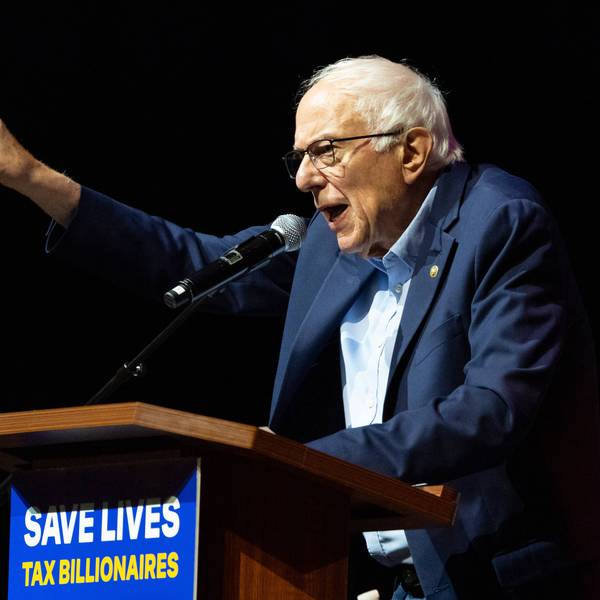
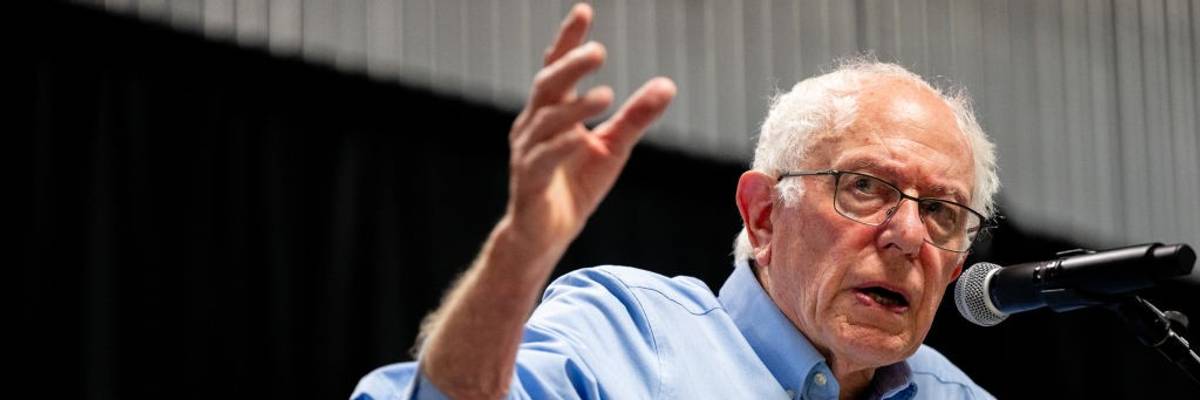
An email Sen. Bernie Sanders sent to supporters this past weekend fueled speculation that he could be laying the groundwork for a new political party in the wake of Democrats' crushing defeat in the 2024 election.
But in an interview with The Nation's John Nichols published Tuesday, Sanders (I-Vt.) said that he's not considering forming a party to challenge the entrenched Democratic and Republican establishments—at least not at the moment.
"Not right now, no," Sanders told Nichols, who asked the senator directly about his email to supporters and whether he intends to create a new party.
The senator argued in the email it is "highly unlikely" that the Democratic leadership will "learn the lessons of their defeat and create a party that stands with the working class and is prepared to take on the enormously powerful special interests that dominate our economy, our media, and our political life."
Sanders, who caucuses with the Democrats in the Senate, told Nichols that while he's not currently backing the creation of a new party, he is making the case that "where it is more advantageous to run as an Independent, outside of the Democratic primary process, we should do that." He also emphasized the need for more working-class candidates across the country.
"Real change in this country will come about when an organized working class leads the fight for justice. We need working-class candidates to help us do that."
The senator said the upstart campaign of Independent Dan Osborn—a union steamfitter who launched an unexpectedly close challenge to two-term Sen. Deb Fischer (R-Neb.) while shunning the state's Democratic establishment—"should be looked at as a model for the future."
"He took on both political parties," Sanders said of Osborn, who outperformed Vice President Kamala Harris by 14 percentage points in Nebraska and is now launching a PAC aimed at helping working-class candidates run for office.
"He took on the corporate world," Sanders continued. "He ran as a strong trade unionist. Without party support, getting heavily outspent, he got through to working-class people all over Nebraska. It was an extraordinary campaign, and it tells me that the American people are sick and tired of seeing the rich getting richer. They think billionaires dominate both political parties. They want real change, and Dan's campaign raised those issues in a very significant way."
Since Trump's victory earlier this month, Sanders has been scathing in his assessment of the current state of the Democratic Party and its long-term trajectory as it hemorrhages working-class support.
"The Democratic Party is, increasingly, a party dominated by billionaires, run by well-paid consultants whose ideology is to tinker around the edges of a grossly unjust and unfair oligarchic system," Sanders told Nichols. "If we are ever going to bring about real change in this country, we have got to significantly grow class consciousness in America."
In his email over the weekend, Sanders wrote that Democratic leaders "are much too wedded to the billionaires and corporate interests that fund their campaigns," making them reflexively hostile to the kinds of transformative changes needed to "build a multi-racial, multi-generational working class movement" with the power to challenge the nation's deeply unequal economic and political status quo.
"How do we recruit more working-class candidates for office at all levels of government? Should we be supporting Independent candidates who are prepared to take on both parties? How do we better support union organizing?" Sanders asked in the email. "These are some of the political questions that, together, we need to address. And it is absolutely critical that you make your voice heard during this process."
"Not me. Us," he added, reprising the central message of his 2020 campaign. "That is the only way forward."
We are at a crossroads
This country and this world are at a monumental crossroads. In a few short weeks, US voters will have an opportunity to beat back the forces of fascism and confront the billionaires who are rigging the economy, our media system, and our democracy, making it increasingly impossible for ordinary people to get by. We’re not just talking about the election. We’re talking about what must be done once these fascist elements are vanquished from power. We need a bolder set of solutions than what either major party has so far been willing to offer and a working-class movement ready to fight like hell for it. Trump didn't emerge from nowhere. The conditions that fueled MAGA authoritarianism were created by decades of radical neoliberal economic policies and a corrupt political system dominated by corporate interests. They slashed taxes on the super-rich, promising that the benefits would trickle down. They said giveaways to the corporate titans would make life more affordable for the rest of us. It was all bullshit. And when a bitter, betrayed populace searches for someone to blame, right-wing demagogues have little trouble finding scapegoats. People know when they're being lied to, but you won't hear any of this from the corporate media. Only independent journalism—powered and funded by people who believe in building a better world—can deliver truly trustworthy daily news. Our Fall Campaign is underway, and we need your help. To power our newsroom through the rest of the year, we need to raise $125,000 by midnight on October 31. So if you share our vision, please contribute whatever you can to sustain our work. |
An email Sen. Bernie Sanders sent to supporters this past weekend fueled speculation that he could be laying the groundwork for a new political party in the wake of Democrats' crushing defeat in the 2024 election.
But in an interview with The Nation's John Nichols published Tuesday, Sanders (I-Vt.) said that he's not considering forming a party to challenge the entrenched Democratic and Republican establishments—at least not at the moment.
"Not right now, no," Sanders told Nichols, who asked the senator directly about his email to supporters and whether he intends to create a new party.
The senator argued in the email it is "highly unlikely" that the Democratic leadership will "learn the lessons of their defeat and create a party that stands with the working class and is prepared to take on the enormously powerful special interests that dominate our economy, our media, and our political life."
Sanders, who caucuses with the Democrats in the Senate, told Nichols that while he's not currently backing the creation of a new party, he is making the case that "where it is more advantageous to run as an Independent, outside of the Democratic primary process, we should do that." He also emphasized the need for more working-class candidates across the country.
"Real change in this country will come about when an organized working class leads the fight for justice. We need working-class candidates to help us do that."
The senator said the upstart campaign of Independent Dan Osborn—a union steamfitter who launched an unexpectedly close challenge to two-term Sen. Deb Fischer (R-Neb.) while shunning the state's Democratic establishment—"should be looked at as a model for the future."
"He took on both political parties," Sanders said of Osborn, who outperformed Vice President Kamala Harris by 14 percentage points in Nebraska and is now launching a PAC aimed at helping working-class candidates run for office.
"He took on the corporate world," Sanders continued. "He ran as a strong trade unionist. Without party support, getting heavily outspent, he got through to working-class people all over Nebraska. It was an extraordinary campaign, and it tells me that the American people are sick and tired of seeing the rich getting richer. They think billionaires dominate both political parties. They want real change, and Dan's campaign raised those issues in a very significant way."
Since Trump's victory earlier this month, Sanders has been scathing in his assessment of the current state of the Democratic Party and its long-term trajectory as it hemorrhages working-class support.
"The Democratic Party is, increasingly, a party dominated by billionaires, run by well-paid consultants whose ideology is to tinker around the edges of a grossly unjust and unfair oligarchic system," Sanders told Nichols. "If we are ever going to bring about real change in this country, we have got to significantly grow class consciousness in America."
In his email over the weekend, Sanders wrote that Democratic leaders "are much too wedded to the billionaires and corporate interests that fund their campaigns," making them reflexively hostile to the kinds of transformative changes needed to "build a multi-racial, multi-generational working class movement" with the power to challenge the nation's deeply unequal economic and political status quo.
"How do we recruit more working-class candidates for office at all levels of government? Should we be supporting Independent candidates who are prepared to take on both parties? How do we better support union organizing?" Sanders asked in the email. "These are some of the political questions that, together, we need to address. And it is absolutely critical that you make your voice heard during this process."
"Not me. Us," he added, reprising the central message of his 2020 campaign. "That is the only way forward."
An email Sen. Bernie Sanders sent to supporters this past weekend fueled speculation that he could be laying the groundwork for a new political party in the wake of Democrats' crushing defeat in the 2024 election.
But in an interview with The Nation's John Nichols published Tuesday, Sanders (I-Vt.) said that he's not considering forming a party to challenge the entrenched Democratic and Republican establishments—at least not at the moment.
"Not right now, no," Sanders told Nichols, who asked the senator directly about his email to supporters and whether he intends to create a new party.
The senator argued in the email it is "highly unlikely" that the Democratic leadership will "learn the lessons of their defeat and create a party that stands with the working class and is prepared to take on the enormously powerful special interests that dominate our economy, our media, and our political life."
Sanders, who caucuses with the Democrats in the Senate, told Nichols that while he's not currently backing the creation of a new party, he is making the case that "where it is more advantageous to run as an Independent, outside of the Democratic primary process, we should do that." He also emphasized the need for more working-class candidates across the country.
"Real change in this country will come about when an organized working class leads the fight for justice. We need working-class candidates to help us do that."
The senator said the upstart campaign of Independent Dan Osborn—a union steamfitter who launched an unexpectedly close challenge to two-term Sen. Deb Fischer (R-Neb.) while shunning the state's Democratic establishment—"should be looked at as a model for the future."
"He took on both political parties," Sanders said of Osborn, who outperformed Vice President Kamala Harris by 14 percentage points in Nebraska and is now launching a PAC aimed at helping working-class candidates run for office.
"He took on the corporate world," Sanders continued. "He ran as a strong trade unionist. Without party support, getting heavily outspent, he got through to working-class people all over Nebraska. It was an extraordinary campaign, and it tells me that the American people are sick and tired of seeing the rich getting richer. They think billionaires dominate both political parties. They want real change, and Dan's campaign raised those issues in a very significant way."
Since Trump's victory earlier this month, Sanders has been scathing in his assessment of the current state of the Democratic Party and its long-term trajectory as it hemorrhages working-class support.
"The Democratic Party is, increasingly, a party dominated by billionaires, run by well-paid consultants whose ideology is to tinker around the edges of a grossly unjust and unfair oligarchic system," Sanders told Nichols. "If we are ever going to bring about real change in this country, we have got to significantly grow class consciousness in America."
In his email over the weekend, Sanders wrote that Democratic leaders "are much too wedded to the billionaires and corporate interests that fund their campaigns," making them reflexively hostile to the kinds of transformative changes needed to "build a multi-racial, multi-generational working class movement" with the power to challenge the nation's deeply unequal economic and political status quo.
"How do we recruit more working-class candidates for office at all levels of government? Should we be supporting Independent candidates who are prepared to take on both parties? How do we better support union organizing?" Sanders asked in the email. "These are some of the political questions that, together, we need to address. And it is absolutely critical that you make your voice heard during this process."
"Not me. Us," he added, reprising the central message of his 2020 campaign. "That is the only way forward."