SUBSCRIBE TO OUR FREE NEWSLETTER
Daily news & progressive opinion—funded by the people, not the corporations—delivered straight to your inbox.
5
#000000
#FFFFFF
To donate by check, phone, or other method, see our More Ways to Give page.
Daily news & progressive opinion—funded by the people, not the corporations—delivered straight to your inbox.
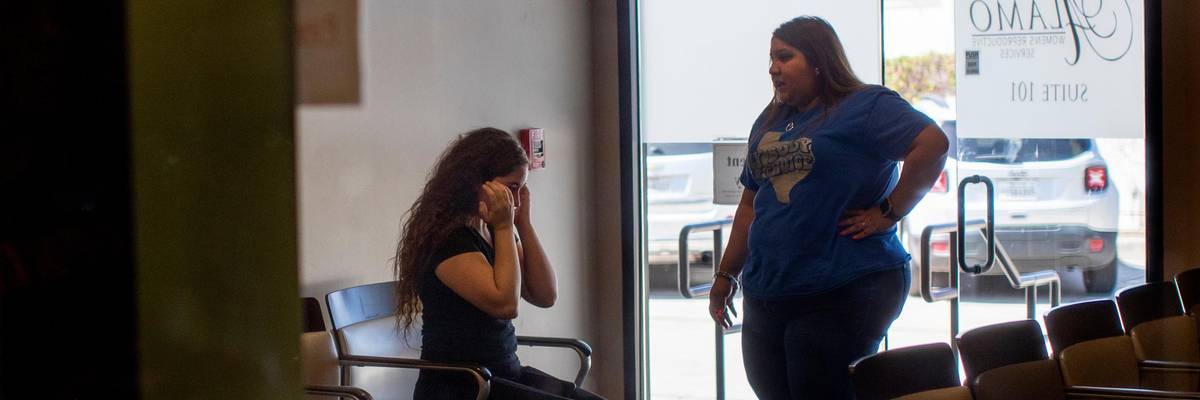
A patient is brought to tears as a staff member informs her that a San Antonio, Texas, clinic can no longer provide abortion services after moments earlier the Supreme Court overturned Roe v. Wade on June 24, 2022.
The reproductive rights landscape is bleak, but there are still ways to fight for abortion access.
Two years ago today, the Supreme Court overturned the longstanding abortion rights precedent Roe v. Wade with its Dobbs v. Jackson Women’s Health Organization decision. Since then, abortion restrictions have had devastating effects not only on pregnant people but on our society more generally, particularly in abortion-hostile states.
The anti-abortion movement is a war on poor women. Banning abortion at the state level means that those in need are often forced to travel to receive care. This requires not only the funds to travel for an abortion and pay for the procedure, which can cost upwards of $1,300, but also the ability to take time off work, find accommodations, or locate childcare.
But it’s also a war on all of us, except the ultrawealthy who can escape the devastating consequences of this post-Roe order. While out-of-state abortions can cost thousands of dollars, it’s estimated that only one in three Americans can afford to pay an unexpected $400 without relying on credit cards or loans.
By fighting for abortion protections at the state level, we can work toward winning back some of the access that we’ve lost in the two years since Dobbs.
And access to abortion is only the start. Denying reproductive services exacerbates existing inequalities and risks lives. The Turnaway Study, which followed nearly 1,000 women for a decade, found that those denied an abortion were four times as likely as those who had received one to be living in poverty years later. Meanwhile, people of color are both more likely to seek abortions and to experience worse health outcomes in pregnancy and childbirth. Black women had the highest rate of abortions in 2019 and died from maternal causes at 2.6 times the rate of white women in 2022.
On a broader scale, maternity care on the whole has worsened. For years, stricter abortion laws and cuts to funding have forced women’s healthcare centers, a key source of reproductive healthcare for low-income women, to close. But now, physicians, often the ones targeted by lawmakers for providing abortions, are leaving altogether and taking their medical expertise with them. Those who remain fear prosecution for providing abortion care, even when it is necessary for their patients’ health. According to a national survey, 68% of OBGYNs report that Dobbs hinders their ability to manage pregnancy-related emergencies.
The Supreme Court was set to decide two abortion-related cases this summer: one about access to the abortion pill mifepristone and another from Idaho questioning whether abortions can be provided to patients in medical emergencies.
On June 13, the Court unanimously ruled in favor of the Food and Drug Administration’s rules for providing and dispensing mifepristone, which allows access to the pills by mail. However, this decision was not a victory for abortion rights so much as it was the avoidance of a terrible setback. The Supreme Court chose to preserve access to the drug in this case on technical terms, meaning the decision doesn’t block future challenges from anti-abortion zealots.
The second abortion decision the Supreme Court will release this summer underscores just how bad the situation has gotten. In states where the only legal exception for abortion is the vague allowance to “save the life of the mother,” doctors are left unsure how much they can do, and their patients pay the price. In Idaho, some hospitals have resorted to flying patients out of state to receive medically necessary abortions, knowing that the trip alone wastes valuable time.
Abortion restrictions harm us all. It’s not only doctors who don’t want to live in abortion-hostile states. All over the U.S., teachers, students, and workers in general are avoiding states with harsh abortion restrictions. One survey found that 45% of young people were likely to reject a job offer if it meant working in a state where abortion was illegal. The combined population strain of people moving out and people refusing to move in compounds the direct economic damages of abortion restrictions.
The reproductive rights landscape is bleak, but there are still ways to fight for abortion access. This November, abortion will be on the ballot in as many as 10 states. These proposals would enshrine the right to abortion, a huge win in states where the procedure is currently banned like Arkansas or South Dakota. By fighting for abortion protections at the state level, we can work toward winning back some of the access that we’ve lost in the two years since Dobbs.
Abortion funds try to mitigate some of the harms of restrictions by helping pregnant individuals pay for their procedures, as well as travel costs when necessary. Since Dobbs, abortion funds have steadily received less in donations, limiting their ability to help people and even forcing some to temporarily shut down.
We have to fight not only for our right to abortion but also for our access. Abortion funds are an essential way to help each other receive invaluable care. Donating our time and money to these funds extends a hand to those who need it most. The Dobbs decision, and resulting abortion restrictions, have done immeasurable damage to our society, but we can still help lift each other up in the face of this new reality.
Dear Common Dreams reader, It’s been nearly 30 years since I co-founded Common Dreams with my late wife, Lina Newhouser. We had the radical notion that journalism should serve the public good, not corporate profits. It was clear to us from the outset what it would take to build such a project. No paid advertisements. No corporate sponsors. No millionaire publisher telling us what to think or do. Many people said we wouldn't last a year, but we proved those doubters wrong. Together with a tremendous team of journalists and dedicated staff, we built an independent media outlet free from the constraints of profits and corporate control. Our mission has always been simple: To inform. To inspire. To ignite change for the common good. Building Common Dreams was not easy. Our survival was never guaranteed. When you take on the most powerful forces—Wall Street greed, fossil fuel industry destruction, Big Tech lobbyists, and uber-rich oligarchs who have spent billions upon billions rigging the economy and democracy in their favor—the only bulwark you have is supporters who believe in your work. But here’s the urgent message from me today. It's never been this bad out there. And it's never been this hard to keep us going. At the very moment Common Dreams is most needed, the threats we face are intensifying. We need your support now more than ever. We don't accept corporate advertising and never will. We don't have a paywall because we don't think people should be blocked from critical news based on their ability to pay. Everything we do is funded by the donations of readers like you. When everyone does the little they can afford, we are strong. But if that support retreats or dries up, so do we. Will you donate now to make sure Common Dreams not only survives but thrives? —Craig Brown, Co-founder |
Two years ago today, the Supreme Court overturned the longstanding abortion rights precedent Roe v. Wade with its Dobbs v. Jackson Women’s Health Organization decision. Since then, abortion restrictions have had devastating effects not only on pregnant people but on our society more generally, particularly in abortion-hostile states.
The anti-abortion movement is a war on poor women. Banning abortion at the state level means that those in need are often forced to travel to receive care. This requires not only the funds to travel for an abortion and pay for the procedure, which can cost upwards of $1,300, but also the ability to take time off work, find accommodations, or locate childcare.
But it’s also a war on all of us, except the ultrawealthy who can escape the devastating consequences of this post-Roe order. While out-of-state abortions can cost thousands of dollars, it’s estimated that only one in three Americans can afford to pay an unexpected $400 without relying on credit cards or loans.
By fighting for abortion protections at the state level, we can work toward winning back some of the access that we’ve lost in the two years since Dobbs.
And access to abortion is only the start. Denying reproductive services exacerbates existing inequalities and risks lives. The Turnaway Study, which followed nearly 1,000 women for a decade, found that those denied an abortion were four times as likely as those who had received one to be living in poverty years later. Meanwhile, people of color are both more likely to seek abortions and to experience worse health outcomes in pregnancy and childbirth. Black women had the highest rate of abortions in 2019 and died from maternal causes at 2.6 times the rate of white women in 2022.
On a broader scale, maternity care on the whole has worsened. For years, stricter abortion laws and cuts to funding have forced women’s healthcare centers, a key source of reproductive healthcare for low-income women, to close. But now, physicians, often the ones targeted by lawmakers for providing abortions, are leaving altogether and taking their medical expertise with them. Those who remain fear prosecution for providing abortion care, even when it is necessary for their patients’ health. According to a national survey, 68% of OBGYNs report that Dobbs hinders their ability to manage pregnancy-related emergencies.
The Supreme Court was set to decide two abortion-related cases this summer: one about access to the abortion pill mifepristone and another from Idaho questioning whether abortions can be provided to patients in medical emergencies.
On June 13, the Court unanimously ruled in favor of the Food and Drug Administration’s rules for providing and dispensing mifepristone, which allows access to the pills by mail. However, this decision was not a victory for abortion rights so much as it was the avoidance of a terrible setback. The Supreme Court chose to preserve access to the drug in this case on technical terms, meaning the decision doesn’t block future challenges from anti-abortion zealots.
The second abortion decision the Supreme Court will release this summer underscores just how bad the situation has gotten. In states where the only legal exception for abortion is the vague allowance to “save the life of the mother,” doctors are left unsure how much they can do, and their patients pay the price. In Idaho, some hospitals have resorted to flying patients out of state to receive medically necessary abortions, knowing that the trip alone wastes valuable time.
Abortion restrictions harm us all. It’s not only doctors who don’t want to live in abortion-hostile states. All over the U.S., teachers, students, and workers in general are avoiding states with harsh abortion restrictions. One survey found that 45% of young people were likely to reject a job offer if it meant working in a state where abortion was illegal. The combined population strain of people moving out and people refusing to move in compounds the direct economic damages of abortion restrictions.
The reproductive rights landscape is bleak, but there are still ways to fight for abortion access. This November, abortion will be on the ballot in as many as 10 states. These proposals would enshrine the right to abortion, a huge win in states where the procedure is currently banned like Arkansas or South Dakota. By fighting for abortion protections at the state level, we can work toward winning back some of the access that we’ve lost in the two years since Dobbs.
Abortion funds try to mitigate some of the harms of restrictions by helping pregnant individuals pay for their procedures, as well as travel costs when necessary. Since Dobbs, abortion funds have steadily received less in donations, limiting their ability to help people and even forcing some to temporarily shut down.
We have to fight not only for our right to abortion but also for our access. Abortion funds are an essential way to help each other receive invaluable care. Donating our time and money to these funds extends a hand to those who need it most. The Dobbs decision, and resulting abortion restrictions, have done immeasurable damage to our society, but we can still help lift each other up in the face of this new reality.
Two years ago today, the Supreme Court overturned the longstanding abortion rights precedent Roe v. Wade with its Dobbs v. Jackson Women’s Health Organization decision. Since then, abortion restrictions have had devastating effects not only on pregnant people but on our society more generally, particularly in abortion-hostile states.
The anti-abortion movement is a war on poor women. Banning abortion at the state level means that those in need are often forced to travel to receive care. This requires not only the funds to travel for an abortion and pay for the procedure, which can cost upwards of $1,300, but also the ability to take time off work, find accommodations, or locate childcare.
But it’s also a war on all of us, except the ultrawealthy who can escape the devastating consequences of this post-Roe order. While out-of-state abortions can cost thousands of dollars, it’s estimated that only one in three Americans can afford to pay an unexpected $400 without relying on credit cards or loans.
By fighting for abortion protections at the state level, we can work toward winning back some of the access that we’ve lost in the two years since Dobbs.
And access to abortion is only the start. Denying reproductive services exacerbates existing inequalities and risks lives. The Turnaway Study, which followed nearly 1,000 women for a decade, found that those denied an abortion were four times as likely as those who had received one to be living in poverty years later. Meanwhile, people of color are both more likely to seek abortions and to experience worse health outcomes in pregnancy and childbirth. Black women had the highest rate of abortions in 2019 and died from maternal causes at 2.6 times the rate of white women in 2022.
On a broader scale, maternity care on the whole has worsened. For years, stricter abortion laws and cuts to funding have forced women’s healthcare centers, a key source of reproductive healthcare for low-income women, to close. But now, physicians, often the ones targeted by lawmakers for providing abortions, are leaving altogether and taking their medical expertise with them. Those who remain fear prosecution for providing abortion care, even when it is necessary for their patients’ health. According to a national survey, 68% of OBGYNs report that Dobbs hinders their ability to manage pregnancy-related emergencies.
The Supreme Court was set to decide two abortion-related cases this summer: one about access to the abortion pill mifepristone and another from Idaho questioning whether abortions can be provided to patients in medical emergencies.
On June 13, the Court unanimously ruled in favor of the Food and Drug Administration’s rules for providing and dispensing mifepristone, which allows access to the pills by mail. However, this decision was not a victory for abortion rights so much as it was the avoidance of a terrible setback. The Supreme Court chose to preserve access to the drug in this case on technical terms, meaning the decision doesn’t block future challenges from anti-abortion zealots.
The second abortion decision the Supreme Court will release this summer underscores just how bad the situation has gotten. In states where the only legal exception for abortion is the vague allowance to “save the life of the mother,” doctors are left unsure how much they can do, and their patients pay the price. In Idaho, some hospitals have resorted to flying patients out of state to receive medically necessary abortions, knowing that the trip alone wastes valuable time.
Abortion restrictions harm us all. It’s not only doctors who don’t want to live in abortion-hostile states. All over the U.S., teachers, students, and workers in general are avoiding states with harsh abortion restrictions. One survey found that 45% of young people were likely to reject a job offer if it meant working in a state where abortion was illegal. The combined population strain of people moving out and people refusing to move in compounds the direct economic damages of abortion restrictions.
The reproductive rights landscape is bleak, but there are still ways to fight for abortion access. This November, abortion will be on the ballot in as many as 10 states. These proposals would enshrine the right to abortion, a huge win in states where the procedure is currently banned like Arkansas or South Dakota. By fighting for abortion protections at the state level, we can work toward winning back some of the access that we’ve lost in the two years since Dobbs.
Abortion funds try to mitigate some of the harms of restrictions by helping pregnant individuals pay for their procedures, as well as travel costs when necessary. Since Dobbs, abortion funds have steadily received less in donations, limiting their ability to help people and even forcing some to temporarily shut down.
We have to fight not only for our right to abortion but also for our access. Abortion funds are an essential way to help each other receive invaluable care. Donating our time and money to these funds extends a hand to those who need it most. The Dobbs decision, and resulting abortion restrictions, have done immeasurable damage to our society, but we can still help lift each other up in the face of this new reality.