
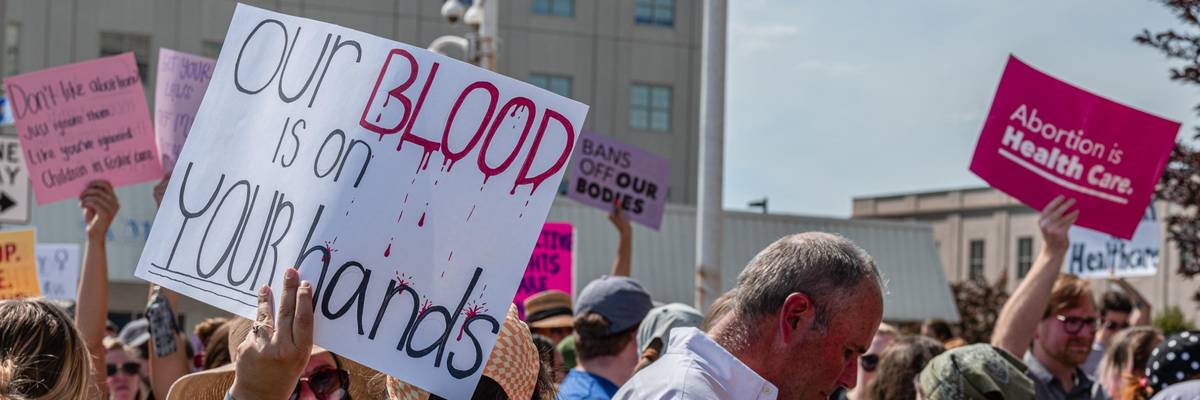
Abortion rights supporters protest the U.S. Supreme Court's Dobbs v. Jackson Women's Health decision at the Gene Snyder U.S. Courthouse in Louisville, Kentucky on June 24, 2022.
2 Years After the Fall of Roe, the Future of Reproductive Rights Depends on Us
We must resist efforts to impose draconian restrictions on reproductive healthcare and work toward policies that ensure everyone has the freedom to make their own healthcare decisions.
Two years ago, the Supreme Court's decision to overturn Roe v. Wade marked a seismic shift in American reproductive rights. The repercussions have been swift and severe, with sweeping changes that jeopardize the health and autonomy of countless individuals. As we navigate the post-Roe landscape, the stakes could not be higher.
In the aftermath of the Supreme Court's decision, nearly half of the states in the U.S. have enacted strict abortion bans or severe restrictions. States such as Texas, Oklahoma, Missouri, and 11 other states have implemented near-total bans, effectively cutting off access to abortion care for millions of people. These laws have created a patchwork of reproductive healthcare access, where the legality and availability of abortion are determined by geographic location rather than personal choice and medical need. This inconsistency forces many to travel long distances, often at great personal and financial cost, to seek the care they need. At Women's Reproductive Rights Assistance Project (WRRAP), we have noticed 54% of patients are traveling this year to another state for care.
One of the critical fronts in the war against reproductive rights is the battle over mifepristone, a medication used in over half of all abortions in the U.S. Mifepristone, combined with misoprostol and approved by the Food and Drug Administration, has been a safe and effective method for medication abortion for decades. However, while the recent SCOTUS ruling is a victory, it only addressed the issue of "standing," leaving the abortion pill still under threat. Anti-abortion legislators and activists have targeted mifepristone with the aim of limiting its distribution or banning it altogether. This would have devastating consequences, further reducing access to safe abortion care and disproportionately affecting those in marginalized communities who already face significant barriers to healthcare.
The fight to preserve and expand access to abortion, contraception, and other reproductive health services is not just a women's issue—it is a human issue.
The fall of Roe has also emboldened efforts to restrict or ban other aspects of reproductive health, including IVF and contraception. Legislative attempts to define personhood at the moment of fertilization could severely impact IVF treatments. Such measures could drastically limit the options for individuals and couples struggling with infertility.
Moreover, contraception, once considered a settled issue, is now under scrutiny. Proposals to ban certain forms of contraception, such as emergency contraception and IUDs, are gaining traction. These efforts threaten to roll back decades of progress in reproductive health and autonomy, potentially leading to higher rates of unintended pregnancies and further exacerbating social and economic inequalities.
Perhaps most alarming is a national abortion ban. Project 2025, a comprehensive plan put forth by conservative activists, outlines a strategy to implement nationwide restrictions on abortion. This plan, if enacted, would override state laws that protect abortion rights and impose a uniform ban across the country. Such a move would represent an unprecedented federal intrusion into personal healthcare decisions and fundamentally alter the landscape of reproductive rights in America.
In addition to restrictive laws, there is a growing trend to criminalize doctors, patients, and anyone who assists individuals seeking abortion care. These punitive measures not only create a climate of fear but also deter healthcare providers from offering essential services. Criminalizing abortion care endangers both the providers and the patients, discouraging the practice and further reducing access to safe abortions.
The implications of these developments extend far beyond those directly seeking abortion care. The erosion of reproductive rights is a threat to the fundamental principle of bodily autonomy, a cornerstone of personal freedom and dignity. When the state can dictate whether and when individuals can have children, it undermines the ability of all people to make essential decisions about their lives and futures.
Moreover, these restrictions disproportionately impact marginalized communities, including people of color, low-income individuals, and LGBTQ+ individuals. These groups often face the highest barriers to healthcare and are least able to travel long distances or navigate complex legal landscapes to obtain care. As such, the ongoing assault on reproductive rights exacerbates existing social and health inequities, entrenching systemic injustices even further.
In this critical moment, it is imperative to recognize that reproductive rights are human rights. The fight to preserve and expand access to abortion, contraception, and other reproductive health services is not just a women's issue—it is a human issue. The ability to control one's reproductive destiny is fundamental to achieving equality and justice for all.
We must resist efforts to impose draconian restrictions on reproductive healthcare and work toward policies that ensure everyone has the freedom to make their own healthcare decisions. This means supporting local and national organizations like WRRAP, advocating for laws that protect reproductive rights, and voting for leaders who are committed to upholding these fundamental freedoms.
The stakes are high, but we cannot afford to be complacent. The future of reproductive rights—and the broader fight for human dignity and equality—depends on our collective action. Now more than ever, we must stand together to protect the right to safe, legal, and accessible reproductive healthcare for all.
This piece was made available by American Forum.
We are at a crossroads
This country and this world are at a monumental crossroads. In a few short weeks, US voters will have an opportunity to beat back the forces of fascism and confront the billionaires who are rigging the economy, our media system, and our democracy, making it increasingly impossible for ordinary people to get by. We’re not just talking about the election. We’re talking about what must be done once these fascist elements are vanquished from power. We need a bolder set of solutions than what either major party has so far been willing to offer and a working-class movement ready to fight like hell for it. Trump didn't emerge from nowhere. The conditions that fueled MAGA authoritarianism were created by decades of radical neoliberal economic policies and a corrupt political system dominated by corporate interests. They slashed taxes on the super-rich, promising that the benefits would trickle down. They said giveaways to the corporate titans would make life more affordable for the rest of us. It was all bullshit. And when a bitter, betrayed populace searches for someone to blame, right-wing demagogues have little trouble finding scapegoats. People know when they're being lied to, but you won't hear any of this from the corporate media. Only independent journalism—powered and funded by people who believe in building a better world—can deliver truly trustworthy daily news. Our Fall Campaign is underway, and we need your help. To power our newsroom through the rest of the year, we need to raise $125,000 by midnight on October 31. So if you share our vision, please contribute whatever you can to sustain our work. |
Two years ago, the Supreme Court's decision to overturn Roe v. Wade marked a seismic shift in American reproductive rights. The repercussions have been swift and severe, with sweeping changes that jeopardize the health and autonomy of countless individuals. As we navigate the post-Roe landscape, the stakes could not be higher.
In the aftermath of the Supreme Court's decision, nearly half of the states in the U.S. have enacted strict abortion bans or severe restrictions. States such as Texas, Oklahoma, Missouri, and 11 other states have implemented near-total bans, effectively cutting off access to abortion care for millions of people. These laws have created a patchwork of reproductive healthcare access, where the legality and availability of abortion are determined by geographic location rather than personal choice and medical need. This inconsistency forces many to travel long distances, often at great personal and financial cost, to seek the care they need. At Women's Reproductive Rights Assistance Project (WRRAP), we have noticed 54% of patients are traveling this year to another state for care.
One of the critical fronts in the war against reproductive rights is the battle over mifepristone, a medication used in over half of all abortions in the U.S. Mifepristone, combined with misoprostol and approved by the Food and Drug Administration, has been a safe and effective method for medication abortion for decades. However, while the recent SCOTUS ruling is a victory, it only addressed the issue of "standing," leaving the abortion pill still under threat. Anti-abortion legislators and activists have targeted mifepristone with the aim of limiting its distribution or banning it altogether. This would have devastating consequences, further reducing access to safe abortion care and disproportionately affecting those in marginalized communities who already face significant barriers to healthcare.
The fight to preserve and expand access to abortion, contraception, and other reproductive health services is not just a women's issue—it is a human issue.
The fall of Roe has also emboldened efforts to restrict or ban other aspects of reproductive health, including IVF and contraception. Legislative attempts to define personhood at the moment of fertilization could severely impact IVF treatments. Such measures could drastically limit the options for individuals and couples struggling with infertility.
Moreover, contraception, once considered a settled issue, is now under scrutiny. Proposals to ban certain forms of contraception, such as emergency contraception and IUDs, are gaining traction. These efforts threaten to roll back decades of progress in reproductive health and autonomy, potentially leading to higher rates of unintended pregnancies and further exacerbating social and economic inequalities.
Perhaps most alarming is a national abortion ban. Project 2025, a comprehensive plan put forth by conservative activists, outlines a strategy to implement nationwide restrictions on abortion. This plan, if enacted, would override state laws that protect abortion rights and impose a uniform ban across the country. Such a move would represent an unprecedented federal intrusion into personal healthcare decisions and fundamentally alter the landscape of reproductive rights in America.
In addition to restrictive laws, there is a growing trend to criminalize doctors, patients, and anyone who assists individuals seeking abortion care. These punitive measures not only create a climate of fear but also deter healthcare providers from offering essential services. Criminalizing abortion care endangers both the providers and the patients, discouraging the practice and further reducing access to safe abortions.
The implications of these developments extend far beyond those directly seeking abortion care. The erosion of reproductive rights is a threat to the fundamental principle of bodily autonomy, a cornerstone of personal freedom and dignity. When the state can dictate whether and when individuals can have children, it undermines the ability of all people to make essential decisions about their lives and futures.
Moreover, these restrictions disproportionately impact marginalized communities, including people of color, low-income individuals, and LGBTQ+ individuals. These groups often face the highest barriers to healthcare and are least able to travel long distances or navigate complex legal landscapes to obtain care. As such, the ongoing assault on reproductive rights exacerbates existing social and health inequities, entrenching systemic injustices even further.
In this critical moment, it is imperative to recognize that reproductive rights are human rights. The fight to preserve and expand access to abortion, contraception, and other reproductive health services is not just a women's issue—it is a human issue. The ability to control one's reproductive destiny is fundamental to achieving equality and justice for all.
We must resist efforts to impose draconian restrictions on reproductive healthcare and work toward policies that ensure everyone has the freedom to make their own healthcare decisions. This means supporting local and national organizations like WRRAP, advocating for laws that protect reproductive rights, and voting for leaders who are committed to upholding these fundamental freedoms.
The stakes are high, but we cannot afford to be complacent. The future of reproductive rights—and the broader fight for human dignity and equality—depends on our collective action. Now more than ever, we must stand together to protect the right to safe, legal, and accessible reproductive healthcare for all.
This piece was made available by American Forum.
- Post-Dobbs Abortion Pill Surge Highlights Stakes of Looming Supreme Court Case ›
- Missouri Coalition Delivers Signatures to Get Abortion Rights on November Ballot ›
- Arizona Supreme Court Upholds 1864 Abortion Ban—But Voters Will Get 'Ultimate Say' in November ›
- Senate Plans Hearing on 'Healthcare Nightmare' From GOP Abortion Bans ›
- Adoption Does Not Remove the Need for Access to Abortion ›
- Overturning Roe Will Harm Women Across the World ›
Two years ago, the Supreme Court's decision to overturn Roe v. Wade marked a seismic shift in American reproductive rights. The repercussions have been swift and severe, with sweeping changes that jeopardize the health and autonomy of countless individuals. As we navigate the post-Roe landscape, the stakes could not be higher.
In the aftermath of the Supreme Court's decision, nearly half of the states in the U.S. have enacted strict abortion bans or severe restrictions. States such as Texas, Oklahoma, Missouri, and 11 other states have implemented near-total bans, effectively cutting off access to abortion care for millions of people. These laws have created a patchwork of reproductive healthcare access, where the legality and availability of abortion are determined by geographic location rather than personal choice and medical need. This inconsistency forces many to travel long distances, often at great personal and financial cost, to seek the care they need. At Women's Reproductive Rights Assistance Project (WRRAP), we have noticed 54% of patients are traveling this year to another state for care.
One of the critical fronts in the war against reproductive rights is the battle over mifepristone, a medication used in over half of all abortions in the U.S. Mifepristone, combined with misoprostol and approved by the Food and Drug Administration, has been a safe and effective method for medication abortion for decades. However, while the recent SCOTUS ruling is a victory, it only addressed the issue of "standing," leaving the abortion pill still under threat. Anti-abortion legislators and activists have targeted mifepristone with the aim of limiting its distribution or banning it altogether. This would have devastating consequences, further reducing access to safe abortion care and disproportionately affecting those in marginalized communities who already face significant barriers to healthcare.
The fight to preserve and expand access to abortion, contraception, and other reproductive health services is not just a women's issue—it is a human issue.
The fall of Roe has also emboldened efforts to restrict or ban other aspects of reproductive health, including IVF and contraception. Legislative attempts to define personhood at the moment of fertilization could severely impact IVF treatments. Such measures could drastically limit the options for individuals and couples struggling with infertility.
Moreover, contraception, once considered a settled issue, is now under scrutiny. Proposals to ban certain forms of contraception, such as emergency contraception and IUDs, are gaining traction. These efforts threaten to roll back decades of progress in reproductive health and autonomy, potentially leading to higher rates of unintended pregnancies and further exacerbating social and economic inequalities.
Perhaps most alarming is a national abortion ban. Project 2025, a comprehensive plan put forth by conservative activists, outlines a strategy to implement nationwide restrictions on abortion. This plan, if enacted, would override state laws that protect abortion rights and impose a uniform ban across the country. Such a move would represent an unprecedented federal intrusion into personal healthcare decisions and fundamentally alter the landscape of reproductive rights in America.
In addition to restrictive laws, there is a growing trend to criminalize doctors, patients, and anyone who assists individuals seeking abortion care. These punitive measures not only create a climate of fear but also deter healthcare providers from offering essential services. Criminalizing abortion care endangers both the providers and the patients, discouraging the practice and further reducing access to safe abortions.
The implications of these developments extend far beyond those directly seeking abortion care. The erosion of reproductive rights is a threat to the fundamental principle of bodily autonomy, a cornerstone of personal freedom and dignity. When the state can dictate whether and when individuals can have children, it undermines the ability of all people to make essential decisions about their lives and futures.
Moreover, these restrictions disproportionately impact marginalized communities, including people of color, low-income individuals, and LGBTQ+ individuals. These groups often face the highest barriers to healthcare and are least able to travel long distances or navigate complex legal landscapes to obtain care. As such, the ongoing assault on reproductive rights exacerbates existing social and health inequities, entrenching systemic injustices even further.
In this critical moment, it is imperative to recognize that reproductive rights are human rights. The fight to preserve and expand access to abortion, contraception, and other reproductive health services is not just a women's issue—it is a human issue. The ability to control one's reproductive destiny is fundamental to achieving equality and justice for all.
We must resist efforts to impose draconian restrictions on reproductive healthcare and work toward policies that ensure everyone has the freedom to make their own healthcare decisions. This means supporting local and national organizations like WRRAP, advocating for laws that protect reproductive rights, and voting for leaders who are committed to upholding these fundamental freedoms.
The stakes are high, but we cannot afford to be complacent. The future of reproductive rights—and the broader fight for human dignity and equality—depends on our collective action. Now more than ever, we must stand together to protect the right to safe, legal, and accessible reproductive healthcare for all.
This piece was made available by American Forum.
- Post-Dobbs Abortion Pill Surge Highlights Stakes of Looming Supreme Court Case ›
- Missouri Coalition Delivers Signatures to Get Abortion Rights on November Ballot ›
- Arizona Supreme Court Upholds 1864 Abortion Ban—But Voters Will Get 'Ultimate Say' in November ›
- Senate Plans Hearing on 'Healthcare Nightmare' From GOP Abortion Bans ›
- Adoption Does Not Remove the Need for Access to Abortion ›
- Overturning Roe Will Harm Women Across the World ›