SUBSCRIBE TO OUR FREE NEWSLETTER
Daily news & progressive opinion—funded by the people, not the corporations—delivered straight to your inbox.
5
#000000
#FFFFFF
To donate by check, phone, or other method, see our More Ways to Give page.
Daily news & progressive opinion—funded by the people, not the corporations—delivered straight to your inbox.
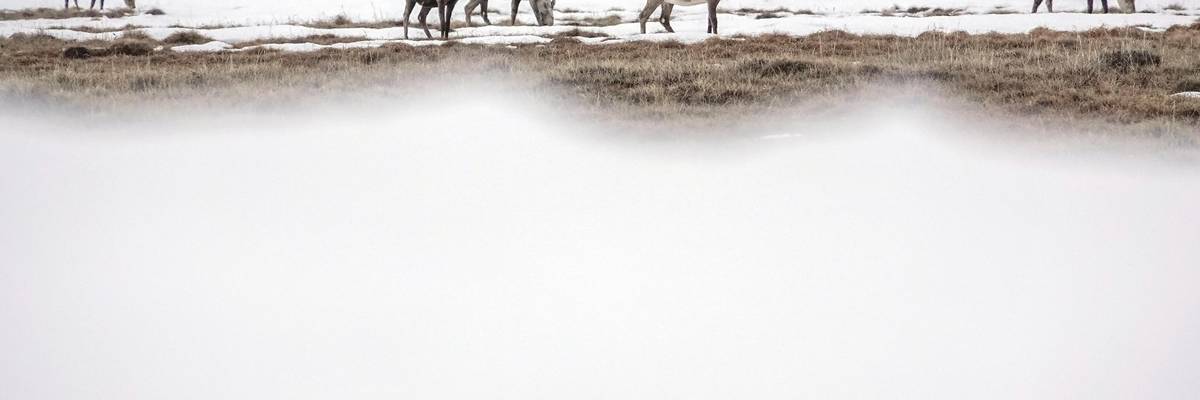
Caribou at Teshekpuk Lake in Arctic Alaska. (Photo: Bonnie Jo Mount/The Washington Post via Getty Images)
Climate groups raised the alarm and put President Joe Biden on notice after the Bureau of Land Management opened the public comment period Friday for a proposed drilling project in the Alaskan Arctic that critics warn would unleash a dangerous "carbon bomb" and threaten pristine ecosystems if given approval by the federal government.
"President Biden has set admirable ambitions for tackling the climate crisis but it could all be undermined if the Willow Project moves forward."
Oil giant ConocoPhillips has proposed the oil drilling and extraction Willow Project in Alaska's National Petroleum Reserve, located in the Western Arctic coastal region in the far north of the state. Hundreds of state, local, and national environmental and Indigenous groups, however, have come out forcefully against the project and described the federal government's assessment of its possible impacts as flawed.
"If approved the Willow project would be bigger than any other proposed oil and gas project on our nation's public lands, and it poses an unparalleled climate and biodiversity threat that puts President Biden's climate legacy at risk," said Kristen Miller, conservation director of the Alaska Wilderness League, following BLM's release on Friday of its Draft Supplemental Environmental Impact Statement (DSEIS).
The release of the DSEIS triggered a 45-day public comment period which by statute must precede final approval of the project. While groups have denounced ConocoPhillips initial 2020 proposal for the project as misleading and a plan that would lead to certain disaster for the region and the planet, opponents said Friday that Biden's approval or rejection of the project would likely seal his legacy as a climate champion or a leader who caved to the interests of the fossil fuel lobby.
Allowing new drilling in "an area that is already being ravaged by climate change," said Miller, "would put critical wildlife and subsistence resources in the crosshairs, and it would lock us into decades of carbon-intensive oil and gas extraction."
"Willow is a legacy setting project that will test whether the Biden administration is righting America's course from a dangerous climate path," she added.
A federal court last year put the permits for the project on hold pending a more thorough federal review and Friday's DSEIS is the result of that order. While the oil company has continued to lobby for the project's approval, an analysis of Willow by the Center for American Progress in March showed that the emissions resulting from the project--estimated to produce 160,000 barrels of oil per day for 30 years--would "would dwarf the greenhouse gas emissions avoided by fulfilling [Biden's] 2030 commitments on renewables on public lands and waters."
Ellen Montgomery, public lands director for Environment America, said the approval simply cannot be justified in the context of the promises that Biden has made.
"Allowing the Willow Project to move forward will harm irreplaceable landscapes and further exacerbate the climate crisis in a region that is especially vulnerable to rising temperatures," Montgomery said. "President Biden has set admirable ambitions for tackling the climate crisis but it could all be undermined if the Willow Project moves forward."
The 250 million metric tons of emissions that would result from the project, she added, would be a "carbon bomb" that over its 30-year lifespan would be equivalent to annual emissions of nearly a third of all U.S. coal-fired power plants.
"Authorizing Willow would be a significant step backward in the global climate fight," "We hope that Americans send in hundreds of thousands of public comments opposing this proposal."
Now in the public registry, public comments will be accepted by BLM during three public hearings in Alaska, three separate virtual hearings online, and via this online portal.
Speaking of local concerns, state director of Alaska Environment Dyani Chapman warned that the Willow project "poses an existential threat to the people and wildlife of the Western Arctic."
"This is a proposal to literally re-freeze the tundra that is melting because of climate change to drill for more oil that will be burned and make climate change worse," she said. "The proposed Willow Project is absurd and Alaska does not need any part of it."
Dear Common Dreams reader, It’s been nearly 30 years since I co-founded Common Dreams with my late wife, Lina Newhouser. We had the radical notion that journalism should serve the public good, not corporate profits. It was clear to us from the outset what it would take to build such a project. No paid advertisements. No corporate sponsors. No millionaire publisher telling us what to think or do. Many people said we wouldn't last a year, but we proved those doubters wrong. Together with a tremendous team of journalists and dedicated staff, we built an independent media outlet free from the constraints of profits and corporate control. Our mission has always been simple: To inform. To inspire. To ignite change for the common good. Building Common Dreams was not easy. Our survival was never guaranteed. When you take on the most powerful forces—Wall Street greed, fossil fuel industry destruction, Big Tech lobbyists, and uber-rich oligarchs who have spent billions upon billions rigging the economy and democracy in their favor—the only bulwark you have is supporters who believe in your work. But here’s the urgent message from me today. It's never been this bad out there. And it's never been this hard to keep us going. At the very moment Common Dreams is most needed, the threats we face are intensifying. We need your support now more than ever. We don't accept corporate advertising and never will. We don't have a paywall because we don't think people should be blocked from critical news based on their ability to pay. Everything we do is funded by the donations of readers like you. When everyone does the little they can afford, we are strong. But if that support retreats or dries up, so do we. Will you donate now to make sure Common Dreams not only survives but thrives? —Craig Brown, Co-founder |
Climate groups raised the alarm and put President Joe Biden on notice after the Bureau of Land Management opened the public comment period Friday for a proposed drilling project in the Alaskan Arctic that critics warn would unleash a dangerous "carbon bomb" and threaten pristine ecosystems if given approval by the federal government.
"President Biden has set admirable ambitions for tackling the climate crisis but it could all be undermined if the Willow Project moves forward."
Oil giant ConocoPhillips has proposed the oil drilling and extraction Willow Project in Alaska's National Petroleum Reserve, located in the Western Arctic coastal region in the far north of the state. Hundreds of state, local, and national environmental and Indigenous groups, however, have come out forcefully against the project and described the federal government's assessment of its possible impacts as flawed.
"If approved the Willow project would be bigger than any other proposed oil and gas project on our nation's public lands, and it poses an unparalleled climate and biodiversity threat that puts President Biden's climate legacy at risk," said Kristen Miller, conservation director of the Alaska Wilderness League, following BLM's release on Friday of its Draft Supplemental Environmental Impact Statement (DSEIS).
The release of the DSEIS triggered a 45-day public comment period which by statute must precede final approval of the project. While groups have denounced ConocoPhillips initial 2020 proposal for the project as misleading and a plan that would lead to certain disaster for the region and the planet, opponents said Friday that Biden's approval or rejection of the project would likely seal his legacy as a climate champion or a leader who caved to the interests of the fossil fuel lobby.
Allowing new drilling in "an area that is already being ravaged by climate change," said Miller, "would put critical wildlife and subsistence resources in the crosshairs, and it would lock us into decades of carbon-intensive oil and gas extraction."
"Willow is a legacy setting project that will test whether the Biden administration is righting America's course from a dangerous climate path," she added.
A federal court last year put the permits for the project on hold pending a more thorough federal review and Friday's DSEIS is the result of that order. While the oil company has continued to lobby for the project's approval, an analysis of Willow by the Center for American Progress in March showed that the emissions resulting from the project--estimated to produce 160,000 barrels of oil per day for 30 years--would "would dwarf the greenhouse gas emissions avoided by fulfilling [Biden's] 2030 commitments on renewables on public lands and waters."
Ellen Montgomery, public lands director for Environment America, said the approval simply cannot be justified in the context of the promises that Biden has made.
"Allowing the Willow Project to move forward will harm irreplaceable landscapes and further exacerbate the climate crisis in a region that is especially vulnerable to rising temperatures," Montgomery said. "President Biden has set admirable ambitions for tackling the climate crisis but it could all be undermined if the Willow Project moves forward."
The 250 million metric tons of emissions that would result from the project, she added, would be a "carbon bomb" that over its 30-year lifespan would be equivalent to annual emissions of nearly a third of all U.S. coal-fired power plants.
"Authorizing Willow would be a significant step backward in the global climate fight," "We hope that Americans send in hundreds of thousands of public comments opposing this proposal."
Now in the public registry, public comments will be accepted by BLM during three public hearings in Alaska, three separate virtual hearings online, and via this online portal.
Speaking of local concerns, state director of Alaska Environment Dyani Chapman warned that the Willow project "poses an existential threat to the people and wildlife of the Western Arctic."
"This is a proposal to literally re-freeze the tundra that is melting because of climate change to drill for more oil that will be burned and make climate change worse," she said. "The proposed Willow Project is absurd and Alaska does not need any part of it."
Climate groups raised the alarm and put President Joe Biden on notice after the Bureau of Land Management opened the public comment period Friday for a proposed drilling project in the Alaskan Arctic that critics warn would unleash a dangerous "carbon bomb" and threaten pristine ecosystems if given approval by the federal government.
"President Biden has set admirable ambitions for tackling the climate crisis but it could all be undermined if the Willow Project moves forward."
Oil giant ConocoPhillips has proposed the oil drilling and extraction Willow Project in Alaska's National Petroleum Reserve, located in the Western Arctic coastal region in the far north of the state. Hundreds of state, local, and national environmental and Indigenous groups, however, have come out forcefully against the project and described the federal government's assessment of its possible impacts as flawed.
"If approved the Willow project would be bigger than any other proposed oil and gas project on our nation's public lands, and it poses an unparalleled climate and biodiversity threat that puts President Biden's climate legacy at risk," said Kristen Miller, conservation director of the Alaska Wilderness League, following BLM's release on Friday of its Draft Supplemental Environmental Impact Statement (DSEIS).
The release of the DSEIS triggered a 45-day public comment period which by statute must precede final approval of the project. While groups have denounced ConocoPhillips initial 2020 proposal for the project as misleading and a plan that would lead to certain disaster for the region and the planet, opponents said Friday that Biden's approval or rejection of the project would likely seal his legacy as a climate champion or a leader who caved to the interests of the fossil fuel lobby.
Allowing new drilling in "an area that is already being ravaged by climate change," said Miller, "would put critical wildlife and subsistence resources in the crosshairs, and it would lock us into decades of carbon-intensive oil and gas extraction."
"Willow is a legacy setting project that will test whether the Biden administration is righting America's course from a dangerous climate path," she added.
A federal court last year put the permits for the project on hold pending a more thorough federal review and Friday's DSEIS is the result of that order. While the oil company has continued to lobby for the project's approval, an analysis of Willow by the Center for American Progress in March showed that the emissions resulting from the project--estimated to produce 160,000 barrels of oil per day for 30 years--would "would dwarf the greenhouse gas emissions avoided by fulfilling [Biden's] 2030 commitments on renewables on public lands and waters."
Ellen Montgomery, public lands director for Environment America, said the approval simply cannot be justified in the context of the promises that Biden has made.
"Allowing the Willow Project to move forward will harm irreplaceable landscapes and further exacerbate the climate crisis in a region that is especially vulnerable to rising temperatures," Montgomery said. "President Biden has set admirable ambitions for tackling the climate crisis but it could all be undermined if the Willow Project moves forward."
The 250 million metric tons of emissions that would result from the project, she added, would be a "carbon bomb" that over its 30-year lifespan would be equivalent to annual emissions of nearly a third of all U.S. coal-fired power plants.
"Authorizing Willow would be a significant step backward in the global climate fight," "We hope that Americans send in hundreds of thousands of public comments opposing this proposal."
Now in the public registry, public comments will be accepted by BLM during three public hearings in Alaska, three separate virtual hearings online, and via this online portal.
Speaking of local concerns, state director of Alaska Environment Dyani Chapman warned that the Willow project "poses an existential threat to the people and wildlife of the Western Arctic."
"This is a proposal to literally re-freeze the tundra that is melting because of climate change to drill for more oil that will be burned and make climate change worse," she said. "The proposed Willow Project is absurd and Alaska does not need any part of it."