SUBSCRIBE TO OUR FREE NEWSLETTER
Daily news & progressive opinion—funded by the people, not the corporations—delivered straight to your inbox.
5
#000000
#FFFFFF
To donate by check, phone, or other method, see our More Ways to Give page.
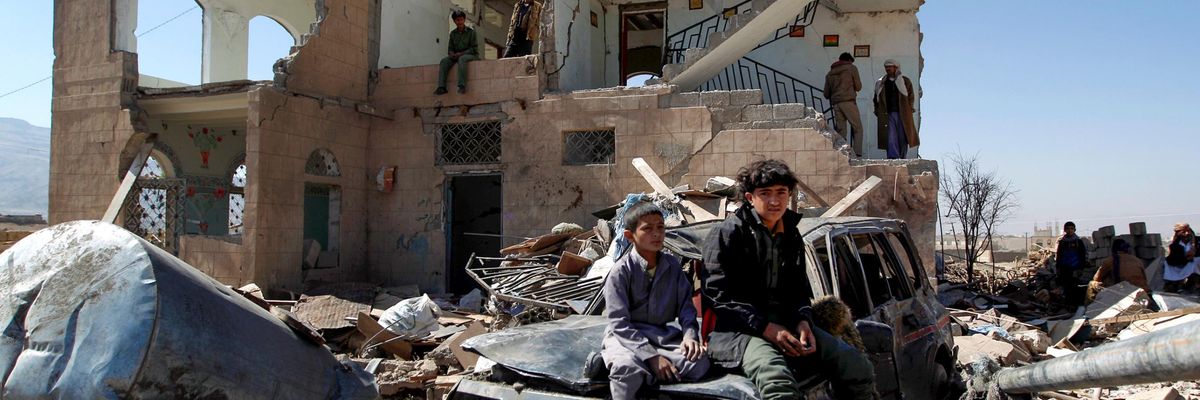
As the ongoing Saudi-led military intervention in Yemen's civil war continues to kill, maim, and displace civilians--over 300,000 of whom have died during more than seven years of fighting--a report published Thursday urges the Biden administration to end critical U.S. support for the atrocity-laden campaign by blocking pending arms sales and stopping future weapons transfers.
"Without U.S. arms, maintenance, and spare parts, the Saudi military would not be able to prosecute its brutal war in Yemen."
"During the Trump administration, the United States doubled down on its support of the regime in Saudi Arabia, regardless of how harshly the kingdom cracked down on human rights or how much devastation it caused through its war in Yemen," the Center for International Policy (CIP) report states.
Its author, CIP Arms and Security Program director William D. Hartung, writes he was initially hopeful that President Joe Biden would eschew the "cynical, transactional approach to U.S.-Saudi relations," but instead "the Biden administration's record so far has been mixed at best."
"The administration has halted two bomb sales to the Saudi regime, but it has offered $500 million in crucial maintenance and support for Saudi aircraft and continued the flow of U.S. arms offers already in the pipeline," he notes. "The administration has also made a $650 million offer of air-to-air missiles to the Saudi Royal Air Force."
"Most importantly," the report adds, "the Biden administration has refused to use U.S. leverage--in the form of a threat to cut off crucial U.S. spare parts and sustainment for the Saudi military--to force Riyadh to end its devastating blockade on Yemen and move towards an inclusive peace agreement to end the war."
Hartung notes that "the bulk of the weapons transferred to Saudi Arabia since 2009" are the result of deals made during the administration of Barack Obama, one of a long line of U.S. presidents who have courted the repressive Saudi monarchy since the discovery of oil in the desert kingdom in the 1930s.
"The Biden administration has refused to use U.S. leverage... to force Riyadh to end its devastating blockade on Yemen."
"Arms sales offers to the kingdom totaled over $118 billion during the eight years of the Obama administration," he writes, "compared with $25 billion during the four years of the Trump administration and $1.1 billion so far in the first year of the Biden term."
While the losers of the war are clear--the United Nations Development Program says that 377,000 Yemeni civilians will have died by the end of this year--the report argues that the winners are "major contractors like Boeing, Raytheon, Lockheed Martin, and General Dynamics."
"All of the largest sales since 2009, including a $29 billion deal for Boeing F-15 aircraft, a $25 billion deal for Boeing Apache helicopters, a $15 billion deal for a Lockheed Martin THAAD missile defense system, [a] $10 billion deal for Lockheed Martin Multi-Mission Surface Combatant ships, a $5.4 billion deal for Raytheon PAC-3 missile defense interceptors, and a $1.57 billion deal for Raytheon Paveway bombs involved one of the four firms mentioned above as the primary supplier," notes Hartung.
The report calls on the Biden administration to "suspend all U.S. arms sales and military support to the Saudi regime--both new offers and systems still in the pipeline and yet to be delivered--as leverage to get Riyadh to end its blockade on humanitarian aid and commercial goods into Yemen, open Sana'a airport, and engage in good faith efforts to end the war."
Related Content

Hartung says Congress should:
The new report comes after Rep. Ilhan Omar (D-Minn.) and Sens. Rand Paul (R-Ky.), Mike Lee (R-Utah), and Bernie Sanders (I-Vt.) introduced resolutions to block the Saudi arms sale. A vote on the Senate measure is expected within days.
"Without U.S. arms, maintenance, and spare parts, the Saudi military would not be able to prosecute its brutal war in Yemen. It's hard to overstate the degree to which the Saudi military relies on U.S. support," Hartung said in a statement. "It's time for the Biden administration to cut off this support as a way to change Saudi conduct and relieve the suffering of the Yemeni people caused by Saudi actions."
As the ongoing Saudi-led military intervention in Yemen's civil war continues to kill, maim, and displace civilians--over 300,000 of whom have died during more than seven years of fighting--a report published Thursday urges the Biden administration to end critical U.S. support for the atrocity-laden campaign by blocking pending arms sales and stopping future weapons transfers.
"Without U.S. arms, maintenance, and spare parts, the Saudi military would not be able to prosecute its brutal war in Yemen."
"During the Trump administration, the United States doubled down on its support of the regime in Saudi Arabia, regardless of how harshly the kingdom cracked down on human rights or how much devastation it caused through its war in Yemen," the Center for International Policy (CIP) report states.
Its author, CIP Arms and Security Program director William D. Hartung, writes he was initially hopeful that President Joe Biden would eschew the "cynical, transactional approach to U.S.-Saudi relations," but instead "the Biden administration's record so far has been mixed at best."
"The administration has halted two bomb sales to the Saudi regime, but it has offered $500 million in crucial maintenance and support for Saudi aircraft and continued the flow of U.S. arms offers already in the pipeline," he notes. "The administration has also made a $650 million offer of air-to-air missiles to the Saudi Royal Air Force."
"Most importantly," the report adds, "the Biden administration has refused to use U.S. leverage--in the form of a threat to cut off crucial U.S. spare parts and sustainment for the Saudi military--to force Riyadh to end its devastating blockade on Yemen and move towards an inclusive peace agreement to end the war."
Hartung notes that "the bulk of the weapons transferred to Saudi Arabia since 2009" are the result of deals made during the administration of Barack Obama, one of a long line of U.S. presidents who have courted the repressive Saudi monarchy since the discovery of oil in the desert kingdom in the 1930s.
"The Biden administration has refused to use U.S. leverage... to force Riyadh to end its devastating blockade on Yemen."
"Arms sales offers to the kingdom totaled over $118 billion during the eight years of the Obama administration," he writes, "compared with $25 billion during the four years of the Trump administration and $1.1 billion so far in the first year of the Biden term."
While the losers of the war are clear--the United Nations Development Program says that 377,000 Yemeni civilians will have died by the end of this year--the report argues that the winners are "major contractors like Boeing, Raytheon, Lockheed Martin, and General Dynamics."
"All of the largest sales since 2009, including a $29 billion deal for Boeing F-15 aircraft, a $25 billion deal for Boeing Apache helicopters, a $15 billion deal for a Lockheed Martin THAAD missile defense system, [a] $10 billion deal for Lockheed Martin Multi-Mission Surface Combatant ships, a $5.4 billion deal for Raytheon PAC-3 missile defense interceptors, and a $1.57 billion deal for Raytheon Paveway bombs involved one of the four firms mentioned above as the primary supplier," notes Hartung.
The report calls on the Biden administration to "suspend all U.S. arms sales and military support to the Saudi regime--both new offers and systems still in the pipeline and yet to be delivered--as leverage to get Riyadh to end its blockade on humanitarian aid and commercial goods into Yemen, open Sana'a airport, and engage in good faith efforts to end the war."
Related Content
Hartung says Congress should:
The new report comes after Rep. Ilhan Omar (D-Minn.) and Sens. Rand Paul (R-Ky.), Mike Lee (R-Utah), and Bernie Sanders (I-Vt.) introduced resolutions to block the Saudi arms sale. A vote on the Senate measure is expected within days.
"Without U.S. arms, maintenance, and spare parts, the Saudi military would not be able to prosecute its brutal war in Yemen. It's hard to overstate the degree to which the Saudi military relies on U.S. support," Hartung said in a statement. "It's time for the Biden administration to cut off this support as a way to change Saudi conduct and relieve the suffering of the Yemeni people caused by Saudi actions."
As the ongoing Saudi-led military intervention in Yemen's civil war continues to kill, maim, and displace civilians--over 300,000 of whom have died during more than seven years of fighting--a report published Thursday urges the Biden administration to end critical U.S. support for the atrocity-laden campaign by blocking pending arms sales and stopping future weapons transfers.
"Without U.S. arms, maintenance, and spare parts, the Saudi military would not be able to prosecute its brutal war in Yemen."
"During the Trump administration, the United States doubled down on its support of the regime in Saudi Arabia, regardless of how harshly the kingdom cracked down on human rights or how much devastation it caused through its war in Yemen," the Center for International Policy (CIP) report states.
Its author, CIP Arms and Security Program director William D. Hartung, writes he was initially hopeful that President Joe Biden would eschew the "cynical, transactional approach to U.S.-Saudi relations," but instead "the Biden administration's record so far has been mixed at best."
"The administration has halted two bomb sales to the Saudi regime, but it has offered $500 million in crucial maintenance and support for Saudi aircraft and continued the flow of U.S. arms offers already in the pipeline," he notes. "The administration has also made a $650 million offer of air-to-air missiles to the Saudi Royal Air Force."
"Most importantly," the report adds, "the Biden administration has refused to use U.S. leverage--in the form of a threat to cut off crucial U.S. spare parts and sustainment for the Saudi military--to force Riyadh to end its devastating blockade on Yemen and move towards an inclusive peace agreement to end the war."
Hartung notes that "the bulk of the weapons transferred to Saudi Arabia since 2009" are the result of deals made during the administration of Barack Obama, one of a long line of U.S. presidents who have courted the repressive Saudi monarchy since the discovery of oil in the desert kingdom in the 1930s.
"The Biden administration has refused to use U.S. leverage... to force Riyadh to end its devastating blockade on Yemen."
"Arms sales offers to the kingdom totaled over $118 billion during the eight years of the Obama administration," he writes, "compared with $25 billion during the four years of the Trump administration and $1.1 billion so far in the first year of the Biden term."
While the losers of the war are clear--the United Nations Development Program says that 377,000 Yemeni civilians will have died by the end of this year--the report argues that the winners are "major contractors like Boeing, Raytheon, Lockheed Martin, and General Dynamics."
"All of the largest sales since 2009, including a $29 billion deal for Boeing F-15 aircraft, a $25 billion deal for Boeing Apache helicopters, a $15 billion deal for a Lockheed Martin THAAD missile defense system, [a] $10 billion deal for Lockheed Martin Multi-Mission Surface Combatant ships, a $5.4 billion deal for Raytheon PAC-3 missile defense interceptors, and a $1.57 billion deal for Raytheon Paveway bombs involved one of the four firms mentioned above as the primary supplier," notes Hartung.
The report calls on the Biden administration to "suspend all U.S. arms sales and military support to the Saudi regime--both new offers and systems still in the pipeline and yet to be delivered--as leverage to get Riyadh to end its blockade on humanitarian aid and commercial goods into Yemen, open Sana'a airport, and engage in good faith efforts to end the war."
Related Content
Hartung says Congress should:
The new report comes after Rep. Ilhan Omar (D-Minn.) and Sens. Rand Paul (R-Ky.), Mike Lee (R-Utah), and Bernie Sanders (I-Vt.) introduced resolutions to block the Saudi arms sale. A vote on the Senate measure is expected within days.
"Without U.S. arms, maintenance, and spare parts, the Saudi military would not be able to prosecute its brutal war in Yemen. It's hard to overstate the degree to which the Saudi military relies on U.S. support," Hartung said in a statement. "It's time for the Biden administration to cut off this support as a way to change Saudi conduct and relieve the suffering of the Yemeni people caused by Saudi actions."