SUBSCRIBE TO OUR FREE NEWSLETTER
Daily news & progressive opinion—funded by the people, not the corporations—delivered straight to your inbox.
5
#000000
#FFFFFF
To donate by check, phone, or other method, see our More Ways to Give page.
Daily news & progressive opinion—funded by the people, not the corporations—delivered straight to your inbox.
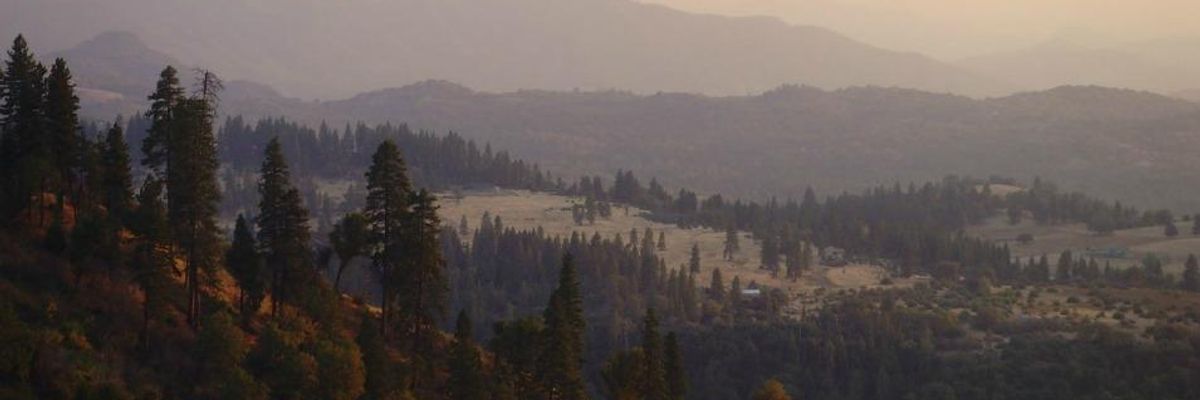
Under a new rule proposed by the Trump administration, protected lands like the Sequoia National Forest could be opened up for drilling by oil and gas companies without input from the public. (Photo: Klaus Nahr/Flickr/cc)
Defenders of wildlife and biodiversity on Tuesday decried a proposal released by President Donald Trump's Department of Agriculture that would sharply curtail the U.S. Forest Service's ability to weigh in on the activities of oil and gas giants in the country's national forests, opening millions of acres of protected land to drilling operations.
The Trump administration officially entered its proposal into the Federal Register on Tuesday morning, explaing that a desire to decrease the "regulatory burden on the oil and gas industry" led the USDA to propose the rule change.
"Under this new rule, the administration would escalate oil and gas development, increase carbon emissions and exacerbate the climate crisis, putting human as well as the forests' health at risk at a time when public health is the nation's top concern."
--National Audubon Society
Under the new rule, the U.S. Forest Service (USFS) would no longer be required to give public notice of the approval of development plans in the national forests, reducing the chance for the public--including tens of millions of Americans who rely on drinking water supplies that originate in the forests--to give input on the decisions.
The rule removes explicit confirmation of USFS consent as a required step in the process of issuing oil and gas leases; requires the service to protect only specific, named natural resources instead of wild places within forests; and removes environmental considerations as criteria for approval of plans.
The USFS would also lose the veto power it generally holds over projects if the environmental impacts are deemed too great, according to The Wilderness Society. That authority would be ceded to "the fossil fuel-focused Bureau of Land Management," the group said.
"By undermining the public participation and environmental review required by the National Environmental Policy Act, this proposed rule puts the interests of the fossil fuel industry ahead of the public interest," said Will Fadely, senior government relations representative for The Wilderness Society, in a statement. "Our national forests and grasslands have never been more important for preserving and passing a healthy world forward to future generations."
With the Earth facing the climate crisis, the proposal would accelerate planet-heating fossil fuel emissions while ridding the U.S. of millions of acres of the dense forests that absorb carbon and have the potential to slow the crisis.
"National forest lands serve a vital role in the climate solution by storing carbon," said the National Audubon Society. "Under this new rule, the administration would escalate oil and gas development, increase carbon emissions and exacerbate the climate crisis, putting human as well as the forests' health at risk at a time when public health is the nation's top concern."
The grassroots group WildEarth Guardians suggested that the proposal was shocking but unsurprising, considering Secretary of Agriculture Sonny Perdue has referred to trees as "crops" to be harvested.
"It's no surprise that his 'vision' for National Forests includes more logging, mining, cattle grazing, and drilling," the group tweeted.
Just 2.7% of acreage in the national forests are currently leased to energy companies, but the Guardian reported that the rule could open up nine million of the 193 million acres of forest, spanning 47 states, for oil and gas drilling. Forests in New Mexico, Montana, Colorado, Utah, and Nevada are thought to be most vulnerable to the plan, according to the Natural Resources Defense Council (NRDC).
The proposal was revealed six weeks after the Trump administration finalized its rule weakening the National Environmental Policy Act (NEPA), rolling back 50-year-old regulations that require government agencies to conduct a thorough review of environmental impacts before approving infrastructure projects.
"When combined with the Trump administration's NEPA rollbacks, the new rule will speed up oil and gas drilling on Forest Service lands while reducing transparency and curtailing environmental review," said the NRDC.
Conservation groups noted that in addition to putting wildlife and biodiversity at risk, the proposal "will further undermine Indigenous interests and sovereignty" as many tribal lands lie in or near national forests.
"The administration really outdid itself with a proposal that has the Forest Service walking away from its responsibilities for managing our national forests and grassland while closing the door on public oversight," said Nada Culver, vice president of public lands and senior counsel for the National Audubon Society.
"This is not just a conservation issue, it's putting our communities at risk," Culver added. "Replacing forested areas and grasslands with drill pads and access roads not only means fewer birds like Mallards and Prairie Warblers, but also degrades our lands and natural spaces, and threatens water supplies for millions of people."
Dear Common Dreams reader, It’s been nearly 30 years since I co-founded Common Dreams with my late wife, Lina Newhouser. We had the radical notion that journalism should serve the public good, not corporate profits. It was clear to us from the outset what it would take to build such a project. No paid advertisements. No corporate sponsors. No millionaire publisher telling us what to think or do. Many people said we wouldn't last a year, but we proved those doubters wrong. Together with a tremendous team of journalists and dedicated staff, we built an independent media outlet free from the constraints of profits and corporate control. Our mission has always been simple: To inform. To inspire. To ignite change for the common good. Building Common Dreams was not easy. Our survival was never guaranteed. When you take on the most powerful forces—Wall Street greed, fossil fuel industry destruction, Big Tech lobbyists, and uber-rich oligarchs who have spent billions upon billions rigging the economy and democracy in their favor—the only bulwark you have is supporters who believe in your work. But here’s the urgent message from me today. It's never been this bad out there. And it's never been this hard to keep us going. At the very moment Common Dreams is most needed, the threats we face are intensifying. We need your support now more than ever. We don't accept corporate advertising and never will. We don't have a paywall because we don't think people should be blocked from critical news based on their ability to pay. Everything we do is funded by the donations of readers like you. When everyone does the little they can afford, we are strong. But if that support retreats or dries up, so do we. Will you donate now to make sure Common Dreams not only survives but thrives? —Craig Brown, Co-founder |
Defenders of wildlife and biodiversity on Tuesday decried a proposal released by President Donald Trump's Department of Agriculture that would sharply curtail the U.S. Forest Service's ability to weigh in on the activities of oil and gas giants in the country's national forests, opening millions of acres of protected land to drilling operations.
The Trump administration officially entered its proposal into the Federal Register on Tuesday morning, explaing that a desire to decrease the "regulatory burden on the oil and gas industry" led the USDA to propose the rule change.
"Under this new rule, the administration would escalate oil and gas development, increase carbon emissions and exacerbate the climate crisis, putting human as well as the forests' health at risk at a time when public health is the nation's top concern."
--National Audubon Society
Under the new rule, the U.S. Forest Service (USFS) would no longer be required to give public notice of the approval of development plans in the national forests, reducing the chance for the public--including tens of millions of Americans who rely on drinking water supplies that originate in the forests--to give input on the decisions.
The rule removes explicit confirmation of USFS consent as a required step in the process of issuing oil and gas leases; requires the service to protect only specific, named natural resources instead of wild places within forests; and removes environmental considerations as criteria for approval of plans.
The USFS would also lose the veto power it generally holds over projects if the environmental impacts are deemed too great, according to The Wilderness Society. That authority would be ceded to "the fossil fuel-focused Bureau of Land Management," the group said.
"By undermining the public participation and environmental review required by the National Environmental Policy Act, this proposed rule puts the interests of the fossil fuel industry ahead of the public interest," said Will Fadely, senior government relations representative for The Wilderness Society, in a statement. "Our national forests and grasslands have never been more important for preserving and passing a healthy world forward to future generations."
With the Earth facing the climate crisis, the proposal would accelerate planet-heating fossil fuel emissions while ridding the U.S. of millions of acres of the dense forests that absorb carbon and have the potential to slow the crisis.
"National forest lands serve a vital role in the climate solution by storing carbon," said the National Audubon Society. "Under this new rule, the administration would escalate oil and gas development, increase carbon emissions and exacerbate the climate crisis, putting human as well as the forests' health at risk at a time when public health is the nation's top concern."
The grassroots group WildEarth Guardians suggested that the proposal was shocking but unsurprising, considering Secretary of Agriculture Sonny Perdue has referred to trees as "crops" to be harvested.
"It's no surprise that his 'vision' for National Forests includes more logging, mining, cattle grazing, and drilling," the group tweeted.
Just 2.7% of acreage in the national forests are currently leased to energy companies, but the Guardian reported that the rule could open up nine million of the 193 million acres of forest, spanning 47 states, for oil and gas drilling. Forests in New Mexico, Montana, Colorado, Utah, and Nevada are thought to be most vulnerable to the plan, according to the Natural Resources Defense Council (NRDC).
The proposal was revealed six weeks after the Trump administration finalized its rule weakening the National Environmental Policy Act (NEPA), rolling back 50-year-old regulations that require government agencies to conduct a thorough review of environmental impacts before approving infrastructure projects.
"When combined with the Trump administration's NEPA rollbacks, the new rule will speed up oil and gas drilling on Forest Service lands while reducing transparency and curtailing environmental review," said the NRDC.
Conservation groups noted that in addition to putting wildlife and biodiversity at risk, the proposal "will further undermine Indigenous interests and sovereignty" as many tribal lands lie in or near national forests.
"The administration really outdid itself with a proposal that has the Forest Service walking away from its responsibilities for managing our national forests and grassland while closing the door on public oversight," said Nada Culver, vice president of public lands and senior counsel for the National Audubon Society.
"This is not just a conservation issue, it's putting our communities at risk," Culver added. "Replacing forested areas and grasslands with drill pads and access roads not only means fewer birds like Mallards and Prairie Warblers, but also degrades our lands and natural spaces, and threatens water supplies for millions of people."
Defenders of wildlife and biodiversity on Tuesday decried a proposal released by President Donald Trump's Department of Agriculture that would sharply curtail the U.S. Forest Service's ability to weigh in on the activities of oil and gas giants in the country's national forests, opening millions of acres of protected land to drilling operations.
The Trump administration officially entered its proposal into the Federal Register on Tuesday morning, explaing that a desire to decrease the "regulatory burden on the oil and gas industry" led the USDA to propose the rule change.
"Under this new rule, the administration would escalate oil and gas development, increase carbon emissions and exacerbate the climate crisis, putting human as well as the forests' health at risk at a time when public health is the nation's top concern."
--National Audubon Society
Under the new rule, the U.S. Forest Service (USFS) would no longer be required to give public notice of the approval of development plans in the national forests, reducing the chance for the public--including tens of millions of Americans who rely on drinking water supplies that originate in the forests--to give input on the decisions.
The rule removes explicit confirmation of USFS consent as a required step in the process of issuing oil and gas leases; requires the service to protect only specific, named natural resources instead of wild places within forests; and removes environmental considerations as criteria for approval of plans.
The USFS would also lose the veto power it generally holds over projects if the environmental impacts are deemed too great, according to The Wilderness Society. That authority would be ceded to "the fossil fuel-focused Bureau of Land Management," the group said.
"By undermining the public participation and environmental review required by the National Environmental Policy Act, this proposed rule puts the interests of the fossil fuel industry ahead of the public interest," said Will Fadely, senior government relations representative for The Wilderness Society, in a statement. "Our national forests and grasslands have never been more important for preserving and passing a healthy world forward to future generations."
With the Earth facing the climate crisis, the proposal would accelerate planet-heating fossil fuel emissions while ridding the U.S. of millions of acres of the dense forests that absorb carbon and have the potential to slow the crisis.
"National forest lands serve a vital role in the climate solution by storing carbon," said the National Audubon Society. "Under this new rule, the administration would escalate oil and gas development, increase carbon emissions and exacerbate the climate crisis, putting human as well as the forests' health at risk at a time when public health is the nation's top concern."
The grassroots group WildEarth Guardians suggested that the proposal was shocking but unsurprising, considering Secretary of Agriculture Sonny Perdue has referred to trees as "crops" to be harvested.
"It's no surprise that his 'vision' for National Forests includes more logging, mining, cattle grazing, and drilling," the group tweeted.
Just 2.7% of acreage in the national forests are currently leased to energy companies, but the Guardian reported that the rule could open up nine million of the 193 million acres of forest, spanning 47 states, for oil and gas drilling. Forests in New Mexico, Montana, Colorado, Utah, and Nevada are thought to be most vulnerable to the plan, according to the Natural Resources Defense Council (NRDC).
The proposal was revealed six weeks after the Trump administration finalized its rule weakening the National Environmental Policy Act (NEPA), rolling back 50-year-old regulations that require government agencies to conduct a thorough review of environmental impacts before approving infrastructure projects.
"When combined with the Trump administration's NEPA rollbacks, the new rule will speed up oil and gas drilling on Forest Service lands while reducing transparency and curtailing environmental review," said the NRDC.
Conservation groups noted that in addition to putting wildlife and biodiversity at risk, the proposal "will further undermine Indigenous interests and sovereignty" as many tribal lands lie in or near national forests.
"The administration really outdid itself with a proposal that has the Forest Service walking away from its responsibilities for managing our national forests and grassland while closing the door on public oversight," said Nada Culver, vice president of public lands and senior counsel for the National Audubon Society.
"This is not just a conservation issue, it's putting our communities at risk," Culver added. "Replacing forested areas and grasslands with drill pads and access roads not only means fewer birds like Mallards and Prairie Warblers, but also degrades our lands and natural spaces, and threatens water supplies for millions of people."