SUBSCRIBE TO OUR FREE NEWSLETTER
Daily news & progressive opinion—funded by the people, not the corporations—delivered straight to your inbox.
5
#000000
#FFFFFF
To donate by check, phone, or other method, see our More Ways to Give page.
Daily news & progressive opinion—funded by the people, not the corporations—delivered straight to your inbox.
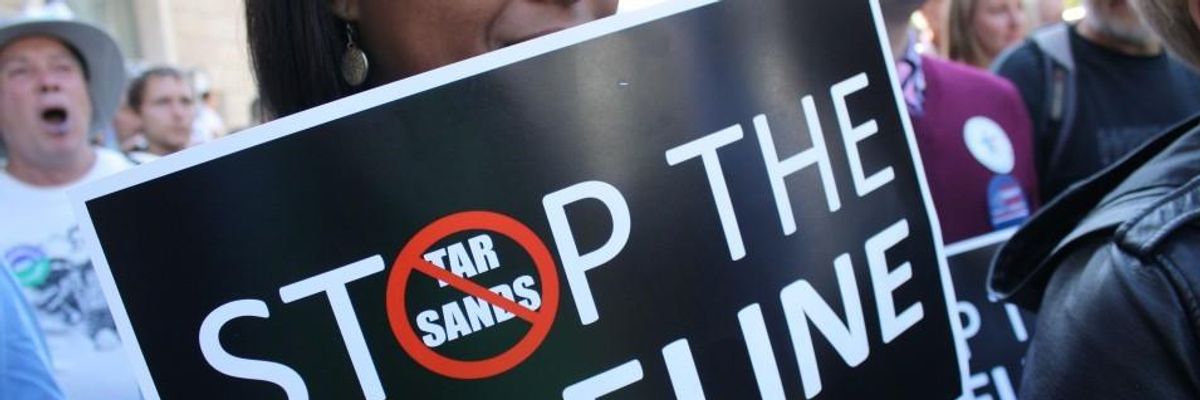
"We need billions of public dollars invested directly in vulnerable communities dying from COVID-19, not spent propping up massive oil companies and unneeded projects that would trample Indigenous rights and exacerbate the climate crisis," said Oil Change International's Collin Rees. (Photo: Elvert Barnes/Flickr/cc)
While the coronavirus pandemic grips the world, Canadian fossil fuel company TC Energy quietly announced Tuesday its intention to start work on the Keystone XL pipeline following an investment of roughly U.S. $1.1 billion into the project by Alberta's provincial government.
"This desperate attempt by Alberta's government to push through the failing Keystone XL pipeline during a global pandemic is beyond the pale."
--Collin Rees, Oil Change International
"Over the last decade of pushing their dirty tar sands pipeline, TC Energy has already made it abundantly clear that they don't care about risks to our communities, but this is a shameful new low," said Catherine Collentine, associate director of the Sierra Club's Beyond Dirty Fuels campaign.
The news from TC Energy, formerly known as TransCanada, came the same day Premier of Alberta Jason Kenney announced what he claimed was a "wise" investment in the project that would make sure the company could begin "immediate construction."
"We cannot wait for the end of the pandemic and the global recession to act," Kenney said Tuesday, calling the investment "a bold move to re-take control of our province's economic destiny."
But climate campaigners on reiterated Monday that the project--which would carry roughly 830,000 barrels per day of tar sands oil 1,179 miles from Hardisty, Alberta to the U.S. state of Nebraska--is unwise for the economy, climate, and communities in the pipeline's path.
"This desperate attempt by Alberta's government to push through the failing Keystone XL pipeline during a global pandemic is beyond the pale," said Collin Rees, senior U.S. campaigner with Oil Change International. "We need billions of public dollars invested directly in vulnerable communities dying from COVID-19, not spent propping up massive oil companies and unneeded projects that would trample Indigenous rights and exacerbate the climate crisis."
The timing of the investment, Rees added, is particularly noteworthy.
"This huge giveaway of public money to fossil fuel executives coming just 36 hours after Jason Kenney's government laid off more than 20,000 educational workers across Alberta says more about where his priorities lie than we ever could," said Rees. "The Indigenous communities, farmers, and ranchers along the Keystone XL route will continue to fiercely resist, and this pipeline will never be built."
Climate action advocates, including Jane Fleming Kleeb, founder of Bold Nebraska, which has fought the fossil fuel project for years, also stressed that the project still faces legal challenges.
"TC Energy is facing eminent domain lawsuits from landowners, and county boards have not granted permits in Nebraska, while nationally there are several lawsuits in federal court challenging the project's permits and seeking a preliminary injunction on construction," said Kleeb. "So while they may have a green light to build in Alberta, they do not have all the permits and regulatory approvals necessary to move forward in America."
The Sierra Club, in its statement, also drew attention to "numerous legal challenges" the pipeline project faces.
"By barreling forward with construction during a global pandemic, TC Energy is putting already vulnerable communities at even greater risk," added Collentine, referencing possible leaks and spills from the project.
While Kleeb seemed sure that the Keystone XL would not be allowed to move forward within the U.S. once a Democratic president is elected, Jamie Henn, a co-founder of climate group 350.org, is not so sure.
" Joe Biden needs to come out and say he'd veto the Keystone XL pipeline right now," Henn wrote on Twitter of the former vice president and presidential candidate. "He opposed it when he was in the Obama Administration--for what possible reason would he support it now?"
Indigenous, environmental, and landowner groups have called on all White House hopefuls to sign to their No Keystone Xl pledge. Sen. Bernie Sanders (I-Vt.) has added his name to the pledge, while Biden has not.
Nevertheless, Henn stressed that the movement to stop the pipeline is undeterred.
"#NoKXL is still here, still fighting, and still going to stop that damn pipe," he said.
Dear Common Dreams reader, It’s been nearly 30 years since I co-founded Common Dreams with my late wife, Lina Newhouser. We had the radical notion that journalism should serve the public good, not corporate profits. It was clear to us from the outset what it would take to build such a project. No paid advertisements. No corporate sponsors. No millionaire publisher telling us what to think or do. Many people said we wouldn't last a year, but we proved those doubters wrong. Together with a tremendous team of journalists and dedicated staff, we built an independent media outlet free from the constraints of profits and corporate control. Our mission has always been simple: To inform. To inspire. To ignite change for the common good. Building Common Dreams was not easy. Our survival was never guaranteed. When you take on the most powerful forces—Wall Street greed, fossil fuel industry destruction, Big Tech lobbyists, and uber-rich oligarchs who have spent billions upon billions rigging the economy and democracy in their favor—the only bulwark you have is supporters who believe in your work. But here’s the urgent message from me today. It's never been this bad out there. And it's never been this hard to keep us going. At the very moment Common Dreams is most needed, the threats we face are intensifying. We need your support now more than ever. We don't accept corporate advertising and never will. We don't have a paywall because we don't think people should be blocked from critical news based on their ability to pay. Everything we do is funded by the donations of readers like you. When everyone does the little they can afford, we are strong. But if that support retreats or dries up, so do we. Will you donate now to make sure Common Dreams not only survives but thrives? —Craig Brown, Co-founder |
While the coronavirus pandemic grips the world, Canadian fossil fuel company TC Energy quietly announced Tuesday its intention to start work on the Keystone XL pipeline following an investment of roughly U.S. $1.1 billion into the project by Alberta's provincial government.
"This desperate attempt by Alberta's government to push through the failing Keystone XL pipeline during a global pandemic is beyond the pale."
--Collin Rees, Oil Change International
"Over the last decade of pushing their dirty tar sands pipeline, TC Energy has already made it abundantly clear that they don't care about risks to our communities, but this is a shameful new low," said Catherine Collentine, associate director of the Sierra Club's Beyond Dirty Fuels campaign.
The news from TC Energy, formerly known as TransCanada, came the same day Premier of Alberta Jason Kenney announced what he claimed was a "wise" investment in the project that would make sure the company could begin "immediate construction."
"We cannot wait for the end of the pandemic and the global recession to act," Kenney said Tuesday, calling the investment "a bold move to re-take control of our province's economic destiny."
But climate campaigners on reiterated Monday that the project--which would carry roughly 830,000 barrels per day of tar sands oil 1,179 miles from Hardisty, Alberta to the U.S. state of Nebraska--is unwise for the economy, climate, and communities in the pipeline's path.
"This desperate attempt by Alberta's government to push through the failing Keystone XL pipeline during a global pandemic is beyond the pale," said Collin Rees, senior U.S. campaigner with Oil Change International. "We need billions of public dollars invested directly in vulnerable communities dying from COVID-19, not spent propping up massive oil companies and unneeded projects that would trample Indigenous rights and exacerbate the climate crisis."
The timing of the investment, Rees added, is particularly noteworthy.
"This huge giveaway of public money to fossil fuel executives coming just 36 hours after Jason Kenney's government laid off more than 20,000 educational workers across Alberta says more about where his priorities lie than we ever could," said Rees. "The Indigenous communities, farmers, and ranchers along the Keystone XL route will continue to fiercely resist, and this pipeline will never be built."
Climate action advocates, including Jane Fleming Kleeb, founder of Bold Nebraska, which has fought the fossil fuel project for years, also stressed that the project still faces legal challenges.
"TC Energy is facing eminent domain lawsuits from landowners, and county boards have not granted permits in Nebraska, while nationally there are several lawsuits in federal court challenging the project's permits and seeking a preliminary injunction on construction," said Kleeb. "So while they may have a green light to build in Alberta, they do not have all the permits and regulatory approvals necessary to move forward in America."
The Sierra Club, in its statement, also drew attention to "numerous legal challenges" the pipeline project faces.
"By barreling forward with construction during a global pandemic, TC Energy is putting already vulnerable communities at even greater risk," added Collentine, referencing possible leaks and spills from the project.
While Kleeb seemed sure that the Keystone XL would not be allowed to move forward within the U.S. once a Democratic president is elected, Jamie Henn, a co-founder of climate group 350.org, is not so sure.
" Joe Biden needs to come out and say he'd veto the Keystone XL pipeline right now," Henn wrote on Twitter of the former vice president and presidential candidate. "He opposed it when he was in the Obama Administration--for what possible reason would he support it now?"
Indigenous, environmental, and landowner groups have called on all White House hopefuls to sign to their No Keystone Xl pledge. Sen. Bernie Sanders (I-Vt.) has added his name to the pledge, while Biden has not.
Nevertheless, Henn stressed that the movement to stop the pipeline is undeterred.
"#NoKXL is still here, still fighting, and still going to stop that damn pipe," he said.
While the coronavirus pandemic grips the world, Canadian fossil fuel company TC Energy quietly announced Tuesday its intention to start work on the Keystone XL pipeline following an investment of roughly U.S. $1.1 billion into the project by Alberta's provincial government.
"This desperate attempt by Alberta's government to push through the failing Keystone XL pipeline during a global pandemic is beyond the pale."
--Collin Rees, Oil Change International
"Over the last decade of pushing their dirty tar sands pipeline, TC Energy has already made it abundantly clear that they don't care about risks to our communities, but this is a shameful new low," said Catherine Collentine, associate director of the Sierra Club's Beyond Dirty Fuels campaign.
The news from TC Energy, formerly known as TransCanada, came the same day Premier of Alberta Jason Kenney announced what he claimed was a "wise" investment in the project that would make sure the company could begin "immediate construction."
"We cannot wait for the end of the pandemic and the global recession to act," Kenney said Tuesday, calling the investment "a bold move to re-take control of our province's economic destiny."
But climate campaigners on reiterated Monday that the project--which would carry roughly 830,000 barrels per day of tar sands oil 1,179 miles from Hardisty, Alberta to the U.S. state of Nebraska--is unwise for the economy, climate, and communities in the pipeline's path.
"This desperate attempt by Alberta's government to push through the failing Keystone XL pipeline during a global pandemic is beyond the pale," said Collin Rees, senior U.S. campaigner with Oil Change International. "We need billions of public dollars invested directly in vulnerable communities dying from COVID-19, not spent propping up massive oil companies and unneeded projects that would trample Indigenous rights and exacerbate the climate crisis."
The timing of the investment, Rees added, is particularly noteworthy.
"This huge giveaway of public money to fossil fuel executives coming just 36 hours after Jason Kenney's government laid off more than 20,000 educational workers across Alberta says more about where his priorities lie than we ever could," said Rees. "The Indigenous communities, farmers, and ranchers along the Keystone XL route will continue to fiercely resist, and this pipeline will never be built."
Climate action advocates, including Jane Fleming Kleeb, founder of Bold Nebraska, which has fought the fossil fuel project for years, also stressed that the project still faces legal challenges.
"TC Energy is facing eminent domain lawsuits from landowners, and county boards have not granted permits in Nebraska, while nationally there are several lawsuits in federal court challenging the project's permits and seeking a preliminary injunction on construction," said Kleeb. "So while they may have a green light to build in Alberta, they do not have all the permits and regulatory approvals necessary to move forward in America."
The Sierra Club, in its statement, also drew attention to "numerous legal challenges" the pipeline project faces.
"By barreling forward with construction during a global pandemic, TC Energy is putting already vulnerable communities at even greater risk," added Collentine, referencing possible leaks and spills from the project.
While Kleeb seemed sure that the Keystone XL would not be allowed to move forward within the U.S. once a Democratic president is elected, Jamie Henn, a co-founder of climate group 350.org, is not so sure.
" Joe Biden needs to come out and say he'd veto the Keystone XL pipeline right now," Henn wrote on Twitter of the former vice president and presidential candidate. "He opposed it when he was in the Obama Administration--for what possible reason would he support it now?"
Indigenous, environmental, and landowner groups have called on all White House hopefuls to sign to their No Keystone Xl pledge. Sen. Bernie Sanders (I-Vt.) has added his name to the pledge, while Biden has not.
Nevertheless, Henn stressed that the movement to stop the pipeline is undeterred.
"#NoKXL is still here, still fighting, and still going to stop that damn pipe," he said.