SUBSCRIBE TO OUR FREE NEWSLETTER
Daily news & progressive opinion—funded by the people, not the corporations—delivered straight to your inbox.
5
#000000
#FFFFFF
To donate by check, phone, or other method, see our More Ways to Give page.
Daily news & progressive opinion—funded by the people, not the corporations—delivered straight to your inbox.
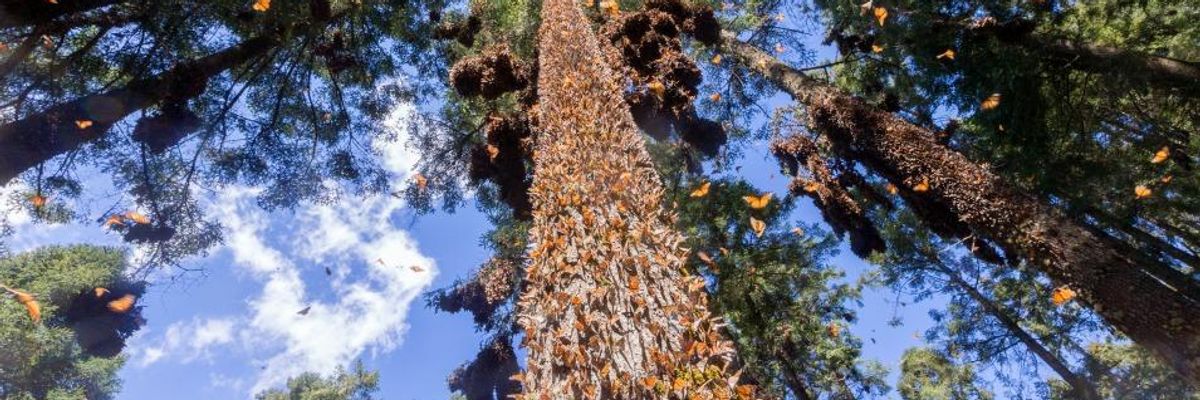
Raul Hernandez Romero, a tour guide who worked at El Rosario butterfly preserve in Michoacan state, Mexico, was found dead on Saturday. He was the second conservation advocate connected with the sanctuary found dead in the past week.
Human rights defenders on Monday demanded a full investigation into the death of a second conservation activist in Michoacan state, Mexico, after the body of a tour guide in one of the country's largest butterfly preserves was found several days after the man went missing.
The body of Raul Hernandez Romero was found at the top of a hill in the El Rosario butterfly sanctuary on Saturday, one day after the manager of the preserve, Homero Gomez Gonzalez, was buried. Gomez's body was found last Wednesday after a two-week disappearance.
"Like Homero Gomez, Raul dedicated his life to the protection of the monarch butterfly in Michoacan," tweeted Amnesty International Mexico in Spanish on Monday. "We demand the immediate intervention of the authorities!"
The global human rights group's U.K. office added that the news of Hernandez's death was "horrific" and pledged to investigate.
Hernandez Romero's death, "along with the death of Homero Gomez, demands immediate investigation and full accountability," tweeted Richard Pearshouse, head of crisis and environment at Amnesty.
El Rosario sanctuary provides a home for millions of migrating monarch butterflies each year and draws thousands of tourists annually. But the reserve has also drawn the ire of illegal loggers in Mexico, who are banned from cutting down trees in the protected area.
Before the ban, more than 1,000 acres of the woodland were lost to the industry between 2005 and 2006.
Hernandez's family told the BBC that before he disappeared on Jan. 27, he had been receiving threats warning him to stop campaigning against illegal logging. Forensic experts said the activist appeared to have been beaten with a sharp object and had a deep wound in his head.
Mexico's murder rate has gone up in recent years, with more than 34,000 people killed in 2019--the highest annual number ever in the country. Between 2010 and 2016, fewer than 6% of murder cases led to convictions. In 2018, at least 14 eco-defenders were killed in Mexico, according to a report by Global Witness.
Last year, Amnesty International's Americas director Erika Guevara-Rosas told Mexico News Daily that "the brave defenders of the land, territory, and environment face constant danger in Mexico."
Guevara-Rosas demanded a thorough investigation into the deaths of Hernandez and Gomez on social media Monday.
"Raul, like Homero, had also denounced illegal logging," she tweeted. "Their deaths cannot go unpunished."
Dear Common Dreams reader, It’s been nearly 30 years since I co-founded Common Dreams with my late wife, Lina Newhouser. We had the radical notion that journalism should serve the public good, not corporate profits. It was clear to us from the outset what it would take to build such a project. No paid advertisements. No corporate sponsors. No millionaire publisher telling us what to think or do. Many people said we wouldn't last a year, but we proved those doubters wrong. Together with a tremendous team of journalists and dedicated staff, we built an independent media outlet free from the constraints of profits and corporate control. Our mission has always been simple: To inform. To inspire. To ignite change for the common good. Building Common Dreams was not easy. Our survival was never guaranteed. When you take on the most powerful forces—Wall Street greed, fossil fuel industry destruction, Big Tech lobbyists, and uber-rich oligarchs who have spent billions upon billions rigging the economy and democracy in their favor—the only bulwark you have is supporters who believe in your work. But here’s the urgent message from me today. It's never been this bad out there. And it's never been this hard to keep us going. At the very moment Common Dreams is most needed, the threats we face are intensifying. We need your support now more than ever. We don't accept corporate advertising and never will. We don't have a paywall because we don't think people should be blocked from critical news based on their ability to pay. Everything we do is funded by the donations of readers like you. When everyone does the little they can afford, we are strong. But if that support retreats or dries up, so do we. Will you donate now to make sure Common Dreams not only survives but thrives? —Craig Brown, Co-founder |
Human rights defenders on Monday demanded a full investigation into the death of a second conservation activist in Michoacan state, Mexico, after the body of a tour guide in one of the country's largest butterfly preserves was found several days after the man went missing.
The body of Raul Hernandez Romero was found at the top of a hill in the El Rosario butterfly sanctuary on Saturday, one day after the manager of the preserve, Homero Gomez Gonzalez, was buried. Gomez's body was found last Wednesday after a two-week disappearance.
"Like Homero Gomez, Raul dedicated his life to the protection of the monarch butterfly in Michoacan," tweeted Amnesty International Mexico in Spanish on Monday. "We demand the immediate intervention of the authorities!"
The global human rights group's U.K. office added that the news of Hernandez's death was "horrific" and pledged to investigate.
Hernandez Romero's death, "along with the death of Homero Gomez, demands immediate investigation and full accountability," tweeted Richard Pearshouse, head of crisis and environment at Amnesty.
El Rosario sanctuary provides a home for millions of migrating monarch butterflies each year and draws thousands of tourists annually. But the reserve has also drawn the ire of illegal loggers in Mexico, who are banned from cutting down trees in the protected area.
Before the ban, more than 1,000 acres of the woodland were lost to the industry between 2005 and 2006.
Hernandez's family told the BBC that before he disappeared on Jan. 27, he had been receiving threats warning him to stop campaigning against illegal logging. Forensic experts said the activist appeared to have been beaten with a sharp object and had a deep wound in his head.
Mexico's murder rate has gone up in recent years, with more than 34,000 people killed in 2019--the highest annual number ever in the country. Between 2010 and 2016, fewer than 6% of murder cases led to convictions. In 2018, at least 14 eco-defenders were killed in Mexico, according to a report by Global Witness.
Last year, Amnesty International's Americas director Erika Guevara-Rosas told Mexico News Daily that "the brave defenders of the land, territory, and environment face constant danger in Mexico."
Guevara-Rosas demanded a thorough investigation into the deaths of Hernandez and Gomez on social media Monday.
"Raul, like Homero, had also denounced illegal logging," she tweeted. "Their deaths cannot go unpunished."
Human rights defenders on Monday demanded a full investigation into the death of a second conservation activist in Michoacan state, Mexico, after the body of a tour guide in one of the country's largest butterfly preserves was found several days after the man went missing.
The body of Raul Hernandez Romero was found at the top of a hill in the El Rosario butterfly sanctuary on Saturday, one day after the manager of the preserve, Homero Gomez Gonzalez, was buried. Gomez's body was found last Wednesday after a two-week disappearance.
"Like Homero Gomez, Raul dedicated his life to the protection of the monarch butterfly in Michoacan," tweeted Amnesty International Mexico in Spanish on Monday. "We demand the immediate intervention of the authorities!"
The global human rights group's U.K. office added that the news of Hernandez's death was "horrific" and pledged to investigate.
Hernandez Romero's death, "along with the death of Homero Gomez, demands immediate investigation and full accountability," tweeted Richard Pearshouse, head of crisis and environment at Amnesty.
El Rosario sanctuary provides a home for millions of migrating monarch butterflies each year and draws thousands of tourists annually. But the reserve has also drawn the ire of illegal loggers in Mexico, who are banned from cutting down trees in the protected area.
Before the ban, more than 1,000 acres of the woodland were lost to the industry between 2005 and 2006.
Hernandez's family told the BBC that before he disappeared on Jan. 27, he had been receiving threats warning him to stop campaigning against illegal logging. Forensic experts said the activist appeared to have been beaten with a sharp object and had a deep wound in his head.
Mexico's murder rate has gone up in recent years, with more than 34,000 people killed in 2019--the highest annual number ever in the country. Between 2010 and 2016, fewer than 6% of murder cases led to convictions. In 2018, at least 14 eco-defenders were killed in Mexico, according to a report by Global Witness.
Last year, Amnesty International's Americas director Erika Guevara-Rosas told Mexico News Daily that "the brave defenders of the land, territory, and environment face constant danger in Mexico."
Guevara-Rosas demanded a thorough investigation into the deaths of Hernandez and Gomez on social media Monday.
"Raul, like Homero, had also denounced illegal logging," she tweeted. "Their deaths cannot go unpunished."