SUBSCRIBE TO OUR FREE NEWSLETTER
Daily news & progressive opinion—funded by the people, not the corporations—delivered straight to your inbox.
5
#000000
#FFFFFF
To donate by check, phone, or other method, see our More Ways to Give page.
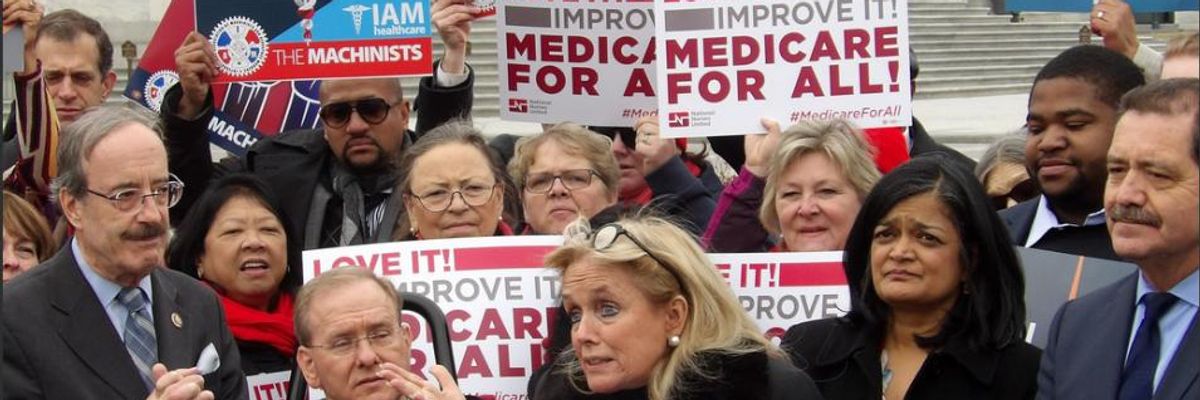
Support for Medicare for All is rapidly gaining momentum in Congress--and insurance investors are starting to get nervous.
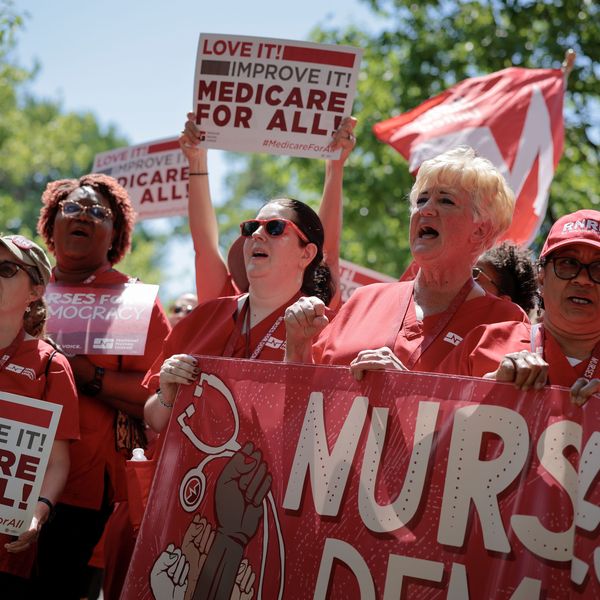
Health insurance stocks tanked on Wednesday as Rep. Pramila Jayapal (D-Wash.) introduced comprehensive Medicare for All legislation with the backing of more than 100 House Democrats and major progressive organizations, including America's largest nurses' union and national consumer advocacy groups.
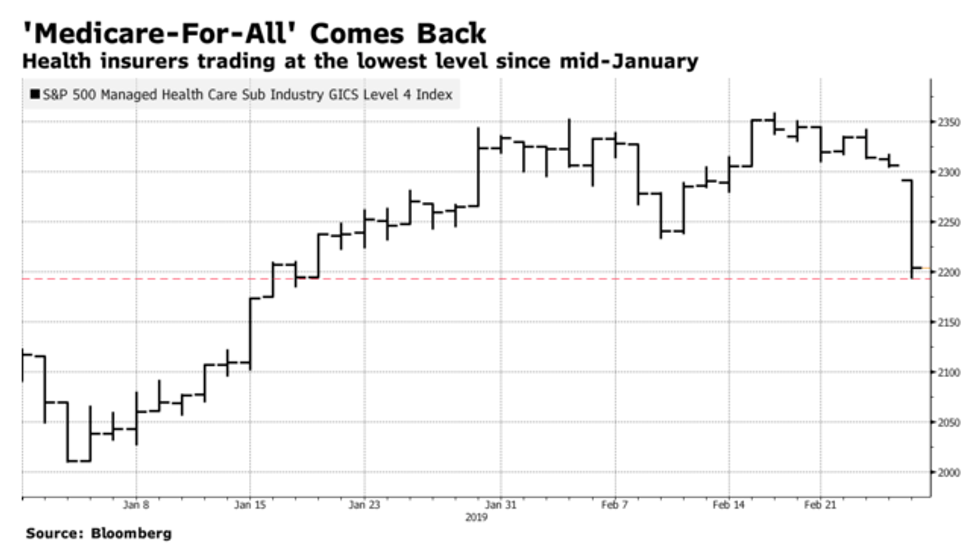
"The S&P 500 Managed Health Care Index plunged as much as 4.9 percent, the most since Dec. 6, led by UnitedHealth Group Inc., Humana Inc., and WellCare Health Plans Inc.," Bloomberg reported after Jayapal unveiled her bill during an event on Capitol Hill. "Insurers UnitedHealth and Cigna Corp, which also own the country's largest pharmacy benefit managers, were both down about four percent."
Jayapal quickly made clear that she has no sympathy for the insurance industry, tweeting in response to the news, "Sorry not sorry."
Under Jayapal's plan, the U.S. would transition to a Medicare for All system over a period of two years, and private insurance would be nearly eliminated.
Dr. Adam Gaffney, president of Physicians for a National Health Program (PNHP), said in a statement on Wednesday that the "only way to achieve universal and comprehensive coverage is to eliminate the profits and waste of the private insurance industry, which drains hundreds of billions of dollars from our healthcare system each year."
With their profits under threat, the insurance and pharmaceutical industries are mounting a full-fledged and aggressive campaign to stop Medicare for All in its tracks. The Partnership for America's Health Care Future, a coalition formed by major pharmaceutical and insurance interests, is reportedly planning a "big nationwide effort" to undermine single payer's momentum and preserve the for-profit status quo.
To overcome the opposition of the deep-pocketed insurance industry, National Nurses United (NNU) and other grassroots organizations are planning a nationwide mobilization of their own in the coming weeks in an effort to defeat corporate power with a mass movement of ordinary Americans.
"This is a milestone in the fight for universal healthcare and an equitable society, where working people make the decisions that determine our destiny," Sanders Institute fellow Michael Lighty said of Jayapal's bill. "Now our task is to build a mass organization of working people that will not give up until we win."
Support for Medicare for All is rapidly gaining momentum in Congress--and insurance investors are starting to get nervous.
Health insurance stocks tanked on Wednesday as Rep. Pramila Jayapal (D-Wash.) introduced comprehensive Medicare for All legislation with the backing of more than 100 House Democrats and major progressive organizations, including America's largest nurses' union and national consumer advocacy groups.
"The S&P 500 Managed Health Care Index plunged as much as 4.9 percent, the most since Dec. 6, led by UnitedHealth Group Inc., Humana Inc., and WellCare Health Plans Inc.," Bloomberg reported after Jayapal unveiled her bill during an event on Capitol Hill. "Insurers UnitedHealth and Cigna Corp, which also own the country's largest pharmacy benefit managers, were both down about four percent."
Jayapal quickly made clear that she has no sympathy for the insurance industry, tweeting in response to the news, "Sorry not sorry."
Under Jayapal's plan, the U.S. would transition to a Medicare for All system over a period of two years, and private insurance would be nearly eliminated.
Dr. Adam Gaffney, president of Physicians for a National Health Program (PNHP), said in a statement on Wednesday that the "only way to achieve universal and comprehensive coverage is to eliminate the profits and waste of the private insurance industry, which drains hundreds of billions of dollars from our healthcare system each year."
With their profits under threat, the insurance and pharmaceutical industries are mounting a full-fledged and aggressive campaign to stop Medicare for All in its tracks. The Partnership for America's Health Care Future, a coalition formed by major pharmaceutical and insurance interests, is reportedly planning a "big nationwide effort" to undermine single payer's momentum and preserve the for-profit status quo.
To overcome the opposition of the deep-pocketed insurance industry, National Nurses United (NNU) and other grassroots organizations are planning a nationwide mobilization of their own in the coming weeks in an effort to defeat corporate power with a mass movement of ordinary Americans.
"This is a milestone in the fight for universal healthcare and an equitable society, where working people make the decisions that determine our destiny," Sanders Institute fellow Michael Lighty said of Jayapal's bill. "Now our task is to build a mass organization of working people that will not give up until we win."
Support for Medicare for All is rapidly gaining momentum in Congress--and insurance investors are starting to get nervous.
Health insurance stocks tanked on Wednesday as Rep. Pramila Jayapal (D-Wash.) introduced comprehensive Medicare for All legislation with the backing of more than 100 House Democrats and major progressive organizations, including America's largest nurses' union and national consumer advocacy groups.
"The S&P 500 Managed Health Care Index plunged as much as 4.9 percent, the most since Dec. 6, led by UnitedHealth Group Inc., Humana Inc., and WellCare Health Plans Inc.," Bloomberg reported after Jayapal unveiled her bill during an event on Capitol Hill. "Insurers UnitedHealth and Cigna Corp, which also own the country's largest pharmacy benefit managers, were both down about four percent."
Jayapal quickly made clear that she has no sympathy for the insurance industry, tweeting in response to the news, "Sorry not sorry."
Under Jayapal's plan, the U.S. would transition to a Medicare for All system over a period of two years, and private insurance would be nearly eliminated.
Dr. Adam Gaffney, president of Physicians for a National Health Program (PNHP), said in a statement on Wednesday that the "only way to achieve universal and comprehensive coverage is to eliminate the profits and waste of the private insurance industry, which drains hundreds of billions of dollars from our healthcare system each year."
With their profits under threat, the insurance and pharmaceutical industries are mounting a full-fledged and aggressive campaign to stop Medicare for All in its tracks. The Partnership for America's Health Care Future, a coalition formed by major pharmaceutical and insurance interests, is reportedly planning a "big nationwide effort" to undermine single payer's momentum and preserve the for-profit status quo.
To overcome the opposition of the deep-pocketed insurance industry, National Nurses United (NNU) and other grassroots organizations are planning a nationwide mobilization of their own in the coming weeks in an effort to defeat corporate power with a mass movement of ordinary Americans.
"This is a milestone in the fight for universal healthcare and an equitable society, where working people make the decisions that determine our destiny," Sanders Institute fellow Michael Lighty said of Jayapal's bill. "Now our task is to build a mass organization of working people that will not give up until we win."