SUBSCRIBE TO OUR FREE NEWSLETTER
Daily news & progressive opinion—funded by the people, not the corporations—delivered straight to your inbox.
5
#000000
#FFFFFF
To donate by check, phone, or other method, see our More Ways to Give page.
Daily news & progressive opinion—funded by the people, not the corporations—delivered straight to your inbox.
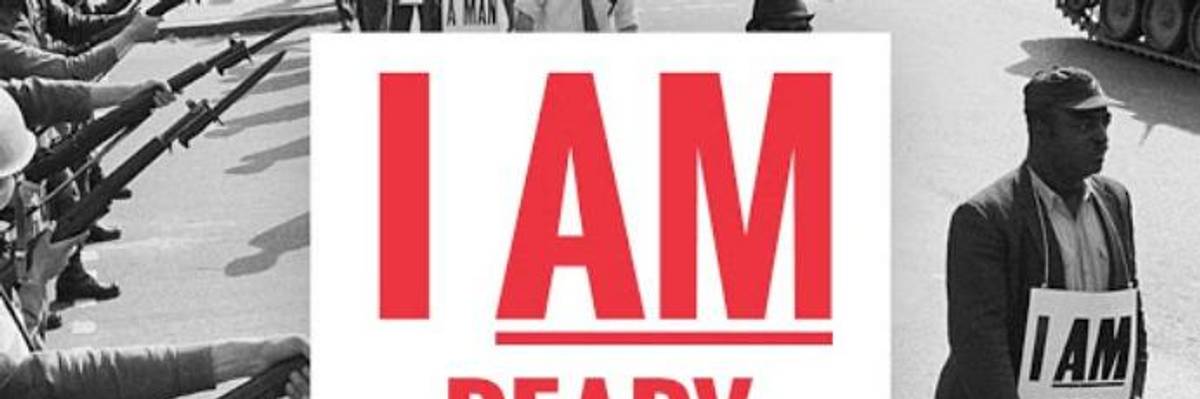
The states-wide strike will be held on Feb. 12. (Photo: Fight for $15/screenshot)
Fifty years after the sanitation workers in Memphis marched with Martin Luther King Jr. to demand higher wages and safer labor conditions, Fight for $15 and Rev. Dr. William J. Barber are planning a fast-food workers strike in two dozen cities across the Southern United States to advocate for racial justice and voting rights.
"There's no separation between the moral battle for voting rights and participation in democracy and the moral battle against systemic poverty. Those battles go together," said Barber, who last year revived King's Poor People's Campaign and has supported the Fight for $15 minimum wage movement.
In a statement announcing plans for the protests, which are scheduled for Feb. 12, Fight for $15 compared the plight of the sanitation workers 50 years ago to that of fast-food workers today. "Now, we carry on the same fight," the group declared. "In 1968, 40 percent of Memphis sanitation workers qualified for public assistance; in 2018, 52 percent of fast food workers are on public assistance."
While Barber and members of the new Poor People's Campaign will march in Memphis with 1968 sanitation workers as well as advocates for labor and civil rights, Fight for $15 is urging its supporters to organize events across the country.
"We're bringing two movements together--people fighting for a living wage, a lot of young people, along with poor people, moral leaders, people of faith," Barber told The Guardian. "We believe we can build a movement that can shift the narrative. Right now, we have an ugly narrative--'Elect me, I'll take away healthcare, I'll hurt the poor, and I'll give tax breaks to the wealthy.'"
Affiliated groups turned to social media Thursday to promote the states-wide strike:
Dear Common Dreams reader, It’s been nearly 30 years since I co-founded Common Dreams with my late wife, Lina Newhouser. We had the radical notion that journalism should serve the public good, not corporate profits. It was clear to us from the outset what it would take to build such a project. No paid advertisements. No corporate sponsors. No millionaire publisher telling us what to think or do. Many people said we wouldn't last a year, but we proved those doubters wrong. Together with a tremendous team of journalists and dedicated staff, we built an independent media outlet free from the constraints of profits and corporate control. Our mission has always been simple: To inform. To inspire. To ignite change for the common good. Building Common Dreams was not easy. Our survival was never guaranteed. When you take on the most powerful forces—Wall Street greed, fossil fuel industry destruction, Big Tech lobbyists, and uber-rich oligarchs who have spent billions upon billions rigging the economy and democracy in their favor—the only bulwark you have is supporters who believe in your work. But here’s the urgent message from me today. It's never been this bad out there. And it's never been this hard to keep us going. At the very moment Common Dreams is most needed, the threats we face are intensifying. We need your support now more than ever. We don't accept corporate advertising and never will. We don't have a paywall because we don't think people should be blocked from critical news based on their ability to pay. Everything we do is funded by the donations of readers like you. When everyone does the little they can afford, we are strong. But if that support retreats or dries up, so do we. Will you donate now to make sure Common Dreams not only survives but thrives? —Craig Brown, Co-founder |
Fifty years after the sanitation workers in Memphis marched with Martin Luther King Jr. to demand higher wages and safer labor conditions, Fight for $15 and Rev. Dr. William J. Barber are planning a fast-food workers strike in two dozen cities across the Southern United States to advocate for racial justice and voting rights.
"There's no separation between the moral battle for voting rights and participation in democracy and the moral battle against systemic poverty. Those battles go together," said Barber, who last year revived King's Poor People's Campaign and has supported the Fight for $15 minimum wage movement.
In a statement announcing plans for the protests, which are scheduled for Feb. 12, Fight for $15 compared the plight of the sanitation workers 50 years ago to that of fast-food workers today. "Now, we carry on the same fight," the group declared. "In 1968, 40 percent of Memphis sanitation workers qualified for public assistance; in 2018, 52 percent of fast food workers are on public assistance."
While Barber and members of the new Poor People's Campaign will march in Memphis with 1968 sanitation workers as well as advocates for labor and civil rights, Fight for $15 is urging its supporters to organize events across the country.
"We're bringing two movements together--people fighting for a living wage, a lot of young people, along with poor people, moral leaders, people of faith," Barber told The Guardian. "We believe we can build a movement that can shift the narrative. Right now, we have an ugly narrative--'Elect me, I'll take away healthcare, I'll hurt the poor, and I'll give tax breaks to the wealthy.'"
Affiliated groups turned to social media Thursday to promote the states-wide strike:
Fifty years after the sanitation workers in Memphis marched with Martin Luther King Jr. to demand higher wages and safer labor conditions, Fight for $15 and Rev. Dr. William J. Barber are planning a fast-food workers strike in two dozen cities across the Southern United States to advocate for racial justice and voting rights.
"There's no separation between the moral battle for voting rights and participation in democracy and the moral battle against systemic poverty. Those battles go together," said Barber, who last year revived King's Poor People's Campaign and has supported the Fight for $15 minimum wage movement.
In a statement announcing plans for the protests, which are scheduled for Feb. 12, Fight for $15 compared the plight of the sanitation workers 50 years ago to that of fast-food workers today. "Now, we carry on the same fight," the group declared. "In 1968, 40 percent of Memphis sanitation workers qualified for public assistance; in 2018, 52 percent of fast food workers are on public assistance."
While Barber and members of the new Poor People's Campaign will march in Memphis with 1968 sanitation workers as well as advocates for labor and civil rights, Fight for $15 is urging its supporters to organize events across the country.
"We're bringing two movements together--people fighting for a living wage, a lot of young people, along with poor people, moral leaders, people of faith," Barber told The Guardian. "We believe we can build a movement that can shift the narrative. Right now, we have an ugly narrative--'Elect me, I'll take away healthcare, I'll hurt the poor, and I'll give tax breaks to the wealthy.'"
Affiliated groups turned to social media Thursday to promote the states-wide strike: