

SUBSCRIBE TO OUR FREE NEWSLETTER
Daily news & progressive opinion—funded by the people, not the corporations—delivered straight to your inbox.
5
#000000
#FFFFFF
To donate by check, phone, or other method, see our More Ways to Give page.
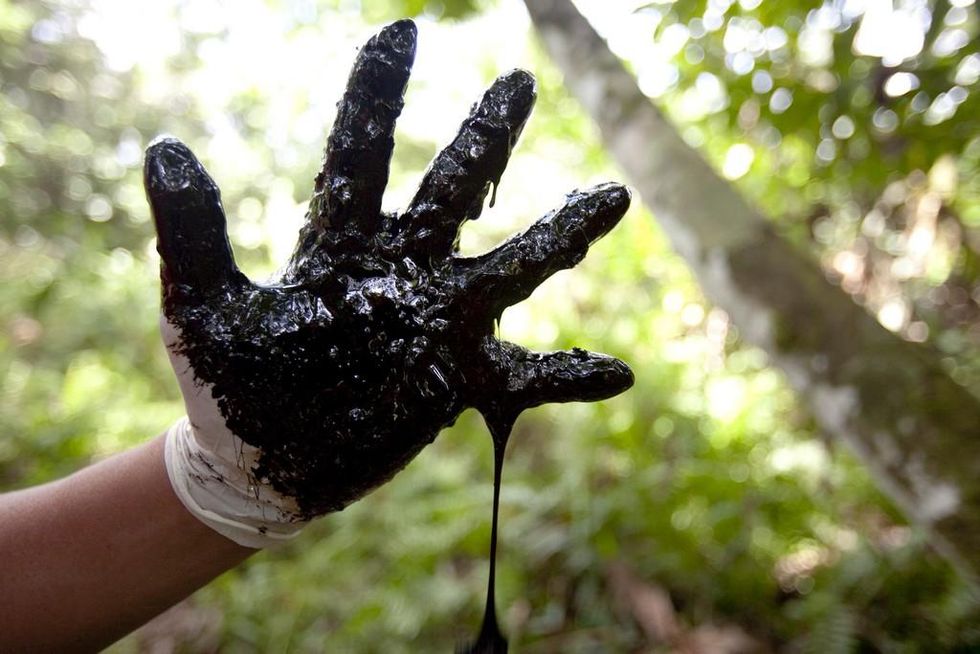
An Ontario appeals court ruled Tuesday (pdf) that indigenous and farmer communities in Ecuador can seek enforcement in Canada of $9.5 billion owed to them by Chevron--one of the largest corporations in the world--for decades of contamination and pollution of the Lago Agrio region in northeastern Ecuador, which has led to a spike in cancer, reported birth defects and ongoing devastation of the environment.
Tuesday's decision, which overturned a ruling from a lower Canadian court, will allow Chevron's victims to pursue the legal battle in Canada.
The court also ordered Chevron and its Canadian subsidiary to pay nearly $100,000 in legal fees to the plaintiffs.
"This decision is momentous," said Humberto Piaguaje, a Secoya indigenous leader who is the director of the Assembly of Affected Communities. "It proves Chevron cannot hide behind legal technicalities to avoid justice."
"Chevron believes that it can escape legal liability in Ecuador for environmental crimes because it has no assets in the country," said Antonia Juhasz, author of The Tyranny of Oil and editor of several Alternative Annual Reports on Chevron, in an interview with Common Dreams. Juhasz recently returned from Ecuador where she says she viewed the ongoing impacts of Chevron's oil contamination firsthand. "This ruling moves us one step closer to establishing the international community's commitment to ensuring that the law, and justice, will in fact be upheld regardless of where Chevron runs to hide."
Damages of $18 billion were awarded by the Ecuadorian courts in 2011 after villagers sued over the activities of Texaco, which was acquired by Chevron in 2001, that included dumping billions of gallons of toxic waste and spilling millions of gallons of crude oil on over 1,700 square miles of land between 1964 and 1992. The damages were cut to $9.5 billion by Ecuador's highest court last month.
Yet, Chevron has repeatedly refused to pay the fine on unproven charges that the trial was corrupt, and has removed most of its assets in Ecuador in an apparent bid to avoid paying. The corporation is challenging the decision in a trade agreement between the U.S. and Ecuador, the BBC reports. Over the summer, Chevron won rights from a U.S. judge over the summer to spy on activists and lawyers challenging its activities in Ecuador via U.S. cyber companies.
Chevron has vowed to fight the payments "until hell freezes over, and then fight it out on the ice."
In response, plaintiffs pursued legal proceedings in Canada, Brazil, and Argentina, where Chevron and its subsidiaries own billions of dollars in assets, in a bid to force the multinational corporation to pay.
Given that Chevron's assets amount to $15 billion in Canada, and Canadian courts have jurisdiction over Chevron on this matter, the plaintiffs could stand to receive the entirety of what is owed them, explained Steven Donziger--a lawyer involved with the plaintiff side of the case.
"After all these years, the Ecuadorian plaintiffs deserve to have the recognition and enforcement of the Ecuadorian judgment heard in an appropriate jurisdiction," reads the decision. "At this juncture, Ontario is that jurisdiction."
_____________________
An Ontario appeals court ruled Tuesday (pdf) that indigenous and farmer communities in Ecuador can seek enforcement in Canada of $9.5 billion owed to them by Chevron--one of the largest corporations in the world--for decades of contamination and pollution of the Lago Agrio region in northeastern Ecuador, which has led to a spike in cancer, reported birth defects and ongoing devastation of the environment.
Tuesday's decision, which overturned a ruling from a lower Canadian court, will allow Chevron's victims to pursue the legal battle in Canada.
The court also ordered Chevron and its Canadian subsidiary to pay nearly $100,000 in legal fees to the plaintiffs.
"This decision is momentous," said Humberto Piaguaje, a Secoya indigenous leader who is the director of the Assembly of Affected Communities. "It proves Chevron cannot hide behind legal technicalities to avoid justice."
"Chevron believes that it can escape legal liability in Ecuador for environmental crimes because it has no assets in the country," said Antonia Juhasz, author of The Tyranny of Oil and editor of several Alternative Annual Reports on Chevron, in an interview with Common Dreams. Juhasz recently returned from Ecuador where she says she viewed the ongoing impacts of Chevron's oil contamination firsthand. "This ruling moves us one step closer to establishing the international community's commitment to ensuring that the law, and justice, will in fact be upheld regardless of where Chevron runs to hide."
Damages of $18 billion were awarded by the Ecuadorian courts in 2011 after villagers sued over the activities of Texaco, which was acquired by Chevron in 2001, that included dumping billions of gallons of toxic waste and spilling millions of gallons of crude oil on over 1,700 square miles of land between 1964 and 1992. The damages were cut to $9.5 billion by Ecuador's highest court last month.
Yet, Chevron has repeatedly refused to pay the fine on unproven charges that the trial was corrupt, and has removed most of its assets in Ecuador in an apparent bid to avoid paying. The corporation is challenging the decision in a trade agreement between the U.S. and Ecuador, the BBC reports. Over the summer, Chevron won rights from a U.S. judge over the summer to spy on activists and lawyers challenging its activities in Ecuador via U.S. cyber companies.
Chevron has vowed to fight the payments "until hell freezes over, and then fight it out on the ice."
In response, plaintiffs pursued legal proceedings in Canada, Brazil, and Argentina, where Chevron and its subsidiaries own billions of dollars in assets, in a bid to force the multinational corporation to pay.
Given that Chevron's assets amount to $15 billion in Canada, and Canadian courts have jurisdiction over Chevron on this matter, the plaintiffs could stand to receive the entirety of what is owed them, explained Steven Donziger--a lawyer involved with the plaintiff side of the case.
"After all these years, the Ecuadorian plaintiffs deserve to have the recognition and enforcement of the Ecuadorian judgment heard in an appropriate jurisdiction," reads the decision. "At this juncture, Ontario is that jurisdiction."
_____________________
An Ontario appeals court ruled Tuesday (pdf) that indigenous and farmer communities in Ecuador can seek enforcement in Canada of $9.5 billion owed to them by Chevron--one of the largest corporations in the world--for decades of contamination and pollution of the Lago Agrio region in northeastern Ecuador, which has led to a spike in cancer, reported birth defects and ongoing devastation of the environment.
Tuesday's decision, which overturned a ruling from a lower Canadian court, will allow Chevron's victims to pursue the legal battle in Canada.
The court also ordered Chevron and its Canadian subsidiary to pay nearly $100,000 in legal fees to the plaintiffs.
"This decision is momentous," said Humberto Piaguaje, a Secoya indigenous leader who is the director of the Assembly of Affected Communities. "It proves Chevron cannot hide behind legal technicalities to avoid justice."
"Chevron believes that it can escape legal liability in Ecuador for environmental crimes because it has no assets in the country," said Antonia Juhasz, author of The Tyranny of Oil and editor of several Alternative Annual Reports on Chevron, in an interview with Common Dreams. Juhasz recently returned from Ecuador where she says she viewed the ongoing impacts of Chevron's oil contamination firsthand. "This ruling moves us one step closer to establishing the international community's commitment to ensuring that the law, and justice, will in fact be upheld regardless of where Chevron runs to hide."
Damages of $18 billion were awarded by the Ecuadorian courts in 2011 after villagers sued over the activities of Texaco, which was acquired by Chevron in 2001, that included dumping billions of gallons of toxic waste and spilling millions of gallons of crude oil on over 1,700 square miles of land between 1964 and 1992. The damages were cut to $9.5 billion by Ecuador's highest court last month.
Yet, Chevron has repeatedly refused to pay the fine on unproven charges that the trial was corrupt, and has removed most of its assets in Ecuador in an apparent bid to avoid paying. The corporation is challenging the decision in a trade agreement between the U.S. and Ecuador, the BBC reports. Over the summer, Chevron won rights from a U.S. judge over the summer to spy on activists and lawyers challenging its activities in Ecuador via U.S. cyber companies.
Chevron has vowed to fight the payments "until hell freezes over, and then fight it out on the ice."
In response, plaintiffs pursued legal proceedings in Canada, Brazil, and Argentina, where Chevron and its subsidiaries own billions of dollars in assets, in a bid to force the multinational corporation to pay.
Given that Chevron's assets amount to $15 billion in Canada, and Canadian courts have jurisdiction over Chevron on this matter, the plaintiffs could stand to receive the entirety of what is owed them, explained Steven Donziger--a lawyer involved with the plaintiff side of the case.
"After all these years, the Ecuadorian plaintiffs deserve to have the recognition and enforcement of the Ecuadorian judgment heard in an appropriate jurisdiction," reads the decision. "At this juncture, Ontario is that jurisdiction."
_____________________

