SUBSCRIBE TO OUR FREE NEWSLETTER
Daily news & progressive opinion—funded by the people, not the corporations—delivered straight to your inbox.
5
#000000
#FFFFFF
To donate by check, phone, or other method, see our More Ways to Give page.
Daily news & progressive opinion—funded by the people, not the corporations—delivered straight to your inbox.
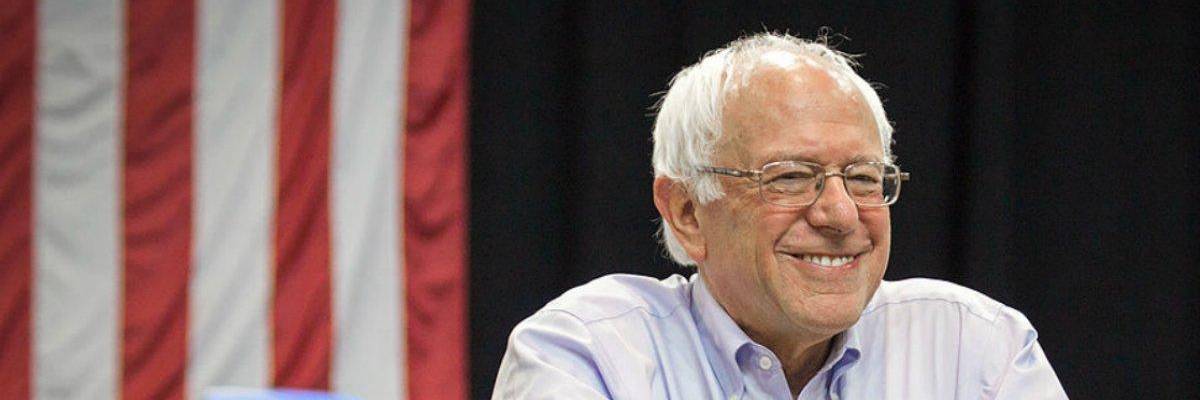
Bernie should recognize, and celebrate, the inevitability that a younger, browner, more female progressive leadership represents our country's future. (Photo: Nick Solari)
Senator Bernie Sanders, Democratic Socialist of Vermont, just announced that he is running for President in 2020. Give Bernie credit. He may not make it to the promised land, but he led a new generation of progressives with his amazing, nearly victorious primary campaign in 2016, changing the face of the Democratic Party and the future course of American politics.
Socialism--which, thanks to Bernie's primary bid, was the most-Googled word of 2015--is quickly becoming a defining theme of the next presidential election. Donald Trump can't stop talking about it, repeatedly declaring that the United States will "never be a socialist country."
Trump is reacting to progressive rock star and Green New Deal sponsor Representative Alexandria Ocasio-Cortez, Democrat of New York, who picked up where Bernie left off, becoming a hero to a generation of young voters who couldn't care less about creaky, Cold War-era warnings that progressive taxation and regulation on polluting industry will impinge on American freedom. These voters are more concerned about runaway corporate profits and yawning income inequality, deregulation that is accelerating a climate crisis, politicians who refuse to address spiraling college debt, and a lack of access to health care that is a scandal in the richest nation on Earth.
Sanders helped shine a light on all of these issues, creating a progressive platform and moving it from the margins to the mainstream.
Thanks to him, Elizabeth Warren was plowing fertile ground in her announcement when she declared, "America's middle-class is under attack. How did we get here? Billionaires and big corporations decided they wanted more of the pie, and they enlisted politicians to cut them a fatter slice."
And thanks to Bernie, Kamala Harris was not testing a new idea when she declared that she was running to establish that health-care is a fundamental right, and promised to champion Medicare for All--a bill she co-sponsored with Sanders.
As Sanders himself put it in an email announcing his 2020 presidential bid:
"Three years ago, during our 2016 campaign, when we brought forth our progressive agenda we were told that our ideas were 'radical' and 'extreme.' . . . Well, three years have come and gone. And, as result of millions of Americans standing up and fighting back, all of these policies and more are now supported by a majority of Americans."
As a result of that fight, which Sanders led, a new class of Democrats were elected to the House of Representatives--making it the most diverse, most female, and most progressive our nation has ever seen.
They were elected in part by young people who turned out in the highest numbers for a midterm election in more than 100 years. Those voters are part of the Bernie Sanders generation. In the last presidential primary, Sanders won more votes among people under the age of thirty than both of the eventual major party nominees combined.
He deserves credit for igniting the public-spirited response to Trump, who embodies everything Sanders ran against: greed, avarice, short-term thinking, and the enrichment of the few at the expense of the many.
But at the heart of Donald Trump's presidency is another major battle in American democracy: the struggle for equal rights for women and people of color, against the efforts of white supremacists to hang onto power in the face of changing demographics.
Trump was elected in a backlash against the nation's first African American President, after running a misogynist campaign against Hillary Clinton. He has made vicious, racist attacks on Muslims and Latin American immigrants a centerpiece of his presidency and his re-election bid. And the 2018 midterms--the biggest rebuke of a sitting president since Watergate--showed the power of the Women's March, #MeToo, and immigrant rights and racial justice movements.
In his first interview after announcing his candidacy, Sanders sounded tone-deaf to the new progressive reality he helped create.
In his first interview after announcing his candidacy, Sanders sounded tone-deaf to this reality. When asked by Vermont Public Radio's Bob Kinzel about concerns that, as a seventy-seven-year-old white man, he does not represent "the face of the new Democratic Party," Sanders replied:
"We have got to look at candidates, you know, not by the color of their skin, not by their sexual orientation or their gender, and not by their age," Sanders said. "I mean, I think we have got to try to move us toward a non-discriminatory society which looks at people based on their abilities, based on what they stand for."
But surely representation matters in our democracy. And representation of women and people of color matters, especially, when Make America Great Again is the slogan of a white supremacist President who ran on nostalgia for an era when white men ruled.
Sanders should acknowledge that, especially after recent revelations of sexism, unequal pay, and harassment within his 2016 campaign.
Bernie's contribution in helping lead the progressive movement should not be understated. His campaign against Hillary Clinton was not, as Clinton supporters portrayed it at the time, a campaign representing misogyny and backwardness against feminism and progress. When Bernie pointed out that Clinton, who took more than $600,000 in speaking fees from Goldman Sachs in a single year, was not the best representative of ordinary people's interests against the predations of Wall Street, he was speaking for a lot of progressives who want to see the Democratic Party stop carrying water for the very wealthy and start championing the interests of ordinary people.
That message is getting through. We have Bernie to thank for that.
But he should recognize, and celebrate, the inevitability that a younger, browner, more female progressive leadership represents our country's future.
Dear Common Dreams reader, It’s been nearly 30 years since I co-founded Common Dreams with my late wife, Lina Newhouser. We had the radical notion that journalism should serve the public good, not corporate profits. It was clear to us from the outset what it would take to build such a project. No paid advertisements. No corporate sponsors. No millionaire publisher telling us what to think or do. Many people said we wouldn't last a year, but we proved those doubters wrong. Together with a tremendous team of journalists and dedicated staff, we built an independent media outlet free from the constraints of profits and corporate control. Our mission has always been simple: To inform. To inspire. To ignite change for the common good. Building Common Dreams was not easy. Our survival was never guaranteed. When you take on the most powerful forces—Wall Street greed, fossil fuel industry destruction, Big Tech lobbyists, and uber-rich oligarchs who have spent billions upon billions rigging the economy and democracy in their favor—the only bulwark you have is supporters who believe in your work. But here’s the urgent message from me today. It's never been this bad out there. And it's never been this hard to keep us going. At the very moment Common Dreams is most needed, the threats we face are intensifying. We need your support now more than ever. We don't accept corporate advertising and never will. We don't have a paywall because we don't think people should be blocked from critical news based on their ability to pay. Everything we do is funded by the donations of readers like you. When everyone does the little they can afford, we are strong. But if that support retreats or dries up, so do we. Will you donate now to make sure Common Dreams not only survives but thrives? —Craig Brown, Co-founder |
Senator Bernie Sanders, Democratic Socialist of Vermont, just announced that he is running for President in 2020. Give Bernie credit. He may not make it to the promised land, but he led a new generation of progressives with his amazing, nearly victorious primary campaign in 2016, changing the face of the Democratic Party and the future course of American politics.
Socialism--which, thanks to Bernie's primary bid, was the most-Googled word of 2015--is quickly becoming a defining theme of the next presidential election. Donald Trump can't stop talking about it, repeatedly declaring that the United States will "never be a socialist country."
Trump is reacting to progressive rock star and Green New Deal sponsor Representative Alexandria Ocasio-Cortez, Democrat of New York, who picked up where Bernie left off, becoming a hero to a generation of young voters who couldn't care less about creaky, Cold War-era warnings that progressive taxation and regulation on polluting industry will impinge on American freedom. These voters are more concerned about runaway corporate profits and yawning income inequality, deregulation that is accelerating a climate crisis, politicians who refuse to address spiraling college debt, and a lack of access to health care that is a scandal in the richest nation on Earth.
Sanders helped shine a light on all of these issues, creating a progressive platform and moving it from the margins to the mainstream.
Thanks to him, Elizabeth Warren was plowing fertile ground in her announcement when she declared, "America's middle-class is under attack. How did we get here? Billionaires and big corporations decided they wanted more of the pie, and they enlisted politicians to cut them a fatter slice."
And thanks to Bernie, Kamala Harris was not testing a new idea when she declared that she was running to establish that health-care is a fundamental right, and promised to champion Medicare for All--a bill she co-sponsored with Sanders.
As Sanders himself put it in an email announcing his 2020 presidential bid:
"Three years ago, during our 2016 campaign, when we brought forth our progressive agenda we were told that our ideas were 'radical' and 'extreme.' . . . Well, three years have come and gone. And, as result of millions of Americans standing up and fighting back, all of these policies and more are now supported by a majority of Americans."
As a result of that fight, which Sanders led, a new class of Democrats were elected to the House of Representatives--making it the most diverse, most female, and most progressive our nation has ever seen.
They were elected in part by young people who turned out in the highest numbers for a midterm election in more than 100 years. Those voters are part of the Bernie Sanders generation. In the last presidential primary, Sanders won more votes among people under the age of thirty than both of the eventual major party nominees combined.
He deserves credit for igniting the public-spirited response to Trump, who embodies everything Sanders ran against: greed, avarice, short-term thinking, and the enrichment of the few at the expense of the many.
But at the heart of Donald Trump's presidency is another major battle in American democracy: the struggle for equal rights for women and people of color, against the efforts of white supremacists to hang onto power in the face of changing demographics.
Trump was elected in a backlash against the nation's first African American President, after running a misogynist campaign against Hillary Clinton. He has made vicious, racist attacks on Muslims and Latin American immigrants a centerpiece of his presidency and his re-election bid. And the 2018 midterms--the biggest rebuke of a sitting president since Watergate--showed the power of the Women's March, #MeToo, and immigrant rights and racial justice movements.
In his first interview after announcing his candidacy, Sanders sounded tone-deaf to the new progressive reality he helped create.
In his first interview after announcing his candidacy, Sanders sounded tone-deaf to this reality. When asked by Vermont Public Radio's Bob Kinzel about concerns that, as a seventy-seven-year-old white man, he does not represent "the face of the new Democratic Party," Sanders replied:
"We have got to look at candidates, you know, not by the color of their skin, not by their sexual orientation or their gender, and not by their age," Sanders said. "I mean, I think we have got to try to move us toward a non-discriminatory society which looks at people based on their abilities, based on what they stand for."
But surely representation matters in our democracy. And representation of women and people of color matters, especially, when Make America Great Again is the slogan of a white supremacist President who ran on nostalgia for an era when white men ruled.
Sanders should acknowledge that, especially after recent revelations of sexism, unequal pay, and harassment within his 2016 campaign.
Bernie's contribution in helping lead the progressive movement should not be understated. His campaign against Hillary Clinton was not, as Clinton supporters portrayed it at the time, a campaign representing misogyny and backwardness against feminism and progress. When Bernie pointed out that Clinton, who took more than $600,000 in speaking fees from Goldman Sachs in a single year, was not the best representative of ordinary people's interests against the predations of Wall Street, he was speaking for a lot of progressives who want to see the Democratic Party stop carrying water for the very wealthy and start championing the interests of ordinary people.
That message is getting through. We have Bernie to thank for that.
But he should recognize, and celebrate, the inevitability that a younger, browner, more female progressive leadership represents our country's future.
Senator Bernie Sanders, Democratic Socialist of Vermont, just announced that he is running for President in 2020. Give Bernie credit. He may not make it to the promised land, but he led a new generation of progressives with his amazing, nearly victorious primary campaign in 2016, changing the face of the Democratic Party and the future course of American politics.
Socialism--which, thanks to Bernie's primary bid, was the most-Googled word of 2015--is quickly becoming a defining theme of the next presidential election. Donald Trump can't stop talking about it, repeatedly declaring that the United States will "never be a socialist country."
Trump is reacting to progressive rock star and Green New Deal sponsor Representative Alexandria Ocasio-Cortez, Democrat of New York, who picked up where Bernie left off, becoming a hero to a generation of young voters who couldn't care less about creaky, Cold War-era warnings that progressive taxation and regulation on polluting industry will impinge on American freedom. These voters are more concerned about runaway corporate profits and yawning income inequality, deregulation that is accelerating a climate crisis, politicians who refuse to address spiraling college debt, and a lack of access to health care that is a scandal in the richest nation on Earth.
Sanders helped shine a light on all of these issues, creating a progressive platform and moving it from the margins to the mainstream.
Thanks to him, Elizabeth Warren was plowing fertile ground in her announcement when she declared, "America's middle-class is under attack. How did we get here? Billionaires and big corporations decided they wanted more of the pie, and they enlisted politicians to cut them a fatter slice."
And thanks to Bernie, Kamala Harris was not testing a new idea when she declared that she was running to establish that health-care is a fundamental right, and promised to champion Medicare for All--a bill she co-sponsored with Sanders.
As Sanders himself put it in an email announcing his 2020 presidential bid:
"Three years ago, during our 2016 campaign, when we brought forth our progressive agenda we were told that our ideas were 'radical' and 'extreme.' . . . Well, three years have come and gone. And, as result of millions of Americans standing up and fighting back, all of these policies and more are now supported by a majority of Americans."
As a result of that fight, which Sanders led, a new class of Democrats were elected to the House of Representatives--making it the most diverse, most female, and most progressive our nation has ever seen.
They were elected in part by young people who turned out in the highest numbers for a midterm election in more than 100 years. Those voters are part of the Bernie Sanders generation. In the last presidential primary, Sanders won more votes among people under the age of thirty than both of the eventual major party nominees combined.
He deserves credit for igniting the public-spirited response to Trump, who embodies everything Sanders ran against: greed, avarice, short-term thinking, and the enrichment of the few at the expense of the many.
But at the heart of Donald Trump's presidency is another major battle in American democracy: the struggle for equal rights for women and people of color, against the efforts of white supremacists to hang onto power in the face of changing demographics.
Trump was elected in a backlash against the nation's first African American President, after running a misogynist campaign against Hillary Clinton. He has made vicious, racist attacks on Muslims and Latin American immigrants a centerpiece of his presidency and his re-election bid. And the 2018 midterms--the biggest rebuke of a sitting president since Watergate--showed the power of the Women's March, #MeToo, and immigrant rights and racial justice movements.
In his first interview after announcing his candidacy, Sanders sounded tone-deaf to the new progressive reality he helped create.
In his first interview after announcing his candidacy, Sanders sounded tone-deaf to this reality. When asked by Vermont Public Radio's Bob Kinzel about concerns that, as a seventy-seven-year-old white man, he does not represent "the face of the new Democratic Party," Sanders replied:
"We have got to look at candidates, you know, not by the color of their skin, not by their sexual orientation or their gender, and not by their age," Sanders said. "I mean, I think we have got to try to move us toward a non-discriminatory society which looks at people based on their abilities, based on what they stand for."
But surely representation matters in our democracy. And representation of women and people of color matters, especially, when Make America Great Again is the slogan of a white supremacist President who ran on nostalgia for an era when white men ruled.
Sanders should acknowledge that, especially after recent revelations of sexism, unequal pay, and harassment within his 2016 campaign.
Bernie's contribution in helping lead the progressive movement should not be understated. His campaign against Hillary Clinton was not, as Clinton supporters portrayed it at the time, a campaign representing misogyny and backwardness against feminism and progress. When Bernie pointed out that Clinton, who took more than $600,000 in speaking fees from Goldman Sachs in a single year, was not the best representative of ordinary people's interests against the predations of Wall Street, he was speaking for a lot of progressives who want to see the Democratic Party stop carrying water for the very wealthy and start championing the interests of ordinary people.
That message is getting through. We have Bernie to thank for that.
But he should recognize, and celebrate, the inevitability that a younger, browner, more female progressive leadership represents our country's future.