SUBSCRIBE TO OUR FREE NEWSLETTER
Daily news & progressive opinion—funded by the people, not the corporations—delivered straight to your inbox.
5
#000000
#FFFFFF
To donate by check, phone, or other method, see our More Ways to Give page.
Earlier this month, the municipal council of Izhma district of the Komi region in the North-East of Russia supported claims of local community and voted to stop the operations of oil giant Lukoil in the area. The councilors ask to stop all industrial activities until requirements of locals are fulfilled: the company is held liable for the previous oil spills and legitimate public hearings are organized to discuss expanding of Lukoil's operations in the district.
Izhma district is located on the bank of Pechora River running into the Arctic Ocean. Lukoil enjoys a monopoly in these subarctic areas. Most of its population is indigenous Komi people - an ethnic group uniting some 200,000 people in north-east of European Russia, belonging to Shamanic and Christian, namely Old Believers, beliefs. Komi-Izhemtsy form a sub-group in Izhma district, known for their well-preserved reindeer husbandry tradition. For many decades, they earned their living from traditional activities: fishing, berries, reindeer herding, hunting, gardening, and milk farming. Now all these activities are under threat: the area becomes so heavily polluted with toxic oil products that cows and reindeers get poisoned and fish intoxicated.

Unfortunately, the voting which took place in Izhma, has no legal force unless the claims are supported by federal environmental authorities (Rosprirodnadzor) - if this happens, Lukoil risks losing its license for drilling in the area.
But it's an unprecedented event for Russia: "We witness a historical event that could give new spirit to Russian civil society in people's fight for their rights," says Vladimir Chuprov, energy expert at Greenpeace Russia.
Before, on March 30th, 150 residents from 13 different villages at a meeting in the Izhma district unanimously voted for a resolution demanding that Lukoil-Komi should leave the district. Lukoil managers were invited too, but failed to appear.
People are outraged with multiple violations of environmental laws by the company and its disregard to the interests of local population. The participants compiled a long list of claims to Lukoil during the meeting.
Here are just a few examples of why the local residents are now ready to kick the company out of the district:
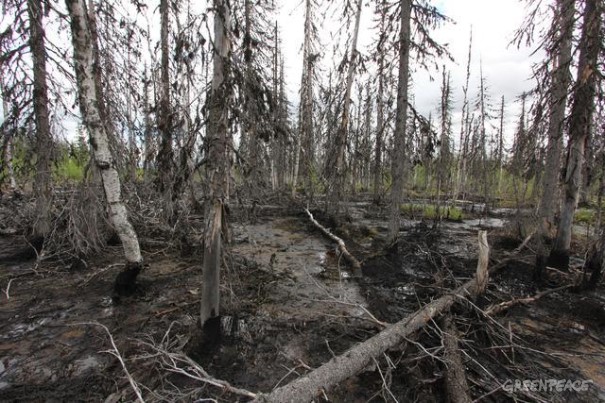
During 16 years in the district, Lukoil earned billions polluting the water, poisoning many hectares of swamps and forests. People complain that the cases of cancers became more frequent, three men died of cancer during the previous week alone.
"We have to live on the disposal dump of oil industry," say locals. "We can't even sell our houses and move away, because they cost nothing". Even though Lukoil's oil business is very profitable, the locals live in poverty, as the company prefers not to employ them and pays little attention to local social issues.
Lukoil is listed among top 50 global energy corporations responsible for climate change. It is responsible for 3.87 gigatonnes of CO2 emissions till year 2010, according the recent research by Climate Accountability Institute.
The situation's unfolding is hardly predictable. "It's very likely that oilmen and the authorities will try to tighten the screw on environmentalists and human rights organizations," warns Chuprov. "But it won't solve the problem for them. Sooner or later, Lukoil will have to change its politics. The same holds true for Rosneft, Gazprom and other fossil fuel companies".
Earlier this month, the municipal council of Izhma district of the Komi region in the North-East of Russia supported claims of local community and voted to stop the operations of oil giant Lukoil in the area. The councilors ask to stop all industrial activities until requirements of locals are fulfilled: the company is held liable for the previous oil spills and legitimate public hearings are organized to discuss expanding of Lukoil's operations in the district.
Izhma district is located on the bank of Pechora River running into the Arctic Ocean. Lukoil enjoys a monopoly in these subarctic areas. Most of its population is indigenous Komi people - an ethnic group uniting some 200,000 people in north-east of European Russia, belonging to Shamanic and Christian, namely Old Believers, beliefs. Komi-Izhemtsy form a sub-group in Izhma district, known for their well-preserved reindeer husbandry tradition. For many decades, they earned their living from traditional activities: fishing, berries, reindeer herding, hunting, gardening, and milk farming. Now all these activities are under threat: the area becomes so heavily polluted with toxic oil products that cows and reindeers get poisoned and fish intoxicated.
Unfortunately, the voting which took place in Izhma, has no legal force unless the claims are supported by federal environmental authorities (Rosprirodnadzor) - if this happens, Lukoil risks losing its license for drilling in the area.
But it's an unprecedented event for Russia: "We witness a historical event that could give new spirit to Russian civil society in people's fight for their rights," says Vladimir Chuprov, energy expert at Greenpeace Russia.
Before, on March 30th, 150 residents from 13 different villages at a meeting in the Izhma district unanimously voted for a resolution demanding that Lukoil-Komi should leave the district. Lukoil managers were invited too, but failed to appear.
People are outraged with multiple violations of environmental laws by the company and its disregard to the interests of local population. The participants compiled a long list of claims to Lukoil during the meeting.
Here are just a few examples of why the local residents are now ready to kick the company out of the district:
During 16 years in the district, Lukoil earned billions polluting the water, poisoning many hectares of swamps and forests. People complain that the cases of cancers became more frequent, three men died of cancer during the previous week alone.
"We have to live on the disposal dump of oil industry," say locals. "We can't even sell our houses and move away, because they cost nothing". Even though Lukoil's oil business is very profitable, the locals live in poverty, as the company prefers not to employ them and pays little attention to local social issues.
Lukoil is listed among top 50 global energy corporations responsible for climate change. It is responsible for 3.87 gigatonnes of CO2 emissions till year 2010, according the recent research by Climate Accountability Institute.
The situation's unfolding is hardly predictable. "It's very likely that oilmen and the authorities will try to tighten the screw on environmentalists and human rights organizations," warns Chuprov. "But it won't solve the problem for them. Sooner or later, Lukoil will have to change its politics. The same holds true for Rosneft, Gazprom and other fossil fuel companies".
Earlier this month, the municipal council of Izhma district of the Komi region in the North-East of Russia supported claims of local community and voted to stop the operations of oil giant Lukoil in the area. The councilors ask to stop all industrial activities until requirements of locals are fulfilled: the company is held liable for the previous oil spills and legitimate public hearings are organized to discuss expanding of Lukoil's operations in the district.
Izhma district is located on the bank of Pechora River running into the Arctic Ocean. Lukoil enjoys a monopoly in these subarctic areas. Most of its population is indigenous Komi people - an ethnic group uniting some 200,000 people in north-east of European Russia, belonging to Shamanic and Christian, namely Old Believers, beliefs. Komi-Izhemtsy form a sub-group in Izhma district, known for their well-preserved reindeer husbandry tradition. For many decades, they earned their living from traditional activities: fishing, berries, reindeer herding, hunting, gardening, and milk farming. Now all these activities are under threat: the area becomes so heavily polluted with toxic oil products that cows and reindeers get poisoned and fish intoxicated.
Unfortunately, the voting which took place in Izhma, has no legal force unless the claims are supported by federal environmental authorities (Rosprirodnadzor) - if this happens, Lukoil risks losing its license for drilling in the area.
But it's an unprecedented event for Russia: "We witness a historical event that could give new spirit to Russian civil society in people's fight for their rights," says Vladimir Chuprov, energy expert at Greenpeace Russia.
Before, on March 30th, 150 residents from 13 different villages at a meeting in the Izhma district unanimously voted for a resolution demanding that Lukoil-Komi should leave the district. Lukoil managers were invited too, but failed to appear.
People are outraged with multiple violations of environmental laws by the company and its disregard to the interests of local population. The participants compiled a long list of claims to Lukoil during the meeting.
Here are just a few examples of why the local residents are now ready to kick the company out of the district:
During 16 years in the district, Lukoil earned billions polluting the water, poisoning many hectares of swamps and forests. People complain that the cases of cancers became more frequent, three men died of cancer during the previous week alone.
"We have to live on the disposal dump of oil industry," say locals. "We can't even sell our houses and move away, because they cost nothing". Even though Lukoil's oil business is very profitable, the locals live in poverty, as the company prefers not to employ them and pays little attention to local social issues.
Lukoil is listed among top 50 global energy corporations responsible for climate change. It is responsible for 3.87 gigatonnes of CO2 emissions till year 2010, according the recent research by Climate Accountability Institute.
The situation's unfolding is hardly predictable. "It's very likely that oilmen and the authorities will try to tighten the screw on environmentalists and human rights organizations," warns Chuprov. "But it won't solve the problem for them. Sooner or later, Lukoil will have to change its politics. The same holds true for Rosneft, Gazprom and other fossil fuel companies".