

SUBSCRIBE TO OUR FREE NEWSLETTER
Daily news & progressive opinion—funded by the people, not the corporations—delivered straight to your inbox.
5
#000000
#FFFFFF
To donate by check, phone, or other method, see our More Ways to Give page.
Daily news & progressive opinion—funded by the people, not the corporations—delivered straight to your inbox.

"A 1-year-old child is dead because police officers in Mississippi opened fire on a car in a crowded Walmart parking lot," said attorney Ben Crump.
Relatives of a toddler shot dead on Sunday by police in rural Mississippi are demanding answers and accountability.
"I don’t know anything right now," Carlos Haynes told Memphis channel WMC. "My grandson gone. I just want justice."
Carolyn Sokes, the slain toddler's great-grandmother, said: "The police department not telling us anything. They removed the baby's body without anybody seeing it. All we know is that a car was shot up and a 1-year-old baby was killed, and then nobody tells us anything, like we're not anybody."
One-year-old Kohen Wiley, who was being held by his mother in the front passenger seat while his aunt was behind the wheel, was shot and killed by police in Senatobia, 40 miles south of Memphis, during an incident in a Walmart parking lot. The baby's aunt was also shot and critically injured.
Cellphone video footage obtained by Fox 13 Memphis shows a vehicle driving away from officers, but does not appear to capture the moment of the shooting. A photo of the car shows bullet holes in the windshield.
An eyewitness told WREG that “I seen the officers take off running, not in the car, I’m talking about on feet."
“They’re running through the parking lot and I see the car take off, you know, so in my head, I’m like, I know they’re not chasing the car, they don’t think they’re going to catch the car. Then I hear gunshots, and I’m like, I know they’re not shooting at a car that’s leaving in public; this is Walmart."
Another witness said that he heard two gunshots fired by officers who were already waiting in the Walmart parking lot as the two women left the store holding a box of diapers and the baby.
According to the Mississippi Department of Public Safety (DPS):
Law enforcement officers responded to a shoplifting call at Walmart on US 51. Upon arrival, officers encountered two subjects and a juvenile child fleeing from the store into a vehicle. Officers attempted to stop the vehicle, but the driver drove in the direction of the officers, almost striking one. An officer then discharged their weapon and the vehicle fled the scene. The subjects arrived at a local hospital where one juvenile child in the vehicle was pronounced deceased, and another subject had critical injuries. No law enforcement officers received any serious physical injury.
The responding law enforcement agencies—the Senatobia Police Department (SPD) and Tate County Sheriff's Office (TCSO)—have yet to release the names of the involved officers or any video footage of the incident.
TCSO said deputies were in the area investigating an unrelated matter when their assistance was requested. On Monday, Tate County Sheriff Luke Shepherd declined to comment about the shooting, including whether anyone had been charged, citing pending investigations, according to Mississippi Today.
SPD issued a statement saying it is "committed to full transparency" and "will share as much information as possible" with the public.
Walmart said in a written statement, “We’re saddened by what took place at our Senatobia, MS store."
Relatives of the slain toddler said his mother and aunt were not shoplifting and expressed wariness about local police, who have been embroiled in multiple brutality scandals involving Black victims in recent years.
“Senatobia Police Department get away with too much stuff,” Stokes, the great-grandmother, told WREG. “I hear about it all the time, it’s in the news all the time."
Licole Wiley, the child’s grandmother and the sister of the critically injured woman, lamented that the toddler died "allegedly over some Pampers."
"Whatever the incident may have come to, it still didn’t need for you to shoot two adults and a baby that was not even a threat to you," she added.
Another one of the child's grandmothers, Lasandra Williams, said that “everybody that was involved needs to be held accountable."
"I’m not giving up until I get justice,” she added. “Justice will be served. If it has anything to do with me, it will be served.”
Mississippi Today reported Tuesday that Wiley's relatives have hired national civil rights attorney Ben Crump.
"A 1-year-old child is dead because police officers in Mississippi opened fire on a car in a crowded Walmart parking lot," Crump said in a statement. "Kohen Wiley was a baby. His mother, who has not been charged with any crime, says she was trying to communicate to officers that there was a baby in the car. They fired anyway, leading to the death of an innocent 1-year-old. We intend to seek justice for baby Kohen and the life that was stolen from him.”

"The murder of Medgar Evers was an act of racial terror," said human rights activist Martin Luther King III.
Historians and other critics expressed disgust on Thursday after news broke that the Trump administration was removing references to racism from the monument dedicated to civil rights icon Medgar Evers.
According to a report from Mississippi Today, the National Park Service has removed visitor brochures from the Medgar & Myrlie Evers Home National Monument in Jackson, Mississippi.
Two Park Service employees tell Mississippi Today that the brochures are expected to undergo significant revisions, including removing references labeling Evers' killer, Byron De La Beckwith, as a racist.
In fact, Beckwith was a member of both the White Citizens Council and the Ku Klux Klan, and remained a committed white supremacist up to his death in prison in 2001.
Mississippi Today noted that the removal of the brochures at the Evers monument aren't a one-off event, and the publication cited an earlier report from the Washington Post detailing how the Trump administration "has ordered the removal of signs and exhibits related to slavery at multiple national parks, including an 1863 photo that Christian abolitionists used to prove the horrors of slavery."
US Civil War historian Kevin Levin reacted with shock to the Trump administration's latest effort to whitewash American history.
"I am speechless," he wrote in a social media post referencing the changes to the Evers monument.
Historian Todd Arrington, site manager of the James A. Garfield National Historic Site, noted the suspicious timing of the change in the monument brochures.
"Today is the 32nd anniversary of Byron De La Beckwith’s February 5, 1994 conviction for murdering Medgar Evers in 1963," he wrote. "I’m sure it’s just a coincidence that this news broke today. That racist POS—who bragged about killing Evers at Klan meetings and rallies—died in prison in 2001."
Human rights activist Martin Luther King III, son of civil rights icon Martin Luther King, Jr., slammed the Trump administration for trying to distort history.
"The murder of Medgar Evers was an act of racial terror," wrote King. "That fact is not partisan. It is historical. Calling it anything else is not 'restoring truth.' It is erasing it."
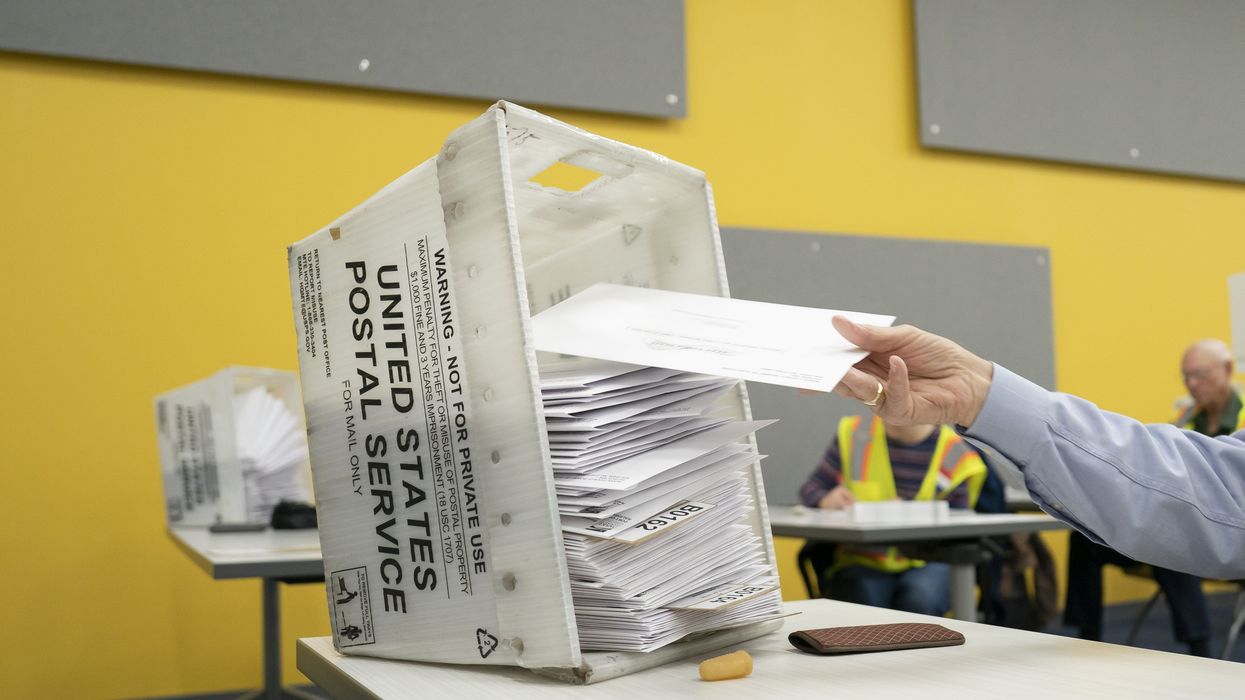
While experts hope the justices will reverse an "objectively insane" appellate decision, a ruling in favor of the Republican National Committee could reduce the rights of Americans who vote by mail.
As President Donald Trump on Monday pardoned leaders who tried to overturn his 2020 loss, the US Supreme Court took up the national Republican Party's argument that counting mailed ballots shortly after Election Day violates federal law.
Voting by mail has long been a target of the GOP president, who has falsely claimed that the practice fuels voter fraud. This case concerns a Mississippi law that allows mailed ballots postmarked by Election Day to be counted as long as they arrive within five business days, which three Trump appointees on the US Court of Appeals for the 5th Circuit struck down last year.
That lawsuit was brought by the Republican National Committee (RNC) and the Mississippi Libertarian Party. Another Republican, Mississippi Attorney General Lynn Fitch‚ is asking the nation's top court to reject the 5th Circuit's decision, arguing that it "defies statutory text, conflicts with this court's precedent, and—if left to stand—will have destabilizing nationwide ramifications."
The Supreme Court—which has a conservative supermajority that includes three Trump appointees—agreed to hear Watson v. RNC and decide "whether the federal Election Day statutes preempt a state law that allows ballots that are cast by federal Election Day to be received by election officials after that day."
The Supreme Court will review an objectively insane 5th Circuit decision that prohibited states from counting ballots that were mailed before Election Day but arrive shortly after. (More than half the states have such laws.) www.supremecourt.gov/orders/court...
[image or embed]
— Mark Joseph Stern (@mjsdc.bsky.social) November 10, 2025 at 9:44 AM
The Associated Press pointed out Monday that "Mississippi is among 18 states and the District of Columbia that accept mailed ballots received after Election Day as long as the ballots are postmarked on or before that date," and "an additional 14 states allow the counting of late-arriving ballots from some eligible voters, including overseas US service members and their families."
Legal experts have condemned the appellate decision as "awful" and "bonkers." The justices are expected to hear arguments early next year and issue a ruling by the end of June, months before the crucial midterm elections.
National Vote At Home Institute executive director Barbara Smith Warner welcomed their decision to take the case and potentially reverse the 5th Circuit's "upside-down" opinion, telling Democracy Docket: "The idea that a ballot that is postmarked on or by Election Day and received afterwards... is like voting after Election Day? That is ridiculous."
Unfortunately I am here to tell you: it's time to worry about what the Supreme Court is going to do to mail ballots postmarked by election day that arrive after election day, in states across the country. This could be enormous.www.democracydocket.com/news-alerts/...
[image or embed]
— jen rice (@jenrice.bsky.social) November 10, 2025 at 11:19 AM
Alexia Kemerling, director of accessible democracy at the American Association of People with Disabilities, was also hopeful.
"We really hope that the Supreme Court takes the responsibility seriously to make sure that every voter can use their power," she said. "'The millions of voters with disabilities who cannot vote in person or voters who are overseas who cannot vote in person—this is their only way to participate in the system. They should not be disenfranchised for the ways that our system moves slowly."
The New York Times noted that Watson v. RNC "is a potential blockbuster and adds to the court's other elections and voting cases for the term, which include a case about who can sue to challenge Illinois' mail-in ballot rules and a challenge to the Louisiana congressional district map that could gut a remaining pillar of the Voting Rights Act."

In addition to high-profile victories in New York, New Jersey, and Virginia, Democrats came away with upset wins in Georgia and Mississippi.
Leading Republicans such as US House Speaker Mike Johnson and right-wing media outlets like Fox News are trying to downplay Democrats' sweeping victories in key elections held on Tuesday, even though many of the party's victories came in areas that are not traditional Democratic strongholds.
Speaking in Washington, DC on Wednesday morning, Johnson dismissed the Democratic wins as entirely predictable given the recent voting histories of New York, New Jersey, and Virginia.
"There's no surprises," Johnson said. "What happened last night was blue states and blue cities voted blue. We all saw that coming. And no one should read too much into last night's election results. Off-year elections are not indicative of what's to come, that's what history teaches us."
Mike Johnson: "What happened last night is blue states and blue cities voted blue. We all saw that coming. And no one should read too much into last night's election results." pic.twitter.com/AO72p71Zsj
— Aaron Rupar (@atrupar) November 5, 2025
But despite Johnson's claims, Democrats on Tuesday also won major victories in two southern states that supported President Donald Trump in the 2024 general election.
As reported by the Atlanta Journal-Constitution, Democrats Peter Hubbard and Alicia Johnson ousted incumbent Republicans serving on Georgia's Public Service Commission, which is responsible for regulating utility prices in the state.
According to The New York Times, this will mark the first time that any Democrat has served on the commission since 2007, and it came after the commission signed off on six rate increases for the state's largest electricity provider over the past two years.
The Times also reported that Georgia Republicans are worried that the twin losses in Public Service Commission are an ill omen for next year's elections, when the GOP will seek to oust Sen. Jon Ossoff (D-Ga.) and maintain its hold on the governor's mansion.
In an interview with Politico, one Republican strategist said that the Democrats' wins in Georgia showed the challenges facing the GOP in getting low-propensity Trump voters to the polls in elections where he is not on the ballot.
"The one thing that would worry me, besides making sure you hold the House, is looking at how Democrats were able to fire up their base in some of these local elections in Georgia," they said.
In Mississippi, meanwhile, Democrats broke the GOP's supermajority in the state Senate for the first time in over a decade by flipping three seats. According to Mississippi Free Press, losing the Senate supermajority will make it significantly harder for the Mississippi Republicans to "override a governor’s veto, propose constitutional amendments, and execute certain procedural actions."
While Democrats in the state celebrated the wins, Mississippi Democratic Party Chairman Cheikh Taylor warned that it could be undone if the US Supreme Court strikes down a key provision of the Voting Rights Act that has historically been used to create of majority-minority districts to ensure Black voters in southern states have proper representation.
"Last night's victory proves that Mississippi is no longer a foregone conclusion—we are a battleground state," Taylor said. "But this win was only possible because the Voting Rights Act ensures fair representation. If the Supreme Court dismantles these protections, we risk silencing the very voices that made last night’s historic outcome possible. As voters continue to reject Trump's agenda in 2026 and 2027, we must protect the fundamental right that makes change possible: The right to vote."
While the wins in Georgia and Mississippi were impressive on their own, data analyst G. Elliott Morris found that shifts toward Democrats weren't confined to any individual state or city, but were incredibly broad.
Writing on his Substack page, Morris revealed that "almost every single county" in Virginia, New Jersey, Pennsylvania, and Georgia in this week's elections moved toward Democrats compared to how they voted in 2024.
"What we saw last night was a directional shift toward Democrats in 99.8% of counties that held partisan elections," Morris explained. "With few exceptions, voters everywhere moved to the left from 2024 to 2025."
What's more, Morris found that the shift toward Democrats wasn't simply the result of having lower turnout elections, which typically are beneficial to the party out of power.
"Average turnout in [New Jersey and Virginia] was close to 80% of 2024 levels, which is impressive for an off-off-year election—and the swing to Democrats there was still 7-8 points," he explained. "So I wouldn’t dismiss the results of last night just because low-turnout-propensity voters stayed home. There's evidence of both persuasion and turnout effects in last night’s contests."
David Smith, the Guardian Washington, DC bureau chief, writes in his analysis of election day that "the results were in part a referendum on Trump, whose approval rating has never been lower," and he added that the president was displaying stark political vulnerabilities just one year into his second term.
"His authoritarian grandstanding is a show of weakness rather than strength," he wrote. "From ICE raids and tariffs to his $300 million White House ballroom, his presidency is deeply unpopular. Are you better off than you were a year ago? Voters said no."
Even still, warned Smith, it's important that Democratic leaders don't mistake anger at Trump for glowing enthusiasm for their work atop the party, which remains at historic lows.The results on Tuesday were "never going to solve the riddle" of which direction the Democrats should head, he wrote, with both "progressives and moderates" provided "fodder to make a case" for their respective approach to politics.
For progressives like Rep. Alexandria Ocasio-Cortez (D-N.Y.), who spoke to MSNBC from New York at Mamdani's victory party, the Democrats need to understand that the party "does not have one face," but that everyone who wants to defeat Trump and the fascist Republicans "all understand the assignment" before them.
“Our assignment everywhere is to send the strongest fighters for the working class wherever possible," she said. "In some places, like Virginia, for the gubernatorial seat, that’s going to look like Abigail Spanberger. In New York City, unequivocally it is Zohran Mamdani.”
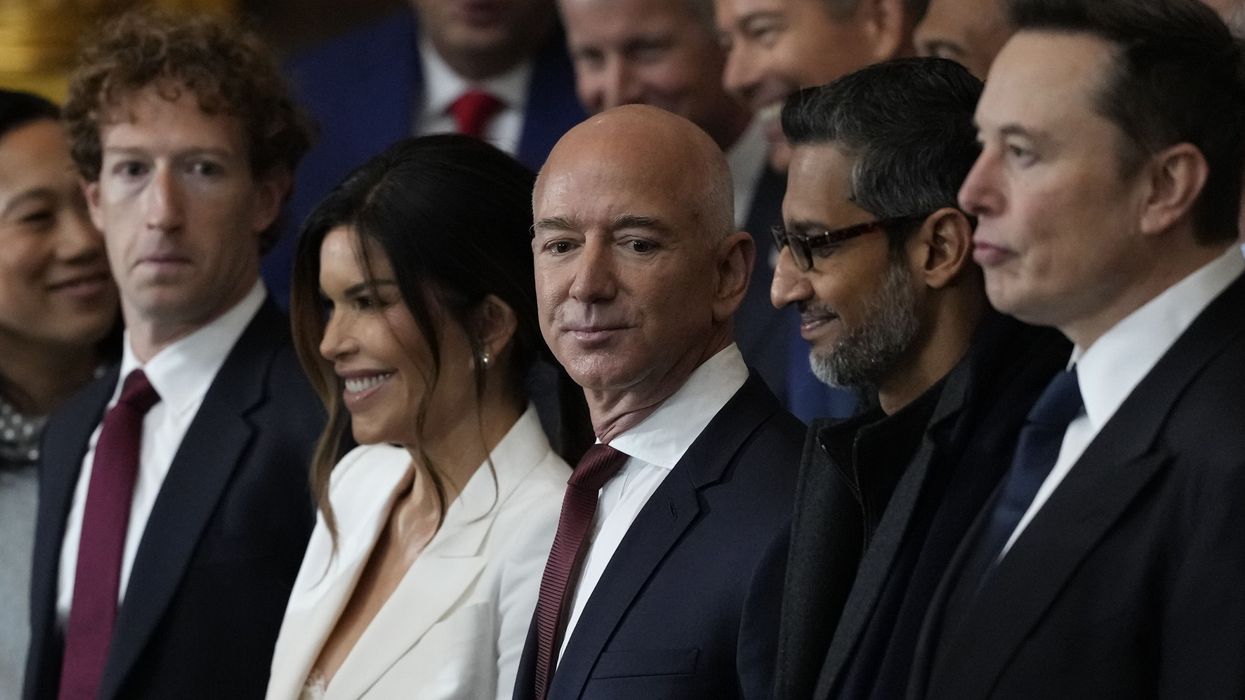
“These tax cuts are not only fiscally reckless but also deeply inequitable."
A progressive think tank has found that America's wealthiest citizens aren't just benefiting from the federal tax cuts passed in Republicans' One Big Beautiful Bill Act this past summer, but from tax giveaways offered by Republican-run states.
The Institute on Taxation and Economic Policy (ITEP) released a new analysis on Thursday showing that five states—Kansas, Mississippi, Missouri, Ohio, and Oklahoma—this year have enacted income tax cuts for families that earn over $1 million per year that are projected to collectively reduce their state governments' revenues by $2.2 billion per year once fully implemented.
The two biggest tax cuts for the wealthy came in Mississippi and Oklahoma, both of which have voted to phase out their state's income taxes over the span of several years. Once the income tax is fully repealed in those two states, ITEP estimates that millionaires living in them will pay $130,000 less per year.
ITEP also poked holes in any Republican claims that the tax cuts they passed were a benefit for "working families," and showed how the GOP's policy is overwhelmingly tilted to benefit the wealthy.
"The average millionaire tax cut is more than 50 times the size of the average cut for non-millionaires in each of the five states included in this report," the think tank noted. "In Mississippi and Ohio the average tax cuts for millionaires are over 100 times the size of those for non-millionaires."
The group found that the tax cuts passed in Missouri were particularly egregious when it comes to benefiting millionaires. As reported by the Missouri Independent, Missouri lawmakers over the summer made their state the first in the nation to eliminate taxes on capital gains, which is estimated to slash state revenues by more than $100 million per year.
According to ITEP, this tax cut is projected to deliver a $43,000 average annual benefit to Missouri families making over $1 million per year, and an $80 average annual benefit to Missouri's non-millionaire households.
Aidan Davis, ITEP's state policy director, expressed dismay at how much these state governments were willing to give to their wealthiest residents, even as their own state budgets face significant cuts to programs such as Medicaid the Supplemental Nutrition Assistance Program, both of which help low-income Americans.
"These tax cuts are not only fiscally reckless but also deeply inequitable," Davis explained. "At a time when state budgets are under immense pressure, it's indefensible to hand millionaires five- and six-figure annual tax cuts while too many families struggle with affording the basics."
Dylan Grundman O’Neill, senior analyst at ITEP, argued that these states' policies "double down on inequality" and "prioritize millionaires while putting critical services like education, healthcare, and infrastructure at risk for everyone else."
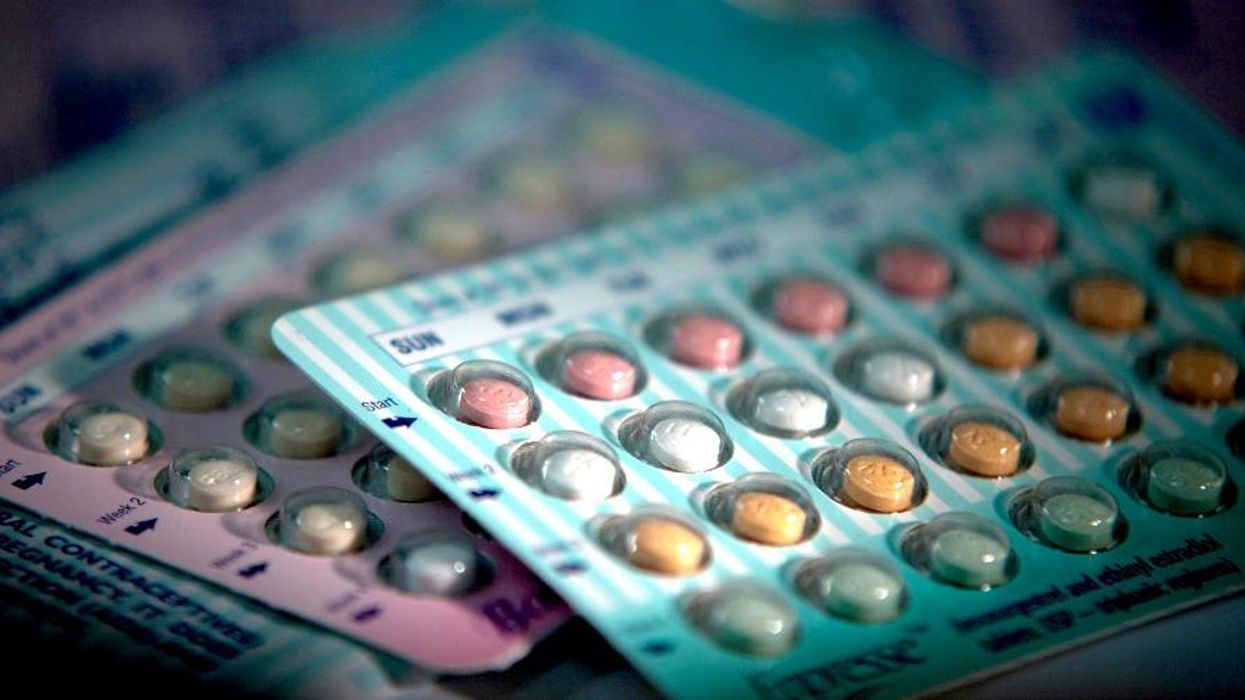
"If you think it's absurd to regulate men, then you should think it's equally absurd to regulate women," said the author of an Ohio bill, who is also an OB-GYN.
Faced with relentless Republican attacks on reproductive freedom including efforts to give embryos and fetuses legal rights from the moment of conception, Democratic lawmakers in two states have recently introduced legislation that would ban men from ejaculating for purposes other than making babies, with some exceptions.
Last month, Mississippi state Sen. Bradford Blackmon (D-21) introduced S.B. 2319, the Contraception Begins at Erection Act, which would "make it unlawful for a person to discharge genetic material (sperm) without the intent to fertilize an embryo, effectively criminalizing certain male reproductive behaviors," according to an official artificial intelligence summary of the proposal. The bill—which died in committee last week—contains exceptions for "genetic material donated or sold to a facility for future embryo fertilization, and genetic material discharged using a contraceptive method intended to prevent fertilization."
"If you're going to penalize someone for an unwanted pregnancy, why not penalize the person who is also responsible for the pregnancy?"
"All across the country, especially here in Mississippi, the vast majority of bills relating to contraception and/or abortion focus on the woman's role when men are 50% of the equation," Blackmon explained, according to NBC News. "This bill highlights that fact and brings the man's role into the conversation. People can get up in arms and call it absurd but I can't say that bothers me."
Meanwhile in Ohio, state Reps. Dr. Anita Somani (D-11) and Tristan Rader (D-13) have introduced their own Contraception Begins at Erection Act, which would fine violators $10,000 per unauthorized discharge, with exceptions for when contraception is used during sex, or in cases of masturbation, and sex between members of the LGBTQ+ community.
"If you're going to penalize someone for an unwanted pregnancy, why not penalize the person who is also responsible for the pregnancy?" Somani, who is also a licensed OB-GYN, asked in an Ohio Capital Journal article published Sunday. "You don't get pregnant on your own."
Every Sperm is sacred! #equalrights #reproductiverights
[image or embed]
— Anita Somani District 8 OH ( @anitamd.bsky.social) February 4, 2025 at 5:19 PM
Responding to Republicans who have called her bill "absurd," Somani said, "If you think it's absurd to regulate men, then you should think it's equally absurd to regulate women."
While observers have questioned the seriousness of these bills—and with Somani and others giving nods to a famous number in Monty Python's 1983 black comedy The Meaning of Life—they come at a nadir for reproductive freedom in the United States.
Since the right-wing U.S. Supreme Courtcanceled half a century of federal abortion rights in the 2022 Dobbs v. Jackson Women's Health Organization ruling, a dozen states including Mississippi have also passed near-total abortion bans, while numerous other states have enacted restrictions on the procedure.
Eight states have also enacted or proposed restrictions on access to contraception, according to the Guttmacher Institute. Last year, Senate Republicans blocked consideration of the Right to Contraception Act. Republican President Donald Trump has signaled support for federal restrictions on contraception, and far-right U.S. Supreme Court Justice Clarence Thomas has suggested that the tribunal "should reconsider" past rulings upholding the right to birth control.
In Ohio, voters decisively enshrined abortion rights in the state constitution via a 2023 ballot measure. Nevertheless, anti-abortion activists haven't given up—Republican activist Austin Beigel told the Capital Journal that GOP lawmakers are preparing to introduce legislation for a total abortion ban in the coming weeks.
"It just says human life begins at conception," he explained. "Therefore, all the protections that are offered to other people under the state law are also offered to the pre-born."
This isn't the first time that semi-satirical legislation has been introduced to highlight the hypocrisy of banning women from controlling their bodies. In 2019, a Democratic state lawmaker in Georgia introduced a "Testicular Bill of Rights" that would, among other things, have required men to get permission from their sexual partners before obtaining erectile dysfunction medication and enacted a 24-hour "waiting period" for men who want to buy porn or sex toys.
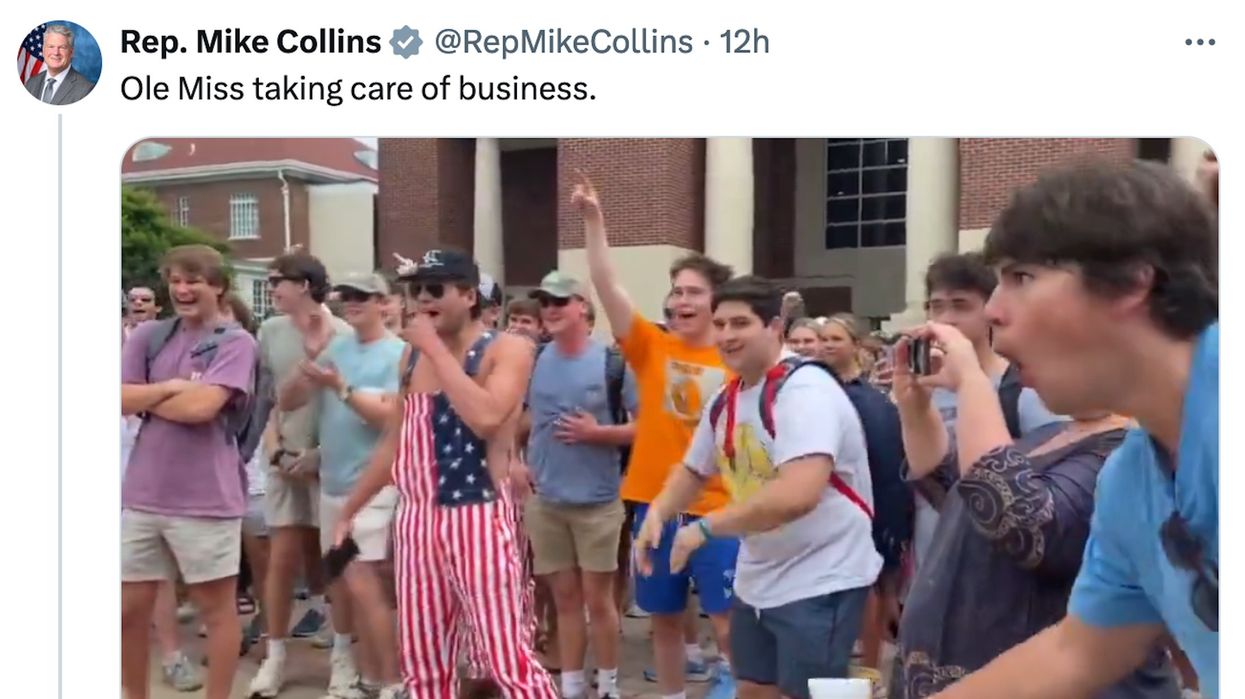
"This is not about Israel, Palestine, or Gaza. This is old-fashioned American racism and misogyny," said one observer. "These are the types of young white men who will grow up to be Republican governors, senators, and members of Congress."
Republican Georgia Congressman Mike Collins came under fire Friday over a social media post applauding video of white University of Mississippi students racially abusing a Black woman participating in a campus protest for Palestine.
Collins posted the video—in which numerous people can be heard grunting like apes and one young man is seen jumping up and down like a monkey in front of the Black woman—with the caption, "Ole Miss taking care of business."
Collins—or whoever's in charge of his social media accounts—sparred with Black leaders who called out his racism. When former Democratic Ohio state senator Nina Turner said the video showed "anti-Blackness," the congressman shot back, "*Anti-terroristness."
When Rep. Jamaal Bowman (D-N.Y.) accused Collins of "fueling white supremacy," the Republican retorted, "Don't take down any more signs at our workplace, please" along with a photo of the Democrat triggering a fire alarm in a House of Representatives office building last year.
Around 30 protesters were rallying in support of Palestine in the Ole Miss Quad when counter-protesters gathered near the demonstrators. Some booed and chanted, "We want Trump!" Others singled out the Black woman—who NBC News said is a graduate student at the school—chanting "Lizzo, Lizzo, Lizzo," "take a shower," "your nose is huge," "fuck you, fat bitch," and "lock her up!"
The counter-protesters also sang the "Star-Spangled Banner." Republican Mississippi Gov. Tate Reeves shared a separate video of the singing students on social media, captioning his post, "Warms my heart" and "I love Mississippi."
No racist language can be heard in the video shared by Reeves.
The Daily Mississippian reports the demonstrators were escorted off the Quad after counter-protesters threw water bottles at them.
Collins is no stranger to accusations of racism. Earlier this year, he suggested murdering migrants by throwing them from helicopters into the sea, in the manner of U.S.-backed South American dictators in the 1970s.
He also
introduced the Restricting Administration Zealots from Obliging Raiders (RAZOR) Act, which would ban the federal government from removing or altering "any state-constructed barriers installed to mitigate illegal immigration," such as the razor buoys installed in the Rio Grande by Republican Texas Gov. Greg Abbott.
Collins was also
accused of antisemitism after he amplified a social media post by an avowed neo-Nazi targeting a Washington Post reporter for being Jewish.
Ole Miss said Friday that "statements were made at the demonstration on our campus Thursday that were offensive and inappropriate."
"We cannot comment specifically about that video, but the university is looking into reports about specific actions," the school added. "Any actions that violate university policy will be met with appropriate action."
The Ole Miss incident comes amid rapidly spreading campus protests across the U.S. and around the world in response to Israel's genocidal assault on Gaza, which has killed, maimed, or left missing around 5% of the embattled strip's 2.3 million people, most of them civilians, while forcibly displacing nearly 9 in 10 people and driving hundreds of thousands to the brink of starvation.
While numerous Ole Miss students said they did not understand what the pro-Palestine protesters hoped to accomplish, others voiced support for the demonstrators—and for Palestine.
"As we've seen throughout history, time and time again, the student movement is never wrong. Time and time again, anytime there's a student protest, and you're against it, you're on the wrong side of history," Xavier Black, a junior majoring in international studies, told
The Daily Mississippian. "So I would like to be on the right side."
One Palestinian American Ole Miss student was teary-eyed as she thanked the protesters.
"Hey guys, I know that what just happened was really intimidating, and it was a little scary, but I just want to say I'm so proud of you guys," the student—who gave only her first name, Jana—said,
according to Mississippi Today. "This wasn't going to happen... without all of you guys. Palestine was being heard. And I just want to thank you guys so much."
"I know that was such a big risk, but this is the most that people have ever thought for us, so don't give up," she added. "I know that was really hard, but we need to keep fighting. This was just the start of it, okay?"

Congressman Greg Casar said the Republicans behind a new joint statement "sound more like corporate lobbyists than governors."
As Volkswagen workers in Tennessee began voting on whether to join the United Auto Workers, progressive critics on Wednesday continued to call out six Southern GOP governors for jointly saying they "are highly concerned about the unionization campaign driven by misinformation and scare tactics that the UAW has brought into our states."
Govs. Kay Ivey of Alabama, Brian Kemp of Georgia, Tate Reeves of Mississippi, Henry McMaster of South Carolina, Bill Lee of Tennessee, and Greg Abbott of Texas issued their statement in response to "the largest organizing drive in modern American history," which the UAW launched after major contract wins following a strike targeting the Big Three automakers—General Motors, Ford, and Stellantis—last year.
"As governors, we have a responsibility to our constituents to speak up when we see special interests looking to come into our state and threaten our jobs and the values we live by," the Republican leaders said, claiming that "unionization would certainly put our states' jobs in jeopardy" and the UAW is "making big promises to our constituents that they can't deliver on."
"We have serious reservations that the UAW leadership can represent our values. They proudly call themselves democratic socialists and seem more focused on helping President [Joe] Biden get reelected than on the autoworker jobs being cut at plants they already represent," the governors added, nodding to the union's January endorsement of the Democrat—UAW president Shawn Fain also called the presumptive Republican nominee, former President Donald Trump, a "scab."
The Economic Policy Institutesaid Wednesday that the governors' anti-union statement "clearly shows how scared they are that workers organizing with UAW to improve jobs and wages will upend the highly unequal, failed anti-worker economic development model of Southern states."
Responding to the statement on social media, the Congressional Labor Caucus declared that "we speak up when we see threats to workers' rights. Workers must be allowed to choose whether to form a union on their own—free from influence from their employers or politicians. Shame on these governors for putting out this anti-union propaganda."
After Ivey shared the statement on social media, Nina Turner, a senior fellow at the Institute on Race, Power, and Political Economy, asked, "Better wages and working conditions are against the values of your state?"
MSNBC's Chris Hayes was even snarkier, jokingly calling the statement "yet more evidence of the populist, pro-worker turn of the Trump-era GOP."
The UAW vote in Chattanooga, Tennessee is set to wrap up on Friday. Then, attention is expected to shift to Vance, Alabama. Workers at a nonunion Mercedes-Benz plant there submitted a petition to the National Labor Relations Board earlier this month requesting an election to join the union.
Noting Ivey's social media post about the statement, Diana Hussein, who does communications work for the UAW, said: "She's mad cuz she wants to keep the Alabama discount that leaves workers behind. No more! #StandUpUAW."
Sara Nelson, president of the Association of Flight Attendants-CWA, also took aim at Ivey, saying, "You used Alabama taxpayers' money to have state troopers escort out-of-state scabs to break the strike of YOUR constituents."
Nelson explained that she was referring to the "hardworking" United Mine Workers of America members employed by Warrior Met, "who were fighting for the right to see their families more than a few days a year."
More Perfect Union told Ivey that "unions only threaten your values if you value denying workers a living wage and good benefits."
In contrast with the Republican governors, around two-thirds of the Senate Democratic Caucus in January wrote to 13 nonunion automakers—including Mercedes and Volkswagen—urging them not to illegally block UAW organizing at their plants.
"We are concerned by reporting at numerous automakers that management has acted illegally to block unionization efforts," the senators stressed, citing multiple examples. "These retaliatory actions are hostile to workers' rights and must not be repeated if further organizing efforts are made by these companies' workers. We therefore urge you all to commit to implementation of a neutrality agreement at your manufacturing plants."
Welcoming their letter, Fain said that "every autoworker in this country deserves their fair share of the auto industry's record profits, whether at the Big Three or the Nonunion 13. We applaud these U.S. senators for standing with workers who are standing up for economic justice on the job."
"It's time for the auto companies to stop breaking the law and take their boot off the neck of the American autoworker," the union leader added, "whether they're at Volkswagen, Toyota, Tesla, or any other corporation doing business in this country."
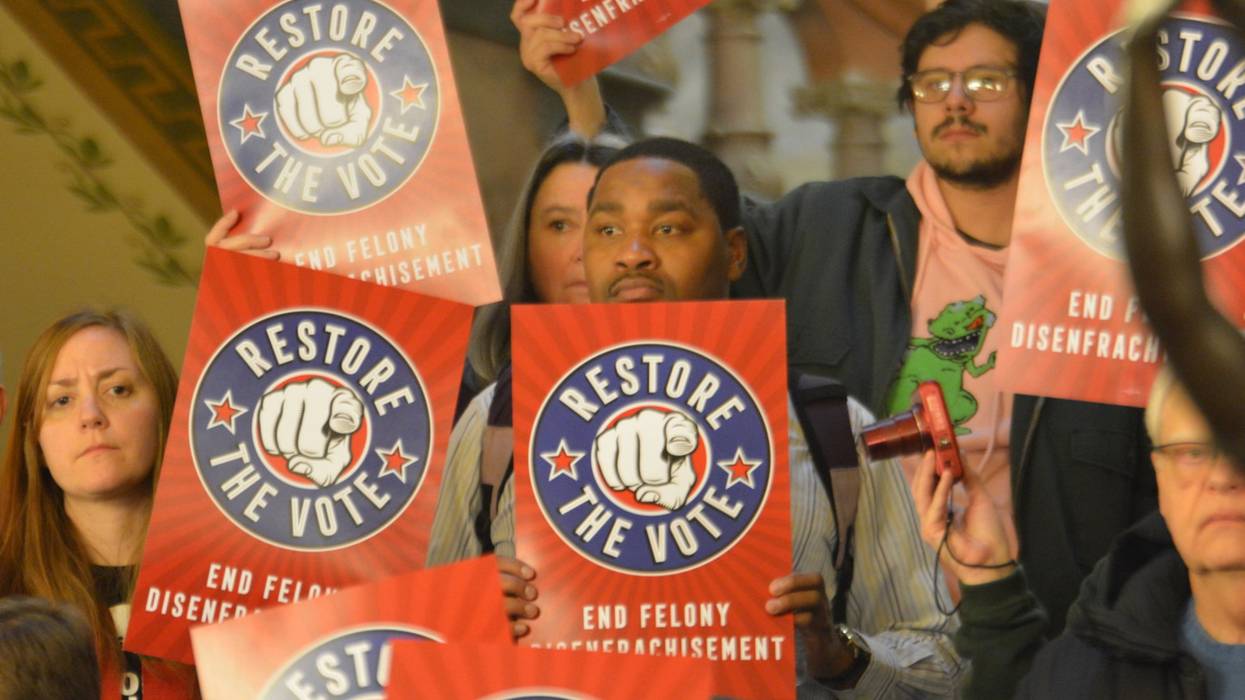
"Mississippi stands as an outlier among its sister states, bucking a clear national trend in our nation against permanent disenfranchisement."
A U.S. federal appellate court on Friday ruled that a Jim Crow-era Mississippi law permanently disenfranchising people with certain felony convictions is unconstitutional.
In a decision that can be appealed to the full U.S. 5th Circuit Court of Appeals, a three-judge panel of the tribunal ruled 2-1 that Section 241 of Mississippi's 1890 Constitution "violates the Eighth Amendment's prohibition on cruel and unusual punishment and the 14th Amendment's guarantee of equal protection under the law."
Last August, the 5th Circuit affirmed Section 241 ,with dissenting Judge James E. Graves Jr., a Black Mississippian, lamenting that when his colleagues were "handed an opportunity to right a 130-year-old wrong, the majority instead upholds it."
The U.S. Supreme Court declined to hear an appeal of the ruling, prompting a scathing dissent from liberal Justice Ketanji Brown Jackson.
"In the last 50 years, a national consensus has emerged among the state legislatures against permanently disenfranchising those who have satisfied their judicially imposed sentences and thus repaid their debts to society," Friday's ruling states. "Mississippi stands as an outlier among its sister states, bucking a clear national trend in our nation against permanent disenfranchisement."
Friday's ruling is the result of a 2018 lawsuit filed by the Southern Poverty Law Center and ACLU on behalf of plaintiffs including Dennis Hopkins, who has been disenfranchised since 1998 due to a grand larceny conviction.
"In school, they teach our kids that everybody's vote counts, but no matter how I've lived for the past 20 years, I don't count, not my values or my experience," Hopkins said when the suit was filed. "I have paid Mississippi what I owe it in full, but I still can't cast my vote for my children's future."
Section 241 "mandates permanent, lifetime disenfranchisement of a person convicted of a crime of any one of 'murder, rape, bribery, theft, arson, obtaining money or goods under false pretense, perjury, forgery, embezzlement, or bigamy,'" according to the ruling.
As the NAACP Legal Defense Fund (LDF) notes, "Section 241 permanently disenfranchises people convicted of 10 specific crimes, eight of which were chosen by all-white delegates in 1890 and based on their belief that Black people were more likely than white people to be convicted of those crimes."
There are currently more than 20 crimes that disenfranchise Mississippians from voting. The state—which according to the Sentencing Project is one of only 12 with lifetime disenfranchisement—added 11 more offenses to the ban list in 2005.
In contrast, everyone age 18 and up—including currently incarcerated individuals—has the right to vote in Maine and Vermont.
While Black Mississippians are 36% of Mississippi's voting-age population, they make up 59% of its disenfranchised people.
"Section 241 is Jim Crow law, which created a deliberate and invidious scheme to disenfranchise Black people," said LDF assistant counsel Patricia Okonta.
"Today, Black Mississippians continue to be disproportionately harmed by this provision," Okonta added. "While the state is home to the highest percentage of Black Americans of any state in the country, it has not elected a Black person to statewide office since 1890."
According to the Felony Murder Elimination Project, a California-based advocacy group:
Over 215,000 people in Mississippi were disenfranchised as of 2019, representing almost 10% of the entire state population. Of this total, only 7% are incarcerated. The remaining 93% are living in the community either under probation or parole supervision, or have completed their criminal sentence. The number of African American residents disenfranchised in Mississippi numbered 127,130 in 2016 or nearly 16% of the Black electorate.
"No one disputes that Mississippi's felon disenfranchisement law was enacted more than 100 years ago for the announced purpose of maintaining white supremacy and blocking Black citizens from voting," ACLU national legal director David Cole said in a statement.
"Racially motivated laws don't become valid over time," Cole added. "It's just as unconstitutional today as it was when it was enacted. That such a law remains on the books today is a stain on the state's law books, and plainly unconstitutional."

"Anyone surprised by this, at this point, can only be a willful denier of what Black people have said—and continue to say—about the broken culture of policing in America."
Six former Mississippi sheriff's deputies from a self-described "Goon Squad" pleaded guilty Thursday to subjecting two Black men to racialized torture and shooting one of the victims in the mouth after a neighbor called in a complaint about the men staying in the home of a white woman.
Former Rankin County Sheriff's Office (RCSO) Deputies Brett Morris McAlpin, Jeffrey Arwood Middleton, Christian Lee Dedmon, Hunter Thomas Elward, Daniel Ready Opdyke, and Joshua Allen Hartfield pleaded guilty to federal charges in connection with the January 24 torture of 32-year-old Michael Corey Jenkins and 35-year-old Eddie Terrell Parker.
On January 24, the white deputies—who had no warrant—broke down the door of the Braxton home where Parker was living, handcuffing and repeatedly tasing the victims before sexually assaulting them, calling them racist names while threatening to kill them, and shooting Jenkins in the mouth, shattering his jaw and causing permanent injuries to his tongue and neck.
"These guilty pleas are historic for justice against rogue police torture in Rankin County and all over America," Malik Shabazz, an attorney representing Jenkins and Parker, said in a statement. "Today is truly historic for Mississippi and for civil and human rights in America."
Trent Walker, another attorney for the two men, told Mississippi Today that his clients "feel they're getting justice. They feel vindicated."
"There were a lot of naysayers," Walker added. "This proves there is justice in Mississippi, even in Rankin County with its long history of police violence."
The U.S. Department of Justice (DOJ) launched a probe into the case in February after an Associated Press investigation linked the Rankin County deputies "to at least four violent encounters with Black men since 2019 that left two dead and another with lasting injuries."
According to Mississippi Today:
In 2021, Damien Cameron, a 29-year-old Black man, died after a confrontation with Rankin County deputies Elward and Luke Stickman. Cameron's mother, who filed a civil lawsuit against the department, said she witnessed the officers kneel on Cameron's neck and back, while Cameron told them he could not breathe for over 10 minutes.
A grand jury chose not to indict the officers for Cameron's death a year before Elward shot Jenkins. "If they would have did something then, this wouldn't have happened," said his father, Mel Jenkins.
Kristen Clarke, who heads the DOJ's Civil Rights Division, said the defendants "caused harm to the entire community who feel that they can't trust the police officers who are supposed to serve them."
U.S. Attorney Darren LaMarca said the deputies "became the criminals they swore to protect us from."
"Now, they'll be treated as the criminals as they are," he added.
According to court documents, McAlpin—formerly the department's chief investigator—received a complaint from one of his neighbors in Braxton, a village of less than 200 people in neighboring Simpson County, about several Black men staying at the home of a white woman.
The neighbor—who according to court documents "observed suspicious behavior" by the men—did not know that Parker was helping to care for the woman.
McAlpin directed Dedmond, an RCSO investigator, to handle the complaint. Dedmond then contacted a group of deputies led by Middleton who called themselves the Goon Squad "because of their willingness to use excessive force and not report it."
The deputies went to the woman's home without a warrant, kicked down a door, and upon encountering Jenkins and Parker, handcuffed, arrested, and tased the men without any probable cause. Opdyke kicked Parker in the ribs while Dedmond demanded to know "where the drugs were." Dedmond drew and fired his pistol, repeating the question. Parker reiterated that there were no drugs in the house.
The deputies then dragged Jenkins and Parker into the living room and called the men racial slurs "including 'nigger,' 'monkey,' and 'boy'" while accusing them of "taking advantage of the white woman who owned the house" and warning them "to stay out of Rankin County and go back to Jackson to 'their side' of the Pearl River."
During a search of the home Opdyke found a dildo and a BB gun, mounted the sex toy on the weapon, and orally assaulted Jenkins and Parker with it. Dedmond prepared to rape Jenkins with the object but "stopped when he noticed that [he] had defecated on himself."
The deputies then forced Jenkins and Parker onto their backs on the living room floor, held them down, and "poured milk, alcohol, and chocolate syrup on their faces and into their mouths" and "cooking grease on [Parker's] head" while Elward threw eggs at the men.
Jenkins and Parker were then ordered to "strip naked and shower off to wash away evidence of abuse" before they were taken to jail. After this, the deputies beat the men with kitchen implements and a sword.
Noticing their tasers were issued by two different law enforcement agencies, the deputies decided to test the stun guns on their victims "to see which one was the most powerful." They shocked the men 17 times.
McAlpin and Middleton then stole several items in the home that caught their eye, including a military uniform and rubber bar mats. The deputies stopped stealing when they heard two gunshots in the bedroom where the other deputies were holding Jenkins and Parker.
One of the shots was fired in the home's yard by Dedmond. The other was fired by Elward, who stuck his gun in Jenkins' mouth and fired. According to a court document, "the bullet lacerated [Jenkins'] tongue, broke his jaw, and exited out his neck."
As Jenkins lay on the floor, bleeding and without medical attention, "the defendants huddled up on the rear screened-in porch and devised a false cover story" that Jenkins consented to a search that produced two bags containing methamphetamine, and that Parker fled into the home.
The deputies also falsely claimed that Parker had reached for a gun after Elward removed his handcuffs in the bedroom where he was shot in self-defense. They then planted evidence including the BB gun with which the victims were sexually assaulted and methamphetamine previously obtained from an informant.
False police reports, sworn affidavits, and charges against Jenkins and Parker followed. The deputies also gave false statements to agents of the Mississippi Bureau of Investigation, which investigated Elward's shooting of Jenkins.
The defendants, who are scheduled for sentencing in November, face possible prison sentences ranging from 80 to 120 years and fines of between $1.5 million and $2.75 million each.
In June, Jenkins and Parker filed a $400 million federal civil rights lawsuit against Bailey and the six deputies.