

SUBSCRIBE TO OUR FREE NEWSLETTER
Daily news & progressive opinion—funded by the people, not the corporations—delivered straight to your inbox.
5
#000000
#FFFFFF
To donate by check, phone, or other method, see our More Ways to Give page.
Daily news & progressive opinion—funded by the people, not the corporations—delivered straight to your inbox.
35 clean energy organizations submitted formal comments today telling the Department of Energy (DOE) to end its taxpayer-funded loan program for nuclear reactors and either return the $10.2 Billion in available funds to the U.S. Treasury or move them to the DOE's renewable energy loan program.
The comments came in response to a draft "Solicitation Announcement" for "Advanced Nuclear Energy Projects " released by DOE last month. Today was the final day of a 30-day public comment period on the announcement.
35 clean energy organizations submitted formal comments today telling the Department of Energy (DOE) to end its taxpayer-funded loan program for nuclear reactors and either return the $10.2 Billion in available funds to the U.S. Treasury or move them to the DOE's renewable energy loan program.
The comments came in response to a draft "Solicitation Announcement" for "Advanced Nuclear Energy Projects " released by DOE last month. Today was the final day of a 30-day public comment period on the announcement.
The DOE's loan program was first authorized under the 2005 Energy Policy Act, and in 2007 Congress authorized the Department to offer $18.5 Billion in loans from the Federal Financing Bank or loan guarantees for commercial lenders to encourage the construction of new, "advanced" nuclear reactors. Only one project, Southern Company's Vogtle reactors in Georgia, have received any money under the program. One other project, the proposed Calvert Cliffs-3 reactor in Maryland, reportedly was offered a loan under the program but one of the lead entities in that project, Constellation Energy (now part of Exelon Corporation) instead decided to abandon the reactor entirely.
DOE has been unable to find any takers for the remainder of its $10.2 Billion in authorized funds.
Given that reality, DOE is attempting with this solicitation to expand what it can lend the money for. DOE now proposes to offer funds for "small modular reactors" (SMRs) despite the fact that no design for such reactors has been submitted to the Nuclear Regulatory Commission for certification, nor have any utilities submitted an application to build an SMR.
DOE is also attempting to use the funds to help nuclear utilities pay for power uprates and safety upgrades to existing reactors despite the explicit Congressional intent of the program to encourage new reactor construction.
The 35 organizational commenters said that "These categories are nothing more than an attempt to prop up--at taxpayer risk--current reactors that have become uneconomical due to age-related deterioration, poor reactor design, or simply lower-cost competition from electricity generation sources like solar and wind power."
They went on to warn, "Should the DOE proceed with this idea, it will be litigated (yet another waste of taxpayer money), and it is highly unlikely DOE will prevail given the plain language of the Act."
Although the organizations described the DOE's nuclear loan program as "an abject failure," they did not blame DOE for that failure:
"The nuclear loan program was established at a time when too many politicians believed nuclear industry hype that a nuclear power "renaissance" was just around the corner, and some government support would be extremely helpful in its launch. But the "renaissance" didn't materialize and nuclear power is back to where it was 15 years or so ago, except in worse position. Then, it was simply a moribund industry. Now, it is not only moribund but obsolete--new technologies, from rooftop solar with battery storage to smart grids to the unexpected effectiveness of energy efficiency programs and mandates, to the growing concept of distributed generation, which provides not only safer and cheaper power, but also a more secure grid; have risen to take nuclear's place....
"Rather than attempt to resuscitate its failed nuclear loan program, the DOE should acknowledge the program's failure and explain to policymakers that it failed not because of DOE's policies, but because of much larger market forces, the effect of multiple nuclear meltdowns, and the rise of new technologies.
"DOE should not only withdraw its solicitation but should either simply end this program or seek to have its funds transferred to its renewable energy loan program, which has shown some evidence of genuine accomplishment."
The full comments are available at: https://www.nirs.org/neconomics/doelgcomments.pdf
Nuclear Information and Resource Service is the information and networking center for people and organizations concerned about nuclear power, radioactive waste, radiation, and sustainable energy issues.
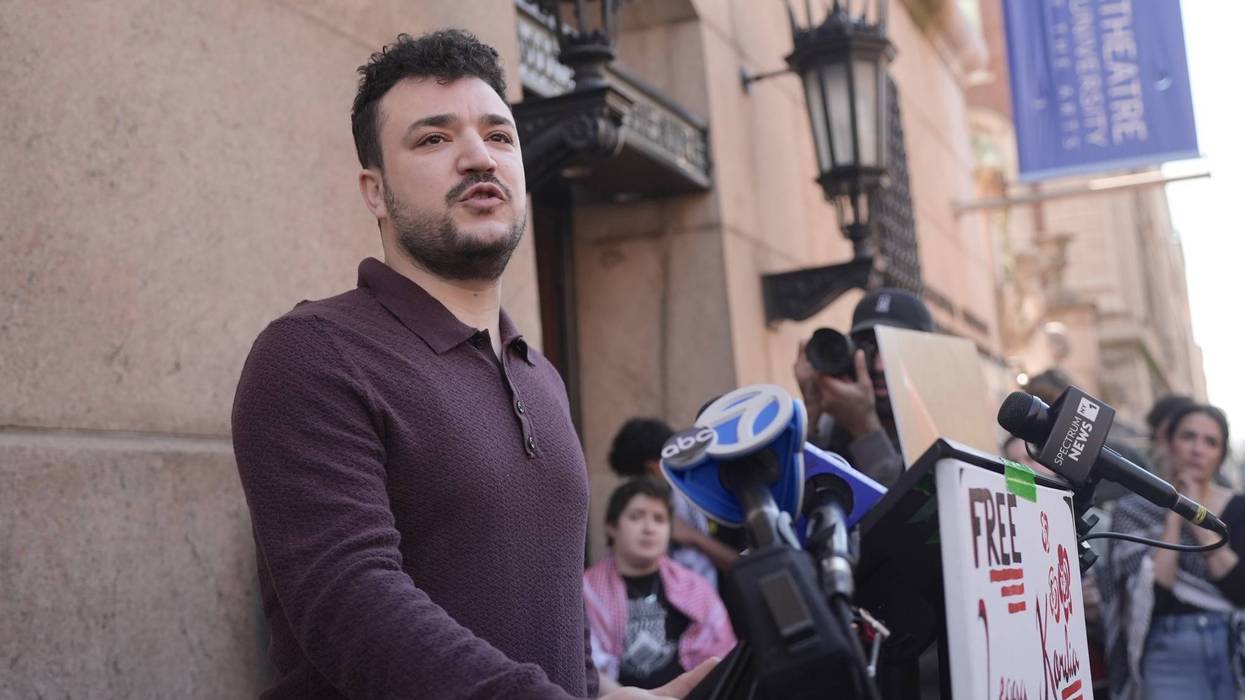
"This case will expose the scheme that sought to criminalize the Palestine solidarity movement in the US."
A lawsuit filed by former Columbia University student organizer Mahmoud Khalil wasn't his first legal challenge stemming from his arrest last year for his Palestinian rights advocacy, but he emphasized that his decision to take members of the Trump administration and private pro-Israel organizations to court was "about far more than what was done to" him when he was detained for 104 days.
"This case will expose the scheme that sought to criminalize the Palestine solidarity movement in the US," said Khalil in a statement. "It is about a coordinated, ongoing plot to punish, silence, and intimidate everyone who dares to dissent and speak out for Palestinian liberation. We will hold them accountable.”
Represented by the Center for Constitutional Rights (CCR) and the law firm Beldock Levine & Hoffman, Khalil sued the Heritage Foundation, Canary Mission, Betar, Trump administration adviser Stephen Miller, Secretary of State Marco Rubio, Secretary of Homeland Security Markwayne Mullin, his predecessor Kristi Noem, acting Attorney General Todd Blanche, and John Armstrong, an official at the State Department’s Bureau of Consular Affairs.
The lawsuit was filed under the Ku Klux Klan Act of 1871, which was passed to stop efforts by vigilante groups like the KKK to coordinate with the government to strip individuals of their constitutional rights.
"Mahmoud is now using this statute to affirmatively challenge the illegal, anti-Palestinian, and anti-democratic public-private conspiracy to harass, intimidate, and punish Palestinians and their allies," said CCR.
Khalil: “I will not stop fighting until everyone who willingly contributed to my missing the birth of my son and to taking 104 days of my life from me answers for what they’ve done.” pic.twitter.com/x6iTgoxsXa
— Erik Uebelacker (@Uebey) July 14, 2026
As the Trump administration continues its efforts to deport Khalil, the lawsuit traces the alleged public-private conspiracy against pro-Palestinian organizers to October 2023, when Miller "vowed to punish Palestinians and their supporters through arrest and deportation."
A year later, the Heritage Foundation published Project Esther, which conflated criticism of Israel with antisemitism, claimed all pro-Palestinian organizers were Hamas supporters, and pledged to execute a plan to deport foreign protesters “when a willing administration occupies the White House.”
The Heritage Foundation said a “public-private partnership" would be required to carry out Project Esther. The lawsuit alleges that Canary Mission, an anonymously run Israeli surveillance and doxing organization, and Betar, a self-described vigilante group with a history of surveilling and harassing supporters of Palestinian rights, provided that partnership.
"Between March and May 2025, Miller, Rubio, Noem, and Armstrong used ICE to arrest or to try to arrest at least nine students or scholars pre-selected by the private groups," said CCR. "The federal defendants continue to seek Mr. Khalil’s deportation and pursue the conspiracy through sham, corrupted immigration proceedings under their control. Working together, the government and private co-conspirators sought to deny Palestinians and their supporters their constitutional rights: to equal protection, to freedom of speech and travel, to freedom from punitive detention, and, ultimately, to exist in this country."
As The New York Times reported, former Heritage Foundation national security director Robert Greenway said two months after Khalil was arrested that it was “no coincidence that we called for a series of actions to take place privately and publicly, and they are now happening.”
CCR pointed to a "range of harms" Khalil has suffered as the result of being targeted by the Trump administration, starting when he was arrested in March 2025. During three months in detention, he was sent to Jena, Louisiana—nearly 1,300 miles away from his family and lawyers—and was forced to miss the birth of his first child. He also faces "an ongoing threat to his lawful immigration status in the United States," with his attorneys preparing to appeal his deportation case to the US Supreme Court.
Baher Azmy, legal director for CCR, said that "the brazenness of this conspiratorial plan is matched only by the exquisitely detailed and shamelessly public record the conspirators produced of a collaborative plan to silence the growing student movement protesting US support for Israel’s genocidal campaign," referring to the country's assault on Gaza that began in October 2023 in retaliation for a Hamas-led attack.
“The conspirators acted through forms of state repression and arbitrary detention that numerous courts have found are blatantly unconstitutional," said Azmy. "They targeted Mr. Khalil, smeared him, and subjected him to the torment of detention for nothing other than being Palestinian and supporting Palestinian rights in order to send a message of terror across the student movement for Palestine."
"The KKK Act was designed to prevent conspiracies to stifle advocacy for political freedom," he added, "and together we are demanding accountability for this outrageous injustice.”
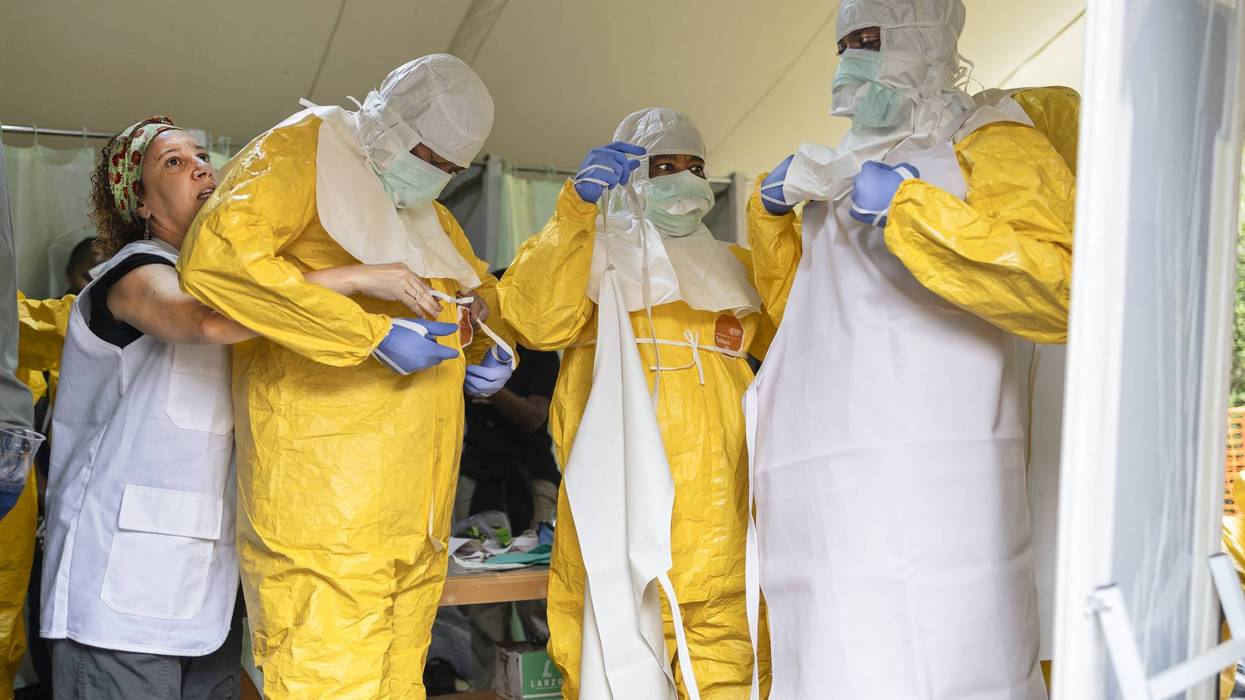
"The scale of the outbreak is at least two to four times the number of cases that we have found," said WHO emergencies director Chikwe Ihekweazu.
The Ebola outbreak sweeping the Democratic Republic of Congo is the fastest-growing ever, the World Health Organization warned Tuesday, as a shortage of funding, strained health infrastructure, and a strike by frontline medical workers threaten efforts to contain the deadly virus.
“We've seen the fastest growth in a single month since the outbreak started, and of all the Ebola outbreaks that we have managed,” WHO Health Emergencies Program executive director Dr. Chikwe Ihekweazu told reporters in Geneva. “Over the last few days, we've seen some of the highest numbers of new infections in a single day."
“A few days ago, we saw over 80 cases confirmed in a single day,” he added.
Experts are particularly alarmed that the majority of new infections—roughly 80%—are coming from what the WHO called “unknown chains of transmission."
“You have to imagine that this is a fire,” Ihekweazu said. “There's something driving the fire in its heart, and it's also expanding at the same time.”
The WHO said that 95% of all new Ebola cases are in Ituri province, where the outbreak started in May, but the virus is now spreading to two new provinces, Haut-Uele and Tshopo.
The Ebola virus causes widespread and often catastrophic damage to the body’s blood vessels, immune system, and organs and typically kills between 25% and 90% of infected people, depending upon the strain of the virus and quality of available medical care.
Democratic Republic of Congo (DRC) government figures show nearly 2,000 confirmed infections and more than 700 deaths, but WHO officials say the true scale could be two to four times higher because many infections and deaths are going undetected.
Wessam Mankoula, an epidemiologist with the Africa Centers for Disease Control and Prevention in Ethiopia, noted during a press briefing last week that 112 healthcare workers have been infected with Ebola in DRC, 32 of whom have died.
There have also been around 20 Ebola infections and at least two deaths during the current outbreak in neighboring Uganda.
“Perhaps the most alarming finding is that many newly reported cases are individuals who died in their communities, without ever reaching a health facility and receiving care," Ihekweazu said.
There is some good news, with Ihekweazu noting that "treatment capacity now exceeds 700 beds and continues to increase each week; laboratory capacity has expanded dramatically... and contact follow-up rates are approaching 80%."
However, frontline health workers at an Ebola treatment at Rwampara General Hospital in Ituri province have gone on strike over unpaid salaries and bonuses, poor working conditions, and shortages of protective equipment.
Congolese Health Minister Roger Kamba assured workers that the government has "the means to sort this out."
Critics say US President Donald Trump’s ideologically driven decision to withdraw the US from the WHO, his administration’s dismantling of the US Agency for International Development (USAID), and reduced funding for the US Centers for Disease Control and Prevention’s global public health efforts have also adversely affected the response to the current Ebola epidemic, compared with 2014 and 2019 outbreaks.
The current Ebola outbreak comes in a region already ravaged by armed conflict, displacement, and other challenges. Health officials stress that getting a grip on the outbreak will require not only medical intervention but also rebuilding trust with communities rife with fear and misinformation, and ensuring health workers are paid and protected.
"This outbreak requires resources that match the scale of the challenges that we are facing," Ihekweazu stressed Tuesday. "And this is not a burden DRC can be allowed to carry alone."

"The high number of head injuries... suggests a pattern of force directed towards the head. Whether intentionally or recklessly, this violates virtually all use-of-force guidelines."
Federal, state, and local law enforcement agents' brutal attacks on protesters across the US have caused blindings, traumatic brain injuries, permanent disabilities, and other maladies, according to a report released Monday by researchers at Physicians for Human Rights and the Human Rights Center at the University of California at Berkeley.
In an examination of actions taken by authorities in response to demonstrations against US Immigration and Customs Enforcement (ICE) actions over the span of a year, the report documents 412 instances of misuse of force against protesters, journalists, and bystanders.
Just over half of the misuses of force were directed at demonstrators, while 43% were directed at journalists, the report finds.
This misuse of force led to 203 documented injuries affecting 119 individuals, including 44 incidents of laceration, 19 traumatic brain injuries, 10 ocular injuries, seven permanent disabilities, and one instance each of amputation and hearing loss.
The report adds that the actual number of injuries inflicted upon anti-ICE demonstrators "is likely far greater" given researchers' limitations in documenting "invisible injuries" such as chronic pain or hearing loss.
What is particularly troubling, the report emphasizes, is the number of injuries impacting people's heads.
"The high number of head injuries (19 brain, 10 eye, 1 hearing loss) suggests a pattern of force directed towards the head," the researchers write. "Whether intentionally or recklessly, this violates virtually all use-of-force guidelines and results in significant harm."
The report documents 97 incidents of law enforcement officials shooting crowd control projectiles at people's heads, making it the second-most frequent type of improper force used, following shots taken at close range.
Dr. Rohini Haar, the lead author of the report, said in an interview with The Guardian that she started tracking misuse of force in response to anti-ICE protests after a federal agent shot a pastor in the face at close range during a demonstration in Oakland last year.
"Those weapons can cause harm,” said Haar, who for years has been researching the health impacts of crowd control weapons. "It’s just when they’re used, how they’re used, and if they’re used."
Tactics used by ICE and other law enforcement agencies have come back into focus over the last week after the fatal ICE shootings of Lorenzo Salgado Araujo in Texas and Joan Sebastian Guerrero in Maine over the span of less than a week.
Salgado Araujo, 52, was an undocumented immigrant from Mexico who had lived in the US for more than three decades and ran a small construction business. Sebastian Guerrero, 26, was a Colombian national who was authorized to work in the US and was shot and killed by ICE in front of his three-year-old daughter.