SUBSCRIBE TO OUR FREE NEWSLETTER
Daily news & progressive opinion—funded by the people, not the corporations—delivered straight to your inbox.
5
#000000
#FFFFFF
To donate by check, phone, or other method, see our More Ways to Give page.
Daily news & progressive opinion—funded by the people, not the corporations—delivered straight to your inbox.
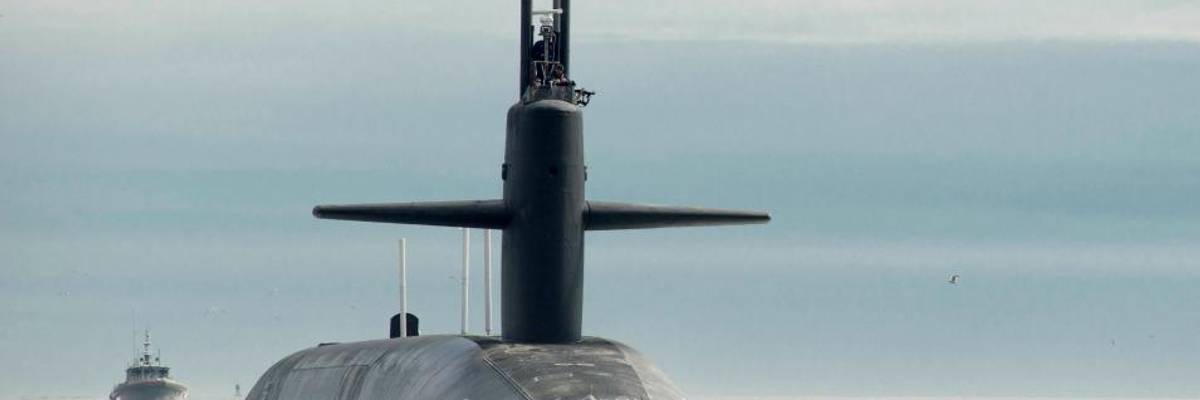
The U.S.S. Tennessee at sea. The Tennessee is believed to have deployed on an operational patrol in late 2019, the first U.S. submarine to deploy with new low-yield W76-2 warhead. (Photo: Gonzalo Alonso/Flickr/cc)
Anti-nuclear campaigners expressed alarm Thursday as the Federation of American Scientists revealed the U.S. has for the first time deployed a "low-yield" nuclear warhead on a submarine that is currently patrolling the Atlantic Ocean.
The USS Tennessee left a port in Georgia last month, and Hans Kristenson of FAS said Wednesday that the submarine is the first U.S. ship to patrol with the W76-2 on board--an occurrence which arms control groups says will make nuclear war more likely.
Tim Wright, treaty coordinator for the International Campaign to Abolish Nuclear Weapons (ICAN), called the news "an alarming development that heightens the risk of nuclear war."
The ready availability of the warhead on a military ship could cause a shift in thinking about nuclear weapons, with the government treating a nuclear launch as a way to fight wars rather than as a deterrent, nuclear critics say.
The low-yield Trident nuclear warhead was commissioned in 2018 by President Donald Trump.
The warhead has an explosive yield of five kilotons, about a third of the power of the atomic bomb dropped on Hiroshima, Japan in 1945, which killed 80,000 people instantly and tens of thousands later from radiation exposure.
Compared to the bombings of Hiroshima and Nagasaki at the end of World War II, the effect of the W76-2 "would be very beneficial to a military officer who was going to advise to the president whether we should cross the nuclear threshold," according to Hans Kristensen, director of the Nuclear Information Project at FAS, which learned about the recent deployment from government briefings.
The deployment of the W76-2 came five months after the president exited the Intermediate-Range Nuclear Forces (INF) Treaty, which the U.S. and Russia forged in 1987. The withdrawal from the treaty would "put the world at heightened risk of nuclear weapons use and war," ICAN said at the time.
According to Trump's Nuclear Posture Review (NPR), the U.S. government claims the Trident is a deterrent against Russia.
As Kristensen wrote in Forbes last year, however, the Russian threat may be exaggerated by the Pentagon.
"It seems like a perfect threat-funding-loop sales pitch: Russia is increasing its non-strategic nuclear weapons that it is more prepared to use first, so give us more money to build new nukes," wrote Kristensen. "But...in stark contrast with the NPR claim, I hear there's no significant increase in the total numbers. On the contrary, there has been a significant reduction over the past ten years--the very period the NPR uses as the basis for its threat assessment."
While Russia's nuclear threat level is questionable, Trump has said he may direct the use of nuclear weapons to respond to "significant non-nuclear strategic attacks" on the U.S., its allies, or "infrastructure."
On social media, international anti-nuclear groups expressed alarm over the deployment of the Trident warhead.
The presence of the warhead on a patrolling submarine "brings us closer to the threshold of nuclear war," tweeted the Scottish anti-nuclear campaign Scrap Trident.
Dear Common Dreams reader, It’s been nearly 30 years since I co-founded Common Dreams with my late wife, Lina Newhouser. We had the radical notion that journalism should serve the public good, not corporate profits. It was clear to us from the outset what it would take to build such a project. No paid advertisements. No corporate sponsors. No millionaire publisher telling us what to think or do. Many people said we wouldn't last a year, but we proved those doubters wrong. Together with a tremendous team of journalists and dedicated staff, we built an independent media outlet free from the constraints of profits and corporate control. Our mission has always been simple: To inform. To inspire. To ignite change for the common good. Building Common Dreams was not easy. Our survival was never guaranteed. When you take on the most powerful forces—Wall Street greed, fossil fuel industry destruction, Big Tech lobbyists, and uber-rich oligarchs who have spent billions upon billions rigging the economy and democracy in their favor—the only bulwark you have is supporters who believe in your work. But here’s the urgent message from me today. It's never been this bad out there. And it's never been this hard to keep us going. At the very moment Common Dreams is most needed, the threats we face are intensifying. We need your support now more than ever. We don't accept corporate advertising and never will. We don't have a paywall because we don't think people should be blocked from critical news based on their ability to pay. Everything we do is funded by the donations of readers like you. When everyone does the little they can afford, we are strong. But if that support retreats or dries up, so do we. Will you donate now to make sure Common Dreams not only survives but thrives? —Craig Brown, Co-founder |
Anti-nuclear campaigners expressed alarm Thursday as the Federation of American Scientists revealed the U.S. has for the first time deployed a "low-yield" nuclear warhead on a submarine that is currently patrolling the Atlantic Ocean.
The USS Tennessee left a port in Georgia last month, and Hans Kristenson of FAS said Wednesday that the submarine is the first U.S. ship to patrol with the W76-2 on board--an occurrence which arms control groups says will make nuclear war more likely.
Tim Wright, treaty coordinator for the International Campaign to Abolish Nuclear Weapons (ICAN), called the news "an alarming development that heightens the risk of nuclear war."
The ready availability of the warhead on a military ship could cause a shift in thinking about nuclear weapons, with the government treating a nuclear launch as a way to fight wars rather than as a deterrent, nuclear critics say.
The low-yield Trident nuclear warhead was commissioned in 2018 by President Donald Trump.
The warhead has an explosive yield of five kilotons, about a third of the power of the atomic bomb dropped on Hiroshima, Japan in 1945, which killed 80,000 people instantly and tens of thousands later from radiation exposure.
Compared to the bombings of Hiroshima and Nagasaki at the end of World War II, the effect of the W76-2 "would be very beneficial to a military officer who was going to advise to the president whether we should cross the nuclear threshold," according to Hans Kristensen, director of the Nuclear Information Project at FAS, which learned about the recent deployment from government briefings.
The deployment of the W76-2 came five months after the president exited the Intermediate-Range Nuclear Forces (INF) Treaty, which the U.S. and Russia forged in 1987. The withdrawal from the treaty would "put the world at heightened risk of nuclear weapons use and war," ICAN said at the time.
According to Trump's Nuclear Posture Review (NPR), the U.S. government claims the Trident is a deterrent against Russia.
As Kristensen wrote in Forbes last year, however, the Russian threat may be exaggerated by the Pentagon.
"It seems like a perfect threat-funding-loop sales pitch: Russia is increasing its non-strategic nuclear weapons that it is more prepared to use first, so give us more money to build new nukes," wrote Kristensen. "But...in stark contrast with the NPR claim, I hear there's no significant increase in the total numbers. On the contrary, there has been a significant reduction over the past ten years--the very period the NPR uses as the basis for its threat assessment."
While Russia's nuclear threat level is questionable, Trump has said he may direct the use of nuclear weapons to respond to "significant non-nuclear strategic attacks" on the U.S., its allies, or "infrastructure."
On social media, international anti-nuclear groups expressed alarm over the deployment of the Trident warhead.
The presence of the warhead on a patrolling submarine "brings us closer to the threshold of nuclear war," tweeted the Scottish anti-nuclear campaign Scrap Trident.
Anti-nuclear campaigners expressed alarm Thursday as the Federation of American Scientists revealed the U.S. has for the first time deployed a "low-yield" nuclear warhead on a submarine that is currently patrolling the Atlantic Ocean.
The USS Tennessee left a port in Georgia last month, and Hans Kristenson of FAS said Wednesday that the submarine is the first U.S. ship to patrol with the W76-2 on board--an occurrence which arms control groups says will make nuclear war more likely.
Tim Wright, treaty coordinator for the International Campaign to Abolish Nuclear Weapons (ICAN), called the news "an alarming development that heightens the risk of nuclear war."
The ready availability of the warhead on a military ship could cause a shift in thinking about nuclear weapons, with the government treating a nuclear launch as a way to fight wars rather than as a deterrent, nuclear critics say.
The low-yield Trident nuclear warhead was commissioned in 2018 by President Donald Trump.
The warhead has an explosive yield of five kilotons, about a third of the power of the atomic bomb dropped on Hiroshima, Japan in 1945, which killed 80,000 people instantly and tens of thousands later from radiation exposure.
Compared to the bombings of Hiroshima and Nagasaki at the end of World War II, the effect of the W76-2 "would be very beneficial to a military officer who was going to advise to the president whether we should cross the nuclear threshold," according to Hans Kristensen, director of the Nuclear Information Project at FAS, which learned about the recent deployment from government briefings.
The deployment of the W76-2 came five months after the president exited the Intermediate-Range Nuclear Forces (INF) Treaty, which the U.S. and Russia forged in 1987. The withdrawal from the treaty would "put the world at heightened risk of nuclear weapons use and war," ICAN said at the time.
According to Trump's Nuclear Posture Review (NPR), the U.S. government claims the Trident is a deterrent against Russia.
As Kristensen wrote in Forbes last year, however, the Russian threat may be exaggerated by the Pentagon.
"It seems like a perfect threat-funding-loop sales pitch: Russia is increasing its non-strategic nuclear weapons that it is more prepared to use first, so give us more money to build new nukes," wrote Kristensen. "But...in stark contrast with the NPR claim, I hear there's no significant increase in the total numbers. On the contrary, there has been a significant reduction over the past ten years--the very period the NPR uses as the basis for its threat assessment."
While Russia's nuclear threat level is questionable, Trump has said he may direct the use of nuclear weapons to respond to "significant non-nuclear strategic attacks" on the U.S., its allies, or "infrastructure."
On social media, international anti-nuclear groups expressed alarm over the deployment of the Trident warhead.
The presence of the warhead on a patrolling submarine "brings us closer to the threshold of nuclear war," tweeted the Scottish anti-nuclear campaign Scrap Trident.