SUBSCRIBE TO OUR FREE NEWSLETTER
Daily news & progressive opinion—funded by the people, not the corporations—delivered straight to your inbox.
5
#000000
#FFFFFF
To donate by check, phone, or other method, see our More Ways to Give page.
Daily news & progressive opinion—funded by the people, not the corporations—delivered straight to your inbox.
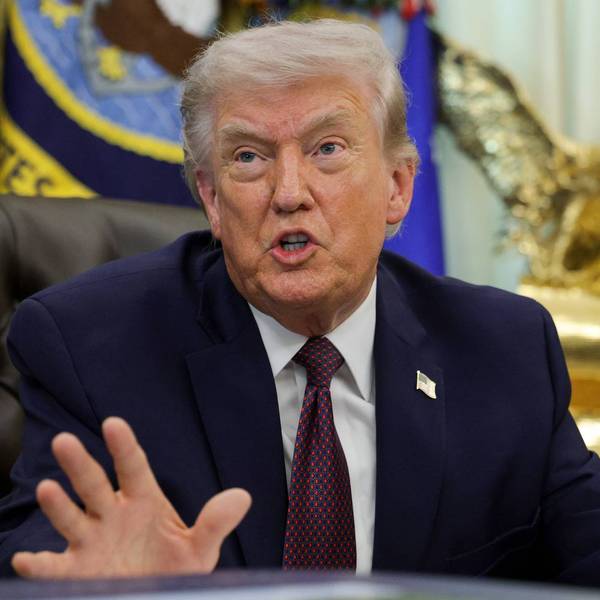
The threat of further U.S. military action in Syria looms with the Pentagon reportedly drawing up plans for a response to Tuesday's deadly chemical attack that Defense Secretary James Mattis will present to President Donald Trump Thursday evening.
According to reporting by the The Intercept, one of the options under consideration would be "saturation" bombings of the war-ravaged country.
Though he offered no evidence, Secretary of State Rex Tillerson said at a Thursday press conference there was "no doubt in our minds" that Syrian President Bashar al-Assad was behind the attack that killed more than 70 people. No formal investigation has yet been launched.
When asked if Assad has "to go," Tillerson said that "it would seem that there would be no role for him" in Syria's future--an apparent call for regime change, which marks a departure from the administration's previous stance on the crisis.
When probed further about what steps the U.S. would take to remove him from power, Tillerson responded: "The process by which Assad would leave is something that requires an international community effort both to first defeat ISIS within Syria, to stabilize the Syrian country to avoid further civil war, and then to work collectively with our partners around the world through a political process that would lead to Assad leaving."
When asked if he and Trump would organize such a coalition, he said: "Those steps are underway."
Meanwhile, official sources told CNN and other outlets that "the Pentagon has long-standing options to strike Syria's chemical weapons capability," which Mattis will be presenting to the president in Florida on Thursday evening, though "[t]he sources stressed a decision has not been made."
Trump is currently hosting Chinese President Xi Jinping at his Mar-a-Lago resort in Palm Beach, which Phyllis Bennis, director of the New Internationalism Project at the Institute for Policy Studies, said could make for a "dangerous moment," as the U.S. president is eager to present himself as a "strong leader."
Further, Bennis told Common Dreams that Trump hopes to distinguish himself from his predecessor, former President Barack Obama, who the president called "weak" because Obama did not use military force "at every turn"--though Bennis specified that he did use it.
"Trump may well use this opportunity to pursue a high profile military campaign," she said. "He has Mattis coming down to make a very public display, to show the world he is a 'military guy.' He's not a president who is likely to step back, he may feel compelled to go ahead with military action."
What's more, she notes that "no one in Congress seems prepared to challenge these threats."
CNN also reported that Trump alerted some members of Congress on Thursday that he is "considering military action in Syria," a move that will likely appease Republican and Democratic war hawks.
As Lawfare blog founder Jack Goldsmith and others are pointing out, during his tenure, Obama did claim to have presidential authority to take military action without congressional approval.
Bennis said that Obama set a "dangerous precedent, particularly if it is not challenged" by Congress. She said a president does not have that authority, but just like breaking international law, "it only matters if someone uses international law to challenge it."
Intercept journalist Glenn Greenwald similarly pointed out the lack of war authorization:
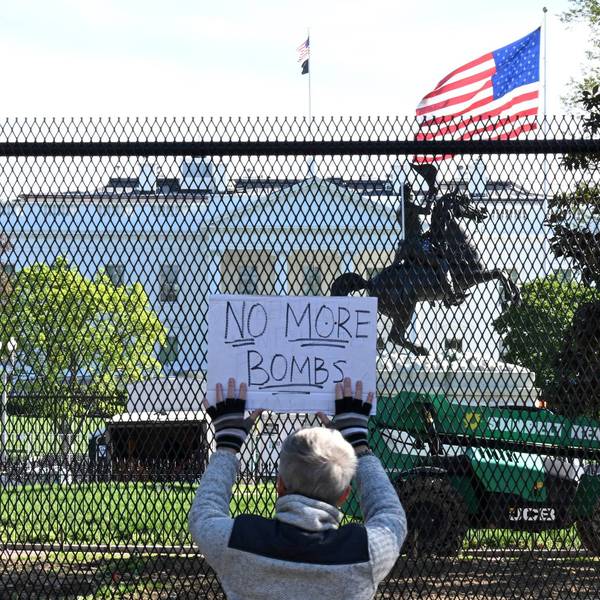
Amid the march to war, cooler heads continue to call for a diplomatic solution.
Charles Glass, former ABC News chief Middle East correspondent and author of Syria Burning: A Short History of a Catastrophe, said Thursday: "The death and suffering caused by poison gas in Syria emphasizes the urgency--not to escalate the war with more bombardment--but to end it through negotiation between the United States and Russia. Only they can impose a solution on their clients."
Similarly, CodePink co-founders Medea Benjamin and Ann Wright argued Thursday that increased U.S. military attacks in Syria would only worsen the "carnage and chaos."
"If the Trump administration decides to escalate U.S. military involvement by bombing the Syrian government's power centers of Damascus and Aleppo and pushing rebel fighters to hold territory for a new government, the carnage--and chaos--will increase," they wrote.
Alternately, they say that Trump"should pressure the Russian government to support a UN investigation into the chemical attack and take bold steps to seek a resolution of this dreadful conflict."
Outlining the recent history of U.S. engagement in the Middle East--from 15 years of violence in Afghanistan, to the spawn of the Islamic State in Iraq, and the splintering of Libya--they conclude: "Can someone in the White House, NSC, Pentagon, or State Department please give President Trump an honest assessment of the history of U.S. military actions over the past 15 years and the likely outcome of further U.S. military involvement in Syria?"
Dear Common Dreams reader, It’s been nearly 30 years since I co-founded Common Dreams with my late wife, Lina Newhouser. We had the radical notion that journalism should serve the public good, not corporate profits. It was clear to us from the outset what it would take to build such a project. No paid advertisements. No corporate sponsors. No millionaire publisher telling us what to think or do. Many people said we wouldn't last a year, but we proved those doubters wrong. Together with a tremendous team of journalists and dedicated staff, we built an independent media outlet free from the constraints of profits and corporate control. Our mission has always been simple: To inform. To inspire. To ignite change for the common good. Building Common Dreams was not easy. Our survival was never guaranteed. When you take on the most powerful forces—Wall Street greed, fossil fuel industry destruction, Big Tech lobbyists, and uber-rich oligarchs who have spent billions upon billions rigging the economy and democracy in their favor—the only bulwark you have is supporters who believe in your work. But here’s the urgent message from me today. It's never been this bad out there. And it's never been this hard to keep us going. At the very moment Common Dreams is most needed, the threats we face are intensifying. We need your support now more than ever. We don't accept corporate advertising and never will. We don't have a paywall because we don't think people should be blocked from critical news based on their ability to pay. Everything we do is funded by the donations of readers like you. When everyone does the little they can afford, we are strong. But if that support retreats or dries up, so do we. Will you donate now to make sure Common Dreams not only survives but thrives? —Craig Brown, Co-founder |
The threat of further U.S. military action in Syria looms with the Pentagon reportedly drawing up plans for a response to Tuesday's deadly chemical attack that Defense Secretary James Mattis will present to President Donald Trump Thursday evening.
According to reporting by the The Intercept, one of the options under consideration would be "saturation" bombings of the war-ravaged country.
Though he offered no evidence, Secretary of State Rex Tillerson said at a Thursday press conference there was "no doubt in our minds" that Syrian President Bashar al-Assad was behind the attack that killed more than 70 people. No formal investigation has yet been launched.
When asked if Assad has "to go," Tillerson said that "it would seem that there would be no role for him" in Syria's future--an apparent call for regime change, which marks a departure from the administration's previous stance on the crisis.
When probed further about what steps the U.S. would take to remove him from power, Tillerson responded: "The process by which Assad would leave is something that requires an international community effort both to first defeat ISIS within Syria, to stabilize the Syrian country to avoid further civil war, and then to work collectively with our partners around the world through a political process that would lead to Assad leaving."
When asked if he and Trump would organize such a coalition, he said: "Those steps are underway."
Meanwhile, official sources told CNN and other outlets that "the Pentagon has long-standing options to strike Syria's chemical weapons capability," which Mattis will be presenting to the president in Florida on Thursday evening, though "[t]he sources stressed a decision has not been made."
Trump is currently hosting Chinese President Xi Jinping at his Mar-a-Lago resort in Palm Beach, which Phyllis Bennis, director of the New Internationalism Project at the Institute for Policy Studies, said could make for a "dangerous moment," as the U.S. president is eager to present himself as a "strong leader."
Further, Bennis told Common Dreams that Trump hopes to distinguish himself from his predecessor, former President Barack Obama, who the president called "weak" because Obama did not use military force "at every turn"--though Bennis specified that he did use it.
"Trump may well use this opportunity to pursue a high profile military campaign," she said. "He has Mattis coming down to make a very public display, to show the world he is a 'military guy.' He's not a president who is likely to step back, he may feel compelled to go ahead with military action."
What's more, she notes that "no one in Congress seems prepared to challenge these threats."
CNN also reported that Trump alerted some members of Congress on Thursday that he is "considering military action in Syria," a move that will likely appease Republican and Democratic war hawks.
As Lawfare blog founder Jack Goldsmith and others are pointing out, during his tenure, Obama did claim to have presidential authority to take military action without congressional approval.
Bennis said that Obama set a "dangerous precedent, particularly if it is not challenged" by Congress. She said a president does not have that authority, but just like breaking international law, "it only matters if someone uses international law to challenge it."
Intercept journalist Glenn Greenwald similarly pointed out the lack of war authorization:
Amid the march to war, cooler heads continue to call for a diplomatic solution.
Charles Glass, former ABC News chief Middle East correspondent and author of Syria Burning: A Short History of a Catastrophe, said Thursday: "The death and suffering caused by poison gas in Syria emphasizes the urgency--not to escalate the war with more bombardment--but to end it through negotiation between the United States and Russia. Only they can impose a solution on their clients."
Similarly, CodePink co-founders Medea Benjamin and Ann Wright argued Thursday that increased U.S. military attacks in Syria would only worsen the "carnage and chaos."
"If the Trump administration decides to escalate U.S. military involvement by bombing the Syrian government's power centers of Damascus and Aleppo and pushing rebel fighters to hold territory for a new government, the carnage--and chaos--will increase," they wrote.
Alternately, they say that Trump"should pressure the Russian government to support a UN investigation into the chemical attack and take bold steps to seek a resolution of this dreadful conflict."
Outlining the recent history of U.S. engagement in the Middle East--from 15 years of violence in Afghanistan, to the spawn of the Islamic State in Iraq, and the splintering of Libya--they conclude: "Can someone in the White House, NSC, Pentagon, or State Department please give President Trump an honest assessment of the history of U.S. military actions over the past 15 years and the likely outcome of further U.S. military involvement in Syria?"
The threat of further U.S. military action in Syria looms with the Pentagon reportedly drawing up plans for a response to Tuesday's deadly chemical attack that Defense Secretary James Mattis will present to President Donald Trump Thursday evening.
According to reporting by the The Intercept, one of the options under consideration would be "saturation" bombings of the war-ravaged country.
Though he offered no evidence, Secretary of State Rex Tillerson said at a Thursday press conference there was "no doubt in our minds" that Syrian President Bashar al-Assad was behind the attack that killed more than 70 people. No formal investigation has yet been launched.
When asked if Assad has "to go," Tillerson said that "it would seem that there would be no role for him" in Syria's future--an apparent call for regime change, which marks a departure from the administration's previous stance on the crisis.
When probed further about what steps the U.S. would take to remove him from power, Tillerson responded: "The process by which Assad would leave is something that requires an international community effort both to first defeat ISIS within Syria, to stabilize the Syrian country to avoid further civil war, and then to work collectively with our partners around the world through a political process that would lead to Assad leaving."
When asked if he and Trump would organize such a coalition, he said: "Those steps are underway."
Meanwhile, official sources told CNN and other outlets that "the Pentagon has long-standing options to strike Syria's chemical weapons capability," which Mattis will be presenting to the president in Florida on Thursday evening, though "[t]he sources stressed a decision has not been made."
Trump is currently hosting Chinese President Xi Jinping at his Mar-a-Lago resort in Palm Beach, which Phyllis Bennis, director of the New Internationalism Project at the Institute for Policy Studies, said could make for a "dangerous moment," as the U.S. president is eager to present himself as a "strong leader."
Further, Bennis told Common Dreams that Trump hopes to distinguish himself from his predecessor, former President Barack Obama, who the president called "weak" because Obama did not use military force "at every turn"--though Bennis specified that he did use it.
"Trump may well use this opportunity to pursue a high profile military campaign," she said. "He has Mattis coming down to make a very public display, to show the world he is a 'military guy.' He's not a president who is likely to step back, he may feel compelled to go ahead with military action."
What's more, she notes that "no one in Congress seems prepared to challenge these threats."
CNN also reported that Trump alerted some members of Congress on Thursday that he is "considering military action in Syria," a move that will likely appease Republican and Democratic war hawks.
As Lawfare blog founder Jack Goldsmith and others are pointing out, during his tenure, Obama did claim to have presidential authority to take military action without congressional approval.
Bennis said that Obama set a "dangerous precedent, particularly if it is not challenged" by Congress. She said a president does not have that authority, but just like breaking international law, "it only matters if someone uses international law to challenge it."
Intercept journalist Glenn Greenwald similarly pointed out the lack of war authorization:
Amid the march to war, cooler heads continue to call for a diplomatic solution.
Charles Glass, former ABC News chief Middle East correspondent and author of Syria Burning: A Short History of a Catastrophe, said Thursday: "The death and suffering caused by poison gas in Syria emphasizes the urgency--not to escalate the war with more bombardment--but to end it through negotiation between the United States and Russia. Only they can impose a solution on their clients."
Similarly, CodePink co-founders Medea Benjamin and Ann Wright argued Thursday that increased U.S. military attacks in Syria would only worsen the "carnage and chaos."
"If the Trump administration decides to escalate U.S. military involvement by bombing the Syrian government's power centers of Damascus and Aleppo and pushing rebel fighters to hold territory for a new government, the carnage--and chaos--will increase," they wrote.
Alternately, they say that Trump"should pressure the Russian government to support a UN investigation into the chemical attack and take bold steps to seek a resolution of this dreadful conflict."
Outlining the recent history of U.S. engagement in the Middle East--from 15 years of violence in Afghanistan, to the spawn of the Islamic State in Iraq, and the splintering of Libya--they conclude: "Can someone in the White House, NSC, Pentagon, or State Department please give President Trump an honest assessment of the history of U.S. military actions over the past 15 years and the likely outcome of further U.S. military involvement in Syria?"