
In Wake of Mubarak's Acquittal, Egyptian Court Issues Mass Death Sentence
Third mass death sentence in less than a year comes amid mounting concerns about state brutality under the U.S.-backed regime of Abdel Fattah Al Sisi
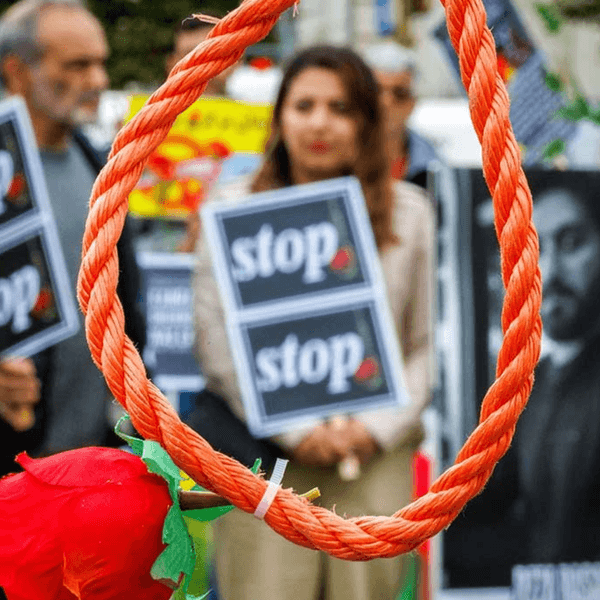
For the third time in less than a year, an Egyptian court has issued a mass death sentence, adding to mounting concerns about state brutality under the regime of U.S.-backed coup leader Abdel Fattah Al Sisi.
Judge Mohammed Nagi Shehata, head of the Giza Criminal Court, on Tuesday condemned to death 188 alleged members of the Muslim Brotherhood, who are charged with killing 11 police officers during a protest last August in the town of Kardasa.
Numerous media outlets and human rights advocates testify that the defendants were denied a fair trial. "A defense lawyer said that there was no effort to prove that any individual defendant personally killed any of the officers; that more than 100 of the defendants were not allowed to have lawyers; and that scores of defense witnesses were excluded from the courtroom," the New York Times reports.
Shehata has been widely criticized for previous decisions, including his sentencing of three Al Jazeera English journalists to at least seven years in prison on unverified charges of conspiring with the Muslim Brotherhood.
The ruling comes just days after 30-year dictator Hosni Mubarak and top aids were acquitted for murder and corruption, prompting thousands-strong protests on Saturday in Tahrir Square, the hub of the uprising that overthrew him in 2011, and sparking charges that the counter-revolution is in full-effect. At least two protesters were killed at Saturday's protests, independent Egyptian publication Mada Masr reports.
Critics, who include international human rights organizations, warn that the state violence overseen by Al Sisi since the overthrow of Mohamed Morsi is unrivaled in recent Egyptian history.
United Nations High Commissioner for Human Rights Rupert Colville released a statement earlier this week expressing "deep" concerns about restrictions on "freedom of expression, association and assembly," including violent crackdowns on demonstrations by security forces, military trials for civilians, and steep prison sentences for participating in protests.
"Mass death sentences are fast losing Egypt's judiciary whatever reputation for independence it once had," said Sarah Leah Whitson, Middle East and North Africa director for Human Rights Watch. "Instead of weighing the evidence against each person, judges are convicting defendants en masse without regard for fair trial standards."
"The act of remembering, of preserving the collective memory in the face of the regime's attempts to revise, manipulate and even wipe out our history is now of the utmost importance," writes Sally Toma, journalist for Mada Masr. "The fight for public space, graffiti, memorials, documentation of all events, aiding NGOs to document violations and using the Internet to make sure nothing can be erased or manipulated are among the many ways we can remember correctly in order to counter the fictional narrative the regime tries to enforce."
Meanwhile, the United States government is drawing ever-closer to Al Sisi's regime, including sending aid and arms shipments, issuing public statements of support and praise for the government, collaborating with Egypt on the expanding war in Iraq and Syria, and backing Egypt's crackdown on civilians near the Gaza border.
"It seemed like just yesterday that American media outlets were pretending to be on the side of the Tahrir Square demonstrates, all while suppressing the unpleasant fact that the dictator against which they were marching was one of the U.S. government's longest and closest allies, a murderous tyrant about whom Hillary Clinton said: 'I really consider President and Mrs. Mubarak to be friends of my family,'" writes Intercept journalist Glenn Greenwald.
"It's an extraordinary feat of propaganda that all of that has been washed away - again - and the U.S. is right back to acting as stalwart ally to a repressive and incredibly violent dictator sitting in Cairo doing its bidding," Greenwald adds.
Of those sentenced on Tuesday, 135 were in custody and 53 in absentia. The ruling must be approved by the mufti, a religious authority in Egypt, and finalized by the court and can still be appealed by defendants.
An Urgent Message From Our Co-Founder
Dear Common Dreams reader, It’s been nearly 30 years since I co-founded Common Dreams with my late wife, Lina Newhouser. We had the radical notion that journalism should serve the public good, not corporate profits. It was clear to us from the outset what it would take to build such a project. No paid advertisements. No corporate sponsors. No millionaire publisher telling us what to think or do. Many people said we wouldn't last a year, but we proved those doubters wrong. Together with a tremendous team of journalists and dedicated staff, we built an independent media outlet free from the constraints of profits and corporate control. Our mission has always been simple: To inform. To inspire. To ignite change for the common good. Building Common Dreams was not easy. Our survival was never guaranteed. When you take on the most powerful forces—Wall Street greed, fossil fuel industry destruction, Big Tech lobbyists, and uber-rich oligarchs who have spent billions upon billions rigging the economy and democracy in their favor—the only bulwark you have is supporters who believe in your work. But here’s the urgent message from me today. It's never been this bad out there. And it's never been this hard to keep us going. At the very moment Common Dreams is most needed, the threats we face are intensifying. We need your support now more than ever. We don't accept corporate advertising and never will. We don't have a paywall because we don't think people should be blocked from critical news based on their ability to pay. Everything we do is funded by the donations of readers like you. When everyone does the little they can afford, we are strong. But if that support retreats or dries up, so do we. Will you donate now to make sure Common Dreams not only survives but thrives? —Craig Brown, Co-founder |
For the third time in less than a year, an Egyptian court has issued a mass death sentence, adding to mounting concerns about state brutality under the regime of U.S.-backed coup leader Abdel Fattah Al Sisi.
Judge Mohammed Nagi Shehata, head of the Giza Criminal Court, on Tuesday condemned to death 188 alleged members of the Muslim Brotherhood, who are charged with killing 11 police officers during a protest last August in the town of Kardasa.
Numerous media outlets and human rights advocates testify that the defendants were denied a fair trial. "A defense lawyer said that there was no effort to prove that any individual defendant personally killed any of the officers; that more than 100 of the defendants were not allowed to have lawyers; and that scores of defense witnesses were excluded from the courtroom," the New York Times reports.
Shehata has been widely criticized for previous decisions, including his sentencing of three Al Jazeera English journalists to at least seven years in prison on unverified charges of conspiring with the Muslim Brotherhood.
The ruling comes just days after 30-year dictator Hosni Mubarak and top aids were acquitted for murder and corruption, prompting thousands-strong protests on Saturday in Tahrir Square, the hub of the uprising that overthrew him in 2011, and sparking charges that the counter-revolution is in full-effect. At least two protesters were killed at Saturday's protests, independent Egyptian publication Mada Masr reports.
Critics, who include international human rights organizations, warn that the state violence overseen by Al Sisi since the overthrow of Mohamed Morsi is unrivaled in recent Egyptian history.
United Nations High Commissioner for Human Rights Rupert Colville released a statement earlier this week expressing "deep" concerns about restrictions on "freedom of expression, association and assembly," including violent crackdowns on demonstrations by security forces, military trials for civilians, and steep prison sentences for participating in protests.
"Mass death sentences are fast losing Egypt's judiciary whatever reputation for independence it once had," said Sarah Leah Whitson, Middle East and North Africa director for Human Rights Watch. "Instead of weighing the evidence against each person, judges are convicting defendants en masse without regard for fair trial standards."
"The act of remembering, of preserving the collective memory in the face of the regime's attempts to revise, manipulate and even wipe out our history is now of the utmost importance," writes Sally Toma, journalist for Mada Masr. "The fight for public space, graffiti, memorials, documentation of all events, aiding NGOs to document violations and using the Internet to make sure nothing can be erased or manipulated are among the many ways we can remember correctly in order to counter the fictional narrative the regime tries to enforce."
Meanwhile, the United States government is drawing ever-closer to Al Sisi's regime, including sending aid and arms shipments, issuing public statements of support and praise for the government, collaborating with Egypt on the expanding war in Iraq and Syria, and backing Egypt's crackdown on civilians near the Gaza border.
"It seemed like just yesterday that American media outlets were pretending to be on the side of the Tahrir Square demonstrates, all while suppressing the unpleasant fact that the dictator against which they were marching was one of the U.S. government's longest and closest allies, a murderous tyrant about whom Hillary Clinton said: 'I really consider President and Mrs. Mubarak to be friends of my family,'" writes Intercept journalist Glenn Greenwald.
"It's an extraordinary feat of propaganda that all of that has been washed away - again - and the U.S. is right back to acting as stalwart ally to a repressive and incredibly violent dictator sitting in Cairo doing its bidding," Greenwald adds.
Of those sentenced on Tuesday, 135 were in custody and 53 in absentia. The ruling must be approved by the mufti, a religious authority in Egypt, and finalized by the court and can still be appealed by defendants.
For the third time in less than a year, an Egyptian court has issued a mass death sentence, adding to mounting concerns about state brutality under the regime of U.S.-backed coup leader Abdel Fattah Al Sisi.
Judge Mohammed Nagi Shehata, head of the Giza Criminal Court, on Tuesday condemned to death 188 alleged members of the Muslim Brotherhood, who are charged with killing 11 police officers during a protest last August in the town of Kardasa.
Numerous media outlets and human rights advocates testify that the defendants were denied a fair trial. "A defense lawyer said that there was no effort to prove that any individual defendant personally killed any of the officers; that more than 100 of the defendants were not allowed to have lawyers; and that scores of defense witnesses were excluded from the courtroom," the New York Times reports.
Shehata has been widely criticized for previous decisions, including his sentencing of three Al Jazeera English journalists to at least seven years in prison on unverified charges of conspiring with the Muslim Brotherhood.
The ruling comes just days after 30-year dictator Hosni Mubarak and top aids were acquitted for murder and corruption, prompting thousands-strong protests on Saturday in Tahrir Square, the hub of the uprising that overthrew him in 2011, and sparking charges that the counter-revolution is in full-effect. At least two protesters were killed at Saturday's protests, independent Egyptian publication Mada Masr reports.
Critics, who include international human rights organizations, warn that the state violence overseen by Al Sisi since the overthrow of Mohamed Morsi is unrivaled in recent Egyptian history.
United Nations High Commissioner for Human Rights Rupert Colville released a statement earlier this week expressing "deep" concerns about restrictions on "freedom of expression, association and assembly," including violent crackdowns on demonstrations by security forces, military trials for civilians, and steep prison sentences for participating in protests.
"Mass death sentences are fast losing Egypt's judiciary whatever reputation for independence it once had," said Sarah Leah Whitson, Middle East and North Africa director for Human Rights Watch. "Instead of weighing the evidence against each person, judges are convicting defendants en masse without regard for fair trial standards."
"The act of remembering, of preserving the collective memory in the face of the regime's attempts to revise, manipulate and even wipe out our history is now of the utmost importance," writes Sally Toma, journalist for Mada Masr. "The fight for public space, graffiti, memorials, documentation of all events, aiding NGOs to document violations and using the Internet to make sure nothing can be erased or manipulated are among the many ways we can remember correctly in order to counter the fictional narrative the regime tries to enforce."
Meanwhile, the United States government is drawing ever-closer to Al Sisi's regime, including sending aid and arms shipments, issuing public statements of support and praise for the government, collaborating with Egypt on the expanding war in Iraq and Syria, and backing Egypt's crackdown on civilians near the Gaza border.
"It seemed like just yesterday that American media outlets were pretending to be on the side of the Tahrir Square demonstrates, all while suppressing the unpleasant fact that the dictator against which they were marching was one of the U.S. government's longest and closest allies, a murderous tyrant about whom Hillary Clinton said: 'I really consider President and Mrs. Mubarak to be friends of my family,'" writes Intercept journalist Glenn Greenwald.
"It's an extraordinary feat of propaganda that all of that has been washed away - again - and the U.S. is right back to acting as stalwart ally to a repressive and incredibly violent dictator sitting in Cairo doing its bidding," Greenwald adds.
Of those sentenced on Tuesday, 135 were in custody and 53 in absentia. The ruling must be approved by the mufti, a religious authority in Egypt, and finalized by the court and can still be appealed by defendants.