SUBSCRIBE TO OUR FREE NEWSLETTER
Daily news & progressive opinion—funded by the people, not the corporations—delivered straight to your inbox.
5
#000000
#FFFFFF
To donate by check, phone, or other method, see our More Ways to Give page.
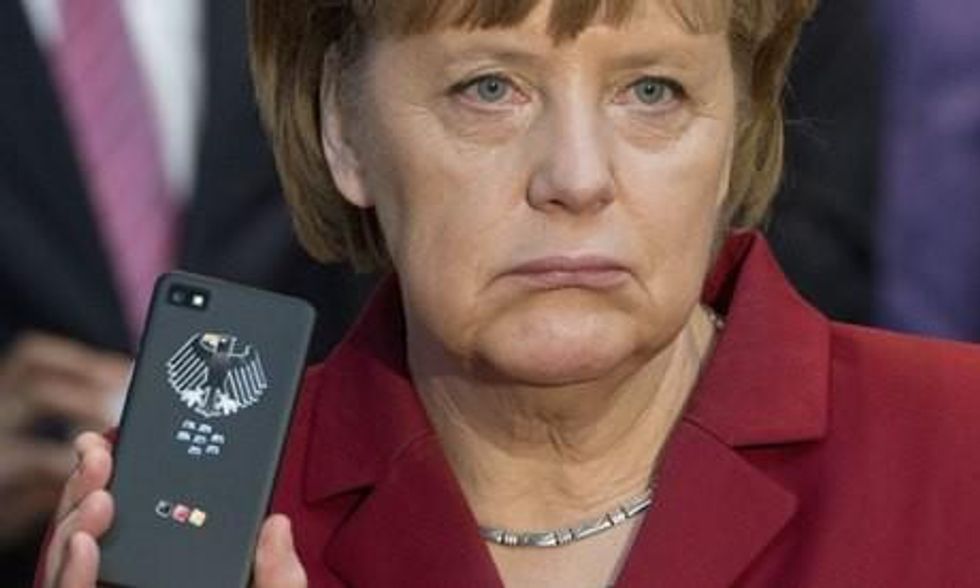
According to government sources in Germany, there was enough speculation that Merkel herself phoned President Obama on Wednesday demanding a clarification about the accusations.
As the Guardian reports:
The German government claims to have obtained information suggesting that the United States may have monitored the mobile phone of Angela Merkel. The chancellor called Barack Obama to demand an immediate clarification, it said.
"We swiftly sent a request to our American partners asking for an immediate and comprehensive clarification," Steffen Seibert, a German government spokesman, said in a statement on Wednesday.
Seibert said the chancellor had made clear that "she unambiguously condemns such practices, if they prove to be true, and considers them completely unacceptable. They would constitute a grave breach of trust. Such practices would have to be stopped immediately."
The White House, subsequent to Merkel's inquiry and a phone call between the two leaders, released a statement on Wednesday, which read:
Today, President Obama and Chancellor Merkel spoke by telephone regarding allegations that the U.S. National Security Agency intercepted the communications of the German Chancellor. The President assured the Chancellor that the United States is not monitoring and will not monitor the communications of Chancellor Merkel.
The United States greatly values our close cooperation with Germany on a broad range of shared security challenges. As the President has said, the United States is reviewing the way that we gather intelligence to ensure that we properly balance the security concerns of our citizens and allies with the privacy concerns that all people share.
Both leaders agreed to intensify further the cooperation between our intelligence services with the goal of protecting the security of both countries and of our partners, as well as protecting the privacy of our citizens.
Asked by the Guardian if the US had monitored the German chancellor's phone in the past, Caitlin Hayden, the White House's National Security Council spokeswoman, said: "The United States is not monitoring and will not monitor the communications of Chancellor Merkel. Beyond that, I'm not in a position to comment publicly on every specific alleged intelligence activity."
The Obama White House was also made to respond to an angry rebuff from French government officials after Le Monde, citing documents leaked to journalists by NSA whistleblower Edward Snowden, revealed that the NSA has been spying on citizens, business networks, and possibly political figures in that country.
Already, revelations made possible by Snowden's disclosures, have shown how the global surveillance network run by the U.S. has been used to spy on the communications of Brazilian President Dilma Rousseff and President Enrique Pena Nieto of Mexico.
In response to those revelations, Rousseff cancelled a planned state visit to Washington last month and Mexico's expression of outrage and demands for answers regarding the surveillance of high-level officials has only grown.
As McClatchy reported Tuesday:
Mexico warned the United States on Tuesday that its reported surveillance of top Mexican officials could sour security cooperation between the countries, and it demanded to know what measures the Obama administration is taking to prevent further spying on its leaders.
The statement was Mexico's angriest yet in response to revelations about surveillance by the National Security Agency that also have roiled Brazil and France.
Mexico said it had tightened governmental cyber-security, the latest sign that the scandal over leaked NSA documents is stirring nations that are considered close U.S. allies to build more vigorous digital-security barriers.
_____________________________
According to government sources in Germany, there was enough speculation that Merkel herself phoned President Obama on Wednesday demanding a clarification about the accusations.
As the Guardian reports:
The German government claims to have obtained information suggesting that the United States may have monitored the mobile phone of Angela Merkel. The chancellor called Barack Obama to demand an immediate clarification, it said.
"We swiftly sent a request to our American partners asking for an immediate and comprehensive clarification," Steffen Seibert, a German government spokesman, said in a statement on Wednesday.
Seibert said the chancellor had made clear that "she unambiguously condemns such practices, if they prove to be true, and considers them completely unacceptable. They would constitute a grave breach of trust. Such practices would have to be stopped immediately."
The White House, subsequent to Merkel's inquiry and a phone call between the two leaders, released a statement on Wednesday, which read:
Today, President Obama and Chancellor Merkel spoke by telephone regarding allegations that the U.S. National Security Agency intercepted the communications of the German Chancellor. The President assured the Chancellor that the United States is not monitoring and will not monitor the communications of Chancellor Merkel.
The United States greatly values our close cooperation with Germany on a broad range of shared security challenges. As the President has said, the United States is reviewing the way that we gather intelligence to ensure that we properly balance the security concerns of our citizens and allies with the privacy concerns that all people share.
Both leaders agreed to intensify further the cooperation between our intelligence services with the goal of protecting the security of both countries and of our partners, as well as protecting the privacy of our citizens.
Asked by the Guardian if the US had monitored the German chancellor's phone in the past, Caitlin Hayden, the White House's National Security Council spokeswoman, said: "The United States is not monitoring and will not monitor the communications of Chancellor Merkel. Beyond that, I'm not in a position to comment publicly on every specific alleged intelligence activity."
The Obama White House was also made to respond to an angry rebuff from French government officials after Le Monde, citing documents leaked to journalists by NSA whistleblower Edward Snowden, revealed that the NSA has been spying on citizens, business networks, and possibly political figures in that country.
Already, revelations made possible by Snowden's disclosures, have shown how the global surveillance network run by the U.S. has been used to spy on the communications of Brazilian President Dilma Rousseff and President Enrique Pena Nieto of Mexico.
In response to those revelations, Rousseff cancelled a planned state visit to Washington last month and Mexico's expression of outrage and demands for answers regarding the surveillance of high-level officials has only grown.
As McClatchy reported Tuesday:
Mexico warned the United States on Tuesday that its reported surveillance of top Mexican officials could sour security cooperation between the countries, and it demanded to know what measures the Obama administration is taking to prevent further spying on its leaders.
The statement was Mexico's angriest yet in response to revelations about surveillance by the National Security Agency that also have roiled Brazil and France.
Mexico said it had tightened governmental cyber-security, the latest sign that the scandal over leaked NSA documents is stirring nations that are considered close U.S. allies to build more vigorous digital-security barriers.
_____________________________
According to government sources in Germany, there was enough speculation that Merkel herself phoned President Obama on Wednesday demanding a clarification about the accusations.
As the Guardian reports:
The German government claims to have obtained information suggesting that the United States may have monitored the mobile phone of Angela Merkel. The chancellor called Barack Obama to demand an immediate clarification, it said.
"We swiftly sent a request to our American partners asking for an immediate and comprehensive clarification," Steffen Seibert, a German government spokesman, said in a statement on Wednesday.
Seibert said the chancellor had made clear that "she unambiguously condemns such practices, if they prove to be true, and considers them completely unacceptable. They would constitute a grave breach of trust. Such practices would have to be stopped immediately."
The White House, subsequent to Merkel's inquiry and a phone call between the two leaders, released a statement on Wednesday, which read:
Today, President Obama and Chancellor Merkel spoke by telephone regarding allegations that the U.S. National Security Agency intercepted the communications of the German Chancellor. The President assured the Chancellor that the United States is not monitoring and will not monitor the communications of Chancellor Merkel.
The United States greatly values our close cooperation with Germany on a broad range of shared security challenges. As the President has said, the United States is reviewing the way that we gather intelligence to ensure that we properly balance the security concerns of our citizens and allies with the privacy concerns that all people share.
Both leaders agreed to intensify further the cooperation between our intelligence services with the goal of protecting the security of both countries and of our partners, as well as protecting the privacy of our citizens.
Asked by the Guardian if the US had monitored the German chancellor's phone in the past, Caitlin Hayden, the White House's National Security Council spokeswoman, said: "The United States is not monitoring and will not monitor the communications of Chancellor Merkel. Beyond that, I'm not in a position to comment publicly on every specific alleged intelligence activity."
The Obama White House was also made to respond to an angry rebuff from French government officials after Le Monde, citing documents leaked to journalists by NSA whistleblower Edward Snowden, revealed that the NSA has been spying on citizens, business networks, and possibly political figures in that country.
Already, revelations made possible by Snowden's disclosures, have shown how the global surveillance network run by the U.S. has been used to spy on the communications of Brazilian President Dilma Rousseff and President Enrique Pena Nieto of Mexico.
In response to those revelations, Rousseff cancelled a planned state visit to Washington last month and Mexico's expression of outrage and demands for answers regarding the surveillance of high-level officials has only grown.
As McClatchy reported Tuesday:
Mexico warned the United States on Tuesday that its reported surveillance of top Mexican officials could sour security cooperation between the countries, and it demanded to know what measures the Obama administration is taking to prevent further spying on its leaders.
The statement was Mexico's angriest yet in response to revelations about surveillance by the National Security Agency that also have roiled Brazil and France.
Mexico said it had tightened governmental cyber-security, the latest sign that the scandal over leaked NSA documents is stirring nations that are considered close U.S. allies to build more vigorous digital-security barriers.
_____________________________