SUBSCRIBE TO OUR FREE NEWSLETTER
Daily news & progressive opinion—funded by the people, not the corporations—delivered straight to your inbox.
5
#000000
#FFFFFF
To donate by check, phone, or other method, see our More Ways to Give page.
Daily news & progressive opinion—funded by the people, not the corporations—delivered straight to your inbox.
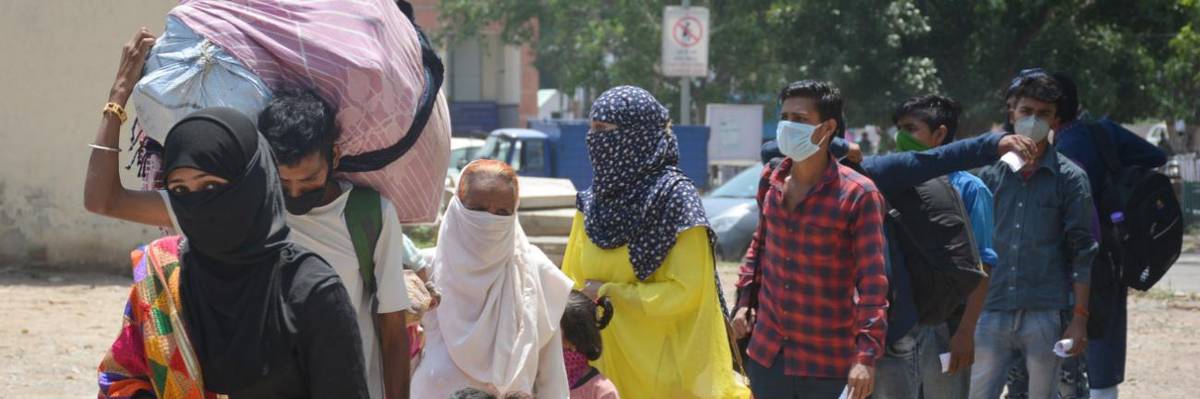
Migrants arrive to board a train for Uttar Pradesh, at Chandigarh railway station, on May 24, 2020 in Panchkula, India. (Photo: Sant Arora/Hindustan Times via Getty Images)
For millions of refugees and asylum-seekers around the world, death may seem more merciful than what they have to endure before, during, and after migration, especially during a pandemic that has crippled even the strongest of countries.
The majority of displaced individuals live in low-income countries that have received only 0.2% of Covid vaccines and which are struggling to secure enough vaccines for their own citizens.
When we talk about health equity and disparity, we mostly think about unequal distribution of and access to healthcare services. Many citizens of developed countries generally have access to preventive healthcare screenings. By contrast, refugees, asylum-seekers, and undocumented immigrants generally have limited or no access to healthcare due to the lack of health insurance, fear of using healthcare benefits that might negatively impact their immigration status, or cultural barriers and discrimination.
Governments have exploited the pandemic to implement restrictive immigration policies. The United States issued blanket entry bans and expelled thousands of asylum-seekers and unaccompanied children despite protests from public health leaders to respect humanitarian laws. Moreover, structural racism is happening widely around the world over vaccine access, vaccine branding, and even vaccine manufacturing sites. For example, millions of people from low- and middle-income countries who received vaccines of the same recipe, but which were manufactured outside of the U.K. or Europe, are barred from entering Europe.
On the one hand, developed countries have superfluous vaccines, many of which are on the verge of expiring due to vaccine hesitancy fueled by conspiracies propagated on social media. On the other hand, people in developing countries are signing up months in advance to receive their first shot of any vaccine that comes their way.
The majority of displaced individuals live in low-income countries that have received only 0.2% of Covid vaccines and which are struggling to secure enough vaccines for their own citizens. Many foreign migrants in developed countries serve as front-line workers, yet they face barriers to getting vaccinated.
Domestic healthcare workers and populations at-most risk were prioritized in the recommended vaccine allocation mechanisms. Foreign-born migrants, asylum-seekers, and refugees make a significant portion of at-risk populations due to the inherent housing situations in detention and refugee camps and because many of them suffer from co-morbidities and are unable to maintain social distancing or public health measures. Instead of developing inclusive vaccine rollout frameworks, we witnessed solitary confinement of asylum-seekers in detention centers in the United States, evictions of asylum-seekers in England during the second Covid-19 wave, evictions from tent cities of pandemic refugees in Brazil, halting of rescue missions in the Mediterranean, and increased xenophobia everywhere.
What does it take to change?
Let's take the selfish route. None of us can be completely safe if any group or nation is left behind. To achieve herd immunity, vaccine access should be a basic right. We all eagerly want our lives back. That can only happen with herd immunity. Creativity in developing and enforcing immigration policies should be rooted in humanitarianism and empathy, not xenophobia and nationalism. After all, we all depend on one another in various ways, especially to stay healthy.
As individuals, what can we do?
Building immigrant-citizen collaborations in high-income countries to advocate for the rights of those who have no voice or are fearful of repercussions is one way to improve vaccine equity, especially among forcibly displaced populations. This can be in the form of working with nongovernmental organizations, voicing concerns to Congress about sharing superfluous vaccines with other countries, eliminating unnecessary visa exclusions, and investing in humanitarian border operations, and engaging in community outreach programs to empower displaced individuals by compiling reliable and accessible resources about their eligibility for healthcare benefits, including vaccines.
Working together we can make a difference.
Dear Common Dreams reader, It’s been nearly 30 years since I co-founded Common Dreams with my late wife, Lina Newhouser. We had the radical notion that journalism should serve the public good, not corporate profits. It was clear to us from the outset what it would take to build such a project. No paid advertisements. No corporate sponsors. No millionaire publisher telling us what to think or do. Many people said we wouldn't last a year, but we proved those doubters wrong. Together with a tremendous team of journalists and dedicated staff, we built an independent media outlet free from the constraints of profits and corporate control. Our mission has always been simple: To inform. To inspire. To ignite change for the common good. Building Common Dreams was not easy. Our survival was never guaranteed. When you take on the most powerful forces—Wall Street greed, fossil fuel industry destruction, Big Tech lobbyists, and uber-rich oligarchs who have spent billions upon billions rigging the economy and democracy in their favor—the only bulwark you have is supporters who believe in your work. But here’s the urgent message from me today. It's never been this bad out there. And it's never been this hard to keep us going. At the very moment Common Dreams is most needed, the threats we face are intensifying. We need your support now more than ever. We don't accept corporate advertising and never will. We don't have a paywall because we don't think people should be blocked from critical news based on their ability to pay. Everything we do is funded by the donations of readers like you. When everyone does the little they can afford, we are strong. But if that support retreats or dries up, so do we. Will you donate now to make sure Common Dreams not only survives but thrives? —Craig Brown, Co-founder |
For millions of refugees and asylum-seekers around the world, death may seem more merciful than what they have to endure before, during, and after migration, especially during a pandemic that has crippled even the strongest of countries.
The majority of displaced individuals live in low-income countries that have received only 0.2% of Covid vaccines and which are struggling to secure enough vaccines for their own citizens.
When we talk about health equity and disparity, we mostly think about unequal distribution of and access to healthcare services. Many citizens of developed countries generally have access to preventive healthcare screenings. By contrast, refugees, asylum-seekers, and undocumented immigrants generally have limited or no access to healthcare due to the lack of health insurance, fear of using healthcare benefits that might negatively impact their immigration status, or cultural barriers and discrimination.
Governments have exploited the pandemic to implement restrictive immigration policies. The United States issued blanket entry bans and expelled thousands of asylum-seekers and unaccompanied children despite protests from public health leaders to respect humanitarian laws. Moreover, structural racism is happening widely around the world over vaccine access, vaccine branding, and even vaccine manufacturing sites. For example, millions of people from low- and middle-income countries who received vaccines of the same recipe, but which were manufactured outside of the U.K. or Europe, are barred from entering Europe.
On the one hand, developed countries have superfluous vaccines, many of which are on the verge of expiring due to vaccine hesitancy fueled by conspiracies propagated on social media. On the other hand, people in developing countries are signing up months in advance to receive their first shot of any vaccine that comes their way.
The majority of displaced individuals live in low-income countries that have received only 0.2% of Covid vaccines and which are struggling to secure enough vaccines for their own citizens. Many foreign migrants in developed countries serve as front-line workers, yet they face barriers to getting vaccinated.
Domestic healthcare workers and populations at-most risk were prioritized in the recommended vaccine allocation mechanisms. Foreign-born migrants, asylum-seekers, and refugees make a significant portion of at-risk populations due to the inherent housing situations in detention and refugee camps and because many of them suffer from co-morbidities and are unable to maintain social distancing or public health measures. Instead of developing inclusive vaccine rollout frameworks, we witnessed solitary confinement of asylum-seekers in detention centers in the United States, evictions of asylum-seekers in England during the second Covid-19 wave, evictions from tent cities of pandemic refugees in Brazil, halting of rescue missions in the Mediterranean, and increased xenophobia everywhere.
What does it take to change?
Let's take the selfish route. None of us can be completely safe if any group or nation is left behind. To achieve herd immunity, vaccine access should be a basic right. We all eagerly want our lives back. That can only happen with herd immunity. Creativity in developing and enforcing immigration policies should be rooted in humanitarianism and empathy, not xenophobia and nationalism. After all, we all depend on one another in various ways, especially to stay healthy.
As individuals, what can we do?
Building immigrant-citizen collaborations in high-income countries to advocate for the rights of those who have no voice or are fearful of repercussions is one way to improve vaccine equity, especially among forcibly displaced populations. This can be in the form of working with nongovernmental organizations, voicing concerns to Congress about sharing superfluous vaccines with other countries, eliminating unnecessary visa exclusions, and investing in humanitarian border operations, and engaging in community outreach programs to empower displaced individuals by compiling reliable and accessible resources about their eligibility for healthcare benefits, including vaccines.
Working together we can make a difference.
For millions of refugees and asylum-seekers around the world, death may seem more merciful than what they have to endure before, during, and after migration, especially during a pandemic that has crippled even the strongest of countries.
The majority of displaced individuals live in low-income countries that have received only 0.2% of Covid vaccines and which are struggling to secure enough vaccines for their own citizens.
When we talk about health equity and disparity, we mostly think about unequal distribution of and access to healthcare services. Many citizens of developed countries generally have access to preventive healthcare screenings. By contrast, refugees, asylum-seekers, and undocumented immigrants generally have limited or no access to healthcare due to the lack of health insurance, fear of using healthcare benefits that might negatively impact their immigration status, or cultural barriers and discrimination.
Governments have exploited the pandemic to implement restrictive immigration policies. The United States issued blanket entry bans and expelled thousands of asylum-seekers and unaccompanied children despite protests from public health leaders to respect humanitarian laws. Moreover, structural racism is happening widely around the world over vaccine access, vaccine branding, and even vaccine manufacturing sites. For example, millions of people from low- and middle-income countries who received vaccines of the same recipe, but which were manufactured outside of the U.K. or Europe, are barred from entering Europe.
On the one hand, developed countries have superfluous vaccines, many of which are on the verge of expiring due to vaccine hesitancy fueled by conspiracies propagated on social media. On the other hand, people in developing countries are signing up months in advance to receive their first shot of any vaccine that comes their way.
The majority of displaced individuals live in low-income countries that have received only 0.2% of Covid vaccines and which are struggling to secure enough vaccines for their own citizens. Many foreign migrants in developed countries serve as front-line workers, yet they face barriers to getting vaccinated.
Domestic healthcare workers and populations at-most risk were prioritized in the recommended vaccine allocation mechanisms. Foreign-born migrants, asylum-seekers, and refugees make a significant portion of at-risk populations due to the inherent housing situations in detention and refugee camps and because many of them suffer from co-morbidities and are unable to maintain social distancing or public health measures. Instead of developing inclusive vaccine rollout frameworks, we witnessed solitary confinement of asylum-seekers in detention centers in the United States, evictions of asylum-seekers in England during the second Covid-19 wave, evictions from tent cities of pandemic refugees in Brazil, halting of rescue missions in the Mediterranean, and increased xenophobia everywhere.
What does it take to change?
Let's take the selfish route. None of us can be completely safe if any group or nation is left behind. To achieve herd immunity, vaccine access should be a basic right. We all eagerly want our lives back. That can only happen with herd immunity. Creativity in developing and enforcing immigration policies should be rooted in humanitarianism and empathy, not xenophobia and nationalism. After all, we all depend on one another in various ways, especially to stay healthy.
As individuals, what can we do?
Building immigrant-citizen collaborations in high-income countries to advocate for the rights of those who have no voice or are fearful of repercussions is one way to improve vaccine equity, especially among forcibly displaced populations. This can be in the form of working with nongovernmental organizations, voicing concerns to Congress about sharing superfluous vaccines with other countries, eliminating unnecessary visa exclusions, and investing in humanitarian border operations, and engaging in community outreach programs to empower displaced individuals by compiling reliable and accessible resources about their eligibility for healthcare benefits, including vaccines.
Working together we can make a difference.