SUBSCRIBE TO OUR FREE NEWSLETTER
Daily news & progressive opinion—funded by the people, not the corporations—delivered straight to your inbox.
5
#000000
#FFFFFF
To donate by check, phone, or other method, see our More Ways to Give page.

We are at a critical historical juncture in which it is becoming increasingly difficult to criticize Israel without being branded an anti-Semite. You are an anti-Semite if you support the International Criminal Court's recent ruling that it has jurisdiction to open a war crimes investigation against Israel. But you are also likely to be called an anti-Semite if you reject the logic informing the court's decision.
Target List
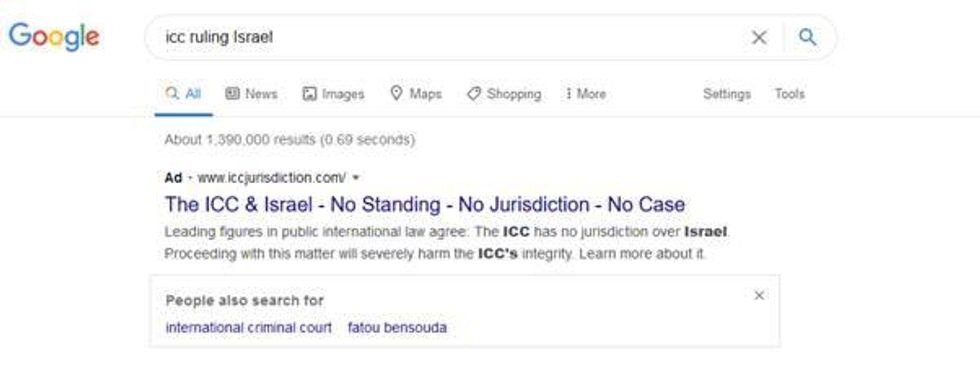
The ICC is on Israel's target list. This becomes clear when searching for the terms "ICC ruling" and "Israel" together; instantaneously, an ad pops up at the very top of Google's list of 1,390,000 results: "ICC & Israel: No Standing. No Jurisdiction. No Case." Clicking the ad, will take you to a slick blue and white website (i.e., the colour of Israel's flag) called "ICC Jurisdiction" with the large "No Standing...." slogan at the centre of the page.
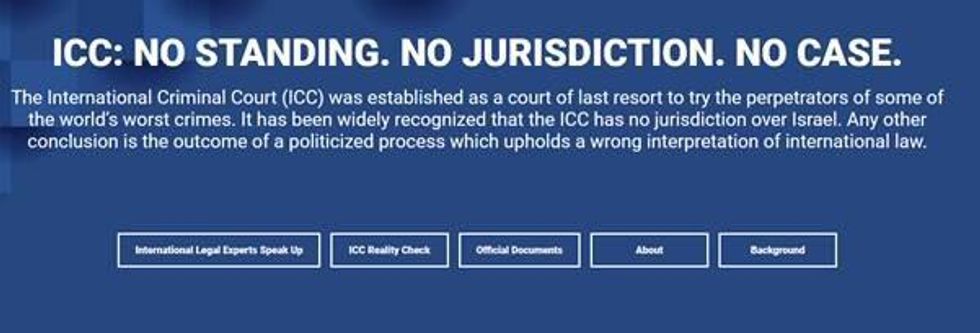
Under the slogan one reads that "The International Criminal Court (ICC) was established as a court of last resort to try the perpetrators of some of the world's worst crimes. It has been widely recognized that the ICC has no jurisdiction over Israel. Any other conclusion is the outcome of a politicized process which upholds a wrong interpretation of international law."
Israel's official view, then, is that the ICC has no standing to investigate alleged war crimes in the Palestinian territories that Israel had occupied in 1967. Israel, so the claim goes, is not a party to the Rome Statute that established the ICC; moreover, the Palestinian Authority is not sovereign and therefore cannot delegate jurisdiction and request that the ICC intervene on its behalf as required by the Statute. This is why Prime Minister Benjamin Netanyahu angrily rejected the ICC's recent ruling that paves the way for a war crimes probe, averring that "The decision of the international court to open an investigation against Israel today for war crimes is absurd. It's undiluted antisemitism and the height of hypocrisy."
Several Israeli allies, including the US, Germany, and Hungary, appear to agree with Israel's analysis. Although US Secretary of State Antony Blinken did not invoke the anti-Semitism charge, he did parrot Israel's Prime Minister when he declared that "the Palestinians do not qualify as a sovereign state and therefore, are not qualified to obtain membership as a state in, participate as a state in, or delegate jurisdiction to the ICC."
Avoiding Hypocrisy
Yet, if one insists that the Palestinians have no standing before the ICC since they lack sovereignty, then the only way to avoid Netanyahu's accusation of hypocrisy would be to infer that the entire area between the Mediterranean Sea and the Jordan River as well as the people living in it are controlled by Israel.
This, however, would mean agreeing with Israel's foremost human rights organization B'tselem, which has claimed that the Palestinian territories are ruled by one regime--namely, Israel. B'tselem goes on to explain that this regime is "organized under a single principle: advancing and cementing the supremacy of one group--Jews--over another--Palestinians." The human rights organisation concludes that "a regime that uses laws, practices and organized violence to cement the supremacy of one group over another is an apartheid regime."
But the claim that one regime controls the entire area between the Mediterranean Sea and the Jordan River is also considered anti-Semitic. After the publication of B'tselem's report, professor Eugene Kontorovich, head of the Kohelet Policy Forum's International Law Department, said that the rights organization's charge of apartheid was akin to an anti-Semitic "blood libel." In a similar vein, NGO Monitor claimed that B'Tselem's report is informed by anti-Semitic tropes, while specifically flagging the phrase from the "River to the Sea" as extremely disturbing.
Of course Palestinians who have dared to talk about "Israeli apartheid" or students who have organized an "Israel Apartheid Week" on campuses have frequently been subjected to similar accusations.
Parallel Universe
There is, of course, one way to speak about Israel without being cast as an anti-Semite. But to do so one would have to have a very creative imagination or live in some kind of parallel universe, where Israel does not have a colonial project, where Palestinian rights are not continuously violated, and where, in fact, Palestinians do not even exist.
We are at a critical historical juncture in which it is becoming increasingly difficult to criticize Israel without being branded an anti-Semite. You are an anti-Semite if you support the International Criminal Court's recent ruling that it has jurisdiction to open a war crimes investigation against Israel. But you are also likely to be called an anti-Semite if you reject the logic informing the court's decision.
Target List
The ICC is on Israel's target list. This becomes clear when searching for the terms "ICC ruling" and "Israel" together; instantaneously, an ad pops up at the very top of Google's list of 1,390,000 results: "ICC & Israel: No Standing. No Jurisdiction. No Case." Clicking the ad, will take you to a slick blue and white website (i.e., the colour of Israel's flag) called "ICC Jurisdiction" with the large "No Standing...." slogan at the centre of the page.
Under the slogan one reads that "The International Criminal Court (ICC) was established as a court of last resort to try the perpetrators of some of the world's worst crimes. It has been widely recognized that the ICC has no jurisdiction over Israel. Any other conclusion is the outcome of a politicized process which upholds a wrong interpretation of international law."
Israel's official view, then, is that the ICC has no standing to investigate alleged war crimes in the Palestinian territories that Israel had occupied in 1967. Israel, so the claim goes, is not a party to the Rome Statute that established the ICC; moreover, the Palestinian Authority is not sovereign and therefore cannot delegate jurisdiction and request that the ICC intervene on its behalf as required by the Statute. This is why Prime Minister Benjamin Netanyahu angrily rejected the ICC's recent ruling that paves the way for a war crimes probe, averring that "The decision of the international court to open an investigation against Israel today for war crimes is absurd. It's undiluted antisemitism and the height of hypocrisy."
Several Israeli allies, including the US, Germany, and Hungary, appear to agree with Israel's analysis. Although US Secretary of State Antony Blinken did not invoke the anti-Semitism charge, he did parrot Israel's Prime Minister when he declared that "the Palestinians do not qualify as a sovereign state and therefore, are not qualified to obtain membership as a state in, participate as a state in, or delegate jurisdiction to the ICC."
Avoiding Hypocrisy
Yet, if one insists that the Palestinians have no standing before the ICC since they lack sovereignty, then the only way to avoid Netanyahu's accusation of hypocrisy would be to infer that the entire area between the Mediterranean Sea and the Jordan River as well as the people living in it are controlled by Israel.
This, however, would mean agreeing with Israel's foremost human rights organization B'tselem, which has claimed that the Palestinian territories are ruled by one regime--namely, Israel. B'tselem goes on to explain that this regime is "organized under a single principle: advancing and cementing the supremacy of one group--Jews--over another--Palestinians." The human rights organisation concludes that "a regime that uses laws, practices and organized violence to cement the supremacy of one group over another is an apartheid regime."
But the claim that one regime controls the entire area between the Mediterranean Sea and the Jordan River is also considered anti-Semitic. After the publication of B'tselem's report, professor Eugene Kontorovich, head of the Kohelet Policy Forum's International Law Department, said that the rights organization's charge of apartheid was akin to an anti-Semitic "blood libel." In a similar vein, NGO Monitor claimed that B'Tselem's report is informed by anti-Semitic tropes, while specifically flagging the phrase from the "River to the Sea" as extremely disturbing.
Of course Palestinians who have dared to talk about "Israeli apartheid" or students who have organized an "Israel Apartheid Week" on campuses have frequently been subjected to similar accusations.
Parallel Universe
There is, of course, one way to speak about Israel without being cast as an anti-Semite. But to do so one would have to have a very creative imagination or live in some kind of parallel universe, where Israel does not have a colonial project, where Palestinian rights are not continuously violated, and where, in fact, Palestinians do not even exist.
We are at a critical historical juncture in which it is becoming increasingly difficult to criticize Israel without being branded an anti-Semite. You are an anti-Semite if you support the International Criminal Court's recent ruling that it has jurisdiction to open a war crimes investigation against Israel. But you are also likely to be called an anti-Semite if you reject the logic informing the court's decision.
Target List
The ICC is on Israel's target list. This becomes clear when searching for the terms "ICC ruling" and "Israel" together; instantaneously, an ad pops up at the very top of Google's list of 1,390,000 results: "ICC & Israel: No Standing. No Jurisdiction. No Case." Clicking the ad, will take you to a slick blue and white website (i.e., the colour of Israel's flag) called "ICC Jurisdiction" with the large "No Standing...." slogan at the centre of the page.
Under the slogan one reads that "The International Criminal Court (ICC) was established as a court of last resort to try the perpetrators of some of the world's worst crimes. It has been widely recognized that the ICC has no jurisdiction over Israel. Any other conclusion is the outcome of a politicized process which upholds a wrong interpretation of international law."
Israel's official view, then, is that the ICC has no standing to investigate alleged war crimes in the Palestinian territories that Israel had occupied in 1967. Israel, so the claim goes, is not a party to the Rome Statute that established the ICC; moreover, the Palestinian Authority is not sovereign and therefore cannot delegate jurisdiction and request that the ICC intervene on its behalf as required by the Statute. This is why Prime Minister Benjamin Netanyahu angrily rejected the ICC's recent ruling that paves the way for a war crimes probe, averring that "The decision of the international court to open an investigation against Israel today for war crimes is absurd. It's undiluted antisemitism and the height of hypocrisy."
Several Israeli allies, including the US, Germany, and Hungary, appear to agree with Israel's analysis. Although US Secretary of State Antony Blinken did not invoke the anti-Semitism charge, he did parrot Israel's Prime Minister when he declared that "the Palestinians do not qualify as a sovereign state and therefore, are not qualified to obtain membership as a state in, participate as a state in, or delegate jurisdiction to the ICC."
Avoiding Hypocrisy
Yet, if one insists that the Palestinians have no standing before the ICC since they lack sovereignty, then the only way to avoid Netanyahu's accusation of hypocrisy would be to infer that the entire area between the Mediterranean Sea and the Jordan River as well as the people living in it are controlled by Israel.
This, however, would mean agreeing with Israel's foremost human rights organization B'tselem, which has claimed that the Palestinian territories are ruled by one regime--namely, Israel. B'tselem goes on to explain that this regime is "organized under a single principle: advancing and cementing the supremacy of one group--Jews--over another--Palestinians." The human rights organisation concludes that "a regime that uses laws, practices and organized violence to cement the supremacy of one group over another is an apartheid regime."
But the claim that one regime controls the entire area between the Mediterranean Sea and the Jordan River is also considered anti-Semitic. After the publication of B'tselem's report, professor Eugene Kontorovich, head of the Kohelet Policy Forum's International Law Department, said that the rights organization's charge of apartheid was akin to an anti-Semitic "blood libel." In a similar vein, NGO Monitor claimed that B'Tselem's report is informed by anti-Semitic tropes, while specifically flagging the phrase from the "River to the Sea" as extremely disturbing.
Of course Palestinians who have dared to talk about "Israeli apartheid" or students who have organized an "Israel Apartheid Week" on campuses have frequently been subjected to similar accusations.
Parallel Universe
There is, of course, one way to speak about Israel without being cast as an anti-Semite. But to do so one would have to have a very creative imagination or live in some kind of parallel universe, where Israel does not have a colonial project, where Palestinian rights are not continuously violated, and where, in fact, Palestinians do not even exist.