SUBSCRIBE TO OUR FREE NEWSLETTER
Daily news & progressive opinion—funded by the people, not the corporations—delivered straight to your inbox.
5
#000000
#FFFFFF
To donate by check, phone, or other method, see our More Ways to Give page.
Daily news & progressive opinion—funded by the people, not the corporations—delivered straight to your inbox.
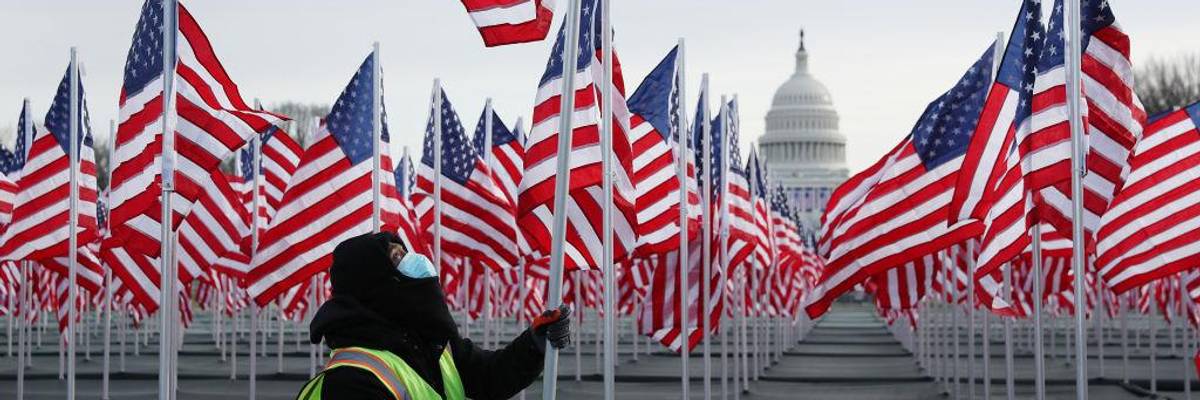
Aaron Haines helps place American flags on the National Mall as the U.S Capitol Building is prepared for the inaugural ceremonies for President-elect Joe Biden on January 18, 2021 in Washington, DC. The approximately 191,500 U.S. flags will cover part of the National Mall and will represent the American people who are unable to travel to Washington, DC for the inauguration. (Photo by Joe Raedle/Getty Images)
On Monday, we celebrated Dr. Martin Luther King's 91st birthday; on Wednesday, Joe Biden will be inaugurated as president, promising change after a dark period of division. Dr. King's relationship with John F. Kennedy and Lyndon Johnson offers instructive lessons for today's movement for justice.
Kennedy, inaugurated after eight years of Republican Dwight Eisenhower, brought new energy to Washington. Kennedy favored action on civil rights but was terribly worried that trying to move a civil rights bill would get in the way of the rest of his legislative agenda.
During his campaign, his call to Coretta Scott King when Dr. King was jailed, helped him capture immense Black support in a razor-thin election. Yet, he was wary of King, unhappy that King and the movement kept demonstrating and forcing change.
The movement for justice must continue to organize nonviolent protest, challenging the entrenched systemic racism that still pervades our institutions.
King appreciated Kennedy but understood the conflicting pressures he faced. The movement continued independently. The Freedom Riders in Montgomery, the dogs and water cannons in Birmingham, the sit-in in Jackson forced Kennedy to act. Even then the legislation -- and much of Kennedy's agenda -- was stuck in the legislature.
Kennedy's assassination brought Lyndon Johnson, the master of the Senate, to the presidency. Johnson decided to push civil rights legislation and put his enormous skills behind passing it. King conferred with Johnson and helped put pressure on legislators who were reluctant. King wasn't simply interested in protest; he wanted a change in policy and was prepared to work with LBJ to get it.
Johnson, like Kennedy, was wary of King. He often besmirched him in private, angry that King would not stop the demonstrations. Again, the movement -- this time the dramatic scenes at Selma -- forced action, and Johnson rose to the moment, leading to the passage of the Voting Rights Act.
The collaboration of Johnson and King, however, soon ended. The Watts Riot angered Johnson who thought blacks should be grateful for what he had done. When Dr. King went public with his opposition to the Vietnam War, the relationship was severed. The FBI under J. Edgar Hoover continued its efforts to discredit and intimidate King.
Today the situation is different. Black voters were critical to Biden's election victory. He chose Kamala Harris as his vice president. He has reaffirmed his commitment to criminal justice reform, to addressing the continued disparities in education, housing, health care and opportunity. What African Americans still seek is an even playing field. On economic justice issues, our agenda speaks to all: the right to a job, the right to health care, the right to a high-quality education, retirement security. To drive reform, the lessons of the 1960s still apply.
The movement for justice must continue to organize nonviolent protest, challenging the entrenched systemic racism that still pervades our institutions. It must continue to build, as Dr. King did, a poor people's campaign across lines of race and region. The movement can't follow Biden's timetable; it must continue to build on its own agenda. There should be no reluctance to work with Biden to help pass critical reforms, but at the same time, the pressure for outside must continue to build for there to be any hope of change.
The 1960s offer another caution: the war on poverty, the progress on civil rights, was lost in the jungles of Vietnam, as that war consumed resources and attention as well as lives. While Biden's domestic pledges offer hope, he inherits a country mired in endless wars and gearing up for a new cold war with both Russia and China. Once more, follies abroad may sap the energy needed to rebuild at home. Once more, the movement for justice must not be silent about the administration's priorities.
Biden's inauguration offers new hope and new energy. He inherits severe crises--the pandemic, mass unemployment, extreme inequality, the climate crisis, racial upheaval. He'll need all the help he can get. And the best way the movement can help is to keep on keeping on.
Dear Common Dreams reader, It’s been nearly 30 years since I co-founded Common Dreams with my late wife, Lina Newhouser. We had the radical notion that journalism should serve the public good, not corporate profits. It was clear to us from the outset what it would take to build such a project. No paid advertisements. No corporate sponsors. No millionaire publisher telling us what to think or do. Many people said we wouldn't last a year, but we proved those doubters wrong. Together with a tremendous team of journalists and dedicated staff, we built an independent media outlet free from the constraints of profits and corporate control. Our mission has always been simple: To inform. To inspire. To ignite change for the common good. Building Common Dreams was not easy. Our survival was never guaranteed. When you take on the most powerful forces—Wall Street greed, fossil fuel industry destruction, Big Tech lobbyists, and uber-rich oligarchs who have spent billions upon billions rigging the economy and democracy in their favor—the only bulwark you have is supporters who believe in your work. But here’s the urgent message from me today. It's never been this bad out there. And it's never been this hard to keep us going. At the very moment Common Dreams is most needed, the threats we face are intensifying. We need your support now more than ever. We don't accept corporate advertising and never will. We don't have a paywall because we don't think people should be blocked from critical news based on their ability to pay. Everything we do is funded by the donations of readers like you. When everyone does the little they can afford, we are strong. But if that support retreats or dries up, so do we. Will you donate now to make sure Common Dreams not only survives but thrives? —Craig Brown, Co-founder |
On Monday, we celebrated Dr. Martin Luther King's 91st birthday; on Wednesday, Joe Biden will be inaugurated as president, promising change after a dark period of division. Dr. King's relationship with John F. Kennedy and Lyndon Johnson offers instructive lessons for today's movement for justice.
Kennedy, inaugurated after eight years of Republican Dwight Eisenhower, brought new energy to Washington. Kennedy favored action on civil rights but was terribly worried that trying to move a civil rights bill would get in the way of the rest of his legislative agenda.
During his campaign, his call to Coretta Scott King when Dr. King was jailed, helped him capture immense Black support in a razor-thin election. Yet, he was wary of King, unhappy that King and the movement kept demonstrating and forcing change.
The movement for justice must continue to organize nonviolent protest, challenging the entrenched systemic racism that still pervades our institutions.
King appreciated Kennedy but understood the conflicting pressures he faced. The movement continued independently. The Freedom Riders in Montgomery, the dogs and water cannons in Birmingham, the sit-in in Jackson forced Kennedy to act. Even then the legislation -- and much of Kennedy's agenda -- was stuck in the legislature.
Kennedy's assassination brought Lyndon Johnson, the master of the Senate, to the presidency. Johnson decided to push civil rights legislation and put his enormous skills behind passing it. King conferred with Johnson and helped put pressure on legislators who were reluctant. King wasn't simply interested in protest; he wanted a change in policy and was prepared to work with LBJ to get it.
Johnson, like Kennedy, was wary of King. He often besmirched him in private, angry that King would not stop the demonstrations. Again, the movement -- this time the dramatic scenes at Selma -- forced action, and Johnson rose to the moment, leading to the passage of the Voting Rights Act.
The collaboration of Johnson and King, however, soon ended. The Watts Riot angered Johnson who thought blacks should be grateful for what he had done. When Dr. King went public with his opposition to the Vietnam War, the relationship was severed. The FBI under J. Edgar Hoover continued its efforts to discredit and intimidate King.
Today the situation is different. Black voters were critical to Biden's election victory. He chose Kamala Harris as his vice president. He has reaffirmed his commitment to criminal justice reform, to addressing the continued disparities in education, housing, health care and opportunity. What African Americans still seek is an even playing field. On economic justice issues, our agenda speaks to all: the right to a job, the right to health care, the right to a high-quality education, retirement security. To drive reform, the lessons of the 1960s still apply.
The movement for justice must continue to organize nonviolent protest, challenging the entrenched systemic racism that still pervades our institutions. It must continue to build, as Dr. King did, a poor people's campaign across lines of race and region. The movement can't follow Biden's timetable; it must continue to build on its own agenda. There should be no reluctance to work with Biden to help pass critical reforms, but at the same time, the pressure for outside must continue to build for there to be any hope of change.
The 1960s offer another caution: the war on poverty, the progress on civil rights, was lost in the jungles of Vietnam, as that war consumed resources and attention as well as lives. While Biden's domestic pledges offer hope, he inherits a country mired in endless wars and gearing up for a new cold war with both Russia and China. Once more, follies abroad may sap the energy needed to rebuild at home. Once more, the movement for justice must not be silent about the administration's priorities.
Biden's inauguration offers new hope and new energy. He inherits severe crises--the pandemic, mass unemployment, extreme inequality, the climate crisis, racial upheaval. He'll need all the help he can get. And the best way the movement can help is to keep on keeping on.
On Monday, we celebrated Dr. Martin Luther King's 91st birthday; on Wednesday, Joe Biden will be inaugurated as president, promising change after a dark period of division. Dr. King's relationship with John F. Kennedy and Lyndon Johnson offers instructive lessons for today's movement for justice.
Kennedy, inaugurated after eight years of Republican Dwight Eisenhower, brought new energy to Washington. Kennedy favored action on civil rights but was terribly worried that trying to move a civil rights bill would get in the way of the rest of his legislative agenda.
During his campaign, his call to Coretta Scott King when Dr. King was jailed, helped him capture immense Black support in a razor-thin election. Yet, he was wary of King, unhappy that King and the movement kept demonstrating and forcing change.
The movement for justice must continue to organize nonviolent protest, challenging the entrenched systemic racism that still pervades our institutions.
King appreciated Kennedy but understood the conflicting pressures he faced. The movement continued independently. The Freedom Riders in Montgomery, the dogs and water cannons in Birmingham, the sit-in in Jackson forced Kennedy to act. Even then the legislation -- and much of Kennedy's agenda -- was stuck in the legislature.
Kennedy's assassination brought Lyndon Johnson, the master of the Senate, to the presidency. Johnson decided to push civil rights legislation and put his enormous skills behind passing it. King conferred with Johnson and helped put pressure on legislators who were reluctant. King wasn't simply interested in protest; he wanted a change in policy and was prepared to work with LBJ to get it.
Johnson, like Kennedy, was wary of King. He often besmirched him in private, angry that King would not stop the demonstrations. Again, the movement -- this time the dramatic scenes at Selma -- forced action, and Johnson rose to the moment, leading to the passage of the Voting Rights Act.
The collaboration of Johnson and King, however, soon ended. The Watts Riot angered Johnson who thought blacks should be grateful for what he had done. When Dr. King went public with his opposition to the Vietnam War, the relationship was severed. The FBI under J. Edgar Hoover continued its efforts to discredit and intimidate King.
Today the situation is different. Black voters were critical to Biden's election victory. He chose Kamala Harris as his vice president. He has reaffirmed his commitment to criminal justice reform, to addressing the continued disparities in education, housing, health care and opportunity. What African Americans still seek is an even playing field. On economic justice issues, our agenda speaks to all: the right to a job, the right to health care, the right to a high-quality education, retirement security. To drive reform, the lessons of the 1960s still apply.
The movement for justice must continue to organize nonviolent protest, challenging the entrenched systemic racism that still pervades our institutions. It must continue to build, as Dr. King did, a poor people's campaign across lines of race and region. The movement can't follow Biden's timetable; it must continue to build on its own agenda. There should be no reluctance to work with Biden to help pass critical reforms, but at the same time, the pressure for outside must continue to build for there to be any hope of change.
The 1960s offer another caution: the war on poverty, the progress on civil rights, was lost in the jungles of Vietnam, as that war consumed resources and attention as well as lives. While Biden's domestic pledges offer hope, he inherits a country mired in endless wars and gearing up for a new cold war with both Russia and China. Once more, follies abroad may sap the energy needed to rebuild at home. Once more, the movement for justice must not be silent about the administration's priorities.
Biden's inauguration offers new hope and new energy. He inherits severe crises--the pandemic, mass unemployment, extreme inequality, the climate crisis, racial upheaval. He'll need all the help he can get. And the best way the movement can help is to keep on keeping on.