SUBSCRIBE TO OUR FREE NEWSLETTER
Daily news & progressive opinion—funded by the people, not the corporations—delivered straight to your inbox.
5
#000000
#FFFFFF
To donate by check, phone, or other method, see our More Ways to Give page.
Daily news & progressive opinion—funded by the people, not the corporations—delivered straight to your inbox.
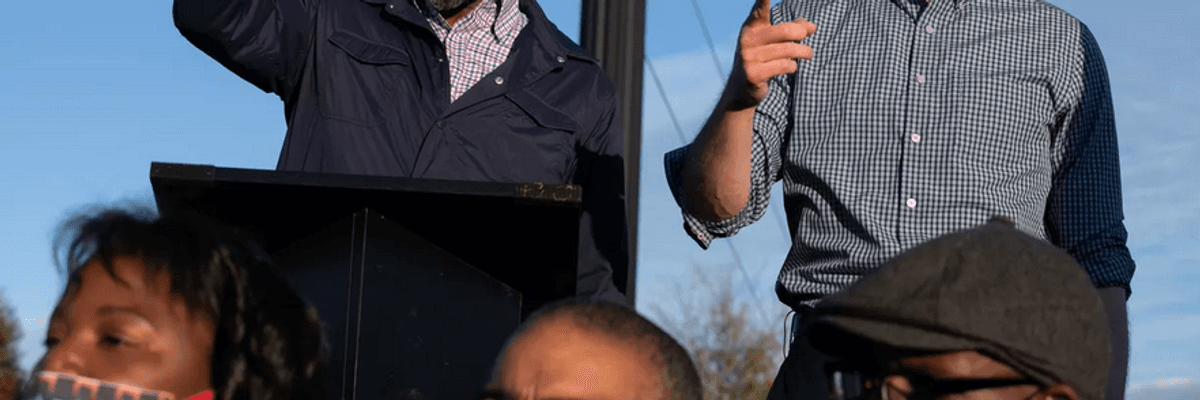
Democratic U.S. Senate candidates Jon Ossoff (roght) and Raphael Warnock of Georgia hold a rally on Sunday in Marietta, Georgia. (Photo: Jessica McGowan/Getty Images)
On Jan. 5, Georgia will hold a run-off election for both of its Senate seats. The races capture national attention because control of the Senate is at stake. If the two Democratic challengers, Jon Ossoff and Rev. Raphael Warnock. both win, the Senate will be effectively split 50-50, with Vice President Kamala Harris breaking the tie. If one or both lose, Republican Senate leader Mitch McConnell will retain his ability to obstruct the incoming president.
The races will be determined by whether Georgia's voters choose to embrace and build a New South coalition or revert to the Old South. Georgia has been changing ever since the Voting Rights Act was passed in 1965. The civil rights movement was anchored in Georgia, led by Rev. Dr. Martin Luther King, the pastor at the historic Ebenezer Baptist Church in Atlanta. Julian Bond and John Lewis, historic leaders of that movement, also came from Atlanta.
After the civil rights movement transformed our laws, Georgia began to change. Major businesses like CNN located in Atlanta, the city "too busy to hate." Professional football and baseball teams could thrive, once their teams were integrated. Blacks and whites played together in college sports like football, with fans divided by the color of the jerseys, not the color of the players' skin.
In recent years, Georgia has grown in population, in diversity and in sophistication. Blacks, Latinos and Asians grew in number. The college educated flocked to the Atlanta suburbs. This year, for the first time since 1992, a Democrat, Joe Biden, won the state in the presidential campaign, by a margin of less than 15,000 votes.
Biden's victory was a fusion victory. African American registration soared, in significant part due to the work of Stacy Abrams who most thought lost the 2018 governor's race only because of brazen voter suppression. The young, single women, the college educated, Latinos all joined in Biden's winning coalition. They had to brave long lines and overcome Georgia's notorious efforts to suppress their votes. Over 4.9 million voted, a new record, with 4 million voting early.
Now the choice facing Georgia is stark: between the sitting Republican senators peddling racial fears and yesterday and the Democratic challengers representing hope and tomorrow.
Both Republican senators, David Perdue and Kelly Loeffler, are multimillionaires. (Loeffler is the wealthiest politician in Washington.) Both were caught moving large stock transactions in the wake of secret briefings on the pandemic. Both support Republican efforts to repeal the Affordable Care Act. Both oppose expanding Medicaid. Loeffler described herself in her ads as "to the right of Attila the Hun." She touted her endorsement by Q-Anon believer running for the Congress. She was denounced as a "greedy insider" seeking to "profit off the pandemic" by her Republican opponent in the primaries.
Loeffler is challenged by Reverend Raphael Warnock, the distinguished pastor at Dr. King's famed Ebenezer Baptist Church in Atlanta. He favors common sense in dealing with the pandemic, and bold action to put people back to work. He calls for defending the Affordable Care Act and its protections of pre-existing conditions and seeks to add a public option that will help lower prices and provide real choices. He'd vote to raise the minimum wage, to pass the rescue plan vital to workers in the pandemic, and to invest in rebuilding America.
Millions will be poured into these two run-offs. Neither Perdue nor Loeffler is popular, so both will feature negative ads designed to drive up doubts about their opponents. Loeffler has already sunk a million dollars into two attack ads labeling Warnock as "anti-American" and part of the "radical left." Perdue has charged his opponent, Jon Ossoff, with everything from being a socialist to being a pawn of the Chinese communists.
They are following the playbook of Donald Trump: sow fear, feed racial divisions, and distract workers from the reality that they and the Republicans in the Senate stand in the way of making this economy work for working people. Or as Rev. Warnock summarized, "If you don't really have an agenda for working families, I guess you have to distract working families."
Despite all the mud, Georgians will have a clear choice. Will they respond to those sowing fear or those raising hopes? Will they side with those seeking to divide us or those seeking to bring us together? Will they support those who would revert back to the Old South or those who would continue its progress into the New South? The vote on Jan. 5 will tell us much about Georgia, about the New South, and about America's ability to deal with the crises we face.
Dear Common Dreams reader, It’s been nearly 30 years since I co-founded Common Dreams with my late wife, Lina Newhouser. We had the radical notion that journalism should serve the public good, not corporate profits. It was clear to us from the outset what it would take to build such a project. No paid advertisements. No corporate sponsors. No millionaire publisher telling us what to think or do. Many people said we wouldn't last a year, but we proved those doubters wrong. Together with a tremendous team of journalists and dedicated staff, we built an independent media outlet free from the constraints of profits and corporate control. Our mission has always been simple: To inform. To inspire. To ignite change for the common good. Building Common Dreams was not easy. Our survival was never guaranteed. When you take on the most powerful forces—Wall Street greed, fossil fuel industry destruction, Big Tech lobbyists, and uber-rich oligarchs who have spent billions upon billions rigging the economy and democracy in their favor—the only bulwark you have is supporters who believe in your work. But here’s the urgent message from me today. It's never been this bad out there. And it's never been this hard to keep us going. At the very moment Common Dreams is most needed, the threats we face are intensifying. We need your support now more than ever. We don't accept corporate advertising and never will. We don't have a paywall because we don't think people should be blocked from critical news based on their ability to pay. Everything we do is funded by the donations of readers like you. When everyone does the little they can afford, we are strong. But if that support retreats or dries up, so do we. Will you donate now to make sure Common Dreams not only survives but thrives? —Craig Brown, Co-founder |
On Jan. 5, Georgia will hold a run-off election for both of its Senate seats. The races capture national attention because control of the Senate is at stake. If the two Democratic challengers, Jon Ossoff and Rev. Raphael Warnock. both win, the Senate will be effectively split 50-50, with Vice President Kamala Harris breaking the tie. If one or both lose, Republican Senate leader Mitch McConnell will retain his ability to obstruct the incoming president.
The races will be determined by whether Georgia's voters choose to embrace and build a New South coalition or revert to the Old South. Georgia has been changing ever since the Voting Rights Act was passed in 1965. The civil rights movement was anchored in Georgia, led by Rev. Dr. Martin Luther King, the pastor at the historic Ebenezer Baptist Church in Atlanta. Julian Bond and John Lewis, historic leaders of that movement, also came from Atlanta.
After the civil rights movement transformed our laws, Georgia began to change. Major businesses like CNN located in Atlanta, the city "too busy to hate." Professional football and baseball teams could thrive, once their teams were integrated. Blacks and whites played together in college sports like football, with fans divided by the color of the jerseys, not the color of the players' skin.
In recent years, Georgia has grown in population, in diversity and in sophistication. Blacks, Latinos and Asians grew in number. The college educated flocked to the Atlanta suburbs. This year, for the first time since 1992, a Democrat, Joe Biden, won the state in the presidential campaign, by a margin of less than 15,000 votes.
Biden's victory was a fusion victory. African American registration soared, in significant part due to the work of Stacy Abrams who most thought lost the 2018 governor's race only because of brazen voter suppression. The young, single women, the college educated, Latinos all joined in Biden's winning coalition. They had to brave long lines and overcome Georgia's notorious efforts to suppress their votes. Over 4.9 million voted, a new record, with 4 million voting early.
Now the choice facing Georgia is stark: between the sitting Republican senators peddling racial fears and yesterday and the Democratic challengers representing hope and tomorrow.
Both Republican senators, David Perdue and Kelly Loeffler, are multimillionaires. (Loeffler is the wealthiest politician in Washington.) Both were caught moving large stock transactions in the wake of secret briefings on the pandemic. Both support Republican efforts to repeal the Affordable Care Act. Both oppose expanding Medicaid. Loeffler described herself in her ads as "to the right of Attila the Hun." She touted her endorsement by Q-Anon believer running for the Congress. She was denounced as a "greedy insider" seeking to "profit off the pandemic" by her Republican opponent in the primaries.
Loeffler is challenged by Reverend Raphael Warnock, the distinguished pastor at Dr. King's famed Ebenezer Baptist Church in Atlanta. He favors common sense in dealing with the pandemic, and bold action to put people back to work. He calls for defending the Affordable Care Act and its protections of pre-existing conditions and seeks to add a public option that will help lower prices and provide real choices. He'd vote to raise the minimum wage, to pass the rescue plan vital to workers in the pandemic, and to invest in rebuilding America.
Millions will be poured into these two run-offs. Neither Perdue nor Loeffler is popular, so both will feature negative ads designed to drive up doubts about their opponents. Loeffler has already sunk a million dollars into two attack ads labeling Warnock as "anti-American" and part of the "radical left." Perdue has charged his opponent, Jon Ossoff, with everything from being a socialist to being a pawn of the Chinese communists.
They are following the playbook of Donald Trump: sow fear, feed racial divisions, and distract workers from the reality that they and the Republicans in the Senate stand in the way of making this economy work for working people. Or as Rev. Warnock summarized, "If you don't really have an agenda for working families, I guess you have to distract working families."
Despite all the mud, Georgians will have a clear choice. Will they respond to those sowing fear or those raising hopes? Will they side with those seeking to divide us or those seeking to bring us together? Will they support those who would revert back to the Old South or those who would continue its progress into the New South? The vote on Jan. 5 will tell us much about Georgia, about the New South, and about America's ability to deal with the crises we face.
On Jan. 5, Georgia will hold a run-off election for both of its Senate seats. The races capture national attention because control of the Senate is at stake. If the two Democratic challengers, Jon Ossoff and Rev. Raphael Warnock. both win, the Senate will be effectively split 50-50, with Vice President Kamala Harris breaking the tie. If one or both lose, Republican Senate leader Mitch McConnell will retain his ability to obstruct the incoming president.
The races will be determined by whether Georgia's voters choose to embrace and build a New South coalition or revert to the Old South. Georgia has been changing ever since the Voting Rights Act was passed in 1965. The civil rights movement was anchored in Georgia, led by Rev. Dr. Martin Luther King, the pastor at the historic Ebenezer Baptist Church in Atlanta. Julian Bond and John Lewis, historic leaders of that movement, also came from Atlanta.
After the civil rights movement transformed our laws, Georgia began to change. Major businesses like CNN located in Atlanta, the city "too busy to hate." Professional football and baseball teams could thrive, once their teams were integrated. Blacks and whites played together in college sports like football, with fans divided by the color of the jerseys, not the color of the players' skin.
In recent years, Georgia has grown in population, in diversity and in sophistication. Blacks, Latinos and Asians grew in number. The college educated flocked to the Atlanta suburbs. This year, for the first time since 1992, a Democrat, Joe Biden, won the state in the presidential campaign, by a margin of less than 15,000 votes.
Biden's victory was a fusion victory. African American registration soared, in significant part due to the work of Stacy Abrams who most thought lost the 2018 governor's race only because of brazen voter suppression. The young, single women, the college educated, Latinos all joined in Biden's winning coalition. They had to brave long lines and overcome Georgia's notorious efforts to suppress their votes. Over 4.9 million voted, a new record, with 4 million voting early.
Now the choice facing Georgia is stark: between the sitting Republican senators peddling racial fears and yesterday and the Democratic challengers representing hope and tomorrow.
Both Republican senators, David Perdue and Kelly Loeffler, are multimillionaires. (Loeffler is the wealthiest politician in Washington.) Both were caught moving large stock transactions in the wake of secret briefings on the pandemic. Both support Republican efforts to repeal the Affordable Care Act. Both oppose expanding Medicaid. Loeffler described herself in her ads as "to the right of Attila the Hun." She touted her endorsement by Q-Anon believer running for the Congress. She was denounced as a "greedy insider" seeking to "profit off the pandemic" by her Republican opponent in the primaries.
Loeffler is challenged by Reverend Raphael Warnock, the distinguished pastor at Dr. King's famed Ebenezer Baptist Church in Atlanta. He favors common sense in dealing with the pandemic, and bold action to put people back to work. He calls for defending the Affordable Care Act and its protections of pre-existing conditions and seeks to add a public option that will help lower prices and provide real choices. He'd vote to raise the minimum wage, to pass the rescue plan vital to workers in the pandemic, and to invest in rebuilding America.
Millions will be poured into these two run-offs. Neither Perdue nor Loeffler is popular, so both will feature negative ads designed to drive up doubts about their opponents. Loeffler has already sunk a million dollars into two attack ads labeling Warnock as "anti-American" and part of the "radical left." Perdue has charged his opponent, Jon Ossoff, with everything from being a socialist to being a pawn of the Chinese communists.
They are following the playbook of Donald Trump: sow fear, feed racial divisions, and distract workers from the reality that they and the Republicans in the Senate stand in the way of making this economy work for working people. Or as Rev. Warnock summarized, "If you don't really have an agenda for working families, I guess you have to distract working families."
Despite all the mud, Georgians will have a clear choice. Will they respond to those sowing fear or those raising hopes? Will they side with those seeking to divide us or those seeking to bring us together? Will they support those who would revert back to the Old South or those who would continue its progress into the New South? The vote on Jan. 5 will tell us much about Georgia, about the New South, and about America's ability to deal with the crises we face.