SUBSCRIBE TO OUR FREE NEWSLETTER
Daily news & progressive opinion—funded by the people, not the corporations—delivered straight to your inbox.
5
#000000
#FFFFFF
To donate by check, phone, or other method, see our More Ways to Give page.
Daily news & progressive opinion—funded by the people, not the corporations—delivered straight to your inbox.
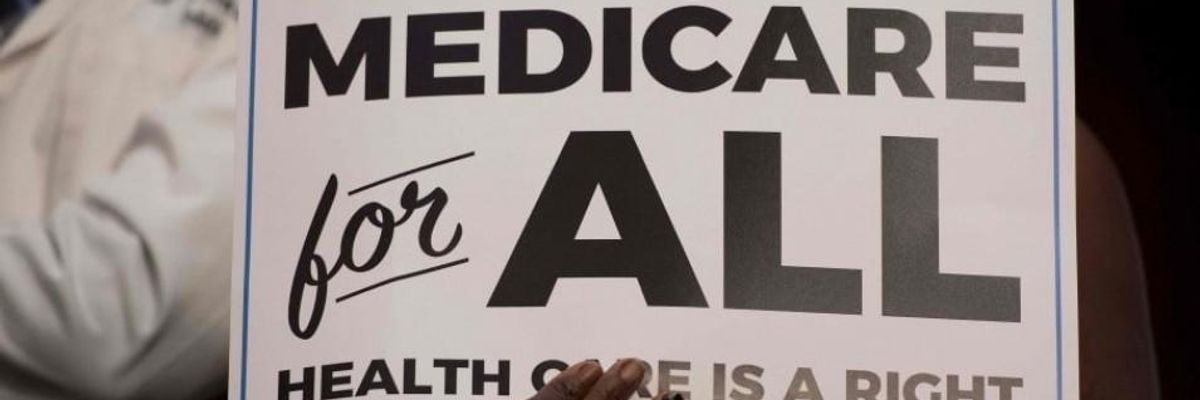
"Medicare for All would not end racism in our health care system, but it is a necessary first step to address the racial health disparities that plague the South and our entire country," write the authors. (Photo: Jim Watson/Getty Images)
The coronavirus pandemic and ongoing protests over racial disparities in the U.S. have highlighted just how broken our health care system is, especially for Black Americans.
As local elected officials, we have witnessed first-hand in our cities how our for-profit health care system fails so many of our residents.
In Louisiana, Black people account for 53% of all coronavirus deaths in Louisiana despite making up 32% of the state population, according to the Louisiana Health Department. Black coronavirus patients also made up three-fourths of hospitalization in the state.
These disparities are underscored by broader racial trends. Black children in New Orleans are 3.5 times more likely to be uninsured than white children--8.5% compared to 2.5%--and Black adults are twice as more likely to be uninsured than whites--32.3% to 16.6%.
In Tennessee, Black residents make up 12% of the population, but account for 33% of coronavirus deaths. Black Tennesseans are 40% more likely to be uninsured than White Tennesseans.
"In this moment of reckoning on racism in so many aspects of society, we must take a stand against a for-profit health care system that too often devalues Black lives."
Latinx communities are also experiencing a disproportionately high rate of positive COVID-19 cases in our communities. In Knox County, Tenn. Latinxs represent 30% of the county's positive and probable COVID-19 cases, while only representing 5% of the county's total population. A study in New Orleans Parish, La., found that 20% of Hispanics tested positive to COVID-19 vs. just 3% of Whites. Latinx Tennesseans are three times as likely to be uninsured that White Tennesseans, and Latinx Louisianans are 3.6 times as likely to be uninsured then White Louisianans.
These rates of uninsurance are likely to drastically increase as tens of millions more Americans have been thrown off their employer-sponsored health insurance since the pandemic began.
People without insurance are much more likely to skip or delay needed care, leading to much higher rates of dangerous underlying health conditions that make COVID-19 much more deadly.
Black Americans are also more likely to live in communities where access to healthy and affordable food is scarce--often known as "food deserts." Residents of food deserts have higher levels of diabetes and heart disease, making them more vulnerable to COVID-19.
In this moment of reckoning on racism in so many aspects of society, we must take a stand against a for-profit health care system that too often devalues Black lives.
Our economic health depends upon our physical health. This is not a red issue or a blue issue, it's a red white and blue issue. The future of the U.S. is depending on universal health care.
That's why the New Orleans and Knoxville City Councils joined cities and towns across the country in passing resolutions recently in support of Medicare for All. These resolutions send a powerful signal to Congress that our cities stand with the majority of Americans who demand guaranteed health care.
Medicare for All would cover every American, regardless of their race, income, or where they live. By partnering with the Medicare program to develop budgets, hospitals would be paid based on the health needs of their community, instead of on the ability to pay of the populations they serve, ensuring that vital hospitals near vulnerable populations won't be improperly forced to close. Special reserves would be set aside for unanticipated public health crises, like the pandemic we are currently living through.
Medicare for All would not end racism in our health care system, but it is a necessary first step to address the racial health disparities that plague the South and our entire country.
Dear Common Dreams reader, It’s been nearly 30 years since I co-founded Common Dreams with my late wife, Lina Newhouser. We had the radical notion that journalism should serve the public good, not corporate profits. It was clear to us from the outset what it would take to build such a project. No paid advertisements. No corporate sponsors. No millionaire publisher telling us what to think or do. Many people said we wouldn't last a year, but we proved those doubters wrong. Together with a tremendous team of journalists and dedicated staff, we built an independent media outlet free from the constraints of profits and corporate control. Our mission has always been simple: To inform. To inspire. To ignite change for the common good. Building Common Dreams was not easy. Our survival was never guaranteed. When you take on the most powerful forces—Wall Street greed, fossil fuel industry destruction, Big Tech lobbyists, and uber-rich oligarchs who have spent billions upon billions rigging the economy and democracy in their favor—the only bulwark you have is supporters who believe in your work. But here’s the urgent message from me today. It's never been this bad out there. And it's never been this hard to keep us going. At the very moment Common Dreams is most needed, the threats we face are intensifying. We need your support now more than ever. We don't accept corporate advertising and never will. We don't have a paywall because we don't think people should be blocked from critical news based on their ability to pay. Everything we do is funded by the donations of readers like you. When everyone does the little they can afford, we are strong. But if that support retreats or dries up, so do we. Will you donate now to make sure Common Dreams not only survives but thrives? —Craig Brown, Co-founder |
The coronavirus pandemic and ongoing protests over racial disparities in the U.S. have highlighted just how broken our health care system is, especially for Black Americans.
As local elected officials, we have witnessed first-hand in our cities how our for-profit health care system fails so many of our residents.
In Louisiana, Black people account for 53% of all coronavirus deaths in Louisiana despite making up 32% of the state population, according to the Louisiana Health Department. Black coronavirus patients also made up three-fourths of hospitalization in the state.
These disparities are underscored by broader racial trends. Black children in New Orleans are 3.5 times more likely to be uninsured than white children--8.5% compared to 2.5%--and Black adults are twice as more likely to be uninsured than whites--32.3% to 16.6%.
In Tennessee, Black residents make up 12% of the population, but account for 33% of coronavirus deaths. Black Tennesseans are 40% more likely to be uninsured than White Tennesseans.
"In this moment of reckoning on racism in so many aspects of society, we must take a stand against a for-profit health care system that too often devalues Black lives."
Latinx communities are also experiencing a disproportionately high rate of positive COVID-19 cases in our communities. In Knox County, Tenn. Latinxs represent 30% of the county's positive and probable COVID-19 cases, while only representing 5% of the county's total population. A study in New Orleans Parish, La., found that 20% of Hispanics tested positive to COVID-19 vs. just 3% of Whites. Latinx Tennesseans are three times as likely to be uninsured that White Tennesseans, and Latinx Louisianans are 3.6 times as likely to be uninsured then White Louisianans.
These rates of uninsurance are likely to drastically increase as tens of millions more Americans have been thrown off their employer-sponsored health insurance since the pandemic began.
People without insurance are much more likely to skip or delay needed care, leading to much higher rates of dangerous underlying health conditions that make COVID-19 much more deadly.
Black Americans are also more likely to live in communities where access to healthy and affordable food is scarce--often known as "food deserts." Residents of food deserts have higher levels of diabetes and heart disease, making them more vulnerable to COVID-19.
In this moment of reckoning on racism in so many aspects of society, we must take a stand against a for-profit health care system that too often devalues Black lives.
Our economic health depends upon our physical health. This is not a red issue or a blue issue, it's a red white and blue issue. The future of the U.S. is depending on universal health care.
That's why the New Orleans and Knoxville City Councils joined cities and towns across the country in passing resolutions recently in support of Medicare for All. These resolutions send a powerful signal to Congress that our cities stand with the majority of Americans who demand guaranteed health care.
Medicare for All would cover every American, regardless of their race, income, or where they live. By partnering with the Medicare program to develop budgets, hospitals would be paid based on the health needs of their community, instead of on the ability to pay of the populations they serve, ensuring that vital hospitals near vulnerable populations won't be improperly forced to close. Special reserves would be set aside for unanticipated public health crises, like the pandemic we are currently living through.
Medicare for All would not end racism in our health care system, but it is a necessary first step to address the racial health disparities that plague the South and our entire country.
The coronavirus pandemic and ongoing protests over racial disparities in the U.S. have highlighted just how broken our health care system is, especially for Black Americans.
As local elected officials, we have witnessed first-hand in our cities how our for-profit health care system fails so many of our residents.
In Louisiana, Black people account for 53% of all coronavirus deaths in Louisiana despite making up 32% of the state population, according to the Louisiana Health Department. Black coronavirus patients also made up three-fourths of hospitalization in the state.
These disparities are underscored by broader racial trends. Black children in New Orleans are 3.5 times more likely to be uninsured than white children--8.5% compared to 2.5%--and Black adults are twice as more likely to be uninsured than whites--32.3% to 16.6%.
In Tennessee, Black residents make up 12% of the population, but account for 33% of coronavirus deaths. Black Tennesseans are 40% more likely to be uninsured than White Tennesseans.
"In this moment of reckoning on racism in so many aspects of society, we must take a stand against a for-profit health care system that too often devalues Black lives."
Latinx communities are also experiencing a disproportionately high rate of positive COVID-19 cases in our communities. In Knox County, Tenn. Latinxs represent 30% of the county's positive and probable COVID-19 cases, while only representing 5% of the county's total population. A study in New Orleans Parish, La., found that 20% of Hispanics tested positive to COVID-19 vs. just 3% of Whites. Latinx Tennesseans are three times as likely to be uninsured that White Tennesseans, and Latinx Louisianans are 3.6 times as likely to be uninsured then White Louisianans.
These rates of uninsurance are likely to drastically increase as tens of millions more Americans have been thrown off their employer-sponsored health insurance since the pandemic began.
People without insurance are much more likely to skip or delay needed care, leading to much higher rates of dangerous underlying health conditions that make COVID-19 much more deadly.
Black Americans are also more likely to live in communities where access to healthy and affordable food is scarce--often known as "food deserts." Residents of food deserts have higher levels of diabetes and heart disease, making them more vulnerable to COVID-19.
In this moment of reckoning on racism in so many aspects of society, we must take a stand against a for-profit health care system that too often devalues Black lives.
Our economic health depends upon our physical health. This is not a red issue or a blue issue, it's a red white and blue issue. The future of the U.S. is depending on universal health care.
That's why the New Orleans and Knoxville City Councils joined cities and towns across the country in passing resolutions recently in support of Medicare for All. These resolutions send a powerful signal to Congress that our cities stand with the majority of Americans who demand guaranteed health care.
Medicare for All would cover every American, regardless of their race, income, or where they live. By partnering with the Medicare program to develop budgets, hospitals would be paid based on the health needs of their community, instead of on the ability to pay of the populations they serve, ensuring that vital hospitals near vulnerable populations won't be improperly forced to close. Special reserves would be set aside for unanticipated public health crises, like the pandemic we are currently living through.
Medicare for All would not end racism in our health care system, but it is a necessary first step to address the racial health disparities that plague the South and our entire country.