SUBSCRIBE TO OUR FREE NEWSLETTER
Daily news & progressive opinion—funded by the people, not the corporations—delivered straight to your inbox.
5
#000000
#FFFFFF
To donate by check, phone, or other method, see our More Ways to Give page.
Daily news & progressive opinion—funded by the people, not the corporations—delivered straight to your inbox.
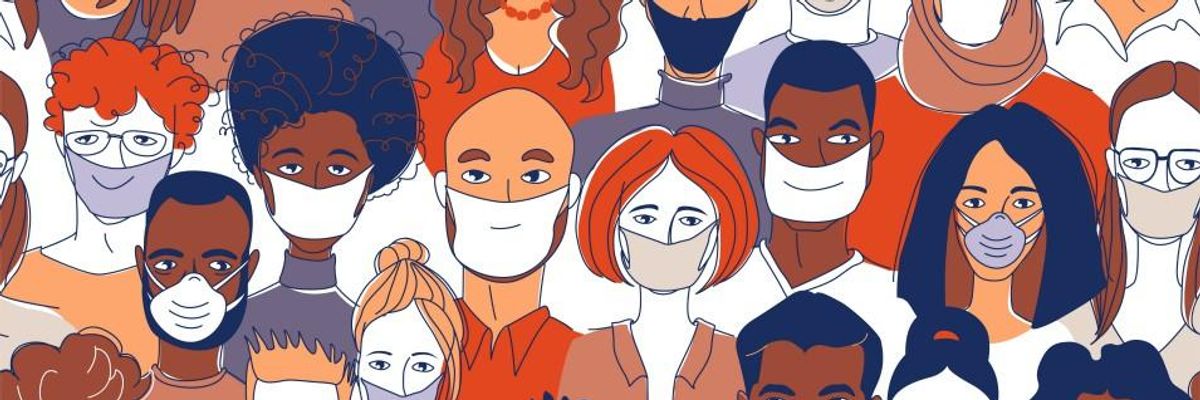
An unexpected and profound impact of today's horrific coronavirus crisis is that it is quietly prompting a societywide recalibration of the rocky road our nation's power elites have put us on. (Photo: iStock/sv_sunny)
Laissez-faire ideologue Ronald Reagan used to delight in mocking the very idea that government should provide health protection, food aid, income support or other public assistance to people in need. The Gipper derided "big government" as both a hopeless bungler and an insatiable beast that devours individual freedom, quipping that, "The nine most terrifying words in the English language are: I'm from the Government, and I'm here to help." The line was a sure-fire crowd pleaser, winning applause and guffaws from those who bought into his demagogic warnings about "creeping socialism."
However, then came COVID-19, and those guffawing at stale jokes about big, bad government have suddenly been drowned out by anxious and angry cries bursting out of practically every ZIP code in our land: "Where the hell is our government?!" It turns out that the right-wing's socialist boogeyman is far less terrifying, even to right-wingers, than the absence of actual socialism when you need it.
People who never before needed food stamps, Medicaid, unemployment checks, etc., are finding themselves in need and in line, personally experiencing the "extravagance" of the system and learning that these programs are an essential investment in the common good.
An unexpected and profound impact of today's horrific coronavirus crisis is that it is quietly prompting a societywide recalibration of the rocky road our nation's power elites have put us on. Here we are--a fantastically rich, ostensibly democratic country filled with masses of smart, creative people who, together, have unlimited potential. Yet, our leaders are so small-minded, incompetent, out of touch and uncaring that they were wholly unprepared for and discombobulated by an inert infectious agent that scientists had specifically warned months ago could spawn a disastrous pandemic.
Mass death and wholesale economic collapse have a way of focusing public attention, not only prompting anger but also leading people to rethink assumptions and start questioning the morality and efficacy of the system itself. Those in charge cannot simply gloss over the societal breakdown they're presiding over, engaging in political blame shifting and butt-covering tweets. Nor can the obvious failure of today's plutocratic policies (social, economic and political) be covered up by ideological assurances that the old free-market magic will soon restore normalcy. Indeed, it's the flagrant ineptitude and inequality of business-as-usual "normal" that people are questioning!
For about a decade now, America's zeitgeist has steadily been shifting away from resigned acceptance of the anti-democratic corporate order, and now comes the abject failure of that system to cope with (and, initially, even address) the deadly pandemic. The aloof arrogance of the system's profiteers has jolted open the minds of a huge swath of the general public to the reality that "We don't matter." Need respirators? Compete against each other to pay the highest market price. That's how America works, says the present president of the United States. But the times, they are a-changing.
Start with public perception of the social safety net, which has long been belittled by anti-government ideologues as an extravagant giveaway of tax-funded benefits to undeserving layabouts. But now, people who never before needed food stamps, Medicaid, unemployment checks, etc., are finding themselves in need and in line, personally experiencing the "extravagance" of the system and learning that these programs are an essential investment in the common good.
The concept of dependency has also been liberated from the right-wing canard that diabolical government programs victimize participants, hooking them on "free things" and stealing their self-reliance and moral strength. Instead, the contagion has revealed that we're a species of completely interdependent beings -- all of us dependent on a collectivist ethos that at the very least (1) strives to keep everyone whom each of us might encounter disease-free and (2) recognizes that, on any given day, the most valuable people in society are not haughty CEOs or billionaire Wall Street financiers but low-paid grocery clerks, EMS responders, food bank staffers, home health aides, delivery workers, immigrant laborers and others on society's front lines. When you can't breathe or you run out of food for your family, you don't call your broker.
And consider the meaning of big, as in "big government." Practically overnight, it has been elevated from the contemptuous corporate connotation of an oozing bureaucratic blob to a meritorious adjective signifying "big enough to do the job at hand." Yes, governments at all levels frequently do grow too big, too intrusive and abusive. This spring, though, we found out what too small looks like. Constant cutbacks in public resources; the rigid, small-minded mentality; and the corporate establishment's determination to keep the status quo have needlessly boxed us into this full-blown coronavirus catastrophe. Those same forces of policy meekness are already pulling back on Washington's inadequate initial steps to stem the people's economic and health crises -- even though the clear and present need is to think bigger, be bolder and do more.
Dear Common Dreams reader, It’s been nearly 30 years since I co-founded Common Dreams with my late wife, Lina Newhouser. We had the radical notion that journalism should serve the public good, not corporate profits. It was clear to us from the outset what it would take to build such a project. No paid advertisements. No corporate sponsors. No millionaire publisher telling us what to think or do. Many people said we wouldn't last a year, but we proved those doubters wrong. Together with a tremendous team of journalists and dedicated staff, we built an independent media outlet free from the constraints of profits and corporate control. Our mission has always been simple: To inform. To inspire. To ignite change for the common good. Building Common Dreams was not easy. Our survival was never guaranteed. When you take on the most powerful forces—Wall Street greed, fossil fuel industry destruction, Big Tech lobbyists, and uber-rich oligarchs who have spent billions upon billions rigging the economy and democracy in their favor—the only bulwark you have is supporters who believe in your work. But here’s the urgent message from me today. It's never been this bad out there. And it's never been this hard to keep us going. At the very moment Common Dreams is most needed, the threats we face are intensifying. We need your support now more than ever. We don't accept corporate advertising and never will. We don't have a paywall because we don't think people should be blocked from critical news based on their ability to pay. Everything we do is funded by the donations of readers like you. When everyone does the little they can afford, we are strong. But if that support retreats or dries up, so do we. Will you donate now to make sure Common Dreams not only survives but thrives? —Craig Brown, Co-founder |
Laissez-faire ideologue Ronald Reagan used to delight in mocking the very idea that government should provide health protection, food aid, income support or other public assistance to people in need. The Gipper derided "big government" as both a hopeless bungler and an insatiable beast that devours individual freedom, quipping that, "The nine most terrifying words in the English language are: I'm from the Government, and I'm here to help." The line was a sure-fire crowd pleaser, winning applause and guffaws from those who bought into his demagogic warnings about "creeping socialism."
However, then came COVID-19, and those guffawing at stale jokes about big, bad government have suddenly been drowned out by anxious and angry cries bursting out of practically every ZIP code in our land: "Where the hell is our government?!" It turns out that the right-wing's socialist boogeyman is far less terrifying, even to right-wingers, than the absence of actual socialism when you need it.
People who never before needed food stamps, Medicaid, unemployment checks, etc., are finding themselves in need and in line, personally experiencing the "extravagance" of the system and learning that these programs are an essential investment in the common good.
An unexpected and profound impact of today's horrific coronavirus crisis is that it is quietly prompting a societywide recalibration of the rocky road our nation's power elites have put us on. Here we are--a fantastically rich, ostensibly democratic country filled with masses of smart, creative people who, together, have unlimited potential. Yet, our leaders are so small-minded, incompetent, out of touch and uncaring that they were wholly unprepared for and discombobulated by an inert infectious agent that scientists had specifically warned months ago could spawn a disastrous pandemic.
Mass death and wholesale economic collapse have a way of focusing public attention, not only prompting anger but also leading people to rethink assumptions and start questioning the morality and efficacy of the system itself. Those in charge cannot simply gloss over the societal breakdown they're presiding over, engaging in political blame shifting and butt-covering tweets. Nor can the obvious failure of today's plutocratic policies (social, economic and political) be covered up by ideological assurances that the old free-market magic will soon restore normalcy. Indeed, it's the flagrant ineptitude and inequality of business-as-usual "normal" that people are questioning!
For about a decade now, America's zeitgeist has steadily been shifting away from resigned acceptance of the anti-democratic corporate order, and now comes the abject failure of that system to cope with (and, initially, even address) the deadly pandemic. The aloof arrogance of the system's profiteers has jolted open the minds of a huge swath of the general public to the reality that "We don't matter." Need respirators? Compete against each other to pay the highest market price. That's how America works, says the present president of the United States. But the times, they are a-changing.
Start with public perception of the social safety net, which has long been belittled by anti-government ideologues as an extravagant giveaway of tax-funded benefits to undeserving layabouts. But now, people who never before needed food stamps, Medicaid, unemployment checks, etc., are finding themselves in need and in line, personally experiencing the "extravagance" of the system and learning that these programs are an essential investment in the common good.
The concept of dependency has also been liberated from the right-wing canard that diabolical government programs victimize participants, hooking them on "free things" and stealing their self-reliance and moral strength. Instead, the contagion has revealed that we're a species of completely interdependent beings -- all of us dependent on a collectivist ethos that at the very least (1) strives to keep everyone whom each of us might encounter disease-free and (2) recognizes that, on any given day, the most valuable people in society are not haughty CEOs or billionaire Wall Street financiers but low-paid grocery clerks, EMS responders, food bank staffers, home health aides, delivery workers, immigrant laborers and others on society's front lines. When you can't breathe or you run out of food for your family, you don't call your broker.
And consider the meaning of big, as in "big government." Practically overnight, it has been elevated from the contemptuous corporate connotation of an oozing bureaucratic blob to a meritorious adjective signifying "big enough to do the job at hand." Yes, governments at all levels frequently do grow too big, too intrusive and abusive. This spring, though, we found out what too small looks like. Constant cutbacks in public resources; the rigid, small-minded mentality; and the corporate establishment's determination to keep the status quo have needlessly boxed us into this full-blown coronavirus catastrophe. Those same forces of policy meekness are already pulling back on Washington's inadequate initial steps to stem the people's economic and health crises -- even though the clear and present need is to think bigger, be bolder and do more.
Laissez-faire ideologue Ronald Reagan used to delight in mocking the very idea that government should provide health protection, food aid, income support or other public assistance to people in need. The Gipper derided "big government" as both a hopeless bungler and an insatiable beast that devours individual freedom, quipping that, "The nine most terrifying words in the English language are: I'm from the Government, and I'm here to help." The line was a sure-fire crowd pleaser, winning applause and guffaws from those who bought into his demagogic warnings about "creeping socialism."
However, then came COVID-19, and those guffawing at stale jokes about big, bad government have suddenly been drowned out by anxious and angry cries bursting out of practically every ZIP code in our land: "Where the hell is our government?!" It turns out that the right-wing's socialist boogeyman is far less terrifying, even to right-wingers, than the absence of actual socialism when you need it.
People who never before needed food stamps, Medicaid, unemployment checks, etc., are finding themselves in need and in line, personally experiencing the "extravagance" of the system and learning that these programs are an essential investment in the common good.
An unexpected and profound impact of today's horrific coronavirus crisis is that it is quietly prompting a societywide recalibration of the rocky road our nation's power elites have put us on. Here we are--a fantastically rich, ostensibly democratic country filled with masses of smart, creative people who, together, have unlimited potential. Yet, our leaders are so small-minded, incompetent, out of touch and uncaring that they were wholly unprepared for and discombobulated by an inert infectious agent that scientists had specifically warned months ago could spawn a disastrous pandemic.
Mass death and wholesale economic collapse have a way of focusing public attention, not only prompting anger but also leading people to rethink assumptions and start questioning the morality and efficacy of the system itself. Those in charge cannot simply gloss over the societal breakdown they're presiding over, engaging in political blame shifting and butt-covering tweets. Nor can the obvious failure of today's plutocratic policies (social, economic and political) be covered up by ideological assurances that the old free-market magic will soon restore normalcy. Indeed, it's the flagrant ineptitude and inequality of business-as-usual "normal" that people are questioning!
For about a decade now, America's zeitgeist has steadily been shifting away from resigned acceptance of the anti-democratic corporate order, and now comes the abject failure of that system to cope with (and, initially, even address) the deadly pandemic. The aloof arrogance of the system's profiteers has jolted open the minds of a huge swath of the general public to the reality that "We don't matter." Need respirators? Compete against each other to pay the highest market price. That's how America works, says the present president of the United States. But the times, they are a-changing.
Start with public perception of the social safety net, which has long been belittled by anti-government ideologues as an extravagant giveaway of tax-funded benefits to undeserving layabouts. But now, people who never before needed food stamps, Medicaid, unemployment checks, etc., are finding themselves in need and in line, personally experiencing the "extravagance" of the system and learning that these programs are an essential investment in the common good.
The concept of dependency has also been liberated from the right-wing canard that diabolical government programs victimize participants, hooking them on "free things" and stealing their self-reliance and moral strength. Instead, the contagion has revealed that we're a species of completely interdependent beings -- all of us dependent on a collectivist ethos that at the very least (1) strives to keep everyone whom each of us might encounter disease-free and (2) recognizes that, on any given day, the most valuable people in society are not haughty CEOs or billionaire Wall Street financiers but low-paid grocery clerks, EMS responders, food bank staffers, home health aides, delivery workers, immigrant laborers and others on society's front lines. When you can't breathe or you run out of food for your family, you don't call your broker.
And consider the meaning of big, as in "big government." Practically overnight, it has been elevated from the contemptuous corporate connotation of an oozing bureaucratic blob to a meritorious adjective signifying "big enough to do the job at hand." Yes, governments at all levels frequently do grow too big, too intrusive and abusive. This spring, though, we found out what too small looks like. Constant cutbacks in public resources; the rigid, small-minded mentality; and the corporate establishment's determination to keep the status quo have needlessly boxed us into this full-blown coronavirus catastrophe. Those same forces of policy meekness are already pulling back on Washington's inadequate initial steps to stem the people's economic and health crises -- even though the clear and present need is to think bigger, be bolder and do more.