SUBSCRIBE TO OUR FREE NEWSLETTER
Daily news & progressive opinion—funded by the people, not the corporations—delivered straight to your inbox.
5
#000000
#FFFFFF
To donate by check, phone, or other method, see our More Ways to Give page.
Daily news & progressive opinion—funded by the people, not the corporations—delivered straight to your inbox.
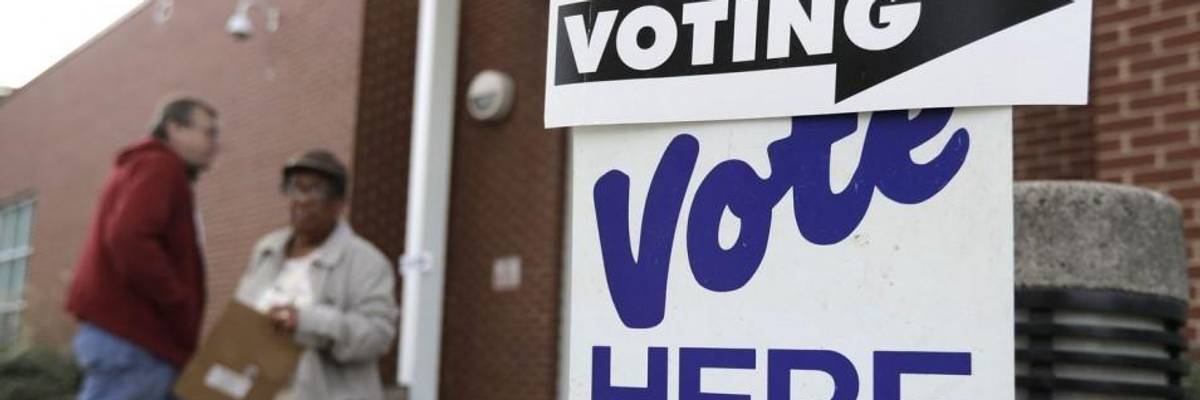
Voting is the fundamental basis of democracy. Particularly in times of crisis, it is vital that the people's voice be heard. The president and the modern-day Republican Party are convinced that if everyone votes, they will not fare well. (Photo: CHUCK BURTON / AP)
The coronavirus does not discriminate, but people do. The coronavirus is not partisan, but politicians are. When we should be coming together to address a shared crisis, some are intent on driving us apart and exacting partisan advantage in the midst of the crisis.
Across the country, Republicans are intensifying their efforts to make it harder to vote, with particular focus on suppressing the votes of African Americans and other minorities.
Across the country, Republicans are intensifying their efforts to make it harder to vote, with particular focus on suppressing the votes of African Americans and other minorities.
With the pandemic making in-person voting dangerous, Congress should move rapidly to provide resources to help every state create systems for voting by mail. The first rescue package, the CARES Act, included some money for vote-by-mail programs, but far short of what is needed.
Why not provide it? Republicans are worried that voting by mail may increase turnout, particularly among low-income and minority voters. Donald Trump voiced the fear, saying "They had things, levels of voting, that if you'd ever agreed to it, you'd never have a Republican elected in this country again." Trump said this in March, dismissing Democratic efforts to expand mail-in voting, make registration easier, and extend voting days.
Republican voters in states that already have widespread vote by mail support the program overwhelmingly. Some sensibly argue that vote by mail might actually help Republicans this fall, because older voters -- who tend to be more conservative -- are more likely to be reluctant to expose themselves to the virus by going to crowded voting places. But Republican history, grounded in the Southern party base that has always sought to suppress the black vote, makes them fear efforts to make voting easier for all.
In Wisconsin, we saw the deadly effects of that. Wisconsin Republicans in control of the state legislature blocked the Democratic governor's effort to allow widespread vote by mail in the primary. When state election officials were swamped by a staggering demand for absentee ballots, they refused to extend the time for voting, ensuring that thousands never received a response to their request for a ballot.
At the same time, officials were slashing the number of voting precincts, worried they'd lack volunteers to staff them. In Milwaukee, the home of two-thirds of the black population in Wisconsin, the number of polling places was reduced from 180 to five. That guaranteed long lines that surely made it impossible for many still at work to vote and put those who did vote at risk. Dozens who went to vote have since contracted the coronavirus.
Simultaneously, conservatives in Wisconsin have joined with Republicans to push purging of voter lists. From 2016 to 2018, Wisconsin purged 14 percent of voters on its rolls (the national average is about 7.6 percent). In the most recent round, election officials sent letters to 232,000 voters who would be removed if they did not respond. One in eight voters in Milwaukee were at risk. Voters in black neighborhoods were nearly twice as likely to be flagged as those in white neighborhoods.
In Georgia in 2018, the Republican candidate for governor, Brian Kemp, was serving as the secretary of state. He sought to purge 300,000 voters, and 53,000 voter registrations were put on hold; 80 percent were people of color. Two hundred voting precincts were closed, most in areas with large black populations. The Democratic candidate, Stacy Abrams, lost the race by a margin far less than the votes that were suppressed.
As she noted, "Especially in states like Georgia, where diversifying demographics have us on the precipice of transformative political change, we are seeing Republicans employ voter suppression to limit who has access to the polls. Disproportionately, under GOP secretaries of state, this process affects Democrats, particularly in communities of color. The clear intention is to strip people of their right to vote."
In state after state, conservative groups are suing to force purges. The Trump Justice Department has piled on: a June 2017 letter went to 44 states saying it would review how the states were planning to "remove the names of ineligible voters."
Purging voters, blocking vote by mail, requiring official voter ID, closing precincts, limiting early voting, limiting the hours that voting booths are open, blocking same day or automatic voter registration, gerrymandering to segregate the minority vote -- the list goes on.
Voting is the fundamental basis of democracy. Particularly in times of crisis, it is vital that the people's voice be heard. The president and the modern-day Republican Party are convinced that if everyone votes, they will not fare well. Think about that.
Our last presidential election was marred by foreign intervention and WikiLeaks. We couldn't stop that. But we should not steal from ourselves. We cannot allow the coming election to be scarred by homegrown intervention and TrickiLeaks.
Dear Common Dreams reader, It’s been nearly 30 years since I co-founded Common Dreams with my late wife, Lina Newhouser. We had the radical notion that journalism should serve the public good, not corporate profits. It was clear to us from the outset what it would take to build such a project. No paid advertisements. No corporate sponsors. No millionaire publisher telling us what to think or do. Many people said we wouldn't last a year, but we proved those doubters wrong. Together with a tremendous team of journalists and dedicated staff, we built an independent media outlet free from the constraints of profits and corporate control. Our mission has always been simple: To inform. To inspire. To ignite change for the common good. Building Common Dreams was not easy. Our survival was never guaranteed. When you take on the most powerful forces—Wall Street greed, fossil fuel industry destruction, Big Tech lobbyists, and uber-rich oligarchs who have spent billions upon billions rigging the economy and democracy in their favor—the only bulwark you have is supporters who believe in your work. But here’s the urgent message from me today. It's never been this bad out there. And it's never been this hard to keep us going. At the very moment Common Dreams is most needed, the threats we face are intensifying. We need your support now more than ever. We don't accept corporate advertising and never will. We don't have a paywall because we don't think people should be blocked from critical news based on their ability to pay. Everything we do is funded by the donations of readers like you. When everyone does the little they can afford, we are strong. But if that support retreats or dries up, so do we. Will you donate now to make sure Common Dreams not only survives but thrives? —Craig Brown, Co-founder |
The coronavirus does not discriminate, but people do. The coronavirus is not partisan, but politicians are. When we should be coming together to address a shared crisis, some are intent on driving us apart and exacting partisan advantage in the midst of the crisis.
Across the country, Republicans are intensifying their efforts to make it harder to vote, with particular focus on suppressing the votes of African Americans and other minorities.
Across the country, Republicans are intensifying their efforts to make it harder to vote, with particular focus on suppressing the votes of African Americans and other minorities.
With the pandemic making in-person voting dangerous, Congress should move rapidly to provide resources to help every state create systems for voting by mail. The first rescue package, the CARES Act, included some money for vote-by-mail programs, but far short of what is needed.
Why not provide it? Republicans are worried that voting by mail may increase turnout, particularly among low-income and minority voters. Donald Trump voiced the fear, saying "They had things, levels of voting, that if you'd ever agreed to it, you'd never have a Republican elected in this country again." Trump said this in March, dismissing Democratic efforts to expand mail-in voting, make registration easier, and extend voting days.
Republican voters in states that already have widespread vote by mail support the program overwhelmingly. Some sensibly argue that vote by mail might actually help Republicans this fall, because older voters -- who tend to be more conservative -- are more likely to be reluctant to expose themselves to the virus by going to crowded voting places. But Republican history, grounded in the Southern party base that has always sought to suppress the black vote, makes them fear efforts to make voting easier for all.
In Wisconsin, we saw the deadly effects of that. Wisconsin Republicans in control of the state legislature blocked the Democratic governor's effort to allow widespread vote by mail in the primary. When state election officials were swamped by a staggering demand for absentee ballots, they refused to extend the time for voting, ensuring that thousands never received a response to their request for a ballot.
At the same time, officials were slashing the number of voting precincts, worried they'd lack volunteers to staff them. In Milwaukee, the home of two-thirds of the black population in Wisconsin, the number of polling places was reduced from 180 to five. That guaranteed long lines that surely made it impossible for many still at work to vote and put those who did vote at risk. Dozens who went to vote have since contracted the coronavirus.
Simultaneously, conservatives in Wisconsin have joined with Republicans to push purging of voter lists. From 2016 to 2018, Wisconsin purged 14 percent of voters on its rolls (the national average is about 7.6 percent). In the most recent round, election officials sent letters to 232,000 voters who would be removed if they did not respond. One in eight voters in Milwaukee were at risk. Voters in black neighborhoods were nearly twice as likely to be flagged as those in white neighborhoods.
In Georgia in 2018, the Republican candidate for governor, Brian Kemp, was serving as the secretary of state. He sought to purge 300,000 voters, and 53,000 voter registrations were put on hold; 80 percent were people of color. Two hundred voting precincts were closed, most in areas with large black populations. The Democratic candidate, Stacy Abrams, lost the race by a margin far less than the votes that were suppressed.
As she noted, "Especially in states like Georgia, where diversifying demographics have us on the precipice of transformative political change, we are seeing Republicans employ voter suppression to limit who has access to the polls. Disproportionately, under GOP secretaries of state, this process affects Democrats, particularly in communities of color. The clear intention is to strip people of their right to vote."
In state after state, conservative groups are suing to force purges. The Trump Justice Department has piled on: a June 2017 letter went to 44 states saying it would review how the states were planning to "remove the names of ineligible voters."
Purging voters, blocking vote by mail, requiring official voter ID, closing precincts, limiting early voting, limiting the hours that voting booths are open, blocking same day or automatic voter registration, gerrymandering to segregate the minority vote -- the list goes on.
Voting is the fundamental basis of democracy. Particularly in times of crisis, it is vital that the people's voice be heard. The president and the modern-day Republican Party are convinced that if everyone votes, they will not fare well. Think about that.
Our last presidential election was marred by foreign intervention and WikiLeaks. We couldn't stop that. But we should not steal from ourselves. We cannot allow the coming election to be scarred by homegrown intervention and TrickiLeaks.
The coronavirus does not discriminate, but people do. The coronavirus is not partisan, but politicians are. When we should be coming together to address a shared crisis, some are intent on driving us apart and exacting partisan advantage in the midst of the crisis.
Across the country, Republicans are intensifying their efforts to make it harder to vote, with particular focus on suppressing the votes of African Americans and other minorities.
Across the country, Republicans are intensifying their efforts to make it harder to vote, with particular focus on suppressing the votes of African Americans and other minorities.
With the pandemic making in-person voting dangerous, Congress should move rapidly to provide resources to help every state create systems for voting by mail. The first rescue package, the CARES Act, included some money for vote-by-mail programs, but far short of what is needed.
Why not provide it? Republicans are worried that voting by mail may increase turnout, particularly among low-income and minority voters. Donald Trump voiced the fear, saying "They had things, levels of voting, that if you'd ever agreed to it, you'd never have a Republican elected in this country again." Trump said this in March, dismissing Democratic efforts to expand mail-in voting, make registration easier, and extend voting days.
Republican voters in states that already have widespread vote by mail support the program overwhelmingly. Some sensibly argue that vote by mail might actually help Republicans this fall, because older voters -- who tend to be more conservative -- are more likely to be reluctant to expose themselves to the virus by going to crowded voting places. But Republican history, grounded in the Southern party base that has always sought to suppress the black vote, makes them fear efforts to make voting easier for all.
In Wisconsin, we saw the deadly effects of that. Wisconsin Republicans in control of the state legislature blocked the Democratic governor's effort to allow widespread vote by mail in the primary. When state election officials were swamped by a staggering demand for absentee ballots, they refused to extend the time for voting, ensuring that thousands never received a response to their request for a ballot.
At the same time, officials were slashing the number of voting precincts, worried they'd lack volunteers to staff them. In Milwaukee, the home of two-thirds of the black population in Wisconsin, the number of polling places was reduced from 180 to five. That guaranteed long lines that surely made it impossible for many still at work to vote and put those who did vote at risk. Dozens who went to vote have since contracted the coronavirus.
Simultaneously, conservatives in Wisconsin have joined with Republicans to push purging of voter lists. From 2016 to 2018, Wisconsin purged 14 percent of voters on its rolls (the national average is about 7.6 percent). In the most recent round, election officials sent letters to 232,000 voters who would be removed if they did not respond. One in eight voters in Milwaukee were at risk. Voters in black neighborhoods were nearly twice as likely to be flagged as those in white neighborhoods.
In Georgia in 2018, the Republican candidate for governor, Brian Kemp, was serving as the secretary of state. He sought to purge 300,000 voters, and 53,000 voter registrations were put on hold; 80 percent were people of color. Two hundred voting precincts were closed, most in areas with large black populations. The Democratic candidate, Stacy Abrams, lost the race by a margin far less than the votes that were suppressed.
As she noted, "Especially in states like Georgia, where diversifying demographics have us on the precipice of transformative political change, we are seeing Republicans employ voter suppression to limit who has access to the polls. Disproportionately, under GOP secretaries of state, this process affects Democrats, particularly in communities of color. The clear intention is to strip people of their right to vote."
In state after state, conservative groups are suing to force purges. The Trump Justice Department has piled on: a June 2017 letter went to 44 states saying it would review how the states were planning to "remove the names of ineligible voters."
Purging voters, blocking vote by mail, requiring official voter ID, closing precincts, limiting early voting, limiting the hours that voting booths are open, blocking same day or automatic voter registration, gerrymandering to segregate the minority vote -- the list goes on.
Voting is the fundamental basis of democracy. Particularly in times of crisis, it is vital that the people's voice be heard. The president and the modern-day Republican Party are convinced that if everyone votes, they will not fare well. Think about that.
Our last presidential election was marred by foreign intervention and WikiLeaks. We couldn't stop that. But we should not steal from ourselves. We cannot allow the coming election to be scarred by homegrown intervention and TrickiLeaks.